
Ruth spent thirty-four years as a librarian, which means she spent thirty-four years believing that everything worth keeping could be catalogued, sorted, and put in its proper place. So when she retired and decided to trade a four-bedroom house in the American suburbs for a 400-square-foot studio in Lisbon, she did the only thing that made sense to her methodical mind. She kept a ledger. On one side she wrote down everything she was giving up, and on the other everything she was gaining, and she balanced the two the way she had once balanced a card catalogue, until she could see plainly whether the trade added up. Her story here is a composite, drawn from the many real people who have made this exact move, but the ledger is the honest shape of the choice.
What follows is that ledger, the debits and the credits of shrinking a whole life down to one small bright room in a foreign city, because the question underneath it is one a great many people quietly ask themselves. Could I actually live with less, somewhere better?
The House She Left Behind
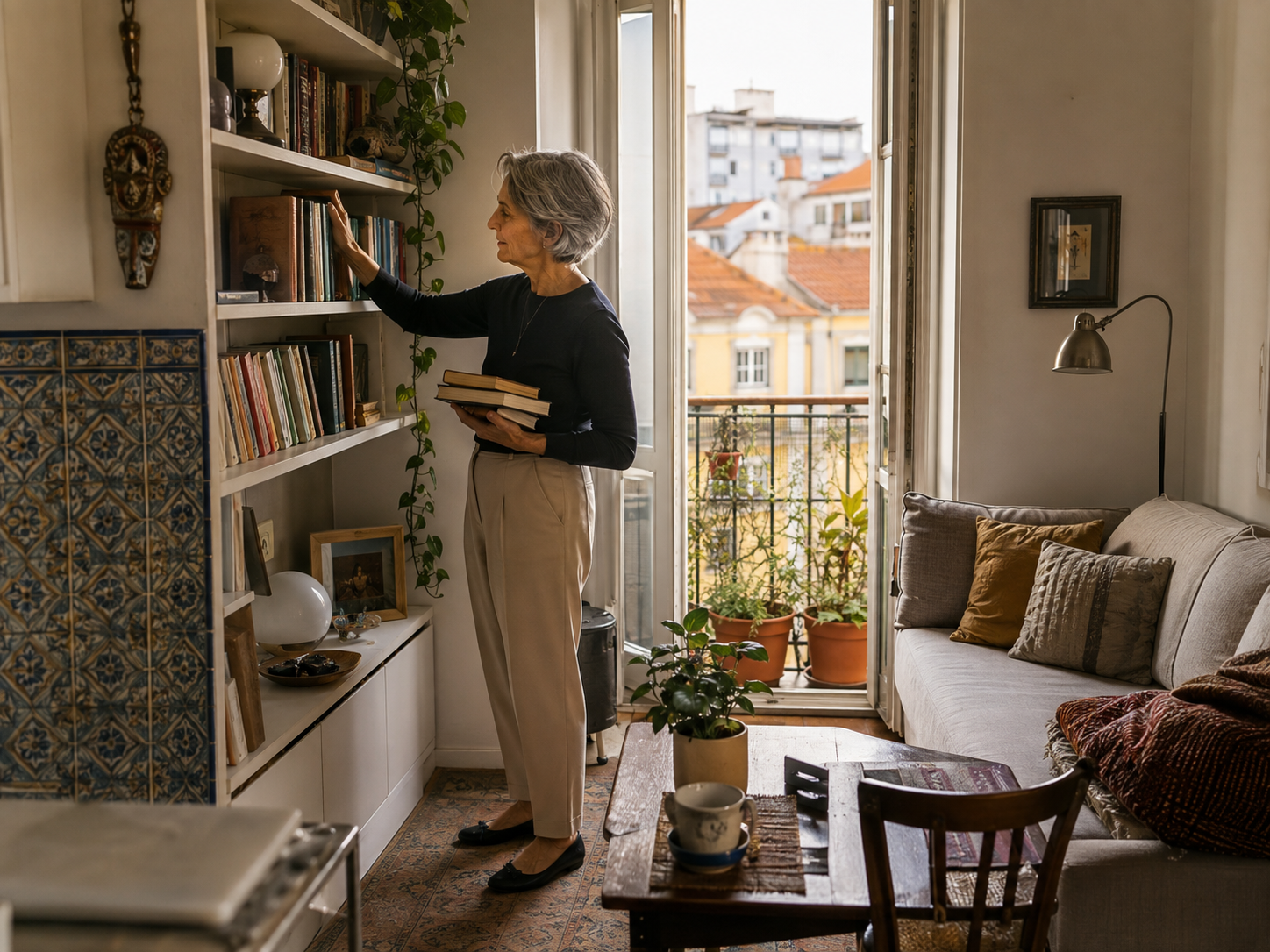
The house was not a burden, exactly, which is what made leaving it so complicated. It was a comfortable four-bedroom in a good suburb, the house where her children had grown up, paid off and familiar and full of thirty years of accumulated life. But it was also, she came to see, a quiet machine for consuming her time and money, since the roof needed work, the yard needed mowing, the property tax arrived twice a year, and three of the four bedrooms sat empty now that the children were grown and gone.
She was, in the plainest terms, paying to heat, clean, insure, and maintain a great deal of space she no longer used. The house had become a museum of a life that was already over, full of rooms she walked through but did not live in, and the upkeep of it all had quietly become the main occupation of her retirement. When she added up what the house truly cost her each year, not just in money but in the weekends lost to its maintenance, the number startled her, and it was that number that first made her open the ledger and start to wonder what else her life might look like.
The Ledger She Kept
Being a librarian, Ruth did not make the decision on feeling, at least not only on feeling, because she needed to see it laid out. She took a notebook and drew a line down the middle of a page, and at the top of one column she wrote what she was losing, and at the top of the other what she was gaining, and then she filled the columns honestly over several weeks, adding to each as things occurred to her. The debit side and the credit side, she called them, the losses and the gains of the whole enormous change.
The point of the ledger was to force honesty, because it is easy to romanticize a dramatic move and just as easy to catastrophize it, and a written accounting resists both. She would not let herself write only the exciting gains and hide the real losses, nor only the frightening losses and dismiss the gains, so everything went down in its column and stayed there to be weighed. What she found, as the pages filled, was that the two sides were both longer and more surprising than she had expected, and that the balance between them was not at all where her fears had told her it would be. The ledger, in the end, is what gave her the courage to go, and it is worth walking through both sides of it as she wrote them.
The Debit Side: What She Gave Up

Honesty starts with the losses, and they were real, so Ruth wrote them first. The most obvious was space itself, the sheer room to spread out, since going from four bedrooms to one studio meant giving up the guest room, the spare space, the ability to simply have more of everything and put it somewhere. She gave up the easy hosting too, the Thanksgiving table that seated twelve, because a 400-square-foot room does not hold a crowd, and that loss of being the family’s gathering place was a genuine grief she did not pretend away.
Then came the possessions, the hardest column of all to fill, because most of what she owned simply could not come. The books above all, since a librarian’s personal library is not a small thing, and she had to release most of it, keeping only a single shelf of the truly beloved and letting the rest go to friends and sales and donations. Furniture she had chosen over decades, her mother’s china, the boxes in the attic she had not opened in years but somehow could not throw away, most of it left her life in the space of a few months.
Letting go of the things turned out to be its own quiet education, since she learned that she had been keeping most of them not because she used or even wanted them, but out of a vague guilt and a sense that discarding them would be discarding the past itself. The past, she found, came with her regardless, in memory rather than in boxes. And there was distance, the plain fact that moving across an ocean put her farther from her children and grandchildren, so that seeing them became a planned trip rather than a Sunday drive, which was the debit that weighed heaviest of all and which no gain on the other side could fully cancel.
The Credit Side: What She Gained
But the credit column, once she let herself fill it honestly, turned out to be longer than she had feared. The first entry was money, and it was large, because selling the house and renting a small studio freed up both the locked-away value of the property and the steady monthly drain of its upkeep, turning a house that ate money into a modest apartment that cost a fraction to run. That freed money became, in effect, the funding for the whole rest of her new life, the travel and the meals out and the simple security of a cushion she had never quite had while the house consumed everything.
The second entry was the city itself, because she had not merely downsized, she had moved to Lisbon, and the room she now lived in opened onto one of Europe’s loveliest capitals. Her 400 square feet were small, but her living room was really the whole city, the cafe on the corner, the walkable streets, the river, the light, so she was not shut in a box but let out into a place she stepped into every single morning. She gained time, too, the weekends no longer swallowed by yard work and repairs, and a strange, unexpected lightness that came from owning little, since the studio took twenty minutes to clean and nothing in it needed maintaining, and she had not understood until it was gone how much mental weight all that stuff had quietly carried. What she gained, in the end, was less house and vastly more life.
What 400 Square Feet Actually Holds

The number sounds impossibly small to anyone used to American houses, so it is worth being concrete about what a life at this scale actually looks like. A 400-square-foot studio, roughly 37 square meters, holds a sleeping area, a small living space, a compact kitchen, and a bathroom, all in one bright room, and the trick to living well in it is that everything must earn its place. There is no room for the maybe-someday object, the duplicate, or the thing kept purely out of guilt, which sounds like deprivation and turns out, oddly, to feel like clarity.
Ruth found that the constraint did her a favor, because it forced the very cataloguing instinct that had defined her career, so every object she owned was now something she had consciously chosen to keep rather than something that had simply accumulated. The bed folded or tucked away, the table served for both meals and reading, the single shelf of books held only the ones that mattered, and the whole room could be tidied in the time it once took to clean a single room of the house. Small-space living is a real skill with real trade-offs, and it is not for everyone, but for her it replaced the low background hum of managing too much with the quiet of managing just enough. She kept one small indulgence of space, a good reading chair by the window, because a librarian without a proper place to read would be a contradiction, and that single well-chosen chair did more for her days than three empty bedrooms ever had.
The Money Math

The financial side of the ledger deserves its own honest accounting, since it is what makes the whole move possible, and the figures are worth grounding even though every situation differs. In central Lisbon, a small studio like Ruth’s rents in the region of €700 to €950 a month, roughly $750 to $1,020, depending on the exact neighborhood and building, with the trendier central districts sitting at the top of that range and the edges a little kinder. Utilities add perhaps €100 to €180, groceries for one run around €200 to €280, and eating out stays genuinely affordable, with a simple restaurant meal often €11 to €14.
Put together, a comfortable single life in Lisbon lands somewhere around €1,800 to €2,000 a month all in, roughly $1,950 to $2,150, which for many retirees sits well within a pension and Social Security, and far below what the American house had quietly been costing once its full upkeep was counted. That gap, between what the old life drained and what the new one costs, is the real engine of the whole decision, because it is not that Lisbon is impossibly cheap, since housing there has climbed steeply in recent years, but that a small apartment in a walkable city simply demands far less than a large house in the suburbs. The money math is what turns the emotional courage of the ledger into something practical, and for Ruth it was the column that finally tipped the balance. She was quick to add, though, that the point was never to chase the lowest possible cost, since a cheaper life in a place she did not love would have been no bargain at all. The math simply made room for a life she did love, which is the only kind of saving worth making.
How the Move Actually Happened

Between the decision and the small bright room lay a great deal of practical work, and Ruth was methodical about that too. The house had to be sold, which in a good market took a few months and turned decades of ownership into the lump of capital that would fund everything after. The possessions had to be sorted into the ruthless three piles of keep, give, and sell, a process she found genuinely exhausting and occasionally tearful, since every object carried a memory and the deciding could not be rushed without regret. She gave herself the better part of a year for the whole thing rather than trying to tear the bandage off in a weekend.
The Lisbon end took its own planning, because moving to Portugal as an American means a residency visa rather than simply showing up, and that meant proving income, arranging health cover, and gathering the paperwork the process demands. She rented her studio for the first year rather than buying, which is the standard and sensible advice, since it let her test the neighborhood and the life before committing any of her freed-up capital to Portuguese property. None of it was quick, and none of it was free of stress, but spread across a year and taken one catalogued step at a time, it proved far more manageable than the single overwhelming leap it looked like from the far side. The lesson she drew was that a big move is really a long series of small ones, which is a comforting thing for anyone standing where she once stood.
Whether the Ledger Balances for You
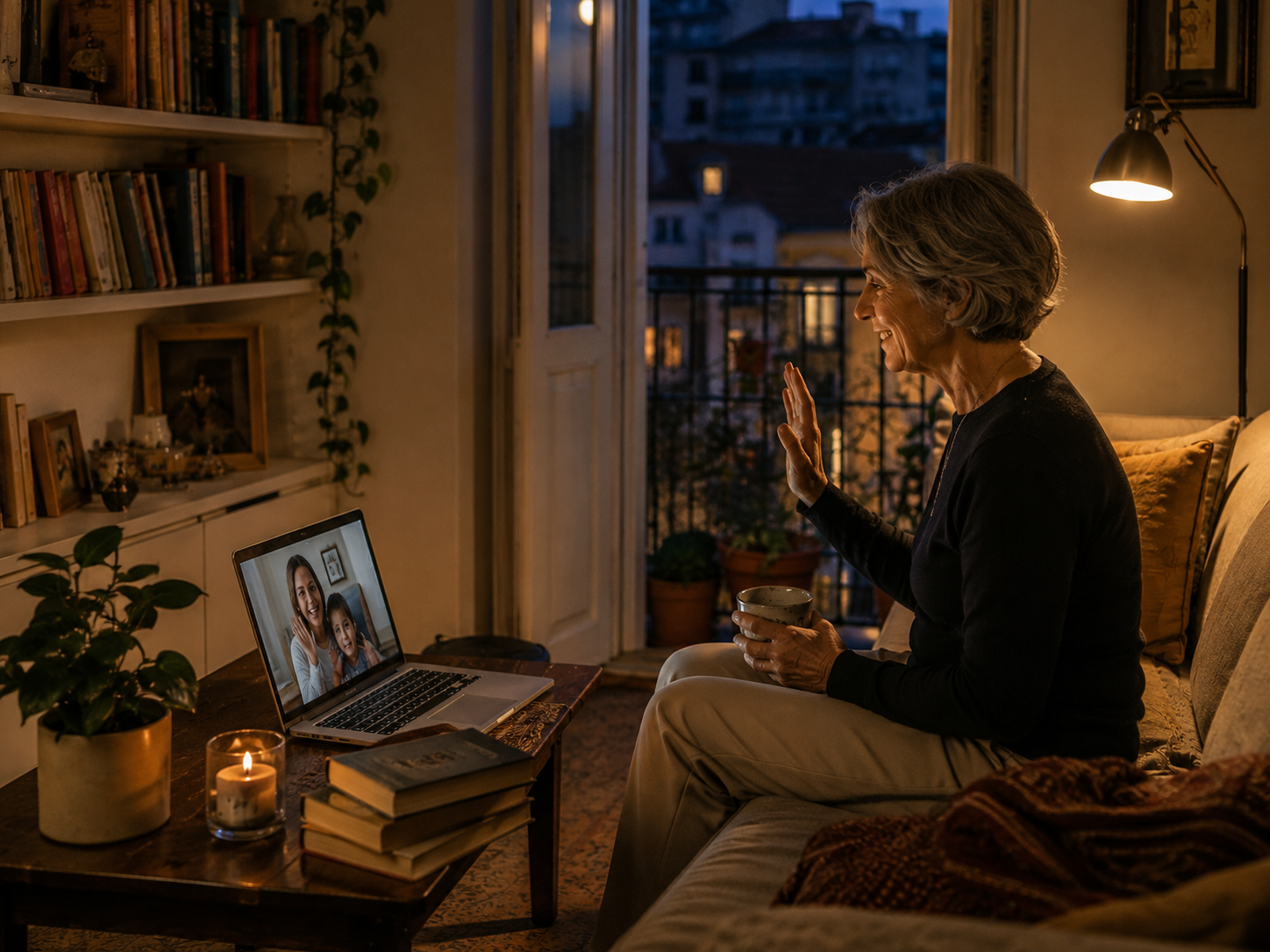
The honest conclusion of Ruth’s ledger is that it balanced firmly toward the move, but that the losses on the debit side were real and personal, which is exactly why it is a ledger and not a sales pitch. For her, the space and the possessions turned out to matter far less than she had feared, and the distance from family, the one heavy debit, was one she chose to manage with regular visits rather than let veto the whole plan. Someone else, weighing the very same columns, might find that the family distance alone outweighs everything, and that is not a wrong answer but a different one, drawn from a different life.
The value of the exercise is the exercise itself, because whether or not you would ever move to a studio in Lisbon, the act of actually writing down what your current life costs you and what a different one might give you is clarifying in a way that vague daydreaming never is. Most people carry the fantasy of a lighter, freer, better-placed life without ever testing it against the real losses, and the ledger is simply the discipline of testing it. Ruth’s balanced toward the small bright room by the river, and she has not once regretted it, but the useful thing she left behind is not her answer. It is her method, the honest two-column page that anyone can draw.
Do keep in mind that Ruth is a composite rather than one real person, and that the figures here are a 2026 snapshot of a city whose rents have been rising fast, so treat the numbers as the rough shape of a working budget rather than a quote for your own, and check the current costs for any neighborhood you are seriously considering.

About the Author: Ruben, co-founder of Gamintraveler.com since 2014, is a seasoned traveler from Spain who has explored over 100 countries since 2009. Known for his extensive travel adventures across South America, Europe, the US, Australia, New Zealand, Asia, and Africa, Ruben combines his passion for adventurous yet sustainable living with his love for cycling, highlighted by his remarkable 5-month bicycle journey from Spain to Norway. He currently resides in Spain, where he continues sharing his travel experiences with his partner, Rachel, and their son, Han.