
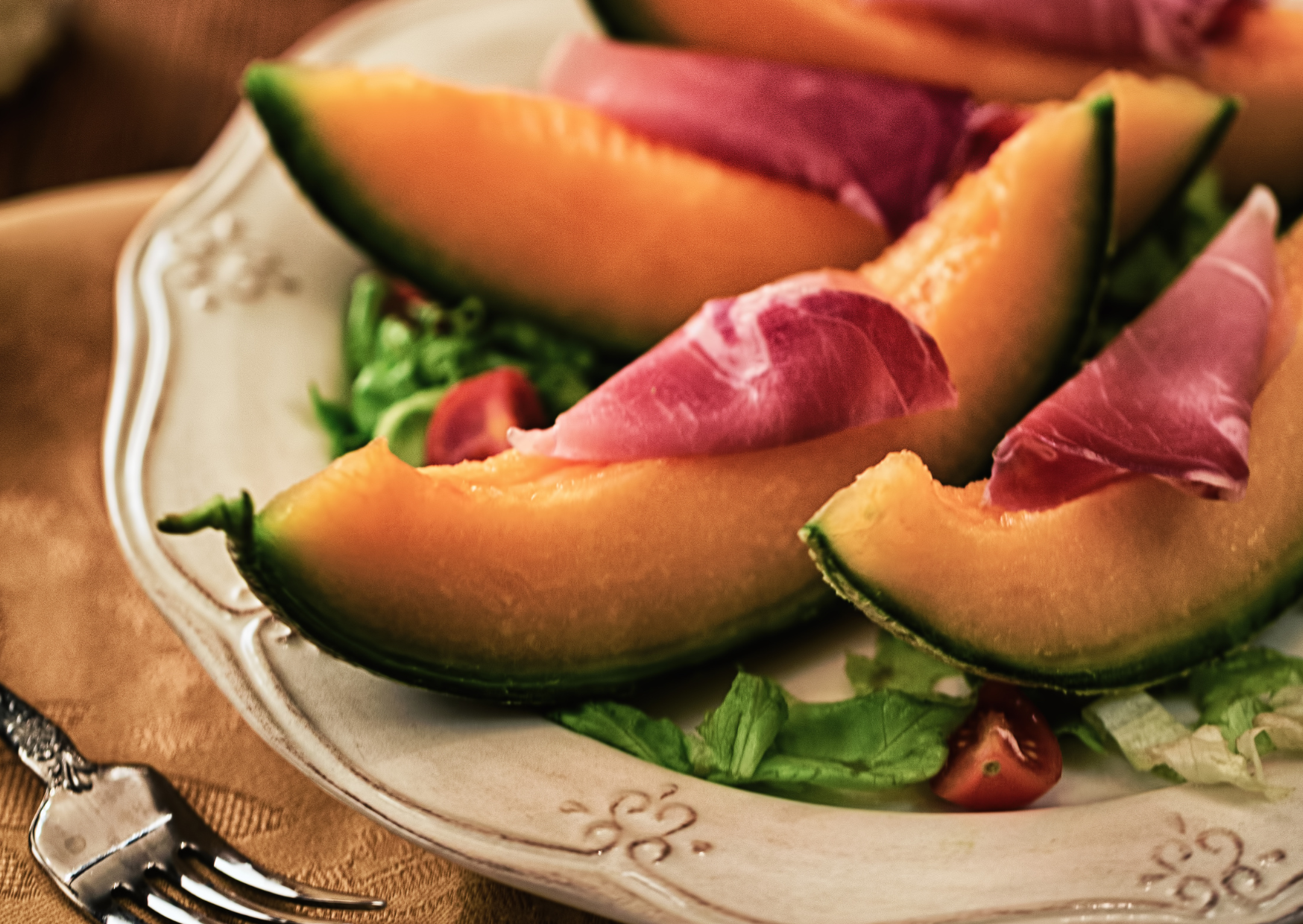
On a hot night in Spain in August, when the idea of cooking anything is unbearable and appetites have shrunk in the heat, dinner is often almost absurdly simple. Cold sweet melon, cut into wedges or wrapped in slices, draped with thin curls of cured ham. That is the whole meal, or most of it, and it is one of the most beloved things a Spaniard eats all summer. Melón con jamón, melon with ham, is the taste of the Spanish August, and to an outsider it can sound like an odd combination until the first bite, when the whole thing suddenly makes perfect sense.
The pairing of cool, honeyed melon with salty, savory cured ham is one of those simple culinary marriages that seems obvious the moment you taste it, the sweetness and the salt setting each other off, the cold fruit and the rich ham balancing perfectly. It requires no cooking, almost no effort, and only two real ingredients, yet it delivers something far greater than the sum of its parts, which is exactly why it has become the default summer dinner across Spain and much of the Mediterranean.
Here is why melon and ham work so beautifully together, how to choose and prepare each element, and how to serve the dish the way Spaniards do on those hot August nights. This is a simple recipe and a bit of food culture rather than anything complicated, since the beauty of the dish is precisely its simplicity, but doing it well is a matter of a few good choices, and getting those right is what turns two ingredients into a summer classic.
Why Sweet and Salty Work So Well
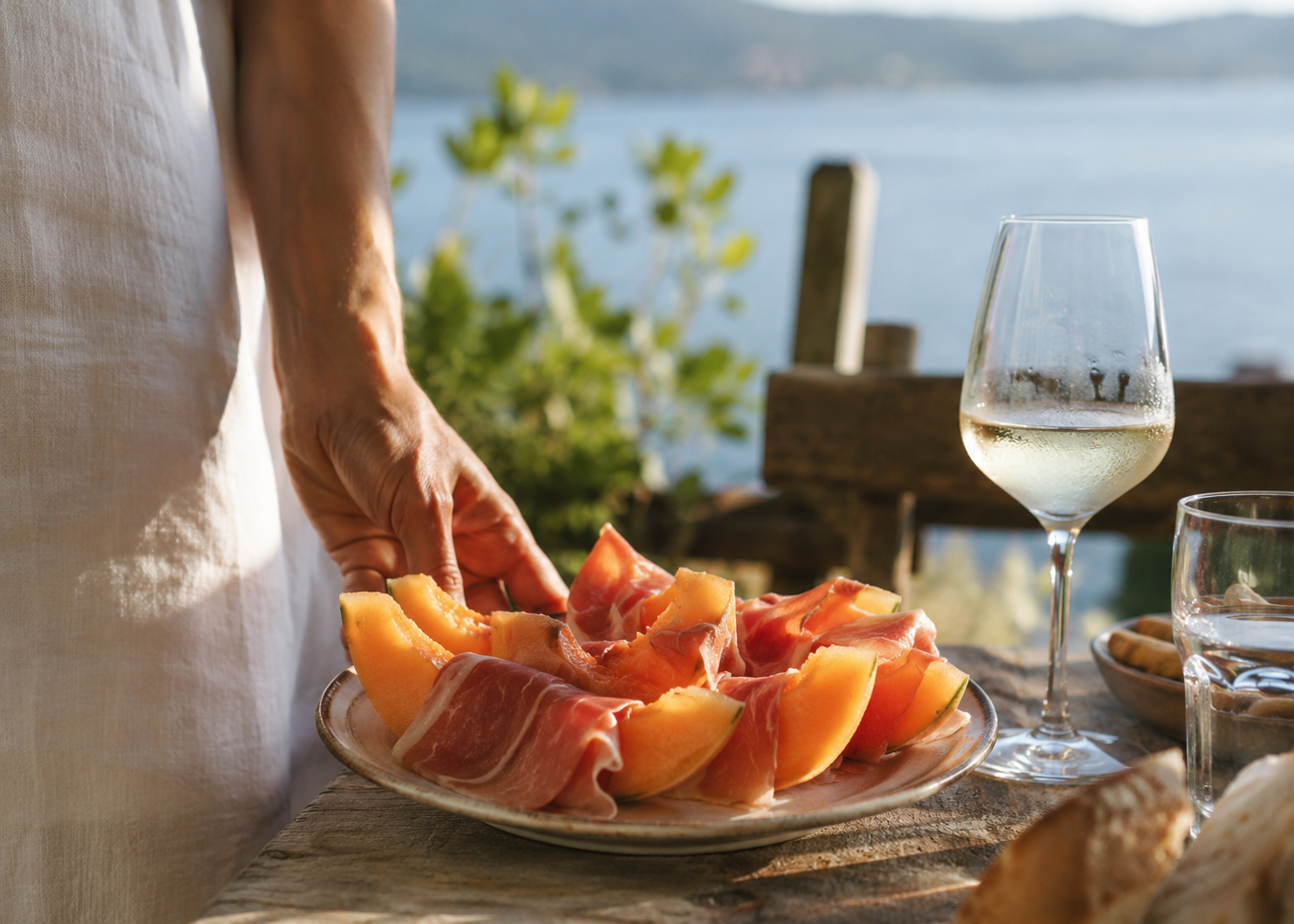
The magic of melon with ham begins with the oldest trick in good cooking, the pairing of sweet and salty. The sweetness of ripe melon and the saltiness of cured ham are natural opposites that flatter each other, each making the other taste more of itself, so the melon seems sweeter against the salt and the ham seems richer against the sweetness. It is contrast doing the work that no single flavor could.
This is the same principle behind so many beloved combinations, from salted caramel to prosciutto with figs. When sweet and salty meet on the palate, they create a balance and a tension that is deeply satisfying, the one preventing the other from becoming cloying or overwhelming, so that a dish of pure sweetness or pure salt would tire the palate where the combination refreshes it. Melon and ham is a textbook case of this happy chemistry.
There is more than taste at play, because texture and temperature join in too. The cool, juicy flesh of chilled melon against the silky, dense, savory ham is a contrast of sensation as much as flavor, the refreshing coldness of the fruit against the rich saltiness of the meat, and on a hot night that cool sweetness beside the savory ham is exactly what a tired summer appetite wants. The pairing works on every level at once. This is why the dish feels so much more considered than its two ingredients suggest. A cook who understood nothing of the theory could assemble it perfectly on instinct, because the balance is built into the ingredients themselves, but knowing why it works, the sweet against the salt, the cold against the rich, the juicy against the silky, helps you choose each element to play its part. The dish is a little lesson in flavor, disguised as the easiest supper imaginable.
Choosing the Right Melon
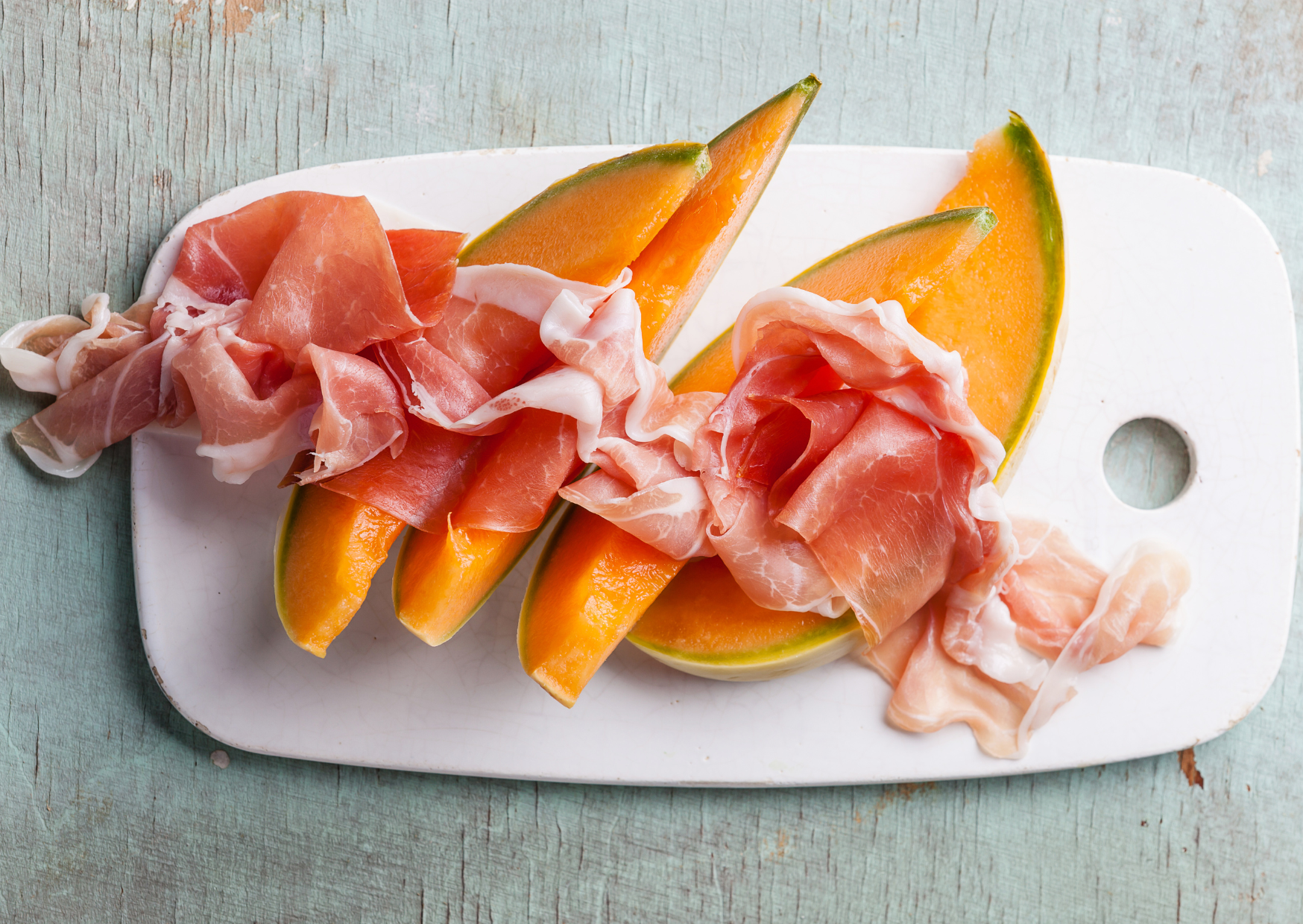
Getting the dish right starts with the melon, and the single most important thing is that it be perfectly ripe and sweet. An underripe, bland melon will sink the whole dish, since the sweetness is half the point, so the melon must be fragrant, heavy for its size, and sweet enough to stand up against the salty ham. Ripeness is everything here.
In Spain the classic choice is a green-fleshed melon of the piel de sapo type, the toad-skin melon, or a fragrant cantaloupe, both prized for their sweetness and their perfume. A good ripe cantaloupe, with its orange flesh and floral aroma, makes a beautiful and colorful pairing with the ham, while the pale green piel de sapo, honey-sweet and juicy, is the traditional Spanish favorite. Either works wonderfully, and the choice is mostly a matter of what looks best and smells ripest at the market.
Judging ripeness is a skill worth having for this dish above all. A ripe melon gives off a sweet fragrance at the stem end, feels heavy for its size, and yields just slightly to gentle pressure at the base, all signs that the flesh inside is sweet and ready. Choose the ripest, most fragrant melon you can find, chill it well, and half your work is done, because a great melon needs almost nothing else to shine. It is worth buying the melon a few days ahead if it is not quite ripe, since a firm melon will sweeten and soften on the counter over a day or two, its fragrance growing as it ripens. A melon that is rock-hard and scentless at the shop will not improve enough by dinnertime, so plan ahead in high summer when the best fruit moves fast, and let a slightly underripe melon finish ripening at home before you chill it for the plate.
Choosing the Right Ham
The other half of the dish is the ham, and here Spain offers its glory, the extraordinary cured hams that make the country famous. The ham should be a good-quality Spanish cured ham, sliced thin, its salty depth the perfect foil for the sweet melon, and the better the ham, the better the dish, so this is a place to buy the best you can.
Spain’s cured hams come in a range, and any of them can work beautifully. At the everyday end is jamón serrano, the mountain-cured ham that is widely available, affordable and delicious, perfectly good for this dish, while at the luxurious end is jamón ibérico, from the black Iberian pig, deeper and more complex and more expensive, which turns the simple dish into something sublime. Even a good Italian prosciutto, the natural cousin of these hams, makes an excellent version.
Whatever ham you choose, the crucial thing is that it be sliced thin, almost transparent. Cured ham is meant to be cut into paper-thin slices that melt on the tongue and drape gracefully over the melon, so a proper thin slice is essential, whether cut by the shop or by a skilled hand at home. Thick, clumsy slices ruin the delicacy of the dish, while gossamer-thin ones make it, letting the salty richness dissolve against the cool sweet fruit.
How to Cut and Serve It
There are two classic ways to present melon with ham, and both are simple. The first is to cut the melon into wedges, like slim smiles, and lay or drape a slice of ham over or beside each one, so that a diner takes a piece of melon and a curl of ham together in one bite. The second is to cut the melon into cubes or balls and wrap each piece in a small slice of ham, making little parcels perfect for a tapa or an appetizer.
The wedge presentation is the everyday Spanish way and the easiest. Simply halve the chilled melon, scoop out the seeds, cut it into wedges, remove the rind or leave it on for easy handling, and arrange the wedges on a plate with the thin slices of ham draped alongside or over them, ready to eat with a knife and fork or by hand. It is a dish that comes together in minutes and looks beautiful with no effort at all.
The wrapped presentation is a touch more refined and makes a lovely tapa. Cut the melon into bite-sized cubes or scoop it into balls, wrap each piece in a small slice of ham, and secure it if you like with a cocktail stick, creating elegant little two-bite morsels that are perfect for sharing or serving with drinks. Either way, the assembly is quick, and the result is far more impressive than the effort suggests.
Melón con Jamón serves 4
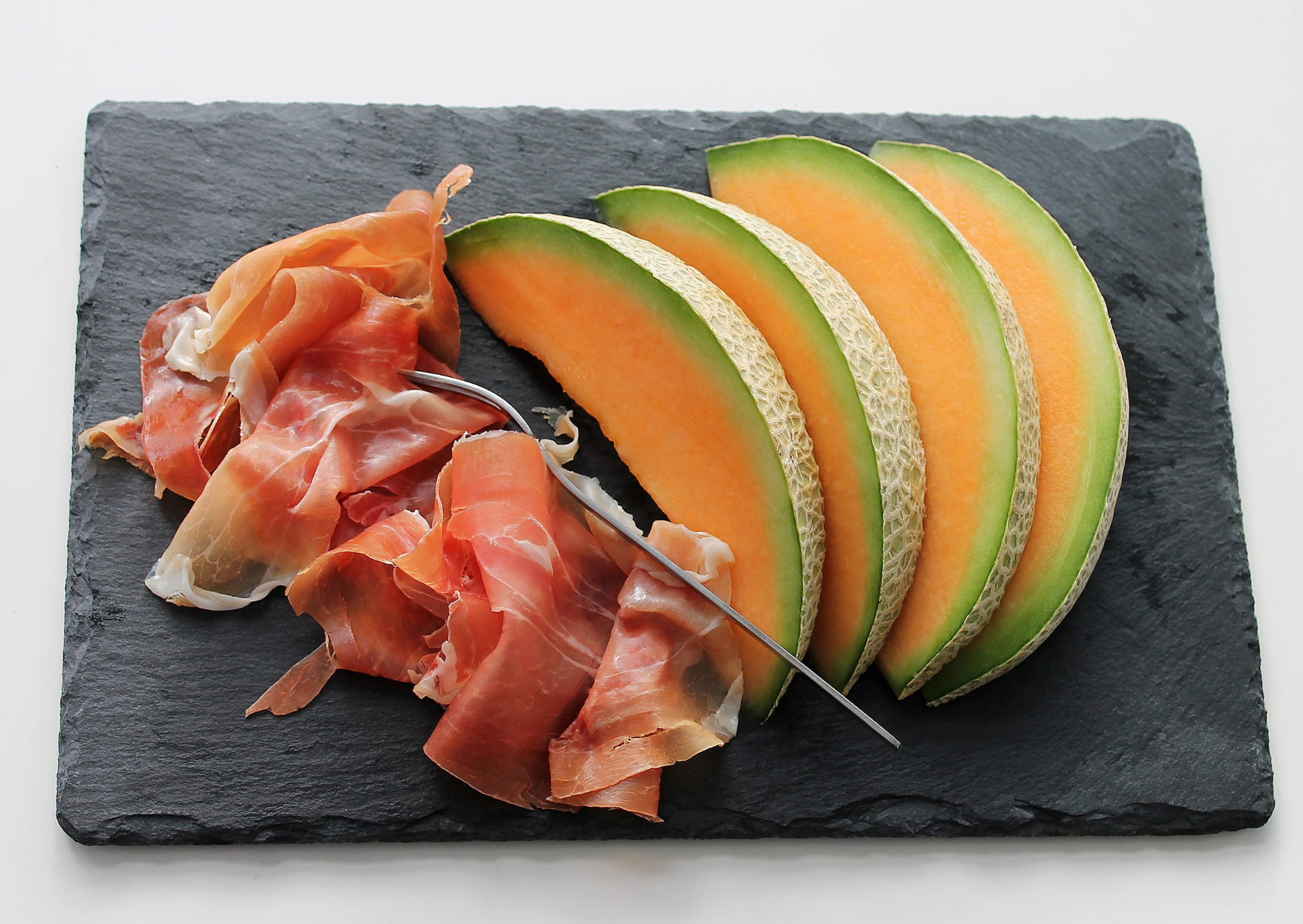
Ingredients:
- 1 ripe melon, cantaloupe or piel de sapo
- 200g thinly sliced Spanish cured ham, serrano or ibérico
- good olive oil, optional, to finish
- freshly ground black pepper, optional
Method:
- Chill the melon thoroughly in the refrigerator for several hours, since the dish is best served cold.
- Halve the melon, scoop out and discard the seeds, and cut it into slim wedges.
- Slice the rind away from each wedge, or leave it on if serving as easy-to-hold pieces.
- Arrange the melon wedges on a serving platter.
- Drape the thin slices of cured ham loosely over and alongside the melon.
- If you like, finish with a thread of good olive oil and a little freshly ground black pepper.
- Serve immediately, while the melon is cold and the ham at cool room temperature.
Serving It the Spanish Way
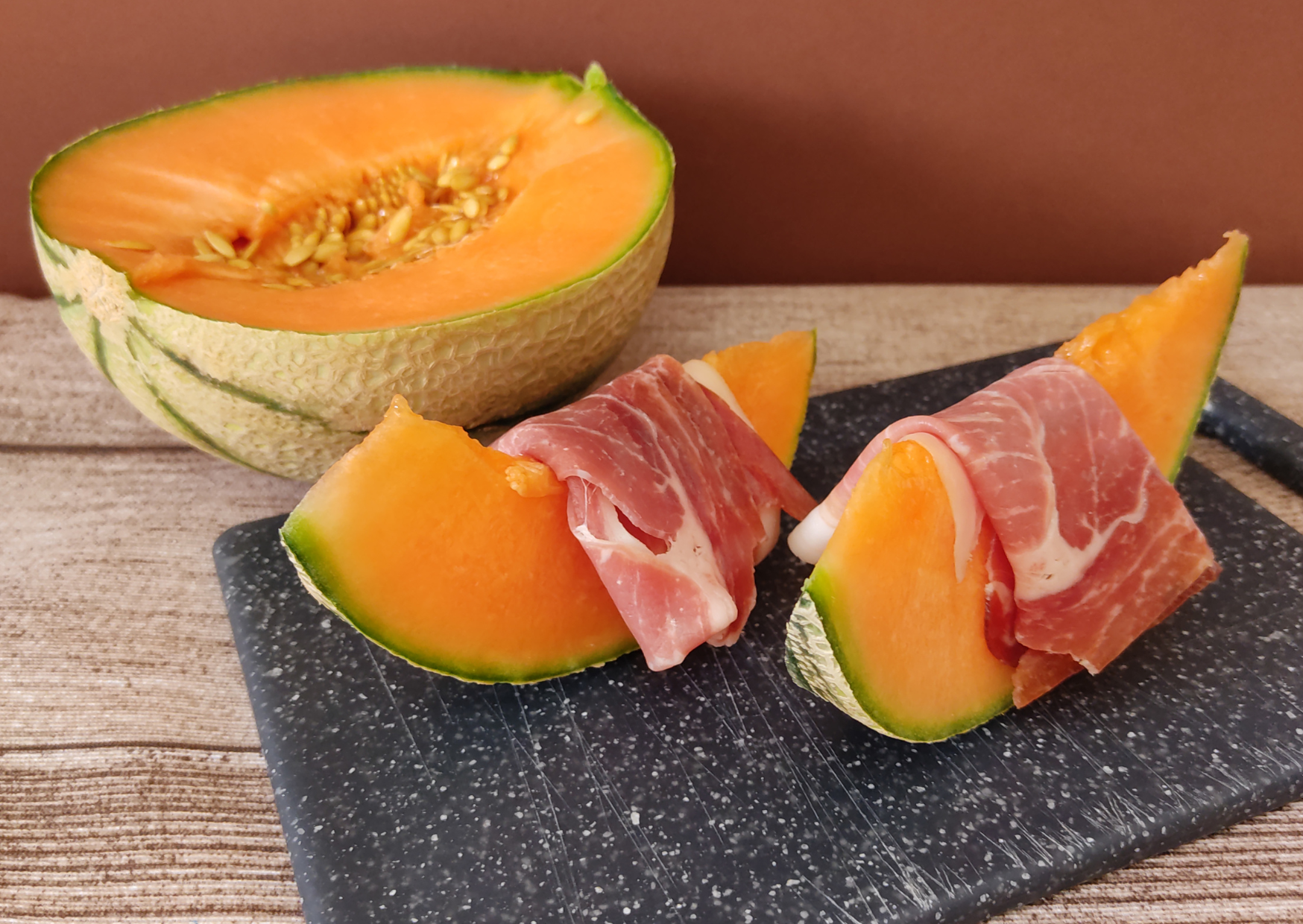
To serve melon with ham as the Spaniards do, a few small touches make all the difference, and the first is temperature. The melon should be well chilled and the ham at cool room temperature rather than fridge-cold, since cured ham releases its full flavor when it is not too cold, so take the ham out a little before serving while keeping the melon properly chilled. This contrast of cold fruit and cool ham is part of the pleasure.
The dish fits into the Spanish summer meal in a particular way worth understanding. It is served as a starter or a light main, often as the opening of a summer lunch or, on the hottest nights, as a light dinner in itself alongside some bread, a simple, refreshing dish that suits the heat and the shrunken summer appetite perfectly. It is not a heavy course but a cooling, savory-sweet refreshment, which is exactly its role.
A few optional flourishes can lift it further without complicating it. A thread of good olive oil over the top adds a lovely richness, a grind of black pepper brings a gentle warmth, and a few fresh mint leaves can add a cool herbal note, though none of these is necessary and many Spaniards use none of them. The dish is complete with just the melon and the ham, and the additions are a matter of taste, best kept light so as not to bury the simple perfection underneath.
What to Drink and Serve Alongside
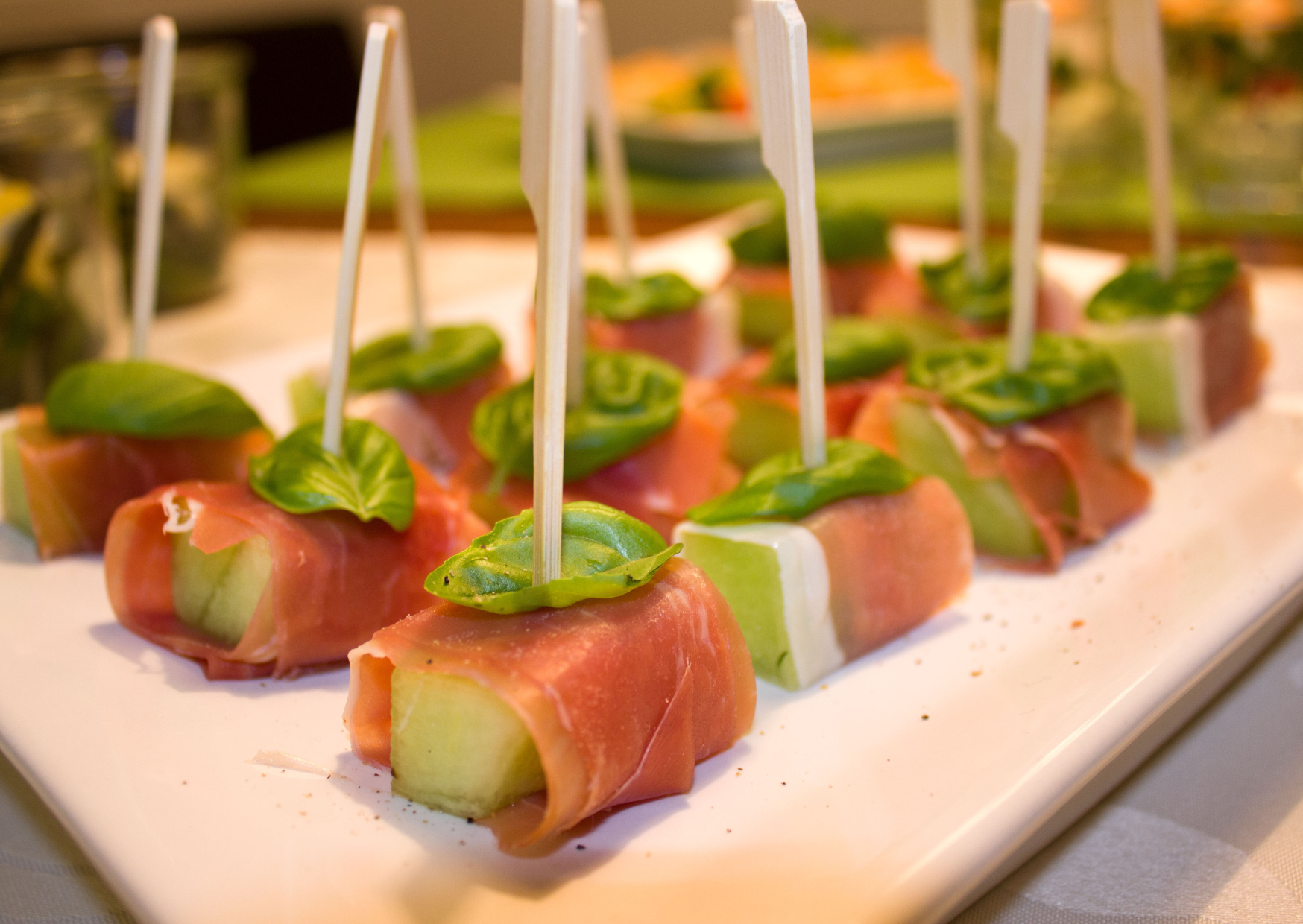
Part of the pleasure of melón con jamón is how gracefully it sits within a summer meal, and a few simple companions round it out beautifully. Because the dish is light and cool, it pairs naturally with the crisp, chilled drinks of the Spanish summer, a glass of cold fino or manzanilla sherry being the classic match, its dry, saline edge echoing the salt of the ham, while a cold cava or a chilled white wine works just as happily.
For those who prefer something without alcohol, the same logic applies. A cold sparkling water with lemon, a chilled glass of gazpacho, or simply plenty of iced water suits the dish and the heat, the point being coolness and refreshment rather than anything heavy or warming. The drink, like the dish, should feel like relief from the August sun.
On the plate, melón con jamón asks for very little beside it. Some good crusty bread to catch the ham and mop up any olive oil is welcome, and on a hot night the melon and ham with bread can be dinner entire, while for a fuller spread it slots naturally alongside other cold Spanish summer dishes, a bowl of olives, some marcona almonds, a wedge of manchego, a plate of tomatoes dressed in oil. It plays well with the whole cast of the Spanish summer table.
The dish also travels beautifully to a gathering, which is part of why Spaniards love it. It can be assembled in minutes, carried to a terrace or a picnic, and served without any need for heat or last-minute cooking, making it the ideal contribution to a summer get-together, as elegant on a party table as it is on a weeknight plate at home. Few dishes give so much for so little effort, which is exactly what a Spanish August evening requires.
A Two-Ingredient Masterpiece
The lasting lesson of melón con jamón is that great food need not be complicated, and that sometimes the finest thing you can eat on a summer night is two perfect ingredients simply put together. This is a dish with no cooking, no technique to master, and nothing to go wrong, yet it stands among the most satisfying things in the Spanish summer repertoire, proof that simplicity, done with good ingredients, is its own kind of sophistication.
What makes it work is entirely in the choosing. Because there are only two real ingredients, each one matters enormously, so the whole art of the dish lies in finding a perfectly ripe, sweet, fragrant melon and pairing it with a good, thinly sliced cured ham, and once you have those, the dish essentially makes itself. The effort goes into the shopping, not the cooking, which is exactly the kind of cooking a hot August night calls for.
So on the next sweltering evening, when turning on the stove feels like a punishment, consider the Spanish solution. Chill a good melon, buy some fine cured ham, slice and arrange them on a plate, and sit down to one of the great simple pleasures of the Mediterranean summer. Melon with ham is Spain’s August dinner because it is cool, effortless and delicious, a two-ingredient masterpiece that asks almost nothing of the cook and gives back a great deal, and once it becomes part of your own summer, you will understand exactly why Spaniards reach for it again and again when the heat comes. It is the flavor of the season on a single plate, and it takes about five minutes to make.

About the Author: Ruben, co-founder of Gamintraveler.com since 2014, is a seasoned traveler from Spain who has explored over 100 countries since 2009. Known for his extensive travel adventures across South America, Europe, the US, Australia, New Zealand, Asia, and Africa, Ruben combines his passion for adventurous yet sustainable living with his love for cycling, highlighted by his remarkable 5-month bicycle journey from Spain to Norway. He currently resides in Spain, where he continues sharing his travel experiences with his partner, Rachel, and their son, Han.