
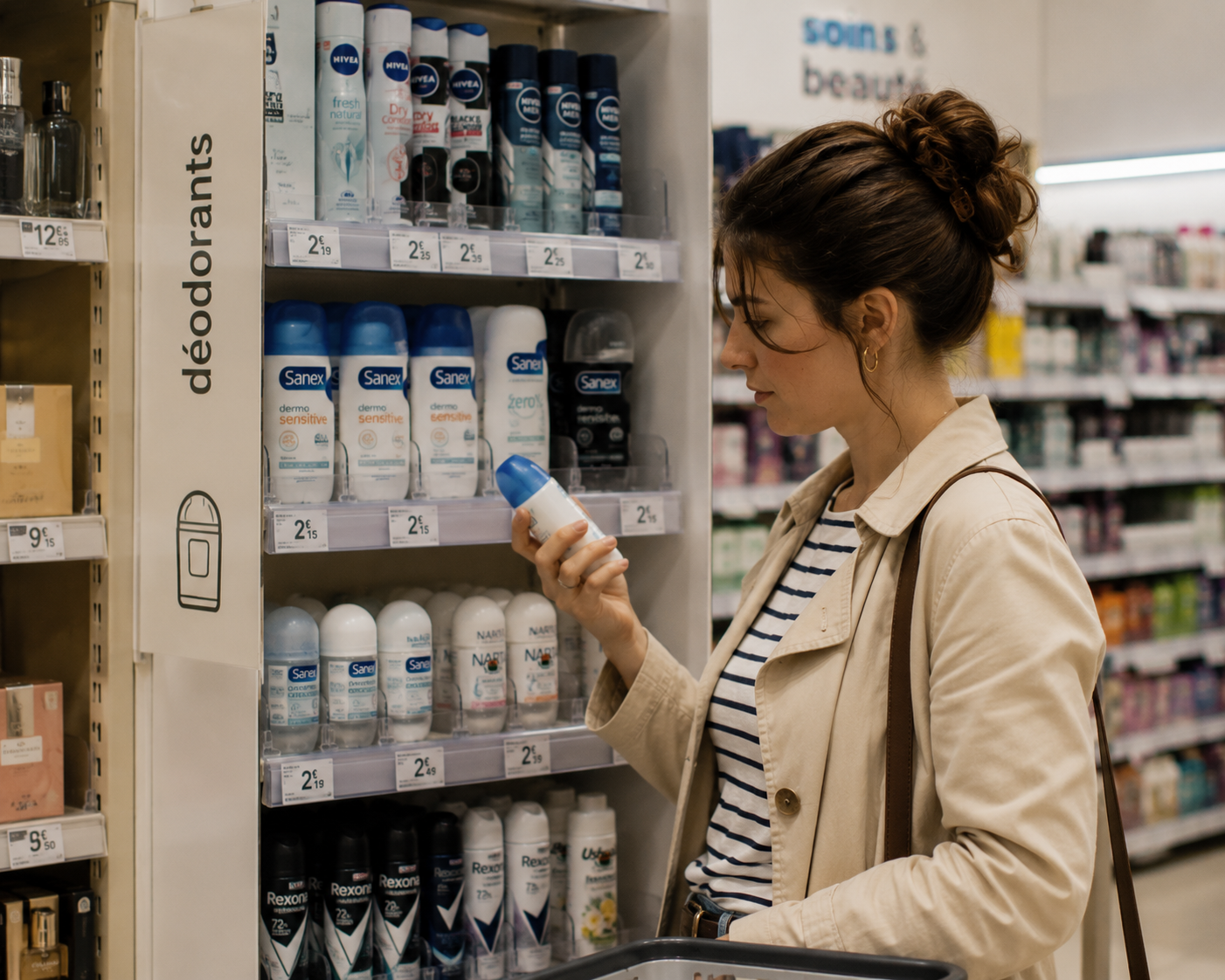
An American walking into a European pharmacy or supermarket for the first time often has the same small shock at the personal-care shelves. The deodorant section, which back home sprawls across an entire aisle of sticks and gels and clinical-strength formulas, is here a modest handful of roll-ons and sprays taking up a fraction of the space. The instinct is to read this as a deficiency, a sign that Europeans care less about body odor. That reading is almost entirely wrong, and the truth behind the small aisle is a fascinating difference in how two cultures think about keeping the body fresh.
The small European deodorant aisle is not evidence of worse hygiene but of a different approach to it, one that reaches for lighter products, relies more on regular washing, and simply does not treat the underarm as a battlefield the way American marketing does. Where the American aisle is vast because it sells an escalating war on sweat, the European aisle is small because it sells something simpler, a light freshening layered onto a clean body. The size of the aisle reflects a difference in philosophy, not in cleanliness. And once you understand that difference, the small aisle stops looking like a gap and starts looking like a signal. It tells you, at a glance, that an entire culture has quietly opted out of a war on sweat that Americans take for granted, and that it has done so without any visible cost in freshness. The shelf is small because the problem it is meant to solve was defined more modestly in the first place.
Here is what the small European deodorant aisle really reveals, why Europeans reach for different products, what the underlying body-care logic is, and why Americans so often misread it. This is general cultural and lifestyle observation rather than medical advice, individual needs and body chemistry vary, and nothing here is a guide to what anyone should use. But the difference is a small, fascinating window into how much of body care is culture rather than necessity.
Deodorant Versus Antiperspirant, the Core Difference
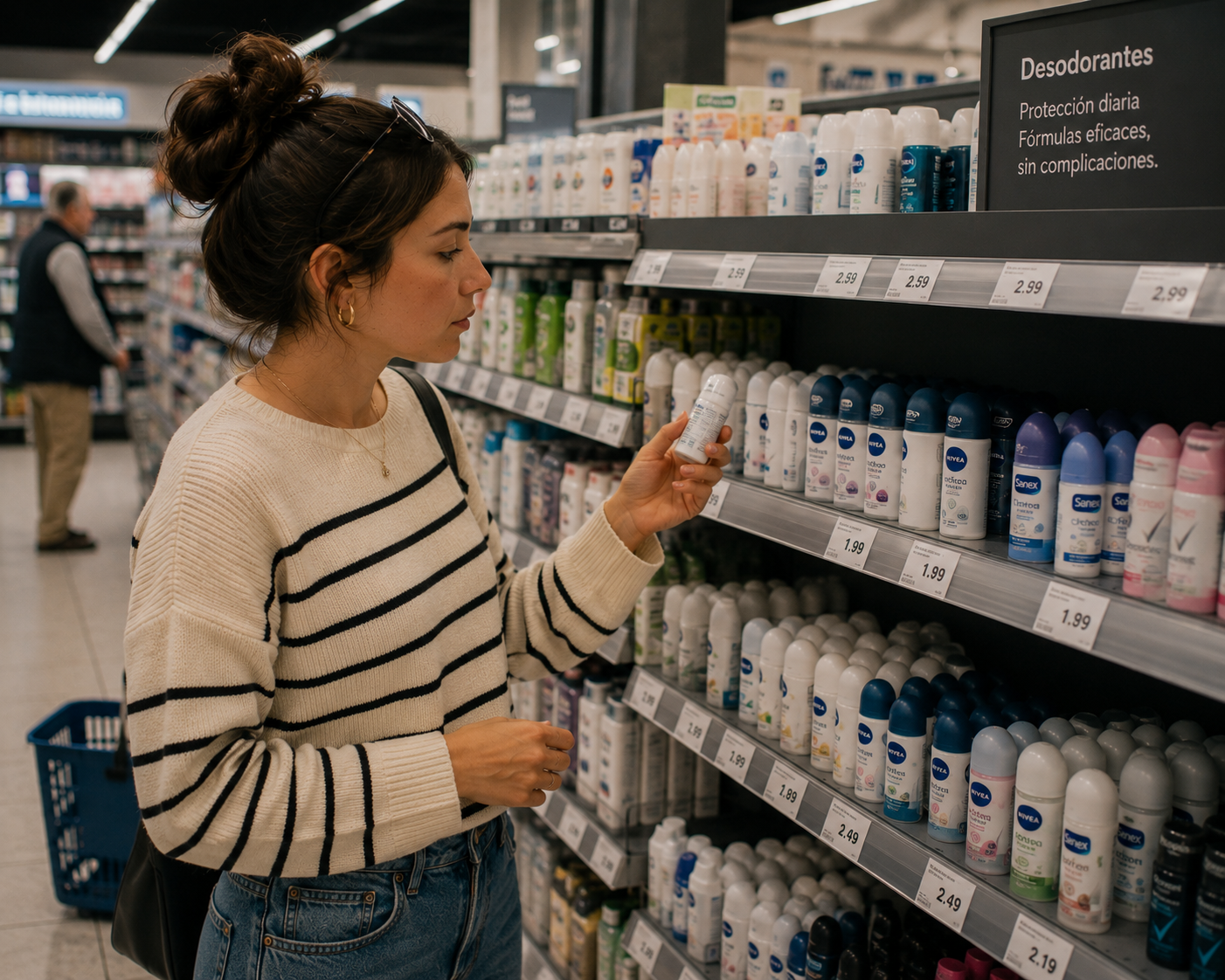
The single most important thing behind the small European aisle is a distinction most Americans barely register, the difference between a deodorant and an antiperspirant. A deodorant works on odor, neutralizing or masking the smell that bacteria produce, while an antiperspirant works on sweat itself, using aluminum compounds to reduce how much a person perspires. These are two different products with two different goals.
American shelves are dominated by antiperspirants, often the two functions combined, reflecting a culture that treats visible sweat as a problem to be stopped. The huge American aisle is largely a wall of antiperspirants in escalating strengths, from regular to clinical, all promising to shut down perspiration, which is a distinctly American preoccupation with staying completely dry. The goal is not just to smell clean but to not sweat at all. This ambition to abolish sweating entirely is worth pausing on, because it is far from universal. Sweating is a normal and necessary bodily function, the body’s way of cooling itself, and the American drive to shut it down completely with ever-stronger antiperspirants strikes many Europeans as a slightly odd war against the body’s own machinery. The European is content to sweat a little and simply not to smell, which is a more modest and, to many, a more natural goal.
Europeans, by contrast, lean far more toward simple deodorants that address odor without trying to stop sweat. The European preference is often for a deodorant that lets the body perspire naturally while keeping it smelling fresh, rather than an antiperspirant that blocks sweating altogether, which reflects a greater comfort with the idea that sweating is a normal bodily function. This single preference explains much of the difference in the aisles, since a culture buying simple deodorants needs far less shelf space than one buying an arsenal of antiperspirants.
The Aluminum Question, Handled Honestly
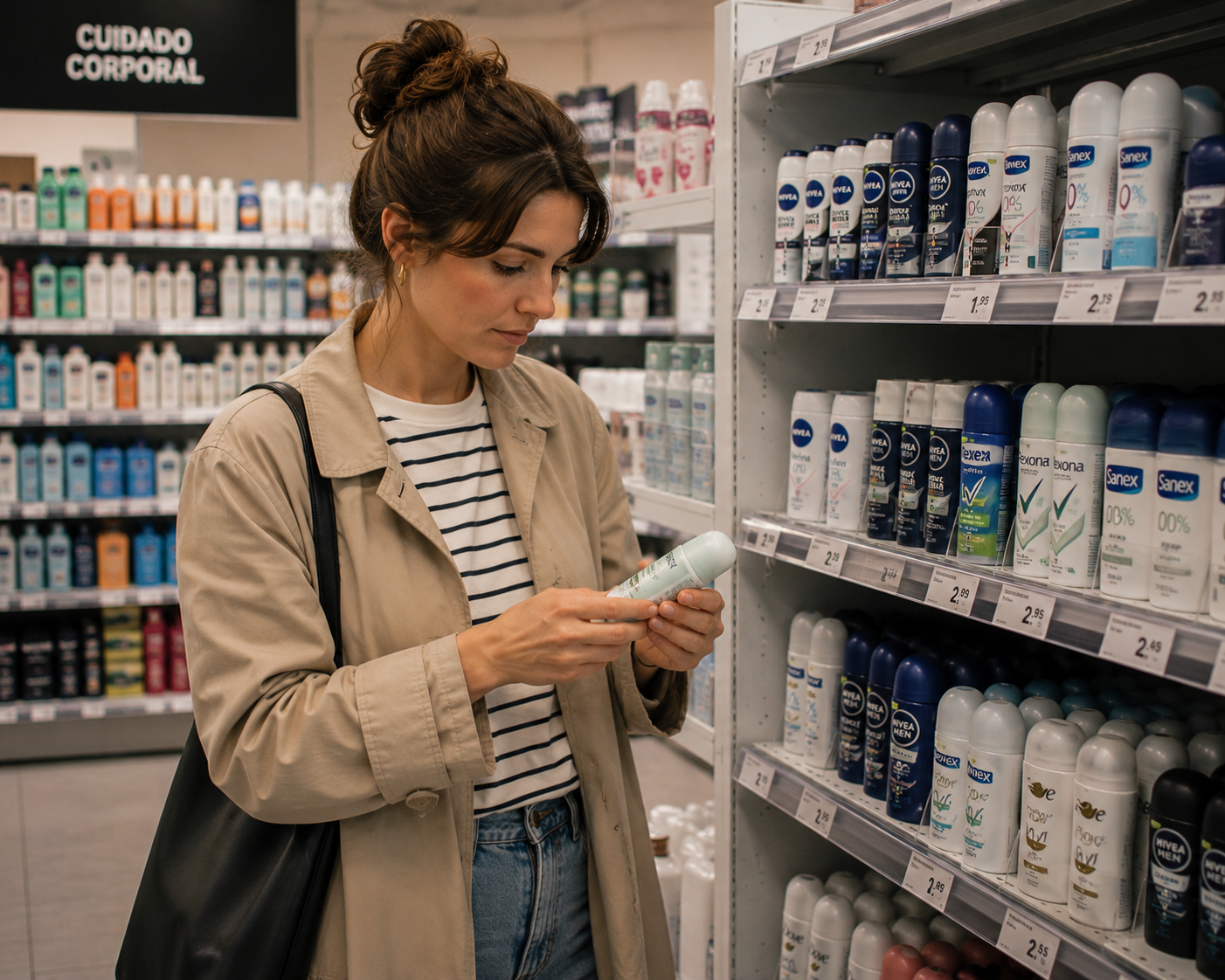
A large part of the European lean toward deodorants over antiperspirants comes down to aluminum, and this deserves a careful and candid treatment. The active ingredient in antiperspirants is an aluminum compound, and many European consumers have grown wary of it, seeking out aluminum-free deodorants over concerns about the ingredient, which has driven the market toward simpler products.
It is important to be accurate about the science here rather than fuel a scare. Despite widespread public concern, scientific research has not established a definitive link between the aluminum in antiperspirants and any serious health harm, and regulatory agencies continue to assess these products as safe when used as intended. The European move away from aluminum is driven more by consumer preference and precaution than by settled proof of danger, and a fair account says so plainly.
What is true is that the preference, whatever its scientific basis, shapes the market. Because many European consumers prefer to avoid aluminum, the shelves offer more aluminum-free deodorants and fewer heavy antiperspirants, and the general European comfort with natural perspiration means the whole category tilts toward gentler products. The result is a smaller, simpler aisle, driven by a cultural preference for a lighter approach, whether or not the underlying worry about aluminum is scientifically decisive.
Regular Washing Does the Heavy Lifting
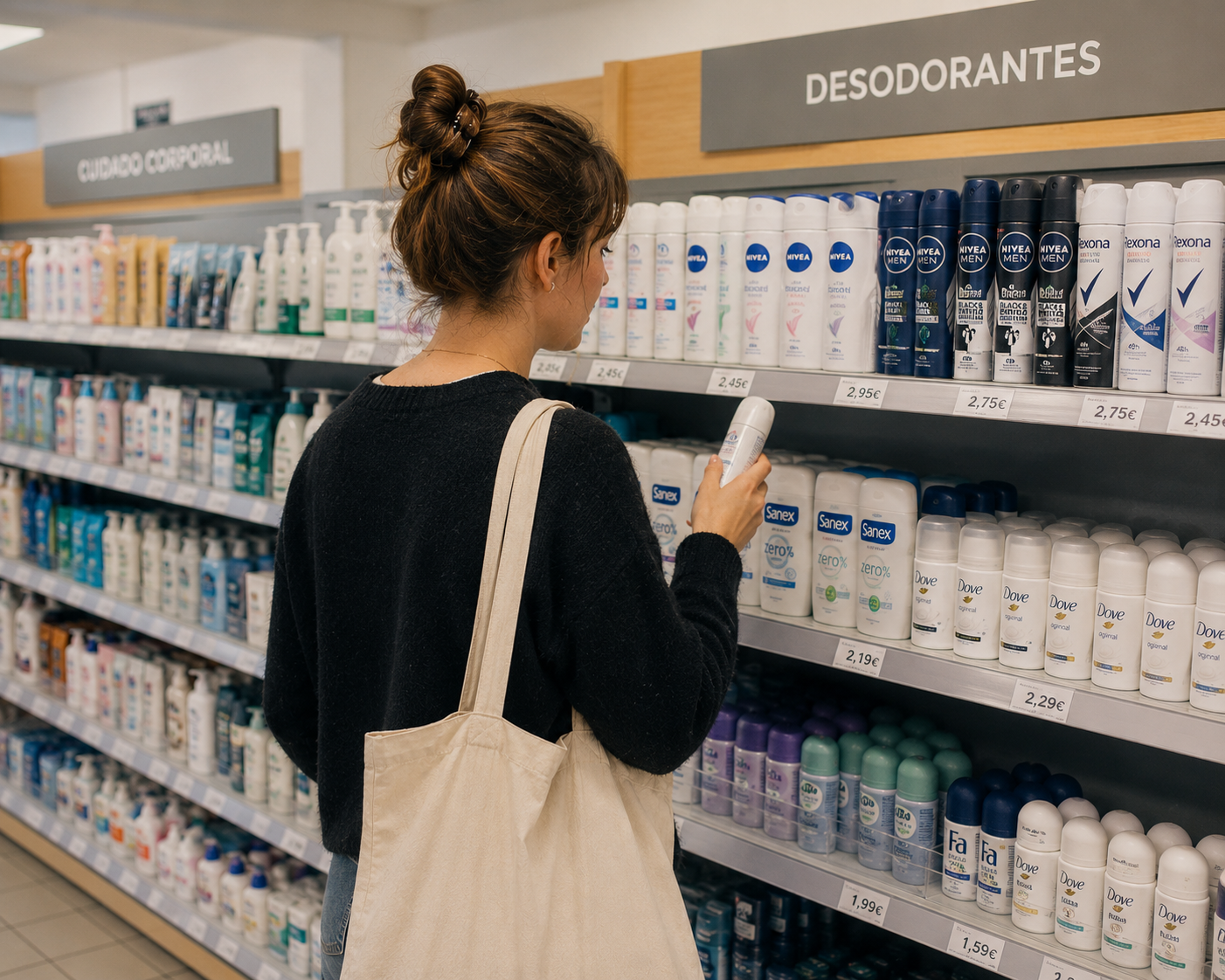
The deeper reason the small aisle causes no problem is that Europeans rely on regular washing rather than heavy products to stay fresh. The foundation of the European approach is simply keeping the body clean through routine bathing, so that freshness comes from washing rather than from an aggressive product applied over a less-washed body. Clean skin needs less help. This is the quiet foundation the whole difference rests on, and it is easy for a visitor scanning the shelves to miss, because the washing happens at home and out of sight while only the products are on display.
This shifts where the work happens. When the body is washed regularly and kept clean, a light deodorant is all that is needed to stay fresh through the day, because there is less accumulated bacteria and odor for a product to combat, so the heavy-duty antiperspirant becomes largely unnecessary. The European relies on the shower to do the main work and the deodorant merely to finish it, rather than asking the product to compensate for the body underneath.
This is the logic Americans most often misread. Seeing the small aisle and the lighter products, the American assumes Europeans must simply tolerate more body odor, when in fact the European stays fresh through regular washing and needs only a light product on top, achieving cleanliness by a different route. The freshness is real, but it comes from the washing rather than from the product, which is why the small aisle causes no problem at all.
Lighter Products for a Lighter Approach
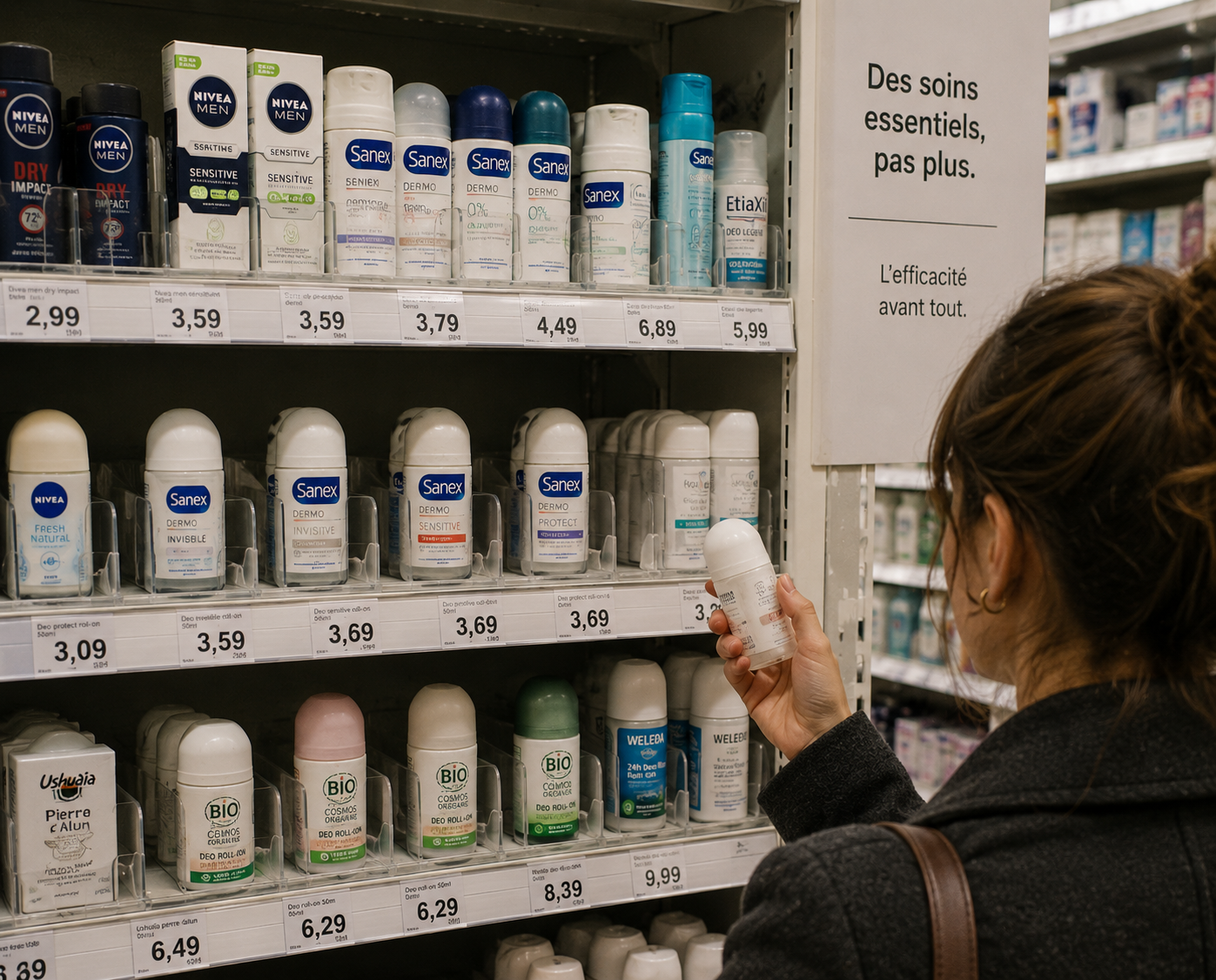
The products themselves differ in form as well as strength, and the European aisle reflects a preference for lighter formats. Where the American default is the solid antiperspirant stick, Europeans reach more often for roll-ons and sprays, lighter applications that freshen without the heavy, dry-everything ambition of the American clinical stick. The format matches the philosophy.
These lighter products suit the whole European approach. A spray or a roll-on deodorant, applied to a clean body, provides the modest freshening the European wants, without the escalating strength and sweat-blocking power that fills the American aisle, which is why the European selection can be so much smaller. There is simply less need for a dozen strengths and formulations when the goal is light freshening rather than total dryness.
The contrast in fragrance follows the same pattern. The European preference runs toward subtle, clean scents rather than the powerful fragrances of many American products, a light freshness rather than an assertive masking, which fits the broader European taste for understatement in body scent. The lighter product, the subtler scent, the smaller aisle, all express the same restrained approach to keeping the body fresh.
The Regulation Behind the Shelf
Part of the difference in the European aisle comes from something invisible to the shopper, which is stricter regulation of what may go into personal-care products. The European Union regulates cosmetics more tightly than the United States, banning or restricting a range of ingredients that remain permitted in American products, which shapes what appears on European shelves.
This regulatory difference has real effects on the products. A number of chemical compounds found in some American deodorants, certain preservatives and antibacterial agents among them, are banned in European cosmetics over health and safety concerns, so European products are formulated within stricter limits, and aluminum compounds themselves are treated as regulated antiperspirant ingredients subject to specific rules. The European shelf is a more tightly governed place, curated as much by regulators in Brussels as by the shoppers reaching for the roll-ons.
For the shopper, this means the smaller aisle is also a more constrained one by design. The European approach to personal care is shaped not just by consumer preference but by a regulatory philosophy more cautious about what goes onto and into the body, which reinforces the tilt toward simpler, gentler products. The small aisle is partly a cultural choice and partly the visible result of rules the shopper never sees.
Climate and the Southern Exception

It would be too simple to treat all of Europe as one, because climate shapes the picture and the warm south is its own case. In the hotter countries of southern Europe, in Spain and Italy and Greece, deodorant use rises considerably in the summer months, as the heat and perspiration of a Mediterranean summer call for more than the light approach that suffices in a cool northern climate.
This variation is a useful corrective to the stereotype. Body-care needs are partly driven by climate, so a hot southern summer naturally demands more attention to freshness than a mild northern winter, and even within Europe the intensity of deodorant use rises and falls with the temperature. The lighter European approach is not indifference to odor but a calibration to a generally cooler climate, adjusted upward where the weather demands.
The point holds across the variation, though. Even in the warm south, where deodorant use climbs, the approach remains built on regular washing and generally lighter products rather than the American reliance on heavy antiperspirants, so the southern exception is a matter of degree rather than a switch to the American model. The whole continent, hot regions and cool, shares the underlying logic of freshness through washing plus a lighter product on top. This climate point also quietly demolishes the lazy stereotype that Europeans are indifferent to body odor. A culture indifferent to odor would not ramp up its deodorant use every summer, yet that is exactly what the warm south does, which shows that the concern for freshness is real and simply expressed through different means than the American one. The response scales with the need, which is precisely what you would expect of people who care about smelling clean.
What Americans Misread
Pull the threads together and the American misreading of the small European aisle comes clearly into view. The American, conditioned by a vast domestic aisle and a culture that wages war on sweat, sees the small European selection and concludes that Europeans must care less about body odor and tolerate more of it, which is a natural but mistaken inference from the shelf alone.
The truth is a different approach rather than a lower standard. Europeans stay fresh through regular washing and light deodorants, are comfortable with the normal function of sweating rather than trying to abolish it, prefer gentler and less heavily fragranced products, and operate within stricter ingredient rules, all of which produces a smaller aisle without producing more body odor. The small aisle reflects a philosophy of light freshening over a clean body, not a tolerance for being unclean.
Seeing this clearly corrects the instinct to read the aisle as a deficiency. The European is not neglecting body care but practicing a different version of it, one that puts the emphasis on washing rather than on the product, on freshening rather than on sweat-blocking, on subtlety rather than on strength. What looks like too little is really a different distribution of effort, with more of it in the shower and less on the shelf.
The Body-Care Logic Worth Understanding
The small European deodorant aisle turns out to be a tidy little lesson in how much of what we assume is necessary is really just cultural. The American treats a huge aisle of powerful antiperspirants as the obvious requirement of a clean, odor-free life, while the European achieves the same freshness with a fraction of the products, which shows that the vast aisle was never a necessity but a cultural preference dressed as one.
What makes the European logic worth understanding is not that it is superior but that it reveals an alternative that works. Freshness through regular washing, comfort with natural perspiration, light products and subtle scents, all add up to a perfectly clean and pleasant result with far less product, which quietly demonstrates that the American approach, whatever its merits, is a choice rather than the only way. The small aisle is proof that the big one is optional.
In the end the deodorant aisle, of all things, is a small window onto a larger truth about body care, that a great deal of it is habit and marketing rather than necessity. The European reaching for a simple roll-on after a shower and the American reaching for a clinical-strength stick are each following the customs and assumptions they grew up with, and neither is unclean. Noticing the difference is a chance to see our own routines as the choices they are, and to recognize that the enormous American deodorant aisle, for all its promises, is answering a question that much of the world has quietly decided it does not need to ask. Wash well, apply a little, and the wall of clinical-strength promises turns out to be one a great many people live perfectly happily without.

About the Author: Ruben, co-founder of Gamintraveler.com since 2014, is a seasoned traveler from Spain who has explored over 100 countries since 2009. Known for his extensive travel adventures across South America, Europe, the US, Australia, New Zealand, Asia, and Africa, Ruben combines his passion for adventurous yet sustainable living with his love for cycling, highlighted by his remarkable 5-month bicycle journey from Spain to Norway. He currently resides in Spain, where he continues sharing his travel experiences with his partner, Rachel, and their son, Han.