
Every €1 house scheme in Italy runs on the same quiet joke. The house costs a euro, and then it costs you sixty thousand. The town gives away a ruin, the buyer absorbs the entire cost of resurrecting it, and both sides call it a bargain. It is a fair trade, but the money only ever flows one way, out of the buyer’s account and into the walls.
Troina, a medieval town in the Sicilian mountains, inverted that. It sells houses for a symbolic euro like the others, and then it offers to pay you to fix them, with a renovation bonus reported at up to €15,000 and a further energy-efficiency grant on top. The town that gives you the house also hands you money to restore it, which turns the usual arithmetic of the €1 dream upside down.
Here is how Troina’s math really works, what the incentives are and what they cost you in obligations, and whether the inversion changes the deal as much as it appears to. This is general information rather than legal or financial advice, the terms shift with each municipal call, and anyone serious should read the current one and take local professional advice before committing.
The Town on the Balcony
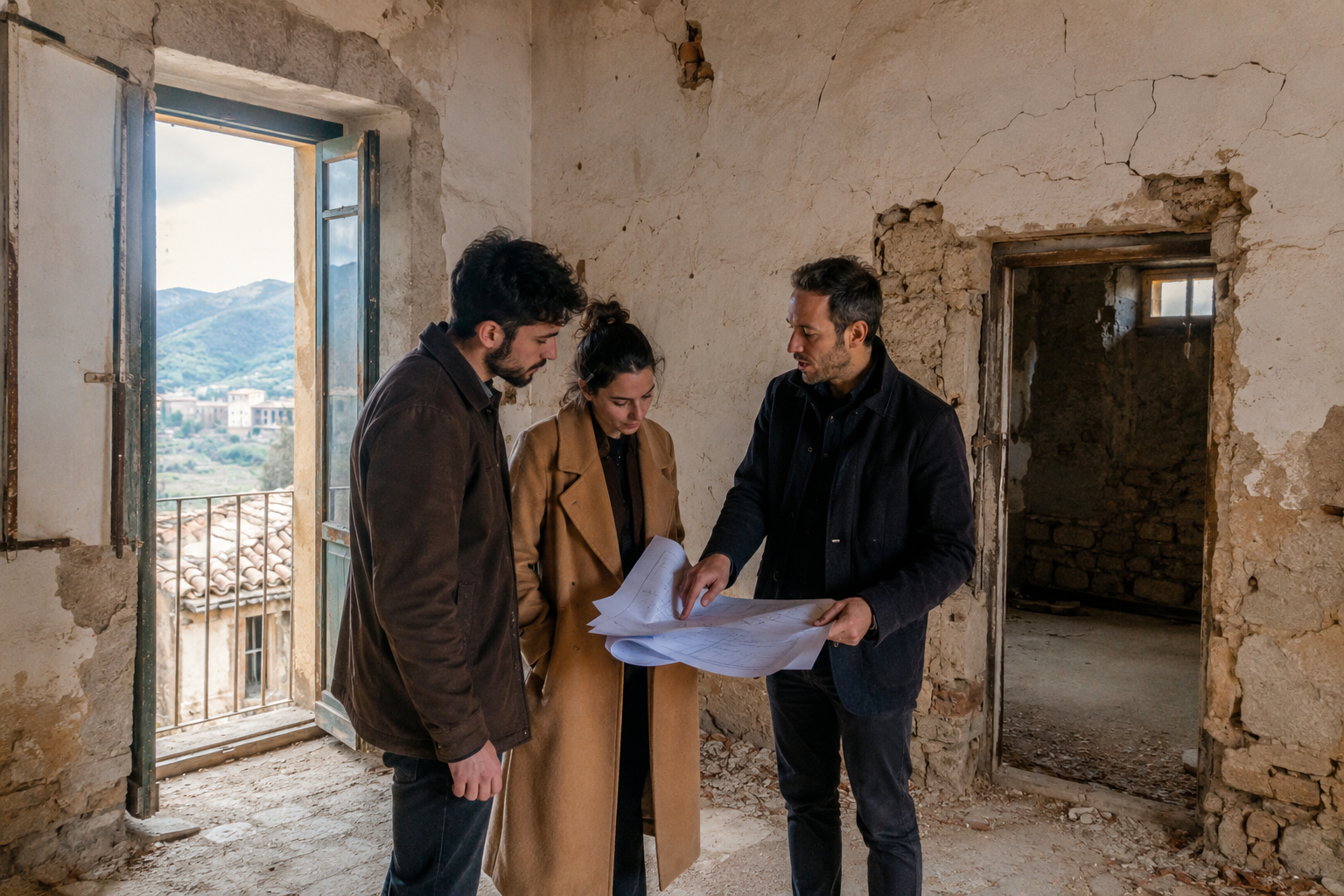
Troina sits high in the province of Enna, in the middle of Sicily, on a ridge in the Nebrodi mountains with views that earned it the nickname the Balcony of Sicily. On a clear day you can see Mount Etna smoking to the east. It is one of the highest towns on the island, it is old beyond easy reckoning, and it belongs to the club of Italy’s officially most beautiful villages. It is also, by any measure, remote from the Sicily most visitors know. The beaches and the baroque cities are hours away, the tourist coach routes do not come through, and the town’s life is its own rather than a performance for outsiders. That isolation is exactly why the houses are cheap and exactly why the town needs people.
The history is the selling point and the problem at once. Troina was the Norman capital of Sicily, and the layers are still there in the stone, from Greek walls through Roman baths to Norman churches, wrapped in a medieval quarter of arches and cobbled lanes. The mayor who launched the scheme framed his ambition in exactly those terms, saying he wanted to save the old district from the grave and recover the grandeur it had when it ruled the island.
The grave was not a metaphor. Like the rest of Sicily’s interior, Troina’s historic center emptied over decades as residents moved to newer housing on the outskirts or left the island altogether, leaving the ancient quarters increasingly dark and derelict. A town can be beautiful, historic and dying all at once, and Troina’s €1 scheme exists because it was doing all three. The pattern is the standard tragedy of the Sicilian interior. Work vanished, the young went to the north or abroad, and those who stayed built new houses on the edge of town with parking and modern plumbing, abandoning the ancient quarter that tourists now photograph. The oldest and most beautiful part of Troina emptied precisely because it was the oldest, with its stairs, its alleys too narrow for cars and its houses built for another century.
The Inversion
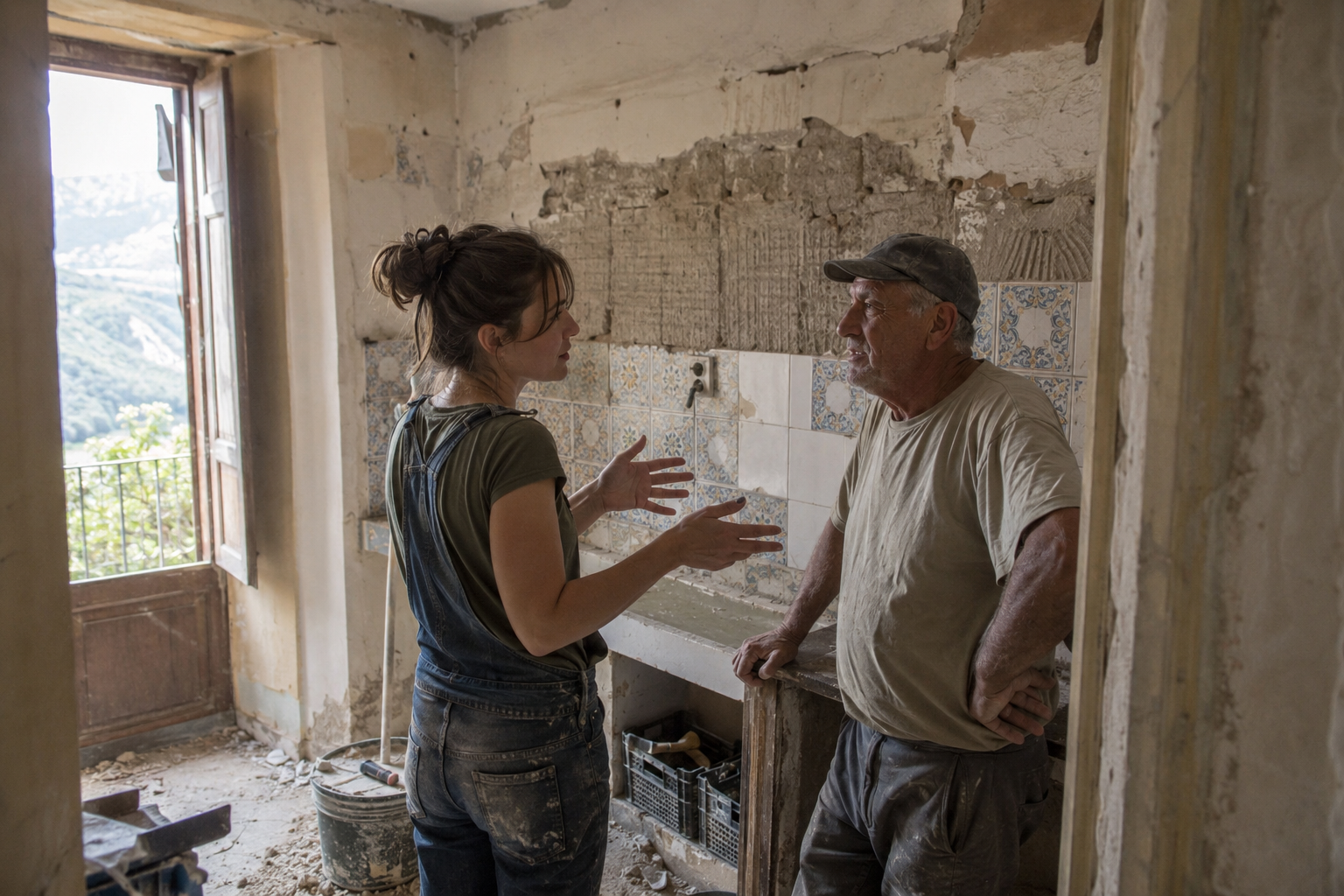
What makes Troina distinctive is that it pairs the symbolic sale with actual money going the other way. Alongside the €1 houses, the municipality has offered a renovation bonus reported at up to €15,000 toward restoring and upgrading the property, aimed at buyers committing to the lowest-priced properties and, in the reporting, at those willing to take up residency in the town.
There is a second stream on top of it. A further grant of up to €10,000 has been reported for installing energy-efficiency systems, meaning eco-friendly heating, hot water and cooling in the restored house. Taken together the two incentives have been described in the international press as up to roughly €25,000 in support, which is real money against a renovation budget rather than a token gesture.
The town has also dangled a settlement incentive for a different category of buyer. For properties that do not need renovation, sold at low but non-symbolic prices, a settlement grant has been reported for those becoming permanent residents. The through-line is unmistakable. Troina is not merely trying to offload ruins. It is trying to buy residents, and it has decided that paying people to arrive is cheaper than watching the town die. That is a striking admission for a municipality to make in public. Most places compete for residents with vague promises about quality of life, while Troina has effectively priced the problem, worked out what a household is worth to it and offered a number. The candor is part of what makes the scheme interesting, because it drops the pretense that the €1 house was ever a gift.
Who the Scheme Is Really For
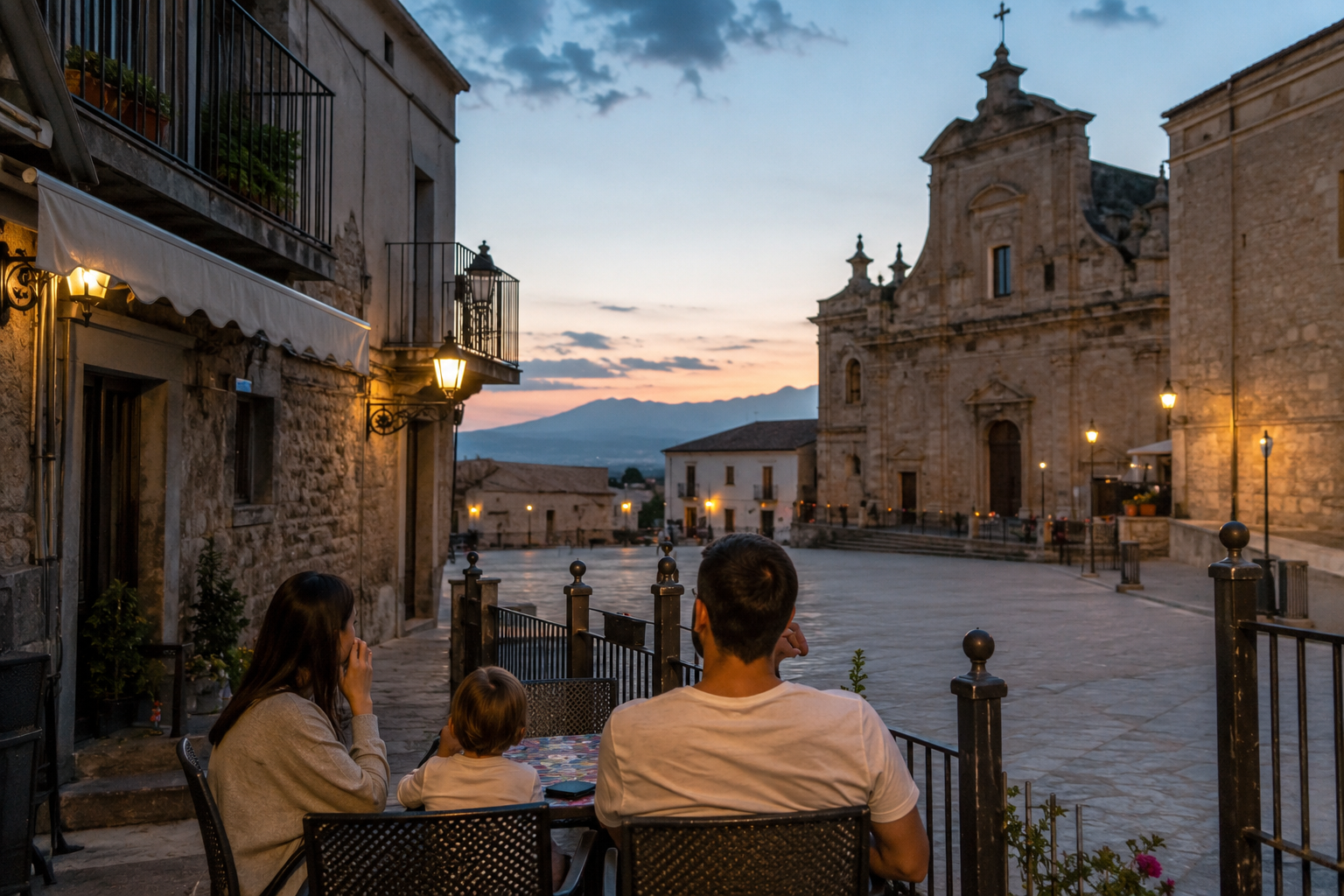
Read the conditions closely and a picture of the intended buyer emerges. Troina’s call has been open not only to private individuals but to sole traders, cooperatives and companies whose business includes managing property for tourism and hospitality, which tells you the town is as interested in small enterprise as in families. A restored house that becomes a guesthouse brings visitors as well as residents.
The residency thread runs through the incentives too. The larger bonuses have been reported in connection with buyers committing to live in the town, and the separate settlement grant for move-in-ready properties points the same way, toward people willing to truly inhabit the place rather than hold a key and visit once a summer. Troina is not shopping for second-home owners.
That focus is what makes the town’s approach coherent. A €1 house sold to an absentee buyer fixes one façade and changes nothing, while a €1 house sold to someone who moves in, opens a business or fills a school desk changes the arithmetic of the whole street. The incentives are shaped to pull the second kind of buyer and to make the first kind slightly less comfortable.
For an American reading from a distance, that shape matters. If the fantasy is a cheap Sicilian bolthole to visit occasionally, Troina’s terms are a poor fit and the money will not be aimed at you. If the plan is to really land somewhere, restore a building and become part of a small mountain town, this is a place that has put cash on the table to help you do exactly that.
What the Money Costs You
None of this is free, and the obligations are where the math gets real. Under the terms of Troina’s call, a buyer must sign the deed and cover all the notarial and administrative costs themselves, prepare a renovation and restoration project, begin works within two years of purchase, and lodge a €5,000 surety in favor of the municipality, valid for three years, as a guarantee that the work will genuinely be done.
The surety is refundable, which is the important part. Complete the renovation within the window and the €5,000 comes back to you, exactly as it should. Fail, and the town has stated it reserves the right to forfeit the guarantee and reacquire ownership of the property, which means a defaulting buyer can lose both the deposit and the house they spent money on.
So the incentives arrive wrapped in conditions. The grants are reported as up to their maximums rather than automatic, tied in the coverage to residency and to the qualifying properties, and they sit on top of a legally binding renovation commitment with a clock and a bond attached. Troina is offering to share the cost of the restoration. It is not offering to remove the obligation to do it, and the fine print is where the euro stops being a joke.
Running the Actual Numbers
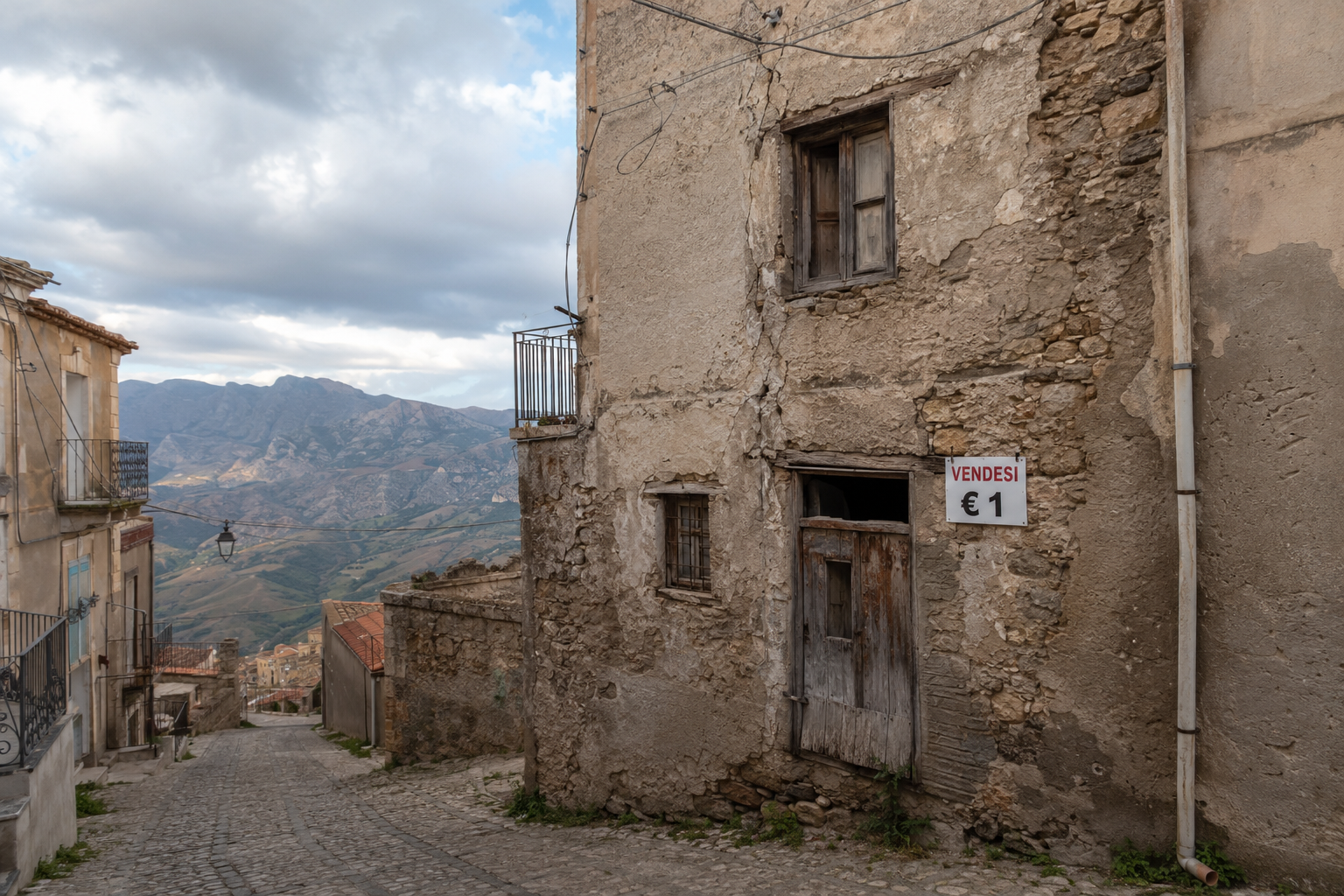
Put the pieces together and the arithmetic looks better than the standard €1 deal, without ever becoming free money. The house is one euro. The notary, registration and transfer costs are yours, and across Italian €1 schemes buyers commonly report a few thousand euros before any work begins. The surety takes €5,000 out of your account for the duration, refundable on completion.
Then the renovation. Estimates for restoring a Sicilian €1 property vary enormously with the state of the building, and reporting on Troina specifically has put typical renovation costs in the range of roughly €30,000 to €50,000, with the broader Sicilian guidance often running from €20,000 to €60,000 and higher for the worst ruins. Against that, up to €15,000 of restyle bonus and up to €10,000 of energy grant is a serious offset, potentially covering a third or more of a mid-range job.
That is the headline, stated plainly. On a €45,000 renovation, maximum incentives could in principle cut your net spend to around €20,000, plus fees, for a restored stone house in a Norman hill town. It is not the free house of the internet fantasy, and the maximums are unlikely to land in every case, but the inversion is genuine. Troina has moved the €1 house from a pure cost transfer toward something closer to a co-funded restoration, and that is a materially different proposition. The caveats on those figures matter and should be read before anyone reaches for a calculator. Reported grant amounts are maximums attached to conditions rather than sums handed over at the deed, the renovation ranges are estimates that a bad roof or a structural surprise can blow through, and everything depends on the specific building. The inversion is real. The precise numbers are not a quote.
Why a Town Pays You to Move In
The logic behind all this is worth understanding, because it explains why the incentive inversion exists at all. A depopulating town is trapped in a spiral, since fewer residents mean fewer shops, fewer school places, less tax base and less reason for anyone to stay, which drives out more residents. Empty houses accelerate it, dragging down the streets around them and sometimes collapsing into them.
Against that, €25,000 is cheap. A single new household that restores a ruin removes a liability from the town’s books, brings a family into the shops and the school, pays local taxes, and hires local builders, architects and suppliers to do the work, which recirculates the grant straight back into the local economy. The mayor made this point explicitly when the scheme launched, noting that renovations would give work to local craftsmen.
The scale of the response tells you the calculation was sound. When Troina opened its scheme, the town reported enquiries from across the world, from the United States and Britain and Germany and France through Turkey, Brazil, Peru and Argentina, from people intending to renovate and spend part of the year there. Whether all that interest converts into finished houses is another matter, and the town’s own conditions are designed to sort the serious from the curious. This is the gap every €1 town lives in. Enquiries arrive by the thousand from around the world, driven by a headline that costs nothing to click, and the number that ends in a signed deed and a finished renovation is a tiny fraction of it. The deposit, the deadline and the works plan exist precisely to close that gap, converting idle enthusiasm into either commitment or a polite exit.
The Part the Headlines Skip
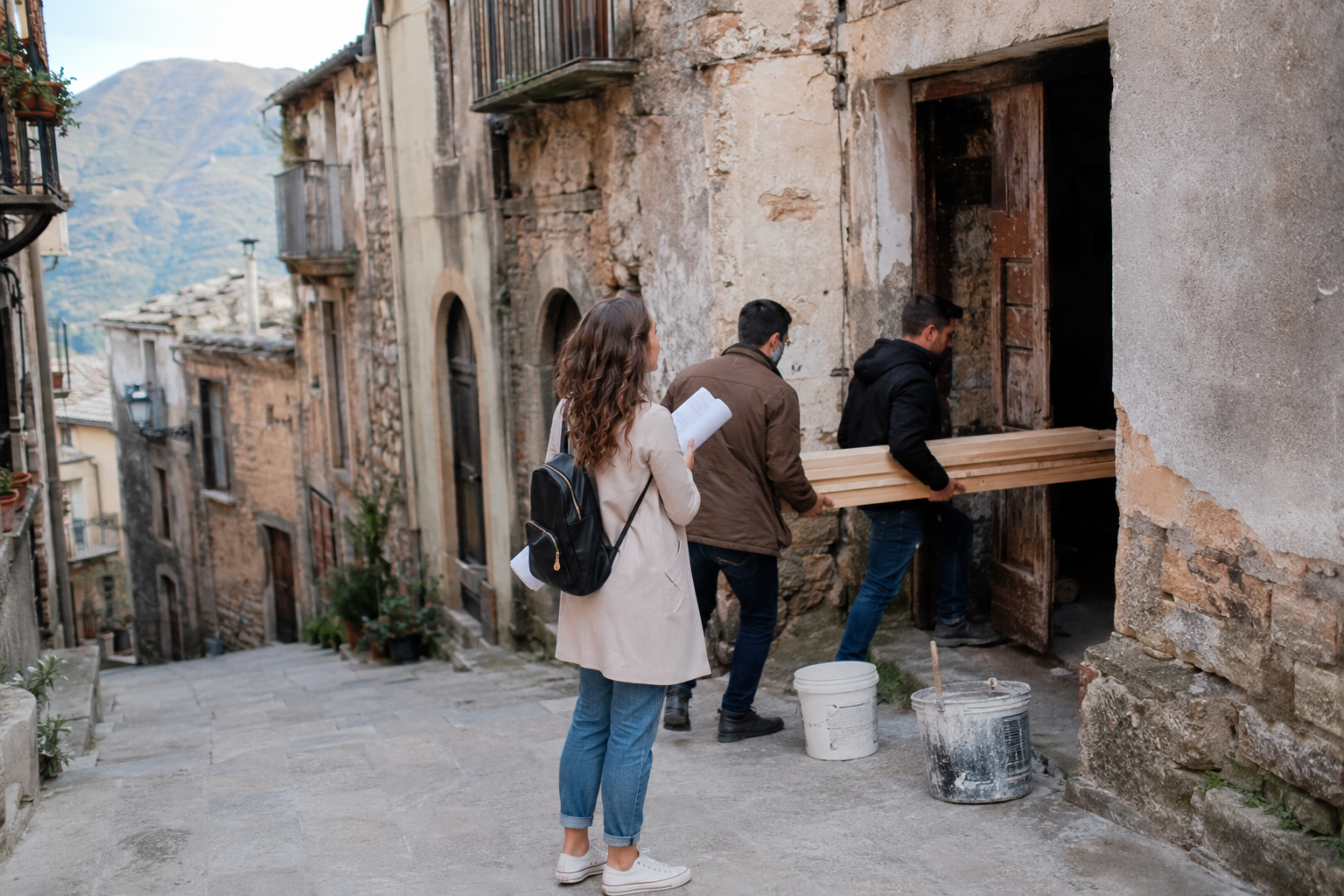
The incentive is the hook, and it deserves the caveats that rarely travel with it. These are municipal schemes, not national law, which means the terms, the amounts and the availability change from call to call and can be withdrawn or altered, and figures reported in a splashy article several years ago may not match the notice open today. The only authority that matters is the current municipal call.
The building itself will fight you. Most Sicilian historic centers sit under heritage protection, so you generally cannot demolish, cannot change the façade and must respect original materials and forms, all of which costs more than a free hand would. Permits take time, contractors in small towns are finite, and the deadline runs from your purchase rather than from the day the paperwork finally clears.
There is also the plain fact of where you are buying. Troina is in the Sicilian interior, high and inland, which means checking transport, winter weather and how you would truly live there before you fall in love with a photograph. The reward is a beautiful, ancient, deeply local town at a price that would not buy a parking space in Palermo. The price of that reward is doing the work in a place that will not make it easy. It is worth saying plainly that this suits some people superbly and others not at all. A buyer who wants a project, speaks or will learn Italian, can visit repeatedly and enjoys the slow grind of restoration will find Troina extraordinarily good value. A buyer who wants a finished holiday home with minimal fuss should spend more elsewhere and be happier for it.
Troina’s math, then, is a genuine improvement on the standard €1 bargain rather than an escape from it. The town has grasped that the euro was never the obstacle and the renovation always was, and it has put money against the real barrier instead of the symbolic one, which is more clear-eyed than most schemes manage. A buyer still needs the appetite, the patience and the capital to restore a mountain ruin in a foreign country under a deadline. What Troina offers is that, for once, the town is standing on the same side of the ledger, paying part of the bill for the thing it actually wants, which is not a sale but a neighbor. That is the whole of Troina’s math, and it is more candid than the headline suggests. The town is not giving away houses and it is not giving away money. It is buying something it needs badly, at a price it can afford, from people who want what it happens to have, which is a stone house on a ridge with Etna on the horizon and a thousand years of history underfoot.

About the Author: Ruben, co-founder of Gamintraveler.com since 2014, is a seasoned traveler from Spain who has explored over 100 countries since 2009. Known for his extensive travel adventures across South America, Europe, the US, Australia, New Zealand, Asia, and Africa, Ruben combines his passion for adventurous yet sustainable living with his love for cycling, highlighted by his remarkable 5-month bicycle journey from Spain to Norway. He currently resides in Spain, where he continues sharing his travel experiences with his partner, Rachel, and their son, Han.