
Beef bourguignon is one of those dishes that almost everyone has eaten and almost no one makes quite right, and the reason usually comes down to a single step near the beginning, the browning of the meat. Americans are taught to brown beef a certain way, and that way, applied to a bourguignon, quietly sabotages the dish before it has properly begun. The French cooks who make the great versions do it differently, and the difference, once you understand it, transforms not just your bourguignon but your understanding of how to brown meat for any braise. It is the single most important thing to get right, and it is the thing most home cooks get wrong.
To be clear and fair, it is not that French cooks never brown the meat, since they absolutely do, and the deep browning is essential to the dish. It is that they brown it correctly, in a way that actually browns rather than steams, which is precisely what the common American method, for all that it is called browning, often fails to do. Understanding this distinction is the key to a real bourguignon, so let us get it exactly right. Here is how to make a real beef bourguignon, and why the French approach to browning the meat is so different from what Americans are usually taught.
The Browning Mistake Almost Everyone Makes
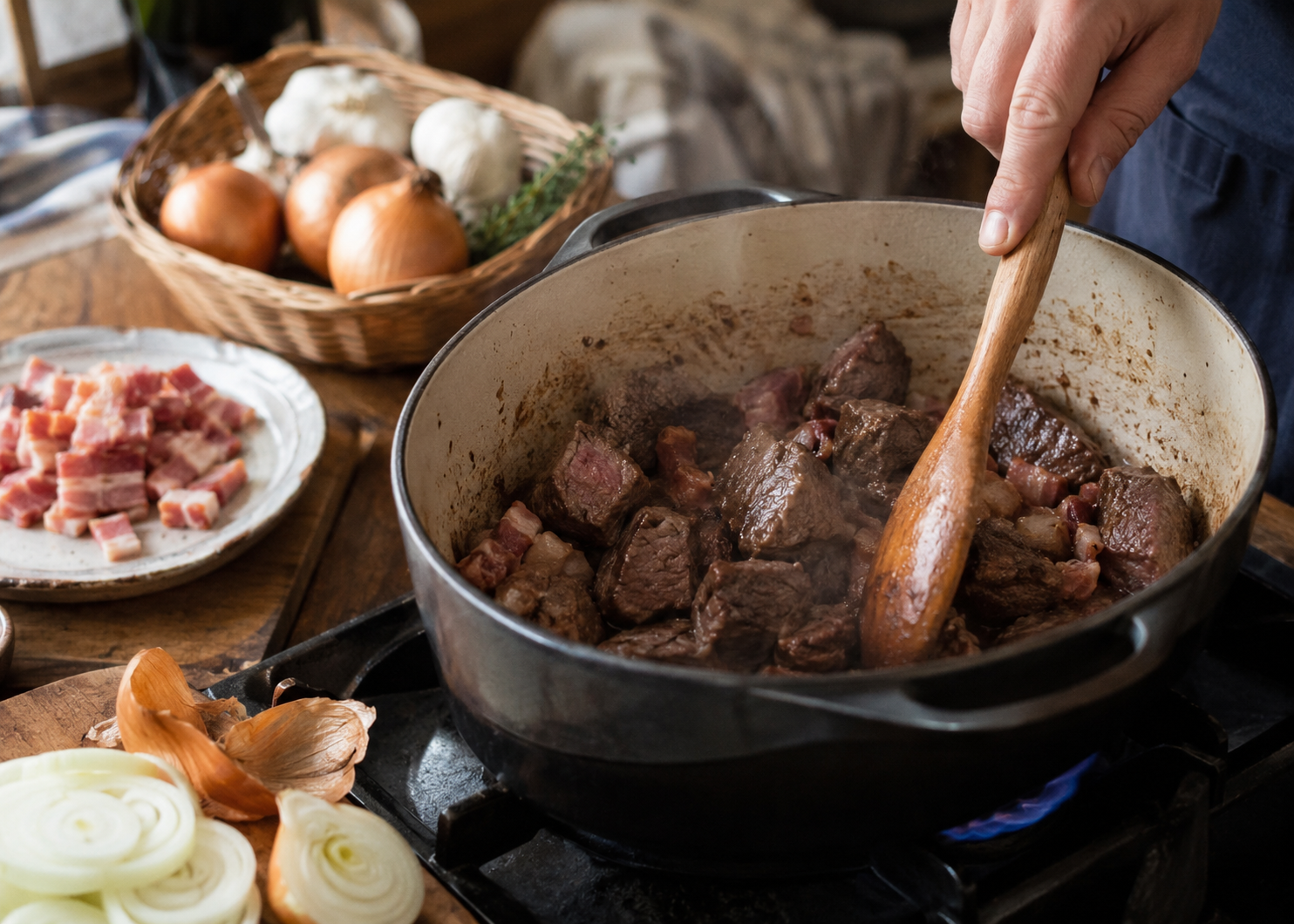
The heart of the matter is a browning mistake so common that it is practically the default, and naming it is the first step to fixing it.
The mistake most home cooks make, and that much American cooking instruction encourages, is to crowd the meat in the pan, adding all the beef at once to the pot, so that the pieces touch and the pan is packed, which seems efficient but ruins the browning, because the crowded meat releases its moisture, the moisture cannot escape from the packed pan, and the beef ends up steaming in its own liquid rather than browning. This is the crucial error, the crowded pan that turns browning into steaming, the meat coming out grey and boiled rather than deeply browned, the cook believing they have browned the meat when in fact they have steamed it, missing the deep flavor that real browning provides. The crowded pan is the silent saboteur of countless braises, the browning that is not really browning at all.
The reason this matters so much is that the browning is where a huge part of the dish’s flavor comes from, the deep caramelized crust on the meat, the browned bits left in the pan, the fond, being the foundation of the rich deep flavor of the finished braise, so that meat which has steamed rather than browned produces a thinner, paler, less flavorful dish. The browning is not a cosmetic step but the flavor foundation, the Maillard reaction creating the deep savory compounds that give the bourguignon its richness, so getting it wrong, steaming instead of browning, undermines the whole dish at the very start. Understanding that the crowded-pan steaming mistake robs the dish of its essential browned flavor is understanding why this step matters so much and why the French do it so carefully.
How The French Actually Brown The Meat
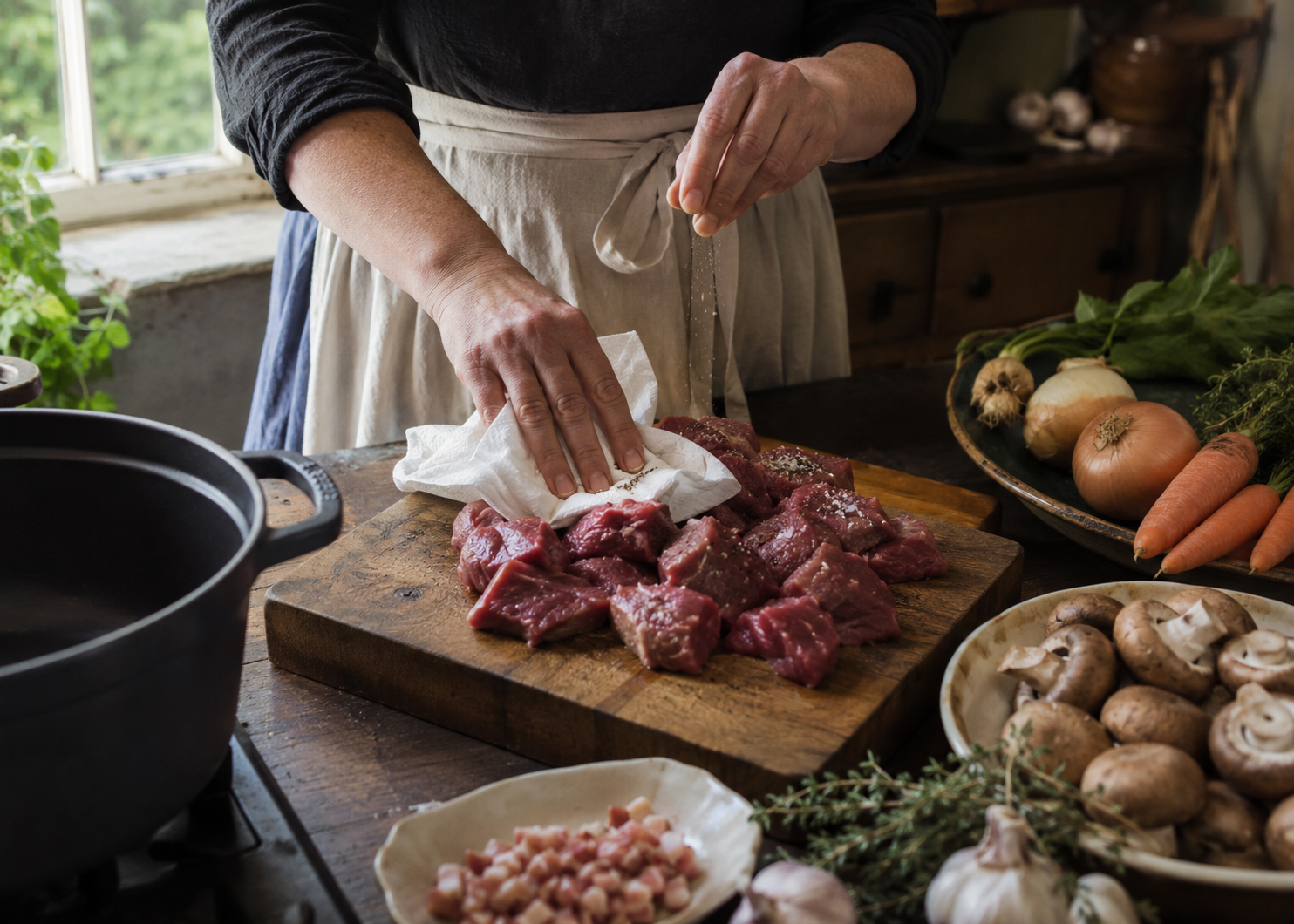
The French method, the correct method, differs in specific ways that ensure the meat actually browns, and these are the techniques to learn.
The French cook browns the meat properly through a few key techniques, the first being to dry the meat thoroughly before browning, patting the beef completely dry with paper towels, since surface moisture is the enemy of browning, the wet meat steaming while the dry meat sears, so the thorough drying is the essential first step. The second and most important technique is to brown in batches, never crowding the pan, adding only enough meat to cover the bottom in a single layer with space around each piece, so that the moisture can escape and the meat actually sears and browns rather than steams, the small batches being the key to real browning. The third is to use sufficiently high heat and a proper heavy pan, so the surface sears quickly and deeply, the hot pan and the dry uncrowded meat together producing the deep brown crust that is the goal.
This batch browning takes patience, since doing the meat in several small batches rather than all at once takes longer, the cook browning one layer, removing it, browning the next, building up the browned meat in stages, which is more work and more time than dumping it all in at once. But this patience is exactly what separates the real bourguignon from the mediocre one, the French willingness to take the time to brown the meat properly in batches being the difference between deep browned flavor and pale steamed disappointment, the extra effort paying off in the depth of the finished dish. So the French method is to dry the meat thoroughly, brown it in small uncrowded batches over proper heat with patience, building the deep browned crust on every piece, which is the real browning that the crowded American method fails to achieve, and it is the foundation of a great bourguignon.
Why The Lardons And The Fond Matter
Two further elements of the French method, the lardons and the fond, deepen the flavor and are part of doing the dish right.
The classic French bourguignon begins not with the beef but with lardons, the small pieces of bacon or salt pork, rendered in the pot first, the rendered fat providing the medium for browning the beef and the lardons themselves adding their smoky richness to the dish, this starting step being a part of the traditional method that builds flavor from the beginning. The beef is then browned in the flavorful rendered fat, picking up extra richness, the lardons set aside to return later, the whole sequence building layers of flavor, the rendered pork fat and the browned beef together creating a deeper base than browning in plain oil would. This use of the lardons at the start is part of the classic technique, a flavor-building step that the proper French method includes and that contributes to the dish’s depth.
The fond, the browned bits left stuck to the bottom of the pan after browning the meat, is the other crucial element, since these caramelized bits are pure concentrated flavor, and the French method deglazes them, using the wine to dissolve the fond back into the dish, capturing all that browned flavor rather than wasting it. After the meat is browned, the pan holds the precious fond, and the deglazing with wine, scraping up all the browned bits into the liquid, is how that flavor enters the braise, so the fond and its deglazing are essential to capturing the full depth of the browning. So the lardons at the start and the fond captured through deglazing are two further parts of the French method that build the deep flavor, the rendered pork fat and the captured browned bits adding to the richness that the proper browning creates, all part of doing the bourguignon the real way.
The Braise Itself
With the meat properly browned, the braise itself is mostly patience, and a few principles ensure it comes out right.
After the browning and the deglazing, the bourguignon is built into a braise, the browned beef and the lardons returned to the pot with the wine, stock, aromatics, and the bouquet of herbs, and then cooked long and slow until the meat is meltingly tender, the long gentle braise transforming the browned beef and the wine into the rich deep stew. The braise is mostly patience, the dish cooking slowly for a couple of hours or more, either gently on the stove or in a low oven, the slow cooking being what tenderizes the meat and melds the flavors, so the cook’s main job after the careful browning is simply to let it cook low and slow. The braise is where the dish becomes itself, the browned flavors and the wine and the slow-cooked beef merging into the rich tender bourguignon over the long gentle cooking.
The classic garnishes, the mushrooms and the small onions, are traditionally cooked separately and added toward the end, the pearl onions glazed and the mushrooms sauteed, then folded into the braise near the finish so they keep their character rather than disintegrating into the long cooking. This separate treatment of the garnishes is part of the classic method, the onions and mushrooms added late so they remain distinct and good, contributing their flavors and textures to the finished dish rather than being lost in the long braise. So the braise is the long slow patient cooking of the browned beef in the wine and aromatics until tender, with the mushrooms and onions added near the end, the dish coming together over the hours into the rich deep tender bourguignon, the careful browning at the start having laid the foundation for the whole.
Why This Matters Beyond Bourguignon
The browning lesson at the heart of the bourguignon applies far beyond this one dish, which is why it is worth truly learning.
The lesson of the proper browning, dry the meat, do not crowd the pan, brown in batches over good heat, capture the fond, is not specific to bourguignon but applies to every braise and stew and any dish that begins with browning meat, so learning it for the bourguignon improves all your cooking. The crowded-pan steaming mistake that ruins the bourguignon ruins every braise it touches, and the proper batch browning that makes the bourguignon great makes every braised dish better, so this single technique, learned properly, elevates a whole category of your cooking, the deep browned flavor foundation being the key to all of them. This is why the browning lesson is worth truly internalizing, since it pays off not just in one dish but in every braise you ever make.
Once you understand and practice the proper browning, it becomes second nature, the drying and the batching and the patience becoming automatic, and your braises and stews take on a depth of flavor they lacked before, the difference between the steamed-grey mediocre version and the deeply browned rich one being entirely in your hands. So the bourguignon is really a teacher, the dish through which you learn the browning technique that transforms all your braising, the careful method that the French apply being a lesson that, once learned, stays with you and improves everything. Learn to brown the meat the French way for your bourguignon, and you have learned a technique that will deepen and enrich your cooking far beyond this one classic dish, the browning lesson being the real and lasting gift of making a proper beef bourguignon.
The Wine, And Why It Matters
Since wine gives the dish its name and much of its character, a few words on it will help you get the bourguignon right.
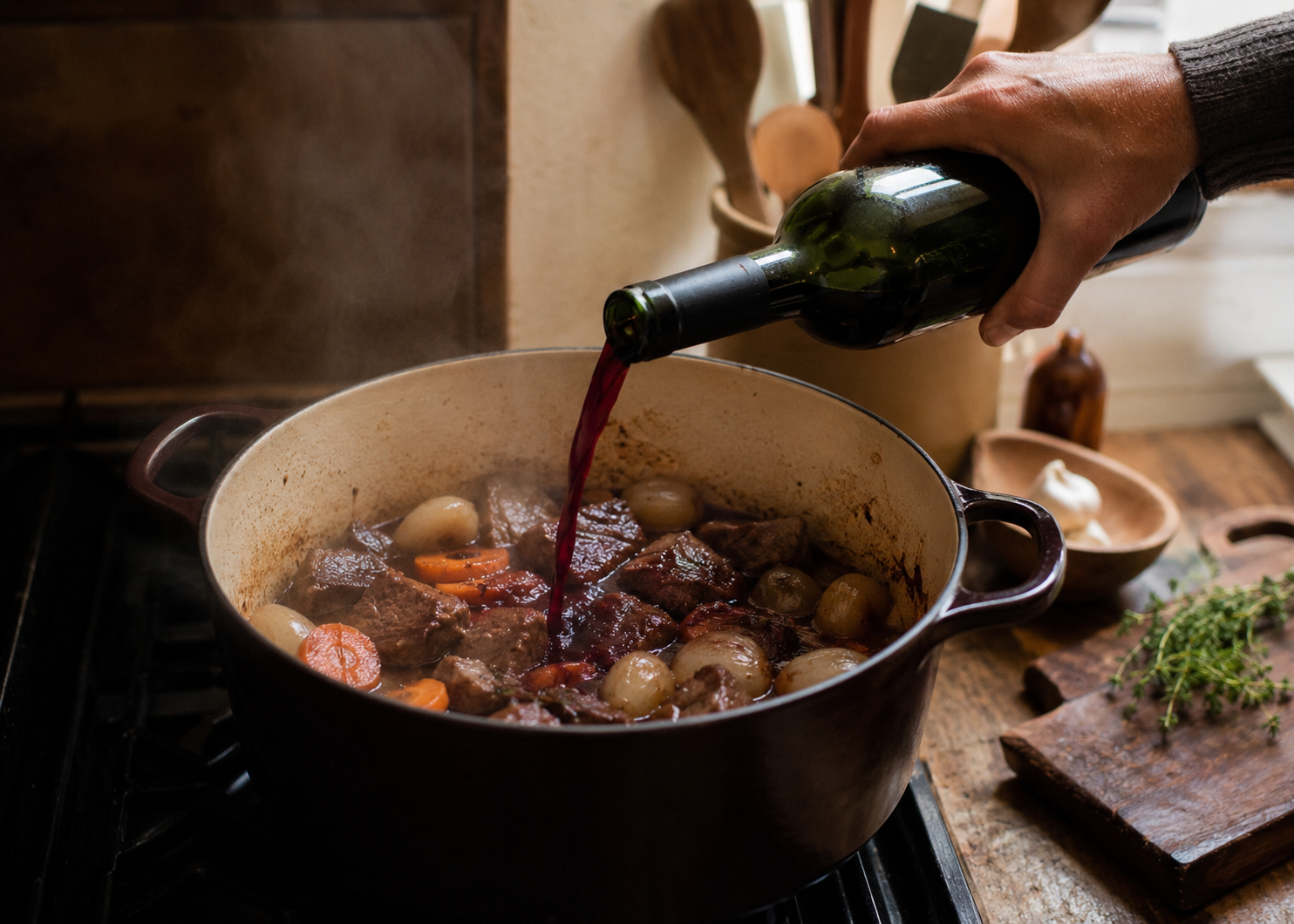
The wine in beef bourguignon is not a minor ingredient but central, since the dish is essentially beef braised in red wine, the wine providing much of the liquid, the flavor, and the character, so its choice matters, the traditional and best being a decent dry red, classically a red Burgundy, the wine of the region the dish comes from, though any good dry red will serve. The old advice to cook only with wine you would drink holds here, since the wine’s flavor concentrates in the long braise, so a poor or cooking-grade wine gives a poor result while a decent drinkable red gives a good one, the quality of the wine showing in the finished dish. You need not use an expensive Burgundy, but a sound dry red you would happily drink is the right choice, the wine being too central to the dish to skimp on.
The wine also does chemical work in the dish, its acidity helping tenderize the meat over the long braise, its flavors melding with the browned beef and the aromatics into the characteristic deep winey richness of the bourguignon, so the wine is woven through the whole dish rather than just added as liquid. A generous amount of good red wine, properly cooked down and melded over the long braise, gives the bourguignon its essential character, the deep red-wine richness that defines it, so treating the wine as the central ingredient it is, choosing a decent dry red and using it generously, is part of doing the dish right. Choose a good dry red, use it generously, and the wine gives the bourguignon its name and its soul, the deep winey richness that, with the proper browning, makes the dish the classic it is.
Real Beef Bourguignon
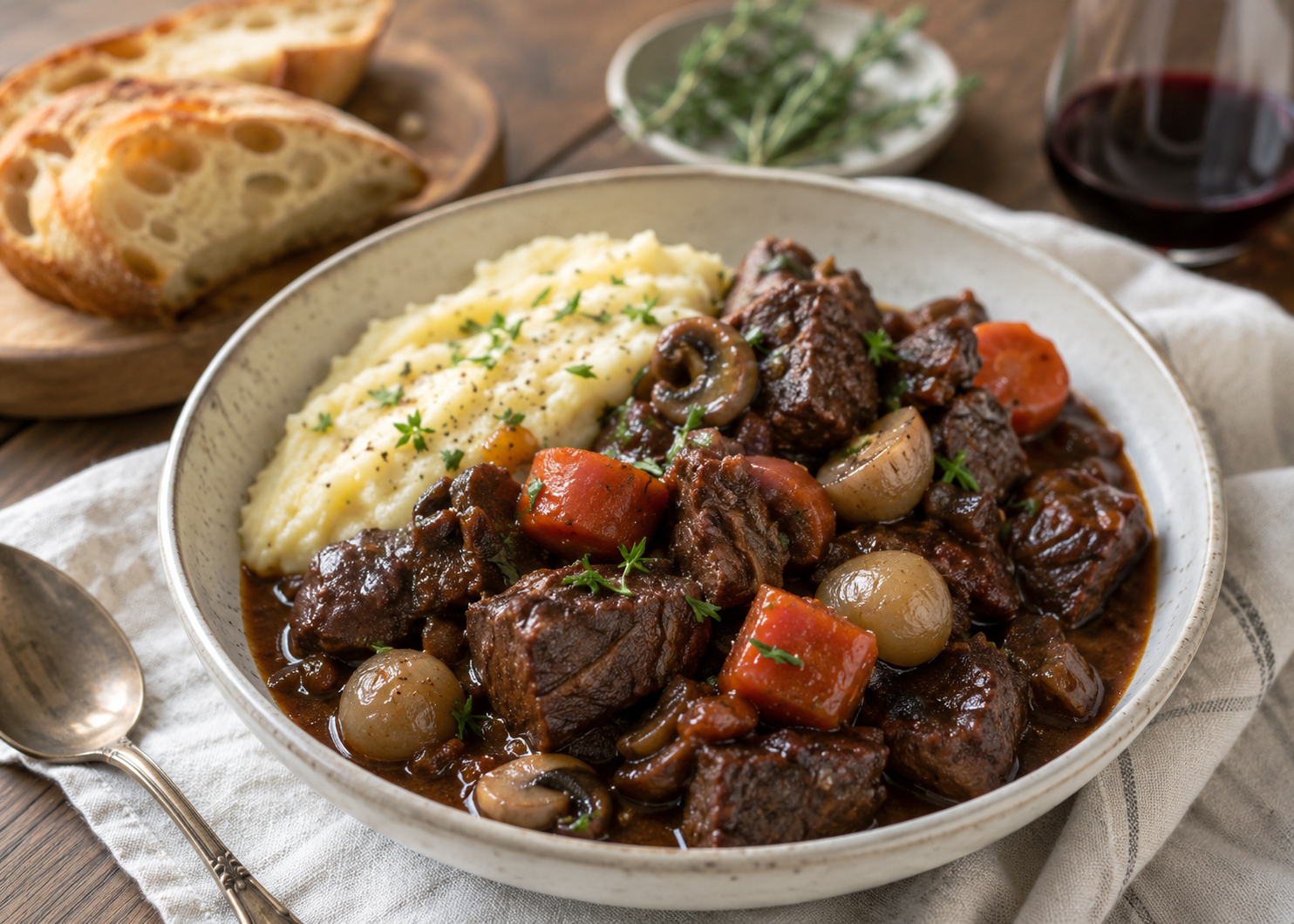
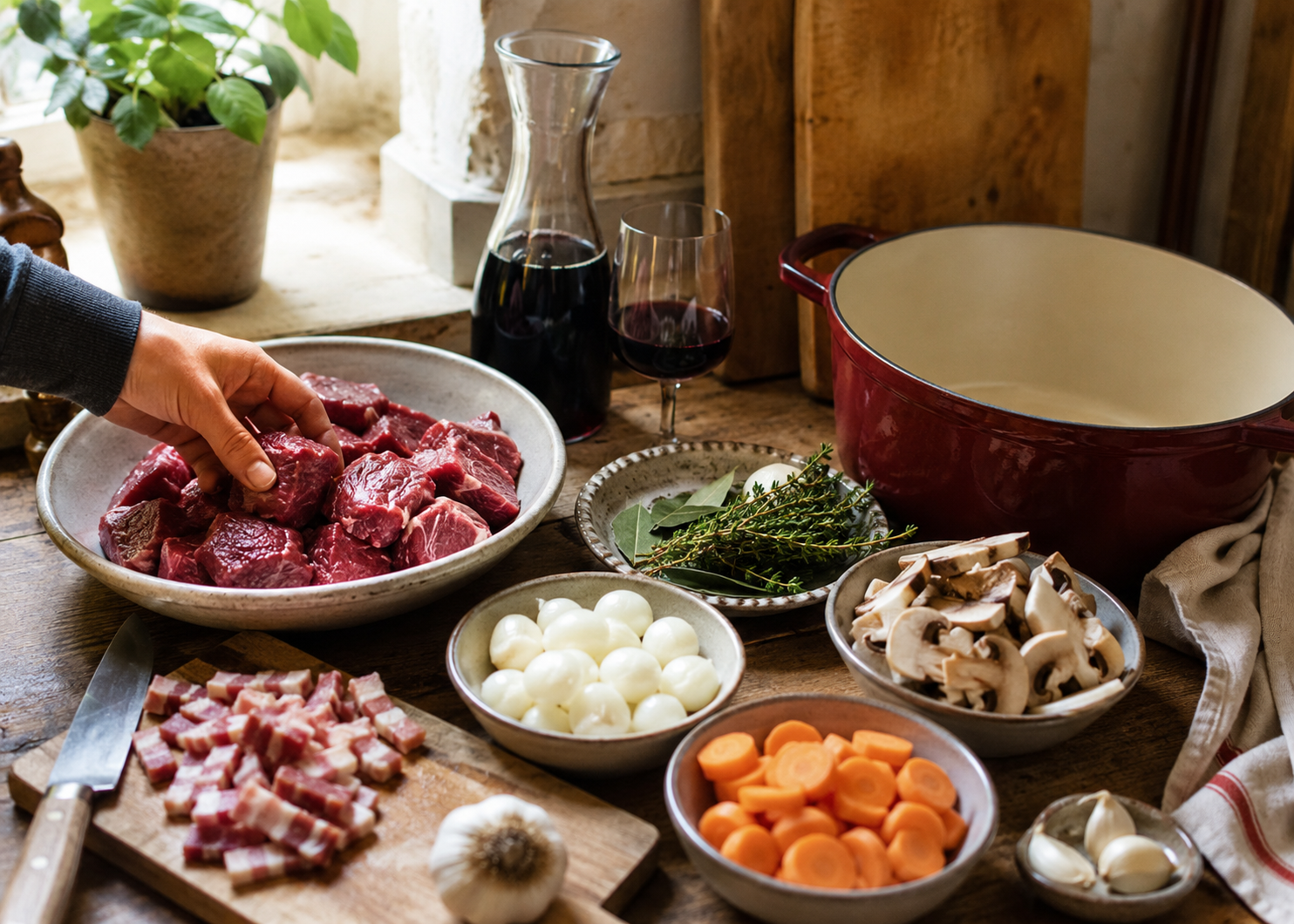
Serves 6. About 30 minutes of preparation and browning, then 2½ to 3 hours of slow braising. A heavy Dutch oven is ideal.
Ingredients
- 1.5kg (3¼ lb) beef chuck or shin, cut into large 5cm chunks
- 200g (7 oz) lardons, or thick-cut bacon cut into strips
- 1 bottle (750ml) good dry red wine, ideally Burgundy
- 500ml (2 cups) beef stock
- 2 tbsp tomato paste
- 1 large onion, chopped
- 2 carrots, cut into chunks
- 3 garlic cloves, crushed
- 2 tbsp flour
- 250g (9 oz) mushrooms, quartered
- 250g (9 oz) pearl onions, peeled
- Bouquet garni (thyme, bay, parsley stems tied together)
- Oil, butter, salt, and pepper
Method
- Dry the beef thoroughly with paper towels and season with salt and pepper. Drying is essential for a proper sear.
- Render the lardons in the Dutch oven over medium heat until browned. Remove with a slotted spoon and set aside, leaving the fat.
- Brown the beef in small batches, never crowding the pan, leaving space around each piece so it sears rather than steams. Add a little oil if needed. Set each browned batch aside. Take your time; this is the most important step.
- Lower the heat, add the onion, carrots, and garlic to the pot, and soften for a few minutes, scraping up the browned fond from the bottom.
- Stir in the flour and tomato paste and cook for a minute. Pour in the wine, scraping up all the remaining fond, and bring to a simmer.
- Return the beef and lardons to the pot, add the stock and bouquet garni, and bring to a gentle simmer. The liquid should nearly cover the meat.
- Cover and braise on low heat or in a 150°C / 300°F oven for 2½ to 3 hours, until the beef is meltingly tender.
- Meanwhile, sauté the mushrooms in butter until golden, and separately glaze the pearl onions in butter until tender and browned.
- About 20 minutes before the end, stir the mushrooms and onions into the braise. Discard the bouquet garni, taste, and adjust the seasoning before serving.
Make-Ahead, Serving, And Storage
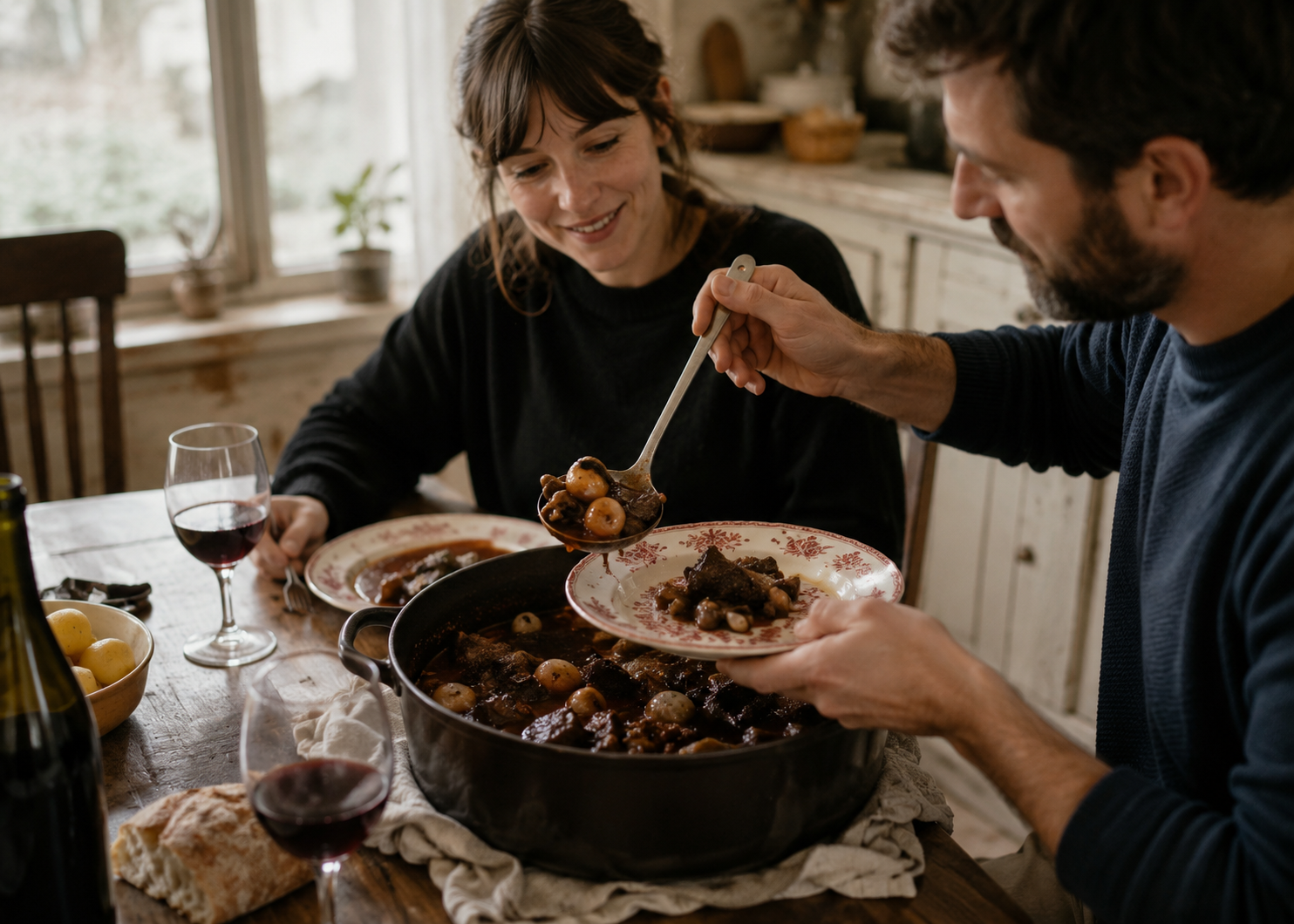
Bourguignon is one of those dishes that is genuinely better the next day, since a night in the fridge lets the flavors deepen and meld, so it is an ideal make-ahead dish for a dinner party, cook it the day before, cool it, refrigerate it, and reheat gently. A bonus of chilling it overnight is that any excess fat sets on top and can be lifted off easily before reheating.
Serve it the French way over something that soaks up the rich sauce, classically buttered noodles, mashed potatoes, or simply good crusty bread, with the rest of the bottle of red you cooked with. A green salad afterward, dressed simply, balances the richness.
It keeps in the fridge for three to four days and freezes very well for up to three months, so it is worth making a large batch. Reheat gently on the stove or in a low oven rather than at a hard boil, which can toughen the meat, and you will have a second dinner that tastes as though you made it fresh, the deep browned flavor you built at the start carrying all the way through.

About the Author: Ruben, co-founder of Gamintraveler.com since 2014, is a seasoned traveler from Spain who has explored over 100 countries since 2009. Known for his extensive travel adventures across South America, Europe, the US, Australia, New Zealand, Asia, and Africa, Ruben combines his passion for adventurous yet sustainable living with his love for cycling, highlighted by his remarkable 5-month bicycle journey from Spain to Norway. He currently resides in Spain, where he continues sharing his travel experiences with his partner, Rachel, and their son, Han.