
There is a particular wisdom in how Italian grandmothers feed their families through the worst of the summer heat, and it begins with not cooking at all. When the kitchen is already an oven and the afternoon sun has turned the whole apartment into a slow furnace, the last thing any sensible nonna is going to do is light the stove and stand over a pot. Instead she reaches for the things that need no heat, the good bread and tomatoes, the tuna and beans, the cheese and the cured meats, the leftover bread revived, and assembles dinners that are cool, fresh, fast, and somehow better suited to the heat than anything hot could be. It is one of the smartest and most pleasurable traditions in Italian home cooking, and it is worth learning.
These are not sad sandwiches or compromise meals but genuine, satisfying, delicious dinners, built on the Italian principle that good ingredients barely touched are often better than elaborate cooking, a principle that comes into its own in the heat of summer. They are also a gift to the modern cook who, like the nonna, has no desire to heat the kitchen on a hot evening. Here are the no-cook Italian dinners the grandmothers make when it is too hot to turn on the stove, why they work so well, and how to make them yourself.
Why The No-Cook Tradition Works So Well
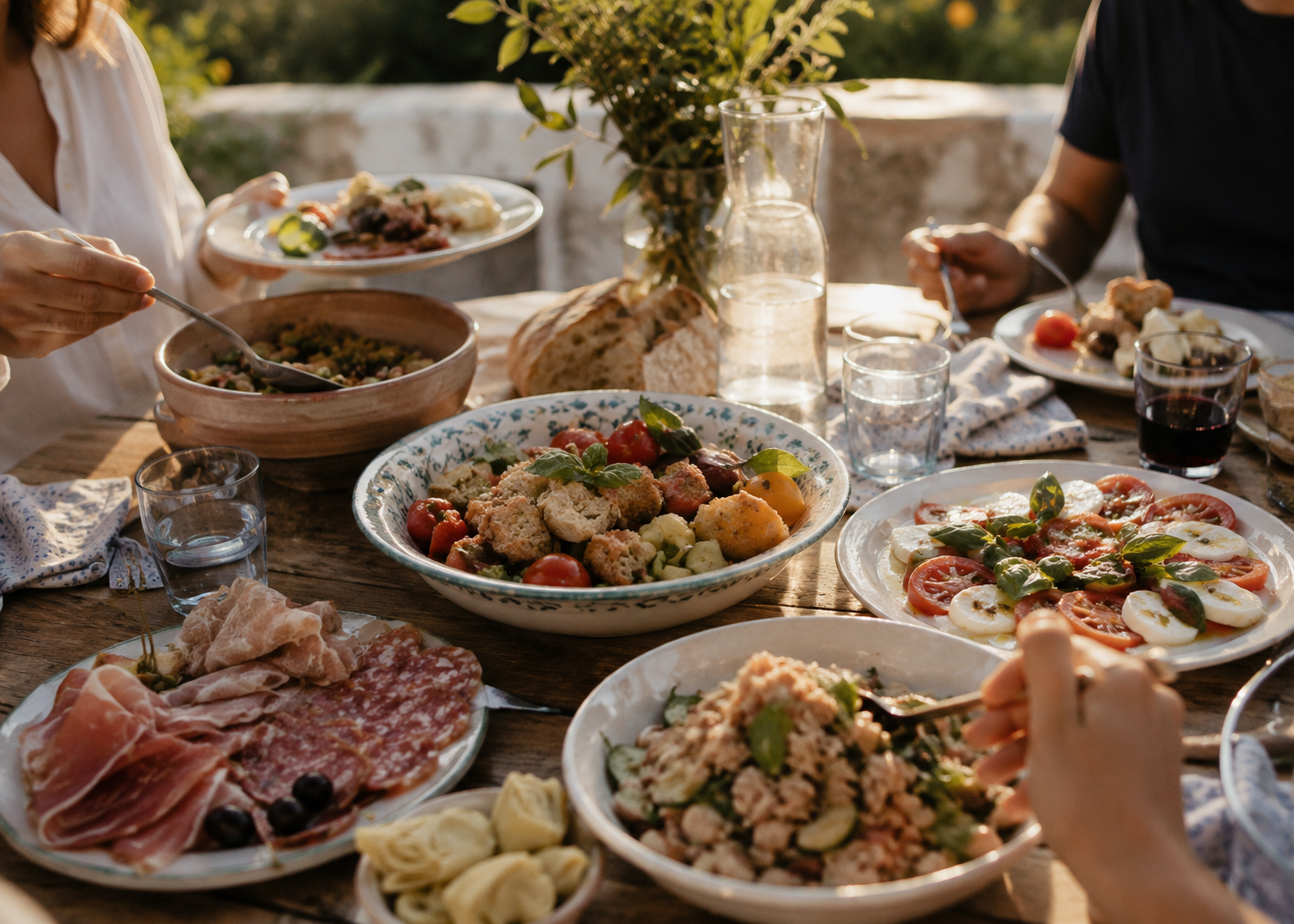
Before the dishes themselves, it helps to understand why this no-cook tradition is so good, since the logic is the key to doing it well.
The no-cook summer tradition works because it rests on the deepest principle of Italian cooking, that the quality of the ingredients matters more than the elaborateness of the preparation, so that the best tomatoes, good bread, fine olive oil, quality tuna, fresh mozzarella, barely combined, make a dish more delicious than hours of cooking with lesser ingredients. In summer, when the produce is at its peak, the tomatoes ripe and sweet, the vegetables abundant and good, this principle reaches its fullest expression, the superb summer ingredients needing almost nothing done to them to be wonderful, so the no-cook approach is not a compromise but the ideal way to eat the best of the season. The tradition works because it lets the peak summer ingredients shine with minimal interference, which is exactly when Italian cooking is at its best.
The no-cook approach also suits the heat in every practical way, keeping the kitchen cool, requiring no time over a hot stove, producing light fresh food that is more appealing in the heat than heavy hot dishes, and coming together quickly so the cook is not laboring in the warm kitchen. So the tradition is doubly wise, both the ideal way to eat the peak summer produce and the practical way to feed a family in the heat without cooking, the no-cook summer dinner being both more delicious and more sensible than the hot alternative. Understanding this, that the no-cook approach is the best way to eat the summer’s best ingredients and the coolest way to feed the family in the heat, is understanding why the nonnas reach for it and why it is worth adopting, the tradition being smart on every level.
The Bread-And-Tomato Dishes
The heart of the no-cook tradition is the family of dishes built on bread and tomatoes, which turn the simplest ingredients into something wonderful.
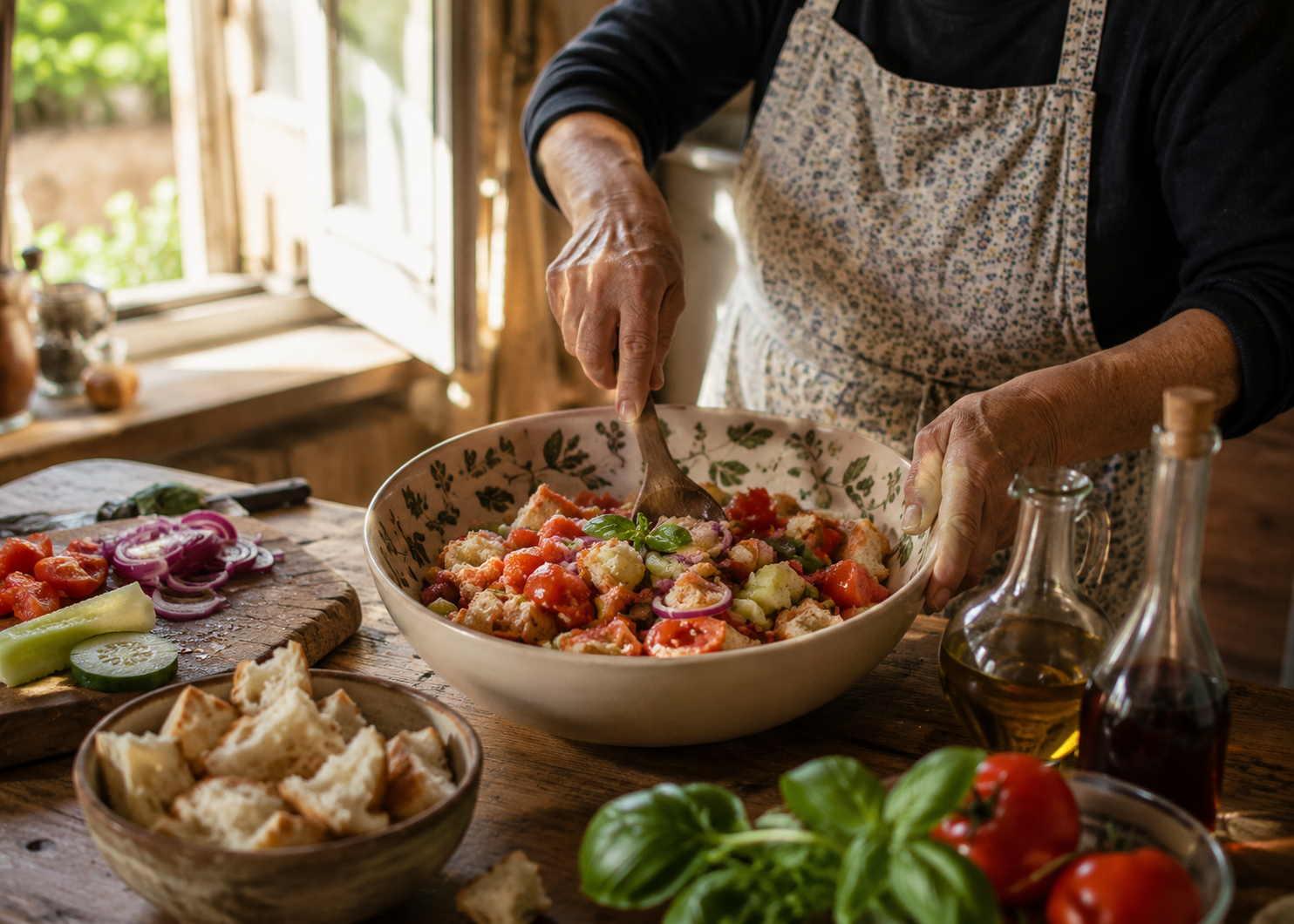
The most iconic of the no-cook summer dishes are those built on bread and tomatoes, above all panzanella, the Tuscan bread salad, where stale bread is soaked and squeezed and tossed with ripe tomatoes, cucumber, red onion, basil, good olive oil, and vinegar into a fresh, satisfying salad that is a complete meal, the bread soaking up the tomato juices and the dressing into something far greater than its humble parts. There is also the simpler Italian habit of topping good bread with chopped ripe tomatoes, garlic, basil, and olive oil, the fresh tomato and the good bread and oil making a simple perfect summer dish, though the classic toasted bruschetta involves a little toasting, the untoasted versions and the panzanella are entirely no-cook. These bread-and-tomato dishes are the soul of the tradition, turning stale bread and ripe tomatoes into wonderful summer meals.
The genius of these dishes is the use of bread that would otherwise be wasted, the stale bread of the Italian kitchen revived and made central, the no-cook tradition being also a tradition of thrift, the panzanella in particular being a masterpiece of turning leftover bread into something delicious. The key to them is the quality of the few ingredients, the ripe flavorful tomatoes, the good bread, the fine olive oil, the fresh basil, since with so little done to them the ingredients must be good, the dish being only as good as the tomatoes and the oil. Make panzanella or the fresh-tomato bread dishes with peak summer tomatoes and good bread and oil, and you have the heart of the no-cook tradition, a wonderful satisfying summer meal made with no heat from the humblest ingredients, the bread and tomatoes transformed.
The Tuna-And-Bean And Cold Protein Dishes
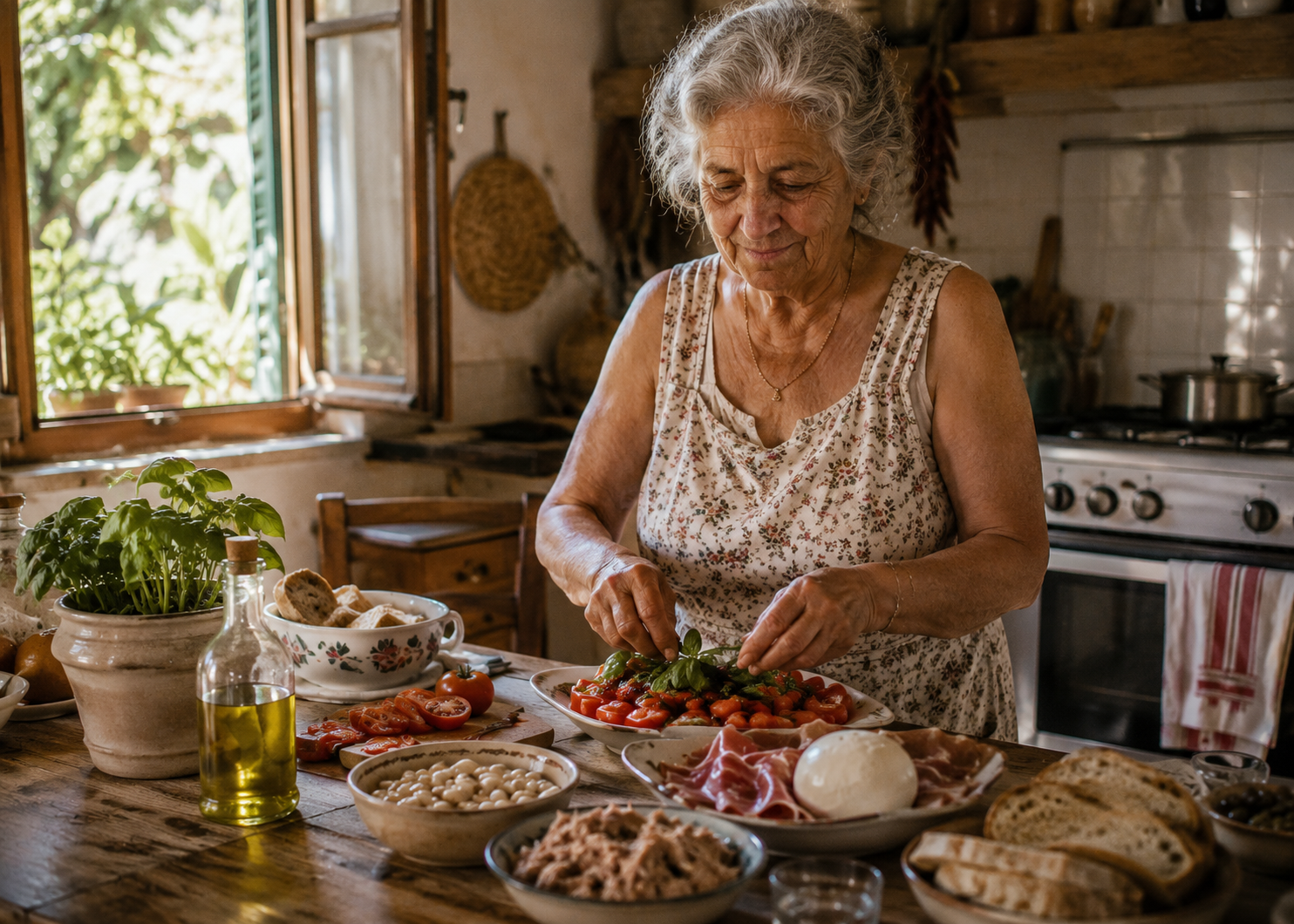
A second family of no-cook dishes provides the protein and substance, built on tinned fish and beans and cured meats, making the meals complete.
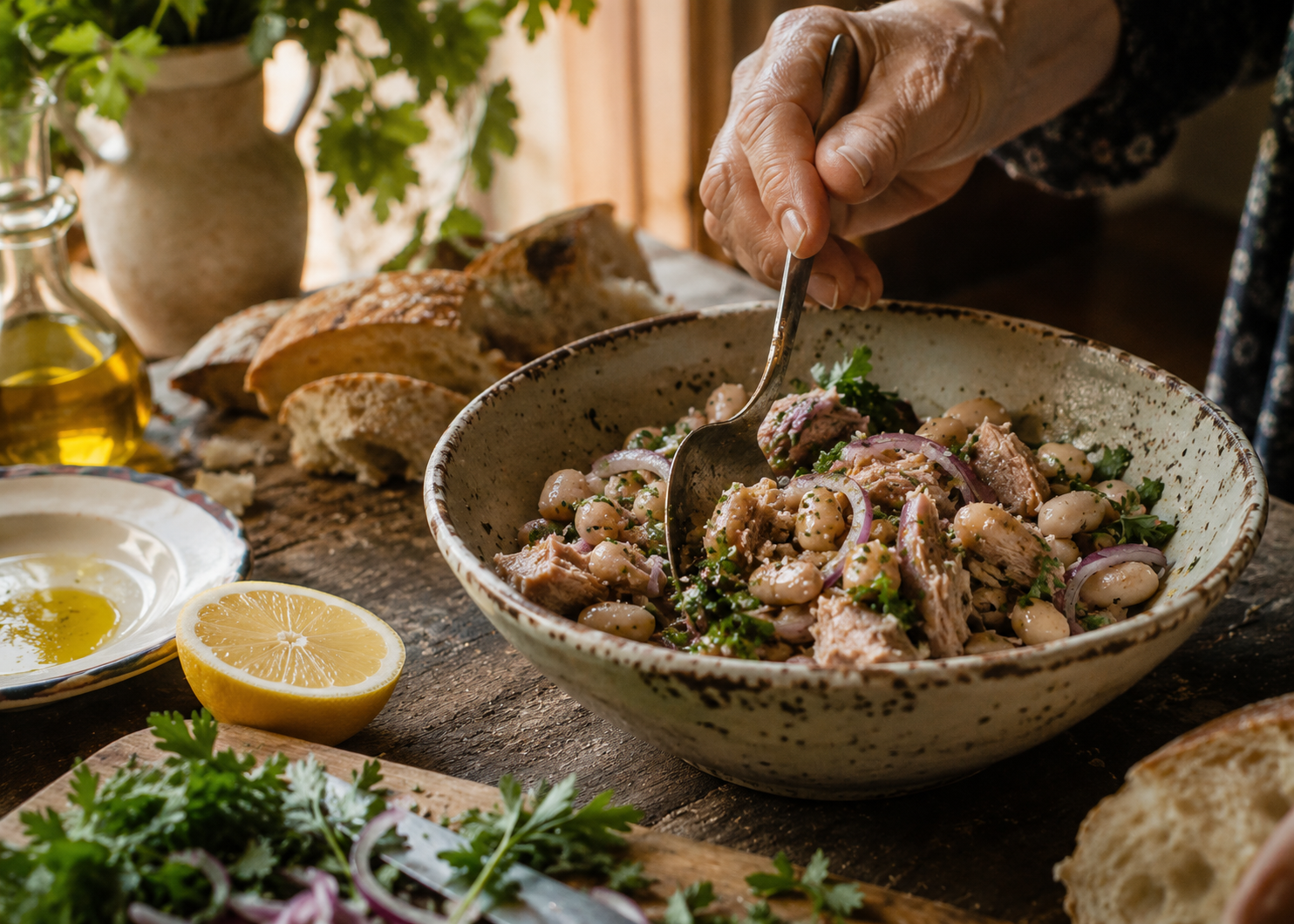
For substance and protein without cooking, the Italian summer table turns to dishes like tonno e fagioli, tuna and white beans, where good tinned tuna and cooked cannellini beans, often from a jar or tin, are dressed with red onion, olive oil, and herbs into a simple, satisfying, protein-rich no-cook dish that is a complete light meal. There is also the whole world of Italian cured meats and cheeses, the antipasto spread of prosciutto, salami, mozzarella, and the like, which needs no cooking at all and makes a satisfying summer dinner, the quality cured meats and cheeses with bread and perhaps some vegetables being a perfect no-cook meal. These protein dishes, the tuna and beans, the cured meats and cheeses, give the no-cook table its substance, making the light fresh meals complete and satisfying without any heat.
The beauty of these dishes is that they use the excellent Italian tinned and cured products, the good tinned tuna, the jarred beans, the fine cured meats and cheeses, all of which need no cooking and combine into satisfying meals, the Italian larder being full of high-quality no-cook ingredients. The tonno e fagioli in particular is a model of the tradition, the tinned tuna and beans dressed simply into a dish that is cheap, fast, no-cook, protein-rich, and genuinely delicious, a perfect hot-evening dinner. Build your no-cook summer meals on these protein dishes, the tuna and beans, the antipasto of cured meats and cheeses, and you have the substance to make the meals complete, satisfying summer dinners assembled from the excellent Italian larder with no heat at all.
The Vegetable And Salad Dishes
A third family rounds out the no-cook table with vegetables and salads that bring freshness, color, and variety to the summer meals.
The Italian summer table is rich in no-cook vegetable and salad dishes that bring freshness and variety, above all the caprese, the simple perfect salad of sliced ripe tomatoes, fresh mozzarella, and basil dressed with olive oil and salt, a dish that is the essence of Italian summer, three perfect ingredients and nothing more. There are also the marinated and raw vegetable dishes, the fennel and orange salads, the shaved raw vegetables dressed in oil and lemon, the marinated peppers and other vegetables, the whole range of fresh and marinated vegetable preparations that need no cooking and bring color, freshness, and variety to the table. These vegetable and salad dishes complete the no-cook spread, adding the fresh bright vegetable element that makes the summer meals light and varied and beautiful.
The caprese in particular is the emblem of the whole tradition, the three perfect ingredients, the ripe tomato, the fresh mozzarella, the basil, with good oil and salt, making a dish of sublime simplicity that depends entirely on the quality of the few elements, the perfect summer no-cook dish. The key across all these vegetable dishes, as with everything in the tradition, is the quality and ripeness of the produce, since with so little done to them the vegetables must be at their summer peak, the dishes being celebrations of the perfect summer produce barely touched. Add the caprese and the fresh vegetable salads to your no-cook table, and you have the fresh bright vegetable dimension that completes the spread, the summer produce at its peak making light beautiful dishes with no heat, the vegetables and salads rounding out the wonderful no-cook summer meal.
How To Build A No-Cook Italian Dinner
Knowing the families of dishes, the practical question is how to assemble them into a complete satisfying dinner, which is simple once you see the pattern.
The way the nonnas build a no-cook summer dinner is to combine dishes from these families into a complete meal, perhaps a bread-and-tomato dish like panzanella, a protein dish like tonno e fagioli or an antipasto of cured meats, and a fresh vegetable dish or salad like caprese, the combination making a complete, satisfying, varied, no-cook dinner. This is the simple principle, to assemble a few of the no-cook dishes into a spread that covers the carbohydrate and bread, the protein, and the vegetables, the combination being a full balanced meal with no heat, the various no-cook dishes complementing each other into a complete dinner. Build your no-cook dinner by combining a bread dish, a protein dish, and a vegetable dish, and you have a full satisfying summer meal assembled without cooking.
The spirit of it is relaxed and improvisational, using what is good and available, the peak tomatoes, the good bread, the tinned tuna and beans, the cured meats and cheeses, the fresh vegetables, combined as the cook likes into the no-cook spread, the tradition being flexible rather than rigid. The nonna does not follow recipes so much as assemble good things, the no-cook dinner being a matter of combining quality ingredients in the simple traditional ways rather than precise cooking, which makes it easy and forgiving and adaptable to what is on hand. Embrace the relaxed assembly of good no-cook things, combine the families of dishes into a spread, and you eat as the Italians do in the heat, wonderful satisfying summer dinners put together from the excellent larder and the peak produce with no heat at all, the no-cook tradition at your own table.
The Few Dishes Worth A Tiny Bit Of Heat
Honesty requires noting that a few beloved Italian summer dishes involve a small amount of cooking, worth mentioning since they fit the spirit even if not strictly no-cook.
A few classic Italian summer dishes involve a tiny bit of cooking that can be done quickly or in advance, notably the cold pasta salad, pasta fredda, where pasta is boiled briefly and then dressed cold with tomatoes, mozzarella, olives, and herbs, and the insalata di riso, the cold rice salad, similarly built on briefly cooked rice dressed with a colorful array of cold ingredients. These are not strictly no-cook, since the pasta or rice must be boiled, but the cooking is brief and can be done in the cooler morning or in advance, and the dishes are served cold and assembled mostly from no-cook ingredients, so they fit the spirit of the tradition, the cold pasta and rice salads being beloved Italian summer dishes that minimize the heat. We mention them honestly as nearly-no-cook rather than truly no-cook, for the cook who does not mind a brief boil done early.
The wisdom with these is to do the small bit of cooking, the boiling of the pasta or rice, in the cool of the morning or evening, or to use the trick of cooking once and eating cold for days, so that the heat in the kitchen is minimized and the cold dishes are ready when wanted. The cold pasta and rice salads are wonderful summer dishes, cool and satisfying and varied, and the brief cooking they require, done strategically in the cool hours, hardly violates the spirit of the no-cook tradition, so they belong on the summer table alongside the truly no-cook dishes. Include them if you like, doing the brief boil in the cool hours, and they extend the no-cook repertoire with the beloved cold pasta and rice salads, nearly no-cook and entirely suited to the hot-weather table.
Four No-Cook Italian Dinners To Assemble
These are assembly blueprints rather than stove recipes, no heat required. Quantities are flexible; quality of ingredients is everything. Each serves about 4 as part of a spread, or 2 as a main.
Panzanella (Tuscan Bread Salad)
Ingredients
- 400g (about half a large loaf) stale country bread, torn into chunks
- 600g ripe tomatoes, cut into chunks
- 1 cucumber, peeled and chopped
- ½ red onion, thinly sliced
- A handful of fresh basil, torn
- 5 tbsp extra virgin olive oil
- 2 tbsp red wine vinegar
- Salt
Method (no heat)
- Briefly soak the stale bread in cold water for a minute, then squeeze it dry and tear into a bowl.
- Add the tomatoes, cucumber, red onion, and basil.
- Dress with the olive oil, vinegar, and salt, toss, and let it sit 20 to 30 minutes so the bread drinks up the juices before serving.
Tonno e Fagioli (Tuna and White Beans)
Ingredients
- 2 tins good tuna in olive oil, drained
- 1 large jar or 2 tins cannellini beans, drained and rinsed
- ½ red onion, very thinly sliced
- 3 tbsp extra virgin olive oil
- 1 tbsp red wine vinegar or lemon juice
- Chopped parsley, salt, and pepper
Method (no heat)
- Combine the beans, flaked tuna, and onion in a bowl.
- Dress with olive oil, vinegar or lemon, parsley, salt, and pepper.
- Toss gently and let sit 10 minutes before serving.
Caprese
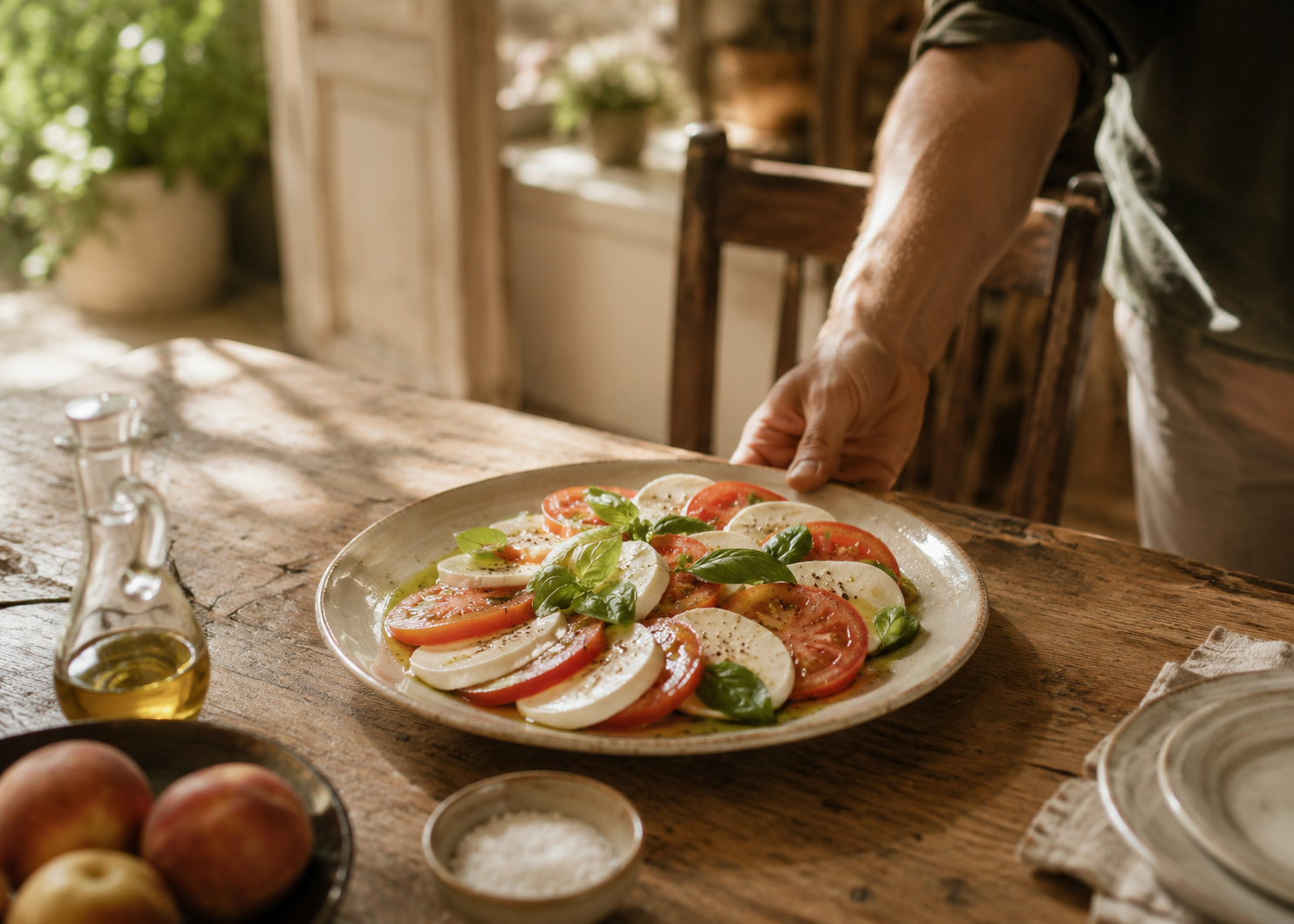
Ingredients
- 4 ripe tomatoes, sliced
- 2 balls fresh mozzarella (or buffalo mozzarella), sliced
- A handful of fresh basil leaves
- Good extra virgin olive oil
- Flaky salt
Method (no heat)
- Arrange alternating slices of tomato and mozzarella on a platter.
- Tuck basil leaves between them.
- Drizzle generously with olive oil and finish with flaky salt just before serving.
The Antipasto Plate
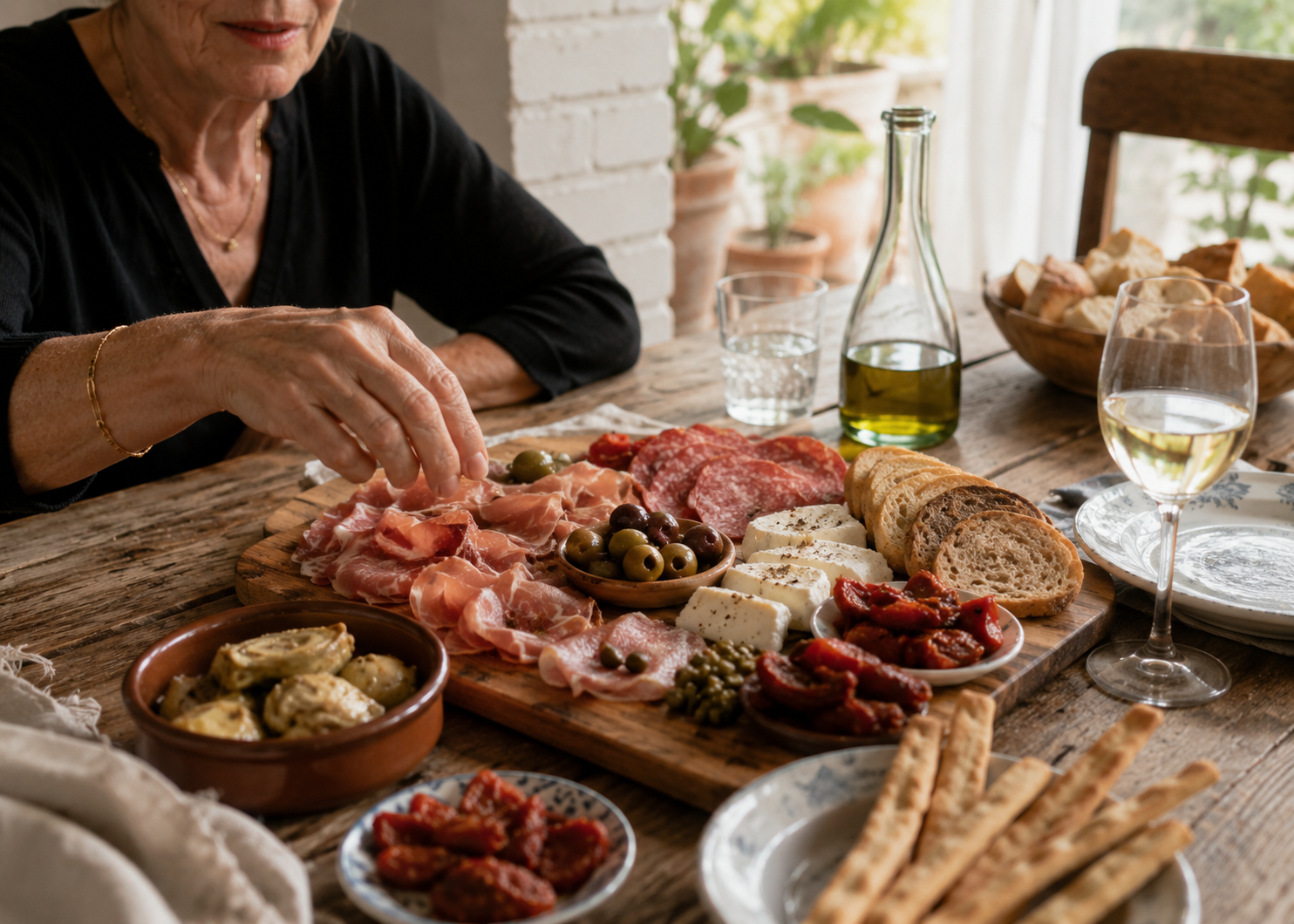
Ingredients
- Sliced prosciutto and/or salami
- Fresh mozzarella or a wedge of provolone or pecorino
- Marinated peppers, olives, sun-dried tomatoes from a jar
- Good bread or grissini
- Extra virgin olive oil
Method (no heat)
- Arrange the cured meats, cheese, and marinated vegetables on a board.
- Serve with bread and a small bowl of olive oil. Assembly only, no cooking at all.
Serving, Storage, And Making It A Spread
To turn these into a proper no-cook dinner, put two or three on the table together, a bread dish, a protein dish, and a fresh vegetable dish, so the meal covers everything without a single burner lit. A panzanella, a tonno e fagioli, and a caprese together make a complete, varied, satisfying summer dinner for a family, and the antipasto plate stretches any of them further.
On storage, the tonno e fagioli and the antipasto components keep well in the fridge for a couple of days and many people think the bean dish is even better the next day once the flavors have settled. Panzanella is best eaten the day it is made, since the bread softens further over time, so assemble it shortly before serving. Caprese should be dressed only at the last minute, as the salt draws water from the tomatoes if it sits.
And the deepest tip is the one the nonnas live by: buy the best tomatoes, mozzarella, bread, and olive oil you can, because in food this simple there is nowhere for poor ingredients to hide and nowhere for great ones to be wasted. Keep the larder stocked with good tinned tuna, beans, and cured things, pick up ripe summer produce, and you can put a wonderful Italian dinner on the table on the hottest evening of the year without ever turning on the stove.

About the Author: Ruben, co-founder of Gamintraveler.com since 2014, is a seasoned traveler from Spain who has explored over 100 countries since 2009. Known for his extensive travel adventures across South America, Europe, the US, Australia, New Zealand, Asia, and Africa, Ruben combines his passion for adventurous yet sustainable living with his love for cycling, highlighted by his remarkable 5-month bicycle journey from Spain to Norway. He currently resides in Spain, where he continues sharing his travel experiences with his partner, Rachel, and their son, Han.