
The American walks into a Spanish restaurant at seven in the evening, hungry for dinner, and the first thing that happens is nothing, because the kitchen is not open, will not be open for an hour or more, and the staff are having their own meal. It is the first of a series of small collisions between the American clock and palate and the Spanish way of eating, and they happen fast, in the first ten minutes, marking the American as a tourist before the food arrives. None of it is held against you, the Spanish are warm and forgiving, but the gap between how Americans eat and how Spain eats is wide, and closing it is the difference between hovering at the edge of Spanish dining and stepping into its considerable pleasures.
The Spanish table runs on its own logic, late and social and unhurried and built around sharing, and the American instincts about timing, ordering, sharing, and pace all tend to misfire against it. After time spent watching the same stumbles, here are the eight Spanish restaurant rules American tourists most often break in the first ten minutes, why each works the way it does in Spain specifically, and how to get them right and eat the way Spain actually eats.
First, You Are Far Too Early
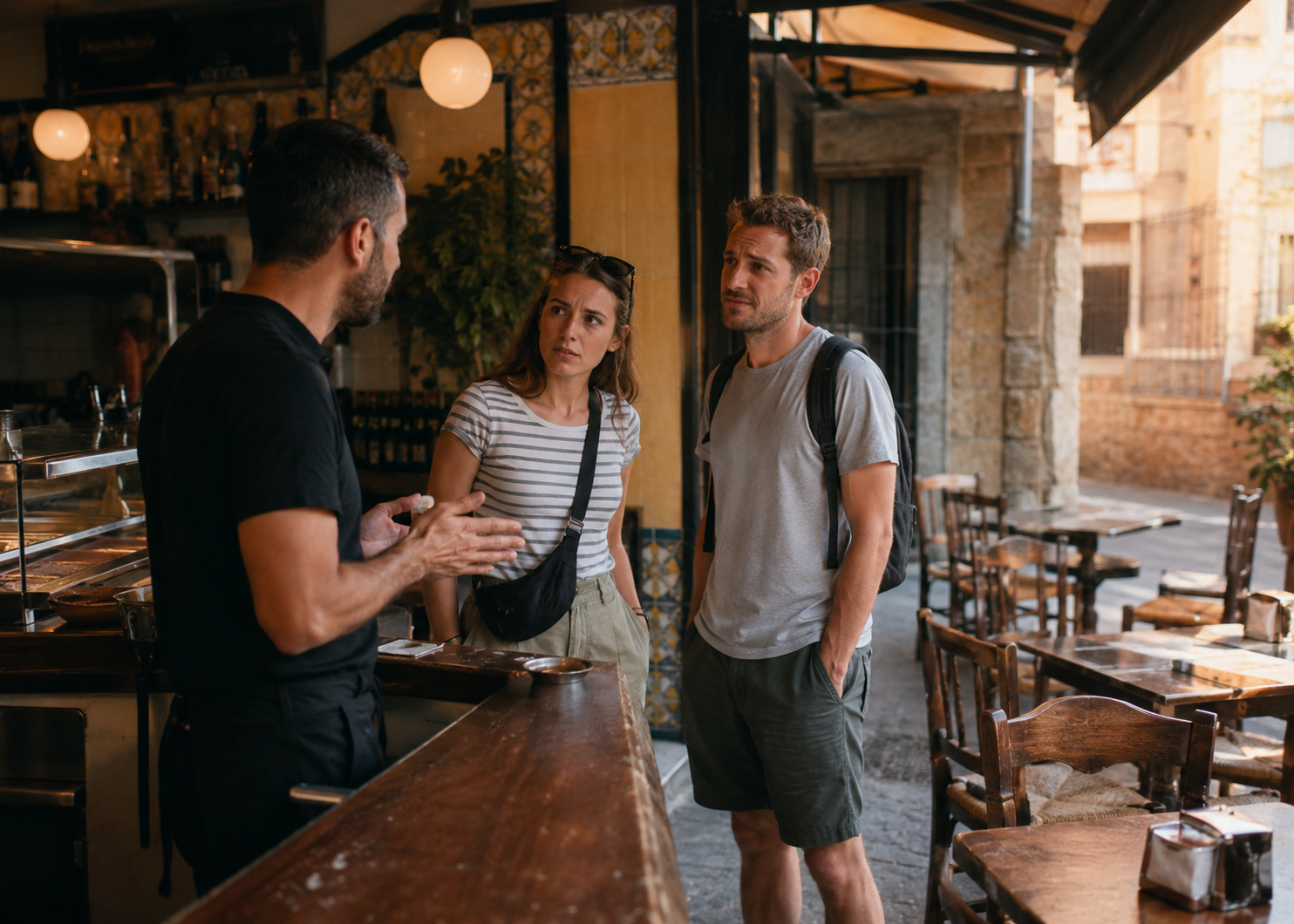
The most basic collision is the clock, since Spain eats later than almost anywhere, and the American dinner hour is the Spanish afternoon.
Spaniards eat dinner late, very late by American standards, with dinner rarely starting before nine in the evening and often ten or later, and restaurant kitchens for dinner frequently not opening until around eight or eight thirty, so the American arriving hungry at six or seven for dinner finds the kitchen closed, the restaurant empty, or only other tourists present, and marks themselves instantly as running on the foreign clock. Lunch too is later than Americans expect, the main midday meal commonly around two or three in the afternoon rather than noon, so the American hungry at the American hours is consistently out of step with the Spanish eating schedule, arriving for meals when Spain is between them. This timing mismatch is the first and most fundamental tourist tell in Spain, the American clock simply not matching the Spanish one.
The fix is to shift your whole eating schedule later to match Spain, taking lunch around two or later, and dinner at nine or after, when the kitchens are open and the restaurants fill with Spaniards and the dining is at its best and most authentic. This requires adjusting the American body clock, helped by the Spanish rhythm of a late breakfast, a substantial late lunch, perhaps an afternoon merienda snack, and the late dinner, the whole day’s eating shifted later than the American pattern. Embrace the late Spanish hours rather than fighting them, eat when Spain eats, and you find yourself dining among Spaniards in full restaurants at the proper hour rather than alone in an empty room hours too early, the timing being the first thing to get right and the foundation of eating well in Spain.
Second, Understand Tapas Are For Sharing
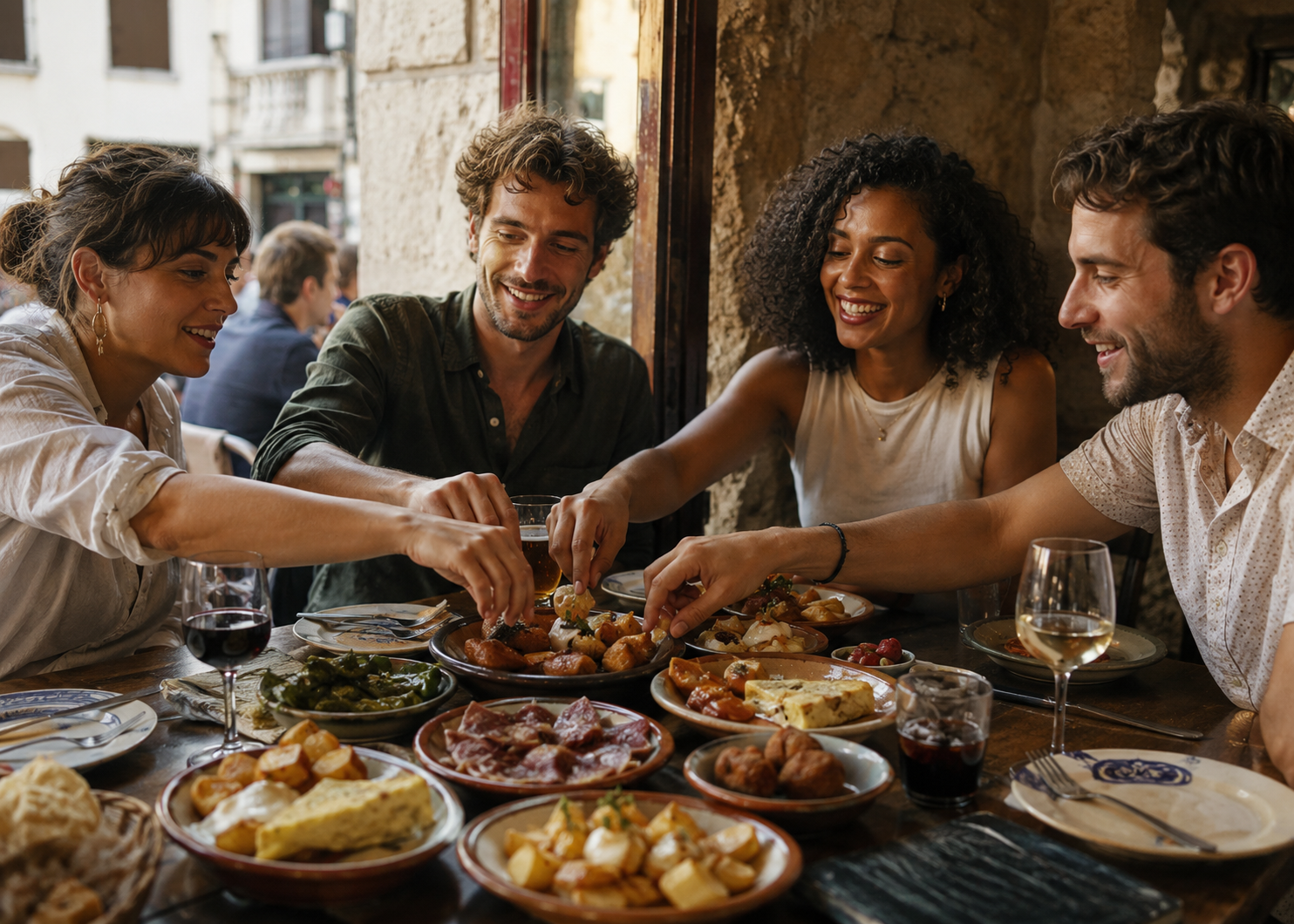
The whole structure of Spanish eating is built around sharing, and the American instinct toward individual plated meals misses the point entirely.
Much of Spanish eating, especially the tapas and raciones that are central to it, is built around sharing, small and medium dishes ordered for the table and eaten communally, everyone reaching in, the meal a shared grazing rather than the American model of each person ordering and eating their own individual plate. The American who orders a single dish as their own personal main, or who is reluctant to share, or who does not understand that the dishes are meant for the whole table, misunderstands the fundamentally communal structure of Spanish eating, where the pleasure is in the variety and the sharing, ordering many dishes among the group and tasting everything together. This sharing model is central to how Spain eats, and the American individual-plate instinct works against it, missing both the social pleasure and the variety that sharing provides.
The fix is to embrace the sharing, ordering a variety of tapas and raciones for the table to share rather than individual mains, reaching in communally, tasting everything, treating the meal as the shared grazing experience it is meant to be. This is not only the authentic way but the more pleasurable one, the variety of many shared dishes beating the monotony of a single individual plate, the social act of sharing food central to the warmth of Spanish dining, so leaning into it improves both the experience and the way you fit the Spanish table. Order to share, reach in, taste widely, and you participate in the communal heart of Spanish eating rather than sitting outside it with your own private plate, the sharing being one of the great pleasures that the American individual-portion instinct would deny you.
Third, Order Your Drinks The Spanish Way
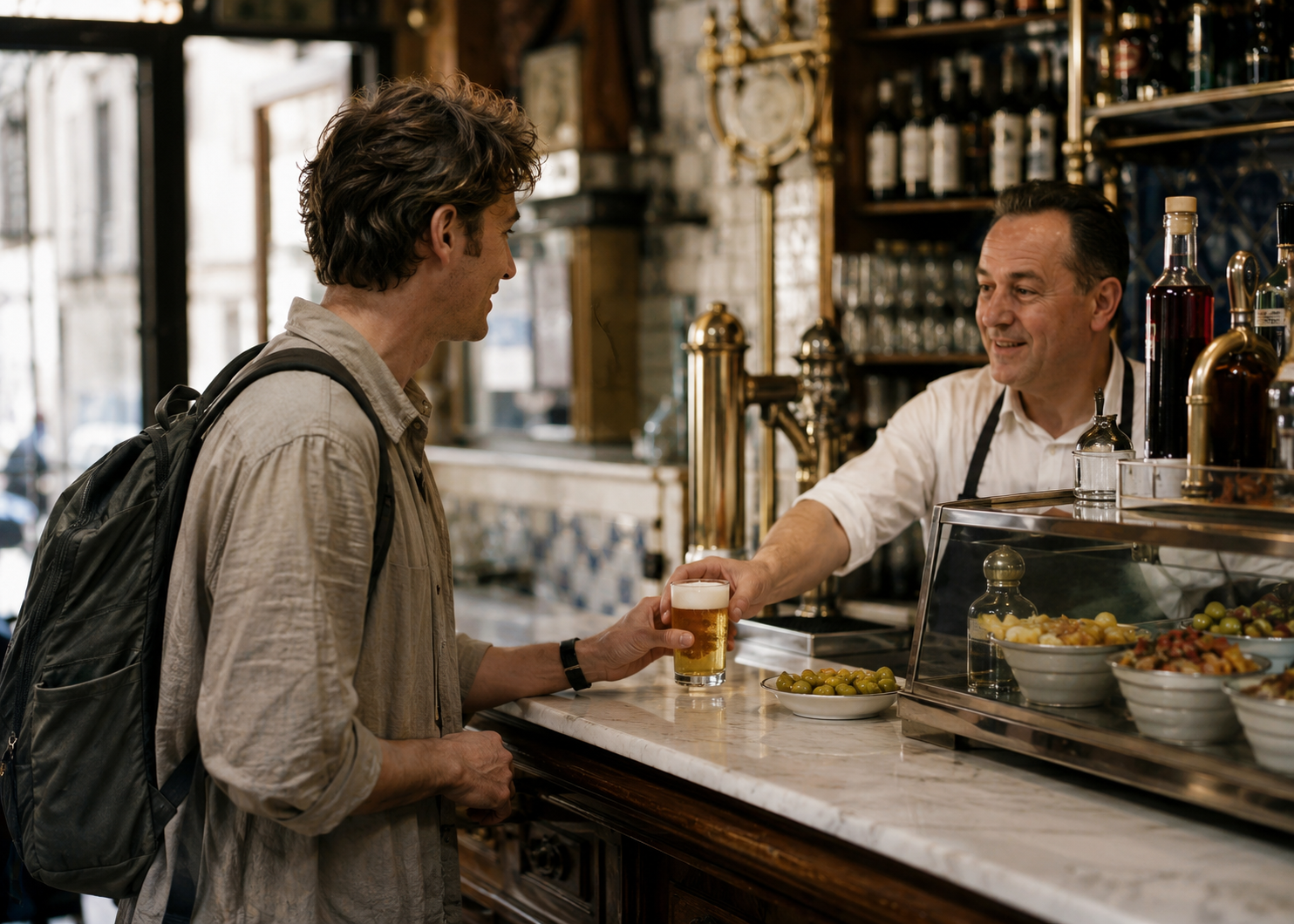
The drinks have their own vocabulary and customs in Spain, and the American ordering misfires in specific ways worth knowing.
Spanish drinking culture has its own forms, the caña, the small glass of draft beer that is the default rather than the large American pint, the vermut, the vermouth that is a beloved pre-lunch aperitif, the wine by region and type, and the American ordering a large beer, or unfamiliar with the small caña, or not knowing the vermut tradition, orders in the American mode and misses the Spanish forms. The caña in particular is worth knowing, since Spaniards typically drink beer in these small fresh glasses rather than large ones, ordering another when it is done, the small size keeping the beer cold and fresh, and the American asking for a large beer marks the unfamiliarity. The whole Spanish drink culture, the small caña, the vermut hour, the local wines, has its own shape that the American ordering by American habits does not match.
The fix is to learn and adopt the Spanish drink forms, ordering a caña for a small fresh beer, trying the vermut as the Spaniards do before lunch, drinking the local wines, ordering in the Spanish way rather than importing American drink habits. There is real pleasure in the Spanish drinking customs once adopted, the perfect small cold caña, the ritual of the pre-lunch vermut, the regional wines, and the American who learns to drink as the Spanish do rather than ordering by American defaults both fits the culture and discovers its pleasures. Order the caña, try the vermut, drink the local wine, and you participate in the Spanish drinking culture properly, another of the small competences that distinguishes the guest who understands Spain from the tourist ordering by foreign habits.
Fourth, Tapas Etiquette And The Free Tapa
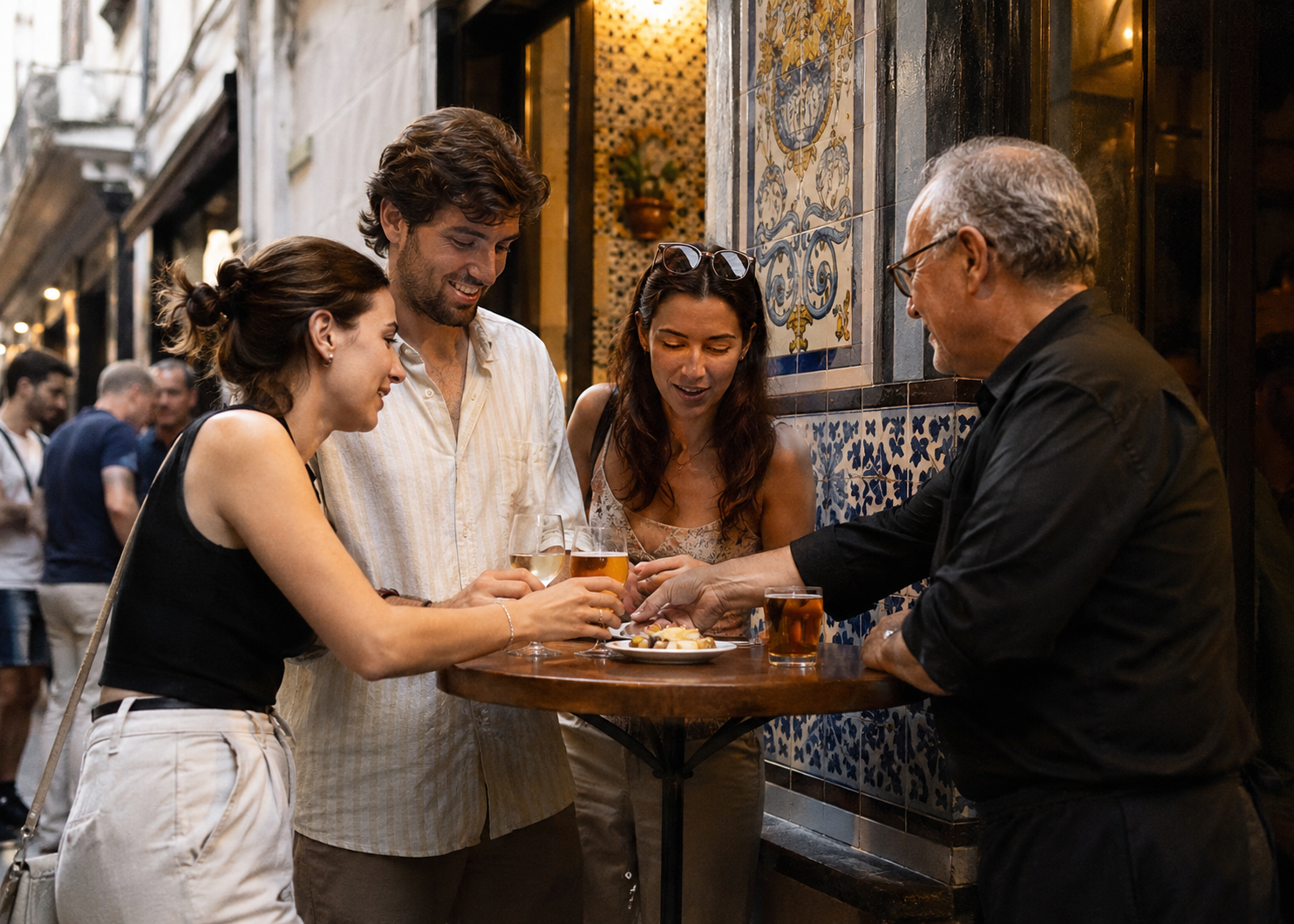
The tapas system itself has customs that surprise Americans, including the regional tradition of the free tapa, worth understanding.
In some parts of Spain, notably Granada and parts of Andalusia and beyond, there is a wonderful tradition of a free tapa arriving with each drink ordered, a small plate of food included with your caña or wine at no charge, a custom that delights Americans when they discover it but that they often do not know to expect or how it works. Elsewhere tapas are ordered and paid for, and the system varies by region and establishment, the American needing to understand whether tapas come free with drinks or are ordered separately, and how the local tapas custom works, since it differs across Spain. The tapas culture also has its own rhythm, the moving between bars, the tapeo, going from place to place having a drink and a tapa at each rather than settling in one spot for a whole meal, a mobile social way of eating that Americans may not know.
The fix is to learn the local tapas custom of wherever you are, discovering whether the free tapa tradition operates there, understanding whether to order tapas separately or expect them with drinks, and embracing the tapeo, the moving between bars, where that is the custom. This regional variation is part of the richness of Spanish eating, the free tapa of Granada a particular delight, the tapeo a wonderful social ritual, and the American who learns how the local tapas system works participates in it properly rather than fumbling. Understand the tapas customs, enjoy the free tapa where it exists, try the tapeo of moving between bars, and you engage with one of the most distinctive and pleasurable features of Spanish eating in the way the locals do.
Fifth, Do Not Rush, And Linger For The Sobremesa
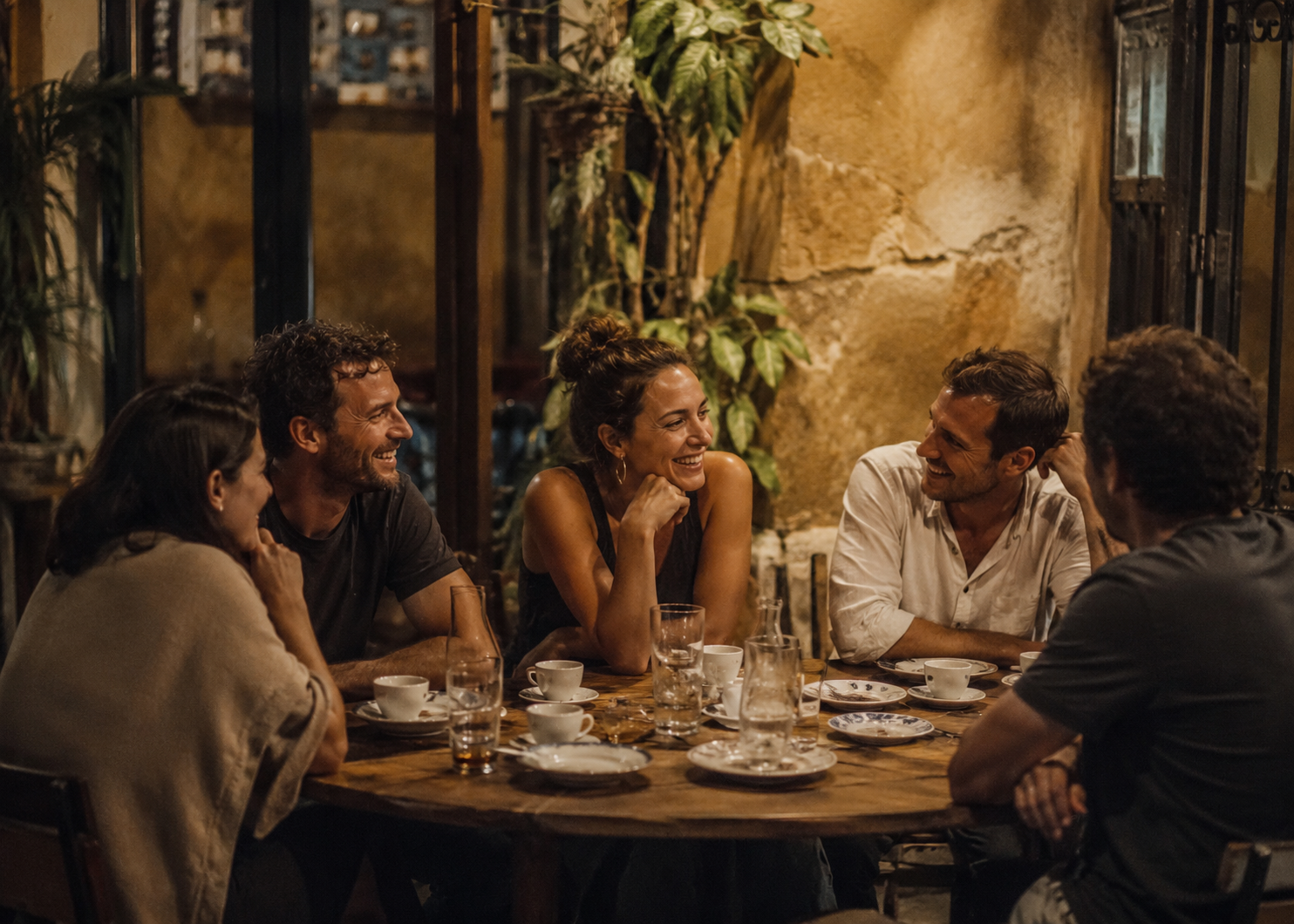
The Spanish meal is long and the lingering afterward is sacred, and the American rush collides with both.
The Spanish meal is a leisurely, social, unhurried affair, but beyond even the long meal itself there is the sobremesa, the cherished Spanish custom of lingering at the table after the food is finished, talking over coffee or a digestif, the conversation and the company extending long past the eating, a beloved institution that can last as long as the meal itself. The American instinct to eat efficiently and leave promptly collides with both the long Spanish meal and the sobremesa, the American wanting to finish and go while the Spaniards settle in for the extended lingering that is, for them, much of the point of the meal, the social time at the table after eating being treasured rather than rushed through. The American who eats fast and wants to leave misses the sobremesa entirely and marks their foreignness to the Spanish rhythm.
The fix is to slow down for the whole arc of the Spanish meal, the long leisurely eating and then the sobremesa, the lingering at the table over coffee and conversation, settling in for the extended social time rather than rushing to finish and leave. This is the deep pleasure of Spanish dining, the meal as an unhurried social event culminating in the sobremesa, the long talk over the cleared plates, and the American who embraces it discovers the actual heart of how Spain eats, the food being only part of it and the lingering company being the rest. Slow down, eat at the Spanish pace, and stay for the sobremesa, and you participate in the full social ritual of the Spanish table rather than treating it as a meal to be efficiently completed.
Sixth, The Bill Comes Only When You Ask
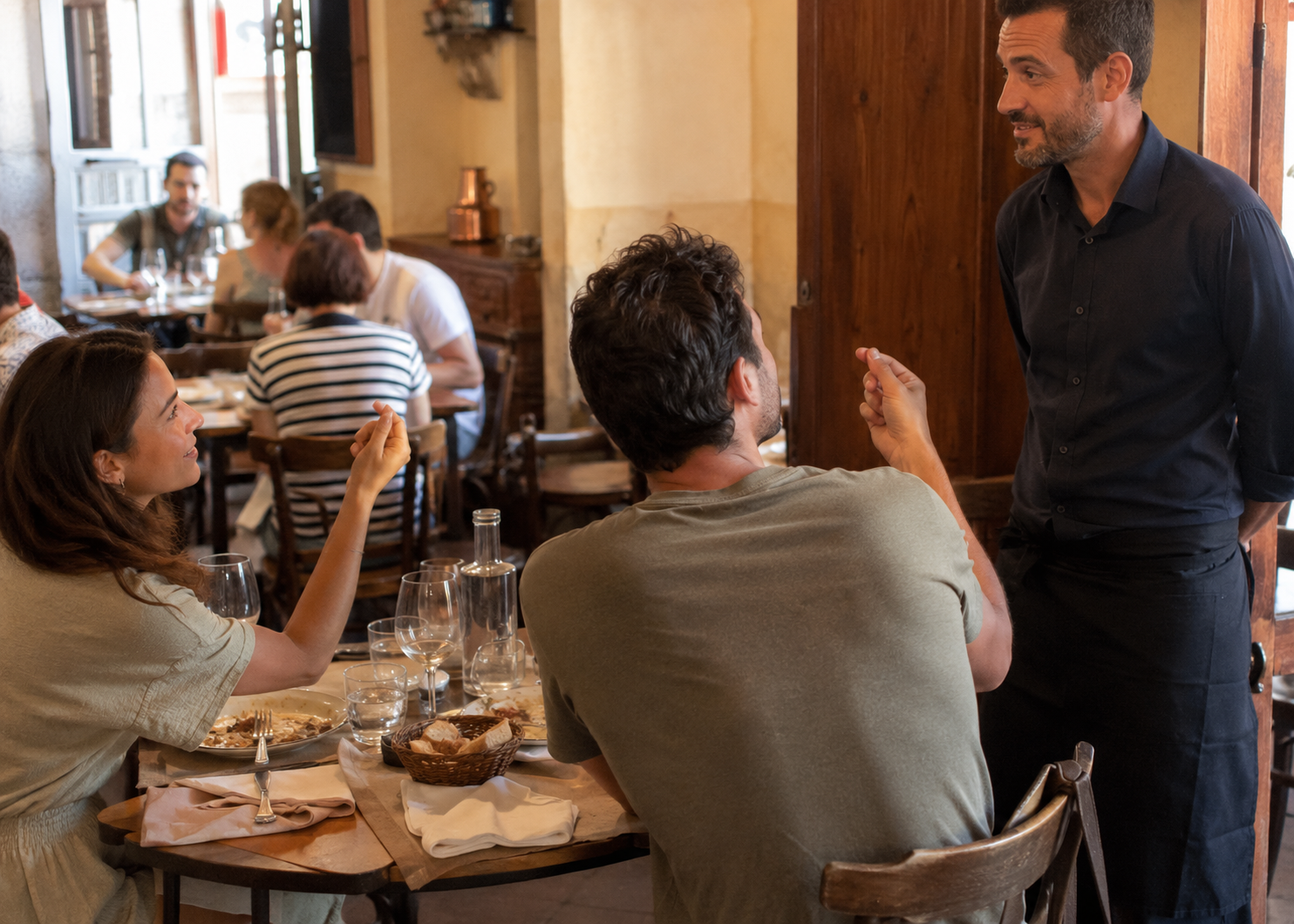
The end of the meal works differently in Spain, and the American expectation about the check creates friction.
In Spain, the bill is not brought until you ask for it, since to bring the check unbidden would be to rush the diners, which runs against the whole leisurely sobremesa culture, so the waiter leaves you to linger as long as you like and brings the bill only when you request it, la cuenta por favor. The American, accustomed to the check arriving promptly or being dropped on the table to signal the meal is over, may sit waiting for a bill that will never come unprompted, growing impatient, misreading the Spanish respect for their lingering as inattentive service, when in fact the waiter is correctly leaving them to enjoy the sobremesa undisturbed. This is a frequent source of American frustration in Spain, the bill that does not come, which is actually a courtesy, the staff not rushing you, rather than the neglect it is misread as.
The fix is to understand that you must ask for the bill, that it will not come until you do, and that this is a feature rather than a failing, the Spanish way of letting you linger as long as you wish without the pressure of a check signaling you to leave. When you are ready, simply ask, la cuenta por favor, or catch the waiter’s eye and make the universal writing gesture, and the bill comes promptly, but until you ask, the table is yours for as long as you want it. Knowing this removes the frustration entirely, the American understanding that the uncalled-for bill is the Spanish courtesy of unhurried dining, and that the simple act of asking produces it whenever wanted, the end of the meal on your schedule rather than the restaurant’s.
Seventh, Tipping Is Minimal, So Relax
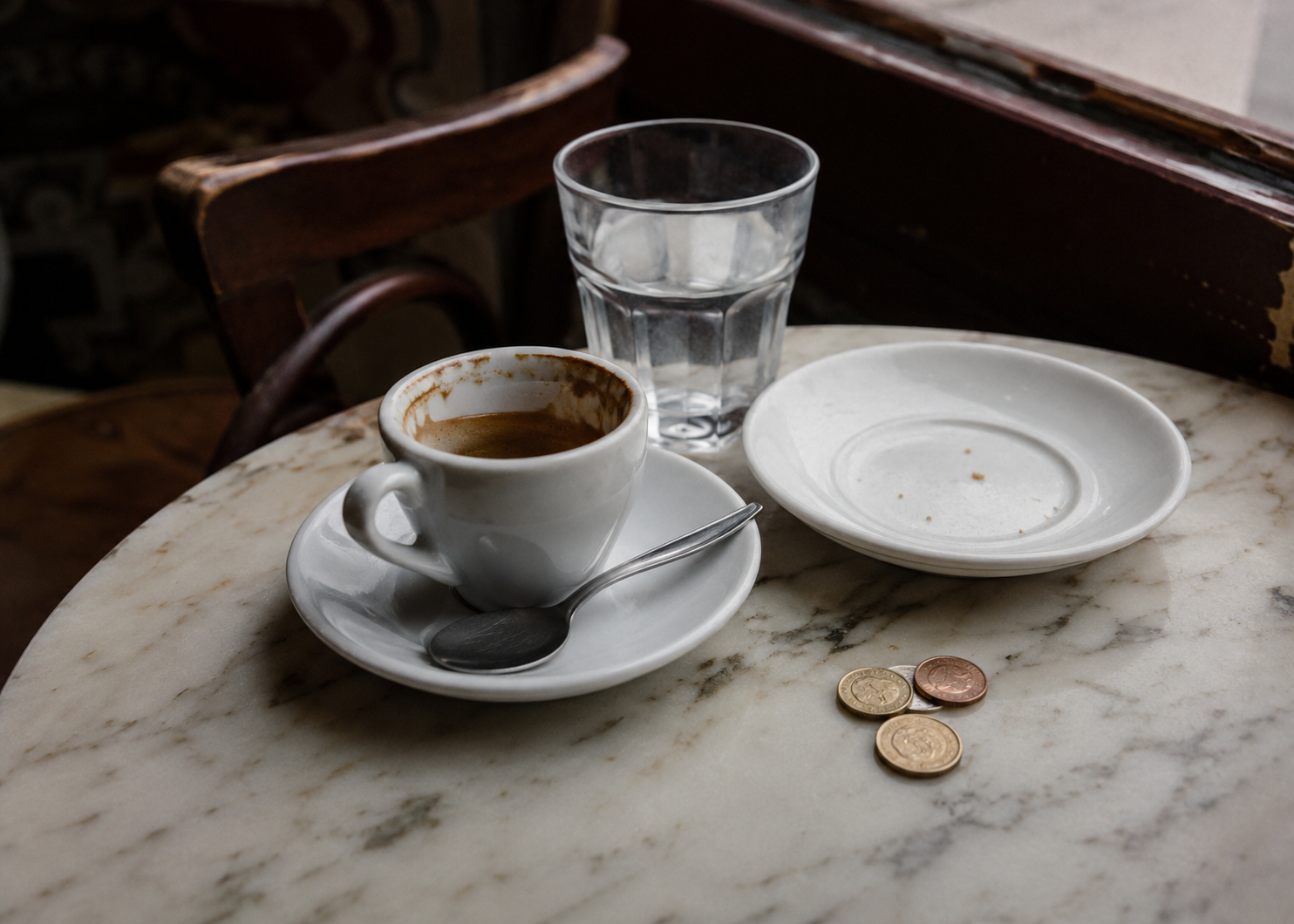
As across much of Europe, the American tipping anxiety misfires in Spain, where the custom is far lighter.
Spain is not a tipping culture in the American sense, with no expectation of the American percentage, and the custom being at most to round up the bill or leave a small amount of change for good service, a euro or two, often nothing at all for a simple drink or coffee. The American who agonizes over the tip, calculates the American percentage, leaves a large gratuity, is operating on rules that do not apply in Spain, the towering American tip being unnecessary and marking the foreignness, since Spanish service is paid differently and the small rounding-up or modest change is all that is customary. The tipping anxiety that shapes American dining is simply not needed in Spain, the expectation being so much lighter that the elaborate American calculation is beside the point.
The fix is to relax about tipping in Spain, knowing that it is minimal, that no American-scale gratuity is expected, and that rounding up or leaving a little change for good service is generous and appropriate, with nothing at all being fine for small orders. Let go of the American tipping habits and anxiety, enjoy the lighter Spanish custom where the price is largely the price, and leave a small token for good service if you wish, which removes one more piece of the American friction. Understand that Spanish tipping is light and relaxed, leave the American percentage behind, and you handle the end of the meal as a Spaniard would, without the tipping worry that does not apply, free to enjoy the Spanish ease about the whole matter.
Eighth, Do Not Expect Dinner To Be The Big Meal
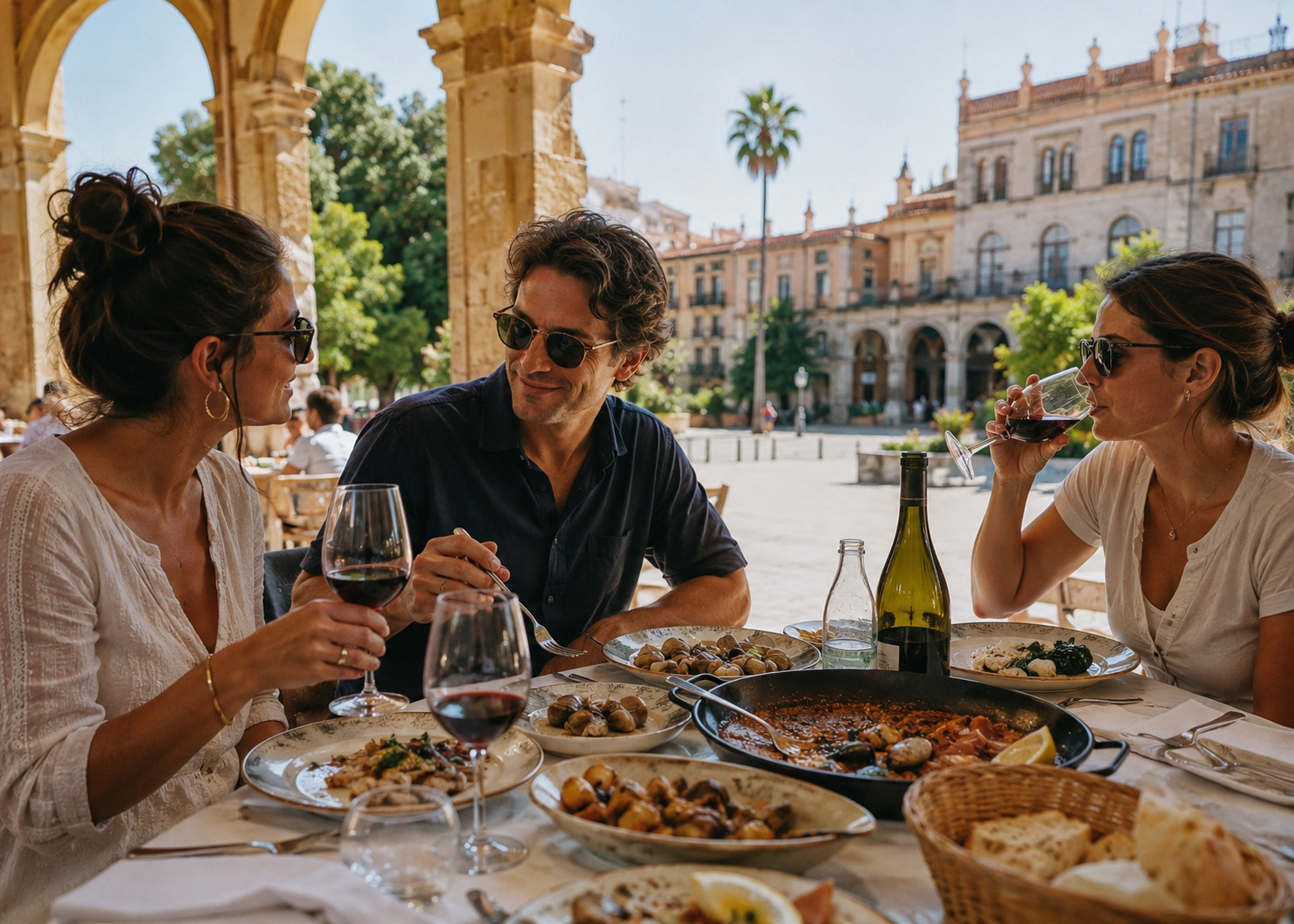
A structural surprise catches Americans out, since the largest meal in Spain is traditionally lunch, not dinner, which reshapes the whole day.
In Spain, the main meal of the day is traditionally the midday lunch, the comida, a substantial multi-course affair eaten around two or three in the afternoon, while dinner, the cena, is typically lighter and later, the reverse of the American pattern where dinner is the large meal and lunch the lighter one. The American who expects a big dinner and a light lunch has the Spanish structure backwards, potentially under-eating at the substantial lunch hour and then arriving for a large dinner that the Spanish would take lighter and later, the whole shape of the day’s eating inverted from the American norm. This structural difference catches Americans by surprise and shapes everything, the timing, the size, the rhythm of the meals being arranged differently in Spain than the American expectation.
The fix is to flip your sense of the day’s meals to match Spain, treating lunch as the main substantial meal, eaten in the early afternoon, and dinner as the lighter, later affair, which aligns you with the Spanish rhythm and the way restaurants and kitchens actually operate. This adjustment, making lunch the big meal, takes some getting used to for Americans but is both the authentic Spanish pattern and a pleasant one, the substantial leisurely midday comida being a genuine pleasure, the lighter later dinner suiting the late Spanish evening. Understand that lunch is the main meal in Spain, arrange your eating accordingly, and you fit the Spanish structure properly, the last of the rules being this fundamental reshaping of the day’s meals from the American pattern to the Spanish one, which once adopted makes the whole of Spanish eating fall into place.

About the Author: Ruben, co-founder of Gamintraveler.com since 2014, is a seasoned traveler from Spain who has explored over 100 countries since 2009. Known for his extensive travel adventures across South America, Europe, the US, Australia, New Zealand, Asia, and Africa, Ruben combines his passion for adventurous yet sustainable living with his love for cycling, highlighted by his remarkable 5-month bicycle journey from Spain to Norway. He currently resides in Spain, where he continues sharing his travel experiences with his partner, Rachel, and their son, Han.