
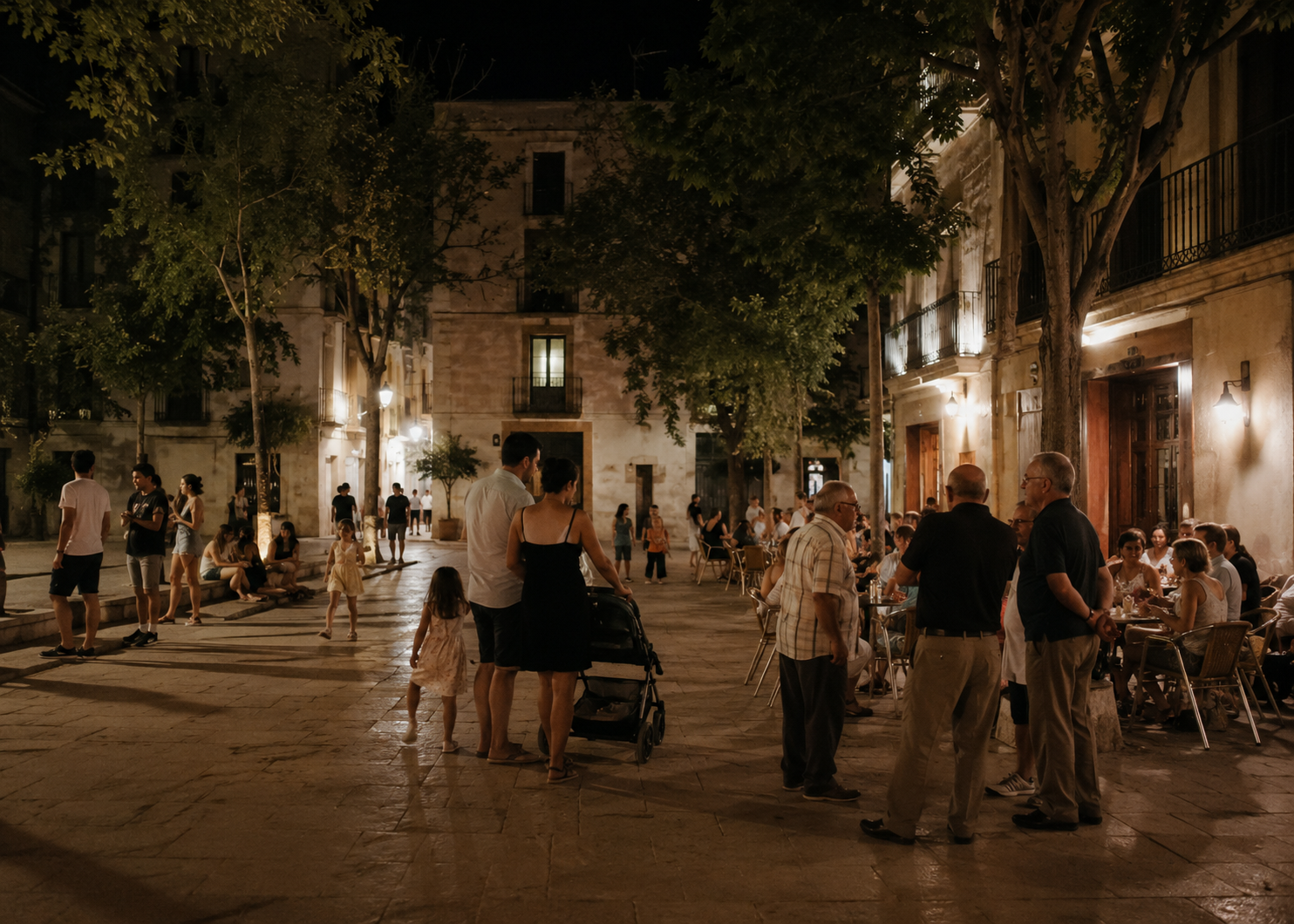
At ten in the evening in a Madrid summer, the city is just sitting down to dinner. The plazas are filling, the terraces are full, children are still playing in the squares, and the whole social life of the city is unfolding in the warm night air, hours after an American city would have gone quiet. At midnight, the streets are still alive, the dinner lingering into the sobremesa, the night far from over. To the American, conditioned to early dinners and early nights, this seems impossible, even unhealthy, but spend a few summer nights living it and you understand, this is not dysfunction but wisdom, a routine perfectly adapted to the heat that turns the summer night into the best part of the day.
The Spanish summer night routine, the late dinner, the alive midnight streets, the whole shifting of life into the cool of the night, is one of the great adaptations to hot-climate living, and it is what makes the Spanish summer not just bearable but genuinely wonderful. It is a routine that takes the heat that would ruin the day and uses it to create the magic of the warm night, and understanding it is to understand much of what makes the Spanish summer worth celebrating. Here is the Spanish summer night routine, why it works so well with the heat, and what makes it worth adopting.
The Logic Of The Late Dinner
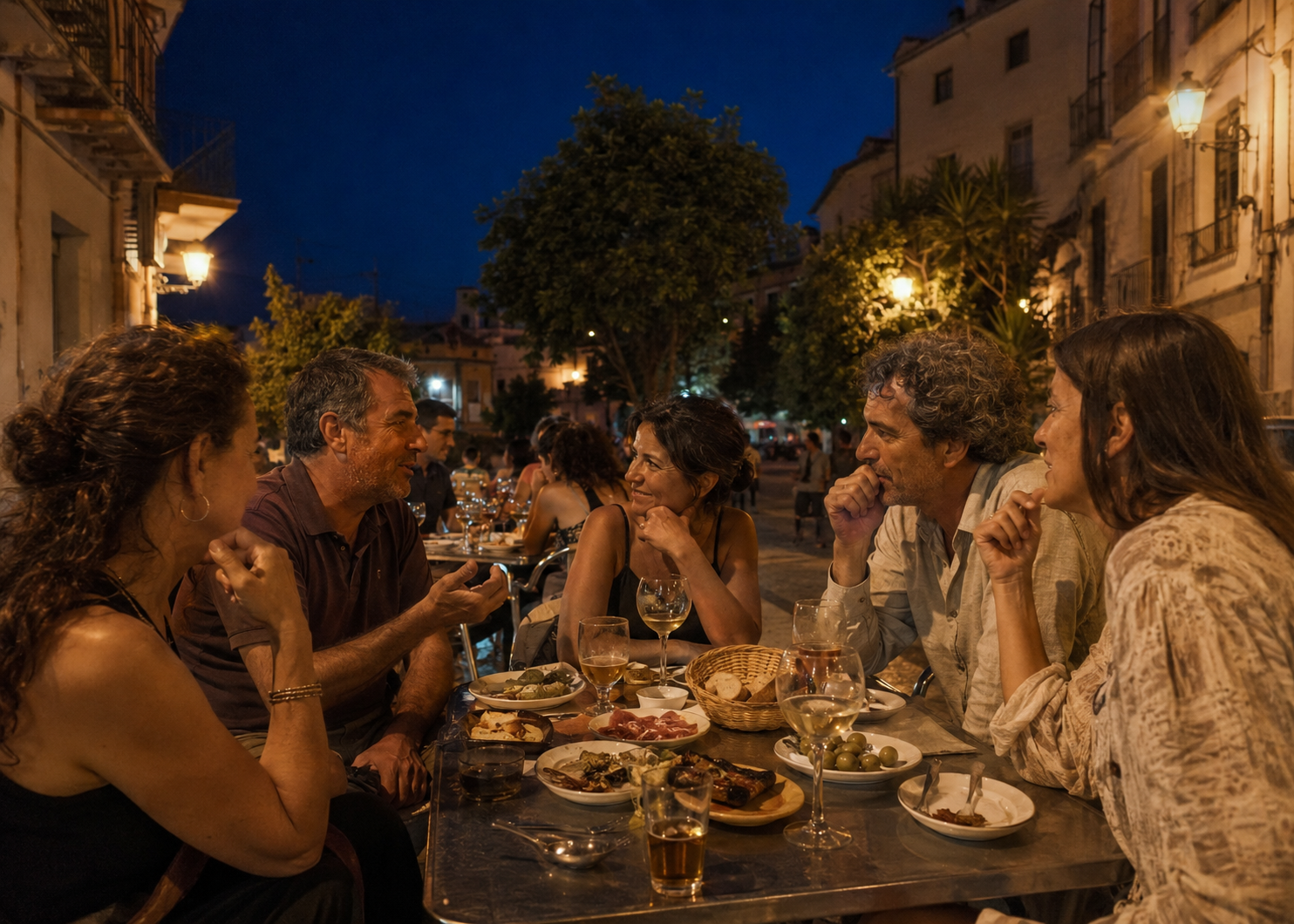
The foundation of the routine is the late dinner, which makes perfect sense once you understand the heat it is adapted to.
The Spanish summer dinner comes late, at ten in the evening or later, and this is not arbitrary but a sensible adaptation to the heat, since the early evening in a Spanish summer is still hot, the day’s heat lingering through the early hours of the evening, so dinner waits until the air has cooled enough to make eating, especially eating outdoors, pleasant. By ten, the worst of the heat has broken, the air is cooling toward the comfortable warmth of the summer night, and dinner can be enjoyed in comfort, often outdoors on a terrace or in a plaza, in the pleasant cool of the late evening rather than the lingering heat of the earlier hours. The late dinner is thus a direct response to the heat, waiting for the cool of the night to eat, which makes the meal a pleasure rather than a sweaty ordeal, the timing dictated by the sensible avoidance of the lingering evening heat.
This logic extends to the whole shape of the day, since the late dinner is part of a rhythm that pushes life later to work with the heat, the late lunch, the afternoon rest or slow period, the late dinner, the whole day shifted later so that the active social hours fall in the cooler parts, the morning and especially the long evening and night. The American early dinner, by contrast, would fall in the lingering heat of the early evening, a less pleasant time to eat, so the Spanish late dinner is simply the more sensible adaptation to the hot climate, eating when it is cool rather than when it is hot. Understanding the late dinner as an adaptation to the heat, waiting for the cool of the night to eat in comfort, is understanding the foundation of the whole Spanish summer night routine, the sensible shifting of the meal into the pleasant cool of the late evening.
The Streets Alive At Midnight
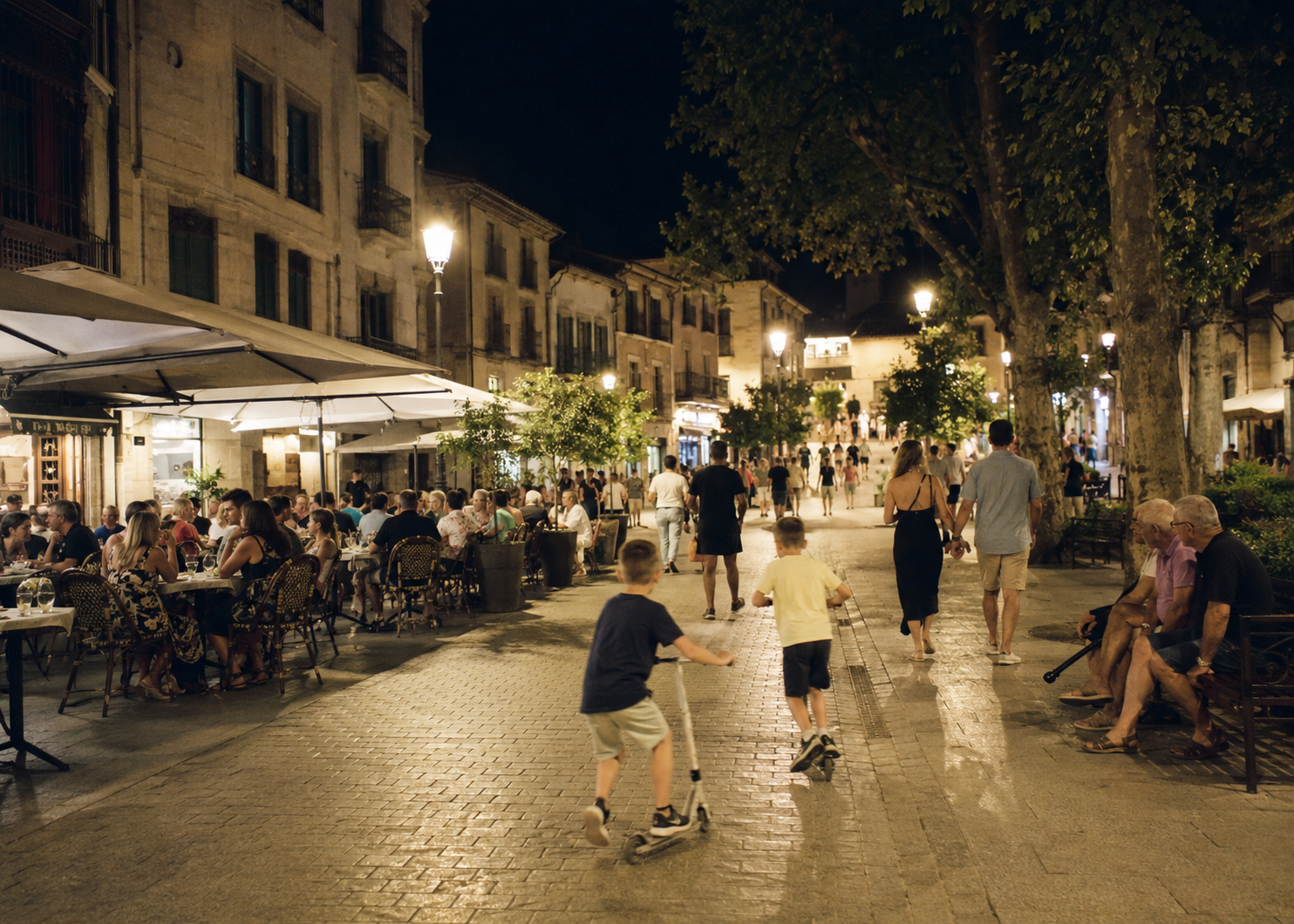
The most striking feature to the American is the alive midnight streets, the social life unfolding deep into the warm night, and this too has its logic and its magic.
In the Spanish summer, the social life of the city unfolds in the cool of the night, the streets and plazas alive at midnight and beyond, the people out in the warm night air, dining and strolling and talking and socializing in the pleasant cool that the day’s heat would not allow. This is the payoff of the routine, the claiming of the cool night for the social life that the hot day cannot comfortably host, the warm summer night becoming the main stage of life, the streets alive late because the night is when it is pleasant to be out, the heat of the day having driven the life into the cool of the night. The alive midnight streets are not a sign of a society that does not sleep but of one that has sensibly moved its outdoor social life into the coolest and most pleasant part of the summer day, the warm night.
The magic of this is real and considerable, the warm summer night as a setting for outdoor social life being one of the great pleasures of the Spanish summer, the plazas and terraces full of people enjoying the cool night air, the children still playing, the conversations and the meals lingering, the whole warm-night life that the American sealed indoors never experiences. There is something wonderful about the alive summer night, the city given over to the pleasant cool after the heat of the day, the social life unfolding under the stars in the warm air, a magic that depends entirely on the late routine that claims the night. The streets alive at midnight are the heart of the Spanish summer’s magic, the warm night reclaimed for life, and experiencing it, being out in the alive summer night rather than asleep or sealed indoors, is to understand what the routine makes possible.
How The Whole Day Supports It
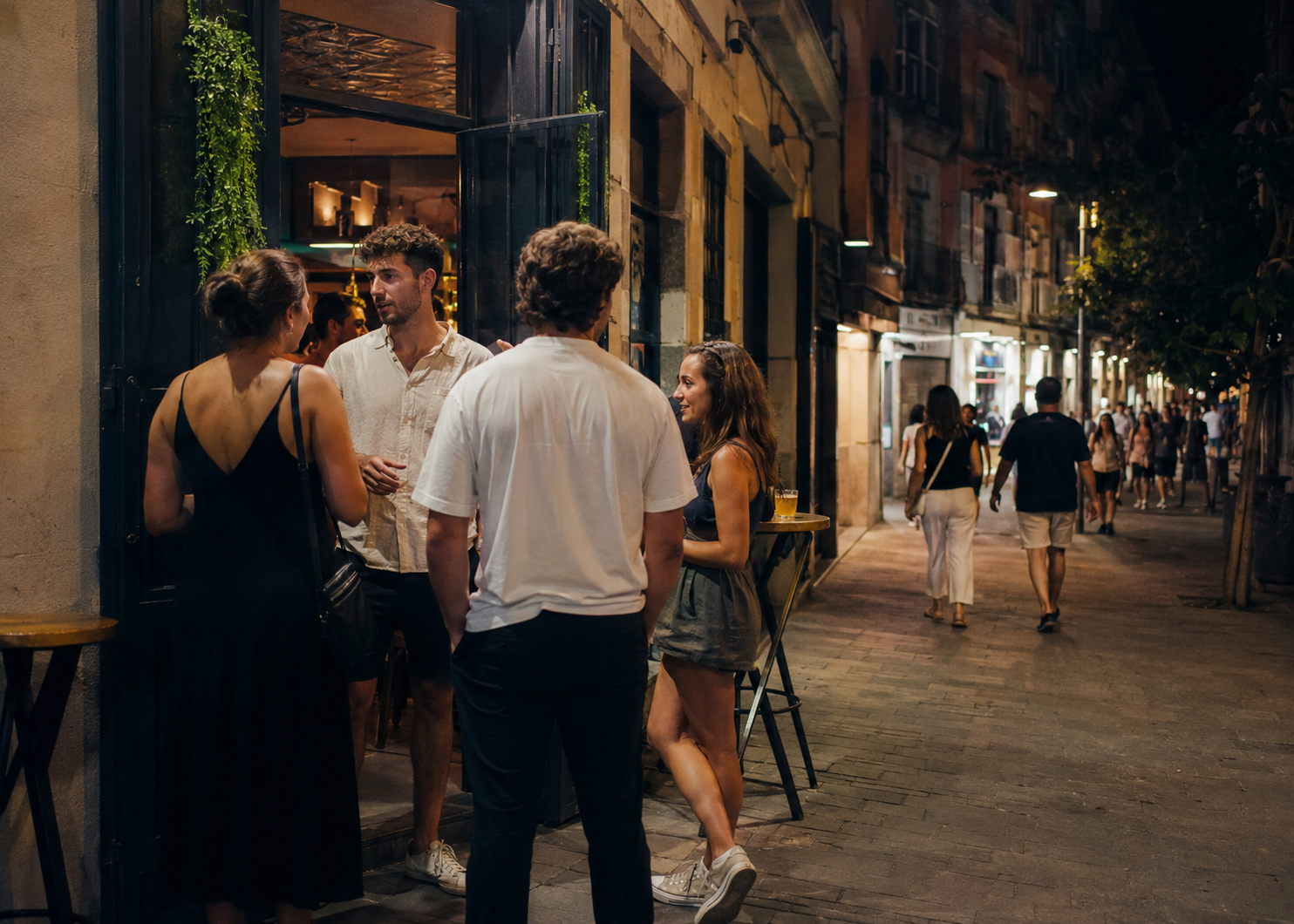
The late night works because the whole day is structured to support it, and understanding this removes the apparent impossibility.
The reason Spaniards can dine at ten and stay out past midnight without exhaustion is that the whole day is structured to support the late night, the later start, the long lunch, the afternoon rest or slower period, the whole rhythm shifted so that the late night is sustainable rather than exhausting. The siesta tradition or the afternoon slow period is part of this, the rest in the hot afternoon making the late night possible, the day’s energy conserved through the heat for the evening and night, so the late routine is not a matter of simply staying up late on an American schedule but of a whole differently-shaped day that makes the late night natural. The American who tries to keep American daytime hours and also stay out past midnight would indeed be exhausted, but the Spaniard’s whole day is built differently to make the late night sustainable.
This is the key to understanding how the routine works and is not the dysfunction it appears to the American, since it is not a society staying up too late on a normal day but a society living a differently-shaped day adapted to the heat, the late night balanced by the later start and the afternoon rest, the whole rhythm coherent and sustainable. The apparent impossibility of the late dinner and the midnight streets dissolves once you see that the whole day supports them, the rhythm shifted later and balanced by the afternoon rest, so the late night is natural rather than exhausting. Understanding that the whole day is structured to support the late night, the later start and the afternoon rest balancing the late dinner and the midnight life, removes the apparent impossibility and reveals the routine as the coherent sensible adaptation it is, a whole day shaped around the heat to make the warm night the pleasant center of life.
Why It Makes The Heat Worth It
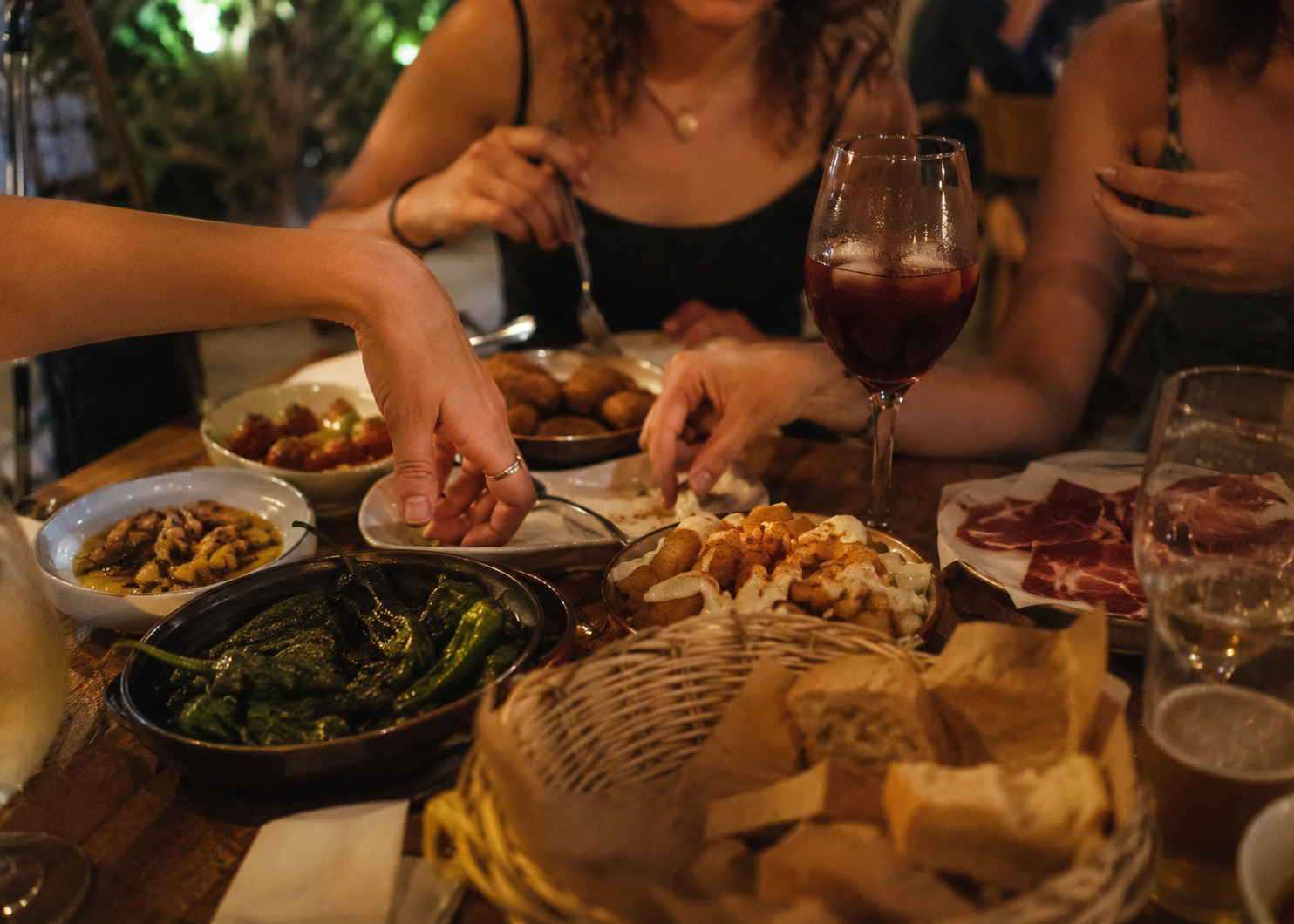
The deepest point is that the routine does not just cope with the heat but makes it worth it, turning the summer’s burden into its gift.
The genius of the Spanish summer night routine is that it takes the heat that would be a pure burden and uses it to create the magic of the warm night, since the very heat that makes the day difficult is what makes the night warm and pleasant, the routine transforming the heat from an all-day ordeal into the condition of the wonderful summer evening. Without the heat there would be no warm night to enjoy, so the routine, by shifting life into the night, turns the heat into the source of the summer’s greatest pleasure, the warm-night life, the burden becoming the gift through the simple device of living at night. This is why the routine makes the heat worth it, not merely bearable but actually the occasion for the magic, the warm summer night that the heat creates and the late routine claims.
This transformation is the heart of the matter, the difference between the American summer, where the heat is a pure burden to be escaped and the season is lost to air conditioning, and the Spanish summer, where the heat is turned through the night routine into the source of the season’s magic, the warm evenings and the alive nights. The Spanish do not suffer the summer more stoically than Americans, they suffer it less, because they have turned it into a pleasure, the routine making the heat worth it by using it to create the warm-night life that is the best of the season. Understanding this is understanding the real wisdom of the routine, not just a way of coping with the heat but a way of transforming it into the magic of the summer night, the burden become the gift, the heat made worth it through the simple genius of living in the cool of the night.
What An American Can Take From It
The routine offers Americans a real lesson for their own summers, available to anyone willing to shift their nights, worth spelling out.
The transferable lesson is to shift the summer evening later, to claim the cool of the night for life as the Spanish do, taking dinner later when the air has cooled, spending the warm evening and night outdoors, treating the cool night as the pleasant center of the summer day rather than retreating indoors. An American does not need to adopt the full Spanish schedule to benefit, but can shift their summer evenings later, dining outdoors as the air cools, staying out in the warm night, reclaiming the cool evening and night that the early-dinner early-night American routine forfeits, capturing some of the magic of the warm summer night. The lesson is the shift to the night, the claiming of the cool warm evening for life, available to anyone willing to push their summer evenings later.
The deeper lesson is the reframing of the heat, the recognition that the summer heat, rather than a pure burden to be escaped, can be turned through the night routine into the source of the season’s pleasure, the warm-night life, so that the heat becomes worth it. The American who adopts even part of the routine, who shifts the summer evening later and claims the warm night, discovers that the heat can be made worth it, that the warm summer night is a pleasure the early-night routine misses, that the season can be celebrated rather than merely endured. Take from the Spanish summer night routine the shift to the cool night and the reframing of the heat, push your summer evenings later and claim the warm night, and you can find in your own summer some of the magic the Spanish know, the dinner at ten and the alive night turning the heat from a burden into the gift of the warm summer evening, the season made worth it through the simple wisdom of living in the night.
A Night In The Routine
To make the routine concrete, it helps to walk through an actual Spanish summer night, since the texture is the best argument for it.
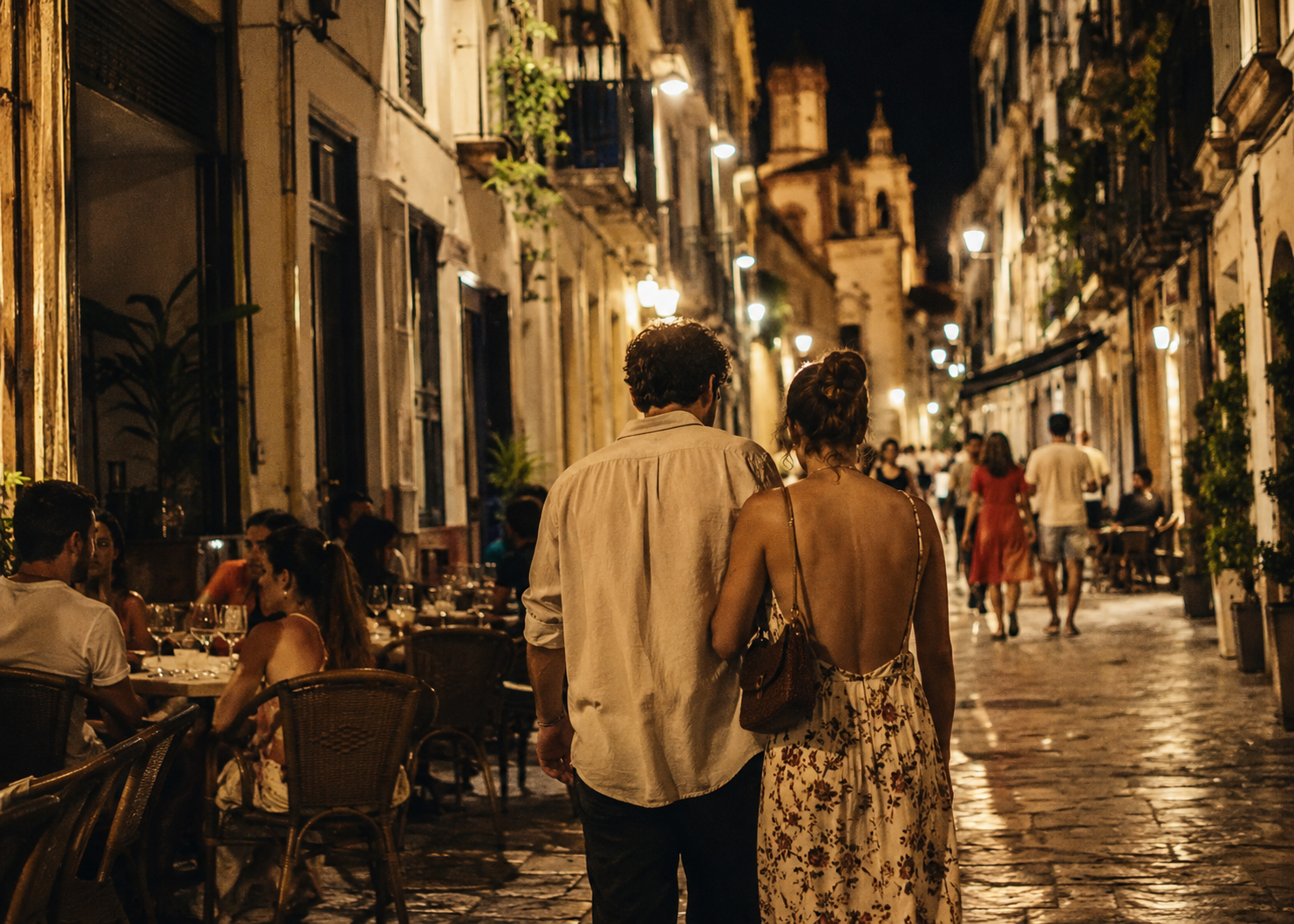
A Spanish summer evening might begin around eight or nine, as the heat finally breaks, with people emerging from homes and the afternoon’s rest, perhaps a stroll, the paseo, in the cooling air, the streets beginning to fill, maybe a drink and a small bite at a terrace as the appetite for the late dinner builds. Dinner itself comes around ten, often outdoors, on a terrace or in a plaza, a leisurely affair in the pleasant cool of the night, the meal unhurried and social, stretching on as Spanish meals do, the conversation and the company as much the point as the food. By eleven or midnight the dinner gives way to the sobremesa, the lingering at the table, or to more strolling, more socializing, the children still up and playing in the squares, the warm night alive with people enjoying the cool after the heat of the day.
This is the texture of the Spanish summer night, the gradual emergence as the heat breaks, the late leisurely outdoor dinner, the lingering warm-night social life stretching past midnight, the whole evening a slow pleasant unfolding in the cool of the night, and lived a few times it becomes not strange but obviously right, the best part of the summer day. The American who experiences it, who lives a few of these warm Spanish summer nights, understands why the routine exists and why it is worth it, the warm night with its late dinner and its lingering life being a genuine pleasure, the magic that the heat and the routine together create. Walk through a Spanish summer night, the emergence and the late dinner and the alive midnight streets, and the routine reveals itself not as dysfunction but as the wise and pleasant adaptation it is, the warm summer night made the center of life, the heat turned into the gift of the alive cool evening that is the best of the Spanish summer.

About the Author: Ruben, co-founder of Gamintraveler.com since 2014, is a seasoned traveler from Spain who has explored over 100 countries since 2009. Known for his extensive travel adventures across South America, Europe, the US, Australia, New Zealand, Asia, and Africa, Ruben combines his passion for adventurous yet sustainable living with his love for cycling, highlighted by his remarkable 5-month bicycle journey from Spain to Norway. He currently resides in Spain, where he continues sharing his travel experiences with his partner, Rachel, and their son, Han.