
By mid-June the Madrid kitchen surrenders. The oven goes cold and stays cold until October, because turning it on in a Madrid summer is an act of self-harm, the city sitting on its plateau and baking through afternoons that pass forty degrees while the pavement gives back the heat it stored all day. This is when you learn how Spaniards actually eat in the heat, which is not the heavy paella and roast meat of the tourist imagination but a whole repertoire of cold dishes, evolved over centuries in a hot country, designed to nourish and refresh without anyone going near a flame.
These are the things I make on repeat from June to September, the cold Spanish dishes that have kept this household fed and cool through Madrid summers, none requiring the oven, most requiring barely any cooking at all, all of them better in the heat than anything hot could be. They are not sad summer salads or compromises but real, satisfying, deeply Spanish food, the genuine answer this country worked out long ago to the question of how to eat well when it is too hot to cook. Here are the five I return to again and again, why they work, and how to make them.
Gazpacho, The One That Started It All
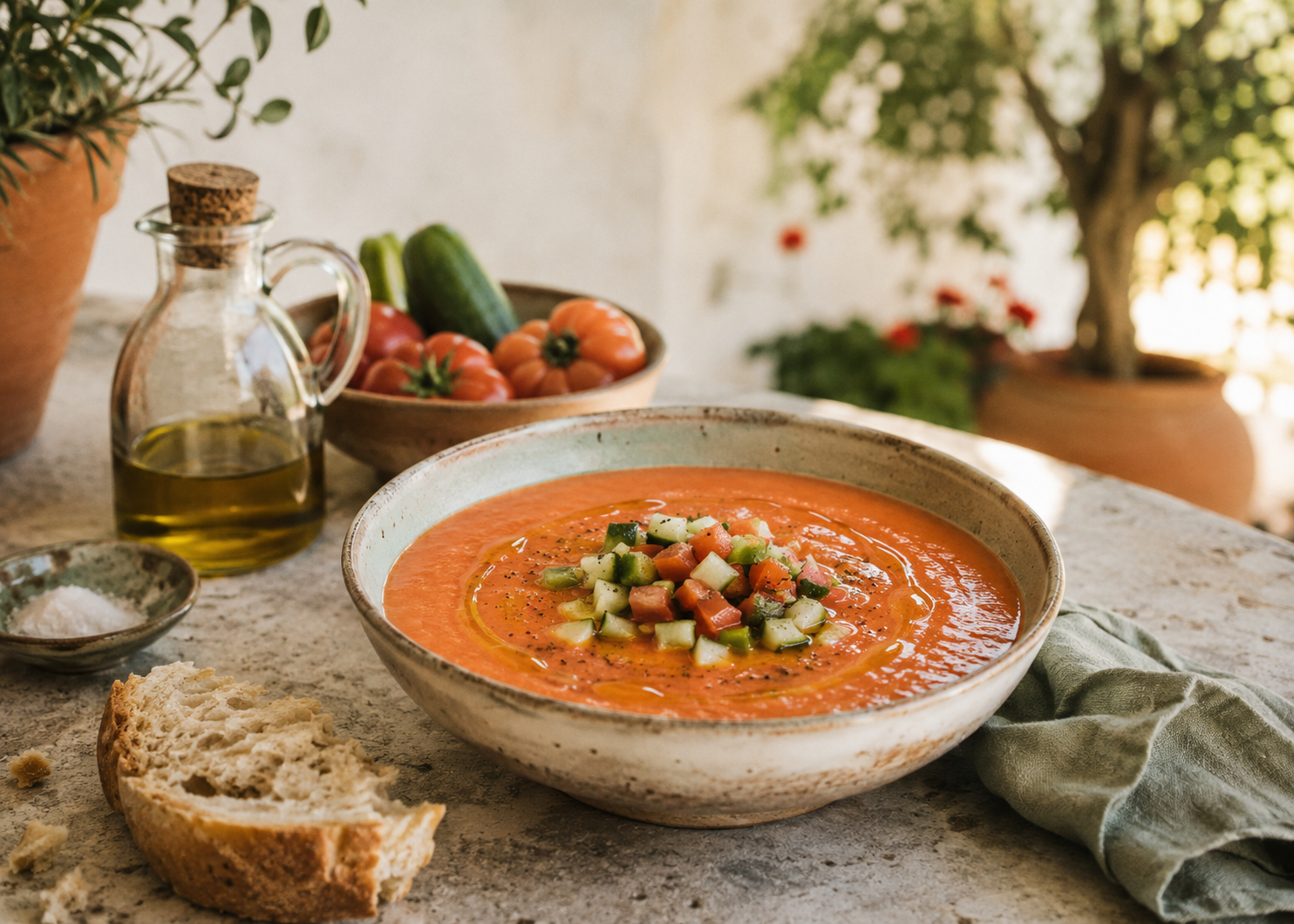
Gazpacho is the obvious one, the cold tomato soup of Andalusia, and it earns its fame, but most Americans have only had a pale imitation of the real thing.
Real gazpacho is not the chunky salsa-like thing often served abroad but a smooth, silky, drinkable cold soup, raw tomatoes blended with cucumber, pepper, garlic, good olive oil, a little sherry vinegar, and bread to give it body, pureed until completely smooth and served cold, sometimes through a glass. It is the genius of the hot south distilled, since it uses the summer’s glut of ripe tomatoes, requires no cooking whatsoever, and delivers something that hydrates, nourishes, and cools all at once, a meal and a refreshment in a single glass. In the deep heat there is almost nothing better, a cold glass of good gazpacho mid-afternoon reviving you in a way that no hot food could, which is exactly the problem it evolved to solve.
The secret to great gazpacho is the quality of the tomatoes and the smoothness of the blend, since this is a dish of few ingredients where everything depends on ripe summer tomatoes and a thorough pureeing, plus the balance of the olive oil and vinegar that lifts the whole thing. Made well, with good tomatoes, blended silky, chilled properly, and finished with a thread of good oil, it is one of the great dishes of summer, and it keeps for days in the fridge, ready to pour whenever the heat demands it. I make a big batch at the start of a hot week and drink it through the days that follow, and it is the first thing I reach for when the Madrid summer truly arrives, the foundational cold dish from which all the others follow.
Salmorejo, The Thicker, Richer Cousin

If gazpacho is the famous one, salmorejo is the one Madrid households actually make more often, the thicker richer cousin from Córdoba that deserves to be far better known abroad.
Salmorejo is gazpacho’s denser relative, made from tomatoes, bread, garlic, and a generous amount of good olive oil blended into a thick, creamy, intensely flavored cold puree, far thicker than gazpacho, almost a dip or a thick soup, traditionally topped with chopped hard-boiled egg and bits of jamón. It is richer and more substantial than gazpacho, the bread and oil giving it a luxurious creaminess, the flavor deeper and more concentrated, and it works as a more filling cold meal where gazpacho is a lighter refreshment. In a Madrid summer it is a perfect lunch, a bowl of cold creamy salmorejo with its egg and jamón, satisfying and cooling at once, requiring nothing but a blender and good ingredients.
The beauty of salmorejo is its simplicity and its richness together, since it is even easier than gazpacho, fewer ingredients, just blended smooth, yet it produces something that feels indulgent, the creamy texture and deep tomato flavor belying how little work it took. The toppings make it a complete dish, the egg and jamón adding protein and savor, turning a simple cold puree into a proper lunch, and a drizzle of good olive oil on top finishes it beautifully. This is the cold dish I probably make most across the summer, since it is so easy and so satisfying, and it is the one I most wish Americans knew, since it is arguably even better than its famous cousin and almost unknown outside Spain. Make salmorejo once and it joins your summer rotation permanently.
Salmorejo Cordobés
The cold dish from this list most worth knowing. No cooking at all beyond boiling an egg. Serves 4 as a starter.
Ingredients
- 1kg (2¼ lb) ripe tomatoes, roughly chopped
- 150g (about 5 thick slices) stale white bread, crusts removed
- 1 small garlic clove
- 120ml (½ cup) extra virgin olive oil, plus extra to serve
- 1 tbsp sherry vinegar
- 1 tsp salt, or to taste
- 2 hard-boiled eggs, chopped, to serve
- 80g (3 oz) jamón serrano, chopped, to serve
Method
- Put the chopped tomatoes in a blender and blend until completely smooth.
- If you want it perfectly smooth, pass the tomato puree through a sieve to remove skins and seeds (traditional, but optional).
- Add the bread to the tomato and let it soak for a few minutes to soften.
- Add the garlic, sherry vinegar, and salt, and blend again until smooth.
- With the blender running, pour in the olive oil in a slow steady stream so the mixture emulsifies into a thick, creamy, pale orange puree.
- Taste and adjust the salt and vinegar. Chill thoroughly, at least 2 hours.
- Serve cold in bowls, topped with chopped hard-boiled egg, jamón, and a generous drizzle of olive oil.
Ensaladilla Rusa, The Cold Potato Salad Spain Perfected
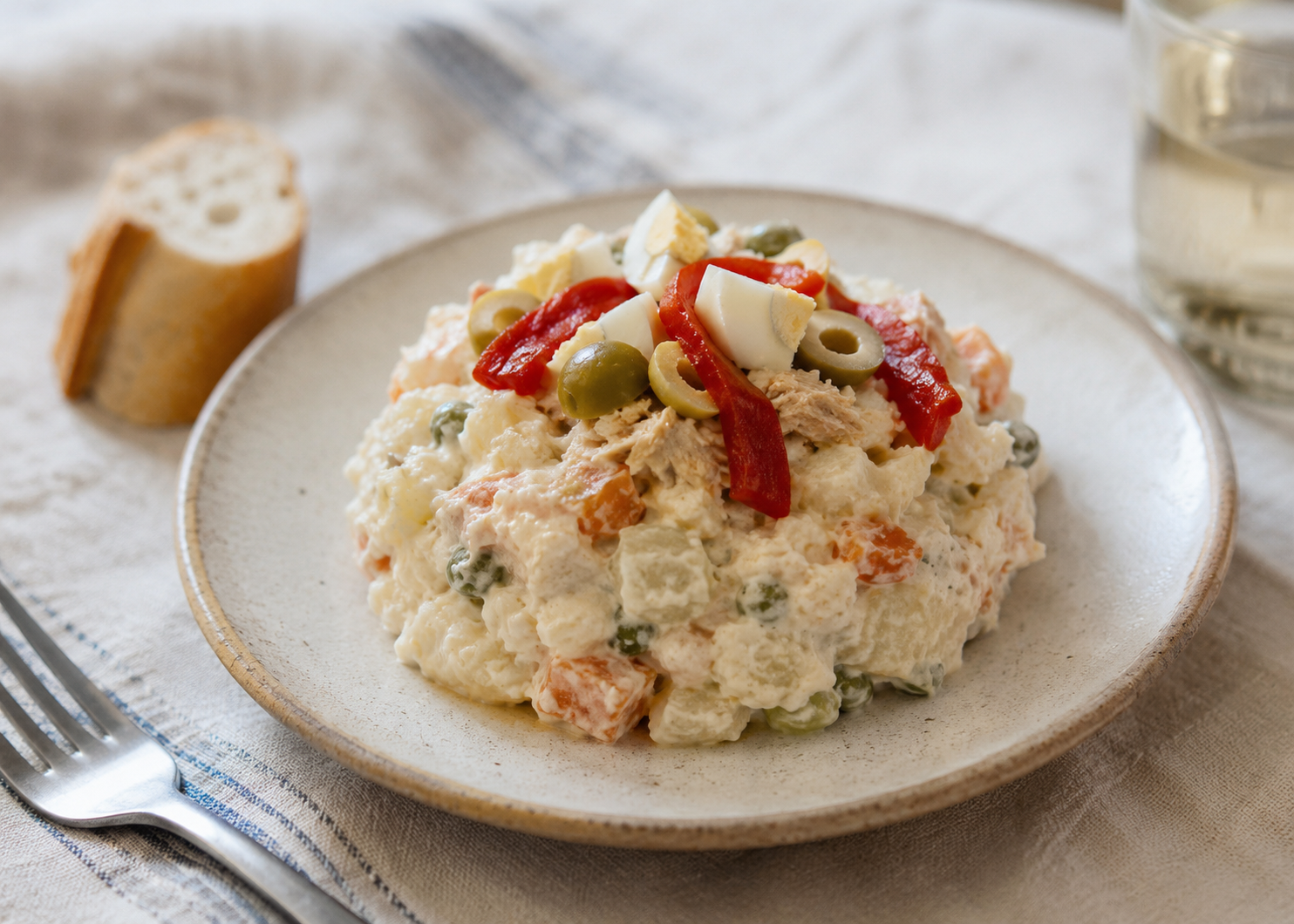
Every Spanish bar serves it and every Spanish family makes it, the ensaladilla rusa, a cold potato salad that Spain adopted and perfected into one of its most beloved tapas.
Ensaladilla rusa is Spain’s version of a cold potato salad, boiled potatoes and often carrots and peas, sometimes tuna, bound in a good mayonnaise, served cold, a humble dish raised to something genuinely delicious by good ingredients and the Spanish touch. It is everywhere in Spain, a fixture of every bar’s tapas selection and every family’s summer table, eaten cold straight from the fridge, perfect in the heat, requiring only the boiling of the potatoes which can be done in the cool of the morning or even the night before. As a cold summer dish it is ideal, filling and satisfying, made ahead and eaten cold, the kind of thing you keep a bowl of in the fridge to eat through a hot week.
What makes the Spanish version special is the quality of the mayonnaise and the balance of the ingredients, since this is a dish where good homemade or good-quality mayonnaise transforms it from ordinary to addictive, and the Spanish proportions, the tender potato, the sweet peas and carrots, the savory tuna, the rich mayonnaise, are perfectly judged. It is the ultimate make-ahead cold dish, since it actually improves after a day in the fridge as the flavors meld, and a big bowl made on a Sunday feeds the household cold through several hot days. Humble, beloved, deeply Spanish, and perfect for the heat, ensaladilla rusa is a cornerstone of how this country eats in summer, and a bowl of it in the fridge is a small insurance policy against the days too hot to cook anything at all.
Cold Tortilla, The Spanish Omelette That Loves The Heat
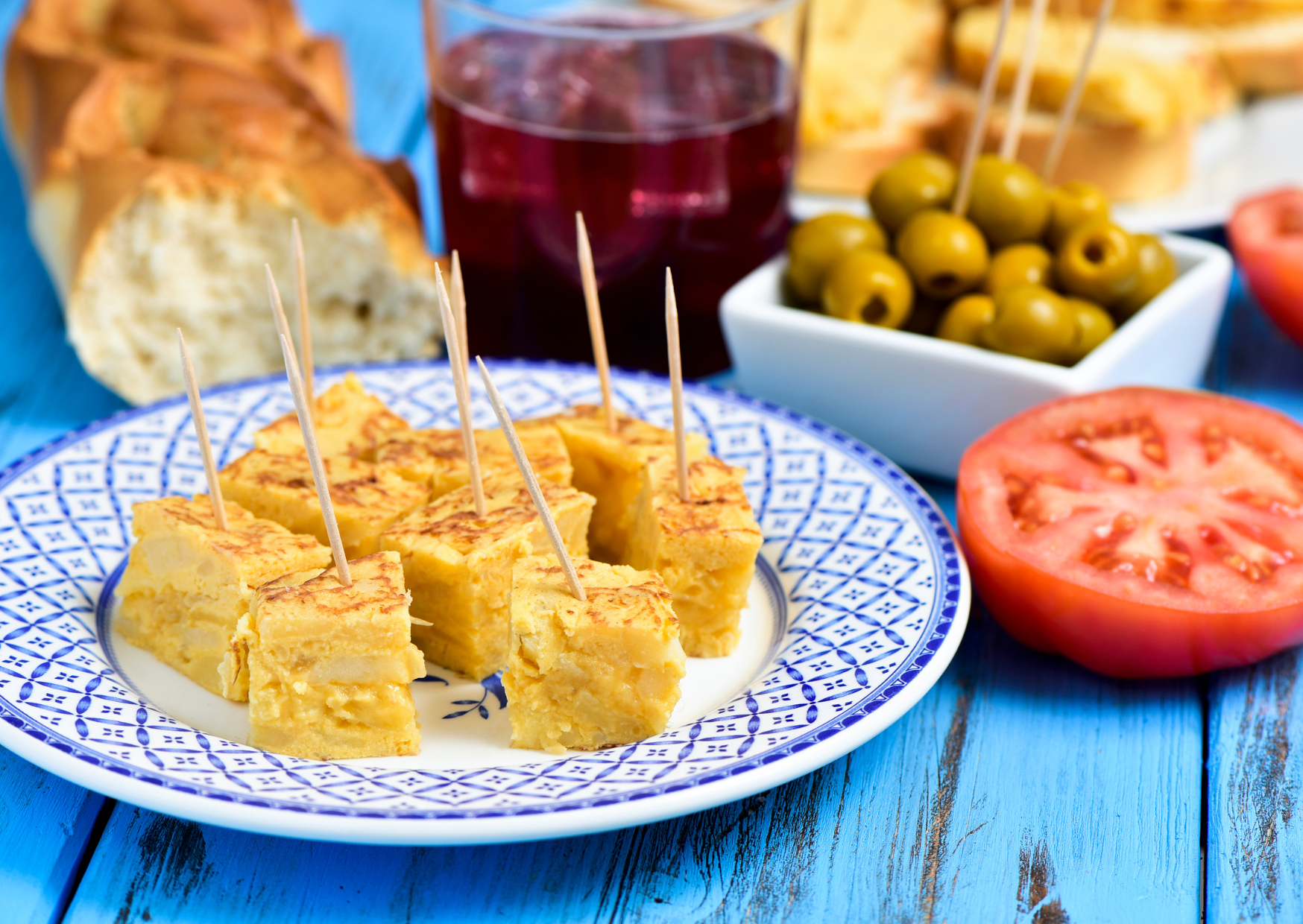
The tortilla española, the Spanish potato omelette, is one of the country’s great dishes, and the secret most Americans miss is that it is often best cold, which makes it perfect summer food.
A tortilla española is the thick potato-and-egg omelette that is among the most fundamental of Spanish dishes, potatoes slowly cooked in olive oil then bound with egg into a thick round cake, cut into wedges, and crucially, it is delicious cold or at room temperature, often better than hot, which makes it ideal summer eating. You make it once, ideally in the cooler morning or evening, and then eat it cold through the day, a wedge of cold tortilla being a perfect summer lunch or tapa, substantial, satisfying, needing no reheating, served at room temperature as Spaniards often prefer it. The cold tortilla is a summer staple precisely because it is made ahead and eaten cold, sidestepping the heat of midday cooking entirely.
The tortilla does require some stovetop cooking to make, the potatoes cooked gently in oil and the omelette set in the pan, but this can be done in the cool hours and the result enjoyed cold for a day or two after, making it an efficient piece of summer cooking, one session of mild stovetop work yielding several cold meals. It is endlessly versatile, eaten as a tapa, a light meal, in a sandwich, the bocadillo de tortilla being a beloved thing, and it keeps well, so a tortilla made in the morning feeds you cold through a hot day. Among the cold dishes of a Spanish summer it is the most substantial and protein-rich, and a cold tortilla in the fridge, like the ensaladilla, is a quiet guarantee that you will eat well even on the days when the kitchen is unbearable. It is Spanish summer eating at its most practical and most satisfying.
Cold Marinated Vegetables And Escalivada
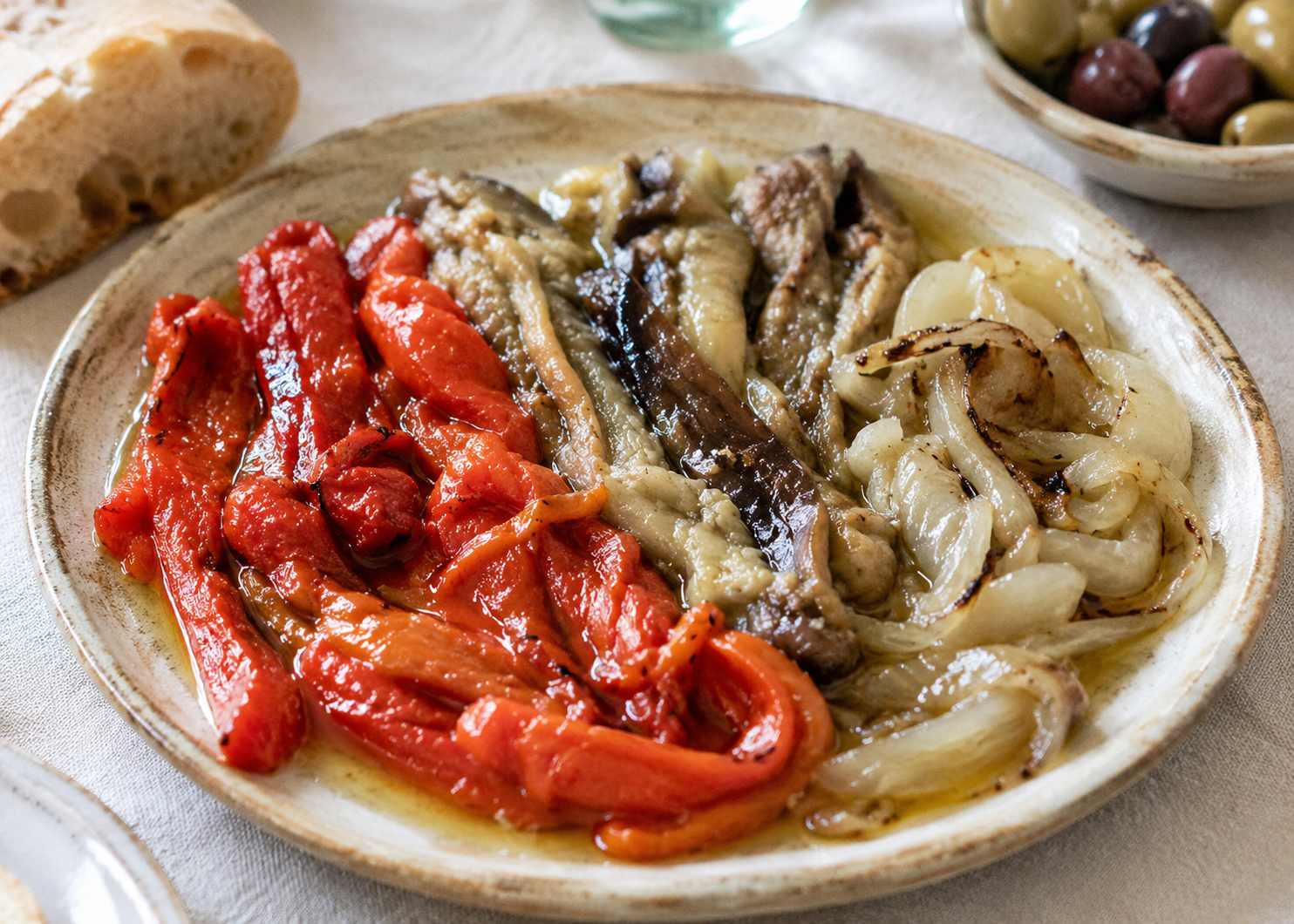
The fifth is less a single dish than a category, the cold marinated and roasted-then-cooled vegetables that round out the Spanish summer table, with escalivada the star.
Spain has a whole repertoire of vegetable dishes served cold, the most beautiful being escalivada, peppers and aubergines and onions roasted until soft and smoky, then peeled, torn into strips, and dressed with good olive oil and served at room temperature or cold, a dish of deep smoky-sweet flavor that is glorious in the heat. There are also the various cold marinated vegetables, the pickled and oil-dressed preparations, the cold roasted peppers, the marinated mushrooms, all of which can be made ahead and eaten cold, adding variety and freshness to the summer table. While escalivada requires roasting the vegetables, this can be done in the cool of the evening, even on a grill outdoors to keep the heat out of the kitchen entirely, and then enjoyed cold for days.
These cold vegetable dishes are the supporting cast that completes a Spanish summer spread, served alongside the gazpacho and salmorejo and tortilla and ensaladilla to make a full cold meal, a table of various cold dishes that together form the classic Spanish answer to summer eating. The smoky escalivada in particular is a revelation for those who only know vegetables hot or in raw salad, the roasting-then-cooling concentrating the flavor into something rich and deep yet served cold and refreshing. Together with the other four, these cold vegetable dishes mean a Spanish summer kitchen can produce an endless variety of satisfying meals without the oven ever coming on at midday, which is the whole genius of how this country eats in the heat, and the reason I cook this way from June until the weather finally breaks.
How To Build A Cold Summer Table
The real Spanish summer meal is rarely one of these dishes alone but several together, and understanding how they combine is the key to eating this way.
A Spanish summer lunch or dinner in the heat is typically a spread of several cold dishes shared, a glass of gazpacho to start, a bowl of salmorejo, some ensaladilla rusa, wedges of cold tortilla, a plate of escalivada or marinated vegetables, perhaps some good jamón and cheese and bread and tomato, all laid out together and grazed over cold. This is the genius of the system, that the individual dishes, each easy and made ahead, combine into an abundant varied meal that required no hot cooking at the moment of eating, the whole table assembled from the fridge. The dishes complement each other, the light gazpacho and the rich salmorejo, the substantial tortilla and ensaladilla, the smoky vegetables, together forming a complete and satisfying meal that happens to be entirely cold.
The practical rhythm that makes this work is cooking in the cool hours and eating cold through the hot ones, since most of these dishes are made ahead and improve or hold well in the fridge, so a session of cooking in the cool morning or the previous evening yields a fridge full of cold dishes to draw on through the baking days. This is how the Spanish household actually runs in summer, the cooking decoupled from the eating, the kitchen worked in the cool and the meals assembled cold from what was prepared earlier, which keeps the cook out of the midday heat and the household well fed regardless of the temperature. Learn this rhythm, cook cool and eat cold, build the fridge full of these dishes, and you have the whole Spanish strategy for eating beautifully through a brutal summer, the same strategy that keeps my own household cool and fed from June until the heat finally lifts.
Why Cold Spanish Food Beats The Hot Kind In Summer
There is a deeper point worth making about all of this, which is that these cold dishes are not summer compromises but often the best of Spanish food, genuinely improved by being cold.
The temptation is to think of cold food as a lesser summer substitute for the real hot cooking, but the Spanish cold dishes disprove this, since gazpacho and salmorejo are not lesser versions of anything but complete dishes in their own right, the tortilla is arguably better cold than hot, and the smoky escalivada and the creamy ensaladilla are at their best at cool temperatures. These are not hot dishes sadly served cold but dishes designed to be cold, evolved in a hot country precisely to be eaten cold, and they represent some of the finest and most characteristic food Spain produces, not a seasonal downgrade. The cold is not a limitation but the point, the dishes built around it and better for it.
This is the real lesson of the Spanish summer kitchen, that a hot climate, far from impoverishing the food, produced a whole brilliant cuisine of cold dishes that are among the country’s best, and that eating cold in the heat is not deprivation but a different and equally rich way of eating beautifully. The American instinct in summer is often to grill or to make sad cold salads, but the Spanish answer is richer, a full repertoire of substantial, flavorful, satisfying cold dishes that nourish and delight while keeping the kitchen cool, and learning them transforms how you eat in the heat. So when the Madrid summer arrives and the oven goes cold for the season, I do not feel I am missing anything, since the cold dishes of a Spanish summer are some of the best food of the whole year, and the heat that drove them into being gave Spain some of its finest eating in the bargain.
Salmorejo Cordobés
The cold dish from this list most worth knowing. No cooking at all beyond boiling an egg. Serves 4 as a starter.
Ingredients
- 1kg (2¼ lb) ripe tomatoes, roughly chopped
- 150g (about 5 thick slices) stale white bread, crusts removed
- 1 small garlic clove
- 120ml (½ cup) extra virgin olive oil, plus extra to serve
- 1 tbsp sherry vinegar
- 1 tsp salt, or to taste
- 2 hard-boiled eggs, chopped, to serve
- 80g (3 oz) jamón serrano, chopped, to serve
Method
- Put the chopped tomatoes in a blender and blend until completely smooth.
- If you want it perfectly smooth, pass the tomato puree through a sieve to remove skins and seeds (traditional, but optional).
- Add the bread to the tomato and let it soak for a few minutes to soften.
- Add the garlic, sherry vinegar, and salt, and blend again until smooth.
- With the blender running, pour in the olive oil in a slow steady stream so the mixture emulsifies into a thick, creamy, pale orange puree.
- Taste and adjust the salt and vinegar. Chill thoroughly, at least 2 hours.
- Serve cold in bowls, topped with chopped hard-boiled egg, jamón, and a generous drizzle of olive oil.

About the Author: Ruben, co-founder of Gamintraveler.com since 2014, is a seasoned traveler from Spain who has explored over 100 countries since 2009. Known for his extensive travel adventures across South America, Europe, the US, Australia, New Zealand, Asia, and Africa, Ruben combines his passion for adventurous yet sustainable living with his love for cycling, highlighted by his remarkable 5-month bicycle journey from Spain to Norway. He currently resides in Spain, where he continues sharing his travel experiences with his partner, Rachel, and their son, Han.