
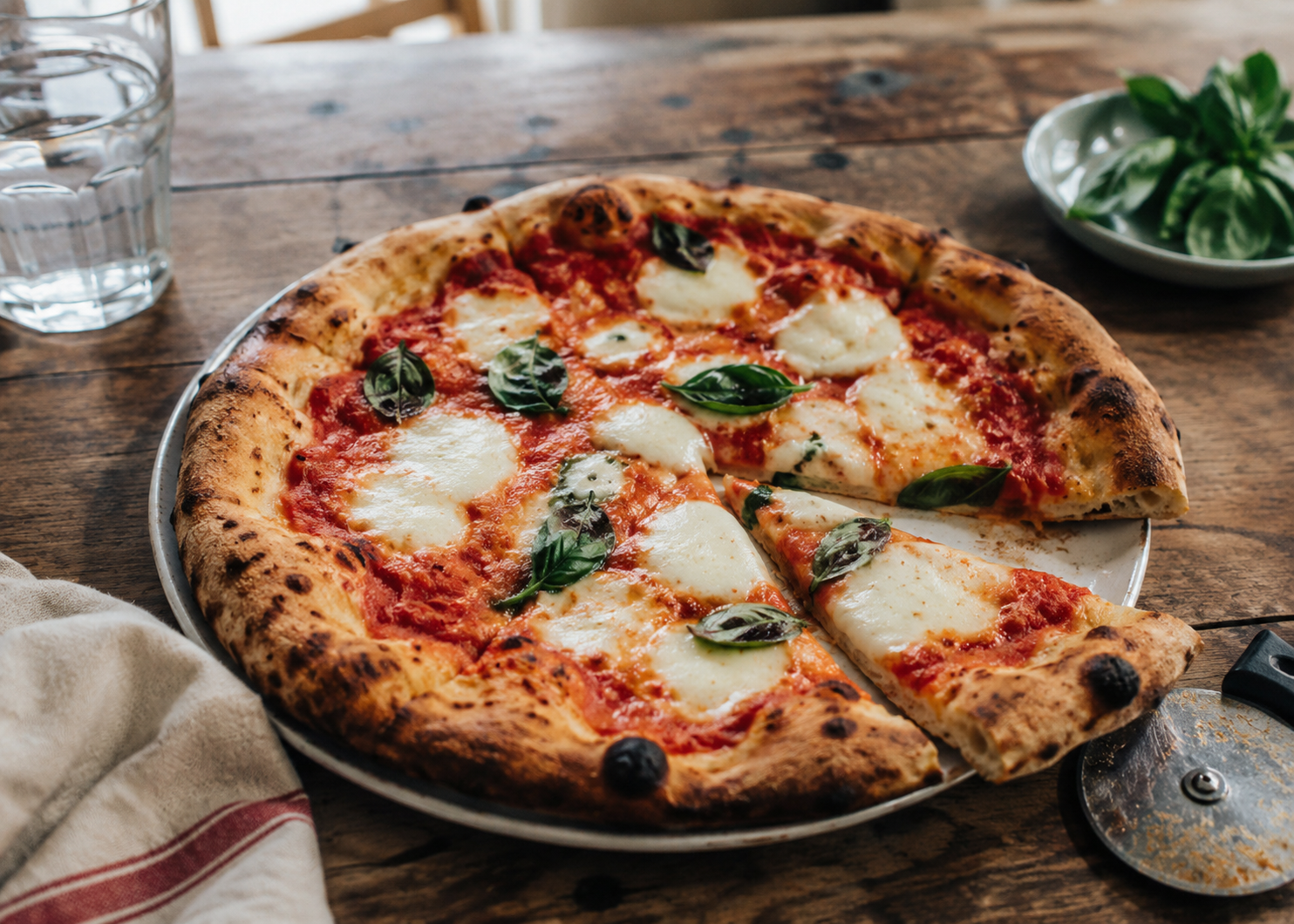
The first time you eat a real pizza margherita in Naples, you understand that what America calls pizza is a different food entirely. The Neapolitan original is almost shockingly simple, a thin soft base, a smear of bright tomato, a few torn pieces of mozzarella, some basil, a thread of olive oil, blistered in a furnace-hot oven for ninety seconds and eaten with a knife and fork. There is nowhere to hide in a pizza this simple, no pile of toppings to cover for a mediocre base, which is exactly why it is the truest test of a pizza maker and the most rewarding pizza to learn to make at home.
The good news is that a genuinely excellent margherita is within reach of any home kitchen, no wood-fired oven required, if you understand the few things that actually matter. The dough needs time, the ingredients need to be good and few, and the oven needs to be as hot as you can make it. Master those, and you will make a pizza that embarrasses the delivery box forever. Here is how the margherita works, why each element matters, and the method that gets you there.
Why The Margherita Is Sacred
The margherita is not just a pizza, it is the pizza, the original against which all others are measured, and its simplicity is the whole point.
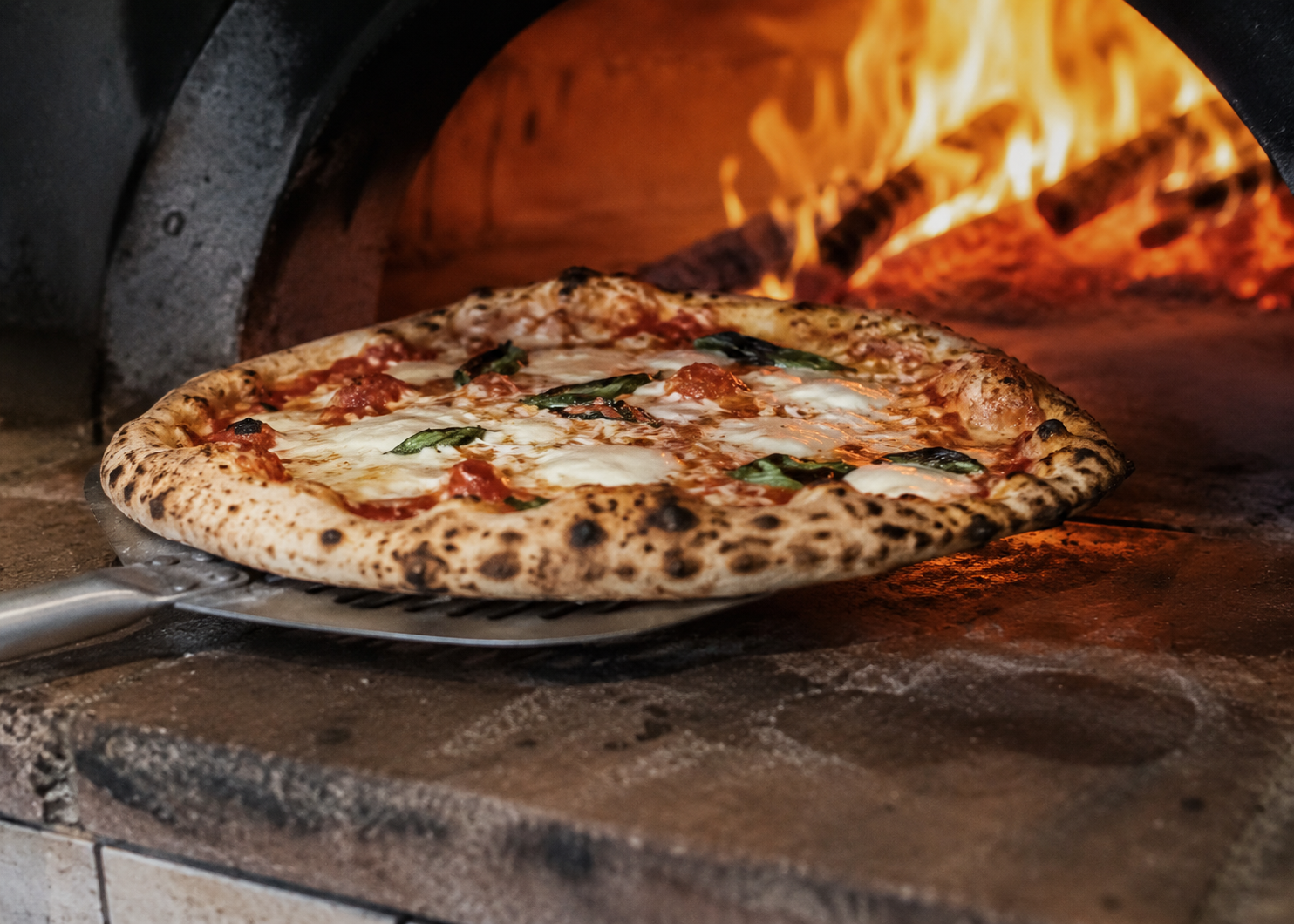
The story, true or embroidered, is that the pizza was created in Naples in 1889 for Queen Margherita of Savoy, topped in the colors of the new Italian flag, red tomato, white mozzarella, green basil, and named in her honor. Whether the legend is exact or not, the margherita became the canonical Neapolitan pizza, so revered that the real thing is protected by an official specification, the rules of what may be called a true Neapolitan pizza, governing the flour, the method, the ingredients, the cooking. This is a food taken seriously enough to be legally defined, which tells you something about how much the simplicity matters, since there is nothing to a margherita except a few ingredients done perfectly, and that is precisely why it is sacred.
The simplicity is also the difficulty, since with so few elements, each one carries enormous weight, and there is no hiding a poor base or a watery sauce or rubbery cheese under a margherita’s spare top. A great margherita depends entirely on getting the fundamentals right, the dough, the tomato, the cheese, because there is nothing else to distract from them, which makes it both the simplest pizza to list and the hardest to fake. This is why learning the margherita teaches you to make pizza properly, since it forces attention onto the things that actually matter rather than letting you bury them under toppings. Get the margherita right and every other pizza becomes easy. The margherita is the foundation, and the foundation is sacred because everything rests on it.
Pizza Margherita
The Neapolitan original. Start the dough at least a day ahead. Makes 4 pizzas.
Ingredients
For the dough
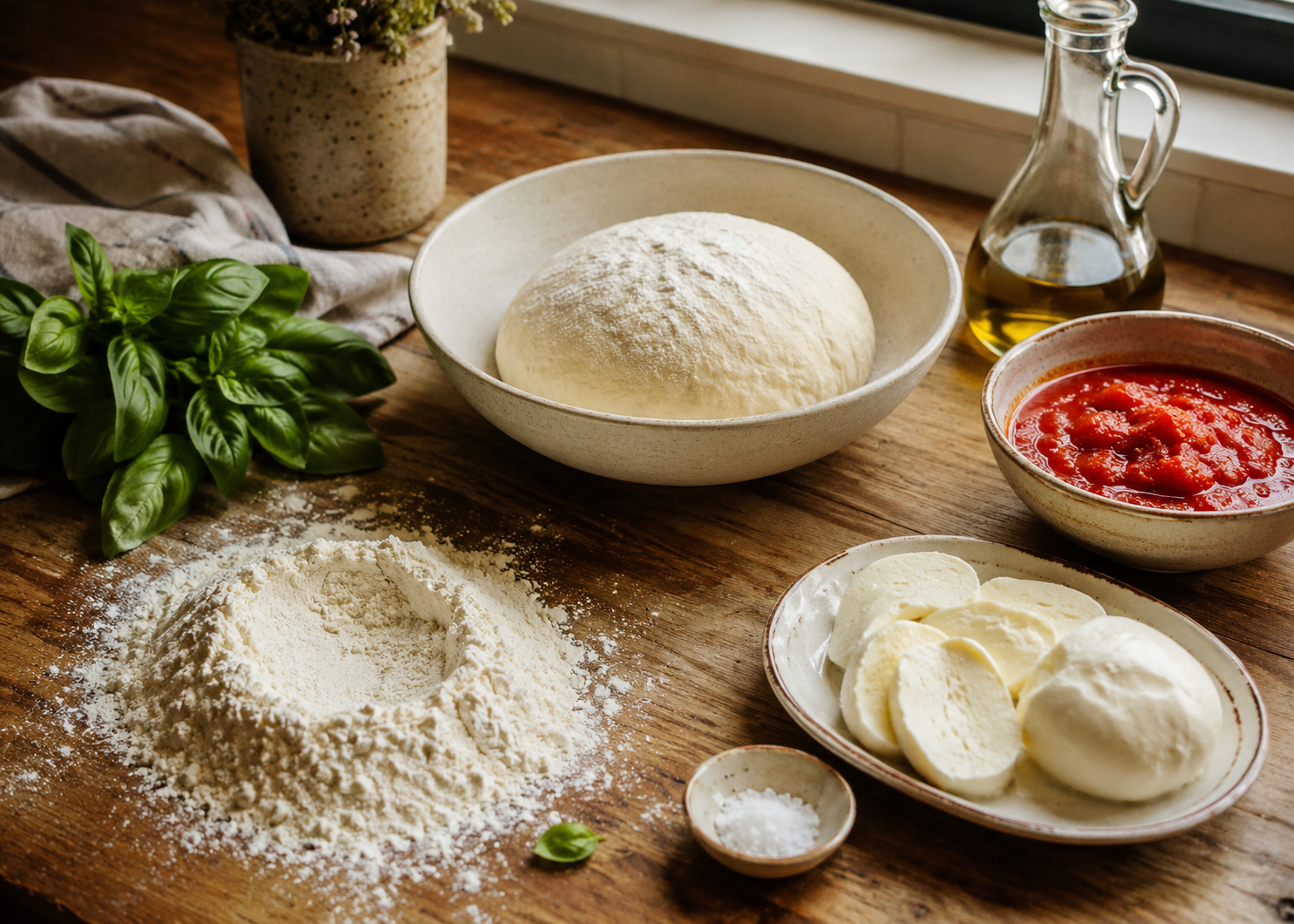
- 500g (about 4 cups) strong bread flour or Italian 00 flour, plus extra for dusting
- 325ml (1⅓ cups) lukewarm water
- 10g (1¾ tsp) fine salt
- 3g (½ tsp) instant dry yeast
For the topping
- 1 can (400g / 14oz) whole peeled San Marzano tomatoes
- 400g (14oz) fresh mozzarella (fior di latte or di bufala)
- Fresh basil leaves
- Extra virgin olive oil
- Salt
Method
- Mix the flour, water, salt, and yeast into a shaggy dough. Knead on a lightly floured surface for about 10 minutes until smooth and elastic.
- Place in an oiled bowl, cover, and leave at room temperature for 2 hours. Then divide into 4 equal balls, place on a floured tray, cover, and refrigerate for 24 hours (or up to 72) to ferment slowly.
- Take the dough out about 2 hours before baking to come to room temperature.
- Crush the tomatoes by hand into a bowl, season with a good pinch of salt, and set aside. Tear the mozzarella into pieces and, if very wet, drain on paper towels.
- Place a pizza stone or steel in the oven and heat to its maximum setting (ideally 250°C / 480°F or higher) for a full hour. Turn on the broiler near the end if you have one.
- On a floured surface, gently stretch one dough ball by hand into a round, pressing from the center outward and leaving a thicker rim. Do not use a rolling pin.
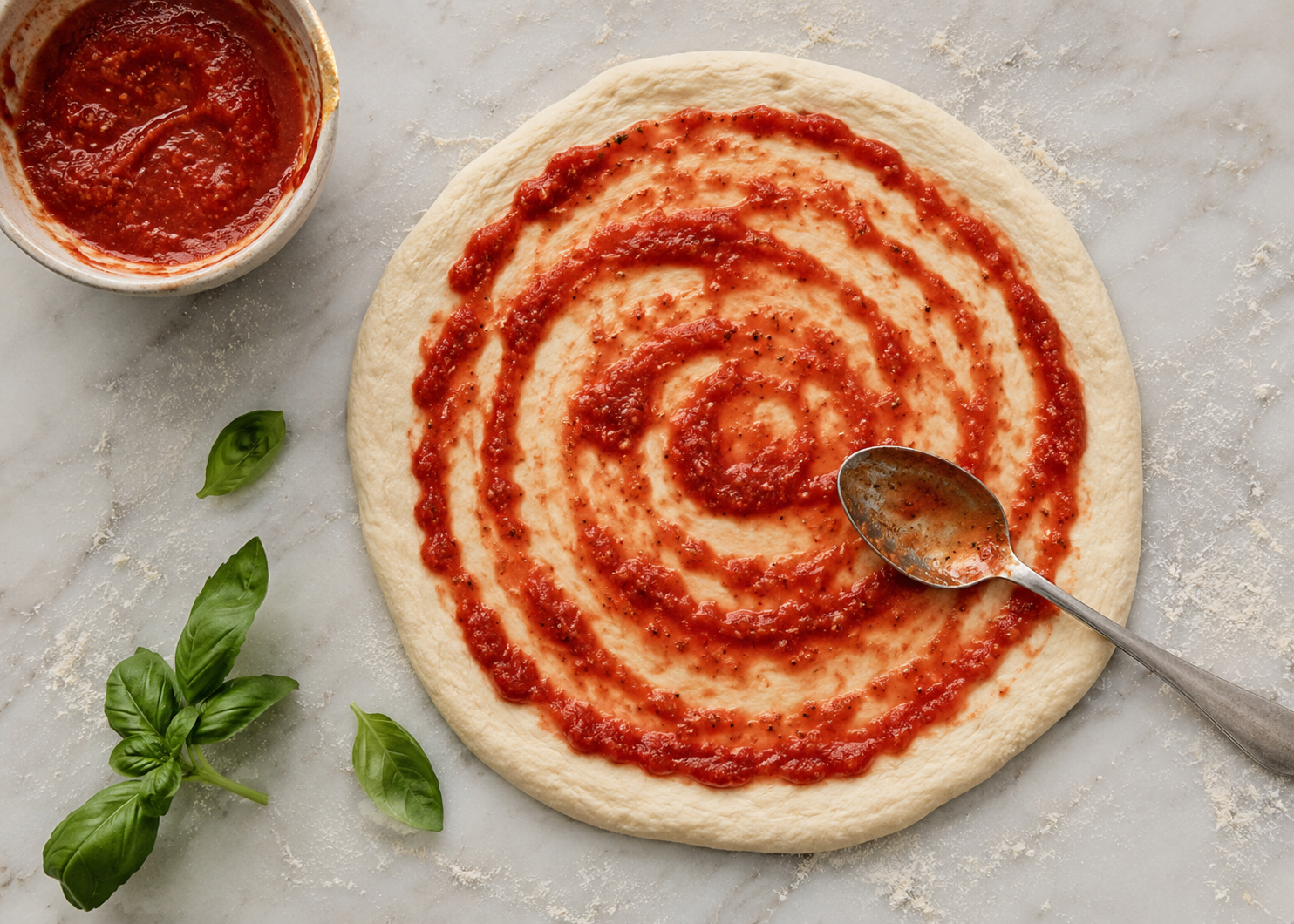
- Transfer to a floured pizza peel or board. Spread a thin layer of crushed tomato over the base, leaving the rim bare. Scatter over pieces of mozzarella.
- Slide onto the hot stone and bake for 4 to 8 minutes (less if your oven runs very hot), until the base is puffed and charred and the cheese is bubbling.
- Remove, top with fresh basil and a thread of olive oil, and eat immediately. Repeat with the remaining dough.
The Dough Is Almost Everything
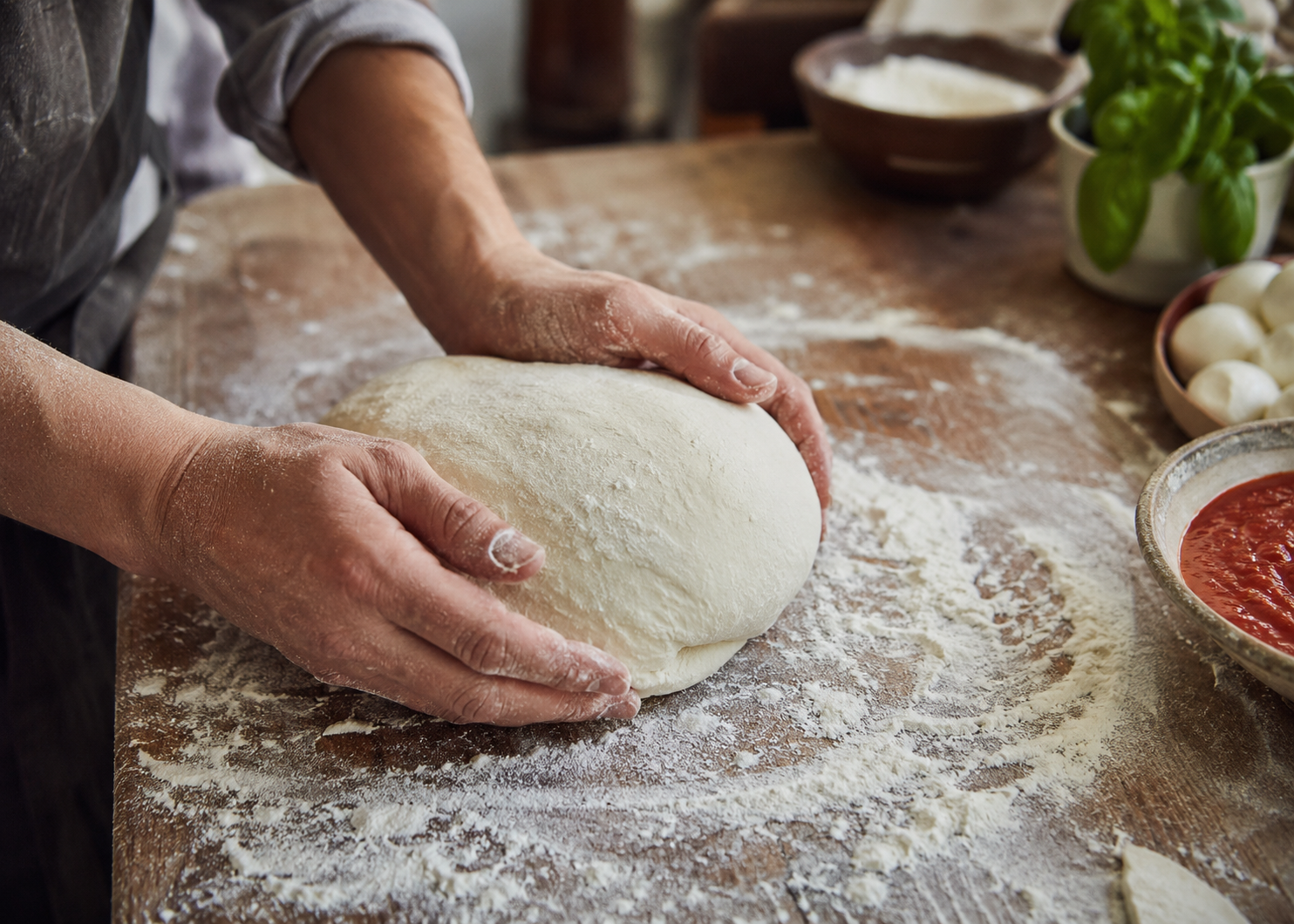
If one element makes or breaks a pizza, it is the dough, and the secret of the dough is time, not skill.
A great pizza base is light, soft, slightly chewy, with a puffed and blistered edge, and it gets that way not through any difficult technique but through slow fermentation, the dough left to rise slowly over many hours, which develops both the flavor and the texture that fast dough never achieves. This is the single most important thing an American home cook can learn about pizza, that the dough should be made well ahead and left to ferment slowly, ideally a full day or even longer in the refrigerator, because that slow rise is what transforms flour and water into a base with real flavor and the proper airy, chewy structure. A dough made and used the same day can be fine. A dough made and left to ferment slowly for twenty-four hours or more is extraordinary, and the difference is entirely in the waiting.
The dough itself is just flour, water, salt, and a small amount of yeast, with the proportions and the long fermentation doing all the work, and the one ingredient choice that matters is the flour, ideally a strong bread flour or the Italian 00 flour that gives the classic texture. The technique of stretching the dough matters too, since a Neapolitan base is stretched by hand, gently, preserving the air in the dough and leaving a thicker rim, never rolled flat with a pin which crushes out the air and gives a cracker base instead of a soft one. But these are details on top of the one essential truth, that the dough needs time, and the home cook who plans ahead and lets the dough ferment slowly has already done ninety percent of what it takes to make a great pizza. Time is the secret ingredient in the dough exactly as it is in so much good cooking.
The Tomato And The Cheese
The topping of a margherita is almost nothing, which means the little that is there has to be right.
The tomato is not a cooked sauce but, in the Neapolitan tradition, simply good tinned tomatoes, ideally San Marzano, crushed by hand with a little salt and nothing else, spread raw and thin on the base to cook in the oven’s heat. This surprises Americans used to a cooked, herbed, sugared pizza sauce, but the Neapolitan way is to let the pure bright flavor of good raw tomato come through, seasoned only with salt, cooking on the pizza itself, which keeps it fresh and vivid rather than heavy and jammy. The key is good tomatoes and a light hand, since too much tomato makes the pizza wet and the base soggy, a thin smear of good crushed tomato being exactly right. The restraint is the technique, trusting the quality of the tomato rather than burying it under seasoning.
The cheese is fresh mozzarella, torn or sliced and scattered, not the dry low-moisture mozzarella of American pizza but the soft fresh kind, ideally mozzarella di bufala or a good fior di latte, distributed in pieces rather than blanketed over the whole surface. Fresh mozzarella is wet, which is its glory and its danger, since it melts into soft delicious pools but releases water that can make the pizza soggy, so the trick is to tear it into pieces, scatter rather than cover, and if the mozzarella is very wet, to drain it on paper towels first. A few basil leaves, added either before or just after baking, and a thread of good olive oil to finish, complete the margherita, and that is genuinely all there is to it. Good tomato, good fresh mozzarella, basil, oil, scattered with restraint, the whole art being to use little and use it well.
The Oven, And Working Around A Home Kitchen
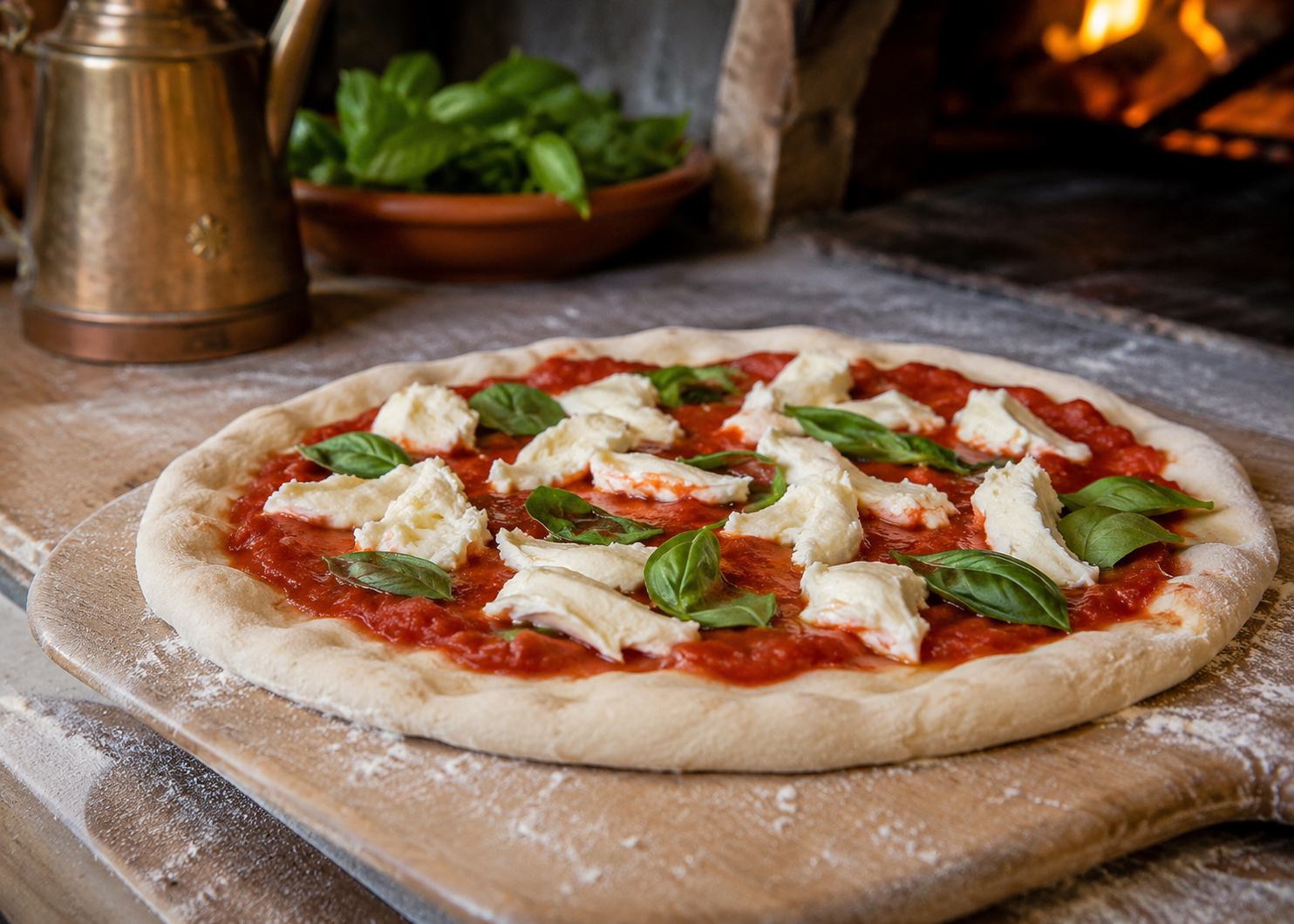
The one thing a home kitchen cannot easily replicate is the heat, and understanding this is the key to the best possible home version.
A real Neapolitan pizza is cooked in a wood-fired oven at around 450 to 480 degrees Celsius, blisteringly hot, which cooks the pizza in sixty to ninety seconds and produces the characteristic puffed, charred, soft result that defines the style. A home oven cannot reach those temperatures, which is the real obstacle to home pizza, but the home cook can get remarkably close by maximizing whatever heat the oven has, cranking it to its absolute highest setting, and using a pizza stone or steel preheated for a long time to store and transfer intense heat to the base. The pizza stone or steel is the single best home pizza investment, since it mimics the hot floor of the pizza oven, giving the base the fast fierce bottom heat that makes it puff and crisp rather than dry out slowly.
The method is to heat the oven as hot as it goes, with the stone or steel inside, for a good long time, a full hour, so the stone is thoroughly saturated with heat, then bake the pizza on that screaming hot surface, often with the broiler on to char the top, for the few minutes it takes. Some home cooks use the broiler-and-stone combination to mimic the top-and-bottom blast of a real pizza oven, and others have had great success with the very hot cast-iron-skillet-and-broiler method, all aimed at the same goal, maximum heat, fast cooking. You will not perfectly replicate Naples in a home oven, but you will get astonishingly close, far closer than any delivery pizza, with a stone, a blazing oven, and the understanding that heat is what you are chasing. Get the oven as hot as you possibly can, and the great home margherita is yours.
The Mistakes That Separate Good From Great
A handful of specific errors account for most disappointing home pizzas, and avoiding them is most of the battle.
The first and most common is rushing the dough, using it the same day it is made, which produces a flat, flavorless, tough base no matter how good the toppings, when a slow ferment would have transformed it, so the cardinal rule is to plan ahead and let the dough rest. The second is overloading the pizza, piling on too much tomato, too much cheese, too many extras, which weighs the base down, makes it soggy, and buries the delicate balance of a margherita, when the whole point is restraint, a thin smear of tomato and scattered pieces of cheese. The third is an oven that is not hot enough, baking the pizza too slowly so it dries into a cracker instead of puffing and blistering, which is why the long preheat and the hottest possible setting matter so much.
The fourth mistake is using the wrong cheese, the dry pre-shredded mozzarella that gives American pizza its uniform blanket but none of the soft fresh pools of the real thing, when fresh mozzarella, drained if wet, is essential to the margherita’s character. The fifth is rolling the dough flat with a pin, crushing out the air that the slow ferment created, when the base should be stretched gently by hand to keep its lightness and leave a puffy rim. None of these mistakes is hard to avoid, and avoiding them is the difference between a good home pizza and a great one. Plan the dough, use little and good, get the oven blazing, choose fresh cheese, stretch by hand, and the pizza that comes out will be one you can hardly believe you made.
What Makes It Worth The Effort
Pizza from scratch is a project, not a weeknight throw-together, and it is worth understanding why the effort pays off so handsomely.
The reward is partly the pizza itself, genuinely better than almost anything you can buy, a soft blistered base and bright fresh top that no delivery box delivers, made for a fraction of the cost from a handful of cheap ingredients. But the deeper reward is the ritual, since pizza-making is one of the great participatory cooking projects, the dough made ahead, the toppings laid out, the family or friends gathered to build their own, the pizzas emerging one after another from the screaming oven to be shared and eaten immediately. This is how pizza is meant to happen, as an event, a gathering around the making and the eating, the Italian and the best American pizza traditions both built on this communal spirit.
Learning to make a real margherita gives you both the food and the ritual, a skill that turns an ordinary evening into something people remember, the smell of the dough, the heat of the oven, the pizzas coming out fast and disappearing faster. It is one of those cooking skills that pays back the learning many times over, used again and again for years, always welcome, always a small celebration. So make the dough the day before, get good tomatoes and fresh mozzarella, heat the oven until it roars, and make the pizza that Naples perfected, the simple, sacred, magnificent margherita, in your own kitchen, for the people you like best. It is worth every minute of the effort, and the effort, in the end, is most of the pleasure.

About the Author: Ruben, co-founder of Gamintraveler.com since 2014, is a seasoned traveler from Spain who has explored over 100 countries since 2009. Known for his extensive travel adventures across South America, Europe, the US, Australia, New Zealand, Asia, and Africa, Ruben combines his passion for adventurous yet sustainable living with his love for cycling, highlighted by his remarkable 5-month bicycle journey from Spain to Norway. He currently resides in Spain, where he continues sharing his travel experiences with his partner, Rachel, and their son, Han.