
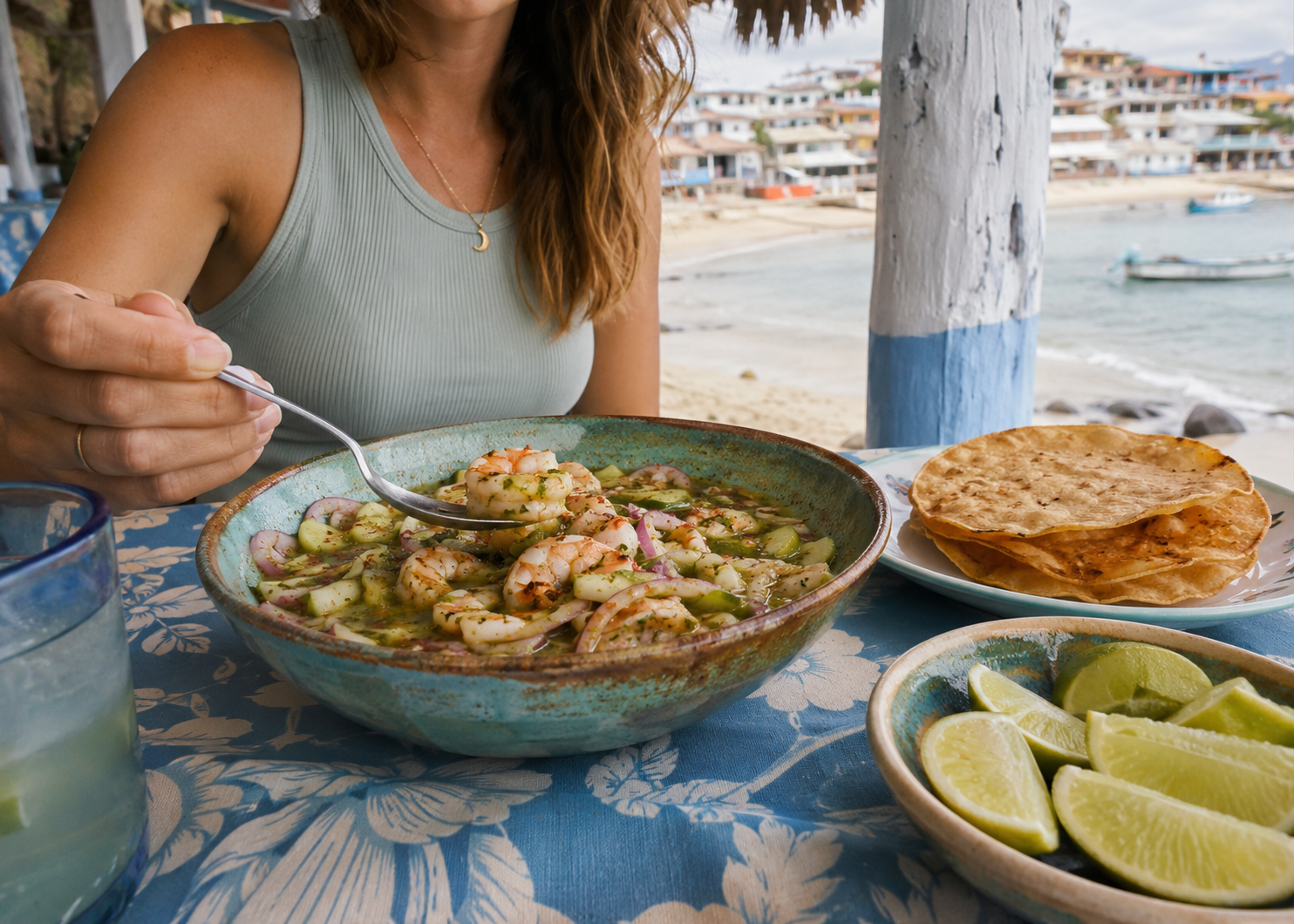
On a hot afternoon on the Pacific coast of Mexico, aguachile is the dish that makes you understand why people fall in love with Mexican food beyond the tacos and the guacamole. Raw shrimp, barely turned by lime, swimming in a fierce green liquid of chile and cilantro, topped with paper-thin cucumber and onion, eaten the moment it is made with a cold beer in hand. It is bright, electric, and alive, one of the great dishes of the Mexican Pacific, and it is far easier to make at home than its restaurant mystique suggests, provided you respect the one thing that defines it.
From a kitchen in Spain, where the love of fresh seafood and bold flavor runs deep, aguachile is a dish to admire rather than claim, a Mexican original that belongs to the cooks of Sinaloa and the Pacific coast. But admiring it need not mean only reading about it, because the dish is simple enough to make properly at home, and the version below is the real one, fierce and fresh, not the softened ceviche-like thing that often passes for it on American menus. The single rule that matters is the heat, so before the recipe, it is worth understanding why.
The One Rule, The Heat Is The Point
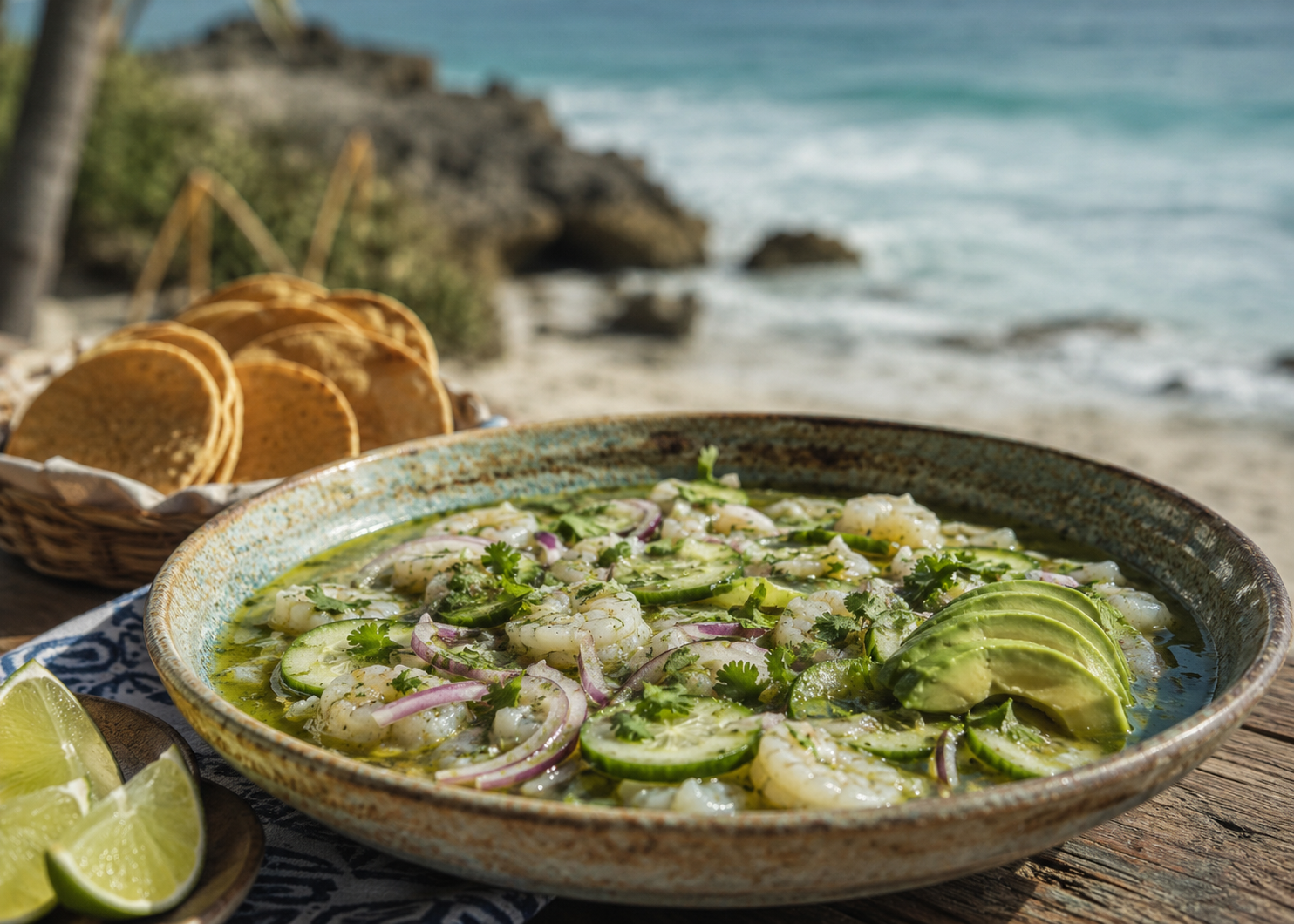
Here is the thing American versions get wrong, and it is the thing to get right. Aguachile is meant to be genuinely spicy, and the heat is not a garnish but the entire concept, named into the dish itself.
The name aguachile means chile water, and the dish is built around fresh green chiles blended into the lime to create a fiery green liquid that is the soul of the whole thing. The heat is the point, the bracing electric quality that makes nearly raw shrimp exciting rather than bland, balanced against the cold richness of the shrimp, the acid of the lime, the crunch of the cucumber, and the cold beer alongside. Soften the heat and the whole dish collapses, becoming flat and one-dimensional, the lime and shrimp with nothing to push against, which is exactly what happens to the timid menu versions. A real aguachile makes you sit up. That is what it is for.
So the rule for making it at home is simple: do not be afraid of the chile. Use real fresh chiles, blend them in generously, and resist the instinct to seed and tame them into harmlessness. You can calibrate the heat to your tolerance, but it should be a real presence, felt and bracing, not a polite hint. A version that does not make you reach for the beer has missed the point as completely as a gazpacho without bread. With that understood, the dish is genuinely easy, and here is how it comes together.
How It Differs From Ceviche
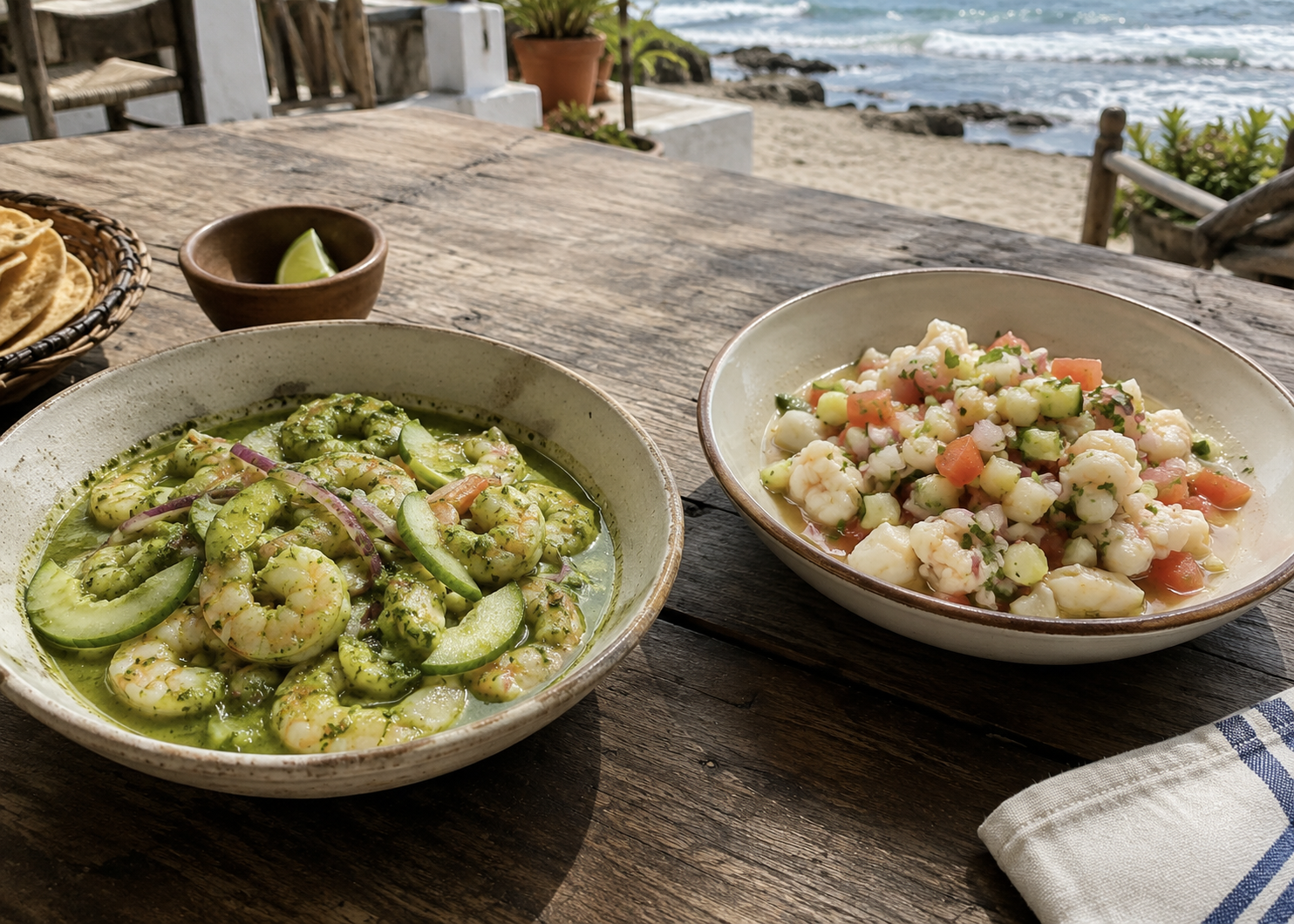
Before the recipe itself, one clarification helps, because aguachile gets confused with ceviche and understanding the difference helps you make it right.
Ceviche works by leaving raw seafood in citrus for a period of time, during which the acid cures the fish, turning it firm and opaque, effectively cooking it. Aguachile is different in two ways. First, it is served immediately, the shrimp dressed and eaten at once rather than left to cure, so it stays nearly raw, soft and fresh, barely touched by the lime. Second, it is defined by the blended fresh chile that gives it its fierce heat and green color, where ceviche is defined by the citrus cure. Aguachile is the fresh, fiery, just-made cousin of the firmer, cured ceviche, related but genuinely distinct.
This matters for the cook because it tells you not to let the shrimp sit. Where a ceviche recipe might have you marinate the seafood for a while, aguachile is assembled and eaten right away, which keeps the shrimp at that fresh, almost-raw texture that is part of its character. The lime dresses the shrimp, it does not cook it for an hour. Understanding this is the difference between making a real aguachile and accidentally making a ceviche, and it shapes how you handle the timing of the dish.
Here is how it comes together. This makes a starter or light dish for four, eaten fresh and immediately.
Ingredients
- 500 g very fresh raw shrimp, peeled and deveined, from a trusted source
- 6 limes, juiced, about 150 ml
- 3 to 5 fresh serrano chiles, to taste
- 1 large handful fresh cilantro
- 1 cucumber, sliced paper-thin
- 1 small red onion, sliced paper-thin
- 1 clove garlic, small
- salt, to taste
- tostadas or tortilla chips, to serve
- avocado slices, optional
Method
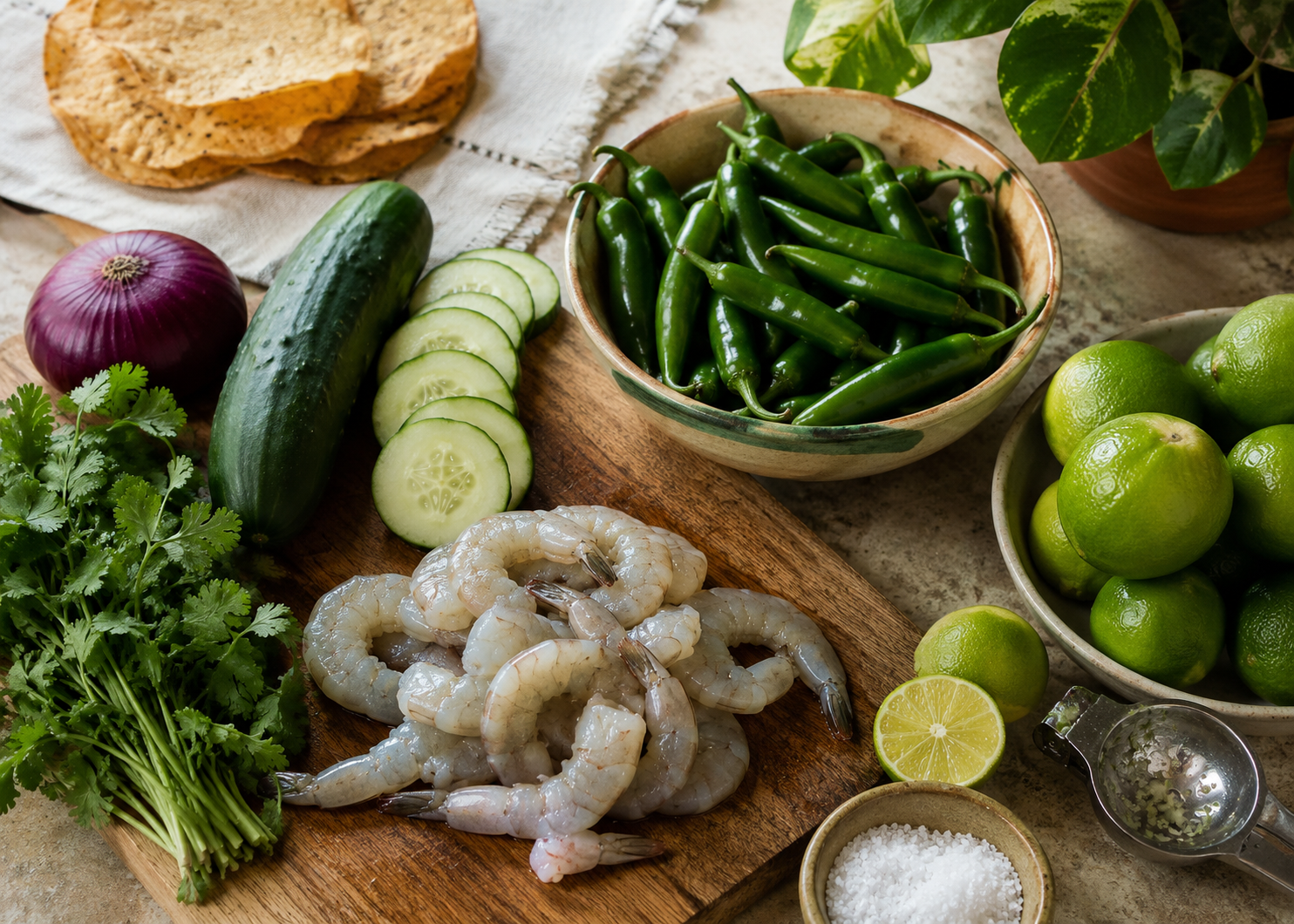
- Prepare the shrimp. Butterfly the raw shrimp by slicing them lengthwise down the back so they open out flat, or leave them whole if small. Spread them in a single layer in a shallow dish. The shrimp must be very fresh and from a source suitable for near-raw preparation, since the lime only lightly cures it.
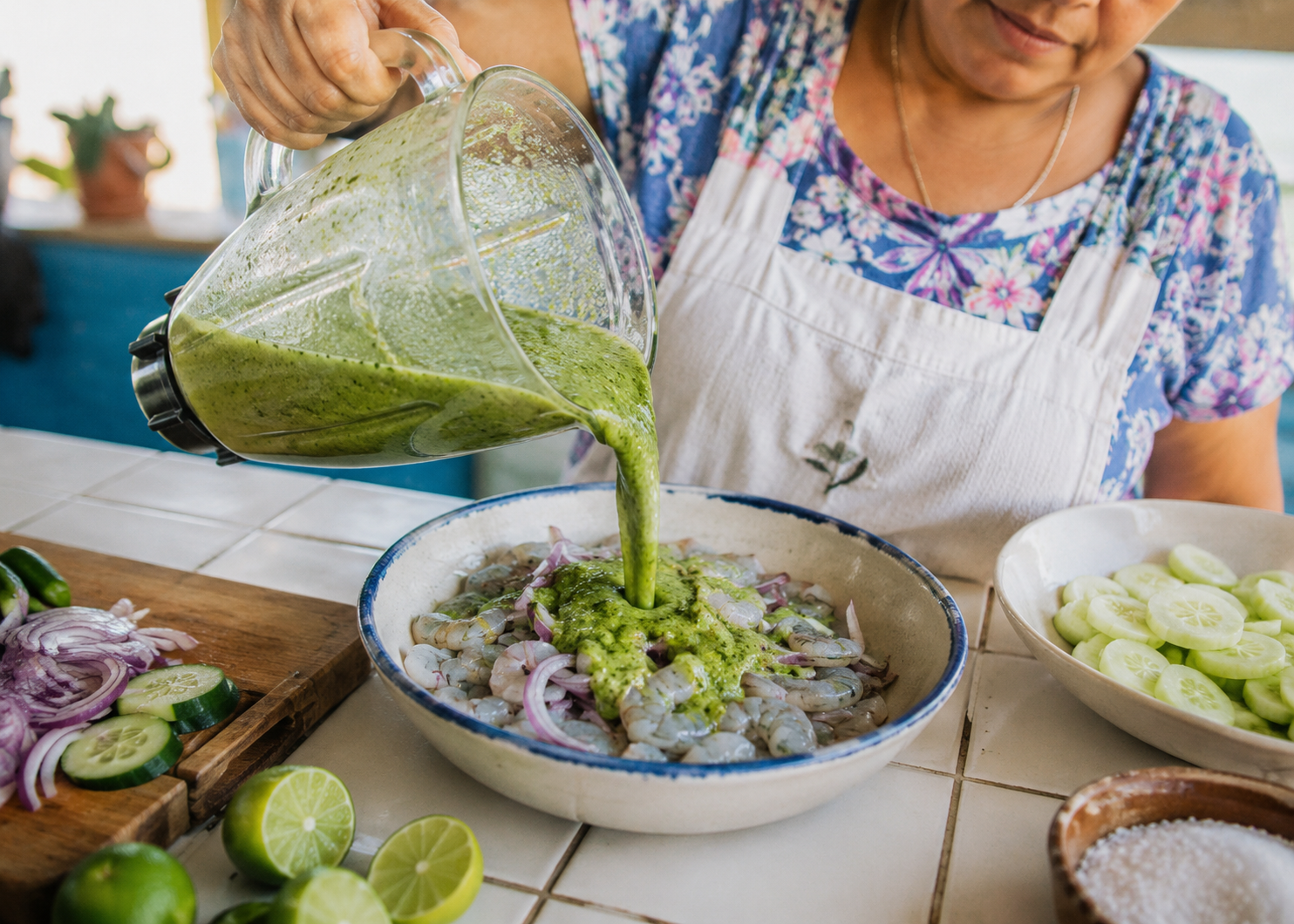
- Make the green chile-lime liquid. In a blender, combine the lime juice, the serrano chiles, the cilantro, the garlic, and a good pinch of salt. Blend until smooth and bright green. Taste it: it should be aggressively hot and bright, hotter than feels comfortable on its own, because the shrimp and cucumber will temper it. Add more chile if it is not fierce.
- Salt the shrimp. Season the spread shrimp lightly with salt just before dressing.
- Dress and rest briefly. Pour the green liquid over the shrimp, making sure all of it is coated. Let it sit just a few minutes, no more, while you prepare the garnish. The shrimp should stay nearly raw and barely turn, not cure firm like ceviche. This is aguachile, not ceviche, so do not let it sit long.
- Add the vegetables. Scatter the paper-thin cucumber and red onion over the top, and the optional avocado if using. The vegetables should be shaved thin to fold lightly into the dish rather than sit as heavy chunks.
- Serve immediately. Serve at once, very cold, with tostadas or tortilla chips to scoop it up, and a cold beer or michelada alongside. Aguachile waits for no one; it is at its best the moment it is made.
A note on the chile and the shrimp. Be bold with the chile, since timidity is the classic mistake, and use only excellent fresh shrimp, since a nearly-raw dish is only as good and as safe as the shrimp in it.
A Note On The Raw Shrimp
Because the shrimp is barely cooked by the lime, a word on sourcing and safety belongs here, since it genuinely matters for a dish eaten nearly raw.
Aguachile depends on very fresh, high-quality shrimp, because the shrimp is essentially raw, only lightly touched by the lime, so the quality and freshness of the shrimp is both a flavor matter and a safety one. Use the freshest shrimp you can find from a source you trust, ideally shrimp suitable for raw or near-raw preparations, the kind a good fishmonger can advise on, and if you are at all unsure, this is a dish to make with sushi-grade or previously-frozen shrimp that has been handled for raw consumption. Freezing shrimp at proper temperatures is one common way raw-seafood safety is handled, so previously frozen shrimp from a reliable source is often the practical choice. The point is that a dish eaten nearly raw is only as safe and as good as the shrimp in it, so this is the ingredient not to economize on.
For anyone uneasy about the near-raw preparation, the lime does firm the shrimp slightly if you give it a few minutes, and you can let it sit a little longer toward a more ceviche-like cure if you prefer the shrimp more opaque, though this moves away from the true aguachile texture. Those who are pregnant, elderly, very young, or immune-compromised should approach raw seafood with the usual caution and may prefer to avoid it, as with any raw-fish dish. With good shrimp from a trusted source, handled properly and eaten fresh, aguachile is a clean, bright, wonderful thing, but the shrimp is the foundation and deserves real care in the choosing.
The Lifestyle Of The Dish
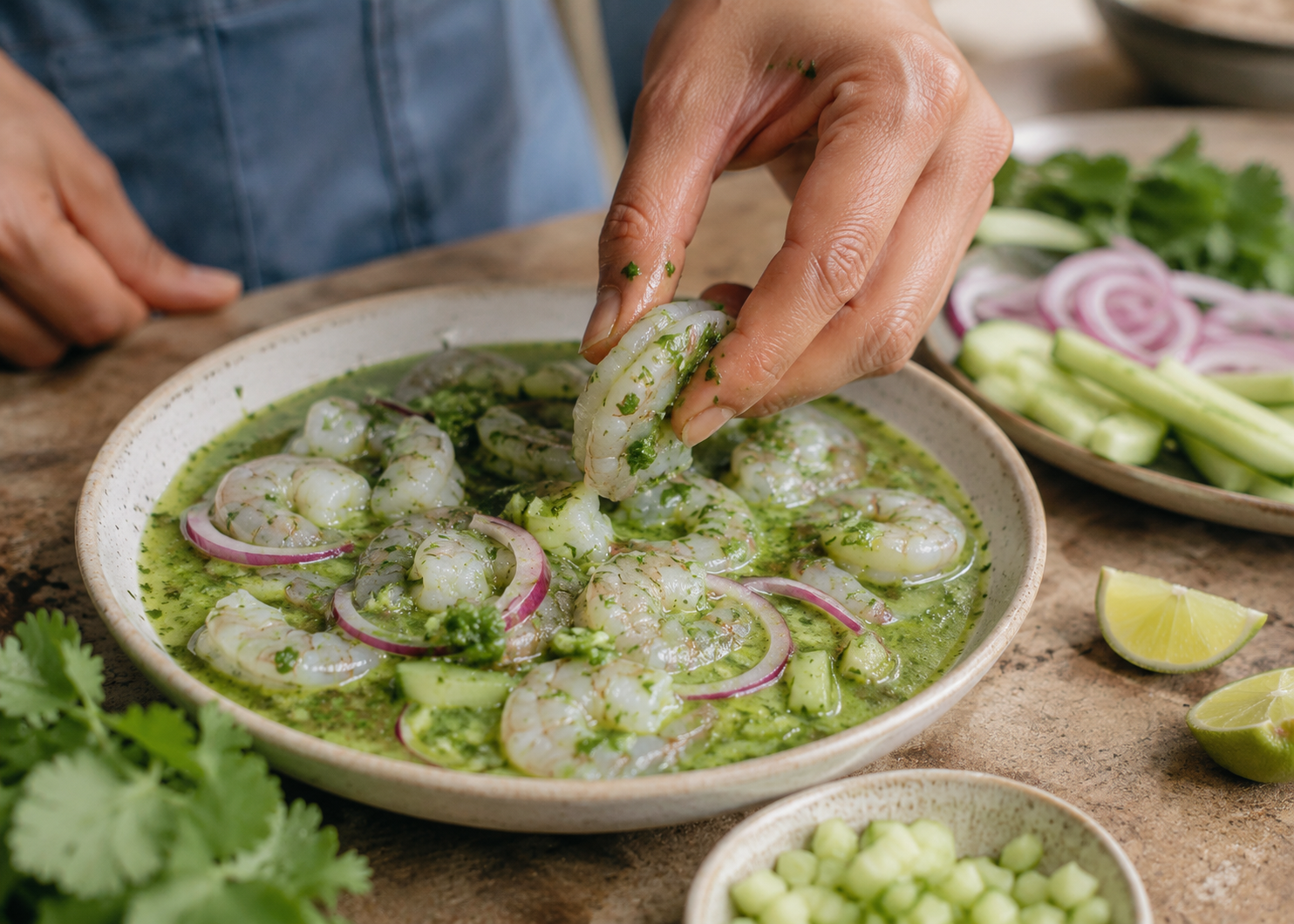
Part of what makes aguachile worth making is understanding how it is eaten, because the dish carries a whole way of eating with it that is half its pleasure.
Aguachile is beach food, party food, social food, the kind of thing thrown together fresh and eaten immediately among friends, ideally outdoors in the heat with cold beer or a michelada and tostadas or tortilla chips to scoop it up. It is not a formal plated course but a communal, casual, festive thing, the bowl in the middle of the table, everyone digging in while it is at its freshest and fieriest. This is the spirit to make it in, not a fussy precise preparation but a generous, lively, just-made dish for sharing in good weather with good company, which is exactly the context a hot summer day anywhere can provide.
The dish also belongs to a hot climate in a way worth feeling, since the combination of fierce chile heat, cold raw seafood, sharp lime, and cold beer is the perfect response to heat, the spice and the cold and the acid all working together to refresh and revive on a blazing day. This is why it makes sense on a Sinaloan beach and why it makes just as much sense on a hot afternoon on a terrace in Spain or a backyard in the United States, a dish built for exactly the weather that makes heavy cooking unbearable. Making aguachile at home is, in a sense, importing that whole way of eating, the fresh-and-fiery, cold-beer, share-the-bowl spirit of the Mexican Pacific coast, which travels anywhere the sun is hot.
The Chiles That Make It
Since the chile is the soul of the dish, it is worth knowing which ones to reach for, because this is where the heat lives and where the home cook has the most to decide.
The classic choice for aguachile verde is the serrano, a small, bright, clean-burning green chile that brings real heat without smokiness, blended raw into the lime and cilantro. Serranos are widely available and are the safe, authentic default, hot enough to matter but manageable. For more heat, the chiltepín, a tiny intensely hot wild chile from northwestern Mexico, is traditional in the region and packs a sharp, serious burn, while the jalapeño is the gentler option for those who want the dish milder, though a true aguachile leans hotter than a jalapeño alone delivers. The chiles are used raw and blended, not cooked or dried, which keeps the heat bright and immediate, matching the fresh character of the dish.
The practical approach for a home cook is to start with serranos as the base, blend them in with the seeds for full heat or with some seeds removed to pull it back, taste the chile-lime liquid before dressing the shrimp, and adjust. The liquid should taste aggressively bright and hot on its own, because it will be tempered by the shrimp and cucumber, so a liquid that tastes perfectly balanced alone will end up underpowered in the finished dish. Erring toward more heat in the liquid than feels comfortable is usually the right call, since the cold shrimp and cucumber absorb and soften it, and the cold beer alongside completes the cooling. This is the one place to be bold rather than cautious, because timidity with the chile is precisely the mistake that produces the flat, forgettable version.
Variations Worth Knowing
Once you have the basic green aguachile, a few variations open up, and knowing them lets you make the dish your own while staying true to its character.
The version above is the classic aguachile verde, built on fresh green chiles and cilantro for that green color and bright heat. There is also a red version, aguachile rojo, made with dried red chiles like chile de árbol rather than fresh green ones, which gives a deeper, different heat and a red color, worth trying once you know the green. Beyond the chile, the protein can vary, since while shrimp is classic, the same treatment works beautifully with other very fresh raw seafood, scallops in particular, sliced thin, making a superb aguachile. The cucumber and red onion are near-constant, and some cooks add slices of avocado for richness against the heat, which is a fine addition.
The thing that does not vary, across every version, is the principle, fresh raw seafood, a fiery blended chile-lime liquid, served immediately at full heat. Everything else is open to the cook, the choice of green or red chile, the protein, the additions, the exact balance of lime and salt, all of it adjustable to taste once the core is understood. This is the mark of a real living dish rather than a fixed recipe, that it has a clear essential character and endless room for personal variation around it, and the home cook who grasps the essence, the heat, the freshness, the immediacy, can range freely through the variations while always making something recognizably and truly aguachile.
Common Mistakes To Avoid
A few errors beyond softening the heat regularly spoil a homemade aguachile, and knowing them in advance saves the dish.
The first is letting the shrimp sit too long in the lime, which turns the dish from a fresh aguachile into a firm, over-cured ceviche, losing the soft, nearly-raw texture that defines it. Dress the shrimp and serve it within minutes, not hours, keeping everything cold and assembling at the last moment. The second is under-seasoning, since a raw, acidic, fresh dish needs enough salt to bring it alive, and an under-salted aguachile tastes thin and sour rather than vibrant, so salt the chile-lime liquid properly and taste it before combining. The third is slicing the cucumber and onion too thick, since they should be cut paper-thin, almost shaved, to fold lightly into the dish rather than sitting as heavy chunks, the thinness part of the fresh, delicate character.
The fourth is using poor or insufficiently fresh shrimp, which in a nearly-raw dish is both a flavor failure and a safety risk, so the shrimp must be excellent and fresh from a trusted source, never an afterthought. And the fifth, the recurring theme, is timidity with the chile, producing a mild liquid that leaves the dish flat, when the whole point is the bracing heat. Get these right, fresh excellent shrimp dressed at the last minute, properly salted, paper-thin vegetables, and a genuinely fiery chile-lime liquid, and the result is a real aguachile, bright and electric and alive, the equal of what you would eat on the coast where it was born. The dish is simple, but it rewards respect for its few essential rules, and punishes the shortcuts that turn it into something lesser.

About the Author: Ruben, co-founder of Gamintraveler.com since 2014, is a seasoned traveler from Spain who has explored over 100 countries since 2009. Known for his extensive travel adventures across South America, Europe, the US, Australia, New Zealand, Asia, and Africa, Ruben combines his passion for adventurous yet sustainable living with his love for cycling, highlighted by his remarkable 5-month bicycle journey from Spain to Norway. He currently resides in Spain, where he continues sharing his travel experiences with his partner, Rachel, and their son, Han.