
The Spanish tortilla is not an omelet with potatoes added. It is potatoes and eggs turned into something soft, compact, golden, and deeply argued over by people who otherwise seem normal.
The onion question divides Spain because tortilla is not just dinner.
It is the thing on the bar counter at 11 a.m., the slice wrapped for a picnic, the square cut into a bocadillo, the plate served with bread, salad, and nothing else because nothing else is needed.
Some Spanish households add onion.
Some consider that a small domestic betrayal.
Both sides can make a good tortilla, but only if they understand the real rule first: the potatoes must be cooked slowly in oil before the eggs ever touch them.
Real Tortilla Starts With Potatoes, Eggs, Oil, And Patience
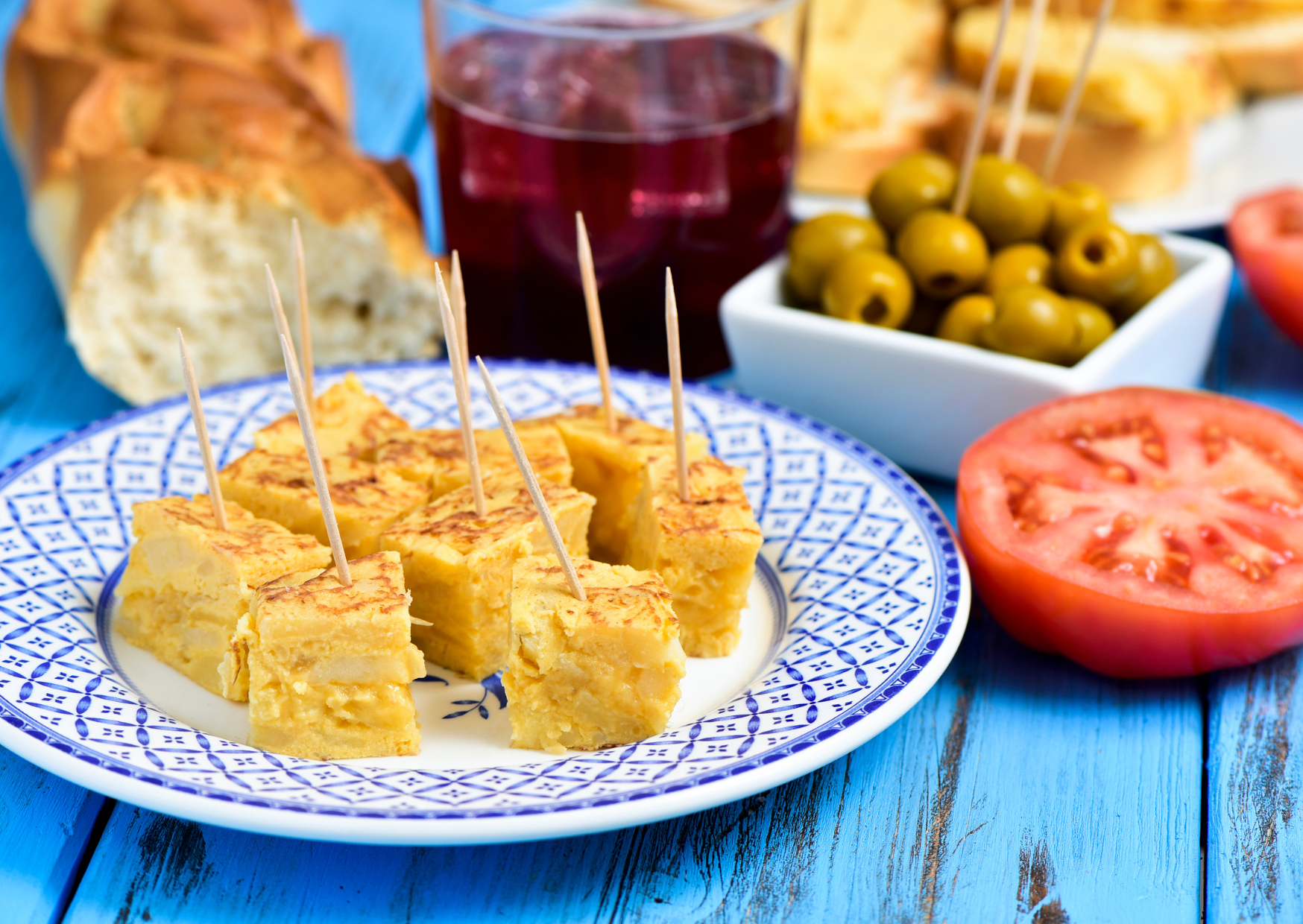
A Spanish tortilla has very few ingredients, which is why people ruin it so easily.
The basic version is potatoes, eggs, olive oil, salt, and maybe onion. That is it. No cream. No cheese. No garlic powder. No milk. No grated cheddar pretending this is brunch. No pile of herbs to distract from weak technique.
The texture is the point.
A good tortilla is tender inside, lightly golden outside, and set enough to slice without being dry. The potatoes should feel integrated into the egg, not trapped inside it like leftovers from another meal.
The biggest mistake American recipes make is treating tortilla like a fast skillet omelet.
It is not.
The potatoes are first poached slowly in olive oil, not fried hard like breakfast potatoes. They should soften, collapse slightly, and absorb enough oil and salt to taste good before the egg arrives. The onion, if used, needs the same treatment: soft, sweet, and folded into the potato, not browned aggressively into a separate flavor.
The second mistake is fearing the oil.
Yes, the recipe uses a lot of olive oil. No, the tortilla does not absorb all of it. The oil cooks the potatoes gently, then gets drained and reused. Spanish kitchens understand this. American kitchens often panic because the amount looks impossible on paper.
The third mistake is overcooking the inside.
A tortilla can be fully set, softly set, or slightly juicy in the center depending on household preference. But it should never be stiff, dry, and rubbery. The egg needs enough heat to hold the potatoes together, not enough heat to punish them.
This is a humble dish with one very clear demand.
Do not rush it.
Spanish Tortilla Española With Optional Onion
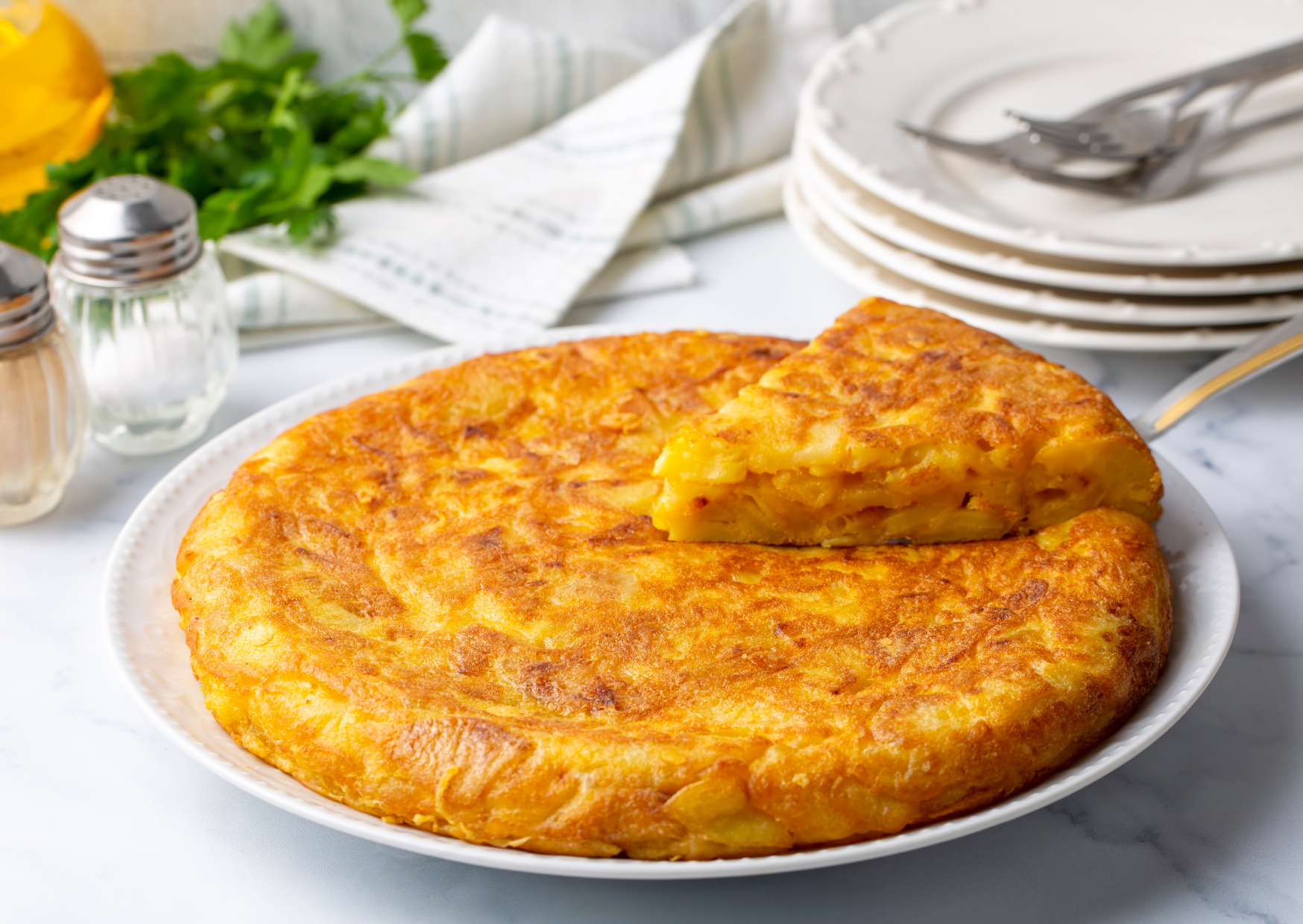
This recipe makes a classic home-style tortilla, with the onion included as an option rather than a command.
The onion version is sweeter, softer, and very common in many homes and bars. The no-onion version tastes cleaner and more potato-forward. Neither side needs to behave like the other one has personally damaged the country.
Yield
Serves 4 as a main dish with salad and bread, or 6 to 8 as tapas.
Ingredients
- 700 g waxy or all-purpose potatoes, about 4 medium potatoes
- 6 large eggs
- 1 medium yellow onion, about 150 g, optional
- 350 to 450 ml extra virgin olive oil, enough to mostly cover the potatoes in the pan
- 1 1/2 teaspoons fine sea salt, plus more to taste
- Optional: a little black pepper, though many Spanish cooks skip it
Equipment
- 24 cm nonstick or well-seasoned skillet
- Large bowl
- Colander or sieve
- Heatproof bowl or jug for draining oil
- Plate larger than the skillet for flipping
- Flexible spatula
Step 1. Slice The Potatoes Thinly
Peel the potatoes if you want a smoother tortilla. Leaving thin skins on is possible, but the classic texture is better peeled.
Cut the potatoes into thin slices, about 3 mm thick. They do not need to be perfect. Some people slice rounds, some slice half-moons, and some cut irregular thin pieces. The important thing is that they cook evenly and soften completely.
If using onion, slice it thinly.
Step 2. Cook The Potatoes Slowly In Olive Oil
Pour the olive oil into the skillet and warm it over medium-low heat.
Add the potatoes and onion, if using. Sprinkle with about 1 teaspoon of salt. The potatoes should sit in enough oil to cook gently, not fry harshly.
Cook for 20 to 25 minutes, stirring occasionally, until the potatoes are soft and some pieces begin to break when pressed with a spatula. The onion should be sweet and translucent, not dark brown.
The oil should bubble gently.
If the potatoes are browning fast, the heat is too high. You are not making chips. You are building the soft potato base that gives tortilla its texture.
Step 3. Drain The Potatoes And Save The Oil
Set a colander or sieve over a heatproof bowl.
Pour the potatoes and onion into the colander and let the oil drain. Save the oil. It is now potato-scented olive oil, and it can be used again for cooking.
Let the potato mixture cool for 5 to 10 minutes. It should still be warm, but not so hot that it scrambles the eggs instantly.
Step 4. Beat The Eggs And Fold In The Potatoes
Crack the eggs into a large bowl. Add the remaining 1/2 teaspoon salt and beat until combined.
Add the drained potatoes and onion. Fold gently until the potatoes are coated in egg.
Let the mixture rest for 10 minutes.
This rest matters. The warm potatoes absorb some egg, the mixture thickens slightly, and the tortilla becomes more cohesive. Skipping this step is one reason some tortillas taste like eggs with potatoes floating in them.
Step 5. Cook The First Side
Wipe the skillet clean if needed.
Add 1 to 2 tablespoons of the saved olive oil and heat over medium.
Pour in the egg and potato mixture. Immediately lower the heat to medium-low. Use a spatula to shape the edges, tucking them in gently as the tortilla cooks.
Cook for 5 to 7 minutes, depending on how set you want the center. The edges should look set, and the bottom should be lightly golden.
Shake the pan gently. The tortilla should move as one piece.
Step 6. Flip The Tortilla
Place a large flat plate over the skillet.
Hold the plate firmly with one hand and the skillet handle with the other. Flip the skillet so the tortilla lands on the plate.
Slide the tortilla back into the pan, uncooked side down.
This is the moment people fear. Do it over the sink the first time if that makes life easier. Confidence helps, but a plate larger than the pan helps more.
Step 7. Cook The Second Side
Cook the second side for 2 to 4 minutes.
For a softly set tortilla, stay closer to 2 minutes. For a firmer tortilla, go longer. The outside should be golden, but the inside should remain tender.
Slide onto a plate and let rest for at least 10 minutes before slicing.
Tortilla is often better warm or room temperature than screaming hot. The rest lets the center settle and the flavor come together.
The Onion Question Is Really About What Tortilla Should Be
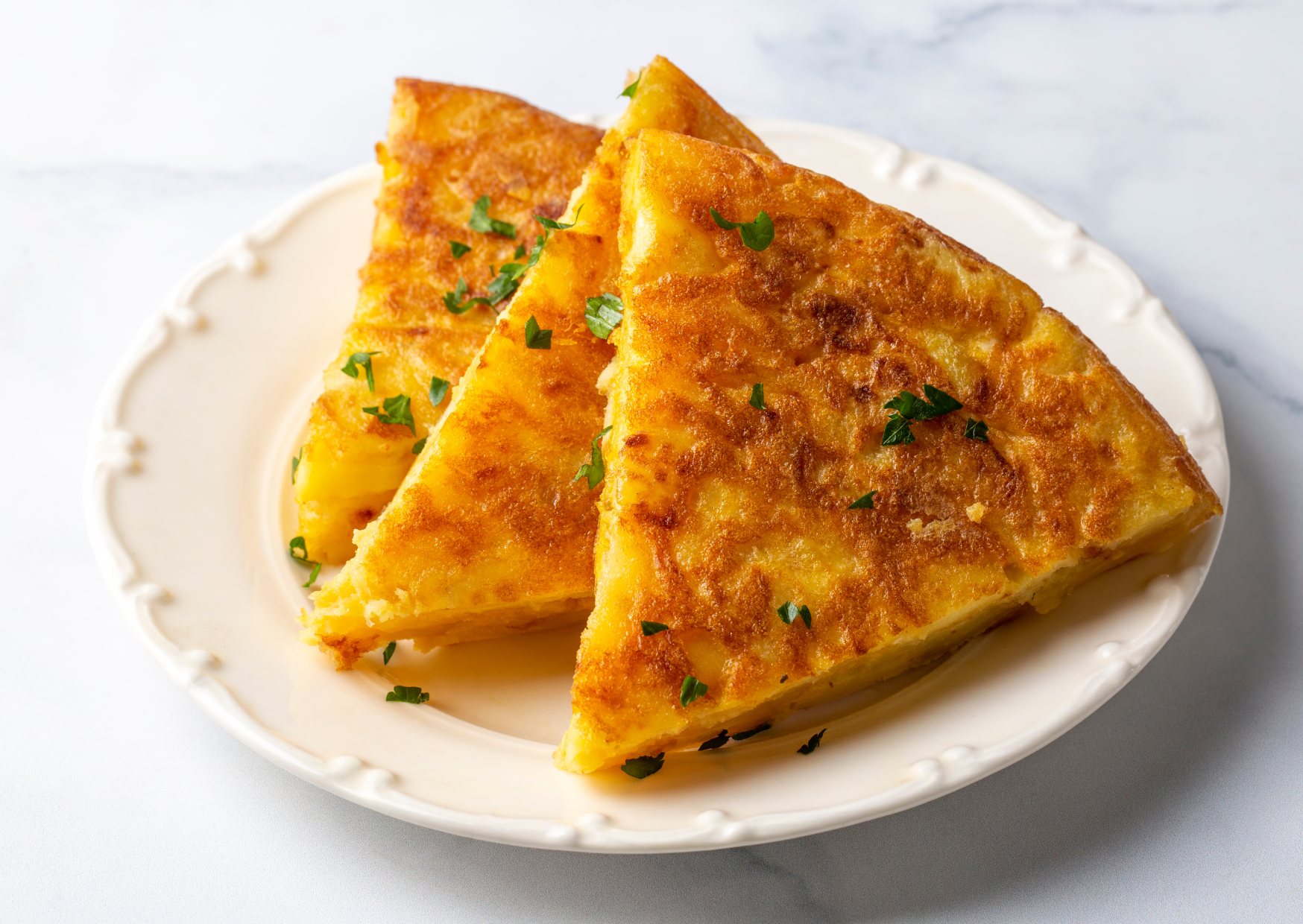
The onion argument is not fake.
It comes up in Spanish homes, bars, online polls, family lunches, and any conversation where people have apparently decided there is not enough conflict in the world.
The no-onion side says onion makes tortilla too sweet, too soft, and too distracting. The potato and egg should be enough. A tortilla without onion tastes cleaner and has a firmer, more direct potato flavor.
The onion side says tortilla without onion is drier, flatter, and missing the thing that makes it tender. Onion melts into the potatoes and gives the egg something sweet to hold. It makes the slice feel more complete, especially when eaten at room temperature.
Both sides have a point.
The problem is not onion.
The problem is bad onion technique.
If the onion is browned hard, it takes over. If it is cut too thick, it becomes stringy. If there is too much, the tortilla can collapse into sweetness. If it is raw-tasting, the whole dish feels unfinished.
A good onion tortilla uses onion as a soft background note. It should be cooked gently with the potatoes until translucent and sweet, but not caramelized into a separate dish.
The no-onion version needs better potato cooking because there is nowhere to hide. The potatoes must be salted properly and cooked until soft enough to integrate with the egg. If they are undercooked or bland, the tortilla feels plain in the wrong way.
A useful household rule is simple.
Make both.
Try the onion version warm and the no-onion version at room temperature. Eat each with bread. Eat each the next morning. Then choose your side like a reasonable person, which in Spain means choosing firmly and pretending the other side has made a character error.
The Oil Is Not Optional, But It Is Not All Eaten
The amount of olive oil in tortilla is the part that alarms Americans first.
That alarm is understandable. The pan looks full. The potatoes look submerged. The recipe seems to be heading toward a cardiovascular incident disguised as tapas.
But the oil functions as a cooking medium.
The potatoes cook gently in it, then the excess is drained. Much of the oil remains in the pan or bowl and can be reused. The final tortilla contains oil, yes, but not the full starting amount.
This is why the quality of oil matters, but not in a precious way.
Use a decent everyday extra virgin olive oil, not the most expensive finishing oil in the house. The flavor should be good because the potatoes absorb some of it. But this is not the place to pour a tiny bottle of estate oil that cost more than the skillet.
The saved oil is useful.
Strain it if needed, keep it in a clean jar, and use it within a few days for eggs, vegetables, potatoes, or another tortilla. It will have potato and onion flavor if onion was used, so it is not a neutral oil anymore. That is a benefit unless you are making something where the flavor would be odd.
The key is heat.
Olive oil should not be smoking. The potatoes should bubble gently. If the oil is too hot, the potatoes brown on the outside before softening inside. That produces a tortilla that tastes like fried potatoes trapped in an omelet.
The correct potato is soft before it is golden.
That is the line American recipes often miss.
Tortilla is not about crispness. It is about tenderness.
The Pan Size Decides The Texture
A tortilla needs enough thickness to be itself.
Use a pan that is too wide and the tortilla becomes a flat egg pancake with potato pieces. Use a pan that is too small and the outside may overcook before the center sets.
For this recipe, a 24 cm skillet is ideal.
It gives the tortilla height without making it stressful to flip. A 26 cm skillet works, but the tortilla will be thinner. A 20 cm skillet makes a taller tortilla, but flipping becomes more dramatic and the timing changes.
Nonstick helps, especially for beginners.
Spanish grandmothers and confident home cooks may use whatever pan they trust because they know its moods. Most people should use a good nonstick skillet and save themselves a private crisis.
The pan should also have sloped sides if possible. That makes the edges easier to tuck and the tortilla easier to slide out.
The edge shaping is more important than it looks.
Once the egg mixture goes in, use a spatula to pull the cooked edges inward slightly and round them. This gives the tortilla its classic curved edge rather than a sharp, flat pancake shape.
Do not stir the tortilla once it is in the pan.
The potato and egg mixture should set as one piece. You can gently tuck, shape, and loosen the edges, but stirring turns the dish into scrambled eggs with potatoes. Delicious maybe, but not tortilla.
A proper tortilla is one unified slice, not a skillet scramble.
The Center Can Be Juicy, But It Should Not Be Careless
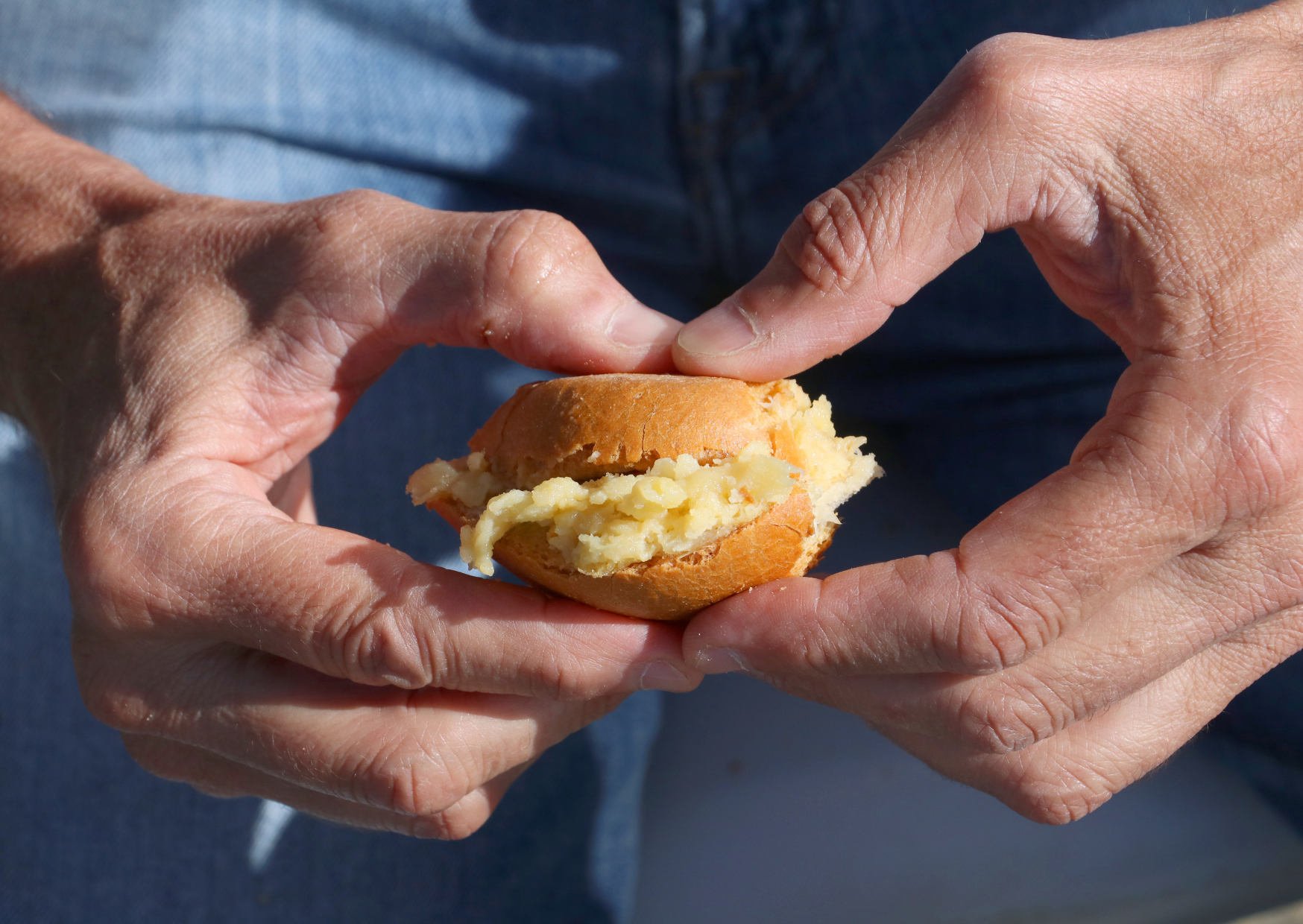
Spanish tortilla texture is personal.
Some people like it fully set and easy to pack into a sandwich. Some like it soft in the center. Some bars serve a tortilla so juicy it almost spills when cut, which has become fashionable in certain places.
That very soft style can be wonderful.
It can also make home cooks nervous, especially when cooking for older adults, pregnant guests, children, or anyone with a higher food-safety risk. Eggs deserve respect, not fear, but respect includes understanding that a very runny tortilla carries more risk than a fully set one.
For a home version, especially for readers cooking outside Spain with supermarket eggs of varying handling standards, the best target is soft but not raw.
The center should be tender and moist. It should not pour across the plate.
If you want a very juicy center, use the freshest eggs you can, handle them carefully, keep everything clean, and serve the tortilla promptly. If you need a picnic tortilla, packed lunch, or make-ahead version, cook it more fully.
Resting also changes texture.
A tortilla that looks slightly loose when it leaves the pan will continue to set as it rests. This is why cutting immediately can be misleading. Give it 10 to 15 minutes, then judge.
For a firmer tortilla, cook the first side for 7 minutes and the second for 4 to 5 minutes over medium-low heat.
For a softer tortilla, cook the first side for 5 minutes and the second for 2 minutes, then rest.
The more often you make it, the more your pan will teach you.
That is not poetic.
It is just true.
What To Serve With Tortilla
Tortilla does not need much.
That is part of its appeal.
Serve it warm, room temperature, or even cold from the fridge if nobody is pretending to be fancy. It works as a tapa, lunch, picnic food, light dinner, sandwich filling, bar snack, or breakfast the next day.
The most Spanish serving style is simple:
- a slice of tortilla
- bread
- tomato salad or green salad
- olives
- roasted peppers
- a little mayonnaise or alioli if that is your household style
- a cold beer, vermouth, or sparkling water
For a full meal, add a salad with tomatoes, onion, tuna, or white beans.
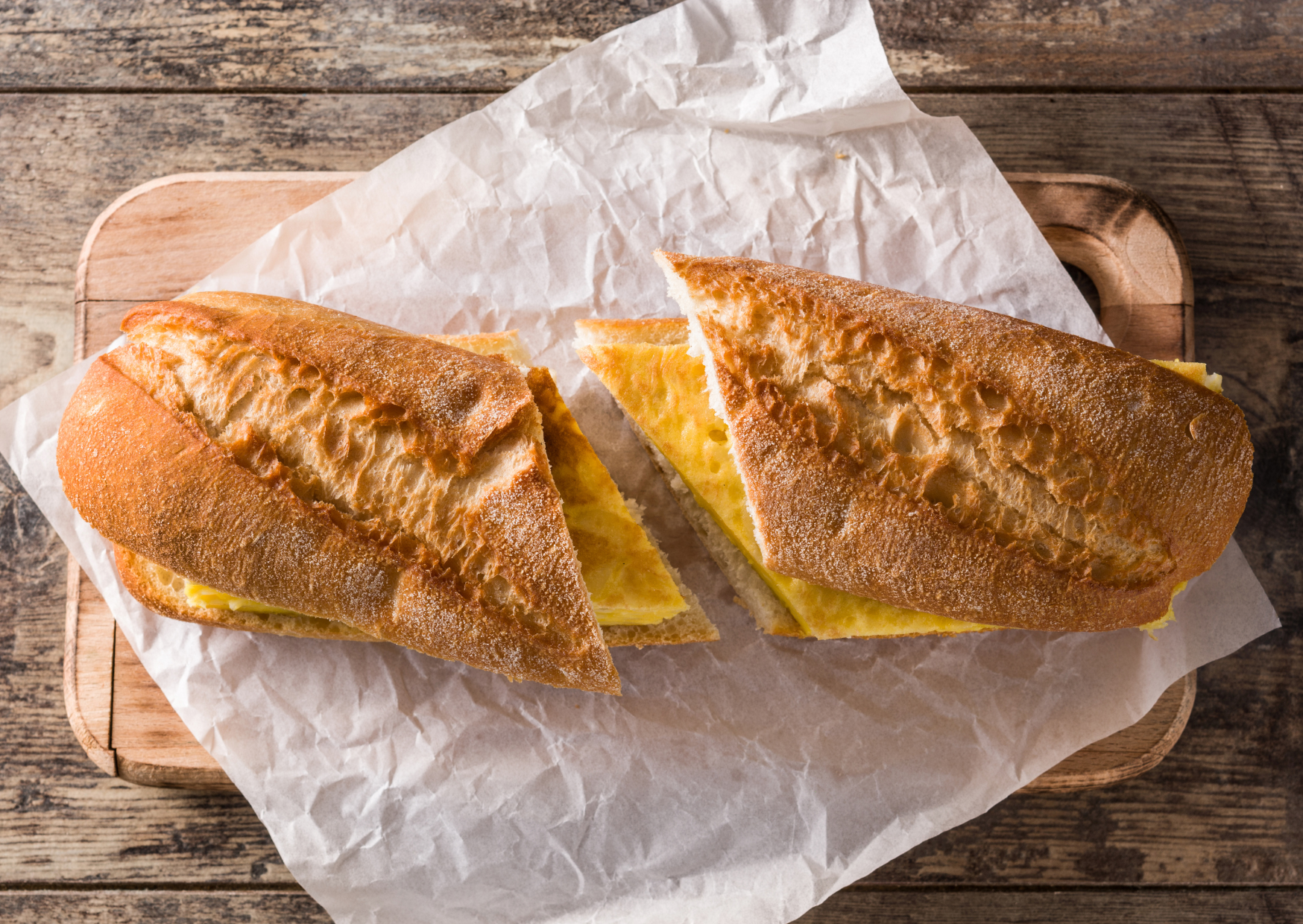
For a bocadillo, put a thick slice of tortilla inside a crusty roll or baguette-style bread. It sounds heavy until you eat it on a train, beach wall, park bench, or kitchen counter and understand why it exists.
For breakfast, a leftover slice with coffee is more sensible than half the “high-protein” products pretending to be food.
The tortilla should be salted enough to stand alone. If it needs sauce to taste like anything, the potatoes were probably under-salted or undercooked.
Storage is easy.
Cool the tortilla, cover it, and refrigerate. Eat within 2 to 3 days. Bring it closer to room temperature before serving if possible. Cold tortilla is still good, but the flavor opens up when it loses the refrigerator chill.
Do not microwave it aggressively.
A brief warm-up is fine, but overheating can make the egg rubbery. Tortilla is often better left alone than revived badly.
The Mistakes That Make It Taste Like A Diner Omelet
The first mistake is using too little oil.
The potatoes need enough oil to cook gently and evenly. Skimping on oil usually means browning, sticking, and uneven texture. Use the oil, drain it, save it.
The second mistake is cutting potatoes too thick.
Thick potatoes take longer, break less, and refuse to merge with the egg. Thin slices soften properly and give the tortilla its layered texture.
The third mistake is high heat.
High heat makes browned potatoes and rubbery eggs. Tortilla wants medium-low patience, not aggression.
The fourth mistake is not salting the potatoes while they cook.
Salt at the end cannot fully repair bland potatoes. Season them early so the flavor enters the dish.
The fifth mistake is skipping the egg-and-potato rest.
Those 10 minutes in the bowl help the mixture become tortilla instead of separate parts.
The sixth mistake is overfilling the pan with anxiety.
A nervous cook keeps touching, pressing, moving, and judging. Let the tortilla set. Tuck the edges. Loosen gently. Flip once.
The seventh mistake is adding too much.
Peppers, chorizo, cheese, herbs, garlic, and other ingredients can be delicious in egg dishes. They are not classic tortilla Española. Learn the basic version first. Then make whatever household variation you like and call it what it is.
The eighth mistake is serving it straight from the pan without resting.
Resting makes the tortilla easier to slice and better to eat. Ten minutes is not a luxury. It is part of the recipe.
The ninth mistake is treating onion like a shortcut for flavor.
Onion can improve tortilla, but it cannot rescue bad potato technique.
The potato still has to be right.
The Honest Answer To The Onion Question
The onion question has no final answer because tortilla belongs to households as much as restaurants.
There are Spanish families where onion is non-negotiable. There are others where adding onion feels like tampering with the dish. Some bars are famous for juicy onion tortillas. Some home cooks will defend the no-onion version with the seriousness of constitutional law.
The best answer is not neutrality.
The best answer is competence.
If using onion, cook it slowly with the potatoes until soft and sweet. Use one medium onion for 700 g potatoes, not a pile that turns the tortilla into an onion cake.
If skipping onion, be more careful with salt, potato texture, and heat. The no-onion tortilla is less forgiving because the flavor is cleaner.
For a first tortilla, the onion version may be easier. It gives tenderness and sweetness, and many Americans will find it more immediately satisfying.
For learning the dish deeply, the no-onion version teaches more. It shows whether the potatoes, salt, oil, eggs, heat, and timing are right.
That is why the argument lasts.
Both versions reveal something.
The onion version shows generosity.
The no-onion version shows discipline.
A Spanish tortilla can survive either choice.
It cannot survive rushed potatoes, dry eggs, and fear of olive oil.
That is the real divide.
Not onion or no onion.
Good tortilla or bad tortilla.

About the Author: Ruben, co-founder of Gamintraveler.com since 2014, is a seasoned traveler from Spain who has explored over 100 countries since 2009. Known for his extensive travel adventures across South America, Europe, the US, Australia, New Zealand, Asia, and Africa, Ruben combines his passion for adventurous yet sustainable living with his love for cycling, highlighted by his remarkable 5-month bicycle journey from Spain to Norway. He currently resides in Spain, where he continues sharing his travel experiences with his partner, Rachel, and their son, Han.