
The problem is not that tourists order “wrong” food in Greece. The problem is that tourist menus often sell a flattened version of Greek food: too much lettuce, too much theater, too much meat in the wrong setting, and dessert habits Greeks do not actually build a normal meal around.
A tourist menu in Greece has a very specific smell.
Not bad. Just predictable.
Lettuce “Greek salad.” Hummus beside everything. Flaming cheese. Gyro plates served like a sit-down dinner. Baklava pushed after every meal as if Greeks end lunch by needing a sugar brick and a nap.
Greeks eat some of these foods. They just often do not eat them the way tourists are sold them.
The better meal is simpler, more seasonal, and much less interested in proving it is Greek.
The Tourist Menu Version Is Usually The Problem
Greek food has been translated badly for decades.
Not because the food is complicated. Because tourist restaurants have learned what visitors recognize, and recognition sells faster than explanation.
So the menu leans on a few symbols: feta, olives, lamb, filo, oregano, tzatziki, baklava, gyros, and the color blue if the printer is feeling ambitious.
The problem is that Greek home and taverna food is broader and quieter than that. It has beans, greens, fish, stews, pies, soups, grilled meats, vegetables cooked in olive oil, yogurt, herbs, lemon, potatoes, rice, seasonal fruit, and bread that exists for more than decoration.
It is not all mezze. It is not all lamb. It is not all “Mediterranean plate” energy.
The five tourist orders below are not illegal. Some are based on real Greek foods. The issue is the tourist version, the timing, and the setting.
A Greek person might eat souvlaki. That does not mean a huge gyro plate with fries and three sauces is the normal taverna dinner.
A Greek person might eat saganaki. That does not mean the flaming cheese show is a standard household ritual.
A Greek person might eat baklava. That does not mean dessert follows every lunch.
So the better question is not “Do Greeks eat this?”
It is “Would this be the normal order here, now, in this kind of place?”
That question fixes more meals than any food list.
Make This First. Horiatiki Instead Of Lettuce Greek Salad
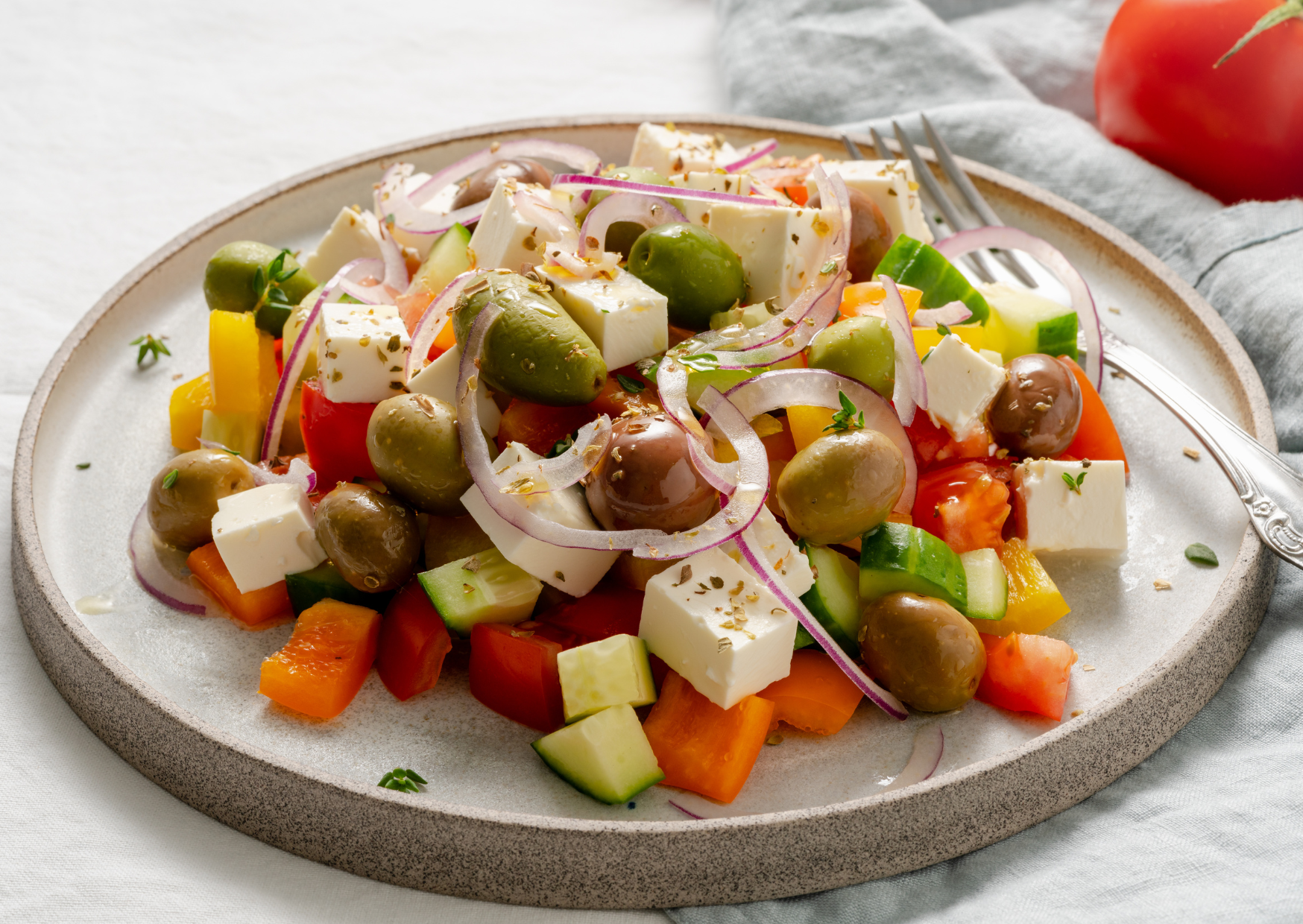
The tourist order is “Greek salad” with lettuce, crumbled feta, bottled dressing, and sometimes a few sad olives placed on top like a legal requirement.
The better order is horiatiki, the village salad.
No lettuce.
No bottled dressing.
No crumbled feta sprinkled like snow.
A proper horiatiki is tomatoes, cucumber, onion, green pepper, olives, a slab of feta, olive oil, oregano, salt, and bread nearby to deal with the juices. It is summer food, which matters. A good horiatiki depends on tomatoes that taste like tomatoes, not red water wearing skin.
Real Horiatiki
Yield
Serves 2 as a main lunch with bread, or 4 as a shared salad.
Ingredients
- 500 g ripe tomatoes, cut into wedges or rough chunks
- 1 medium cucumber, about 250 g, sliced thickly
- 1 small red onion, thinly sliced
- 1 small green bell pepper, sliced into rings or strips
- 120 to 150 g Greek feta, preferably in one slab
- 16 to 20 Kalamata or Greek olives
- 3 tablespoons extra virgin olive oil
- 1 teaspoon dried Greek oregano
- 1/2 teaspoon fine sea salt, plus more to taste
- Optional: 1 tablespoon red wine vinegar, used lightly
- Bread for serving
Steps
- Put the tomatoes, cucumber, onion, and green pepper in a shallow bowl or platter.
- Sprinkle with salt and let the vegetables sit for 5 minutes. This helps the tomatoes release the juice that becomes part of the dressing.
- Add the olives and drizzle with olive oil.
- Place the feta slab on top. Do not crumble it first. The person eating can break it with a fork.
- Sprinkle oregano over the feta and vegetables.
- Add a small splash of vinegar only if the tomatoes need brightness. Good summer tomatoes often do not.
- Serve with bread. The juice at the bottom is part of the dish, not waste.
The important detail is the feta stays whole.
That single choice changes the salad. It keeps the cheese from becoming salty dust and lets the vegetables stay central. The bread is not optional if the tomatoes are good because the oil, tomato juice, salt, and oregano become the best thing on the table.
Order this in Greece when tomatoes are in season and the place looks like it understands vegetables.
If the salad arrives with lettuce, shredded cheese, and dressing, you are probably not in the meal you thought you were in.
Order Fava Instead Of Treating Hummus Like Greek Food
Tourists order hummus in Greece because it feels Mediterranean.
That is understandable. It is also usually the wrong instinct.
Hummus belongs more clearly to the eastern Mediterranean and Middle Eastern table. You can find it in Greece, especially in modern restaurants, but it is not the classic Greek taverna dip tourists imagine it to be.
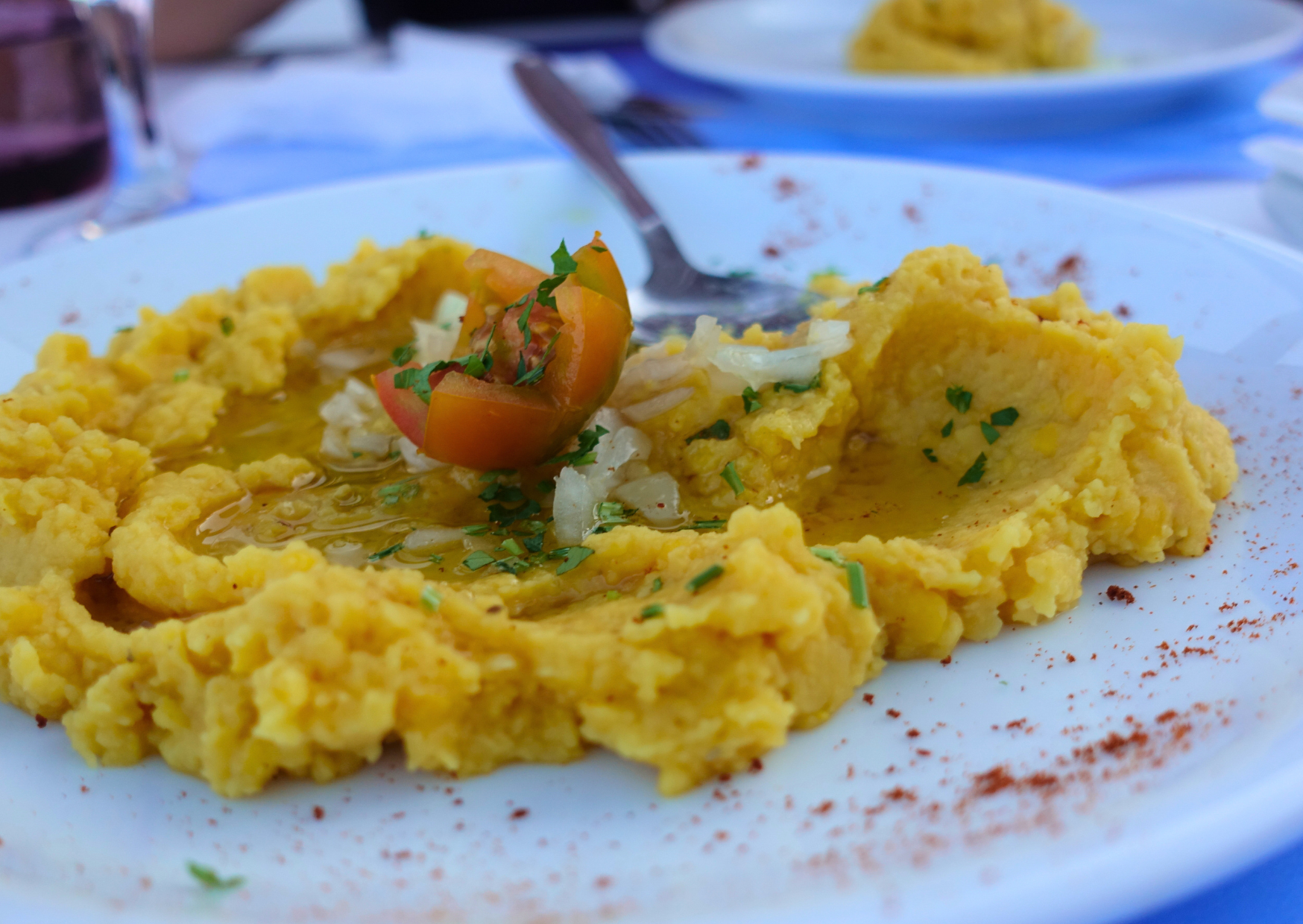
The Greek alternative is often fava, a yellow split pea puree associated strongly with Santorini but eaten more broadly in Greek cooking.
It is not chickpea hummus. It is softer, sweeter, more restrained, and excellent with olive oil, onion, capers, lemon, and bread.
Greek Fava With Onion And Lemon
Yield
Serves 4 as a starter.
Ingredients
- 250 g yellow split peas
- 1 small yellow onion, chopped
- 1 small carrot, chopped, optional
- 1 bay leaf
- 750 ml water, plus more if needed
- 4 tablespoons extra virgin olive oil, divided
- 1 teaspoon fine sea salt, plus more to taste
- 2 tablespoons lemon juice, plus more to taste
- 1 small red onion, thinly sliced, for serving
- 1 tablespoon capers, rinsed, optional
- Optional: chopped parsley or dried oregano
Steps
- Rinse the yellow split peas under cold water until the water runs mostly clear.
- Put the split peas, chopped yellow onion, carrot if using, bay leaf, water, and 2 tablespoons olive oil into a pot.
- Bring to a boil, then reduce to a gentle simmer. Skim off foam if it appears.
- Cook for 35 to 45 minutes, stirring occasionally, until the split peas collapse and become very soft.
- Remove the bay leaf. Add salt and lemon juice.
- Mash with a spoon, whisk, or blend briefly until smooth. Add warm water if the mixture is too thick. It should be creamy, not stiff.
- Spoon onto a plate or shallow bowl. Drizzle with the remaining olive oil.
- Top with red onion, capers, and herbs if using.
Serve warm or at room temperature with bread.
The key is cooking the split peas until they collapse. If they are still grainy, keep cooking. Fava should feel like a spreadable puree, not a bean salad that lost its confidence.
Tourists often miss this dish because hummus is the word they recognize.
Order fava instead, especially on islands, in traditional tavernas, or anywhere the menu leans toward Greek home food rather than generic Mediterranean plates.
It is cheaper, more Greek, and usually a better test of the kitchen.
Skip The Flaming Cheese Show. Make Saganaki Without The Theater.
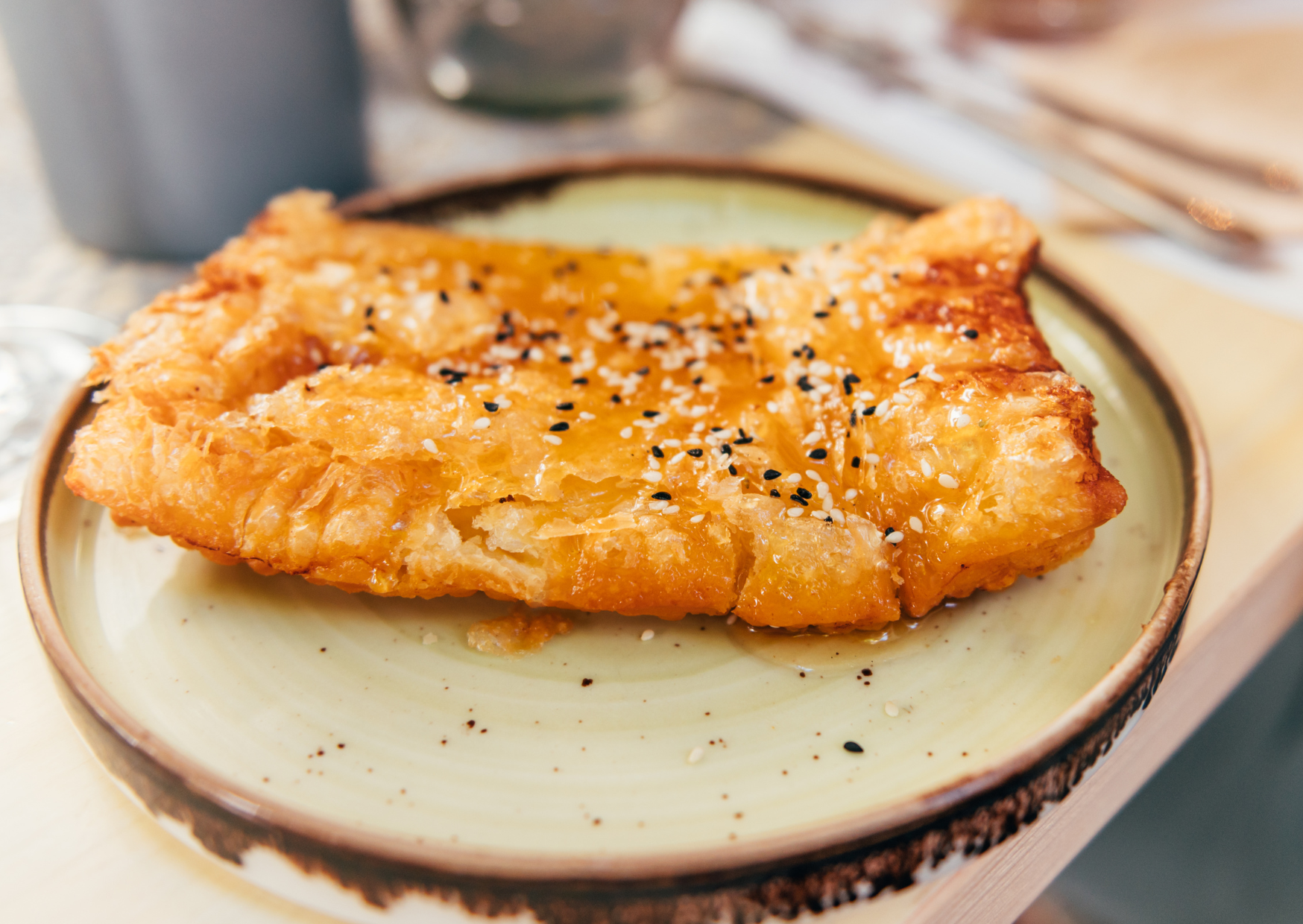
Saganaki is real Greek food.
The tourist problem is the fire.
The flaming “Opa!” version is far more associated with Greek-American restaurant theater than with normal Greek household eating. In Greece, saganaki usually means cheese fried in a small pan until golden outside and hot inside. No table fire required. No performance. No server risking eyebrows for your vacation memory.
A good saganaki is simple, salty, and eaten quickly with lemon.
It is not meant to be a giant melted cheese event that carries the whole meal.
Proper Cheese Saganaki
Yield
Serves 2 to 4 as a starter.
Ingredients
- 200 g firm Greek cheese, such as kefalotyri, kefalograviera, graviera, or kasseri
- 2 tablespoons all-purpose flour
- 1 tablespoon cold water, for moistening the cheese
- 2 tablespoons olive oil
- 1 lemon, cut into wedges
- Optional: a pinch of dried oregano
Steps
- Cut the cheese into one thick slice, about 1.5 cm thick.
- Briefly moisten the cheese with cold water. This helps the flour stick.
- Dredge the cheese lightly in flour, shaking off the excess. The coating should be thin.
- Heat olive oil in a small skillet over medium-high heat.
- Add the cheese and cook for 1 to 2 minutes per side, until deeply golden.
- Transfer to a warm plate.
- Squeeze lemon over the cheese and serve immediately.
The important move is a thin flour coating, not a thick breading.
The flour creates a golden crust and helps the cheese hold its shape. Too much flour turns the dish heavy and pasty. Too much heat burns the outside before the inside warms. Too little heat makes the cheese leak and sulk.
Eat it while hot.
This is not a make-ahead dish. It does not wait politely. Once saganaki cools, the texture changes and the charm leaves the table.
When ordering in Greece, saganaki is fine if the place treats it normally. If the menu sells flames harder than food, keep walking.
The cheese should arrive golden, salty, lemony, and done.
That is enough.
Stop Making Gyros The Whole Greek Dinner. Make Souvlaki Properly.
Gyros is real.
Greeks eat it. Students eat it. Workers eat it. Families grab it. People eat it late, fast, cheap, and happily.
The tourist mistake is treating gyros as the essential Greek dinner and ordering giant plates of it in sit-down restaurants for the full vacation. Gyros belongs more naturally to the souvlatzidiko, the grill shop, not every taverna meal.
The better move depends on setting.
At a casual grill shop, order souvlaki, gyros, or kalamaki the way the place does it. At a taverna, look for grilled meats, lamb chops, fish, baked dishes, beans, greens, and seasonal plates.
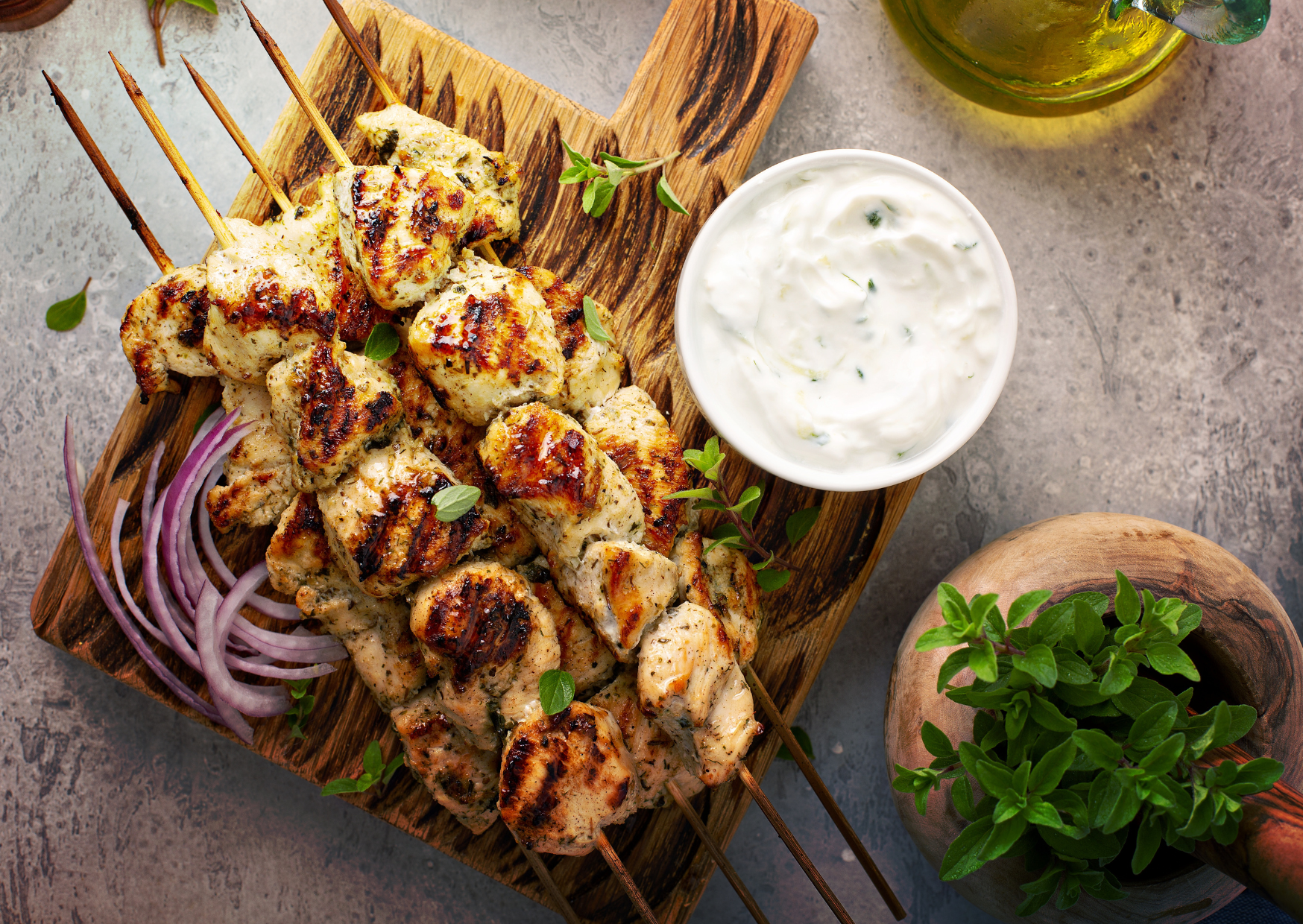
For home cooking, souvlaki is the cleaner lesson.
Pork Or Chicken Souvlaki
Yield
Serves 4.
Ingredients
- 700 g pork shoulder, pork loin, or chicken thighs, cut into 2.5 cm cubes
- 3 tablespoons extra virgin olive oil
- 2 tablespoons lemon juice
- 1 tablespoon red wine vinegar
- 2 teaspoons dried Greek oregano
- 2 garlic cloves, grated or minced
- 1 teaspoon fine sea salt
- 1/2 teaspoon black pepper
- Optional: 1/2 teaspoon sweet paprika
- Wooden or metal skewers
- Pita, tomato, red onion, tzatziki, and lemon for serving
Steps
- If using wooden skewers, soak them in water for 30 minutes.
- Mix olive oil, lemon juice, vinegar, oregano, garlic, salt, pepper, and paprika if using.
- Add the meat and coat well.
- Marinate for 30 minutes at room temperature, or up to 6 hours in the refrigerator. Do not marinate overnight with this much lemon or the texture can become mushy.
- Thread the meat onto skewers, leaving a little space between pieces.
- Heat a grill pan, outdoor grill, or heavy skillet over medium-high heat.
- Cook for 8 to 12 minutes, turning often, until browned and cooked through. Chicken should reach 74°C internally.
- Rest for 5 minutes.
- Serve with pita, tomato, red onion, tzatziki, and lemon.
The important part is small pieces and high heat.
Souvlaki should brown quickly and stay juicy. Large chunks cook badly. Low heat makes the meat steam. Too much marinade makes it wet. The lemon should brighten the meat, not cure it into weirdness.
If serving with tzatziki, use it as a sauce, not a flood.
A balanced plate might include one or two skewers, tomato, onion, pita, salad, and maybe potatoes. It does not need to become a mountain of fries, meat, and sauce just because the tourist menu discovered Americans like abundance.
Greek grill food is best when it stays sharp, hot, and simple.
Baklava Is Not The Dessert After Every Greek Meal

Baklava is real.
It is also not the automatic ending to every Greek meal. Tourists often order it because it is the dessert they know, the way they order tiramisu in Italy even when the restaurant clearly wants them to eat something else.
Baklava is rich, sweet, sticky, and festive. It belongs to pastry shops, celebrations, holidays, and specific cravings more than a normal end to every lunch.
After a Greek meal, dessert may be fruit, yogurt with honey, spoon sweets, halva, loukoumades, ice cream, or nothing at all. In many tavernas, a small sweet or fruit plate may appear without drama.
The better everyday option is Greek yogurt with honey and walnuts, sometimes with spoon sweet fruit.
It is simple enough to sound like nothing and good enough to make the heavier dessert feel unnecessary.
Greek Yogurt With Honey, Walnuts, And Spoon Sweet Fruit
Yield
Serves 2.
Ingredients
- 300 g thick Greek yogurt
- 2 tablespoons Greek honey, thyme honey if available
- 30 g walnuts, roughly chopped
- 2 tablespoons spoon sweet, such as sour cherry, quince, fig, or orange peel, optional
- Optional: pinch of cinnamon
Steps
- Spoon the yogurt into two bowls.
- Drizzle each bowl with honey.
- Add chopped walnuts.
- Add spoon sweet fruit if using.
- Sprinkle lightly with cinnamon if wanted.
- Serve cold.
The important detail is thick, unsweetened yogurt.
Do not use vanilla yogurt. Do not use low-fat yogurt that tastes like apology. The dish needs tang, richness, honey, and crunch. The spoon sweet adds fruit and syrup, but the yogurt should still be the base.
This is the dessert that makes more sense after grilled fish, beans, greens, or a heavy lunch.
Baklava has its place.
Just not as a nightly assignment.
If the bakery looks good, buy baklava and eat it with coffee when you actually want it. Do not order tired baklava from a tourist taverna because the menu tells you it is the Greek thing to do.
The best Greek dessert is often the one the kitchen did not need to force.
The Tourist Dishes Are Usually Too Heavy, Too Sweet, Or Too Generic
The pattern is easy to see once you look for it.
Tourist Greek food often makes every meal louder. More sauce. More cheese. More meat. More filo. More honey. More fries. More things translated into the language of American abundance.
Greek food at its best is not shy, but it is usually better balanced.
A table might have horiatiki, grilled fish, fava, boiled greens, bread, olives, roasted vegetables, and wine. Another meal might have beans, potatoes, salad, feta, and fruit. A grill-shop meal might be souvlaki, pita, onion, tomato, and tzatziki. A winter meal might be soup, greens, bread, and cheese.
The food has more vegetables than tourists expect.
It has more legumes.
It has more olive oil used with purpose.
It has more seasonal logic.
It has fewer giant mixed platters where every recognizable Greek word gets placed on one plate and buried under fries.
This does not mean Greeks eat perfectly. Nobody does. Greece has fast food, packaged snacks, sugary drinks, processed food, and people eating badly like anywhere else.
But traditional Greek meals have a structure tourists often miss because the tourist menu is built around symbols.
Lamb is Greek, yes, but not every Greek meal is lamb.
Filo is Greek, yes, but not every dinner ends in syrup.
Feta is Greek, yes, but not every dish needs it.
Tzatziki is Greek, yes, but it is not ranch dressing in a witness protection program.
The better Greek meal usually looks simpler.
That is why tourists sometimes walk past it.
How To Order Better In Greece
The first rule is to look at the room.
If the menu outside has photos of every dish, five languages, and someone waving you in, the restaurant may still feed you. But it is probably not where the best version of Greek food is hiding.
Look for places where Greek customers are eating actual meals. Not only coffee. Not only drinks. Actual plates.
The second rule is to ask what is fresh or cooked today.
Greek tavernas often have daily dishes: beans, stuffed vegetables, stews, fish, greens, pies, roasted meats, soups, and vegetables cooked in olive oil. Those can be better than the permanent tourist-menu classics.
Useful orders include:
- horiatiki when tomatoes are good
- fava instead of generic hummus
- horta, boiled greens with olive oil and lemon
- gigantes, baked giant beans
- briam, vegetables baked with olive oil
- gemista, stuffed tomatoes and peppers
- psari, fish, but ask the price clearly
- souvlaki or kalamaki at a grill shop
- saganaki without the fire show
- yogurt with honey or fruit instead of automatic baklava
The third rule is to stop ordering everything at once like a tourist trying to defeat the menu.
Greek meals often work better shared. A salad, one or two starters, a main or grilled dish, bread, and something simple to finish can be enough.
The fourth rule is to respect season.
Tomatoes are better in summer. Greens matter in cooler months. Fish depends on place, price, and freshness. Heavy baked dishes are not always the best choice in August heat.
The fifth rule is to let go of the checklist.
You do not need moussaka, gyros, baklava, Greek salad, spanakopita, tzatziki, and lamb in the same 36 hours to prove the trip happened.
A better Greek food trip is less anxious than that.
The Better Greek Meal Is Less Famous And More Useful
The tourist menu is not evil.
It is just tired.
It knows what visitors recognize and sells it back to them until Greek food becomes five clichés in a blue border. Some of those clichés are delicious. Some are distorted. Some belong in different places than tourists order them.
The better meal starts with less performance.
A real horiatiki instead of lettuce salad. Fava instead of generic hummus. Saganaki without flames. Souvlaki in the right setting instead of gyro plates as every dinner. Yogurt with honey instead of tired baklava after meals that never needed it.
Those swaps do not make a person local.
They make the food better.
They also teach the real rhythm of Greek eating: vegetables matter, beans matter, bread matters, olive oil matters, season matters, and not every meal has to announce itself as Greek from across the street.
That is usually the difference between a meal designed for tourists and a meal Greeks would actually recognize.
The tourist meal tries to prove where you are.
The better Greek meal already knows.

About the Author: Ruben, co-founder of Gamintraveler.com since 2014, is a seasoned traveler from Spain who has explored over 100 countries since 2009. Known for his extensive travel adventures across South America, Europe, the US, Australia, New Zealand, Asia, and Africa, Ruben combines his passion for adventurous yet sustainable living with his love for cycling, highlighted by his remarkable 5-month bicycle journey from Spain to Norway. He currently resides in Spain, where he continues sharing his travel experiences with his partner, Rachel, and their son, Han.