
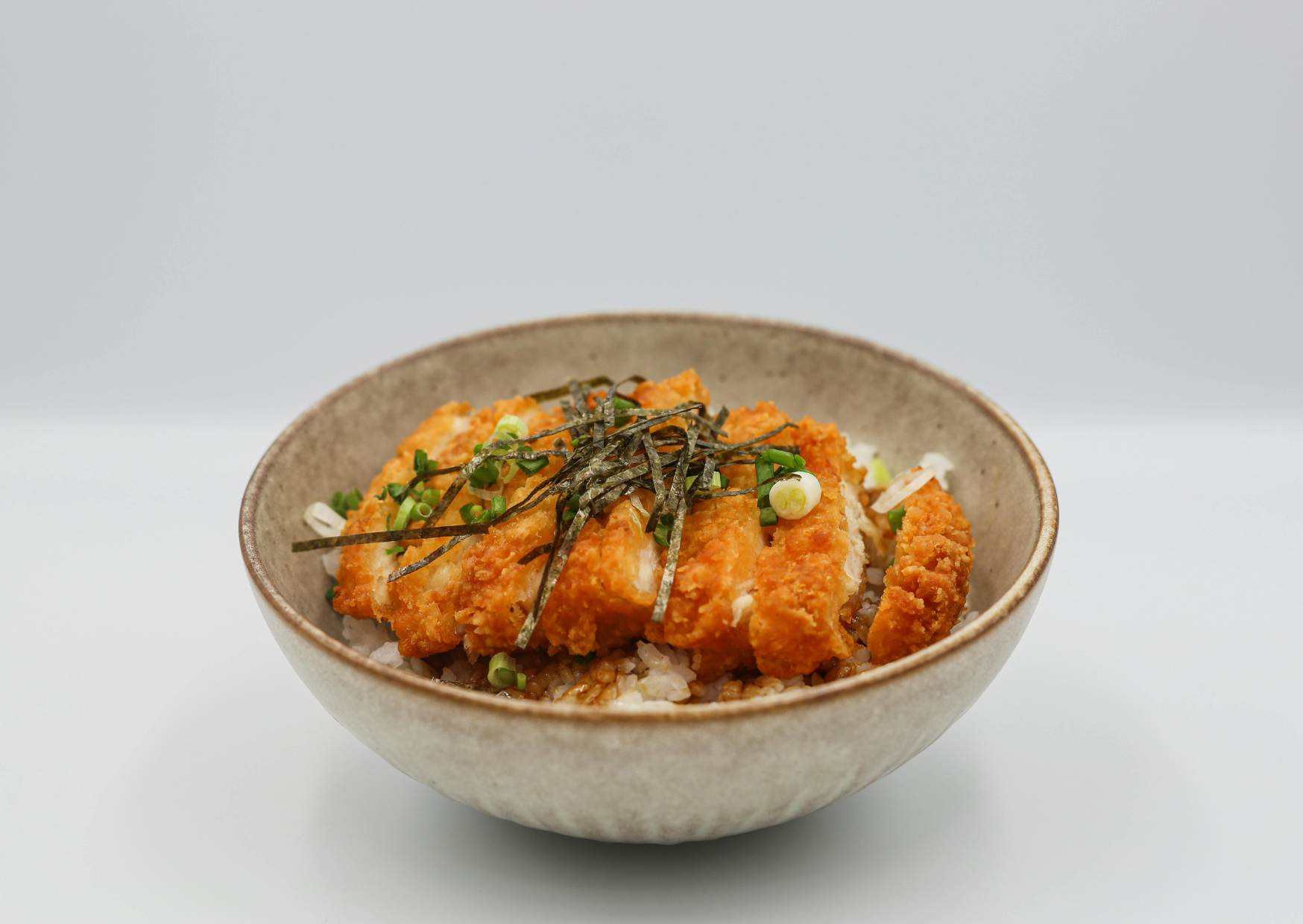
Watch a Japanese chef make katsu. The chicken comes out of the oil shatteringly crisp, with a coating that stays crisp even after sitting for ten minutes, that crunches loudly when cut, that tastes light rather than heavy. Then make the cookbook version at home. The coating is denser, softer, less crunchy, and goes soggy within minutes of leaving the oil.
The cookbook recipe is not wrong. The cookbook recipe is incomplete. It lists panko as the breading, which is correct. It does not explain that panko is not a single thing, that the panko available in American supermarkets is usually the wrong panko for katsu, and that even with the right panko, the breading needs to be applied differently than the breading on Italian or American breaded cutlets. The panko trick is what produces the light, shattering crunch that distinguishes real katsu from American interpretations.
This piece is the recipe written for the cook who wants the Japanese restaurant version rather than the cookbook version. The ingredient logic, the panko selection, the breading technique, and the frying method come first. The cultural and history context follows.
The Recipe
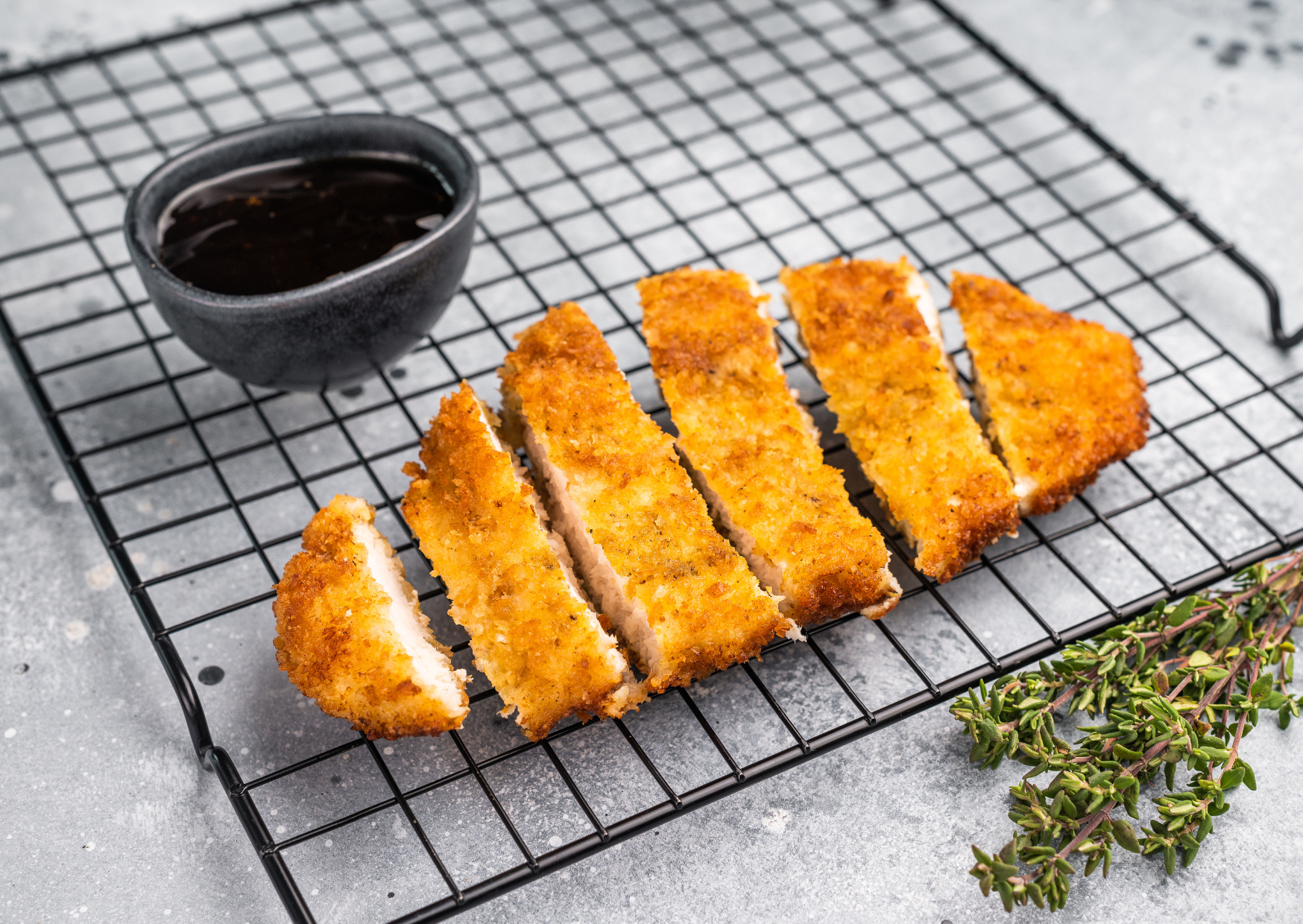
Yield: 4 servings
Active time: 25 minutes Total time: 50 minutes (or up to 4 hours if salting the chicken in advance)
Ingredients:
- 4 boneless, skinless chicken breasts (about 600 to 750 grams total)
- 1.5 teaspoons fine sea salt
- 1/2 teaspoon ground white pepper
- 60 grams all-purpose flour
- 2 large eggs
- 1 tablespoon water
- 200 grams Japanese-style panko (look for “nama panko” or coarse Japanese panko)
- Neutral oil for frying (canola, rice bran, or peanut oil)
- Tonkatsu sauce for serving
- Finely shredded raw cabbage for serving
- Cooked short-grain rice for serving
- Lemon wedges for serving
Method:
- Place each chicken breast between two sheets of plastic wrap. Pound to an even thickness of about 1.5 to 2 centimeters using a meat mallet or rolling pin. Even thickness is critical for proper cooking. The breast should be about the size and shape of a small flattened cutlet.
- Season both sides of each cutlet generously with salt and white pepper. If you have time, let the chicken rest at room temperature for 20 to 30 minutes, or refrigerate for up to 4 hours. The salting period helps the meat retain moisture during frying.
- Set up three shallow dishes for breading. The first contains the flour. The second contains the eggs beaten with the tablespoon of water. The third contains the panko.
- Working with one cutlet at a time, dredge in the flour and shake off excess. The flour layer should be thin and even.
- Dip the floured cutlet in the egg, letting excess drip off. The egg coating should be even but not pooled.
- Press the cutlet into the panko, then flip and press the other side. Press firmly enough to make the panko adhere but not so firmly that you crush the panko flakes. The panko should retain its three-dimensional structure rather than becoming flat. This is the panko trick. Most American recipes call for pressing too firmly, which crushes the panko and produces a denser coating.
- After breading all four cutlets, let them rest on a wire rack for 10 to 15 minutes before frying. This rest allows the breading to set and adhere better, which prevents the panko from sliding off during frying.
- Heat 3 to 4 centimeters of neutral oil in a heavy-bottomed pan or Dutch oven to 170 degrees Celsius (340 Fahrenheit). The temperature is critical. Too cool and the panko absorbs oil and becomes greasy. Too hot and the panko browns before the chicken cooks through. Use a thermometer.
- Carefully lower one or two cutlets into the oil at a time. Do not crowd the pan. Fry for 4 to 5 minutes on the first side, until the panko is deep golden brown and crisp. Flip and fry for another 3 to 4 minutes on the second side. The internal temperature should reach 70 degrees Celsius (160 Fahrenheit).
- Transfer to a wire rack to drain. Do not rest on paper towels. Paper towels trap steam against the bottom of the cutlet, which makes the panko soggy. The wire rack allows air circulation on all sides, which keeps the coating crisp.
- Let the cutlets rest for 2 to 3 minutes before slicing. Slice each cutlet diagonally into 1.5 to 2 centimeter strips, perpendicular to the grain. The strips should hold together when lifted.
- Serve immediately on a bed of finely shredded raw cabbage, with tonkatsu sauce drizzled over or served on the side. Accompany with cooked short-grain rice, miso soup, and lemon wedges.
Why The Panko Selection Matters
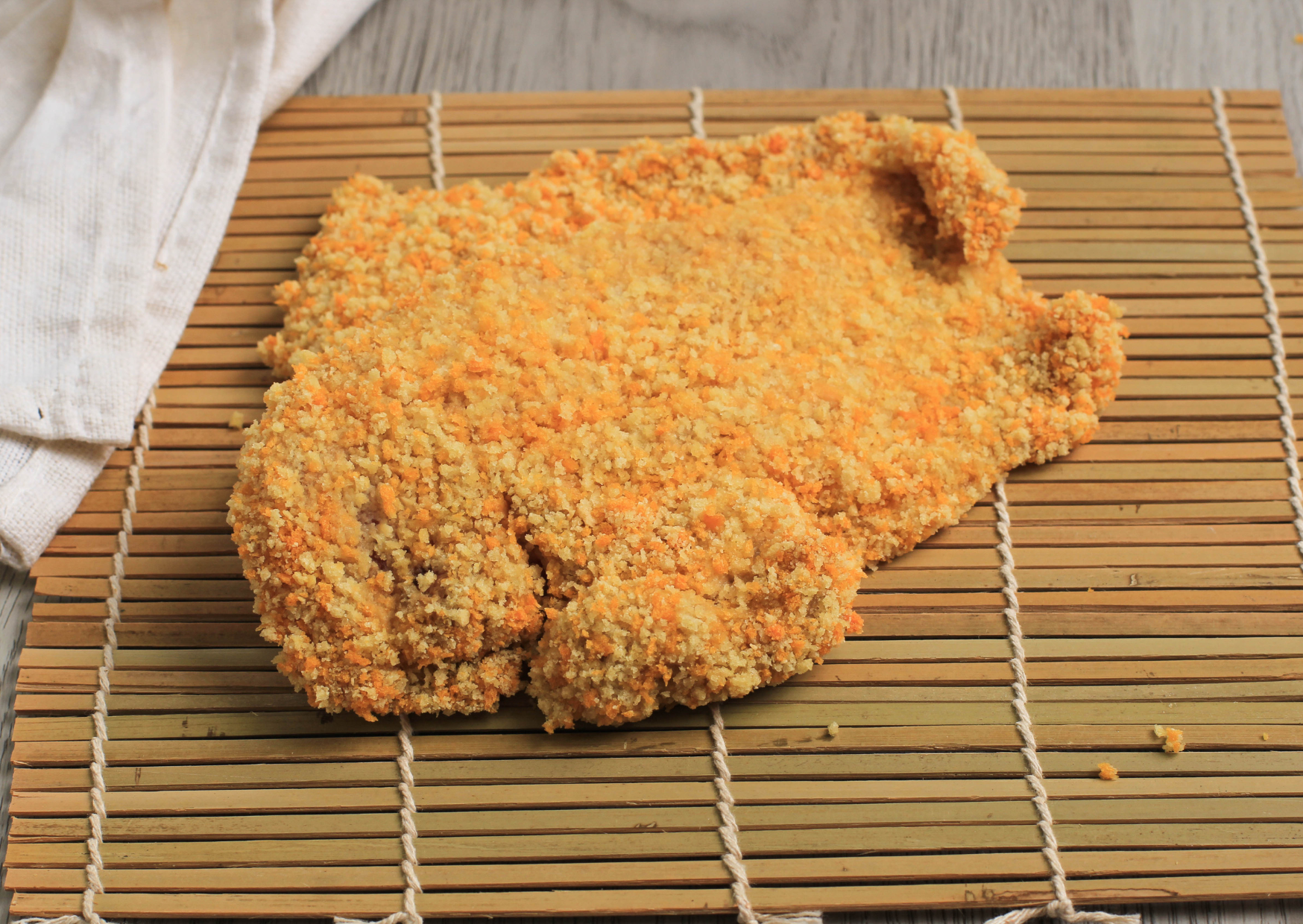
The single most important ingredient decision is the panko. American supermarket panko is usually a different product from Japanese panko, and the difference shows up in the final crunch.
Japanese panko is made from crustless white bread that has been dried using a specific low-temperature electrical process. The bread shards are long, jagged, and hollow, with significant air pockets. When fried, the air pockets stay open and produce the shattering crunch that defines real katsu.
American supermarket panko is often made from regular bread that has been crumbled and dried. The shards are denser, smaller, and lack the air pockets. Fried, they produce a denser, softer coating that resembles American breading more than Japanese panko.
The visual difference is clear if you compare them side by side. Japanese panko looks like long, irregular flakes, almost like paper shavings. American supermarket panko looks like more uniform, denser crumbs.
The brand matters. Look for Kikkoman, S&B, Yamamori, or other Japanese-imported panko. The Japanese-language label on the bag is a good sign. Avoid generic American panko brands sold in standard supermarket spice aisles. The Japanese-imported panko is typically sold in Asian grocery stores, larger international supermarkets, or specialty spice shops.
Some American panko brands have started producing closer-to-Japanese panko. Read the ingredient list. The Japanese-style panko contains only flour, water, yeast, salt, and shortening or oil. American versions often contain additional preservatives, dough conditioners, or stabilizers that affect the texture.
If you cannot find Japanese panko, the next best option is to make panko at home from white bread. Remove the crusts from a loaf of soft white bread (Pullman loaf or sandwich bread). Tear the bread into small pieces. Dry in a low oven (90 to 100 degrees Celsius, or 200 Fahrenheit) for 30 to 45 minutes until completely dry but not browned. Process briefly in a food processor until coarse crumbs form. Use within a week.
Why The Light Press Matters
The breading technique most American recipes teach involves pressing the breaded cutlet firmly to make the panko adhere. This works for Italian breaded cutlets, where the breading is meant to be dense and tightly bound. It does not work for katsu.
Pressing the panko firmly crushes the air pockets that give Japanese panko its distinctive crunch. The crushed panko adheres better but produces a denser, less crunchy coating. The result is a katsu that looks like a katsu but tastes like an American breaded cutlet.
The Japanese technique is to press just firmly enough to make the panko adhere, but no more. The panko should still retain its three-dimensional structure after pressing. You should be able to see the individual flakes on the surface of the breaded cutlet, not a uniform coating.
This requires the egg coating to be sufficient. A thin egg coating means the panko has trouble adhering. A thick, well-coated egg layer means the panko adheres with light pressure and retains its structure. Beat the eggs thoroughly before dipping, and let excess egg drip off but do not wipe the cutlet dry.
The 10 to 15 minute rest after breading also helps. The egg coating partially sets during this rest, which improves panko adhesion without requiring additional pressing.
Why The Temperature Matters
The frying temperature of 170 degrees Celsius is specific and important. American recipes often call for higher temperatures (180 to 190 degrees Celsius), which produces faster browning but causes problems with the chicken interior.
At 170 degrees Celsius, the panko browns at the same rate that the chicken cooks through. The interior reaches the safe temperature of 70 degrees Celsius at approximately the same time the exterior reaches deep golden brown. The result is a perfectly cooked cutlet with optimally fried panko.
At higher temperatures, the panko browns faster than the chicken cooks. The cook either pulls the cutlet too early (resulting in undercooked chicken) or leaves it in too long (resulting in burned panko and dry chicken).
Use a candy thermometer or instant-read thermometer to monitor the oil temperature. The temperature drops when cutlets are added, so allow time for it to recover between batches. Do not eyeball the temperature. The 10-degree difference between 170 and 180 produces meaningfully different results.
The oil itself should be neutral and high smoke point. Canola, rice bran, peanut, or grapeseed oil all work. Olive oil is wrong for this dish. Sesame oil is wrong. Lard or other animal fats produce different flavors that do not match traditional katsu.
After frying, the oil can be strained, cooled, and reused 2 to 3 times for similar dishes. After that, the oil starts to develop off-flavors and should be discarded.
On The Chicken
Boneless, skinless chicken breasts are standard for chicken katsu. They produce a clean, even cutlet that fries evenly and slices cleanly.
The thickness after pounding should be 1.5 to 2 centimeters. Thinner cuts cook too quickly and dry out. Thicker cuts do not cook through before the breading burns. Even thickness across the cutlet is more important than absolute thickness.
Some Japanese restaurants use thigh meat instead of breast meat. Thigh produces juicier, more flavorful katsu but with a slightly different texture. The breading technique is the same. The frying time is similar. Thigh-based katsu is sometimes called “momo katsu” and is increasingly popular in Japan.
The chicken should be at room temperature when fried. Cold chicken straight from the refrigerator drops the oil temperature too much and produces uneven cooking. Let breaded cutlets rest at room temperature during the 10 to 15 minute rest period before frying.
For tonkatsu (the pork version), use boneless pork loin chops 2 to 2.5 centimeters thick. The frying time is slightly longer (5 to 6 minutes per side). The breading technique is identical.
On The Tonkatsu Sauce
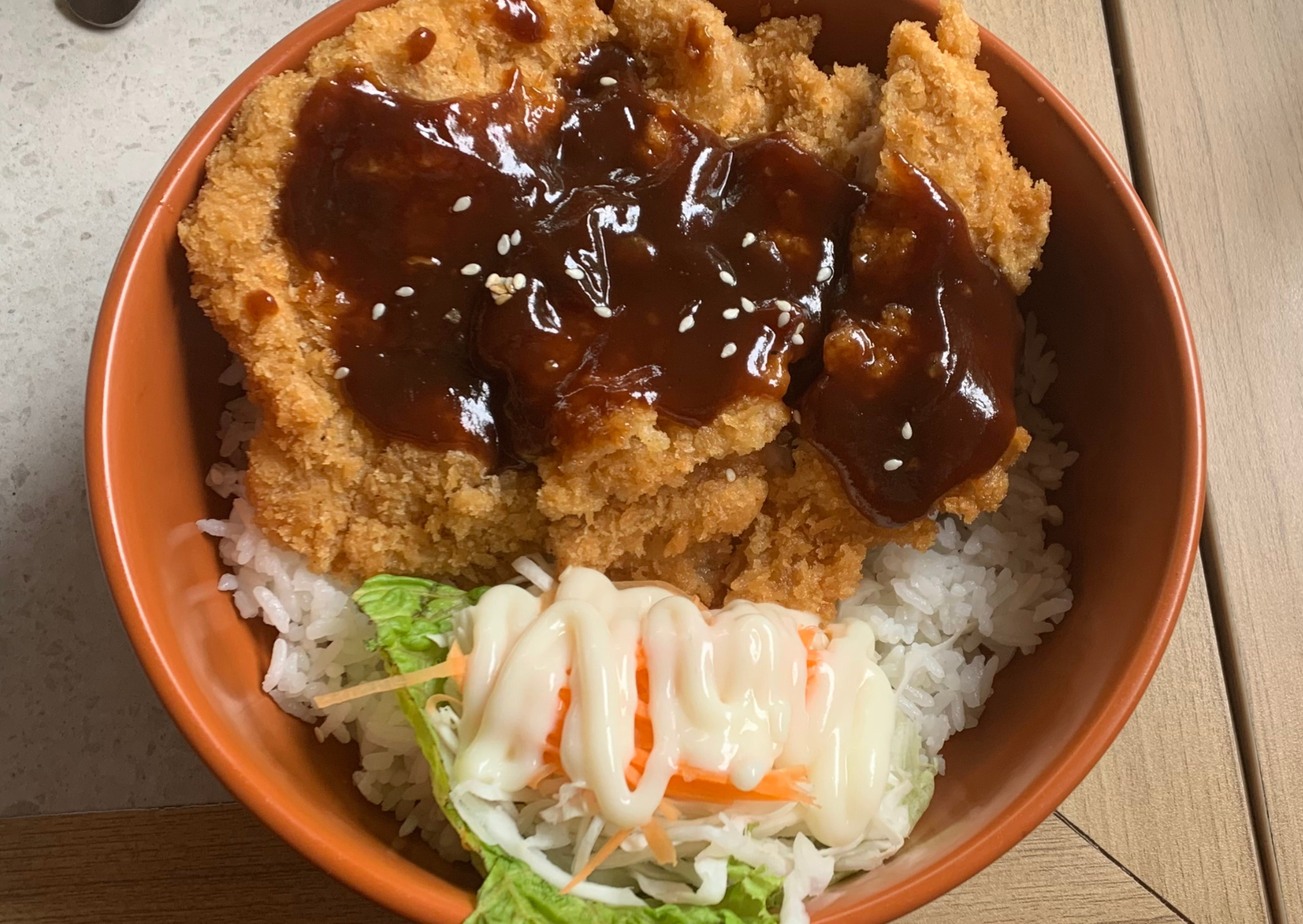
Tonkatsu sauce is non-negotiable for serving. The sauce is a fundamental part of the dish, not an optional accompaniment. The dark, sweet-savory-fruity sauce balances the rich fried cutlet and the cabbage.
Bull-Dog brand is the standard Japanese tonkatsu sauce and is widely available. Kagome and Otafuku are also good options. Avoid generic Worcestershire sauce as a substitute. Tonkatsu sauce is sweeter, thicker, and more complex than Worcestershire.
If you cannot find commercial tonkatsu sauce, you can make a quick approximation by combining 60 milliliters ketchup, 30 milliliters Worcestershire sauce, 15 milliliters soy sauce, 15 milliliters mirin, 1 teaspoon sugar, and 1/2 teaspoon Dijon mustard. This is not authentic tonkatsu sauce but produces a similar flavor profile.
Some Japanese restaurants serve tonkatsu sauce at the table with a small bowl of toasted sesame seeds. Diners grind the sesame seeds in a small mortar (suribachi) and stir them into the sauce. This adds nutty depth and is a traditional touch worth replicating if you have a mortar and pestle available.
On The Cabbage
The shredded cabbage that accompanies katsu is also non-negotiable. It is not a garnish. It is a fundamental component of the dish that balances the richness of the fried cutlet.
The cabbage should be shredded as finely as possible. A sharp knife or a Japanese-style mandoline produces the right consistency. The cabbage should be almost translucent when shredded properly. Coarse cabbage does not work the same way.
Use green cabbage. Napa cabbage is too soft. Red cabbage is wrong color and slightly different flavor. The standard tight-headed green cabbage produces the right texture and color.
Soak the shredded cabbage in ice water for 5 to 10 minutes after shredding. This crisps the cabbage and removes any residual bitterness. Drain thoroughly and pat dry before serving.
The cabbage is served raw, not dressed. Diners can squeeze lemon over it or drizzle a small amount of tonkatsu sauce, but the cabbage itself is unseasoned. Its job is to refresh the palate between bites of the rich fried cutlet.
The Cost Breakdown
For a single batch of chicken katsu, four servings:
Chicken breasts: 6 to 10 euros for 600 to 750 grams of good-quality chicken. Japanese panko: 1.50 to 2.50 euros for the 200 grams used (a 200g bag typically costs 3 to 5 euros). Eggs: 0.50 to 1 euro for 2 eggs. Flour, salt, pepper: negligible. Frying oil: 2 to 4 euros for the oil used (most can be strained and reused). Tonkatsu sauce: 0.50 to 1 euro for the small amount used per serving (a bottle lasts months). Cabbage: 1 to 2 euros for one small head, of which a portion is used. Rice: 1 to 2 euros for the cooked rice serving four.
Total cost for four servings: roughly 12 to 22 euros, or 3 to 5.50 euros per person.
For comparison, chicken katsu at a Japanese restaurant in Madrid, Lisbon, or Barcelona typically costs 14 to 22 euros per person for the equivalent serving with sides. Making it at home is significantly cheaper and allows you to control the panko quality.
Storage And Leftovers
Katsu is best eaten immediately after frying. The crisp panko coating is the point, and that crispness fades as the cutlet sits.
Leftover katsu can be stored in the refrigerator for up to 2 days. To reheat without losing too much crispness, place the leftover katsu on a wire rack in a 180-degree Celsius oven for 8 to 10 minutes. Do not microwave. Microwaving destroys the panko texture completely.
Leftover katsu is also excellent in the dish katsu sando, a Japanese sandwich made with thick slices of soft white bread, butter or Japanese mayo, tonkatsu sauce, and the cold or briefly reheated katsu. The sandwich is sliced into halves and traditionally served as a portable lunch or snack.
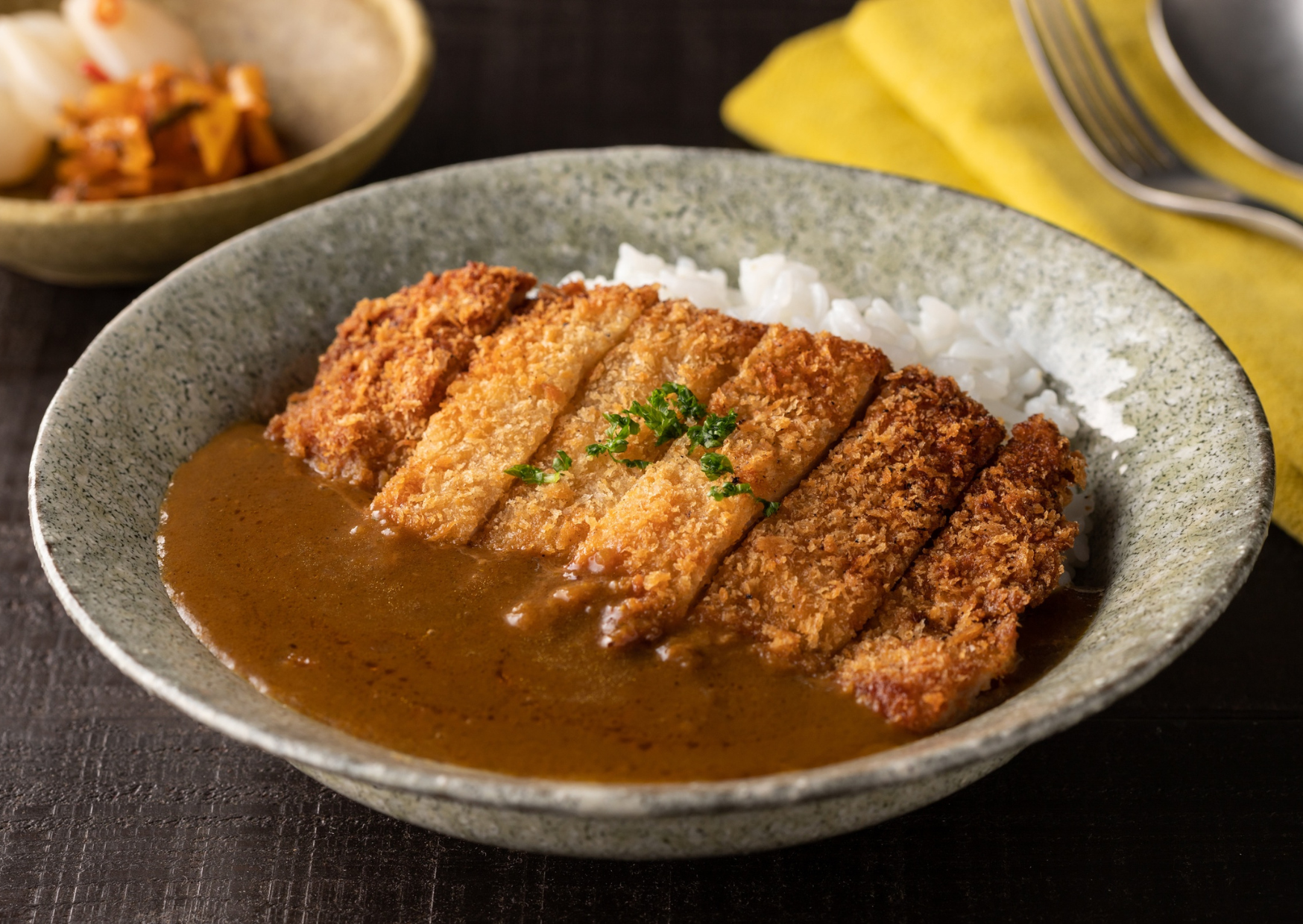
Another use for leftover katsu is katsu curry, where the katsu is sliced and served on top of Japanese curry rice. The curry sauce moistens the slightly less crisp leftover katsu and produces a different but equally satisfying dish.
A Repeatable Week Plan
To integrate this dish into regular cooking:
Make katsu for dinner once a week or every two weeks. The active prep time is 25 to 30 minutes including pounding the chicken and breading. The frying takes another 15 to 20 minutes.
Buy Japanese panko in larger quantities when available and store in airtight containers. Properly stored panko keeps for 6 to 12 months without losing texture.
Keep tonkatsu sauce in the refrigerator. A bottle lasts 3 to 6 months and is useful for other Japanese dishes beyond katsu.
Vary the protein after mastering the chicken version. Pork loin (the original tonkatsu). Beef (gyu katsu). Tofu or eggplant for vegetarian versions. The breading technique stays the same. The frying times vary slightly.
The Framework The Cookbook Misses
The recipe above is one specific dish. The framework it teaches transfers to most Japanese frying preparations.
The light-press breading technique applies to other Japanese fried dishes including ebi furai (fried shrimp), korokke (Japanese croquettes), and menchi katsu (fried ground meat patties). The 170-degree frying temperature applies broadly. The wire rack draining technique applies to all Japanese fried foods.
These techniques are obvious to Japanese home cooks who learned the dishes from their families or from Japanese cooking shows that explain the underlying logic. They are largely absent from American cookbooks because American cookbook writers often adapt the recipes to American kitchen norms (heavier breading, hotter oil, shorter cooking times) without explaining what they have changed.
The American who makes this katsu three or four times stops needing the recipe. The cook starts adjusting the seasoning, the breading thickness, and the frying time by feel. The dish becomes a regular dinner option rather than a special occasion attempt at Japanese restaurant cuisine.
The panko trick is not a secret. It is just a technique the cookbook glided past. Once you understand the difference between Japanese panko and American panko, between light pressing and firm pressing, between 170 degrees and 180 degrees, the restaurant version becomes producible at home. The cookbook version of katsu is no longer the katsu you make. The Japanese version is.

About the Author: Ruben, co-founder of Gamintraveler.com since 2014, is a seasoned traveler from Spain who has explored over 100 countries since 2009. Known for his extensive travel adventures across South America, Europe, the US, Australia, New Zealand, Asia, and Africa, Ruben combines his passion for adventurous yet sustainable living with his love for cycling, highlighted by his remarkable 5-month bicycle journey from Spain to Norway. He currently resides in Spain, where he continues sharing his travel experiences with his partner, Rachel, and their son, Han.