
Walk through a French market in the week before Christmas and you will see them everywhere, stacked in wooden crates and wide flat baskets: oysters, huitres, by the hundred, sold by the dozen to families who will eat them on Christmas Eve. In France the great feast is not Christmas lunch but the Reveillon, the long late dinner on the night of the twenty fourth, and for an enormous number of French families that dinner opens with oysters, served raw on a bed of ice and, in the most French touch of all, opened right there at the table.
To an American, for whom oysters are a restaurant indulgence or a summer treat, the idea of a whole family shucking a few dozen of them at the Christmas table is a small revelation. It is festive, generous, a little theatrical, and deeply, unmistakably French. This piece explains why oysters anchor the French Christmas Eve, the dozen rule by which they are bought and served, the ritual of opening them at the table, the mignonette and the other classic accompaniments, and how to do the whole thing yourself. A serving guide and a mignonette recipe follow the story, because this is less about cooking than about doing it right.
Why Oysters on Christmas Eve
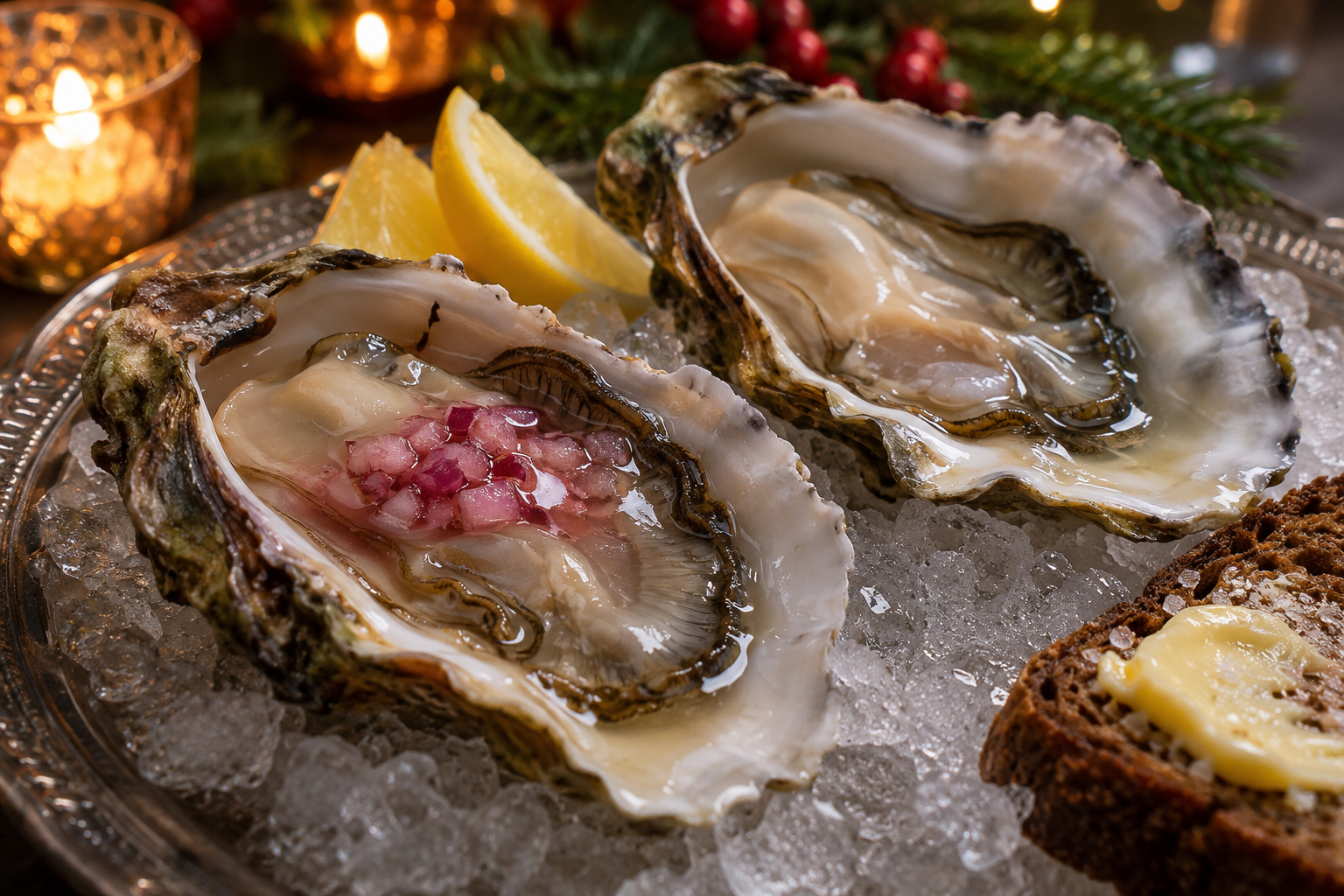
To understand the Christmas oyster you first have to understand the Reveillon, the grand festive dinner the French hold on the night of Christmas Eve rather than on Christmas Day. The word comes from reveiller, to wake or stay awake, and the Reveillon is a long, late, luxurious meal that stretches through the evening of the twenty fourth, often after midnight Mass, and it is the real centerpiece of the French Christmas. It is a feast built around fine, celebratory food, and the oyster is one of its defining stars.
Seafood in general dominates the French festive table, with oysters, other shellfish, smoked salmon, and grand seafood platters taking the place that turkey or goose might hold elsewhere, and oysters above all signal luxury and celebration. They are a treat, associated with special occasions and with the generosity of the season, and buying a few dozen fresh oysters for the Reveillon is a normal and joyful part of French Christmas shopping. December is peak oyster season in France, the cold months being the traditional and best time to eat them, so the timing is perfect.
The result is that France consumes a staggering quantity of oysters in the few days around Christmas and the new year, a large part of the whole year’s oyster eating compressed into that festive stretch. For French families, opening the Reveillon with a platter of cold, briny, just opened oysters is as traditional and as evocative as any Christmas food, the taste of the sea and of celebration at once. The oyster is not a quirky addition to the French Christmas; it is close to its heart.
The Dozen Rule
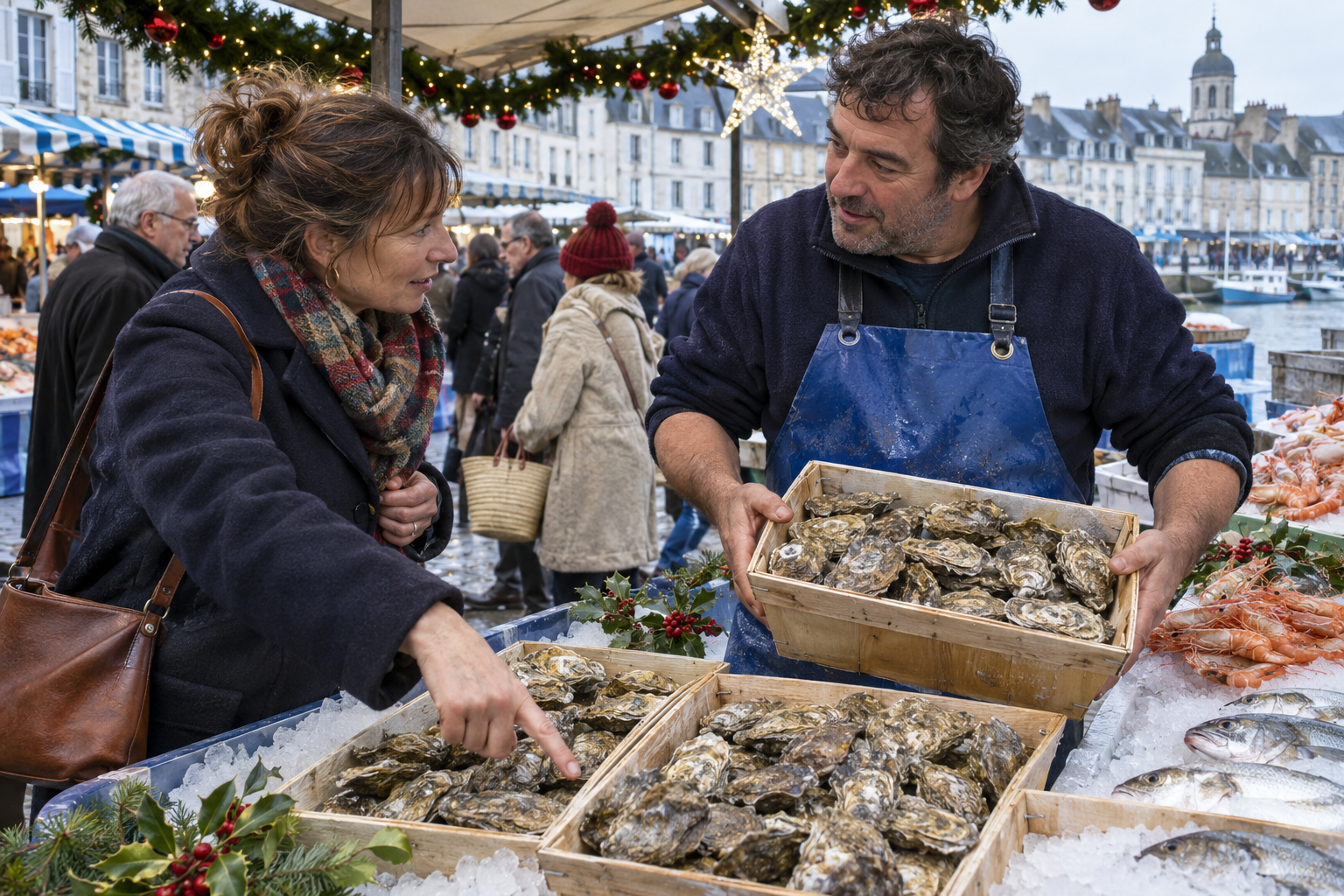
Oysters in France are bought and served by the dozen, and this is not a loose habit but the fixed unit of the thing, the dozen rule. At the market you order oysters by the douzaine, a dozen, or by the half dozen or the multiple dozen, and they are sold and priced that way, so a family planning a Reveillon simply works out how many dozens they need. The dozen is the natural serving too, with a dozen oysters, or half a dozen, being a typical portion per person as a starter.
The dozen comes with a vocabulary, because French oysters are graded and named with real precision. They are sold by type and by size, with numbered grades indicating how large each oyster is, and by variety, the common distinction being between the deeper, fleshier hollow oysters, the huitres creuses, and the rounder, flatter flat oysters, the huitres plates, which are rarer and more prized. There are famous appellations by region too, so choosing oysters is a considered business, and a knowledgeable buyer selects type, size, and origin with care.
For the newcomer, the practical point is simply to embrace the dozen as the unit and to buy good, very fresh oysters from a reputable fishmonger or market stall, choosing a size and type you like and allowing roughly six to twelve per person depending on whether they open the meal or anchor it. Freshness is everything with a raw oyster, so they should smell of clean sea, feel heavy with liquid, and be tightly closed, bought as close to eating as possible. Buy them by the dozen, keep them cold and flat, and open them at the last moment, and you are doing it the French way.
Opening Them at the Table
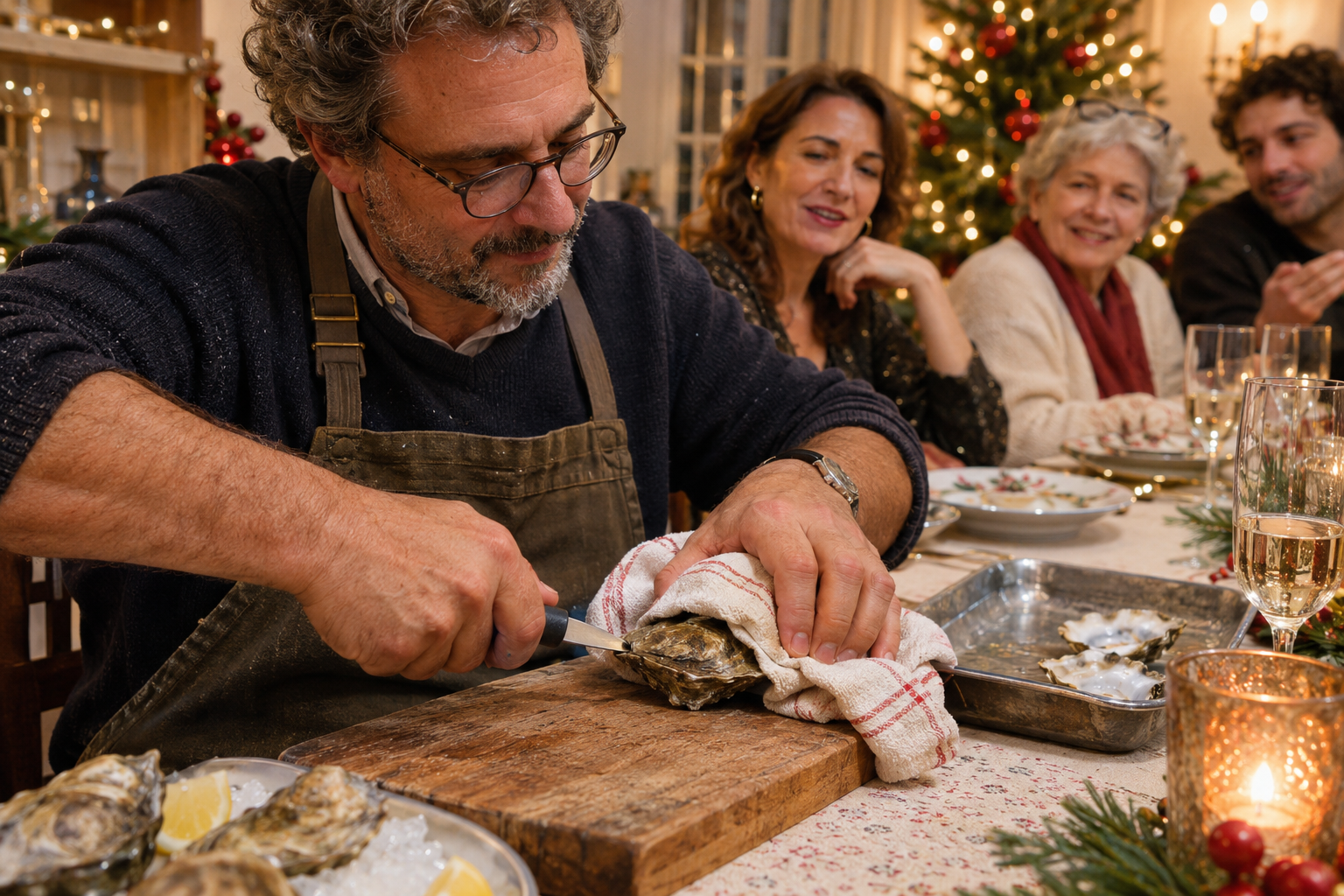
The most distinctive part of the French Christmas oyster, and the part that most surprises visitors, is that the oysters are very often opened, shucked, at the table, as part of the meal itself rather than beforehand in the kitchen. Someone, often the father or whoever has the knack and the oyster knife, sits down with the crate of oysters and a folded cloth and opens them one by one in front of everyone, setting each freshly opened oyster onto the ice. It is a social, slightly performative ritual, part of the evening’s entertainment.
Opening them at the table serves a real purpose beyond theater, because an oyster is at its best eaten within moments of opening, when its liquor is fresh and its flesh glistening, so shucking them to order means everyone eats them at their peak. It also makes the oysters a shared event rather than a plated course, the opener working through the dozen while the family waits, chats, and eats them as they come, a communal rhythm that sets the relaxed, generous tone of the whole long Reveillon. The oyster course is not rushed; it unfolds.
The shucking itself is a skill, done with a short, blunt oyster knife and a protective cloth or glove, working the knife into the hinge of the shell and twisting to pop it, then sliding the blade along to cut the muscle, all while keeping the precious liquor inside. It takes practice and a careful hand, because an oyster knife can slip, but it is a satisfying skill to learn and a genuinely useful one. Watching a practiced French relative open a dozen oysters smoothly at the Christmas table, the shells opening one after another, is one of the small pleasures of a Reveillon, and learning to do it yourself is part of joining in.
The Mignonette and the Classic Accompaniments
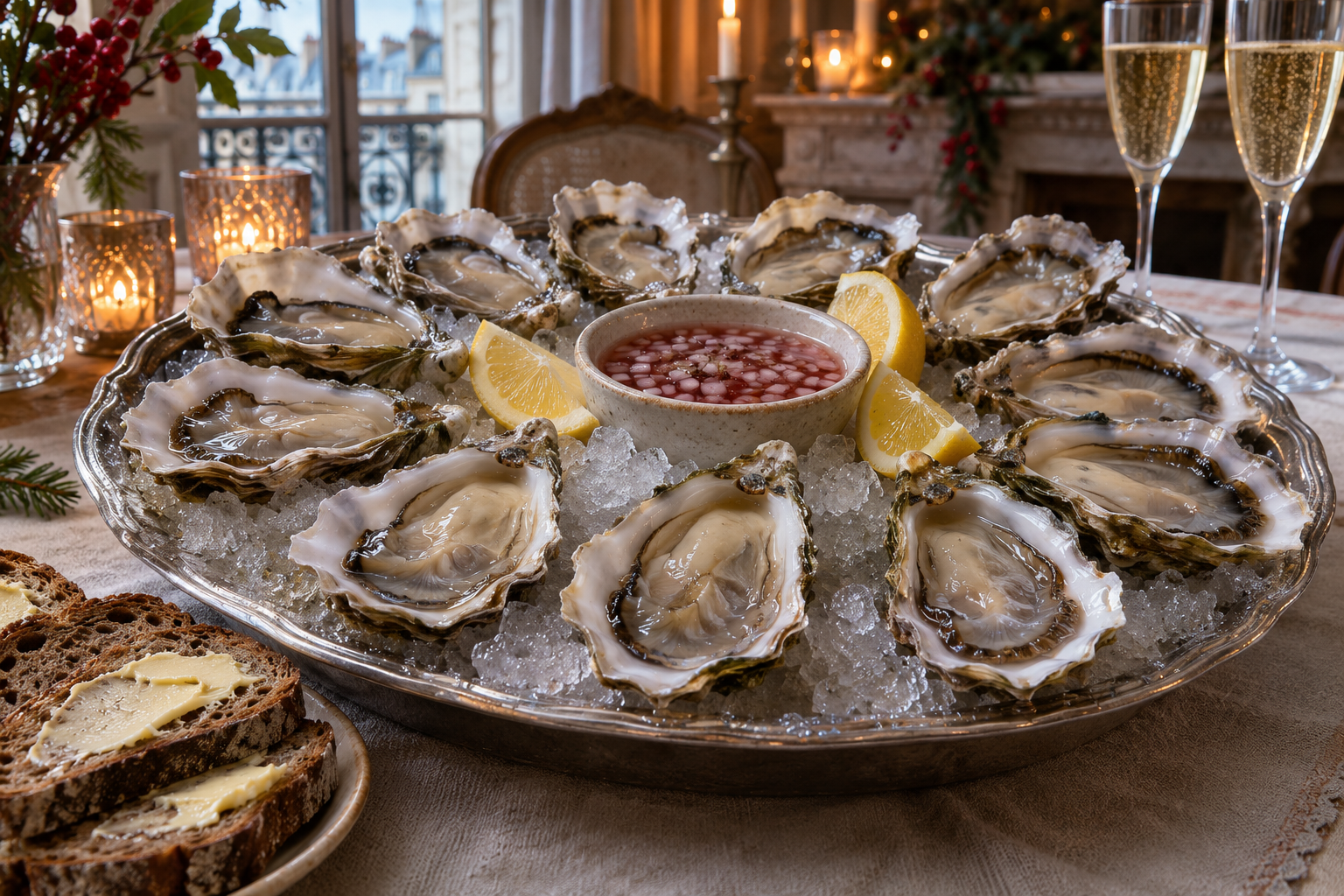
A raw French oyster is eaten simply, and the classic accompaniments are few and precise, the most characteristic being the mignonette. Mignonette is a cold sauce of finely chopped shallot, red wine vinegar, and coarsely ground black pepper, sometimes with a little sugar, left to sit so the shallot softens and the flavors mingle, and a tiny spoonful of it on a raw oyster is the quintessential French way to dress it. The sharp vinegar and the bite of shallot and pepper cut through the oyster’s brine and bring it alive without overwhelming it.
Alongside the mignonette, the other classic options are a simple squeeze of fresh lemon, and sometimes a little rye or brown bread and butter on the side, the bread and butter being a traditional and surprisingly perfect partner to the cold oysters. Many purists take their best oysters with nothing at all, just as they come, to taste the sea most cleanly, and that too is entirely correct, the oyster needing no help if it is good enough. The point of the accompaniments is to offer, not to mask: a squeeze of lemon, a dab of mignonette, a bite of buttered bread, each person dressing their oysters to taste.
To drink, the French reach for a crisp cold white wine or Champagne, the sparkling wine and the briny oyster being one of the great festive pairings, and the whole thing, cold oysters, mignonette, lemon, buttered bread, and a glass of something cold and sparkling, is the elegant, simple, deeply French opening to the Reveillon. There is no cooking and little fuss, just excellent cold ingredients assembled and dressed with care, which is exactly why it feels so luxurious. The mignonette is the one thing you make, and it takes five minutes, so the oyster course is as easy as it is impressive.
Bringing the Ritual Home
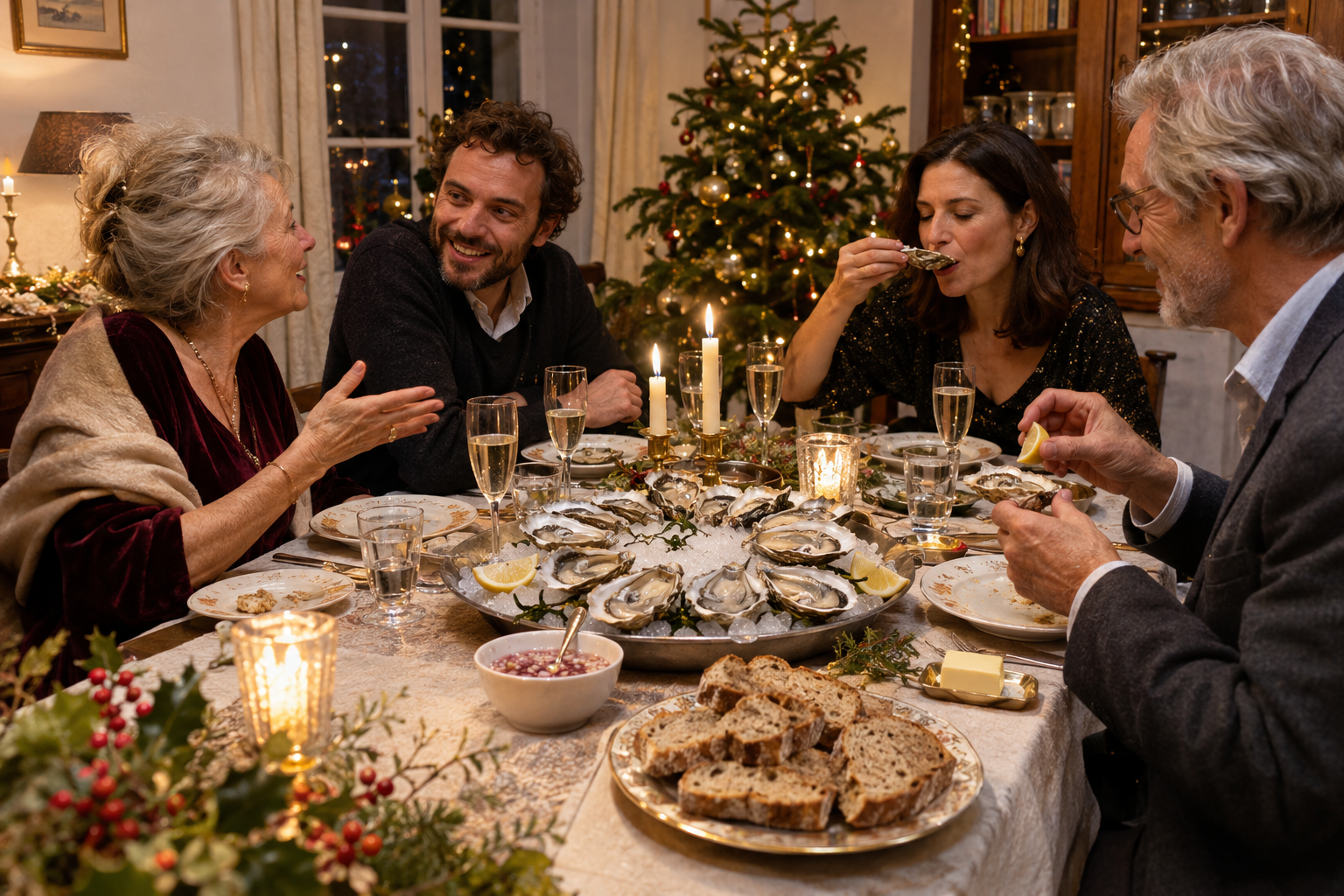
For an American or an expat wanting to bring the French Christmas oyster home, the wonderful thing is how little actual cooking is involved and how much the result depends simply on good oysters and the right ritual. You need very fresh oysters, bought by the dozen from a good source, kept cold, a bed of crushed ice to serve them on, an oyster knife and a cloth, a quick homemade mignonette, some lemon, and good bread and butter. That is the whole kit, and none of it is difficult.
The one real skill to acquire is the shucking, which is worth learning properly, with a proper short oyster knife and a protective glove or thick folded cloth, and a little practice before the big night so you are not wrestling with your first oyster in front of guests. There are clear techniques for working the hinge, and once it clicks it becomes quick and satisfying, but it demands care because the knife can slip, so patience and protection matter. If shucking truly daunts you, a good fishmonger can open them for you shortly before, though you lose some of the ritual and the freshness.
Done at home, the French oyster course makes a spectacular, authentic, and genuinely easy start to a festive meal, a platter of cold oysters on ice with a little bowl of mignonette, a plate of lemon wedges, and brown bread and butter, with cold Champagne poured alongside. It brings the elegance and the theater of the Reveillon to your own table, and it is the kind of thing that feels far more impressive than the effort it takes. The recipe below is really a serving guide and a mignonette, because with oysters the art is in the sourcing, the opening, and the dressing, not the cooking.
Make It: Oysters on Ice With Mignonette
This serves the oysters the French Reveillon way: raw, cold, freshly opened, with a classic mignonette, lemon, and buttered bread. Quantities are per the dozen.
You will need:
- Very fresh oysters, allowing 6 to 12 per person, tightly closed and heavy, smelling of clean sea
- Plenty of crushed ice for serving
- An oyster knife and a thick folded cloth or oyster glove
- Lemon wedges
- Rye or brown bread, with good butter
- Cold Champagne, cremant, or a crisp dry white wine
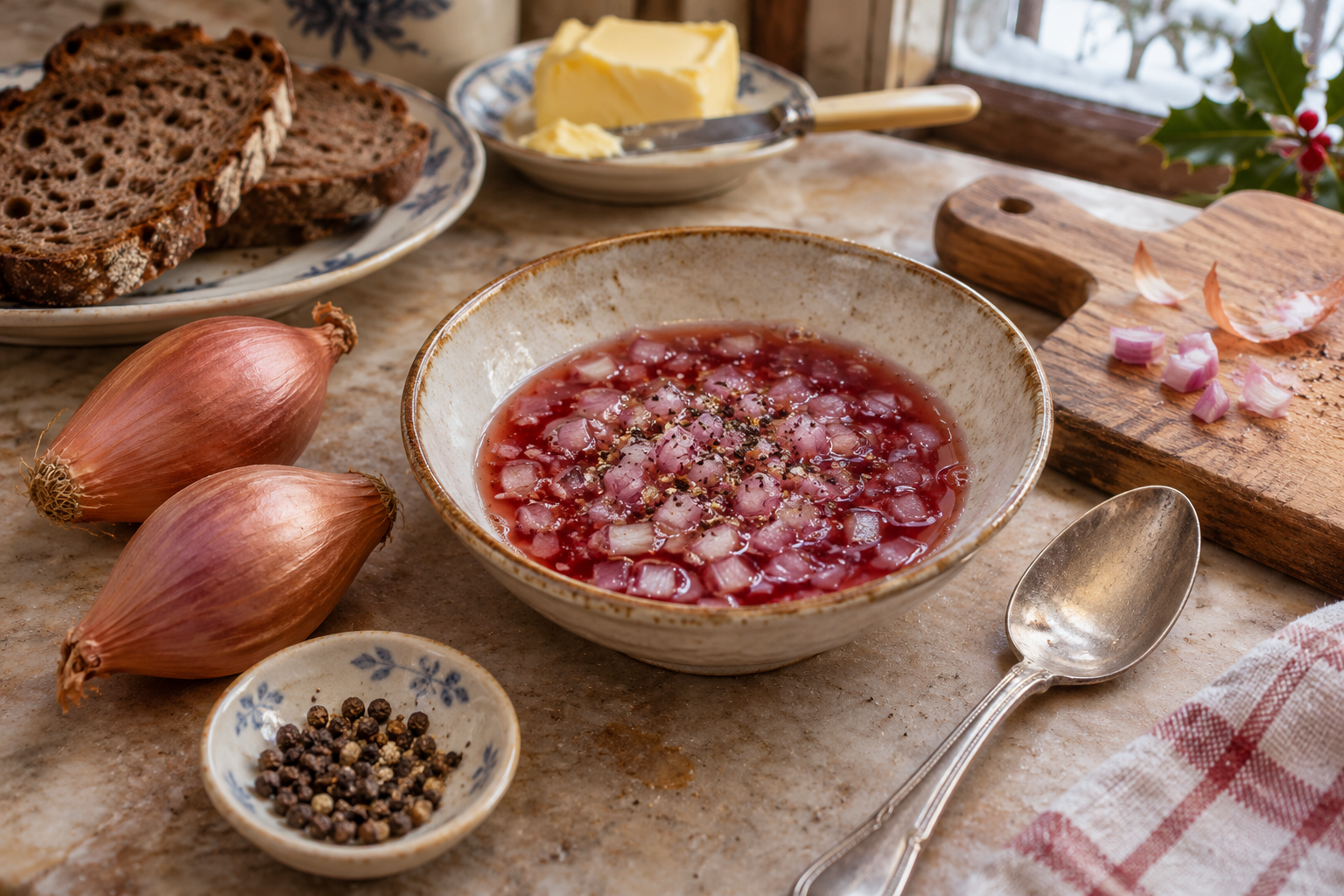
For the mignonette (enough for a dozen or two):
- 2 shallots, very finely chopped
- 4 tablespoons red wine vinegar
- Half a teaspoon coarsely ground black pepper
- Optional: a small pinch of sugar
Method:
- Make the mignonette first so it can sit: combine the finely chopped shallots, red wine vinegar, pepper, and optional sugar in a small bowl, and leave at room temperature for at least 30 minutes for the shallot to soften and the flavors to mingle. Keep cool until serving.
- Keep the oysters cold, cupped (curved) side down, until the moment of opening so they hold their liquor.
- To open each oyster, wrap one hand in the folded cloth and hold the oyster cup side down, hinge (the pointed end) toward you. Work the tip of the oyster knife into the hinge, twist firmly to pop it, then slide the blade along the top shell to cut the muscle, keeping the oyster level so you do not spill the liquor. Lift off the top shell and run the knife under the oyster to free it, picking out any shell fragments.
- Set each opened oyster on the bed of crushed ice as you go. Open to order, as close to eating as possible.
- Serve the platter of oysters on ice with the bowl of mignonette, lemon wedges, and brown bread and butter alongside, and pour something cold and sparkling. Each person dresses their oysters to taste, with a little mignonette, a squeeze of lemon, or nothing at all, and eats them straight from the shell.
A word of care: oyster knives slip easily, so always protect the hand holding the oyster, and buy oysters only very fresh from a trusted source, discarding any that are open and do not close when tapped or that smell off. Raw shellfish is not advised for those who are pregnant, immunocompromised, or otherwise vulnerable.

About the Author: Ruben, co-founder of Gamintraveler.com since 2014, is a seasoned traveler from Spain who has explored over 100 countries since 2009. Known for his extensive travel adventures across South America, Europe, the US, Australia, New Zealand, Asia, and Africa, Ruben combines his passion for adventurous yet sustainable living with his love for cycling, highlighted by his remarkable 5-month bicycle journey from Spain to Norway. He currently resides in Spain, where he continues sharing his travel experiences with his partner, Rachel, and their son, Han.