
Of all the desserts a French grandmother makes, few are as humble or as comforting as riz au lait, French rice pudding, a pot of rice cooked slowly in milk until it turns thick, creamy, and sweet. It is made from just three ingredients, rice, milk, and sugar, and the only technique it asks is patience, a low flame and a stirring spoon, and sometimes it is made from the leftover rice from a previous meal, turning yesterday’s side dish into today’s dessert. It is thrift and comfort in one pot, the kind of nursery dessert that tastes of childhood and home.
The charm of riz au lait is its utter simplicity and its deep, creamy comfort, a warm bowl of sweet rice that costs almost nothing and soothes like few other desserts. It is the opposite of a fancy patisserie creation, a grandmother’s pudding, made from pantry staples and love. Here is what riz au lait is, the three ingredients, the grandmother’s trick of using leftover rice, and the low flame that makes it creamy. This is a recipe and a bit of French food history, offered to bring the humblest and most comforting of French desserts to your table.
What Riz au Lait Is
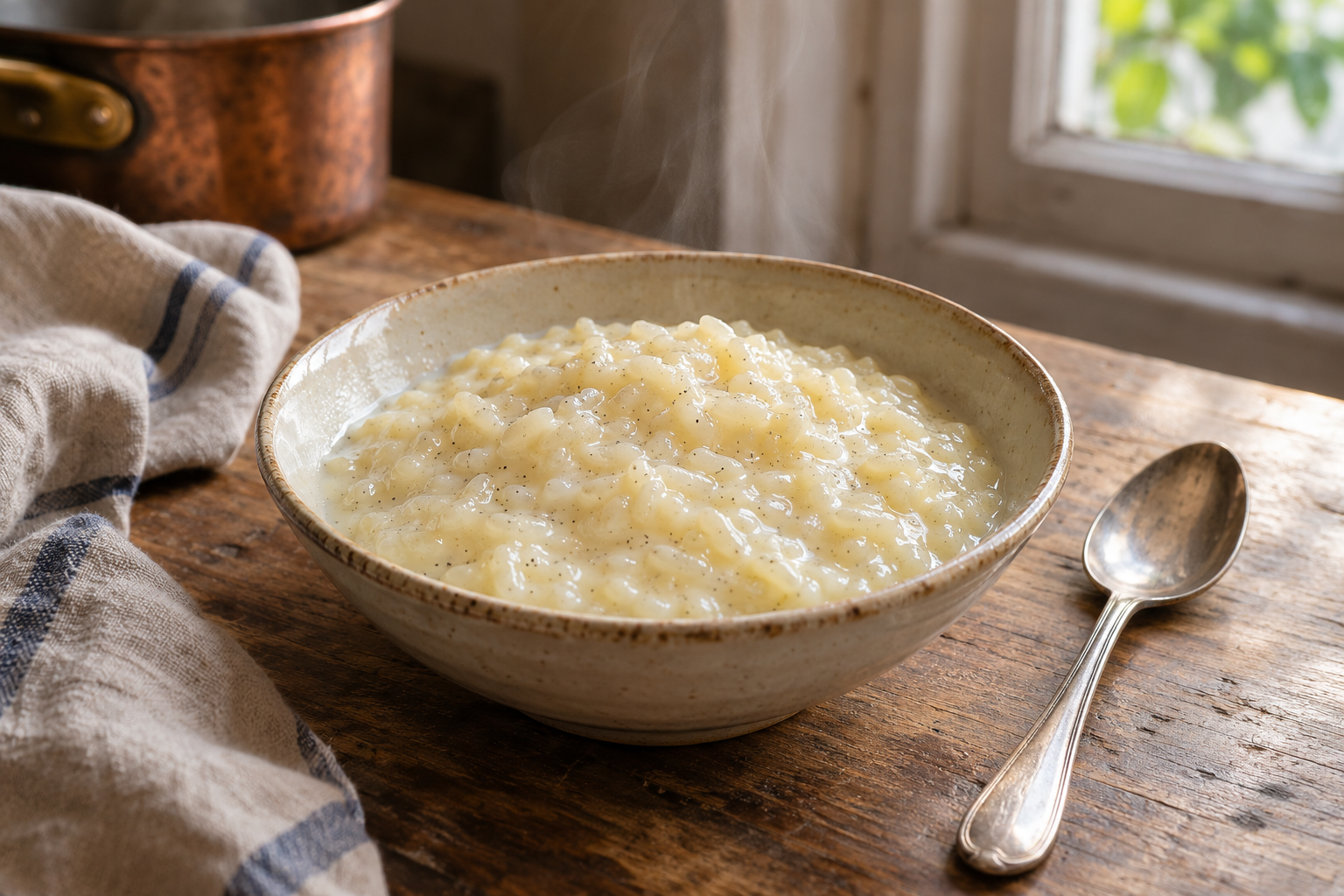
Riz au lait, literally rice with milk, is French rice pudding, a dessert of rice cooked gently in milk with sugar until the rice softens and the milk thickens into a creamy, rich, sweet pudding. Often flavored with vanilla, sometimes with a strip of lemon or a cinnamon stick, it is cooked slowly until the grains are tender and the whole thing is thick and creamy, then eaten warm or cold, on its own or with a little something extra. It is simple, soft, and comforting, the essence of a nursery pudding.
It is a beloved French home and comfort dessert, the kind of thing grandmothers make for family, a nostalgic sweet that many French people associate with childhood and the warmth of home. It belongs to the great family of rice puddings found across Europe and the world, the French version characteristically simple and vanilla-scented, but it is above all a homely, everyday dessert rather than a restaurant one. Its comfort and familiarity are a big part of its appeal.
The character of riz au lait is creamy, soft, and gently sweet, the tender rice suspended in thickened sweet milk, mild and soothing, the kind of dessert you eat slowly from a bowl with a spoon. It is not a dessert of dramatic flavor or texture but of pure comfort, warm and mild and creamy, which is exactly what makes it such a beloved nursery and family pudding. The simplicity is the point, a plain creamy sweetness that comforts rather than excites.
Three Ingredients
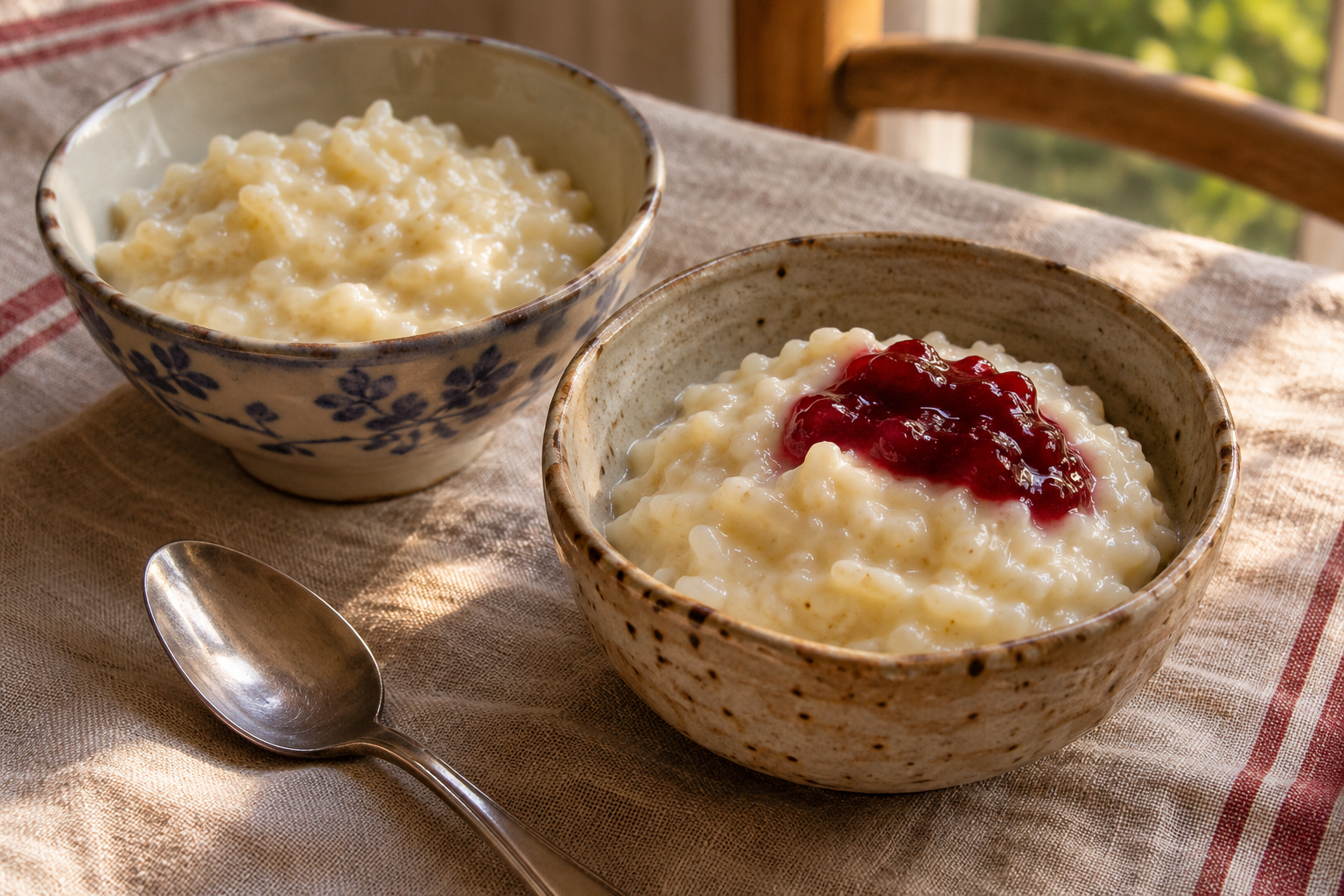
Riz au lait is made from just three essential ingredients, which is part of why it has always been home food: rice, milk, and sugar, plus a little vanilla or other flavoring if you like. That is the whole shopping list, three pantry staples that nearly every kitchen always has, cooked together into a dessert. There is nothing to buy specially, nothing exotic or expensive, which is exactly why a grandmother can make it on a whim from what is on hand.
The rice is best a short or medium grain that releases its starch and turns creamy, the milk is whole milk for richness, and the sugar sweetens it gently, with vanilla the most common addition for flavor, infused into the milk. Some versions add a strip of lemon zest, a cinnamon stick, or an egg yolk for extra richness, but the irreducible core is rice, milk, and sugar, and from those three the creamy pudding is made. The simplicity means good whole milk and a little real vanilla make a real difference.
This three-ingredient simplicity is the whole appeal, a dessert that asks for almost nothing and gives real comfort, which is why riz au lait has endured as a home classic across generations. In an age of elaborate desserts, there is something deeply satisfying about a pudding made from three humble things and a little patience, and that modesty is exactly its charm. Rice, milk, sugar, a low flame, and time, and you have one of the most comforting desserts there is, which the grandmothers have always known.
From Leftover Rice
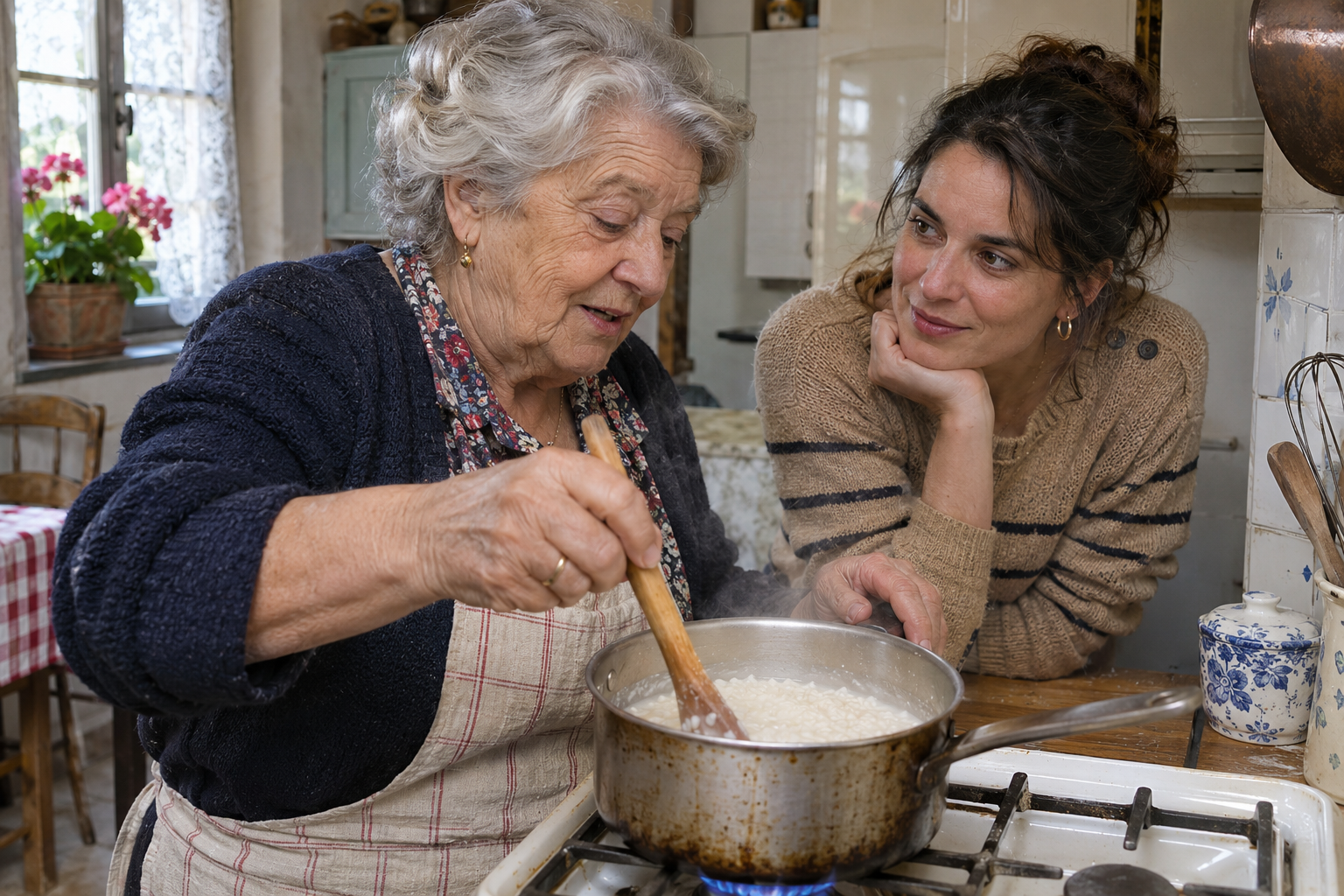
One of the most charming and practical aspects of riz au lait is that grandmothers often make it from leftover rice, the plain cooked rice remaining from a previous meal, turning a humble leftover into a dessert. Rather than let yesterday’s rice go to waste, the thrifty cook simmers it in sweetened milk until it turns creamy, transforming a savory side into a sweet pudding with almost no effort. It is a lovely example of the no-waste spirit of traditional home cooking.
This use of leftovers connects riz au lait to the broad tradition of thrifty home cooking that wastes nothing, finding a second life for every scrap, and it makes the dessert even more economical and convenient. Leftover rice that might otherwise be thrown away becomes a comforting pudding, which is both practical and a little magical, dessert from what would have been waste. The grandmother who makes riz au lait from last night’s rice is cooking in the resourceful tradition that produced so many beloved humble dishes.
Making it from leftover rice is also simply quicker, since the rice is already cooked and only needs to simmer in milk until creamy, so the dessert comes together faster than cooking the rice from scratch. You can, of course, make riz au lait from raw rice, cooking it slowly in the milk from the start, and many do, but the leftover-rice method is the grandmother’s quick thrifty version, and it works beautifully. Whether from leftover or raw rice, the principle is the same, slow gentle cooking in sweet milk, and the leftover version is just the thriftiest expression of this most thrifty of desserts.
The Low Flame
The one technique riz au lait requires, and the secret to its creaminess, is the low flame, cooking the rice and milk gently and slowly rather than quickly over high heat. Slow, gentle cooking is what allows the rice to release its starch gradually and the milk to thicken into a creamy pudding without scorching or boiling over, so patience and low heat are everything. A high flame would scald the milk and cook the rice unevenly, while a low flame coaxes out the creaminess.
The low flame also demands occasional stirring, to keep the rice from sticking to the bottom and to help it cook evenly and release its starch into the milk, so riz au lait is a dessert you tend gently, stirring now and then as it slowly thickens. This is not hard work, just a matter of keeping an eye on the pot and stirring occasionally over the gentle heat, but it is essential to the creamy result. The dessert rewards patience, thickening gradually into its soft, creamy perfection.
So the whole method is simply slow cooking over a low flame with occasional stirring, until the rice is tender and the milk has thickened into a creamy pudding, a process of patience rather than skill. There is no technique to master beyond keeping the heat low and stirring now and then, which is exactly why it is such a reliable home dessert, forgiving and simple. Give it the low flame and the time, and riz au lait turns three humble ingredients into pure creamy comfort, which the recipe below does over a gentle heat.
Warm or Cold, and the Toppings
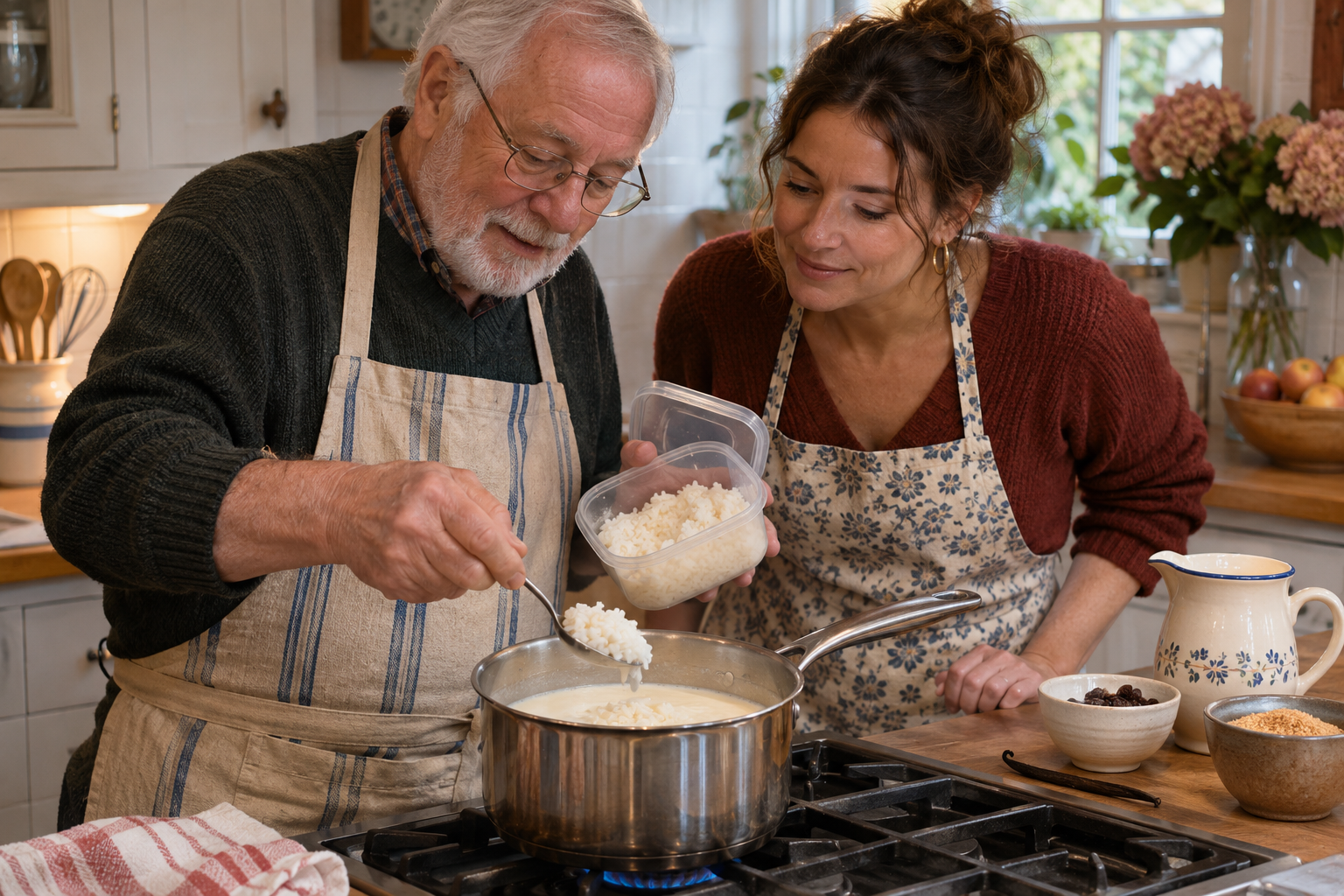
One of the nice things about riz au lait is that it is good both warm and cold, which gives you two desserts from one pot. Served warm, fresh from the pan, it is soft, soothing, and comforting, the ideal cozy dessert on a cold evening, while served cold, chilled from the fridge, it is firmer and more refreshing, a cooling sweet for a warmer day. Many people have a strong preference, and both are entirely traditional, so you can please yourself and the season.
The pudding also welcomes simple toppings and additions, which lift it without complicating it. A spoonful of jam or fruit compote stirred through or dolloped on top adds fruit and color, a drizzle of caramel adds a bitter-sweet depth, and a sprinkle of cinnamon or a little stewed fruit works beautifully too. Some grandmothers caramelize the top under a grill, others fold in a beaten egg yolk at the end for extra richness, so there is room to make it your own.
These small flourishes turn the plainest version into something a little more special when you want it, while the pudding is perfect unadorned too. Warm or cold, plain or with jam or caramel, riz au lait is a forgiving and flexible comfort, which is part of why it has stayed a family favorite across generations. Serve it however suits the day and the weather, and it will comfort either way, which is exactly what this humblest of desserts is for.
Make It: Riz au Lait
This serves four and asks only for patience over a low flame. Use whole milk and a short or medium grain rice for creaminess, and vanilla for flavor. Make it from raw rice as below, or use about 300g of leftover cooked rice and simmer it in the sweetened milk until creamy.
Ingredients
- 100g short or medium grain rice (such as pudding or risotto rice)
- 750ml whole milk
- 70g sugar
- 1 vanilla pod (or a teaspoon of vanilla extract)
- a pinch of salt
Instructions
If using raw rice, rinse it briefly. Put the milk in a heavy saucepan with the split vanilla pod (or extract) and the pinch of salt, and warm it gently over low heat.
Add the rice to the warm milk and cook over a low flame, stirring occasionally so it does not stick, letting it simmer very gently. The low heat is the key to a creamy result, so resist turning it up.
Continue cooking gently, stirring now and then, for around 30 to 40 minutes, until the rice is tender and the milk has thickened into a creamy pudding. Add the sugar partway through or near the end and stir to dissolve. If it gets too thick before the rice is done, add a splash more milk.
Remove the vanilla pod. The pudding will thicken further as it cools, so take it off the heat while still slightly loose and creamy.
Serve riz au lait warm or chilled, in bowls, on its own or with a spoonful of jam, a drizzle of caramel, or a little stewed fruit. From three ingredients and a low flame, you have the humblest and most comforting of French desserts, exactly as the grandmothers make it, leftover rice and all.

About the Author: Ruben, co-founder of Gamintraveler.com since 2014, is a seasoned traveler from Spain who has explored over 100 countries since 2009. Known for his extensive travel adventures across South America, Europe, the US, Australia, New Zealand, Asia, and Africa, Ruben combines his passion for adventurous yet sustainable living with his love for cycling, highlighted by his remarkable 5-month bicycle journey from Spain to Norway. He currently resides in Spain, where he continues sharing his travel experiences with his partner, Rachel, and their son, Han.