
Every American Thanksgiving table has a green bean casserole on it, that familiar dish of canned green beans bound in cream of mushroom soup and topped with crispy fried onions from a can. It is a beloved classic, a comfort, a tradition. It is also, if we are honest, built almost entirely out of cans, and it is one of the dishes that simply cannot be recreated in Spain, because not one of its canned ingredients exists here.
Faced with this, the American expat discovers the Spanish way with green beans, and it is a revelation. Judias verdes con jamon, green beans with cured ham, is Spain’s everyday answer to the same vegetable, and it is fresher, simpler, more savory, and frankly far more delicious than the casserole it replaces. Americans who make it for their first Thanksgiving abroad tend to switch to it permanently, casserole forgotten.
Here is why the casserole does not travel, what the Spanish do with green beans instead, why the result is so much better, the one ingredient that makes it sing, and a recipe for the side dish you may never want to be without again. It takes minutes and it will quietly upstage the turkey.
The Casserole, and Its Cans
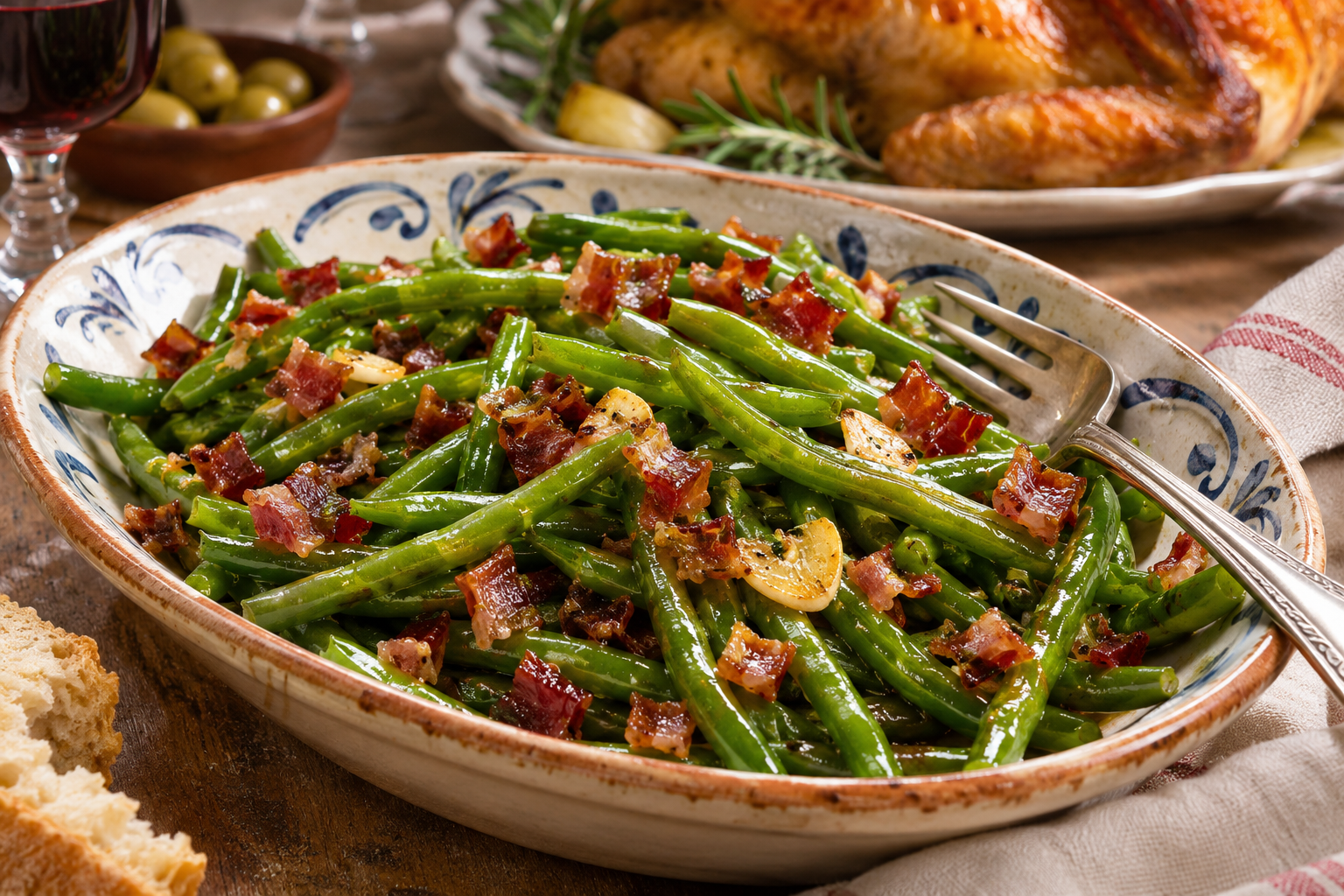
To understand why the switch happens, it helps to look honestly at what the green bean casserole actually is. It is a mid-century American convenience dish, invented around a can of condensed soup, and its charm is as much nostalgic as culinary. Its three core components are all processed and canned: condensed cream of mushroom soup, canned green beans, and crispy fried onions from a can or carton.
That canned foundation is exactly why the dish cannot be made in Spain. Spanish supermarkets do not stock condensed cream of mushroom soup, that particular American product is simply not part of the food culture here, nor do they sell the canned fried onions the topping depends on, and while canned vegetables exist, the whole Spanish approach to green beans is to buy them fresh. Strip the casserole of its cans and there is nothing left to make, which leaves the expat cook needing an entirely different approach to the holiday’s green vegetable.
And here is the quiet truth that most people only admit once they have an alternative: the casserole, for all its nostalgic comfort, is not actually very good as food. The beans are soft and gray, the sauce is salty and one-note, and the whole thing tastes more of processed convenience than of green beans. It endures because of tradition and memory rather than flavor, which means that being forced to abandon it is less a loss than it first appears. The Spanish alternative is waiting, and it is better in every way that matters.
The Spanish Way: Judias Verdes con Jamon
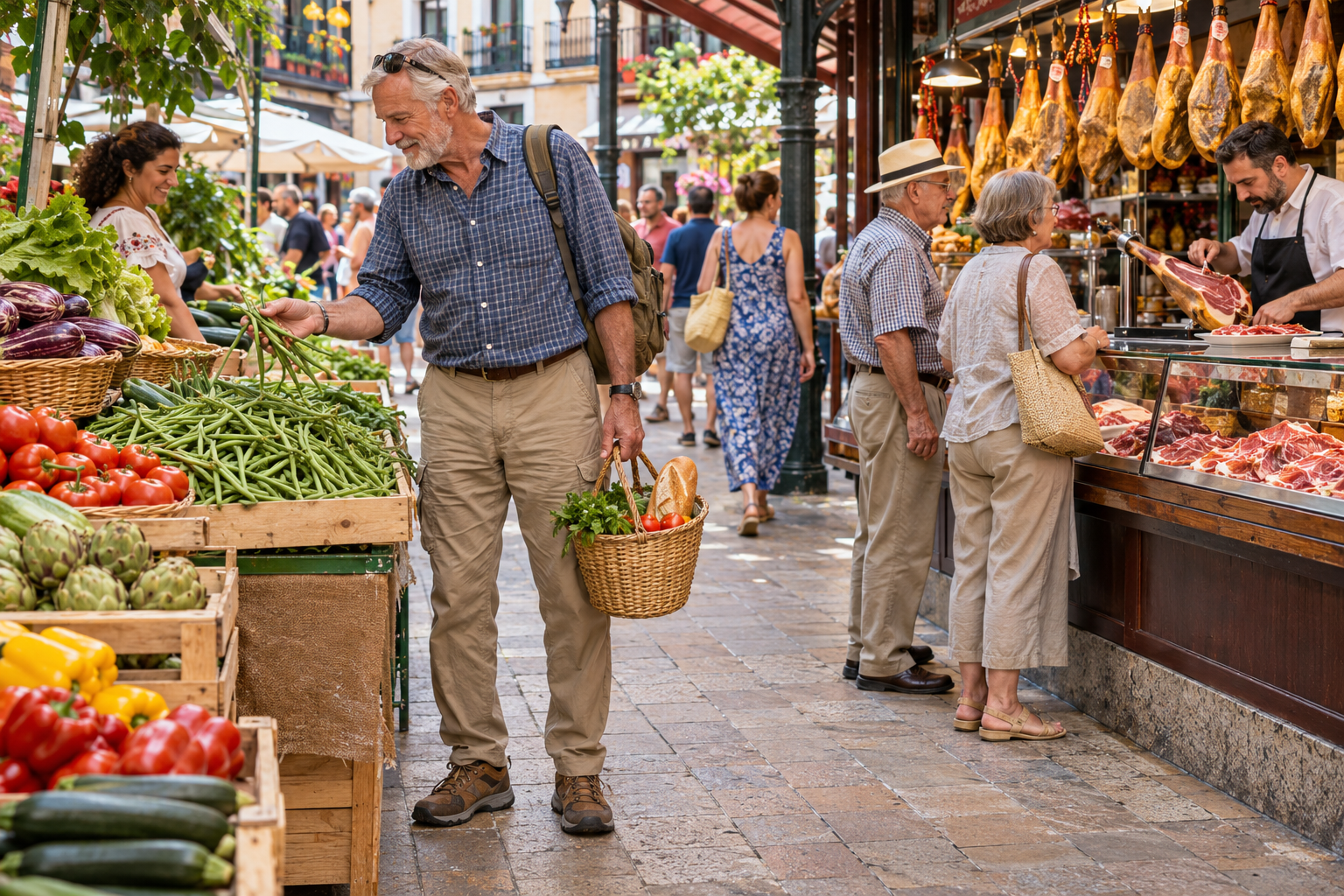
The Spanish answer to green beans is beautifully simple, the opposite of the casserole in every respect: fresh ingredients, a few minutes of cooking, and real flavor rather than canned. Judias verdes con jamon is a classic of the Spanish table, served as a side, a tapa, or even a light meal on its own.
The dish could hardly be more straightforward. You take fresh green beans and cook them briefly, boiling or blanching them until just tender and still bright, then you saute them in good olive oil with garlic and diced jamon, Spain’s famous cured ham, which crisps and renders its savory saltiness into the beans. That is essentially the whole dish: fresh beans, olive oil, garlic, and cured ham, each ingredient real and recognizable. Some versions add a little potato for heft, or finish the plate with a fried egg for a light supper, but the heart of it is just those four things, cooked quickly and well.
What strikes an American most is how fresh and clean it is compared to the heavy, gloopy casserole. The beans keep their texture and their green bite, the garlic and olive oil give it a savory Mediterranean backbone, and the ham threads salty, meaty depth through the whole thing. It tastes, unmistakably, of green beans and good ham, rather than of condensed soup, and it does so with a fraction of the ingredients and the effort. This is Spanish home cooking at its best: simple, fresh, and far more delicious than its humble ingredient list suggests.
Why It Is Better
Set the two dishes side by side and the Spanish version wins on nearly every count, which is why the switch tends to be permanent. The most obvious difference is freshness: where the casserole relies on soft, dull canned beans, the Spanish dish uses fresh ones that keep their color, texture, and flavor, so the beans actually taste like beans.
Then there is the question of what carries the flavor. The casserole leans on condensed soup, a salty, processed, one-dimensional base that tastes mostly of itself, whereas the Spanish dish builds flavor from real ingredients: fruity olive oil, fragrant garlic, and genuine cured ham, a combination that is savory, complex, and deeply satisfying without a single processed component. The result is lighter and fresher on a table groaning with rich dishes, a welcome green note rather than another heavy, creamy mound, which makes it especially valuable at a Thanksgiving feast.
And it is, simply, more delicious. The casserole survives on nostalgia; the Spanish beans survive on taste, and once you have eaten green beans that actually taste wonderful, the canned version loses its hold on you. This is the quiet pattern of the whole expat Thanksgiving, that being pushed toward fresh, simple, real cooking produces a better meal than the processed original, and the green beans are perhaps the clearest example of all. Fresher, lighter, tastier, and easier: the Spanish way wins going away.
The Jamon Makes It
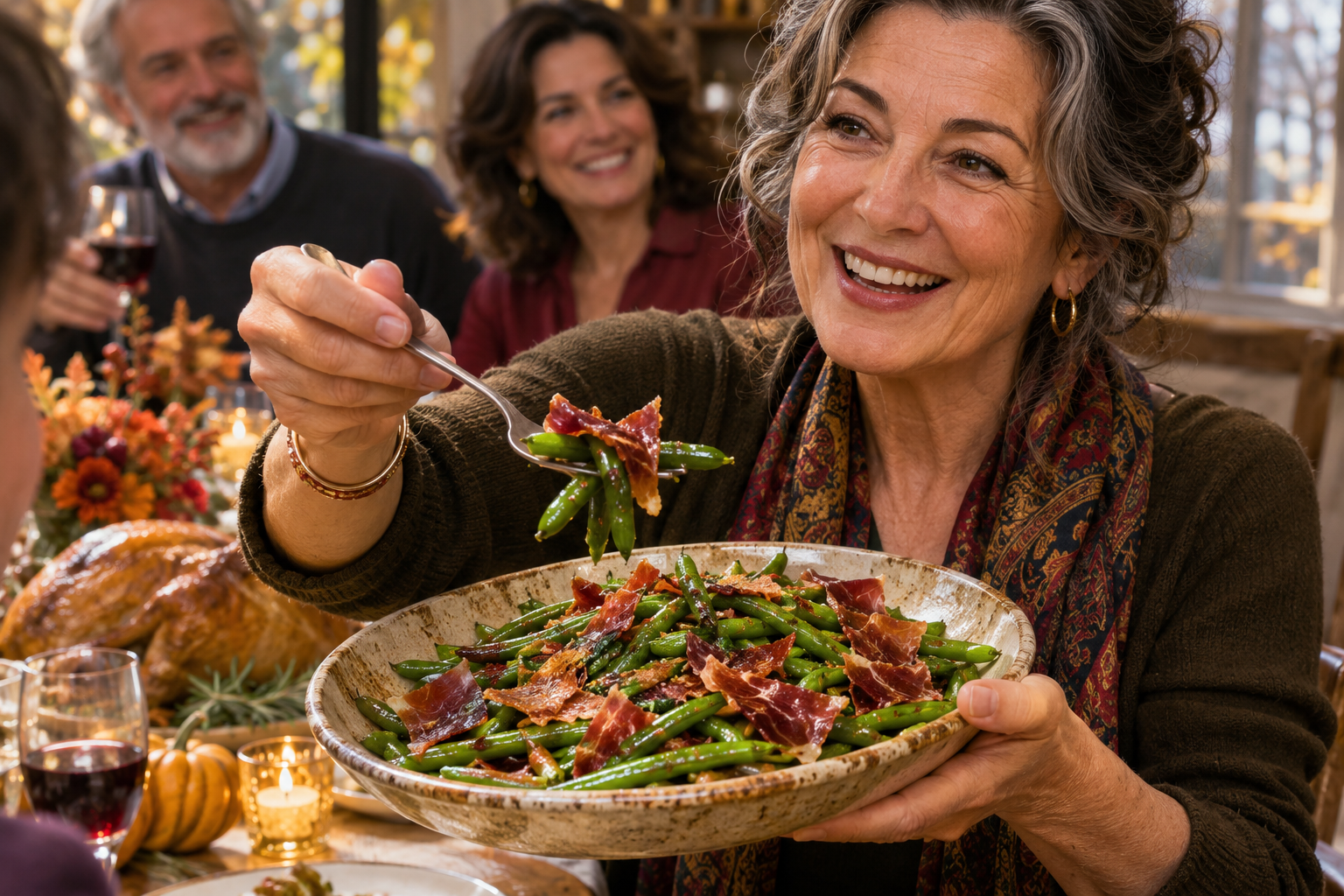
If there is one ingredient that transforms this dish from merely good green beans into something special, it is the jamon, Spain’s extraordinary cured ham, and it deserves its own moment. The ham is what gives the dish its savory soul, and understanding it is the key to getting the dish right.
A little jamon goes a remarkably long way here. Diced small and cooked briefly in the hot olive oil, it crisps at the edges and renders its intense, salty, umami-rich flavor directly into the oil and onto the beans, seasoning the whole dish with a depth that no amount of salt could replicate. Spanish cured ham, whether the everyday jamon serrano or the finer jamon iberico, is a pantry hero precisely because a small amount lends profound savory character to simple vegetables, which is exactly what happens here. The ham does not dominate; it infuses, turning plain beans into something you cannot stop eating.
If you are making this outside Spain and cannot find jamon, the dish still works beautifully with sensible substitutes. Italian prosciutto, diced and crisped, does a very similar job, as does pancetta, and in a pinch good quality bacon will give you the salty, savory, rendered-fat character the dish wants, though the flavor will lean a little different. The principle is the same wherever you are: a small amount of good cured pork, crisped in olive oil with garlic, is what turns humble green beans into a dish worth switching to. Find the best version of that your shops allow, and the beans will reward you.
It Fits the Thanksgiving Table
Beyond simply being delicious, judias verdes con jamon turns out to be nearly perfect for the Thanksgiving table specifically, which is a large part of why expats adopt it for the holiday and then keep it forever. It fills the exact role the green bean casserole was meant to fill, only far better.
On a Thanksgiving table laden with rich, heavy, creamy dishes, the turkey and the stuffing and the mashed potatoes and the gravy, what the meal most needs is a fresh, light, savory green vegetable to cut through all that richness, and the Spanish beans do this beautifully. Where the casserole added yet another heavy, creamy element, the fresh beans with ham provide a welcome contrast, bright and savory and light, a palate-refreshing counterpoint to the feast. They take minutes to make even on a busy cooking day, and they slot onto the table as the green dish without any of the casserole’s canned apparatus, pairing especially well with a simply roasted bird.
This is why the switch sticks. An American who makes these beans for one Thanksgiving abroad discovers a dish that is easier, fresher, more delicious, and better suited to the meal than the casserole ever was.
Having made that discovery, they do not go back, not that year and not when they visit home, often bringing the recipe across the Atlantic to the family table.
The green bean casserole, it turns out, was never the point; a good green vegetable was, and the Spanish have been making a far better one all along. Try it once and you will understand the never-switch-back part completely, and wonder why you put up with the cans for so long. Here is how to make it. This piece is general cooking guidance; adjust quantities and seasoning to taste.
Make It: Judias Verdes con Jamon
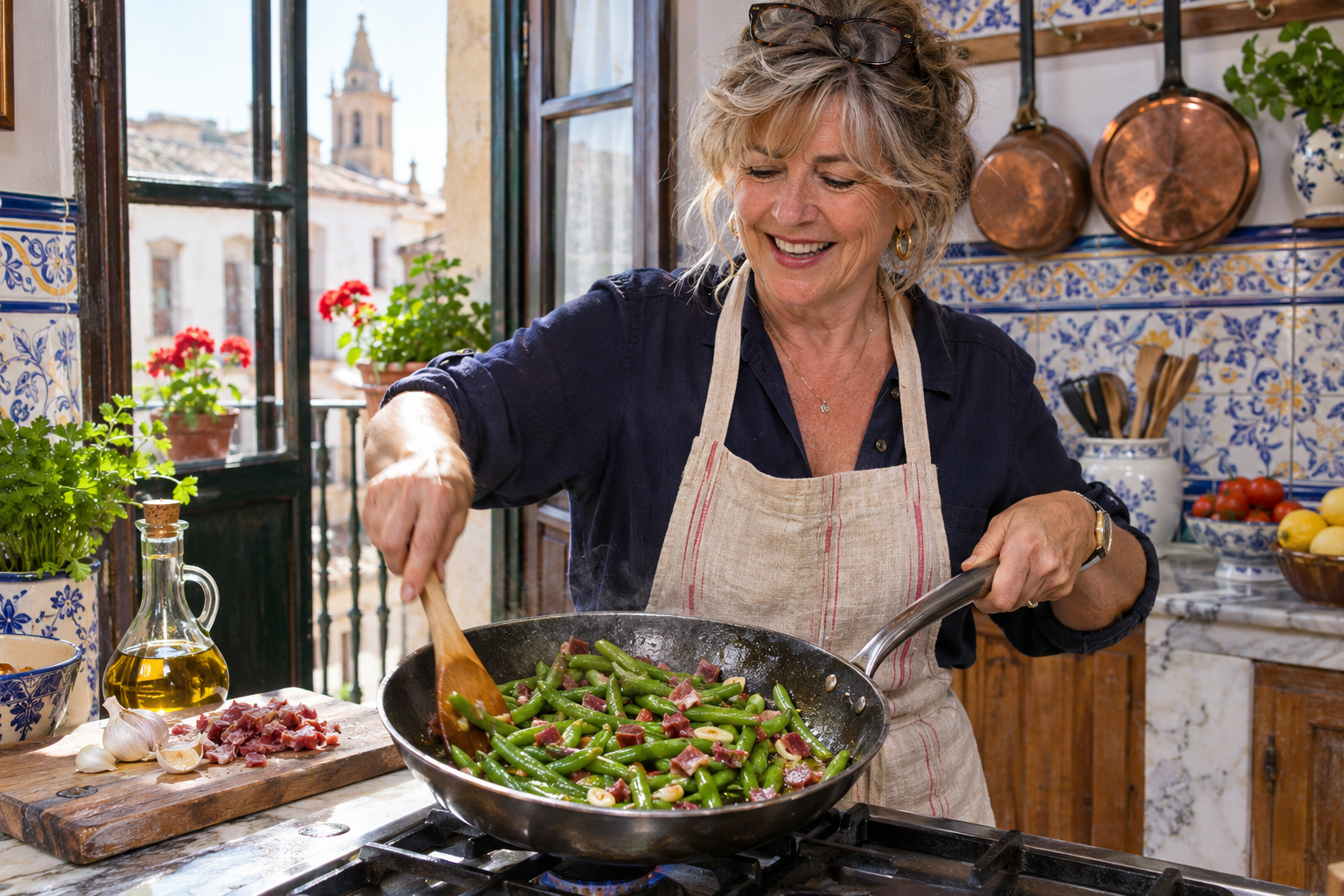
Here is the classic Spanish green beans with cured ham, serving about four as a side. It is quick, fresh, and savory, and it comes together in minutes.
Ingredients
- 500g fresh green beans, trimmed
- 100g jamon serrano (or prosciutto, pancetta, or good bacon), diced
- 3 cloves garlic, thinly sliced
- 3 tablespoons olive oil
- salt and black pepper
- a squeeze of lemon, optional
Instructions
- Bring a pot of salted water to the boil. Add the trimmed green beans and cook for 4 to 6 minutes, until just tender but still bright green with a little bite. Drain them well.
- While the beans cook, heat the olive oil in a large pan over medium heat. Add the diced jamon and cook for a couple of minutes, until it starts to crisp and renders its flavor into the oil.
- Add the sliced garlic to the pan and cook for another minute, until fragrant and just golden, being careful not to let it burn.
- Add the drained green beans to the pan and toss well to coat them in the flavored oil, garlic, and crisped ham. Saute for 2 to 3 minutes, until everything is well combined and heated through.
- Season with black pepper, and salt only if needed, since the ham is already salty. Finish with a squeeze of lemon if you like, and serve warm.

About the Author: Ruben, co-founder of Gamintraveler.com since 2014, is a seasoned traveler from Spain who has explored over 100 countries since 2009. Known for his extensive travel adventures across South America, Europe, the US, Australia, New Zealand, Asia, and Africa, Ruben combines his passion for adventurous yet sustainable living with his love for cycling, highlighted by his remarkable 5-month bicycle journey from Spain to Norway. He currently resides in Spain, where he continues sharing his travel experiences with his partner, Rachel, and their son, Han.