
An American reaches the checkout in a European supermarket, unloads the cart onto the belt, and waits for the familiar routine: the cashier will scan, a bagger will pack, and the whole thing will proceed at a civilized pace. Instead, the cashier starts scanning at speed, the groceries come tumbling down the far end of the belt in a growing heap, and nobody is bagging anything. With a rising sense of panic, the American realizes the terrible truth. They have to bag it all themselves, right now, as fast as they can, while the cashier keeps firing items down the line and a queue builds behind them.
This is the European checkout, and for an unprepared American it can be one of the small, genuinely stressful shocks of travel. There is no bagger, the cashier does not wait, and the pressure to keep up is real and immediate.
But there is nothing to actually fear here, because the whole thing runs on a simple logic once you understand it, and the locals have a trick that removes the panic entirely. Here is why European checkouts work this way, why they move so fast, and exactly how to sail through one like someone who has done it a thousand times.
Nobody Is Going to Bag for You
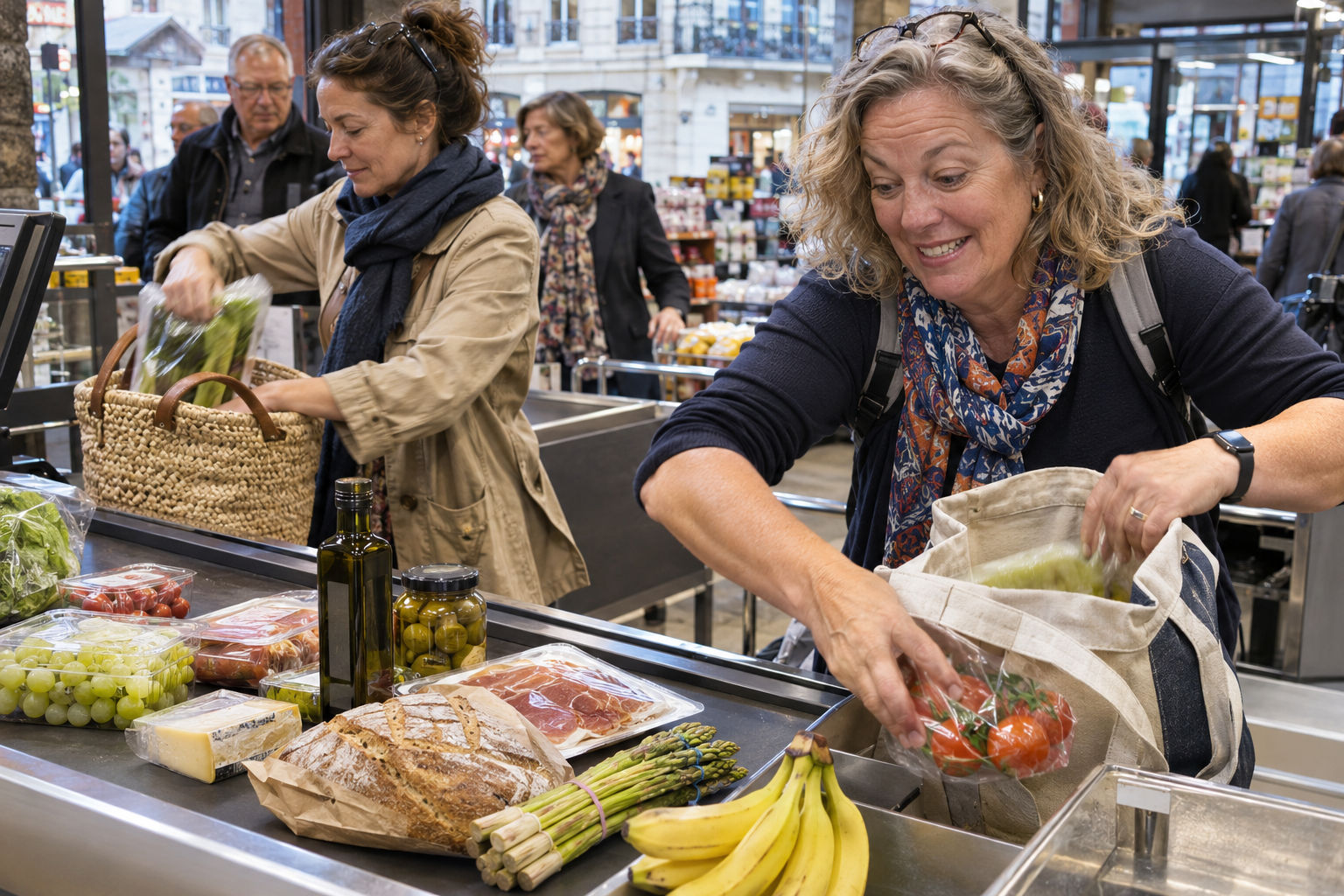
The first and most fundamental thing to grasp is that, in a European supermarket, bagging your groceries is your job, not the store’s. There is, in the vast majority of cases, no bagger, that distinctly American figure who packs your purchases while you stand by, and in most places the cashier will not bag for you either.
The cashier’s role is to scan, take your payment, and move you along, full stop. The packing is left entirely to you, and it is simply assumed that you will do it, briskly and without being asked. To a European this is utterly normal and unremarkable; bagging your own shopping is just part of shopping, as natural as pushing the cart. To an American accustomed to having it done for them, the sudden absence of any help can feel almost like being abandoned mid-task.
This single difference is the root of most of the checkout anxiety visitors feel. It is not that the European system is harsh; it is that it quietly transfers one job, the bagging, from the store to the shopper, and an American who arrives expecting that job to be done for them is caught flat-footed. Once you simply accept from the outset that you and only you are going to bag these groceries, half the panic evaporates before it starts, because you are no longer waiting for help that is not coming.
And the Cashier Does Not Wait
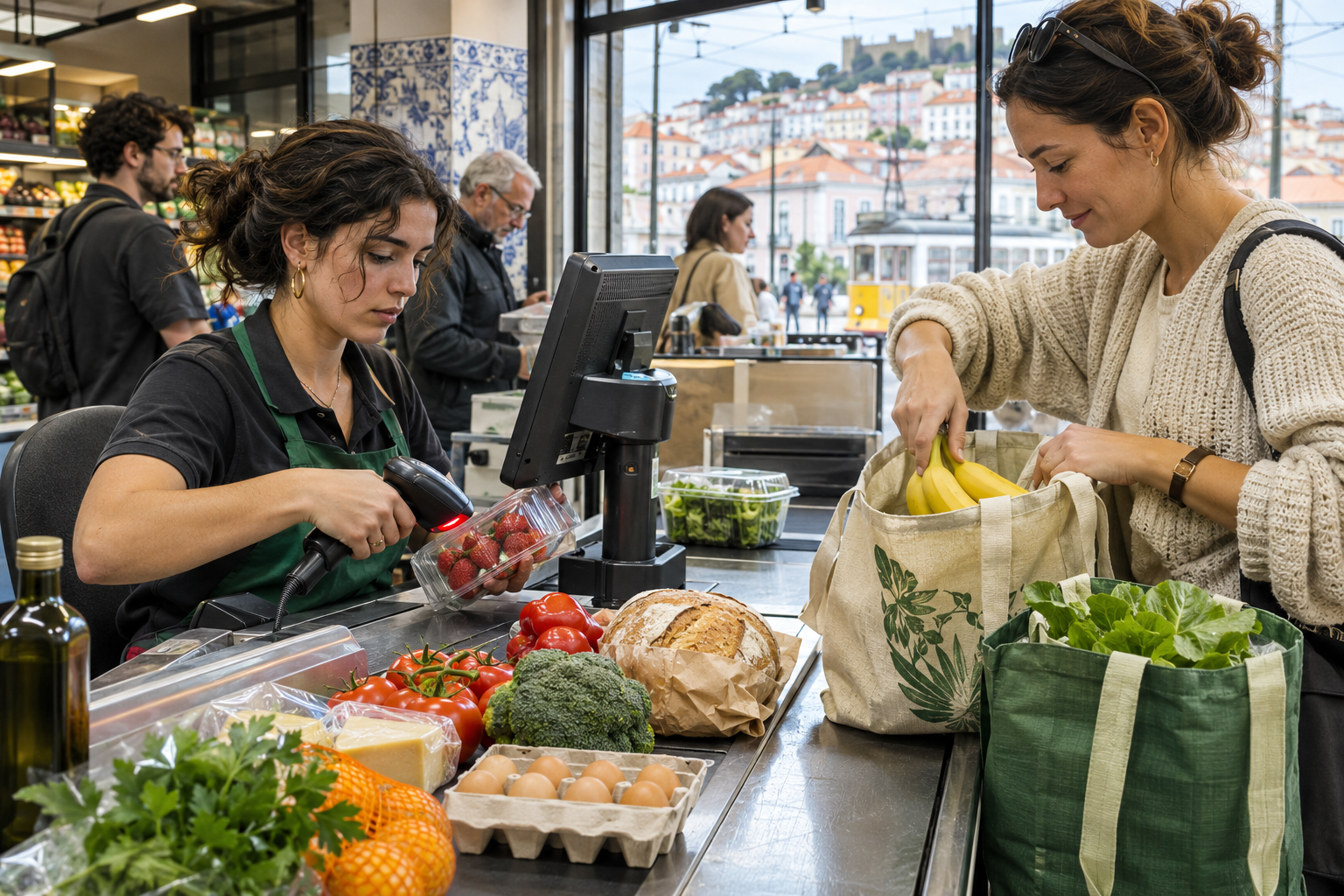
The second shock, layered on top of the first, is the speed. European cashiers tend to scan quickly and efficiently, and crucially, they do not slow their pace to match how fast you can pack. The items keep coming whether you are ready for them or not.
Part of this is simply a different working style. In much of continental Europe, cashiers sit rather than stand, settled at the till for long shifts, and they develop a brisk, practiced rhythm, sweeping items across the scanner one after another without pause. They are not being rude, and they are not racing you on purpose; they are just doing the job at the efficient clip the system expects. But the effect, if you are not prepared, is that the scanned groceries pile up at your end far faster than you can get them into bags, and the heap grows alarmingly while you fumble.
Add the queue behind you, and the pressure intensifies. You are aware of the other shoppers waiting, of the cashier’s steady pace, of the mounting pile, and of your own bags not open and not ready, and the whole thing can tip into a flustered scramble. This is the moment of peak checkout panic, the one that sends unprepared visitors into a sweaty frenzy of grabbing and stuffing. It feels like a test you are failing in public, which is exactly why knowing the local trick, which comes shortly, changes everything.
The Aldi Effect
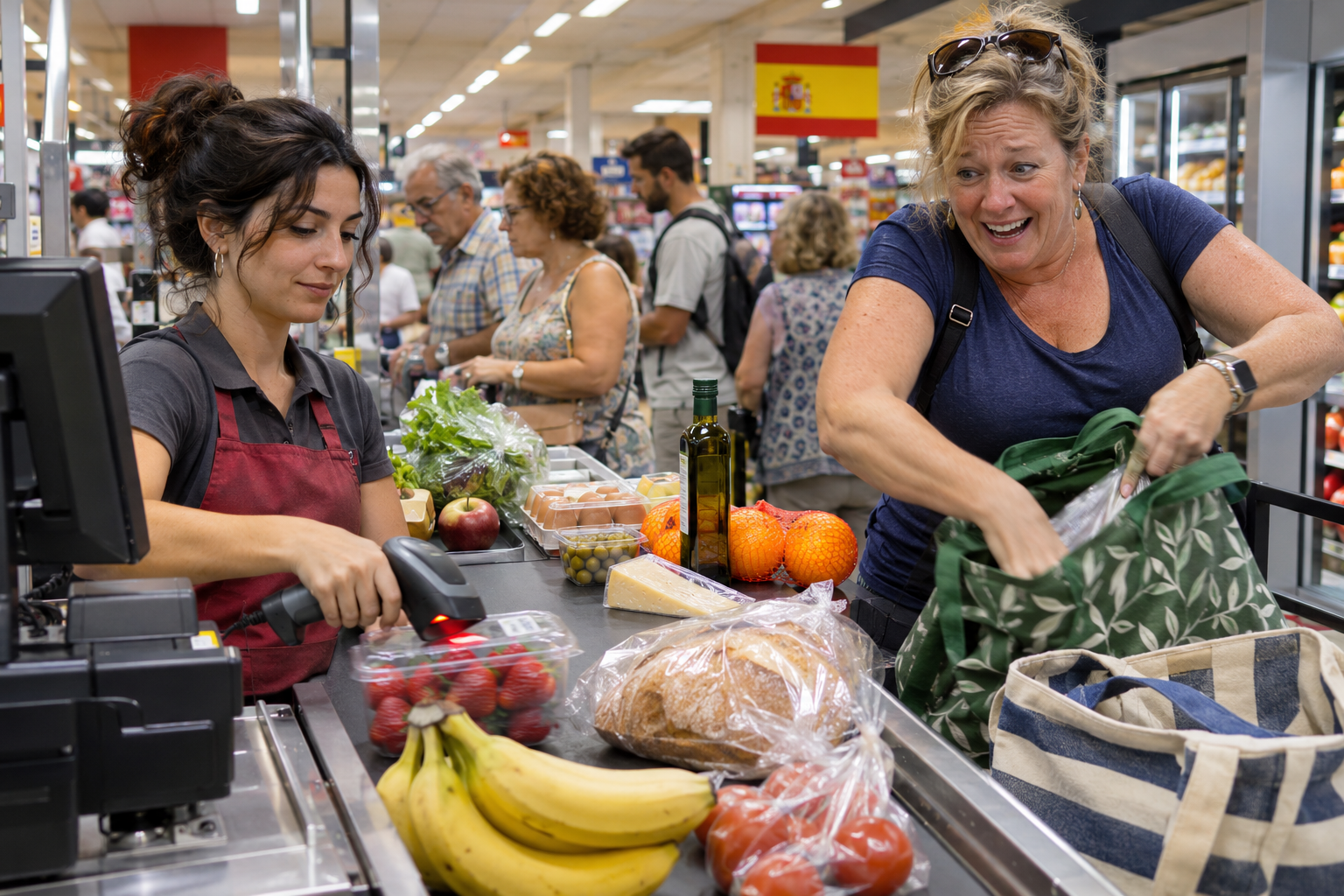
If the ordinary European checkout is fast, the discount chains take it to a famous extreme, and no name is more associated with checkout speed than the German discounters that have spread across the continent and beyond. Shopping at one of these stores for the first time is where the panic reaches its height.
Their cashiers are legendarily, almost superhumanly fast. The stores are engineered for it, with barcodes printed large and on multiple sides of every package so the item can be scanned from any angle without fumbling, and the cashiers, seated and highly practiced, fly through a cart’s worth of groceries in what feels like seconds. It is genuinely impressive to watch and genuinely terrifying to be on the receiving end of, as your groceries are flung down the line faster than seems humanly possible to pack.
This blistering speed is not an accident or an oversight; it is central to the whole business model. The discounters keep their prices rock-bottom partly by keeping their labor costs down and their throughput high, and a cashier who can process twice as many shoppers an hour is part of how the groceries stay cheap. The frantic checkout, in other words, is a feature you are paying less because of, not a flaw. Understanding that makes the speed feel less like an assault and more like the engine of the low price you came for, though it does not make your first encounter with it any calmer.
The Trick Locals Know
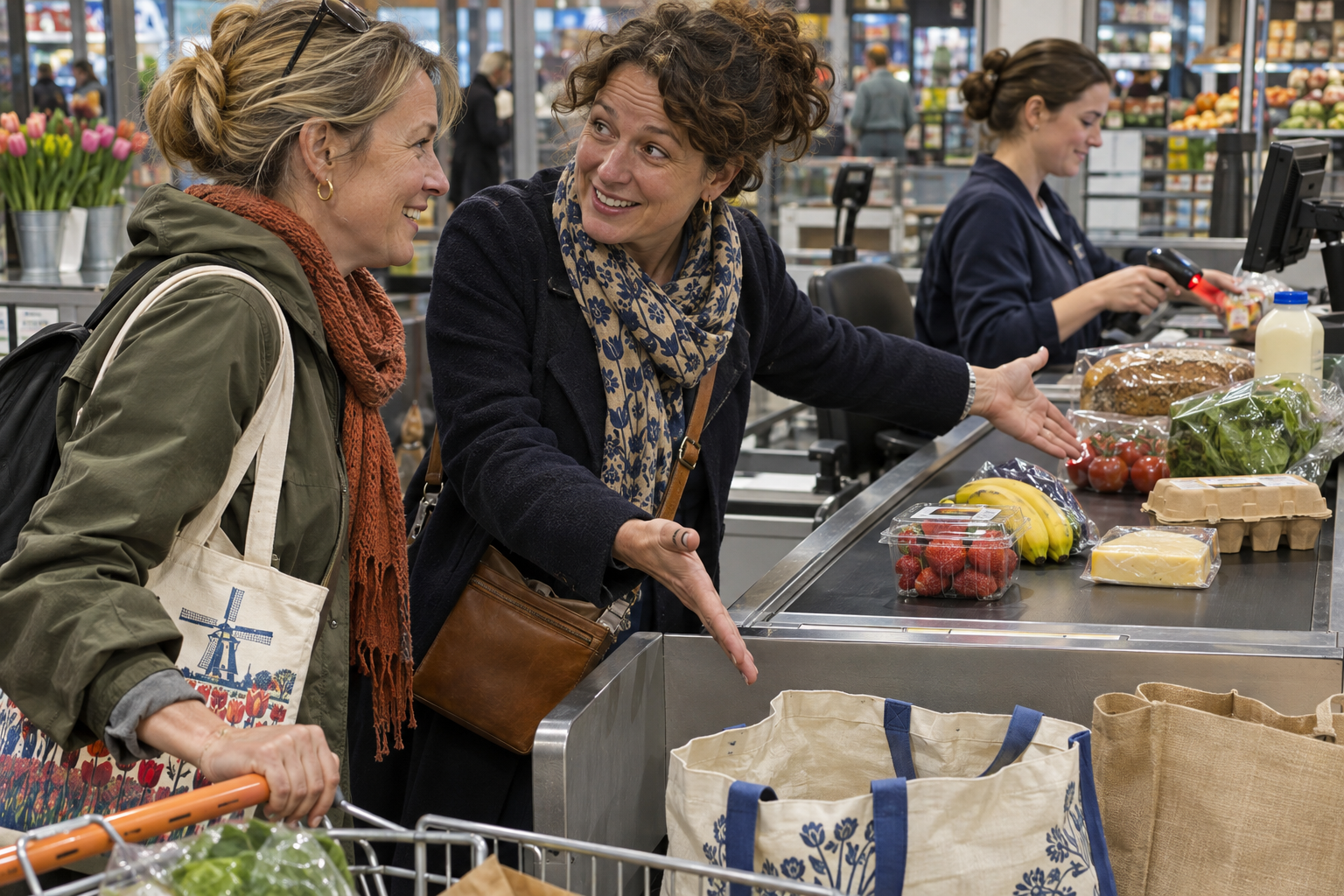
Here is the single most important thing in this entire article, the piece of knowledge that transforms the European checkout from an ordeal into a non-event: you do not bag at the register. The locals know this, and it is the whole secret.
Instead of trying desperately to pack your bags at the till while the cashier fires groceries at you, you simply do not pack there at all. You let the scanned items pile up, and as they come, you sweep them straight back into your cart or basket, loose and unbagged, as fast as you can just to clear the end of the belt. You pay, you take your loaded-but-unbagged cart, and you wheel it a few feet away to a separate shelf or counter, provided for exactly this purpose, where you then bag everything at your own leisurely pace with nobody waiting and no pressure at all.
This is the move that dissolves the panic completely. The cashier’s speed no longer matters, because you are not trying to keep up with the packing; you are only trying to clear items into your cart, which is easy and fast.
The queue behind you is served quickly, because you are not holding up the till fussing with bags, and your actual bagging happens afterward, off to the side, in calm and comfort. The Americans who melt down at European checkouts are almost always the ones trying to bag at the register; the locals gliding through serenely are the ones who learned, long ago, to just clear the belt and pack later. Learn that one thing, and you have learned the whole game.
Bring Your Own Bags
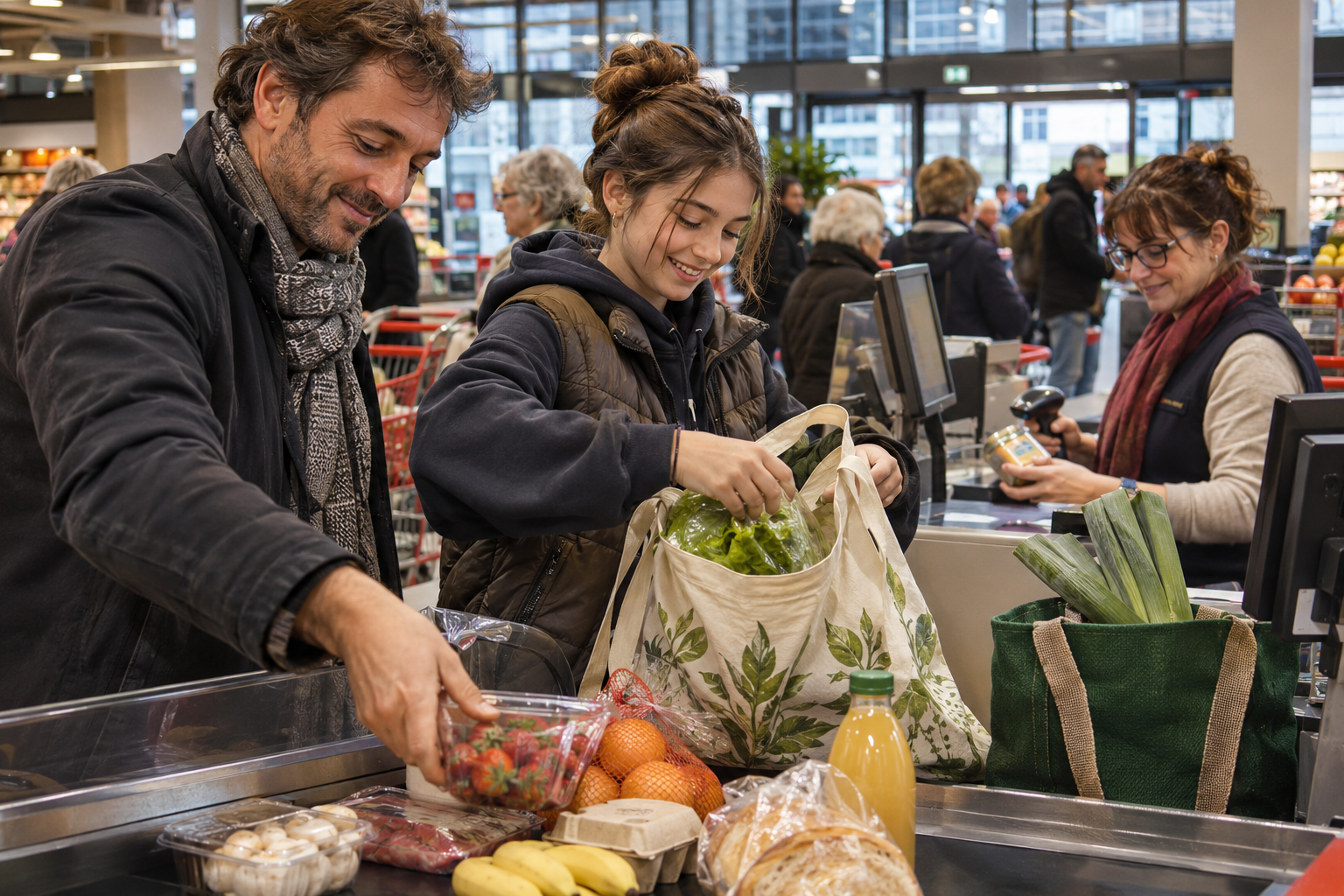
There is one more piece of the puzzle, and skipping it is another classic American stumble: you need to bring your own bags. In Europe, the free plastic grocery bag has largely vanished, and shops charge for bags, so arriving empty-handed means either paying for bags at the till or wrestling your groceries into your arms.
This is a deliberate environmental measure, widespread across the continent, and it has thoroughly reshaped shopping habits. Europeans simply carry their own reusable bags as a matter of course, keeping sturdy cloth or woven bags in the car, the cupboard, and the handbag, ready for any shopping trip. Many also reuse cardboard boxes from the store or wheel their groceries home in a little shopping trolley of their own. The expectation is that you come equipped, and the shopper who turns up with nothing is the exception, slightly caught out, fishing coins from their pocket to buy yet another bag they did not need to.
For a visitor, the fix is simple: acquire a reusable bag or two early in your trip and keep them with you, and the problem never recurs. The small charge for bags is easy to forget about when you are used to free ones, and getting caught by it once, standing at a fast-moving till with a mountain of groceries and no way to carry them, is a memorable lesson. Bring your own bags, and you remove the last piece of friction from the whole experience.
Why It Works This Way
Step back from the panic, and the European checkout makes complete sense, because it reflects a clear and coherent set of priorities, different from the American ones but not worse. The whole system is optimized for efficiency and low prices rather than for service and ease.
The chain of logic is straightforward. No baggers means lower labor costs; fast, seated cashiers mean more shoppers served per hour, which means fewer cashiers needed; charging for bags means less waste and another small cost removed. Every one of these choices shifts a little more of the work onto the shopper and takes a little more cost out of the store, and the savings show up where European shoppers want them, in cheaper groceries. You are, in effect, trading a bit of your own labor and a bit of your own hassle for a lower bill, which is a bargain many are happy to make.
This is simply a different point on the spectrum from the American model, which leans the other way, toward more service, more help, and more ease, at the price of the labor and cost that service requires. Neither is right or wrong; they are different answers to the question of how much you want done for you versus how little you want to pay. The flustered American at the European till is really just experiencing, in miniature and without warning, what the European trade-off feels like from the inside: you do more, and you pay less, and the fast unhelpful checkout is the visible edge of that deal.
Surviving the Checkout Like a Local
So here is the complete playbook for sailing through a European checkout, calm and competent, from the very first try, because following a few simple moves means the panic never arrives.
Come with your own bags, so you are never caught short. As you unload onto the belt, think a little about the order, heavier and sturdier items first, and use the divider bar to separate your shopping from the next person’s. Have your payment ready before the scanning is even finished, card or cash in hand, so there is no fumbling at the end.
Then, when the scanning starts, resist every instinct to bag at the till. Just sweep the scanned groceries back into your cart or basket, loose and quick, clearing the belt and keeping the line moving. Pay, pull your cart aside to the bagging shelf or counter a few steps away, and only there, in peace, pack your bags properly. That is the entire secret, and it is the difference between the sweaty scramble and the serene glide.
Do it this way a couple of times and it becomes second nature, and you will wonder why it ever seemed stressful. The European checkout is not an obstacle course designed to defeat you; it is a lean, efficient system with one unwritten rule, bag later, not now, that nobody thought to tell you. Learn that rule, bring your bags, keep your payment handy, and you will move through the fastest checkout in the world like someone who belongs there, which, by then, you rather will.

About the Author: Ruben, co-founder of Gamintraveler.com since 2014, is a seasoned traveler from Spain who has explored over 100 countries since 2009. Known for his extensive travel adventures across South America, Europe, the US, Australia, New Zealand, Asia, and Africa, Ruben combines his passion for adventurous yet sustainable living with his love for cycling, highlighted by his remarkable 5-month bicycle journey from Spain to Norway. He currently resides in Spain, where he continues sharing his travel experiences with his partner, Rachel, and their son, Han.