
La Boqueria is one of the most photographed food markets in the world. Just off the thronged Rambla in the heart of Barcelona, its stalls spill over with jewel-colored fruit, hanging hams, pyramids of candied nuts, and glistening fish on ice, and for years it drew such enormous crowds of tourists that the people who actually came to shop could barely get through the door.
So Barcelona did something about it: the market banned the tour groups. Large guided groups are no longer allowed to pour into La Boqueria during its busiest hours, a rule brought in to reclaim a working market that had been turning into a tourist spectacle. It is a small, pointed measure, and it quietly changed the way visitors are meant to experience one of the city’s signature sights.
Here is what the Boqueria rule actually is, the overcrowding that forced it, how it changed the way tourists shop the market, where it fits in Barcelona’s much larger fight against overtourism, and how to visit La Boqueria the right way.
The Rule at the Market
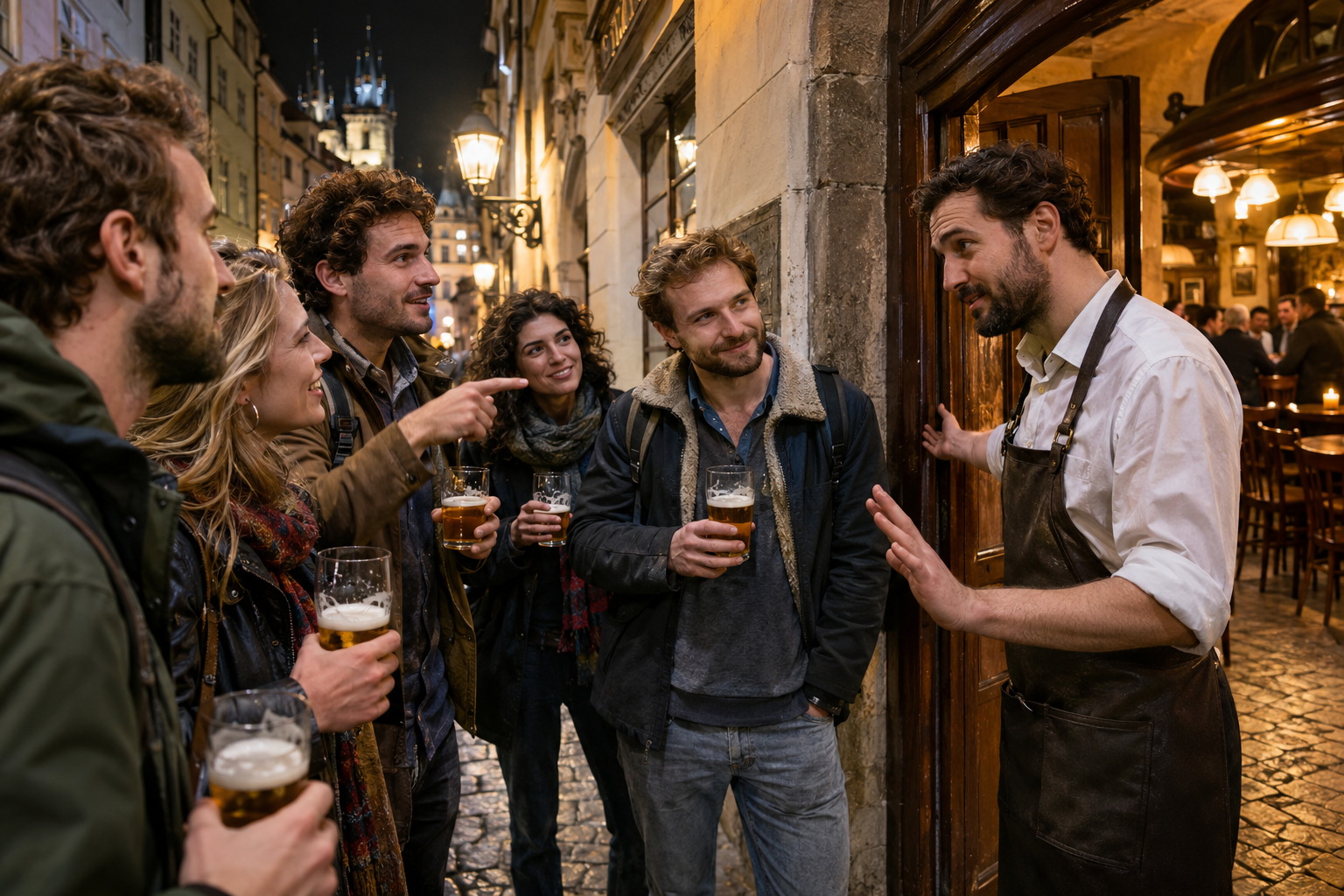
The rule itself is specific and easy to state. Tour groups of more than fifteen people are banned from entering La Boqueria during its busiest times, which the market defines as Friday and Saturday mornings, roughly from eight in the morning until three in the afternoon.
The enforcement is direct. During those restricted hours on those days, oversized tourist groups are simply not permitted in, and if a group of more than fifteen does try to enter, the market’s security staff will inform them of the rule and escort them back out. The restriction has been in place since the middle of the last decade, introduced after the stallholders themselves petitioned the city, and it targets exactly the thing that had become the problem: the big, aisle-blocking tour group moving through the market as a single slow mass.
Outside those specific hours and days, the rule does not apply, so the market remains open to everyone as before. But on the Friday and Saturday mornings when the locals most want to do their shopping, the herds of fifteen-plus are turned away, which is the whole point. It is a narrowly aimed measure, designed to hit the peak-time tour-group crush without closing the market to tourists altogether.
The Market Overrun
To understand why a beloved market would start turning visitors away, you have to picture what La Boqueria had become. As one of Barcelona’s absolute top attractions, sitting right on the tourist artery of the Rambla, it was drawing such vast numbers of visitors that it had begun to stop functioning as a market at all.
The specific culprit was the tour group. Day after day, large guided groups would file into the narrow aisles, stop to take photographs of the colorful stalls, and block the passages as a dense, slow-moving, camera-wielding mass, making it genuinely difficult for anyone to move, least of all the local shoppers trying to buy their fish and vegetables for the weekend. The market, meant to be a living place where Barcelonans do their shopping, was being overwhelmed into a kind of walk-through photo opportunity, crowded to the point of gridlock by people who had come to look rather than to buy.
It was the stallholders, the people whose livelihoods depend on the market working, who pushed for the change. They petitioned the city’s market authority to limit group access, precisely because the overcrowding was choking the market’s actual business and driving away the regular customers it exists to serve. The ban was a response to that plea, an attempt to stop a working market from being loved into dysfunction, and to keep it a place that serves its city rather than just entertains its visitors.
For the Locals, on the Busiest Days
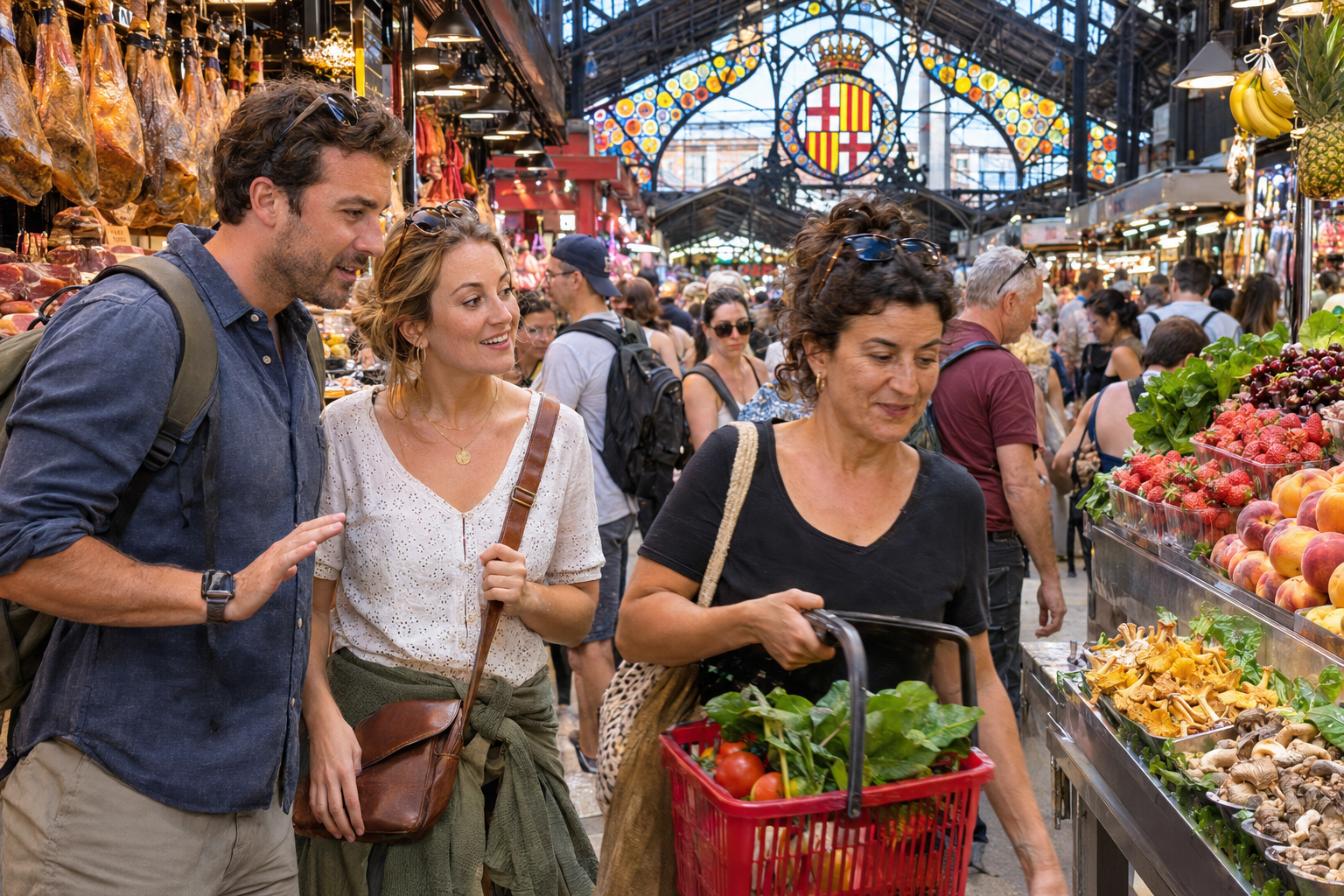
The timing of the restriction is deliberate and revealing, because it is aimed squarely at protecting the market’s core purpose. The ban falls on Friday and Saturday mornings specifically, and that is no accident: these are the busiest days for local food shopping, when Barcelonans come to stock up for the weekend.
By restricting the big groups during exactly those hours, the rule tries to give the market back to the people who use it as a market. The idea is that a resident should be able to come on a Saturday morning and buy their shrimp for the paella without having to fight through a tour group of thirty blocking the aisle, that the stalls should be able to serve their regular customers at their busiest time, and that the market should remain a functioning part of local life rather than a round-the-clock tourist attraction. The restriction is, at heart, a defense of the market’s purpose as a market.
This is what distinguishes the Boqueria rule from a simple anti-tourist measure. It does not ban individual tourists, who remain welcome to wander, shop, and eat; it does not even ban small groups. It targets only the large organized group during the peak local-shopping window, which is the specific thing that was breaking the market. The aim is not to keep visitors out but to keep the market alive, to preserve the very thing that made it worth visiting in the first place, which heavy group tourism was quietly destroying.
It Changed How Tourists Shop
The rule did more than thin the crowds; it quietly reshaped the way tourists are meant to experience the market, which is where it earns the title. The era of rolling through La Boqueria in a herd of thirty, shepherded by a guide with a raised umbrella, is over, at least at the busy times, and visitors have had to adjust.
The shift has been toward smaller, more individual, more considerate visits. Where a tourist might once have ticked off the market as a quick group-tour stop, filing through in a crowd and out again, the rule pushes people to come as individuals or in small groups, to move through at a human scale rather than as a blockage. The big group market tour has given way to the small-group one, with specialized market tours now typically run for just a handful of people at a time, a far cry from the aisle-clogging masses of before. The market is still absolutely a place tourists visit; it is just no longer a place they are herded through.
This is arguably a better way to experience it anyway, which is the quiet upside of the whole thing. A market like La Boqueria rewards the visitor who slows down, wanders at their own pace, talks to a stallholder, and actually buys and tastes something, far more than the one swept through in a photographing crowd. By breaking up the big groups, the rule nudges tourists toward exactly that more rewarding, more respectful way of visiting, the way that treats the Boqueria as a market to engage with rather than a backdrop to photograph. In changing how tourists shop, it may have improved the experience as much as protected the market.
Part of Barcelona’s Bigger Crackdown
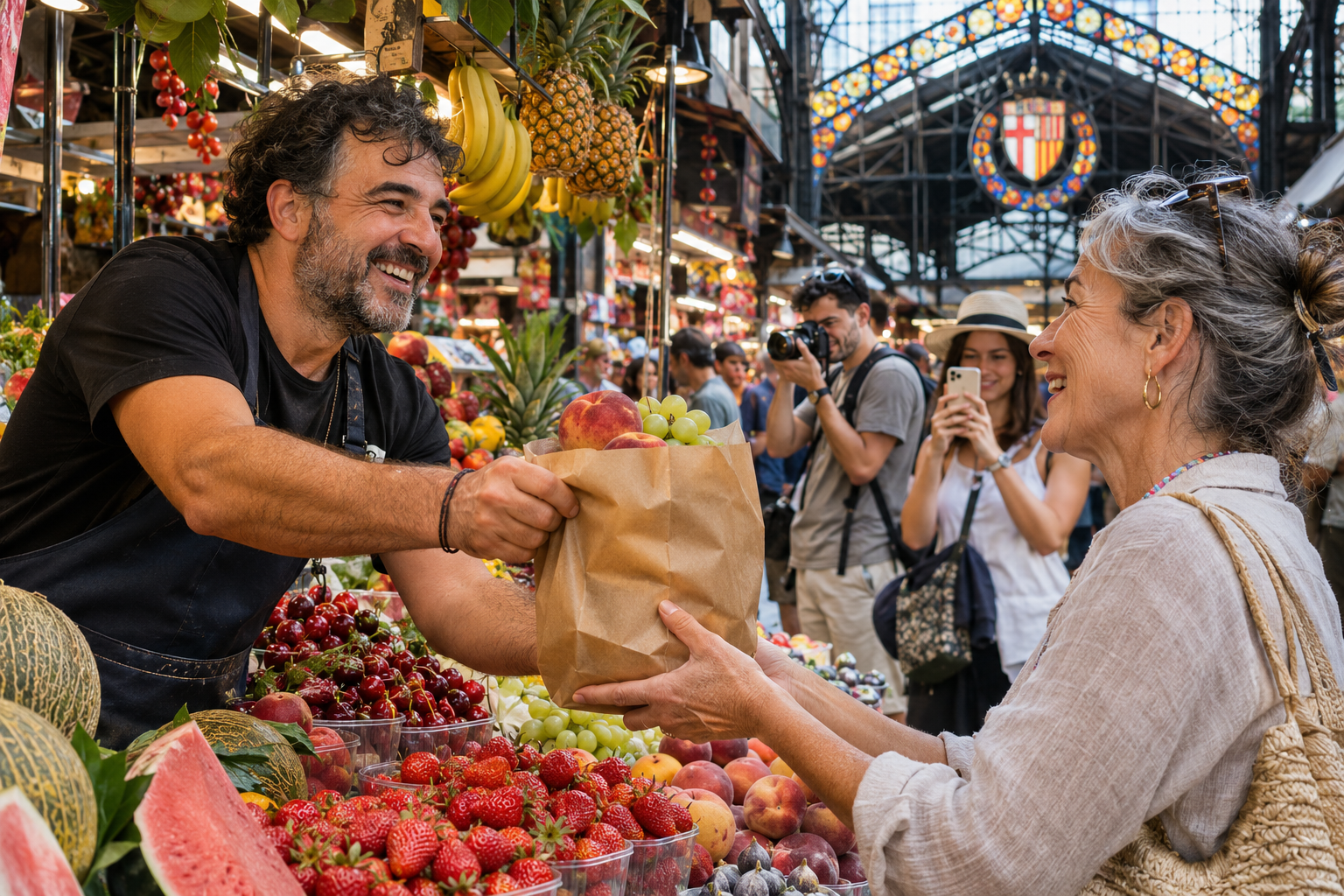
The Boqueria rule does not stand alone; it is one piece of a much larger and increasingly famous campaign, because Barcelona has become the epicenter of Europe’s backlash against overtourism. The city, flooded with tens of millions of visitors a year, a great many of them day-trippers who crowd the same handful of sights, has been rolling out measure after measure to manage the crush.
The tour group has been a particular target across the city, not just at the market. Barcelona has moved to cap the size of guided groups, with limits that drop sharply in the narrowest streets of the old town, and has banned tour guides from using megaphones, requiring quiet headset systems instead so that herds of tourists no longer blast commentary through residential streets. It has pushed tour operators onto designated one-way routes through a limited set of streets, to spread groups out and reduce the congestion they cause, and some major sights now admit only very small groups at a time. The Boqueria restriction fits neatly into this whole architecture of trying to tame the big tour group, which the city has identified as a prime source of disruption.
All of it springs from a real and deepening tension between residents and tourism in Barcelona, where locals increasingly feel their city, their streets, and their daily life are being overwhelmed. The market rule is a small, concrete instance of a city-wide, and indeed continent-wide, reckoning with what mass tourism does to the places it loves. Like Venice charging day-trippers to enter and Dubrovnik fining rolling suitcases, the Boqueria ban is Barcelona’s version of a beautiful, overrun place trying to draw some lines and reclaim a little of itself.
Does It Actually Work?
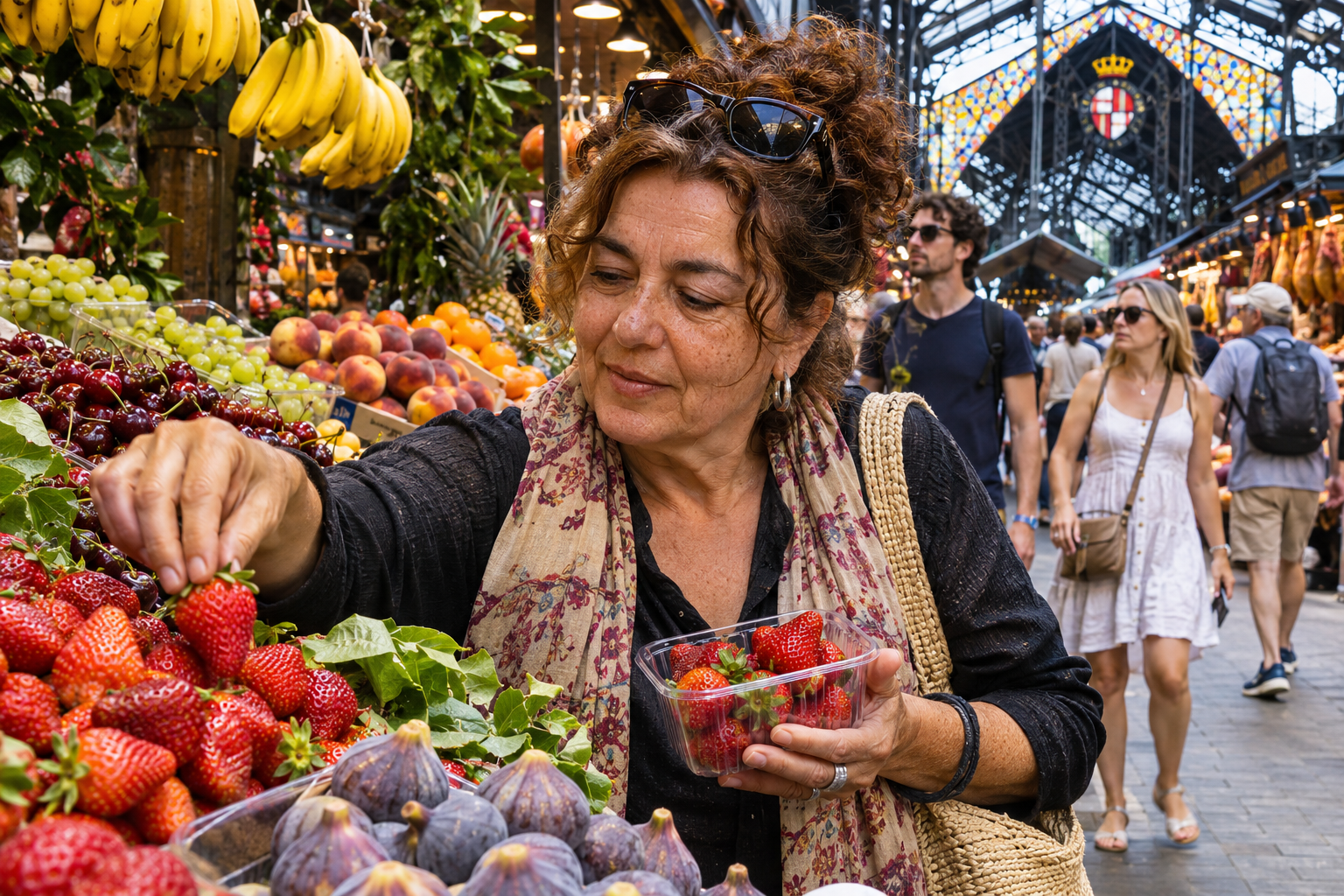
It would be too neat to present the Boqueria rule as a tidy success, because it is genuinely imperfect, and the honest version acknowledges its limits. Critics have been quick to point out the obvious flaw in a rule that only targets groups of more than fifteen.
The problem is that plenty of disruptive tourism comes in smaller packages. A great many tour groups contain fewer than fifteen people yet still block aisles, crowd stalls, and disrupt the market, and the rule does nothing about them, nor about the sheer mass of individual tourists who, in aggregate, overwhelm the place just as thoroughly as any group. Some residents have dismissed the measure as a kind of greenwashing, a visible gesture that lets the city look like it is acting on overtourism without seriously reducing the crowds, since the underlying tide of visitors remains enormous. On its own, a cap on the largest groups during certain hours is a modest tool against a vast problem.
So the fair assessment is that the Boqueria rule is a small, imperfect, partial step rather than a solution. It genuinely helps at the margins, easing the very worst of the peak-time group crush and signaling the market’s priorities, but it does not and cannot fix Barcelona’s overtourism on its own, and it was never going to. It is best understood as one modest piece of a much larger and much harder effort, a single line drawn around a single market, worthwhile in itself but no cure for the flood. Judging it by whether it solved the problem misses the point; it was only ever meant to help, a little, where it could.
How to Visit the Boqueria Right
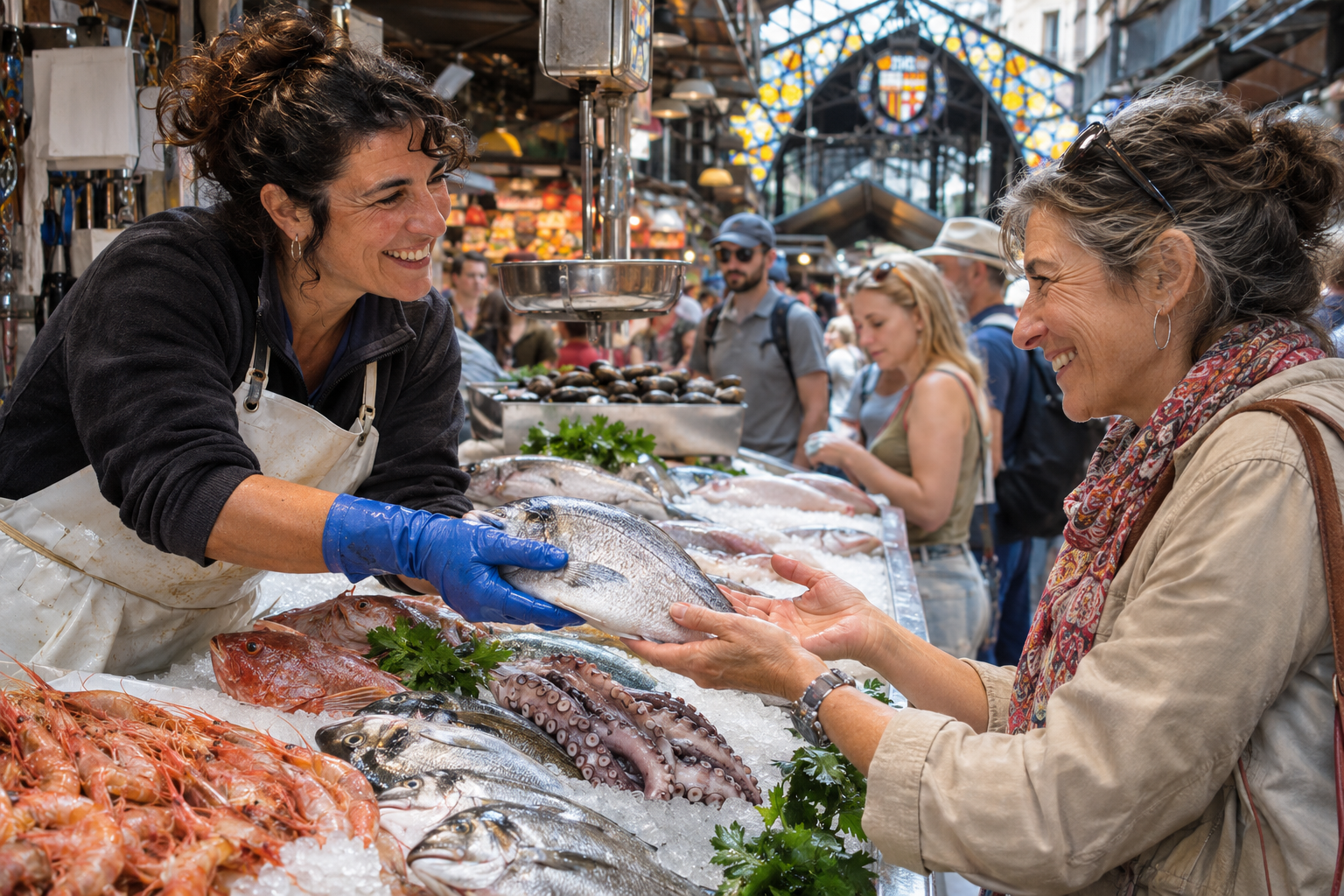
For the visitor who wants to experience La Boqueria well, and considerately, the rule points the way, and the approach it encourages happens to be the one that gives you the best time anyway. The whole trick is to come as the market wants to be visited: as a person, not a crowd.
The practical advice is simple. Go early, ideally not long after it opens in the morning, when the aisles are calmer and you will find the locals doing their real shopping, rather than at the packed midday-to-afternoon peak when the tourist crush is at its worst.
Come on your own or in a small group rather than a big one, and if you want a guide, choose one of the small-group tours rather than a mass one. And when you are there, treat it as a market: wander the deeper aisles rather than just the tourist-trap stalls near the entrance, ask before photographing a stallholder and ideally buy something from them, and taste the place rather than just filming it. Do that, and you honor both the rule and the market.
In the end, the Boqueria rule is a small lesson in how to travel through places that people actually live and work in. The market is not a theme park but a working part of a real city, and the way to enjoy it is the way that respects that, as a customer and a guest rather than a tide.
The rule exists because too many visitors forgot that, and it asks the rest of us simply to remember it. Visit La Boqueria as a person who has come to engage with a wonderful market, and you will have a far better time than any herd ever did, and leave the place a little better than you found it.

About the Author: Ruben, co-founder of Gamintraveler.com since 2014, is a seasoned traveler from Spain who has explored over 100 countries since 2009. Known for his extensive travel adventures across South America, Europe, the US, Australia, New Zealand, Asia, and Africa, Ruben combines his passion for adventurous yet sustainable living with his love for cycling, highlighted by his remarkable 5-month bicycle journey from Spain to Norway. He currently resides in Spain, where he continues sharing his travel experiences with his partner, Rachel, and their son, Han.