
If you spend Christmas in Portugal, sooner or later a plate of rabanadas will appear in front of you. Thick slices of bread, golden and crisp on the outside, soft and custardy within, dusted with cinnamon sugar or drenched in a glossy syrup, warm from the pan.
At first glance they look like French toast, and they are indeed a close relative. But the Portuguese version has a secret that sets it apart, especially up in the north of the country: instead of milk, the bread is often soaked in sweet wine.
And there is something else. Rabanadas are not an everyday breakfast you can have whenever you like. They belong to Christmas, appearing on Portuguese tables through December and then vanishing until the next year comes around.
Here is what rabanadas are, the wine that makes them Portuguese, how every family makes them differently, the season they belong to, their humble origins, and how to make them yourself. They are one of the great comforting pleasures of a Portuguese Christmas, and far easier to make than they look.
Portugal’s Christmas French Toast
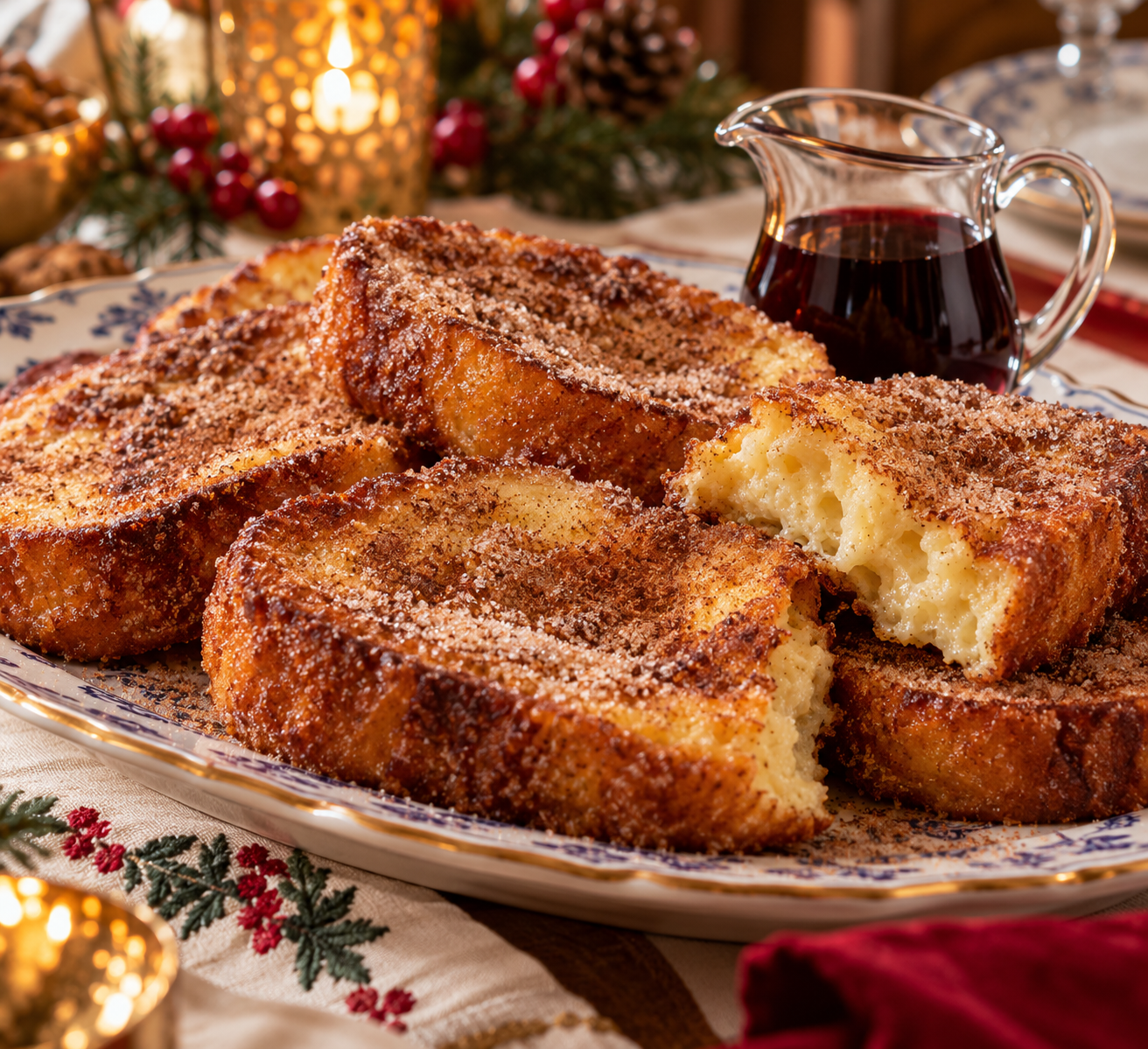
A rabanada begins, like French toast, with slices of bread that are soaked, dipped in beaten egg, and fried until golden. The bread of choice is usually a day-old or slightly stale loaf, a baguette-style bread or a Portuguese white bread, cut into good thick slices so that the inside stays soft and custardy while the outside crisps up in the oil.
Once fried, the slices are finished in one of a few traditional ways. The most common is a generous coating of cinnamon sugar, rolled on while the rabanadas are still warm. Others are drenched in a sweet syrup, or served with a rich egg-yolk cream, for a more decadent, dessert-like version.
The result is somewhere between French toast and a doughnut, crisp outside and meltingly soft inside, fragrant with cinnamon. It is comfort food of the highest order, and in Portugal it tastes unmistakably of Christmas.
It is a first cousin of the Spanish torrijas, though the Portuguese keep theirs firmly tied to the festive season while the Spanish lean toward Easter.
The basic idea, soaking and frying bread to rescue and transform it, turns up all over the world in one form or another, from French toast to countless regional variations. What makes the rabanada distinct is the particular Portuguese combination: the thick cut of good bread, the spiced soak, the wine or the port, and above all the firm attachment to Christmas. Same simple idea, two different holidays, each country sure its own version is the real one.
Soaked in Wine
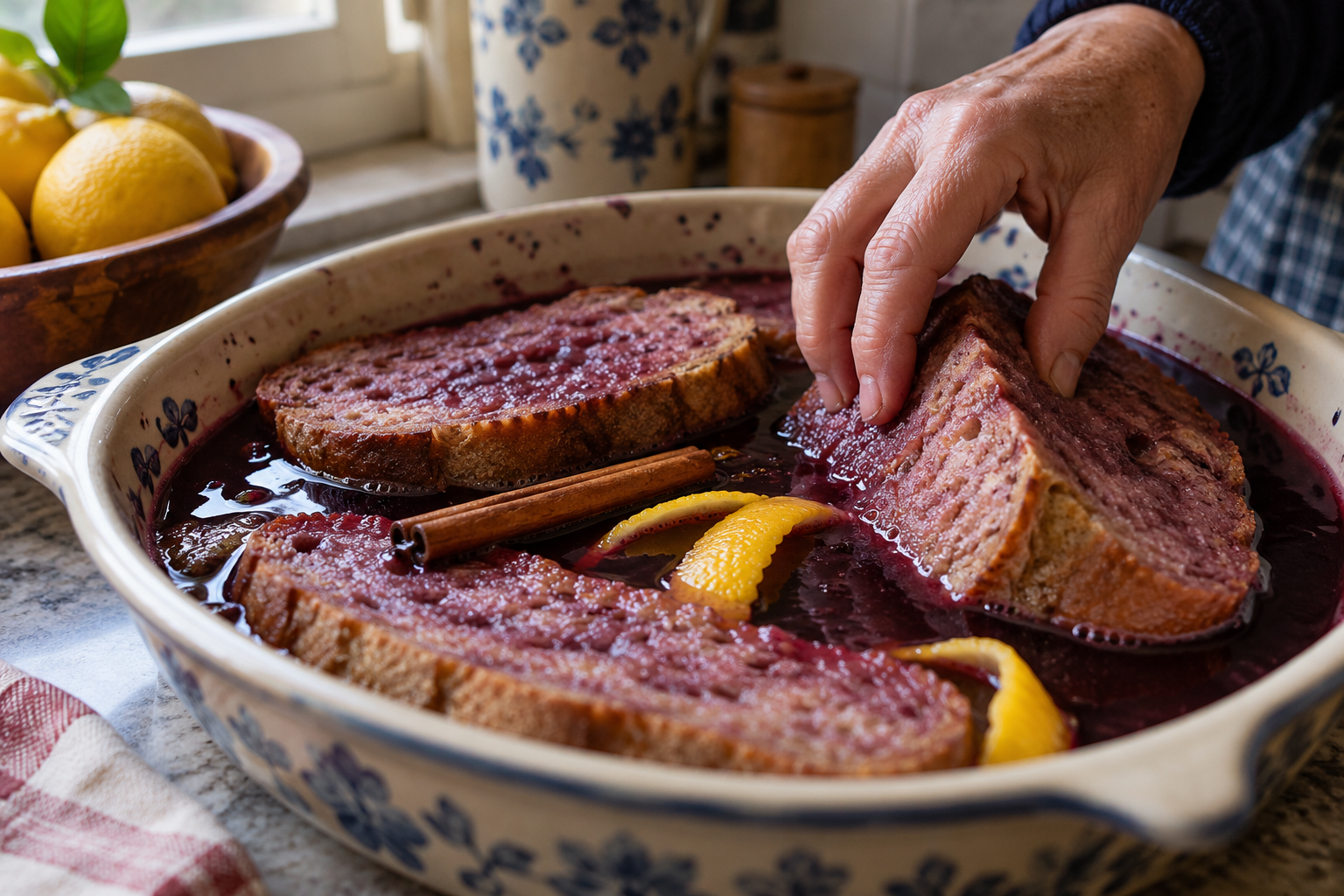
Here is the detail that makes a Portuguese rabanada more than just French toast. While many are soaked in warm milk, flavored with cinnamon, lemon zest, and sugar, a great many, particularly in the northern regions of Minho and Tras-os-Montes, are soaked instead in sweet wine.
These rabanadas de vinho, wine-soaked rabanadas, have a deeper, more aromatic, more grown-up flavor than their milky cousins. The bread drinks up the spiced, sweetened wine, and the finished slice carries a warmth and complexity that plain French toast never has.
Wine finds its way in even when milk does the soaking, because a classic Portuguese finish is to drench the fried rabanadas in a syrup, a calda, often made with port wine. Between the wine-soaked versions and the port-wine syrups, this is a sweet with a genuine festive glow to it, which is exactly why it belongs to the season of celebration rather than to an ordinary breakfast.
Every Family Does It Differently
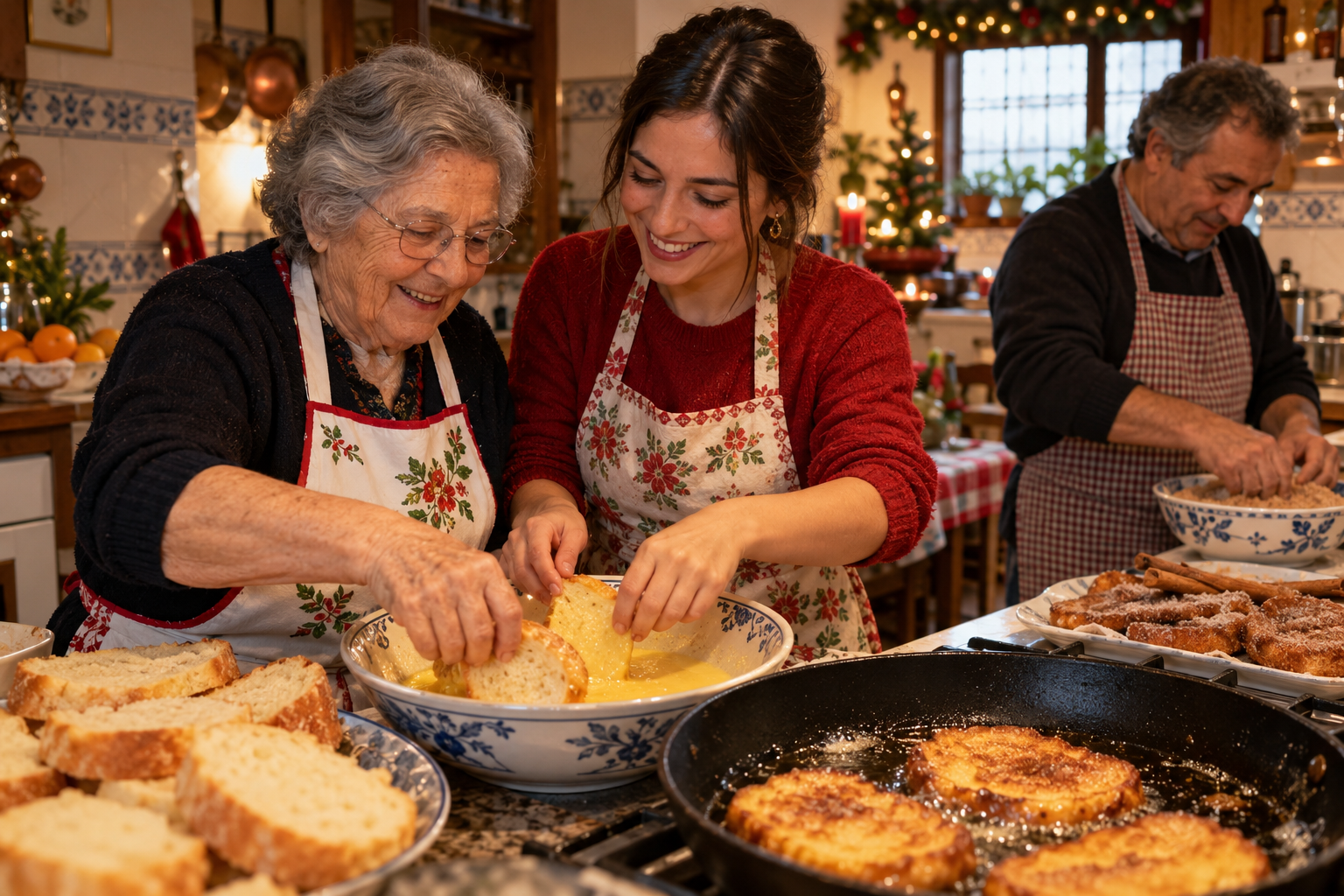
Ask ten Portuguese families how they make rabanadas and you may well get ten slightly different answers, because this is a dish that lives in home kitchens and family tradition. The basic idea is fixed, but the details are a matter of fierce and affectionate preference.
Some swear by the milk soak, flavored just so with cinnamon and lemon; others insist the wine version is the only proper one. Some finish theirs with a simple dusting of cinnamon sugar, while others would not dream of serving rabanadas without drowning them in a port syrup, and a few go further still with a rich egg-yolk cream poured over the top.
The bread matters too, and everyone has an opinion on the right loaf and the right thickness. None of these versions is more correct than another; they are simply how different families and different regions have always done it, passed down from one generation to the next. That variety is part of what makes rabanadas feel so personal, a dish that tastes, for each Portuguese person, specifically of their own family’s Christmas.
The Treat That Only Appears in December
One of the loveliest things about rabanadas is how firmly they belong to one time of year. Unlike French toast, which you can have any morning you please, rabanadas are a Christmas food, made and eaten through December and then put away until the following winter.
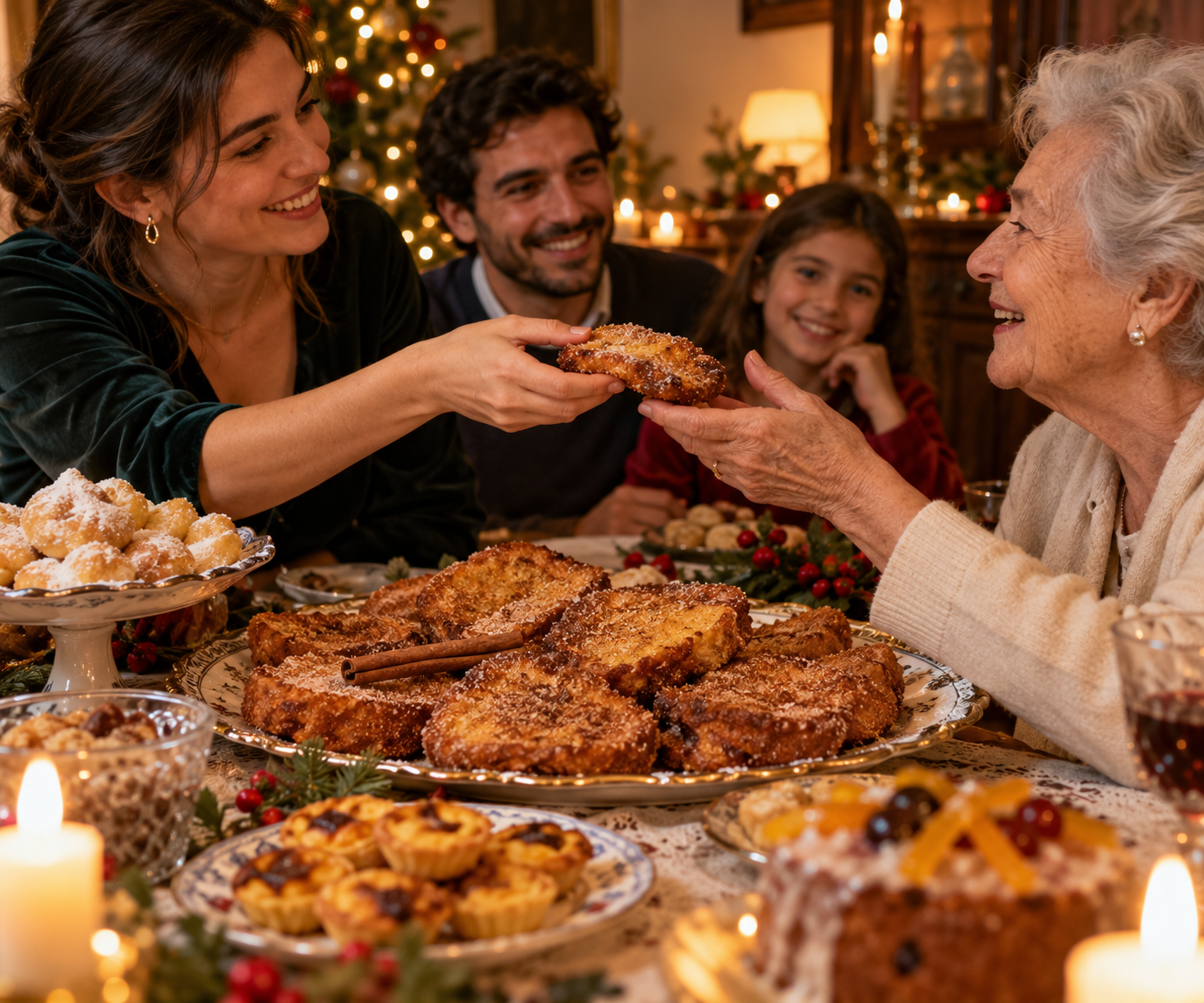
They are a star of the Consoada, the Portuguese Christmas Eve supper, served as one of the sweets that close the meal, and they carry on through Christmas Day and the season beyond. Many families also enjoy them as a festive breakfast or an any-time treat over the holidays, warm from a batch fried that morning.
That seasonality is part of their magic. Because they come only once a year, each December’s first plate of rabanadas carries a little thrill of anticipation, the taste of Christmas arriving.
Making them is often a family affair too, a big batch fried together in a well-used pan. Everyone helps to soak, dip, and coat, and the kitchen fills with the smell of frying bread and warm cinnamon, which is as much a part of the memory as the eating.
A Dish With Humble Roots
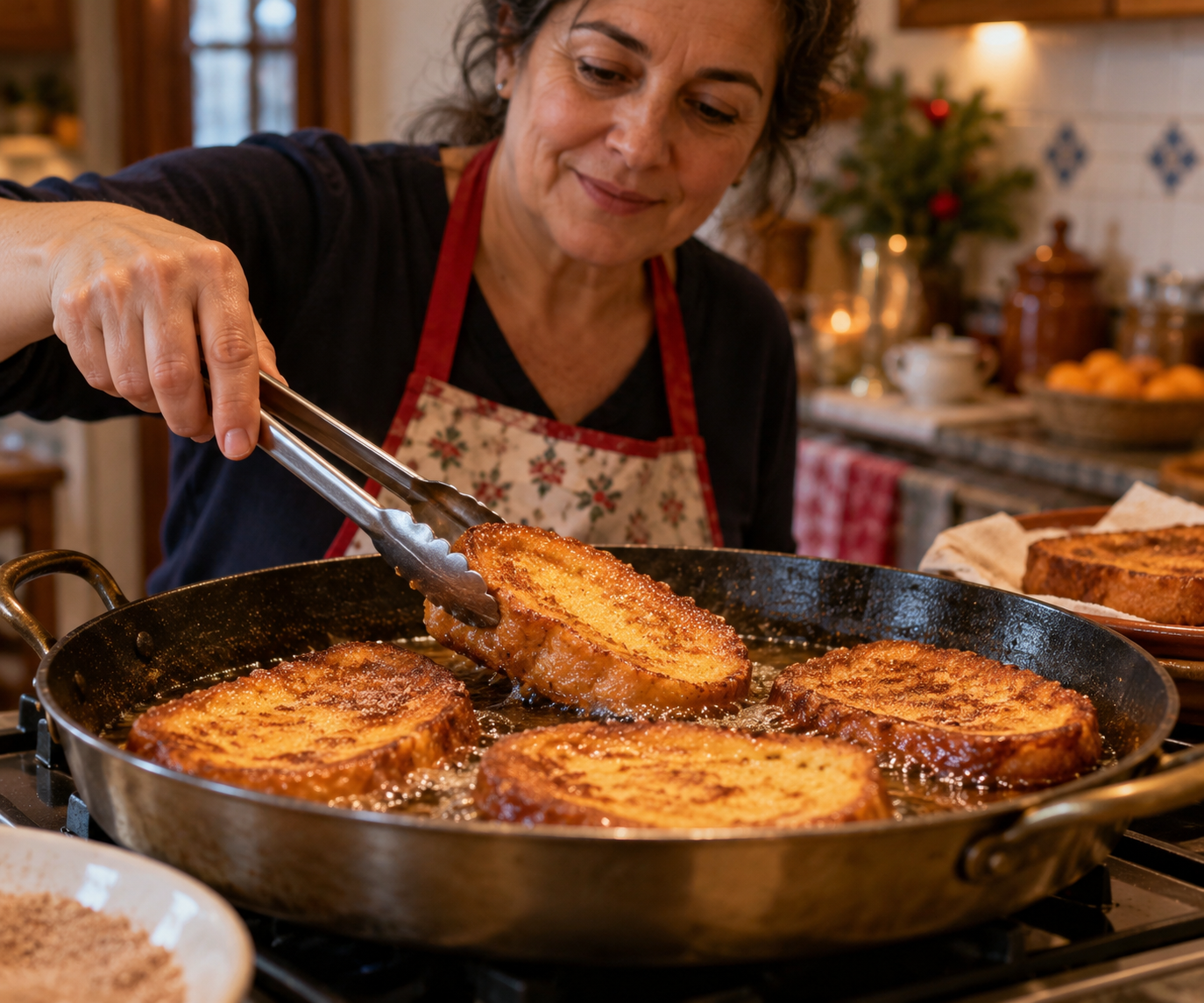
For all their festive richness, rabanadas began as humble, thrifty food, which is often the case with the best-loved dishes. At heart, they are a clever and delicious way to use up bread that has gone stale, transforming something that might have been thrown away into a warm, sweet treat.
The dish carries old names that hint at its history, including fatias de parida, which tied this fried, milk-soaked bread to new mothers, and through them to the Nativity and the birth of Christ. That connection helped fix rabanadas firmly in the Christmas tradition.
Versions of the same idea turn up across the Portuguese-speaking world and beyond, from the famous rabanadas of Brazil to the closely related torrijas of Spain. But the Portuguese Christmas rabanada, with its wine and its cinnamon and its once-a-year appearance, remains a thing entirely its own, a humble peasant sweet raised up into one of the country’s most beloved festive foods.
The Meal They Belong To
Rabanadas have their natural home at the Portuguese Christmas table, and specifically at the Consoada, the Christmas Eve supper that is the centerpiece of the Portuguese holiday. After the traditional meal of salt cod and vegetables, out come the sweets, and rabanadas are among the most beloved of them.
They do not travel alone. The Portuguese Christmas table groans with sweets: alongside the rabanadas you will find filhos and sonhos, fried dough treats, and other regional specialties, a whole spread of the rich, sugary things that only appear at this time of year. Rabanadas hold their own place of honor in that lineup, often the one people reach for first.
And they do not vanish with Christmas Eve. Made in big batches, rabanadas carry on through the holiday, eaten as a dessert, a snack, or a festive breakfast over the following days, warm or cold, whenever someone fancies one. That lingering presence through the whole season, there on the counter to be picked at, is part of what makes them feel so thoroughly like Christmas to a Portuguese household.
There is real pleasure in making them, too, mess and all. The kitchen fills with the smell of warm milk or wine and cinnamon, the bread turns golden in the pan, and the whole house knows that Christmas is close. For many Portuguese families, the making of the rabanadas, often with several generations crowded into the kitchen, is as cherished a part of the ritual as the eating.
They are also wonderfully forgiving to cook, which makes them a lovely place to start if you have never fried a sweet before. The bread does most of the work, the method is simple and hard to ruin, and the result looks and tastes far more impressive than the effort it took. A first attempt at rabanadas almost always succeeds, which is part of why the tradition has stayed so alive in home kitchens.
Whichever way you make yours, milk or wine, cinnamon sugar or syrup, the essential thing is to serve them with a little ceremony and a lot of warmth, the way they are meant to be eaten. Pile them on a plate, dust them generously, and share them while they are fresh, and you will understand at once why a humble slice of fried bread became one of the most beloved sweets of the Portuguese Christmas.
Make It: Rabanadas
Here is a traditional version using a spiced milk soak with a port syrup finish, making about a dozen. For the more aromatic wine-soaked version, replace the milk with a sweet red wine in the soaking step.
Ingredients
- 1 day-old baguette or Portuguese white loaf, cut into thick slices (about 12)
- 500ml milk (or sweet red wine, for rabanadas de vinho)
- 100g sugar
- 1 cinnamon stick
- peel of 1 lemon
- 4 eggs, beaten
- oil, for frying
For the finish (choose one):
- cinnamon sugar: 1/2 cup sugar mixed with 1 tablespoon ground cinnamon
- or port syrup: 200g sugar, 200ml water, a splash of port, a cinnamon stick, lemon peel
Instructions
- Heat the milk (or wine) with the sugar, cinnamon stick, and lemon peel until warm and the sugar dissolves. Let it cool slightly, then remove the cinnamon and peel.
- Soak the bread slices in the warm milk (or wine), a few at a time, until saturated but not falling apart. Lift them out and let the excess drip off.
- Dip each soaked slice thoroughly in the beaten egg, coating both sides.
- Fry in hot oil, turning once, until golden brown and crisp on both sides. Drain on paper towels.
- For the cinnamon-sugar finish, roll the warm rabanadas in the cinnamon sugar. For the syrup finish, simmer the syrup ingredients for about 10 minutes, then spoon it over the fried rabanadas.
- Serve warm, in the Portuguese way, as a Christmas dessert or a festive breakfast.

About the Author: Ruben, co-founder of Gamintraveler.com since 2014, is a seasoned traveler from Spain who has explored over 100 countries since 2009. Known for his extensive travel adventures across South America, Europe, the US, Australia, New Zealand, Asia, and Africa, Ruben combines his passion for adventurous yet sustainable living with his love for cycling, highlighted by his remarkable 5-month bicycle journey from Spain to Norway. He currently resides in Spain, where he continues sharing his travel experiences with his partner, Rachel, and their son, Han.