
In America, washing the car in the driveway on a sunny Saturday is practically a national pastime. Bucket, hose, sponge, maybe the kids helping and getting soaked, suds running down to the curb. It is wholesome, ordinary, and entirely unremarkable. For a lot of Americans it is practically a rite of the season, the first warm Saturday spent out front with the hose, the car gleaming by afternoon.
In Germany, it can get you fined. Across most of the country, washing your car at home, on your own driveway, in front of your house, or on the street, is simply not allowed. The thing that millions of Americans do every weekend without a second thought is, in much of Germany, against the rules.
To an outsider this sounds like peak German bureaucracy, a rule invented purely to spoil a pleasant chore. But like most German regulations, it has a serious reason behind it, and understanding that reason explains a surprising amount about why German streets, neighborhoods, and rivers look the way they do. Here is what the rule actually is, why Germany made it, how it varies from place to place, and what it reveals about a whole way of thinking. It is one of those small laws that, pulled on, unravels into the entire character of a country.
The Rule That Surprises Americans
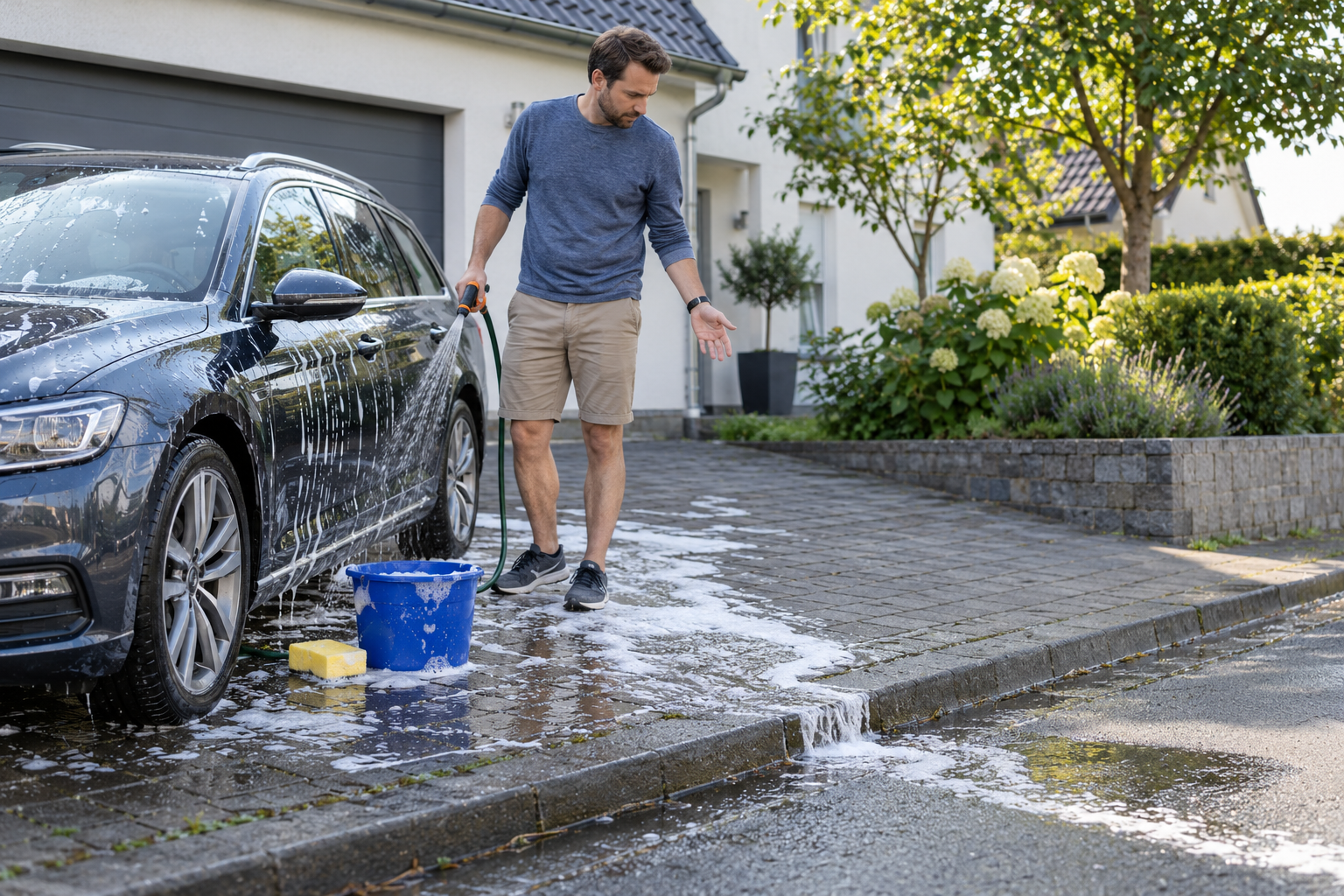
The rule is straightforward in most German municipalities: you may not wash your car on private property or public streets at home. That includes your own driveway, the strip of road in front of your house, and the parking spot outside your building. If you want your car cleaned, you are expected to take it to a proper facility.
The rule applies whether or not you use soap, in the stricter municipalities, and whether or not the surface is your own. It is not a matter of trespass or permission; it is a matter of what happens to the water. That is a distinction that takes most newcomers a while to absorb, because it reframes car washing as an environmental act rather than a private one.
For Americans, this is genuinely startling, because home car washing is so deeply normal that it never occurs to anyone it could be illegal. The idea that a police officer or a neighbor could object to you hosing down your own vehicle on your own property feels like an overreach of the state into private life.
But in Germany the logic runs the other way. The question is not whether the driveway is yours, but where the dirty water goes once it leaves your sponge. And the answer to that question is what the whole rule turns on. Your property rights end, in the German view, where your soapy water starts flowing toward everyone else’s water supply.
This is a genuinely different starting assumption, and it is worth sitting with. In the American frame, the driveway is yours and what you do on it is your business. In the German frame, the groundwater beneath the driveway is everyone’s, and anything that threatens it is therefore a public concern, no matter whose land it starts on. The two views lead to opposite conclusions about the same bucket of suds.
It Is All About the Water
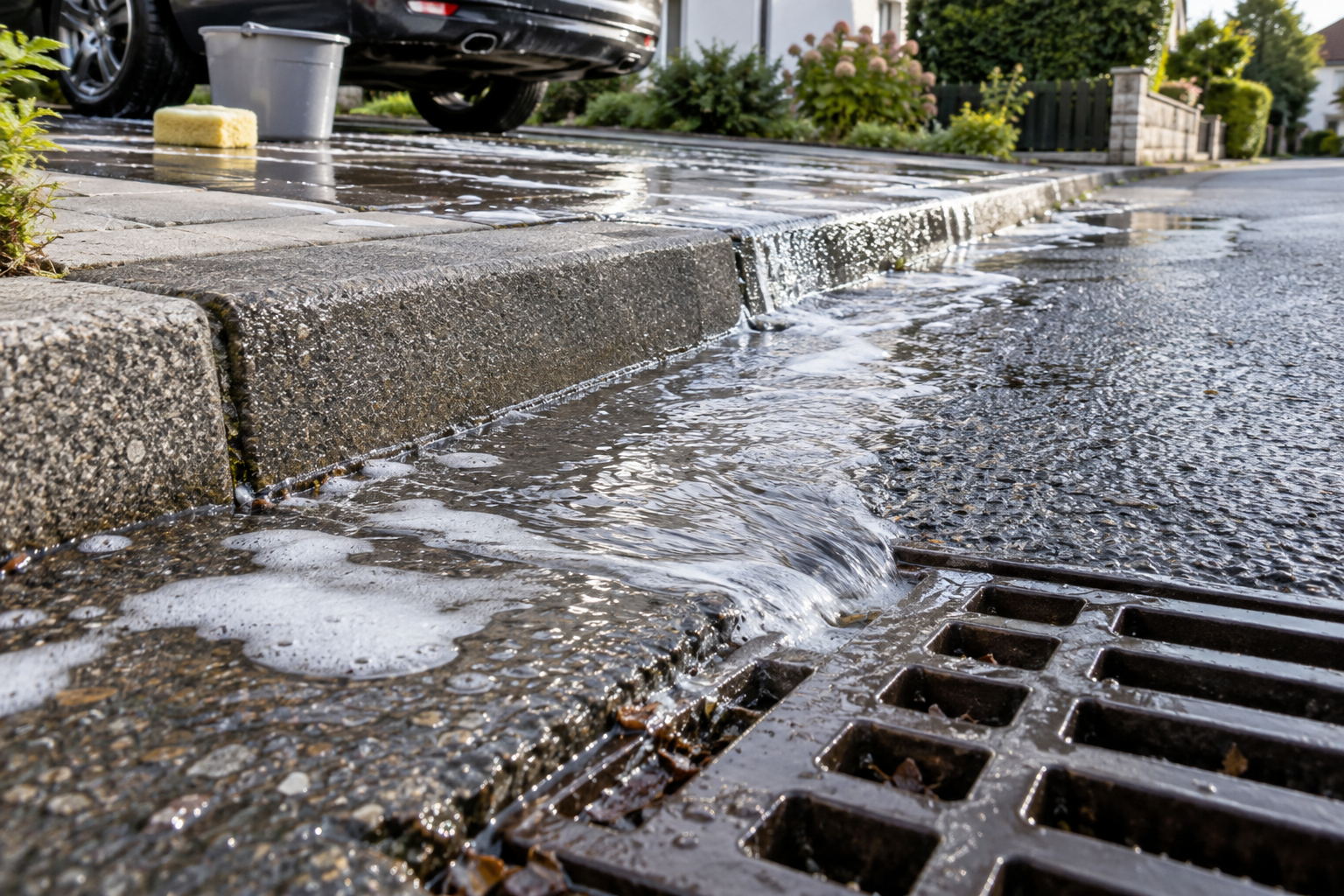
The reason behind the ban is environmental, and specifically it is about protecting water. When you wash a car, the runoff is not just water. It carries soap and detergent, yes, but also the oil, grease, brake dust, heavy metals, and road grime that coat a vehicle, all of it sluicing off onto the ground.
On a driveway or a street, that contaminated water does one of two things, and neither is good. It either soaks into the soil and makes its way down into the groundwater, or it runs into the storm drains, which in many places empty directly into rivers and streams without being treated first. Either way, the pollutants from your car end up in the water supply or the natural environment, untreated.
Germany takes the protection of its groundwater extremely seriously, and the rule is underpinned by national water-protection law, the Federal Water Act. From that legal and cultural starting point, letting individuals rinse engine grime and detergent into the ground all over the country is simply not acceptable. The humble driveway car wash, multiplied across millions of households, becomes a meaningful source of water pollution, and Germany has decided that the convenience is not worth the cost.
It is the scale that makes the difference. One person rinsing one car does little harm, which is exactly why the activity feels so innocent. But rules are written for the aggregate, and a nation of weekend driveway washers would send a steady stream of oil and detergent into the water table year after year. Germany’s answer is to stop the practice before it adds up, rather than to clean up the consequences afterward.
The Car Wash Does It Right
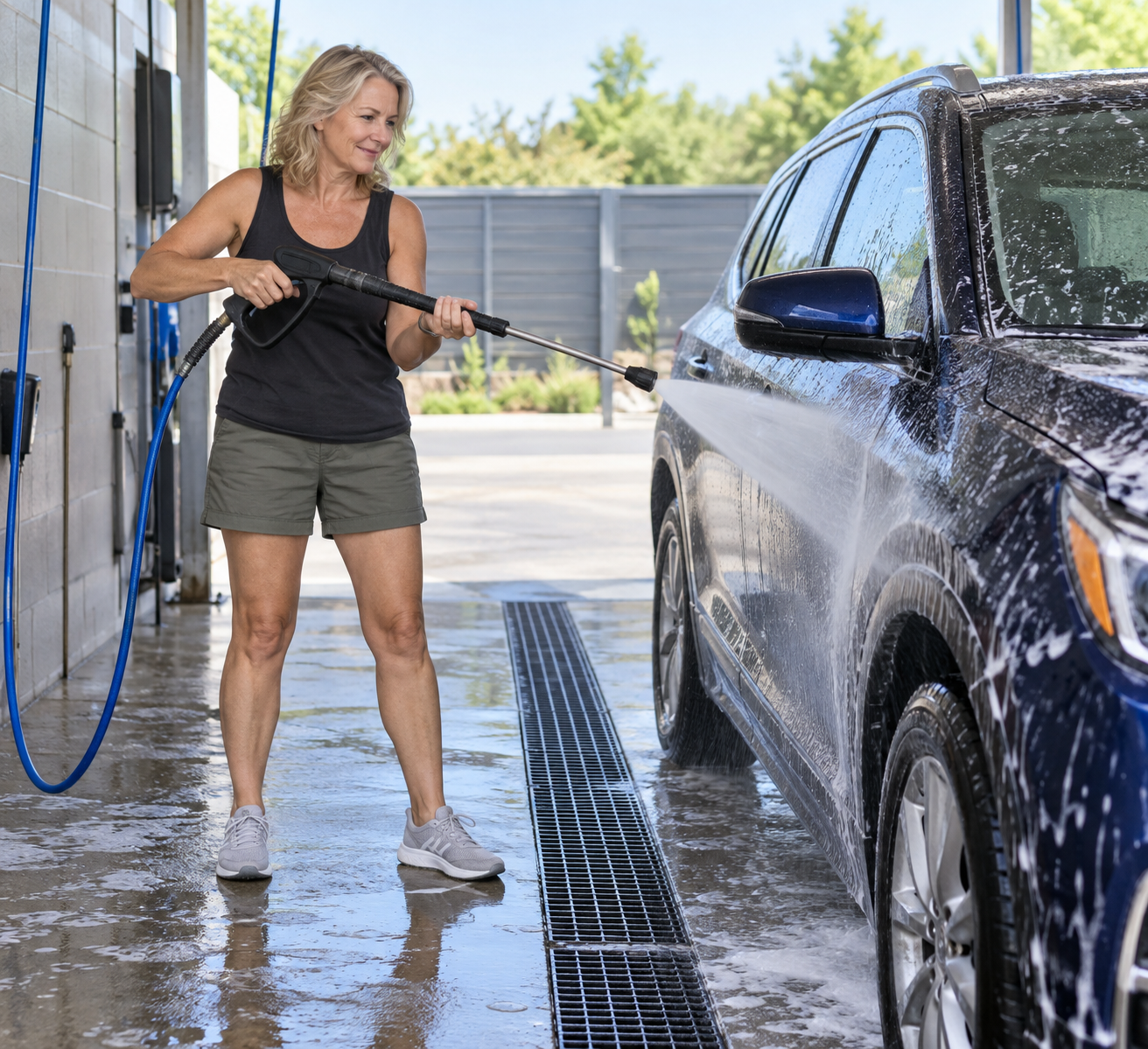
The alternative Germany provides is the commercial car wash, and the difference is not just convenience but infrastructure. A proper car wash facility, a Waschanlage, is built to handle exactly the problem that home washing creates.
These facilities are equipped with oil separators, filters, and water-treatment or recycling systems that capture the contaminated runoff rather than letting it escape. The oil and grime are separated out and disposed of properly, the water is cleaned and often reused, and nothing dirty is allowed to flow off into the groundwater or the rivers. Many German car washes recycle a large share of their water, so the professional option is often far gentler on the environment overall than a single home wash would be, not just better contained. The pollution is contained and dealt with at the source.
So the rule is not really a ban on washing your car; it is a requirement to wash it somewhere the dirty water can be managed. Germany has, in effect, funneled all car washing into controlled facilities designed to protect the environment, and made the uncontrolled home version the exception rather than the norm. It is a very German solution: not prohibiting the activity, but insisting it be done properly, in the right place, with the right equipment.
And the facilities are everywhere, which makes the rule painless in practice. Germany is dotted with car washes of every kind, from the drive-through tunnels to the self-service bays where you can wash the car yourself with brushes and hoses over proper drainage. The self-service option is the closest thing to the old driveway ritual, letting you do the work with your own hands, just in a place built to catch the dirty water. The pleasure of washing your own car need not be lost; it simply moves to the right address.
It Varies by Place
Here is where honesty and nuance are needed, because the rule is not uniform across the whole country. Germany is a federal nation, and the details of this regulation are set at the municipal and state level, which means they vary quite a bit depending on exactly where you are.
In many municipalities, home car washing is banned outright, in any form. In others, the rules are more permissive, allowing you to wash with plain water and no detergent, or permitting washing only on certain surfaces, such as those connected to the sewage system rather than those where the runoff would soak into the ground. Some places distinguish between a quick rinse and a full soapy scrub. The upshot is that whether, and how, you can wash your car at home genuinely depends on your local rules.
This patchwork is very German in its own way, too, reflecting a federal system where towns and states set their own detailed rules within a national framework. It also means that a practice that is perfectly legal in one town can draw a fine a few kilometers away, so local knowledge genuinely matters.
The fines vary too, and the figures you see quoted range widely. For a minor infraction in a lenient area, you might face a modest penalty of a few dozen euros, or just a warning. For serious water-pollution violations, though, the legal maximums are far higher, running into hundreds or even thousands of euros. The practical lesson is simply to check your own municipality’s rules rather than assume, because the one thing you cannot safely do is take for granted that the American approach applies.
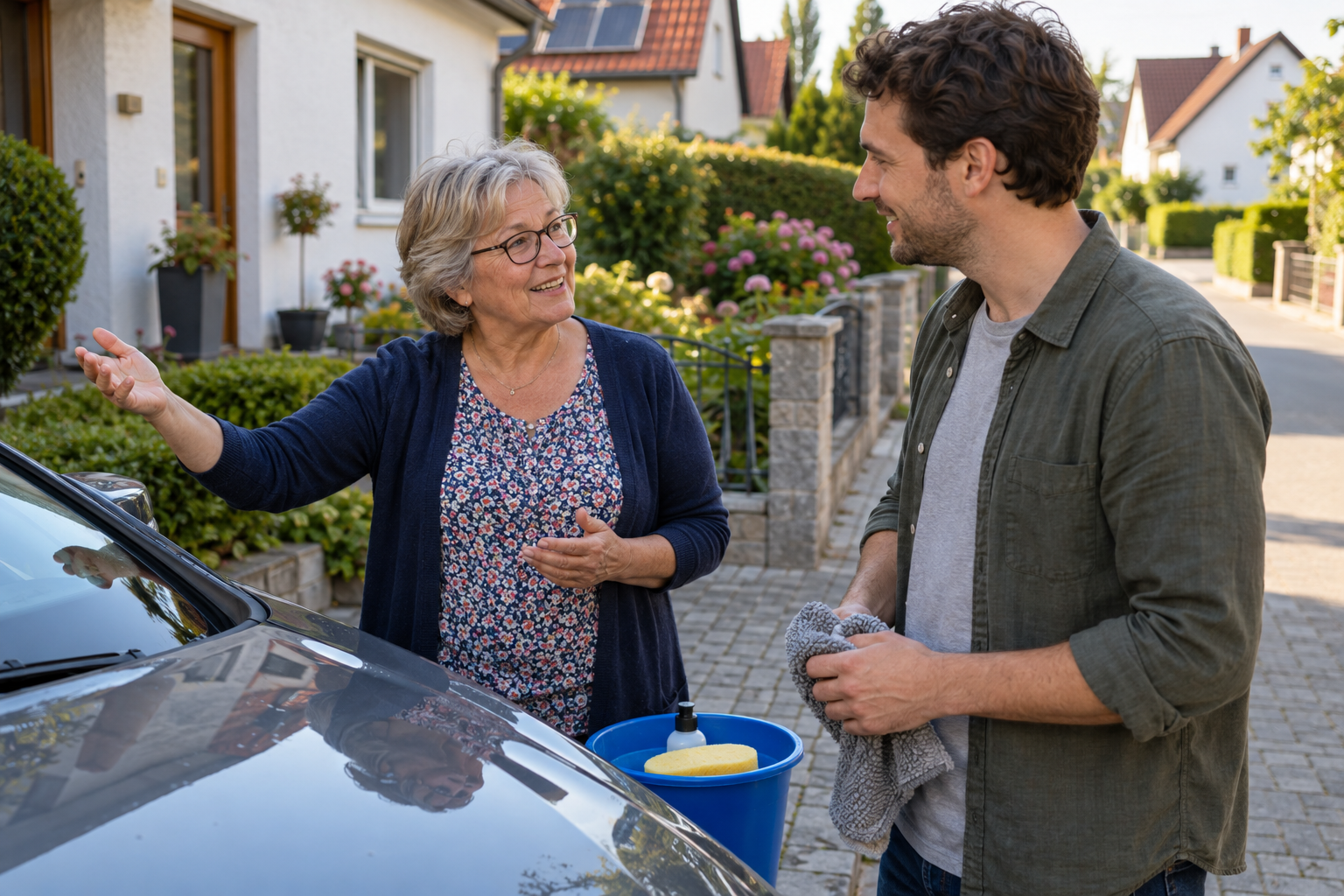
Neighbors are part of the enforcement, too, which surprises people. In a culture that takes its rules seriously, a neighbor who sees you sudsing up your car in the driveway may well say something, or report it, not out of spite but out of a genuine sense that the rule matters. For an American used to minding one’s own business, this communal policing can feel intrusive, but it is woven into how the system works, and it is a large part of why the rules are actually followed.
Why German Streets Look Like That
Step back from the specific rule and you can see it as one small expression of something much larger about Germany, the thing that visitors often sense without being able to name it. German public spaces have a particular quality of order, cleanliness, and care, and the car wash rule is a tiny thread in that larger fabric.
It belongs to the same cultural instinct that produces Germany’s famous recycling systems, its bottle-and-can deposit scheme, its protected Sunday quiet days when loud work is forbidden, and its generally tidy, well-kept neighborhoods. Running through all of it is a deep, widely shared commitment to protecting shared resources and respecting the collective environment, even at some cost to individual convenience. You do not rinse your car into the common groundwater for the same reason you do not run a leaf blower at eight on a Sunday morning: because the shared thing matters more than the private preference.
This is why German streets so often look the way they do: clean, calm, and curiously free of the small messes and noises that other countries tolerate. No soapy water trickles down the gutters on a Saturday, no detergent foam collects at the curb, because that activity has been quietly designed out of the landscape. The absence is invisible until you know to look for it, and then you cannot unsee it. The orderly look is not an accident of national character alone; it is the visible result of thousands of small rules like this one, each trading a little personal freedom for a little collective good.
Living With the Rule

For anyone actually living in Germany, or spending serious time there, the rule is easy enough to live with once you understand it. You use the car wash, which is plentiful and cheap, you learn your local regulations, and you stop thinking of the driveway scrub as an option. It quickly becomes just another unremarkable part of how things are done. Expats who grumble about it at first usually stop noticing within a year, their weekend simply rearranged around a trip to the Waschanlage instead of the hose.
The deeper adjustment is a philosophical one, and it is worth naming because it comes up again and again for Americans in Germany. What can look at first like fussy, freedom-crushing over-regulation is, more often, a community making a deliberate choice to prioritize a shared good, in this case clean water, over an individual convenience. It reflects a different balance between personal liberty and collective responsibility than the one many Americans grow up with, and neither balance is simply right or wrong; they are different answers to the question of how people should live together.
Seen that way, the car wash rule stops being an absurd piece of bureaucracy and becomes something more interesting: a small, concrete lesson in how a whole society thinks.
Germans, by and large, accept a dense web of rules like this because they trust that the rules protect things everyone benefits from, and they generally get clean rivers, tidy streets, and orderly neighborhoods in return. You can disagree with the trade, but it is a coherent and considered one. The next time you see a spotless German street with not a drop of soapy water in the gutter, you will know exactly why.

About the Author: Ruben, co-founder of Gamintraveler.com since 2014, is a seasoned traveler from Spain who has explored over 100 countries since 2009. Known for his extensive travel adventures across South America, Europe, the US, Australia, New Zealand, Asia, and Africa, Ruben combines his passion for adventurous yet sustainable living with his love for cycling, highlighted by his remarkable 5-month bicycle journey from Spain to Norway. He currently resides in Spain, where he continues sharing his travel experiences with his partner, Rachel, and their son, Han.