
If you are American, you almost certainly know zuppa toscana as one thing: the rich, creamy soup studded with Italian sausage, bacon, and sliced potatoes, flecked with kale, that you order at Olive Garden. It is warm and comforting and genuinely delicious, and there is nothing wrong with loving it.
But here is the plot twist that surprises nearly everyone: that soup is not Tuscan, and it is barely Italian. The real zuppa toscana, the soup actually eaten in Tuscany, has no cream in it at all, and in its classic form no sausage either. It is a humble, centuries-old peasant soup of beans, dark cabbage, and stale bread, and it bears almost no resemblance to the creamy bowl Americans think of. Here is what zuppa toscana actually is in Tuscany, how the famous American version came to carry the name, why there is no cream in sight, the thrifty soul of the real dish, and how to make the genuine article. Once you taste the original, the whole story makes delicious sense.
What follows is what Americans think it is, what Tuscans actually eat, why there is no cream, the no-waste soul of the real dish, and how to make it yourself.
What Americans Think It Is
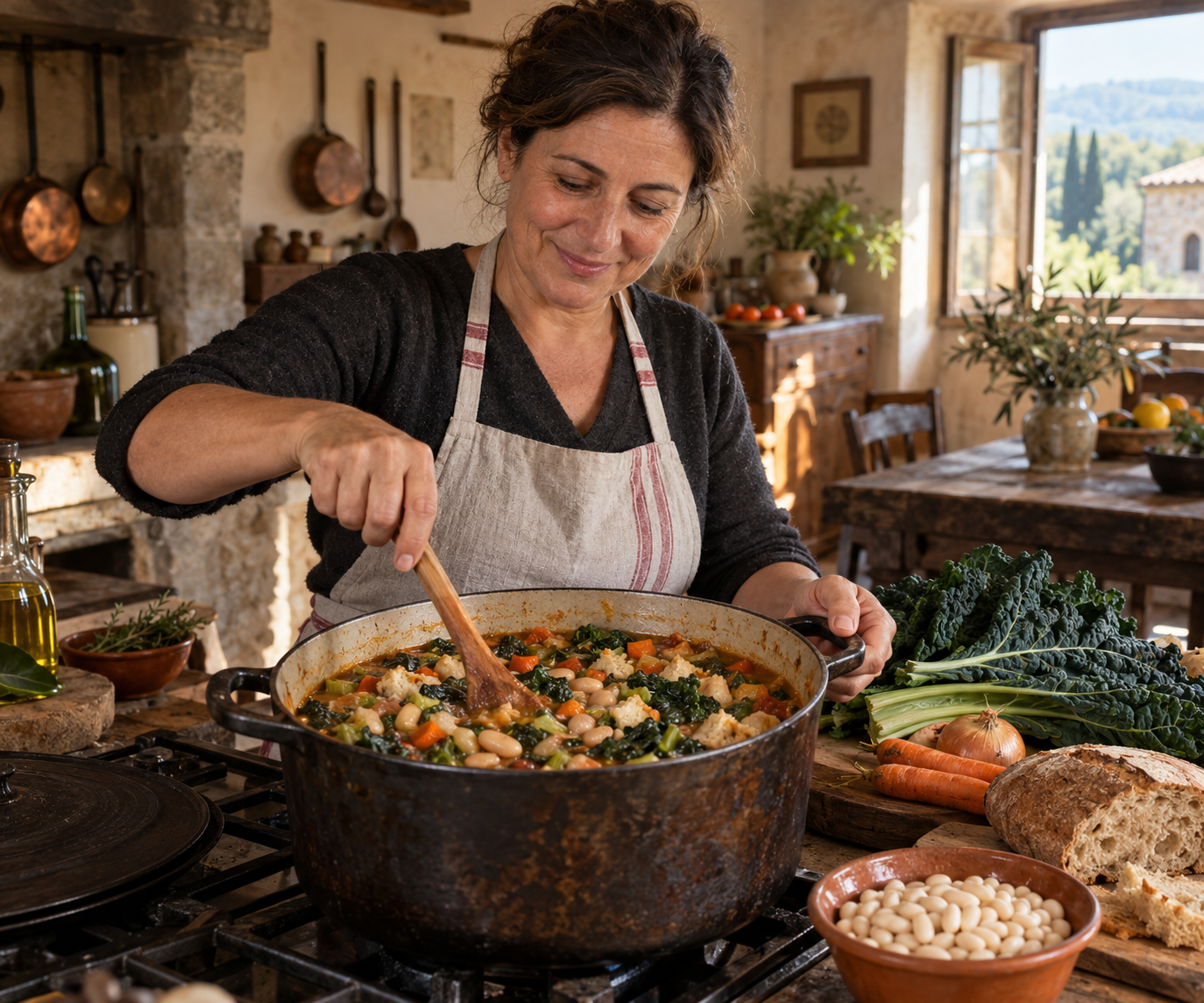
Let us be fair to the American version first, because it is a perfectly good soup in its own right. The zuppa toscana that Americans know and love, popularized nationally by Olive Garden starting in the 1990s, is a creamy concoction built on Italian sausage, crumbled and browned, with sliced potatoes, kale, onion, garlic, and crispy bacon, all simmered in chicken broth and finished with a generous pour of heavy cream. It is hearty, rich, and deeply satisfying, the kind of indulgent, cream-laced bowl that is genuinely wonderful on a cold night, and it has become so beloved and so ubiquitous that for most Americans it simply is zuppa toscana, full stop, the only version they have ever met or imagined. That is exactly how a name gets quietly rewritten. There is no other version in their minds.
The trouble is only that the name promises something it does not deliver. Zuppa toscana translates literally to Tuscan soup, and the dish presents itself as a taste of Tuscany, which naturally leads people to believe they are eating an authentic Italian regional specialty. They are not. What they are eating is a delicious American invention that borrowed a Tuscan name and built an entirely different soup around it, one tailored to American tastes with cream, sausage, and bacon, none of which belong in the traditional dish. It is a bit like calling a loaded, bacon-and-cheese-topped baked potato an authentic French dish simply because you gave it a French name on the menu. The name does a lot of work that the recipe does not back up.
The American zuppa toscana deserves to be enjoyed for exactly what it is: a tasty Italian-American creation. It just should not be mistaken for the real thing, because the real thing is something else entirely.
How the Mix-Up Happened
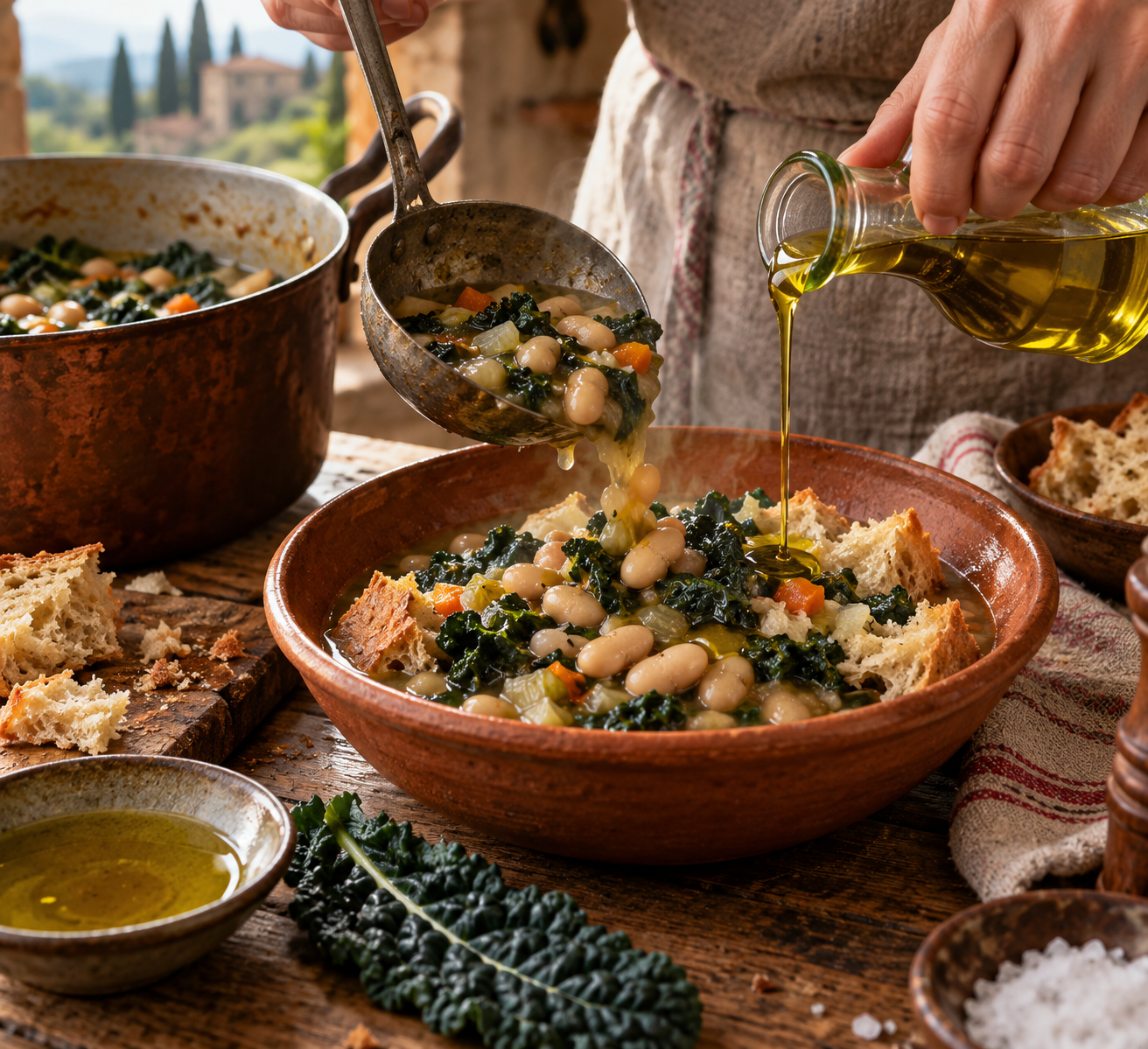
It is worth understanding how an American soup came to carry a Tuscan name and convince a whole country it was authentic, because it is a tidy little lesson in how food travels and mutates. The story runs through Olive Garden, which put its creamy sausage-and-potato soup on the national menu in the 1990s and called it zuppa toscana, Tuscan soup. The chain was enormously popular, the soup became a signature, and over the following decades it spread outward through copycat recipes, food blogs, and home kitchens until the creamy version was simply what the name meant to tens of millions of Americans. A restaurant soup quietly rewrote the meaning of a word for an entire country, which is a strangely powerful thing for a bowl of soup to do. Language bends to lunch more often than we notice.
This is not a story of deliberate deception so much as of how a catchy name attached to a crowd-pleasing recipe can overwrite a centuries-old original in the public mind, at least in one country. Olive Garden did not invent the idea of a Tuscan soup with greens and beans; it took the general notion of hearty Italian country cooking and built something rich and American around a borrowed label. The result is that an entire nation grew up believing the creamy bowl was traditional, while the actual traditional dish, the humble bread soup eaten in Tuscany for centuries, remained almost completely unknown across the ocean.
None of this makes the American soup bad or unworthy, and plenty of Italians abroad have cheerfully adopted bits of it too, because a good soup is a good soup wherever it comes from. The only real error is confusing the two and assuming the creamy bowl is what Nonna in Tuscany is stirring on a cold evening, because she is not; she is stirring beans and black kale and yesterday’s bread. It just means that if you want to taste what Tuscany actually eats, you have to set the famous version gently aside and start over.
What Tuscans Actually Eat
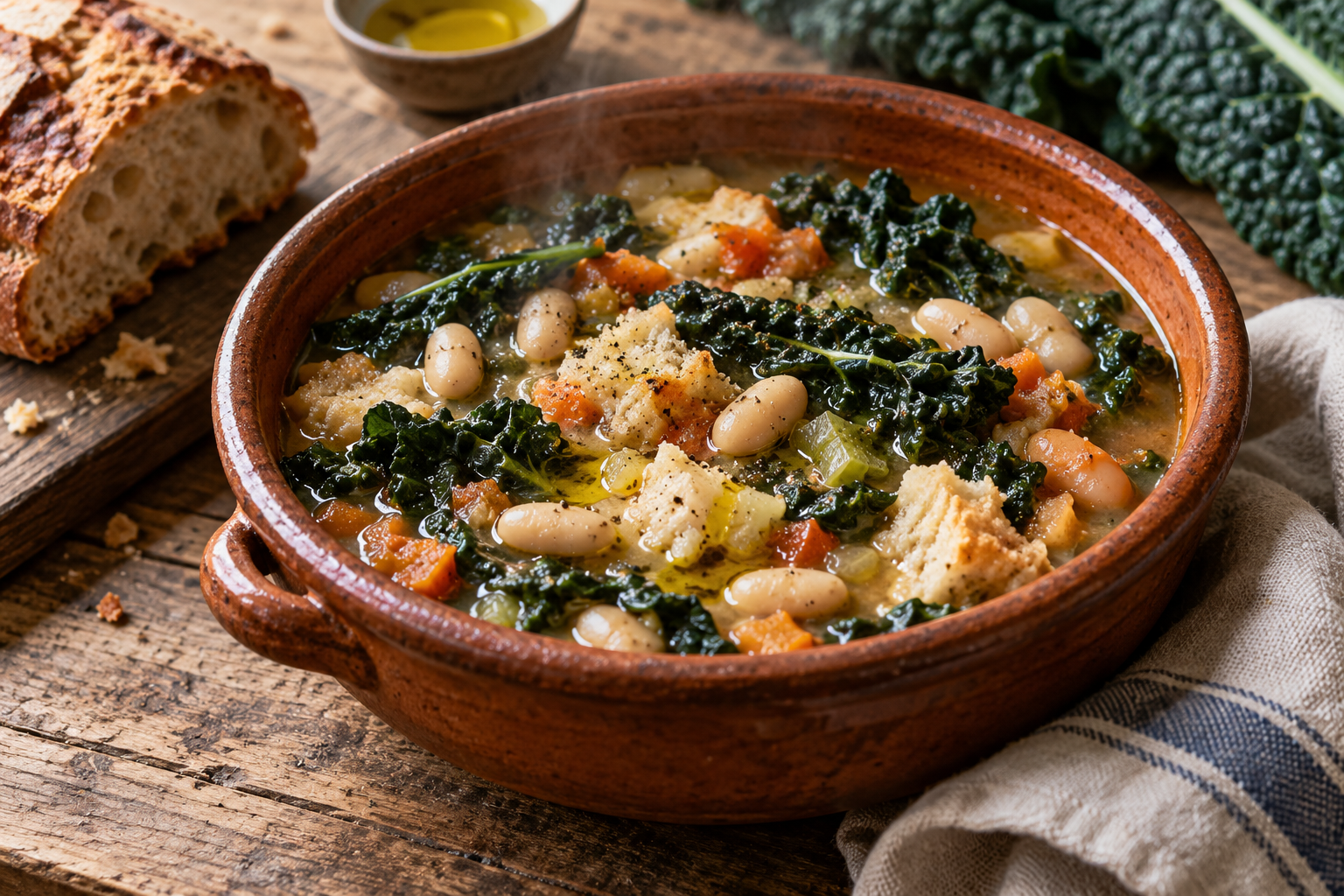
So what is zuppa toscana in Tuscany itself? The real dish, known in Italy as minestra di pane (bread soup) or, reboiled, as ribollita, is a rustic, humble vegetable soup built on three essential ingredients: cannellini beans, cavolo nero, and stale bread. Cavolo nero is Tuscan black kale, the dark, crinkly, deeply flavored cabbage that is genuinely native to the region and is the authentic green of the dish, cooked long and slow until tender rather than the quick-wilted kale of the American bowl.
The beans and the bread give the soup its real body and heartiness, filling and sticking-to-the-ribs without a scrap of meat, and a base of slowly cooked vegetables, a soffritto of onion, carrot, and celery sweated gently in olive oil, gives it the savory depth that makes even a soup this humble taste like it was cooked for hours by someone who cared. That patient base is where a great deal of the flavor quietly lives.
There is not a drop of cream in it, and in the classic bread-soup and ribollita tradition, no sausage either. What makes it rich and satisfying is not dairy or meat but technique: some of the beans are mashed and stirred back in, thickening the broth into something creamy-textured entirely without cream, and the stale bread melts into the soup to make it thick and filling. It is finished, as so much Tuscan food is, not with cream but with a generous drizzle of excellent extra virgin olive oil at the table, which carries the flavor and the richness.
The result is a hearty, deeply flavorful, warming soup that is utterly different from the Olive Garden version in every respect, somehow both lighter and more satisfying at once, and profoundly, unmistakably Tuscan in a way the creamy bowl could never be. It tastes of the land and of thrift and of good olive oil, which is to say it tastes like Tuscany itself.
Why There Is No Cream in Sight
The absence of cream is not an accident; it goes to the very heart of what Tuscan cooking is. Historically, Tuscany was not a dairy region, and cream was scarce, so the cuisine simply did not develop around it the way the cooking of, say, northern France or Emilia did. Instead, Tuscan food is built on an entirely different and famously frugal foundation, one that has become quietly admired the world over: beans, greens, bread, and superb olive oil. Those four humble things, handled with care, are the whole engine of Tuscan cooking, and they are precisely what the real zuppa toscana runs on. Tuscans are affectionately nicknamed mangiafagioli, the bean-eaters, a label they wear with pride, and that tells you everything about where the richness in their food comes from. It comes from legumes and oil and clever technique, not from butter and cream.
This is why the creamy American zuppa toscana would strike a Tuscan cook as almost comically wrong, a misunderstanding of the entire philosophy of the cuisine.
In honesty, there is a genuine rustic Tuscan soup that does include sausage, a hearty farmhouse bowl of cannellini beans, cavolo nero, and local salsiccia made when the autumn pig and the first-frost cabbage come together, but even that soup contains no cream whatsoever, drawing its body from crushed beans just like its meatless cousin. So the sausage is at least genuinely Tuscan-adjacent in that one rustic farmhouse version, which is why the title’s claim is really about the classic bread-soup tradition, but the cream is never Tuscan in any version at all.
On that point every Tuscan cook agrees without hesitation: cream has no business in the pot. Cream is the purely American addition, the ingredient that most clearly marks the Olive Garden bowl as a dish from somewhere other than Tuscany. Strip away the cream, lean instead on the beans and the olive oil and the slow-cooked cavolo nero, and you start moving steadily back toward the real thing, the soup that Tuscan families have actually been eating for generations. The journey from the Olive Garden bowl to the authentic one is mostly a matter of what you leave out.
The No-Waste Soul of the Real Dish
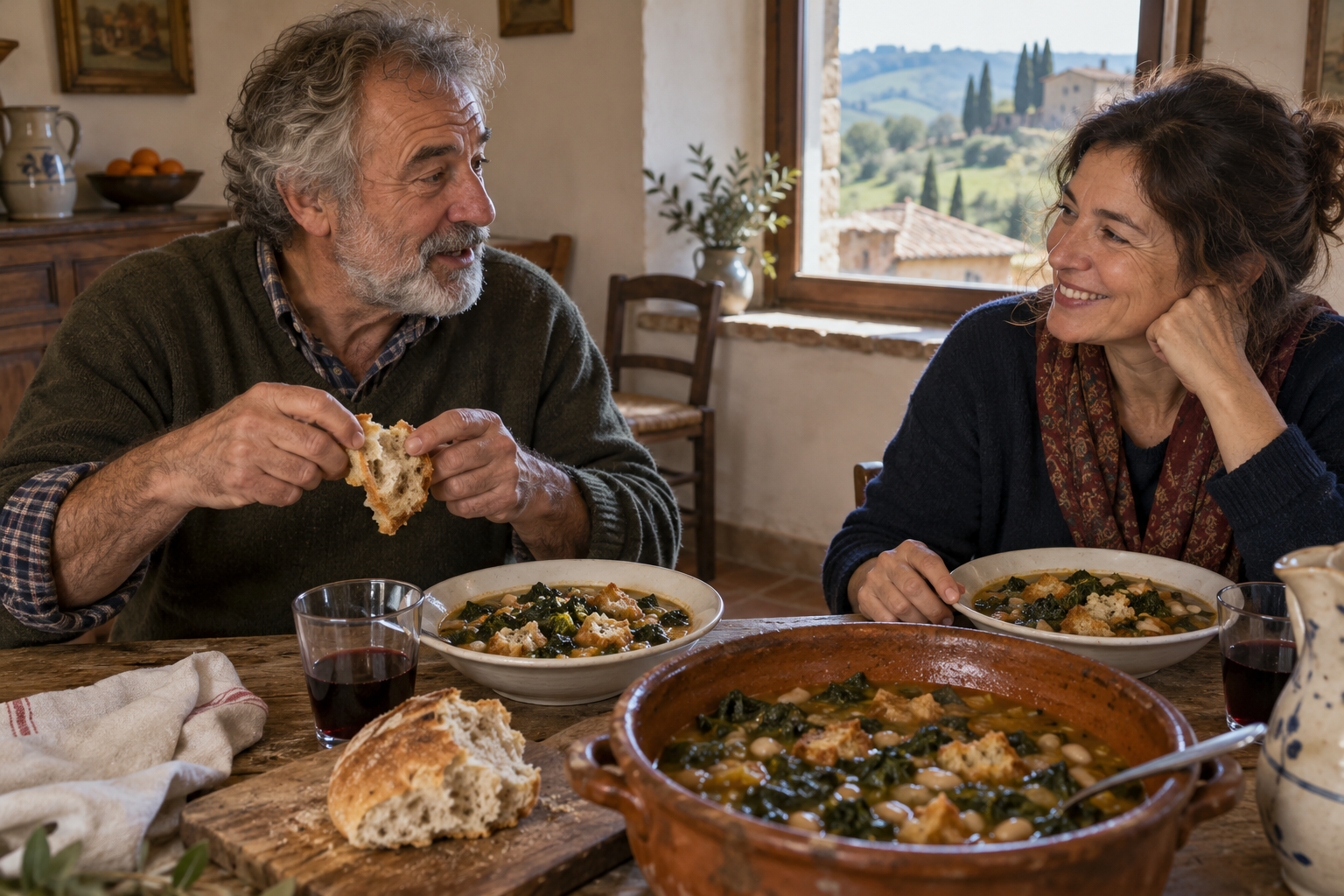
There is one more thing that defines authentic zuppa toscana and connects it to the deepest traditions of Italian cooking: it was born entirely of thrift and the refusal to waste anything, especially bread. The soup’s very name and origin come from stale bread. According to the older generation in Tuscany, minestra di pane was created as a way to use up leftover hard bread that it would have been a sin to throw away, so instead of discarding it, people softened it into a soup. The dish is poverty cooking at its most ingenious, turning a dry, inedible heel of yesterday’s bread into the thickening heart of a nourishing meal.
The reboiled version, ribollita, takes the thrift even further, because the word ribollita literally means reboiled. Traditionally, you make a big pot of the bread-and-bean soup one day, and then the next day you reheat the leftovers, often adding more bread, and in that second cooking the soup thickens into something even denser and more delicious, a dish born purely from the determination not to waste the previous day’s leftovers.
This is cucina povera, the cooking of the poor, at its finest, and it is also, by happy accident, a textbook example of the healthy Mediterranean diet, built on beans, vegetables, olive oil, and whole grain bread. The real zuppa toscana was quietly practicing thrift, sustainability, and healthy eating centuries before any of those words became fashionable dinner-party talk, which makes the humble Tuscan original not just more authentic than its rich American cousin, but arguably a good deal wiser and healthier too. The peasants who invented it out of necessity accidentally built one of the better soups you can eat.
Make It: Real Tuscan Zuppa Toscana
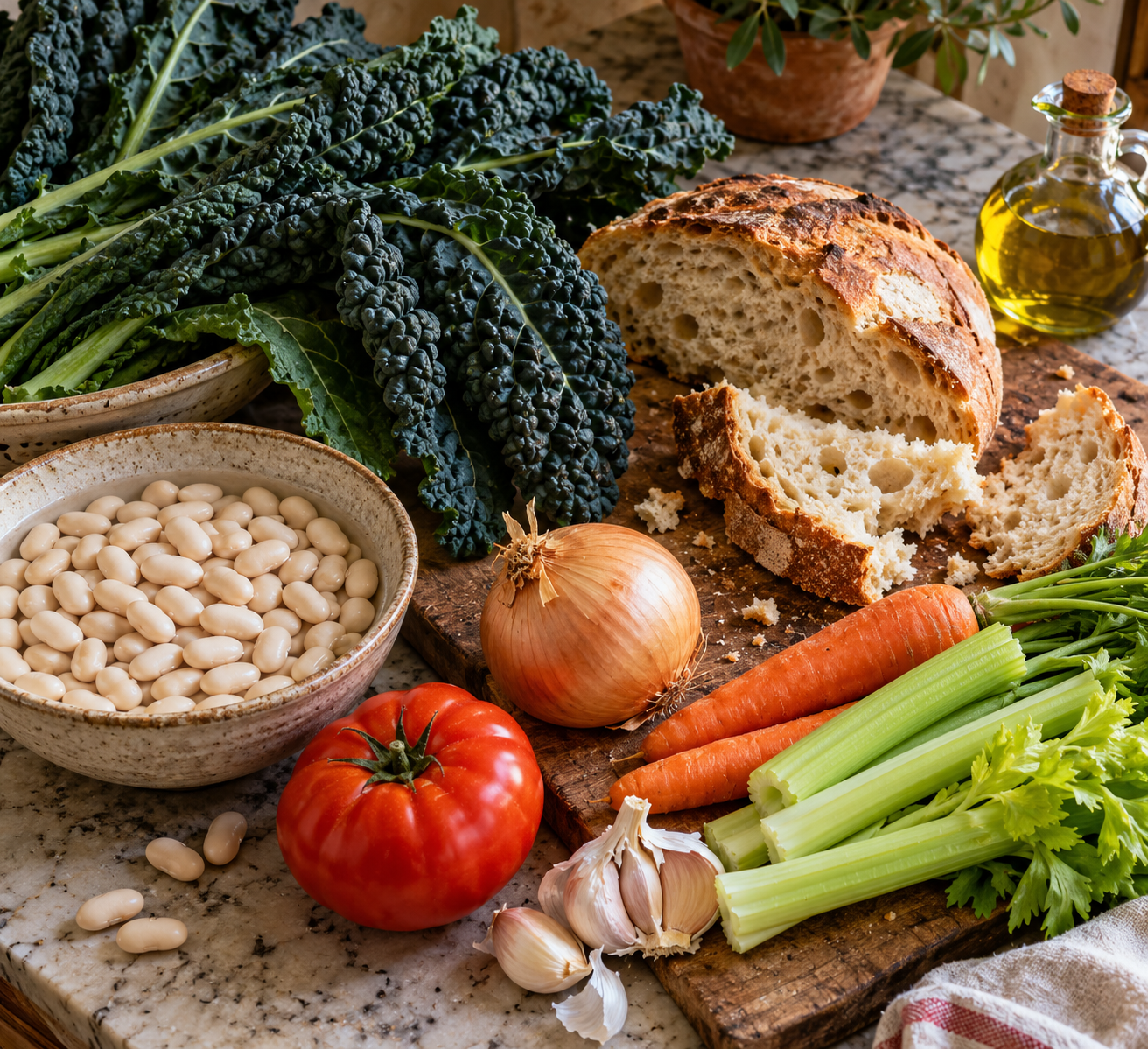
Here is a version of the authentic article, the bread-and-bean soup that is ribollita’s heart. It serves about four to six and improves the next day. No cream, no bacon, and olive oil instead.
Ingredients
- 3 tablespoons olive oil, plus plenty more to finish
- 1 onion, finely chopped
- 1 carrot, finely chopped
- 1 celery rib, finely chopped
- 3 garlic cloves, minced
- 2 tablespoons tomato paste (or a few chopped tomatoes)
- 2 cans cannellini beans, with their liquid (or the equivalent cooked from dried)
- a large bunch cavolo nero (Tuscan kale) or other dark kale, stems removed, leaves roughly chopped
- about 5 cups vegetable broth or water
- a few thick slices of stale, rustic, preferably saltless bread
- salt and plenty of black pepper
- a parmesan rind, if you have one
Instructions
- Warm the olive oil in a heavy pot over medium-low heat and cook the onion, carrot, and celery gently for about 10 minutes until soft and sweet. Stir in the garlic and tomato paste and cook a minute or two more.
- Mash or blend about half the beans with a little of their liquid, then add both the mashed and the whole beans to the pot along with the broth or water and the parmesan rind if using.
- Add the chopped cavolo nero, bring to a gentle simmer, and cook for around 30 minutes, until the kale is meltingly tender and the soup is thick, adding a little more liquid if it gets too dense.
- Season well with salt and generous black pepper.
- To serve as the classic bread soup, tear or slice the stale bread into each bowl, or stir torn bread into the pot and let it soften for a few minutes. To make true ribollita, cool and refrigerate overnight, then reheat the next day with the bread stirred in until thick enough to stand a spoon in.
- Finish each bowl with a very generous drizzle of your best extra virgin olive oil and more black pepper, and skip the cream entirely.

About the Author: Ruben, co-founder of Gamintraveler.com since 2014, is a seasoned traveler from Spain who has explored over 100 countries since 2009. Known for his extensive travel adventures across South America, Europe, the US, Australia, New Zealand, Asia, and Africa, Ruben combines his passion for adventurous yet sustainable living with his love for cycling, highlighted by his remarkable 5-month bicycle journey from Spain to Norway. He currently resides in Spain, where he continues sharing his travel experiences with his partner, Rachel, and their son, Han.