
In a Filipino home, the first sign that someone is unwell is not a thermometer but a smell: ginger and garlic hitting hot oil, the unmistakable opening notes of arroz caldo. Before the fever is even confirmed, a mother or a lola is already at the stove, because in the Philippines this warm, savory, ginger-laced rice porridge is simply what you make for a person who is sick, or cold, or tired, or sad, and somehow it works on all of it. It is the Filipino sick-day cure, the rainy-day comfort, the thing that appears when a child is pale or a grown adult is run down, a bowl of soft rice cooked down in broth, heavy with ginger, crowned with toasted garlic and a squeeze of calamansi. The name sounds Spanish, and the dish carries a Spanish and Chinese history, but the soul of it is entirely Filipino. Here is what arroz caldo actually is, why it heals the way it does, the toppings that make it sing, when Filipinos reach for it, what it means to the people who grew up on it, and exactly how to make a pot of it yourself. It is comfort, culture, and medicine in a single golden bowl.
What follows is what arroz caldo is, why it comforts body and spirit, the toppings that matter, when Filipinos turn to it, why it means so much, and how to make it at home.
What Arroz Caldo Actually Is
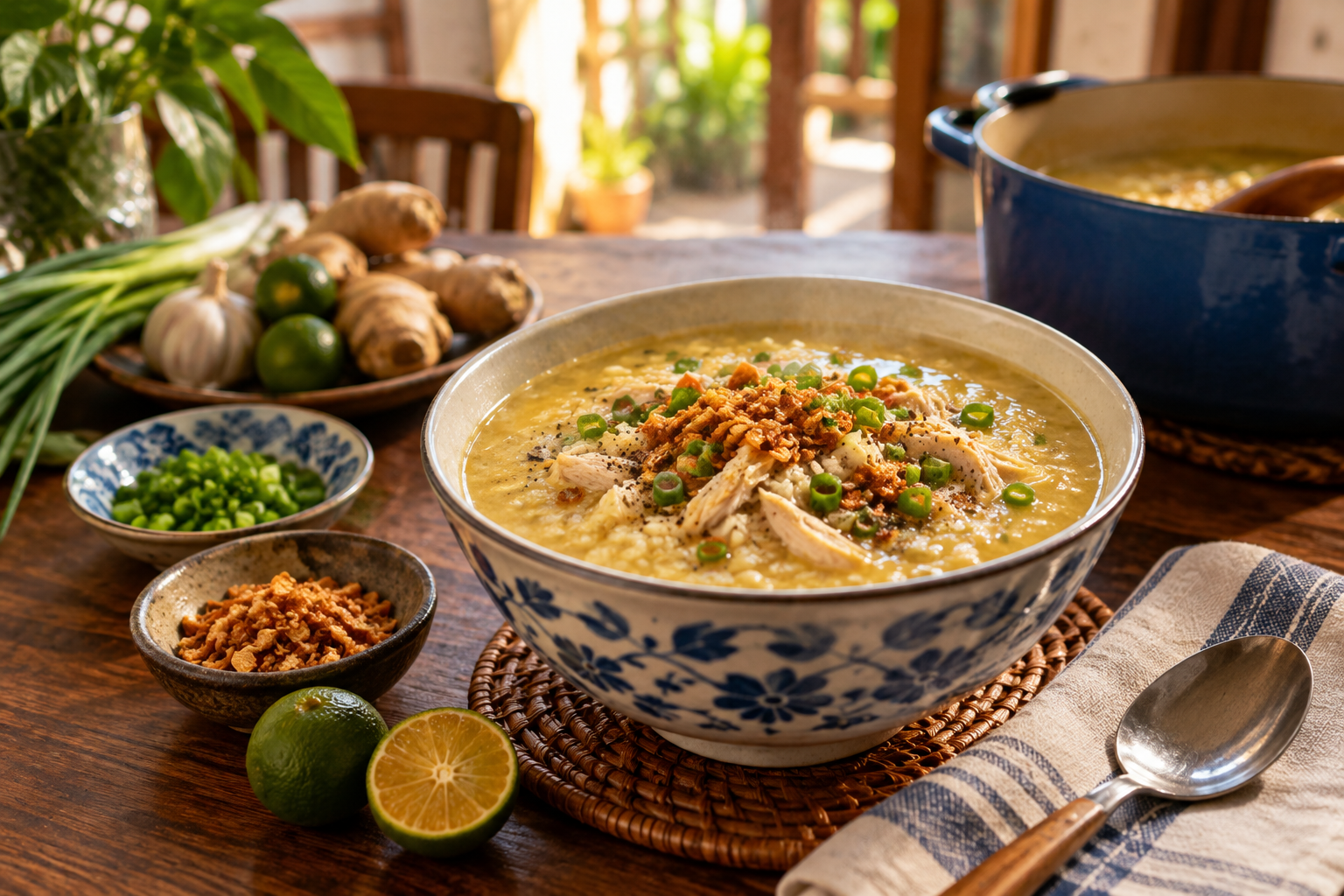
Arroz caldo belongs to the great Filipino family of rice porridges known as lugaw, rice cooked low and slow in a lot of liquid until it breaks down into something thick, soft, and soothing, somewhere between a soup and a risotto. What sets arroz caldo apart from plain lugaw is that it is savory and substantial, built on chicken and, above all, ginger. The rice is simmered in a well-seasoned broth with plenty of fresh ginger and garlic, often with pieces of chicken cooked right in it, until the grains swell and soften and the whole pot turns into a warm, fragrant, golden bowl of comfort. Some cooks tint it gently yellow with a pinch of safflower, called kasubha, or turmeric, which is why it often arrives a cheerful warm gold.
The name is a little misleading, and the history is a lovely tangle. Arroz caldo literally means rice broth in Spanish, a leftover of Spain’s long colonial presence, but the dish itself is really a Filipino adaptation of a Chinese rice congee, brought over by Chinese traders and settlers and then thoroughly made Filipino, above all by the heavy use of ginger and the fish-sauce seasoning that are not Chinese congee traditions. So in one bowl you taste the whole layered history of the Philippines, a Spanish name on a Chinese technique transformed by Filipino hands and tastes into something that belongs completely to the islands. It is humble food, cheap and simple, built from rice and chicken and aromatics, and it is beloved precisely because it is the opposite of fancy. It is the food of home.
Why It Heals Body and Spirit
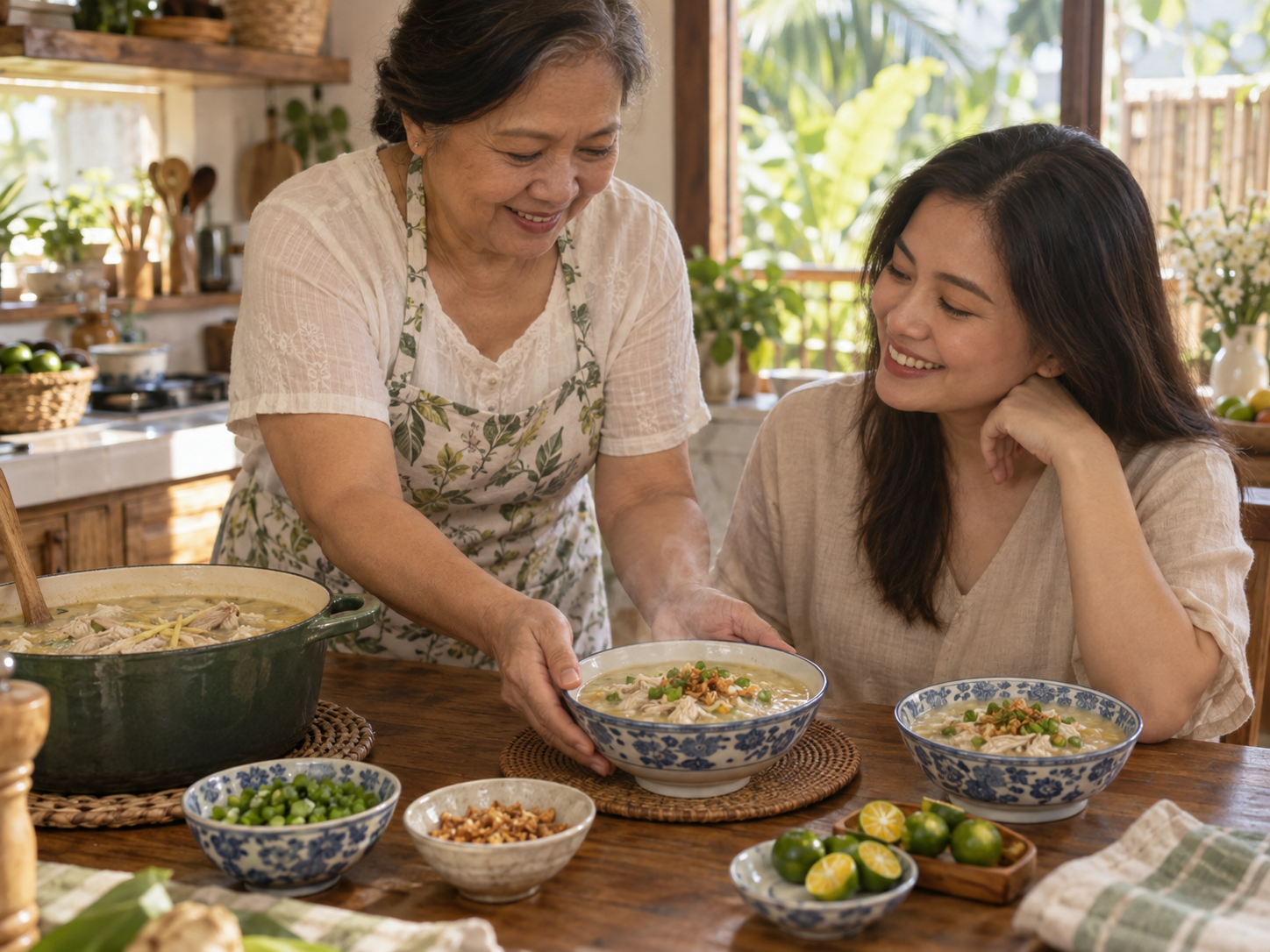
Arroz caldo earns its reputation as a cure on two fronts at once, and both are genuine. The first is the food itself, which is close to perfectly designed for an unwell body. Soft, slow-cooked rice is gentle and easy to digest, the warm broth hydrates and soothes, and the generous ginger is not just for flavor but does real work, long valued for settling an upset stomach, easing nausea, and warming you from the inside, which is exactly what you want when you are shivering with a cold or queasy with a fever. It is hot, soft, savory, and nourishing without being heavy, the ideal thing to get into a reluctant, sick stomach, which is why Filipinos reach for it the way other cultures reach for chicken soup. The ginger in particular makes it feel almost medicinal, a warmth that seems to go straight to whatever ails you.
But as with every great comfort food, the deeper cure is emotional. For a Filipino, a bowl of arroz caldo is inseparable from the memory of being cared for, of a mother or grandmother making it at the first sign of illness, of being tucked in and fed and watched over. It is one of the most powerful food-memories of a Filipino childhood, bound up with love and home and safety, so that even as an adult, far from home and long since grown, a bowl of it can dissolve a hard day instantly. The warmth you feel is not only the ginger. It is the whole weight of having been loved through every sickness of your childhood by someone who expressed that love in exactly this bowl. That is why it fixes not just colds but bad days of every kind, because what it really delivers, under the rice and the ginger, is the feeling of being taken care of.
The Toppings That Make It Sing
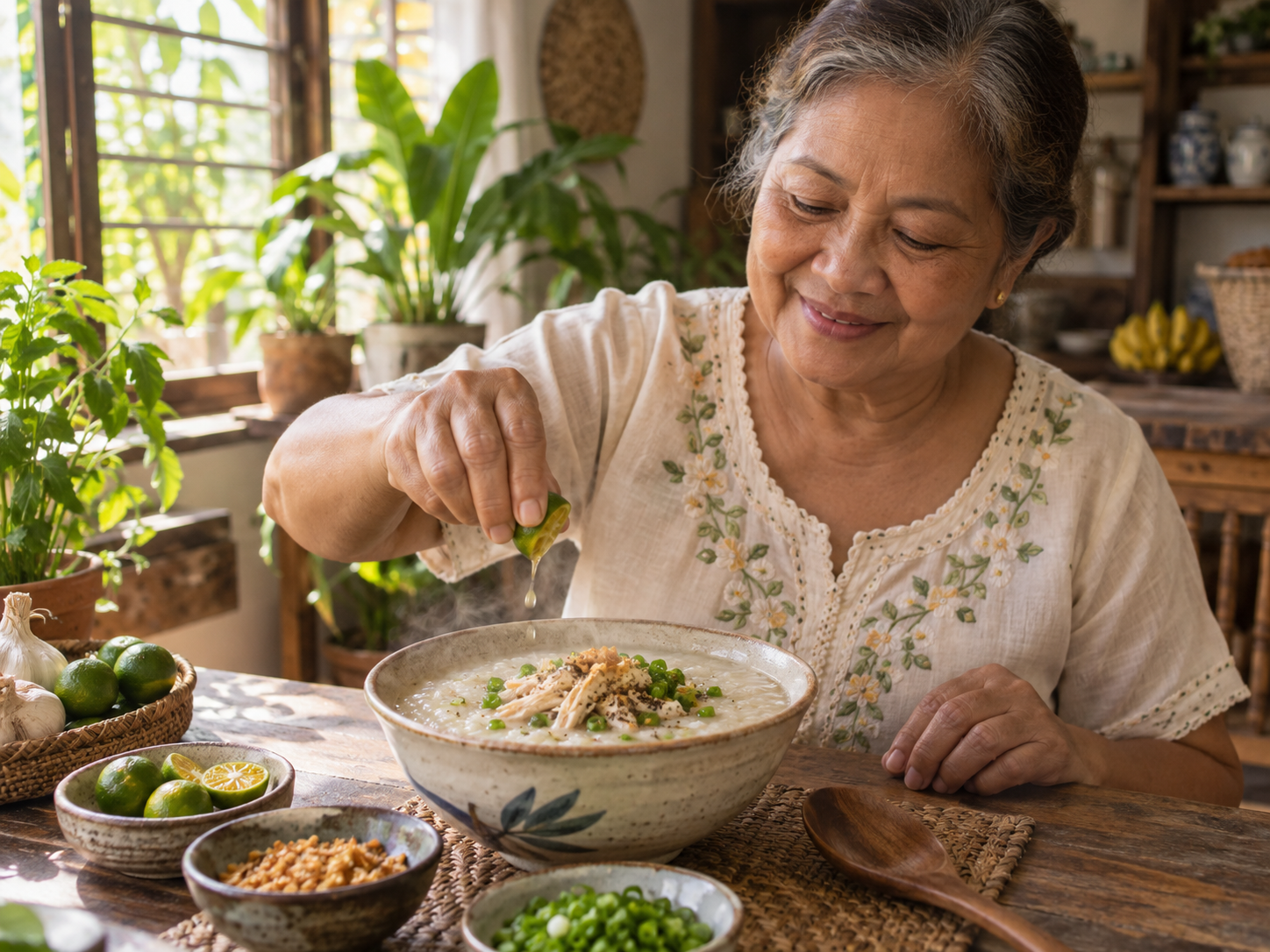
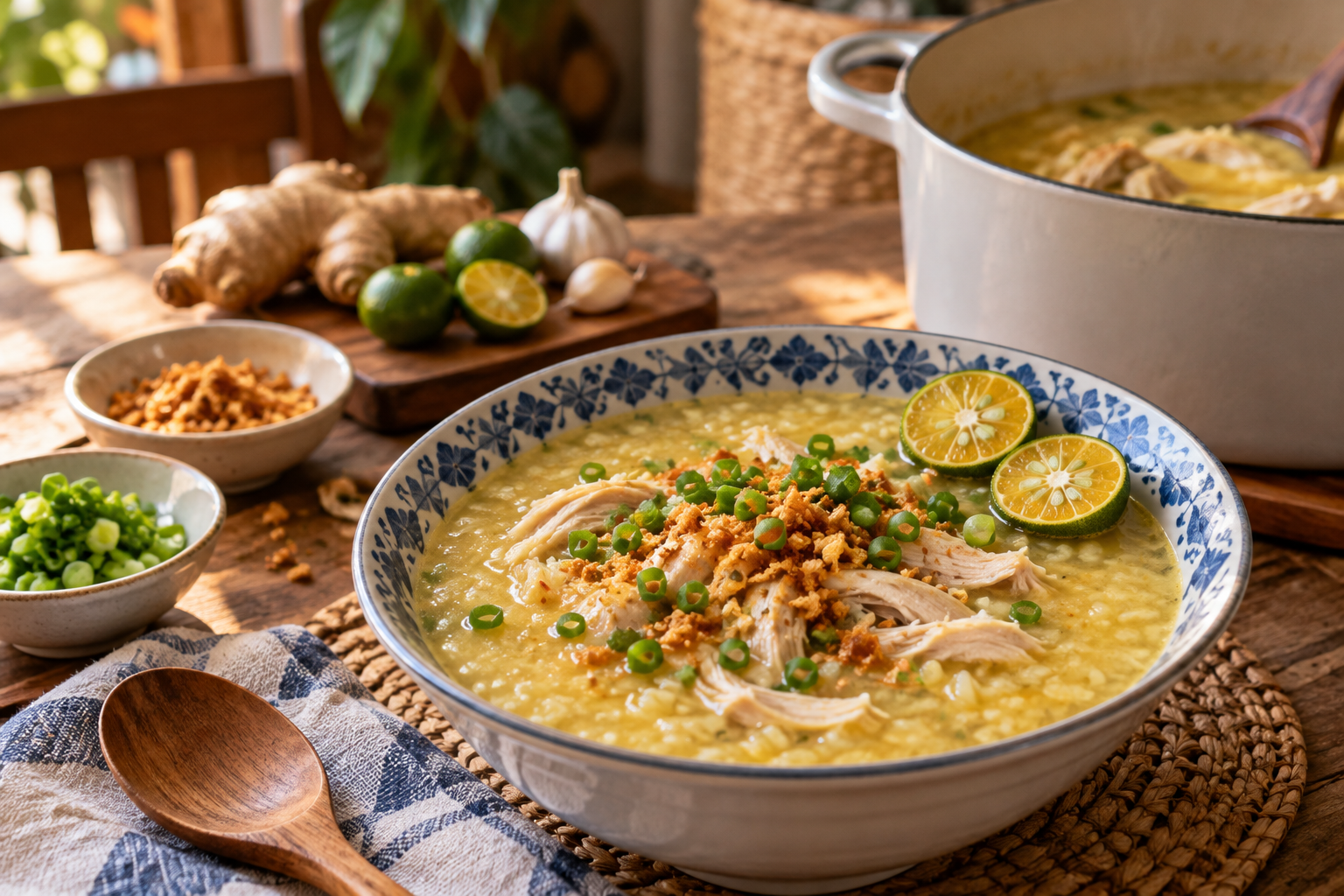
Here is a truth every Filipino knows: the pot of arroz caldo is only half the dish, and the toppings are what lift it from plain porridge to something crave-worthy. A bowl served naked is comforting but incomplete; dressed properly, it becomes genuinely delicious, and the ritual of adding the toppings is part of the pleasure. The non-negotiable crown is toasted garlic, whole cloves sliced thin and fried slowly in oil until deep golden and crisp, then scattered over the top along with the fragrant garlic oil, which adds a nutty crunch and deep savor that transforms the whole bowl.
From there, the classic additions pile on. A generous shower of sliced spring onions or scallions adds freshness and color. A wedge or two of calamansi, the small fragrant Filipino citrus, is squeezed over at the table, and its bright sourness cutting through the rich savory rice is, for many, the single most important touch of all, the thing that wakes the whole bowl up.
A hard-boiled egg, halved and laid on top, adds richness and makes it more of a meal. A good crack of black pepper, a drizzle of fish sauce, called patis, for those who want it saltier and funkier, and sometimes a sprinkle of crispy fried pork or chicharron for the indulgent. The genius of it is that each eater dresses their own bowl to taste, more calamansi for brightness, more garlic for depth, more patis for salt, so the dish is both deeply traditional and personal to the moment. Serve arroz caldo plain, without its toppings, and a Filipino will look at you with gentle pity, the way you might look at someone eating a burger with no bun; serve it properly crowned with garlic, scallion, calamansi, and egg, and you have made the real thing, the version worth being sick for.
When Filipinos Reach for It
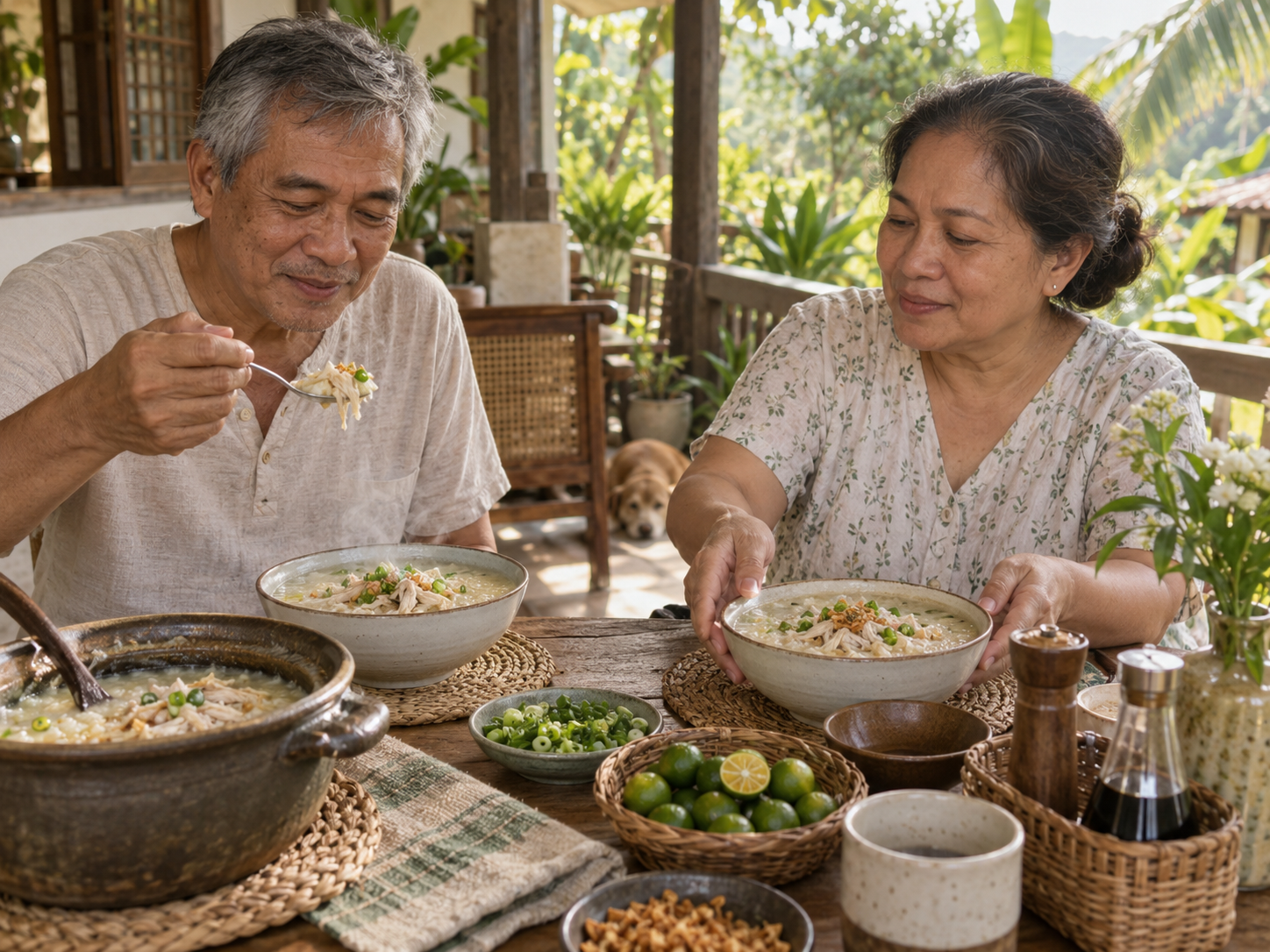
Arroz caldo has its seasons and its occasions, and they tell you what the dish is for. The first and most sacred is sickness. When a Filipino, child or adult, comes down with a cold, a fever, a flu, or an upset stomach, arroz caldo is the automatic answer, the thing a mother makes the moment illness appears, the food you are fed back to health on. It is so tied to being sick that for many Filipinos the smell of ginger simmering carries an instant association with being unwell and being cared for, the two inseparable.
But its comfort extends far past illness. It is classic rainy-day and cold-weather food, exactly right when a tropical downpour has the whole family indoors and everyone wants something warm; it is a beloved breakfast, a hearty merienda or afternoon snack, and a cheap, filling meal that stretches a little chicken and rice to feed a crowd. It appears at gatherings and is sold by street vendors and in little eateries, ladled hot into bowls on a cool morning. And it is, like all the great comfort foods, the thing you reach for on any bad day, when you are tired or homesick or low and need something warm and familiar that asks nothing of you. In all of it, the thread is the same: arroz caldo is Filipino care made edible, the dish that says someone is looking after you, whether that someone is your mother, a vendor on a rainy street, or just yourself on a hard night, choosing to be kind to your own body with a pot of soft rice and ginger.
More Than a Bowl of Rice
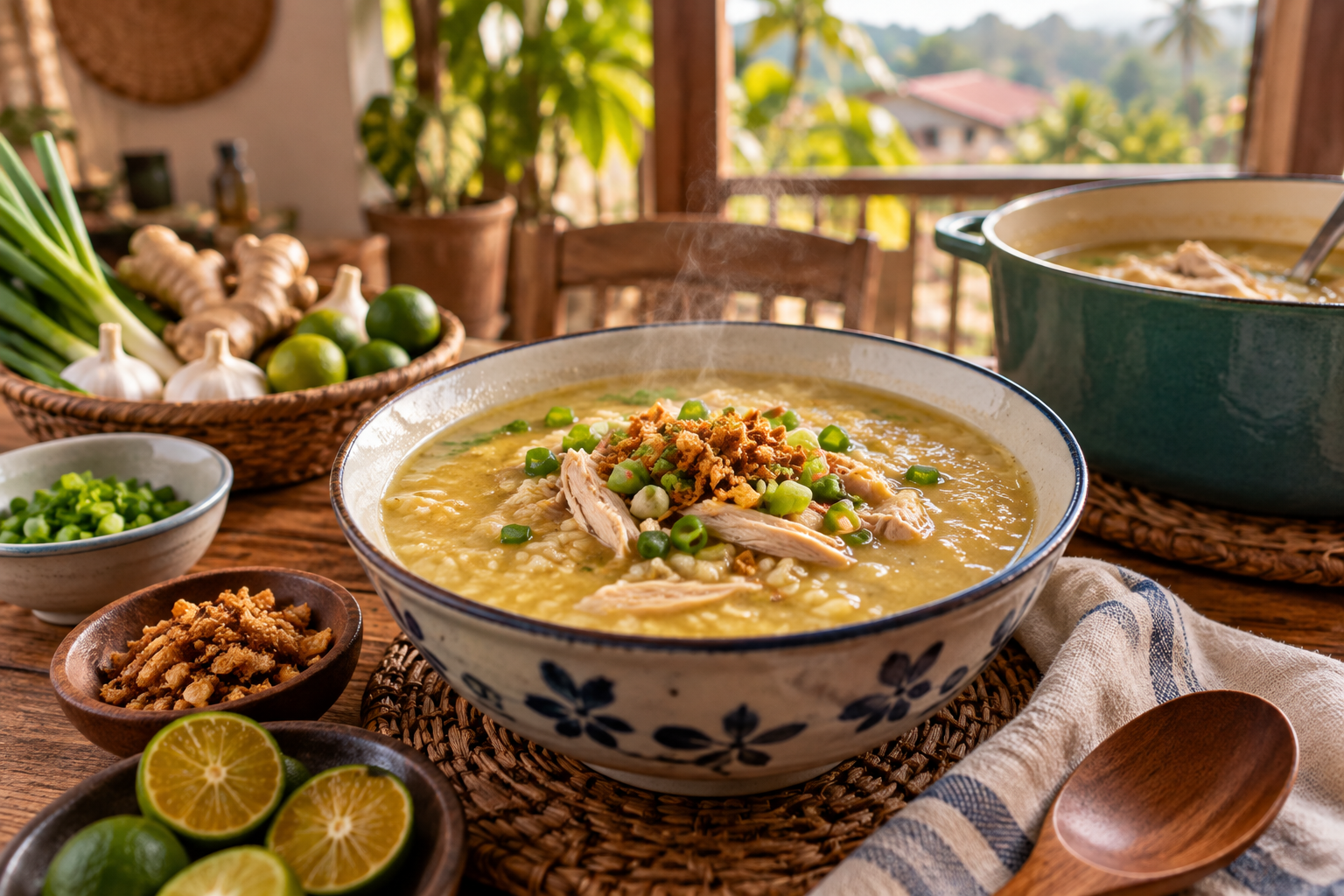
It is worth saying what arroz caldo really is to the people who grew up on it, because the recipe alone cannot hold it. For Filipinos, this dish is a thread of home that stretches across the whole world. The Philippines sends its people everywhere, millions of Filipinos living and working far from the islands, and for so many of them a pot of arroz caldo is one of the most direct ways back, a smell and a taste that collapses the distance and puts them, for a moment, back in a mother’s kitchen on a rainy afternoon. It is one of the first dishes a homesick Filipino abroad learns to make, precisely because making it is a way of conjuring home when home is an ocean away.
That is the quiet power of food like this. It is cheap, it is simple, it is nobody’s idea of fine dining, and it carries an entire culture’s tenderness inside it.
To make arroz caldo for someone is to do something Filipinos have done for one another for generations, to take the humblest ingredients, rice, chicken, ginger, garlic, and turn them, through a little time and care, into a bowl that says you are not alone, I am taking care of you, eat and feel better. That message needs no translation, and it is the real reason the dish fixes everything it is said to fix. The ginger helps the cold, yes. But what heals the person is the love the bowl is made of, and arroz caldo is one of the purest expressions of that love any kitchen has ever produced. So here is how to make it, not just as a recipe but as a way of taking care of someone, including, when you need it, yourself.
Make It: Arroz Caldo
This makes a big, comforting pot, the kind meant to feed a sick family member and have plenty left over. It is forgiving and hard to ruin; the keys are plenty of ginger, good toasted garlic on top, and calamansi or lemon to finish.
Serves 4 to 6. About 20 minutes of prep and 45 minutes of cooking.
Ingredients:
- 2 tablespoons oil
- 1 head of garlic, minced, plus extra cloves for the fried garlic topping
- 1 large thumb of fresh ginger, peeled and cut into thin matchsticks (be generous)
- 1 onion, chopped
- About 700 g (1.5 lb) bone-in chicken pieces, cut into serving pieces
- 3 tablespoons fish sauce (patis), plus more to taste
- 1 cup glutinous rice, or 1.5 cups regular long-grain rice
- About 2 liters (8 cups) chicken broth or water, plus more as needed
- A pinch of safflower (kasubha) or turmeric, optional, for color
- Salt and black pepper
To serve:
- Toasted garlic and garlic oil (fry sliced garlic cloves slowly in oil until golden and crisp)
- Sliced spring onions
- Calamansi or lemon wedges
- Hard-boiled eggs, halved
- Extra fish sauce and black pepper
Instructions
- First make the toasted garlic topping: gently fry the extra sliced garlic in a little oil over low heat until deep golden and crisp, then set the garlic and its oil aside. Do not rush or burn it.
- In a large pot, heat the oil and saute the minced garlic, ginger, and onion until soft and very fragrant, a few minutes. Be generous with the ginger; it is the soul of the dish.
- Add the chicken pieces and cook, stirring, until they change color on the outside. Pour in the fish sauce and stir.
- Add the rice and stir to coat it in the aromatics for a minute. Pour in the broth, add the pinch of kasubha or turmeric if using, and bring to a boil.
- Lower the heat and simmer, stirring occasionally so the rice does not stick to the bottom, for about 40 to 45 minutes, until the rice has broken down into a thick, soft porridge and the chicken is tender. Add more hot broth or water as needed; it should be thick but still spoonable and a little soupy, not stiff. Taste and adjust with more fish sauce, salt, and plenty of black pepper.
- Ladle into bowls and crown each one generously: toasted garlic and its oil, spring onions, a wedge of calamansi or lemon to squeeze over, half a hard-boiled egg, and more pepper. Serve very hot, to someone who needs it.
A note on making it right: the three things that make or break arroz caldo are ginger, garlic, and acid. Be braver with the ginger than you think you should; its warmth is the whole point. Do not skip the toasted garlic topping, which is what separates a sad porridge from the real thing. And do not forget the calamansi or lemon squeezed in at the end, because that bright sourness against the rich rice is what makes people go back for a second bowl. Use glutinous rice for the stickiest, most traditional texture, or regular rice if that is what you have.

About the Author: Ruben, co-founder of Gamintraveler.com since 2014, is a seasoned traveler from Spain who has explored over 100 countries since 2009. Known for his extensive travel adventures across South America, Europe, the US, Australia, New Zealand, Asia, and Africa, Ruben combines his passion for adventurous yet sustainable living with his love for cycling, highlighted by his remarkable 5-month bicycle journey from Spain to Norway. He currently resides in Spain, where he continues sharing his travel experiences with his partner, Rachel, and their son, Han.