
The first truly cold evening in Europe has a smell, and it is the smell of warm spiced wine, cinnamon, orange, and clove, drifting from a market stall into the dark. All across the continent, as the temperature drops and the Christmas markets begin to appear, Europe reaches for the hot drink, that uniquely comforting ritual of wrapping cold hands around a warm mug and sipping something that glows its way all the way through you, down to the toes. But what is in the mug depends entirely on where you are standing. In Germany it is Gluhwein, the spiced red wine that practically defines a European winter; in Spain it is chocolate a la taza, hot chocolate so thick you could stand a spoon in it; in the Italian Alps it is a boozy, creamy bombardino that skiers drink mid-mountain. So here is the hot drink map of Europe, the warmers each country reaches for when it gets cold, and, at the end, the recipe for the most iconic of them all, so you can make a winter market in your own kitchen. It is one of the loveliest and most underrated pleasures of a European winter.
What follows is the great mulled wine family, the thick hot chocolate belt, the spiked and the theatrical, why Europe does hot drinks so well, and how to make Gluhwein yourself.
The Great Mulled Wine Family
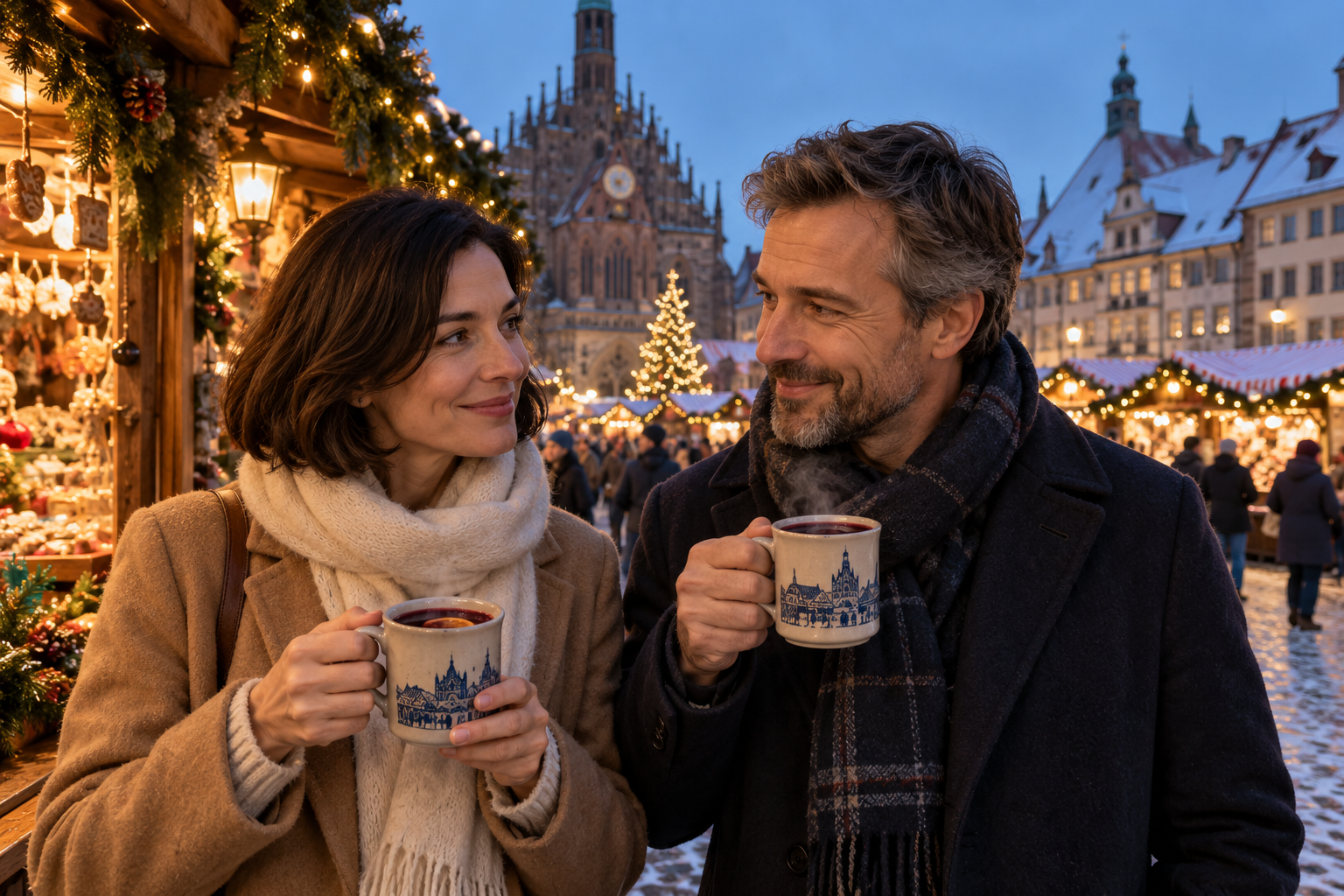
The beating heart of the European hot-drink tradition is mulled wine, the warm, spiced red wine that appears, in one form or another, in nearly every country on the continent, and whose aroma is the very scent of a European Christmas market. The idea is ancient, going back to the Romans, who heated and spiced their wine two thousand years ago, partly to preserve it and partly for pleasure, and it spread across Europe with them to become the definitive cold-weather drink, warm red wine infused with cinnamon, cloves, star anise, citrus, and sugar, sipped from a mug outdoors as you shop and socialize in the cold. By the late Middle Ages, when winter markets had spread across the continent, warm spiced wine had found its permanent home.
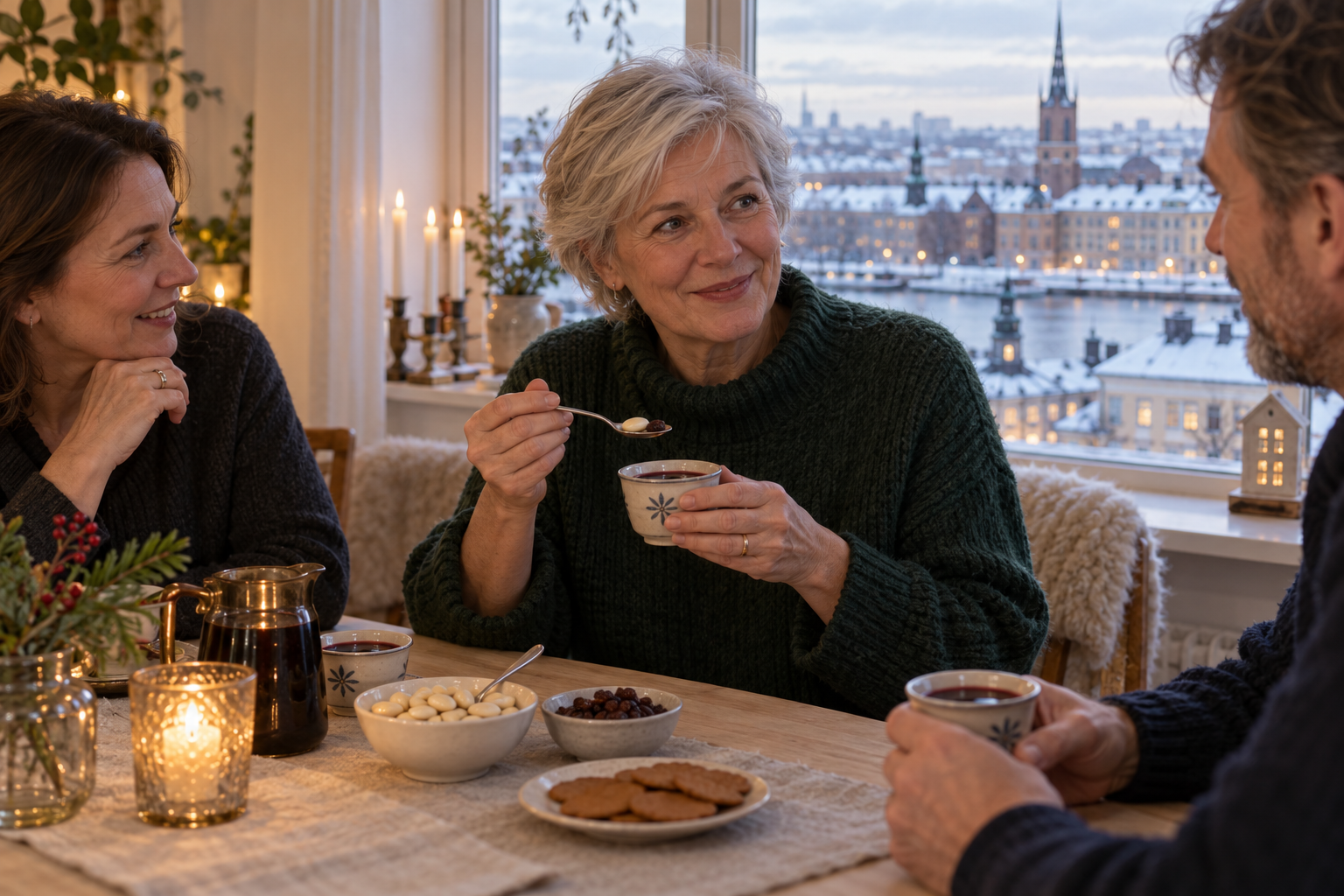
What makes it a map rather than a single drink is that every country has made it its own and given it its own name. In Germany and Austria it is Gluhwein, glow-wine, the king of the Christmas markets. In Scandinavia it becomes glogg, which the Nordic countries, who know a thing or two about surviving long dark winters, have turned into a whole ritual, adding blanched almonds and raisins to the bottom of the mug and often a shot of aquavit or vodka to fortify it against the cold. In France it is vin chaud, hot wine, typically made with a lighter red like a Beaujolais and sweetened with honey and orange peel rather than plain sugar, giving it a more perfumed, citrusy character than its German cousin, especially in the Alpine ski towns. Italy’s north drinks vin brule, especially up in South Tyrol, the Czechs their svarak at every winter market, the Hungarians forralt bor made from their robust local reds, the Portuguese vinho quente, each a local accent on the same warming idea, and each defended by its drinkers as the proper way to do it.
Germany even has a theatrical version, Feuerzangenbowle, in which a rum-soaked sugarloaf is set alight above the wine and drips flaming, caramelized sweetness into the pot, a spectacle worth seeing at least once. The mulled wine family is the great unifying hot drink of Europe, the same glowing comfort spoken in a dozen languages, and wherever you are in the cold months, from a Strasbourg market to a Prague square to a Stockholm kitchen, some version of it will be bubbling nearby, scenting the whole street with cinnamon and warm wine.
The Thick Hot Chocolate Belt
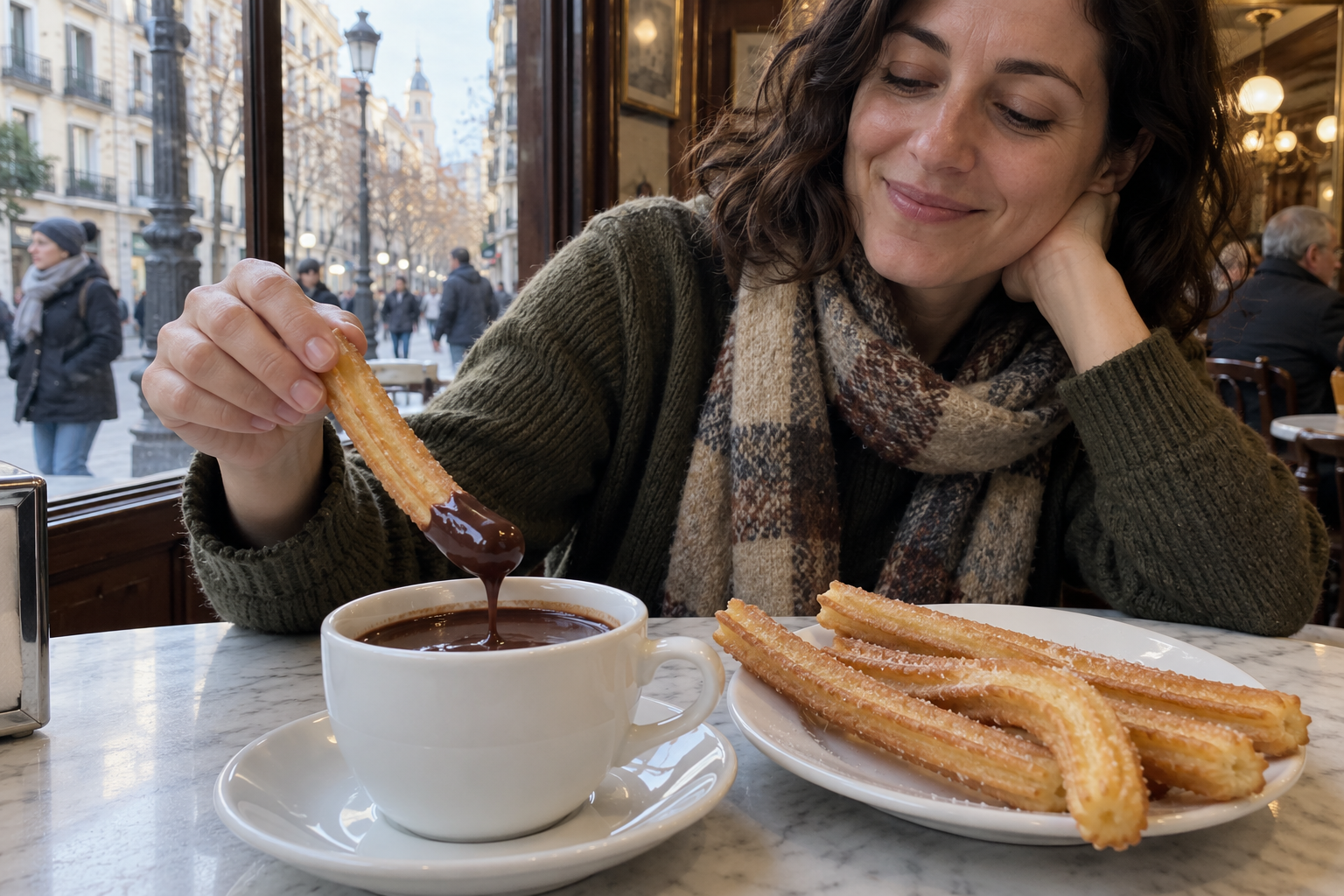
Not every European hot drink involves wine, and the second great tradition is one that will reorder an American’s entire understanding of hot chocolate. Across parts of southern and western Europe runs a belt of countries that make hot chocolate not as the thin, sweet, watery drink Americans know but as something closer to a warm dessert, thick, rich, and almost spoonable. The champion here is Spain, where chocolate a la taza is made so dense and glossy that it coats the spoon, traditionally served with churros for dipping, a combination that is one of the great cold-weather pleasures of Spanish life, eaten for breakfast, for an afternoon snack, or after a long night out.
Italy keeps pace with cioccolata calda, its own thick hot chocolate, often thickened with a little cornstarch until it verges on a warm pudding you eat as much as drink, a world away from the powder-and-hot-water version most Americans grew up with. And the chocolate-makers of Switzerland and Belgium, unsurprisingly, treat hot chocolate with the seriousness their chocolate deserves, making it rich and frothy with whole milk or cream, an indulgence to be lingered over once the leaves fall. This thick hot chocolate belt is a revelation to visitors, because the drink shares only a name with the thin American version; this is chocolate made to be a treat in itself, a warm, rich, enveloping thing to be sipped slowly or eaten with a spoon or soaked up with fried dough, a proper indulgence rather than a quick sweet drink. In Spain it is practically a national institution, the reward at the end of a long cold night and the comfort of a slow weekend morning alike. For a nervous winter visitor who does not drink, or simply wants something sweet and warming rather than boozy, the hot chocolate belt is the best-kept secret on the whole hot-drink map, a reason in itself to be in Spain or Italy on a cold morning.
The Spiked and the Theatrical
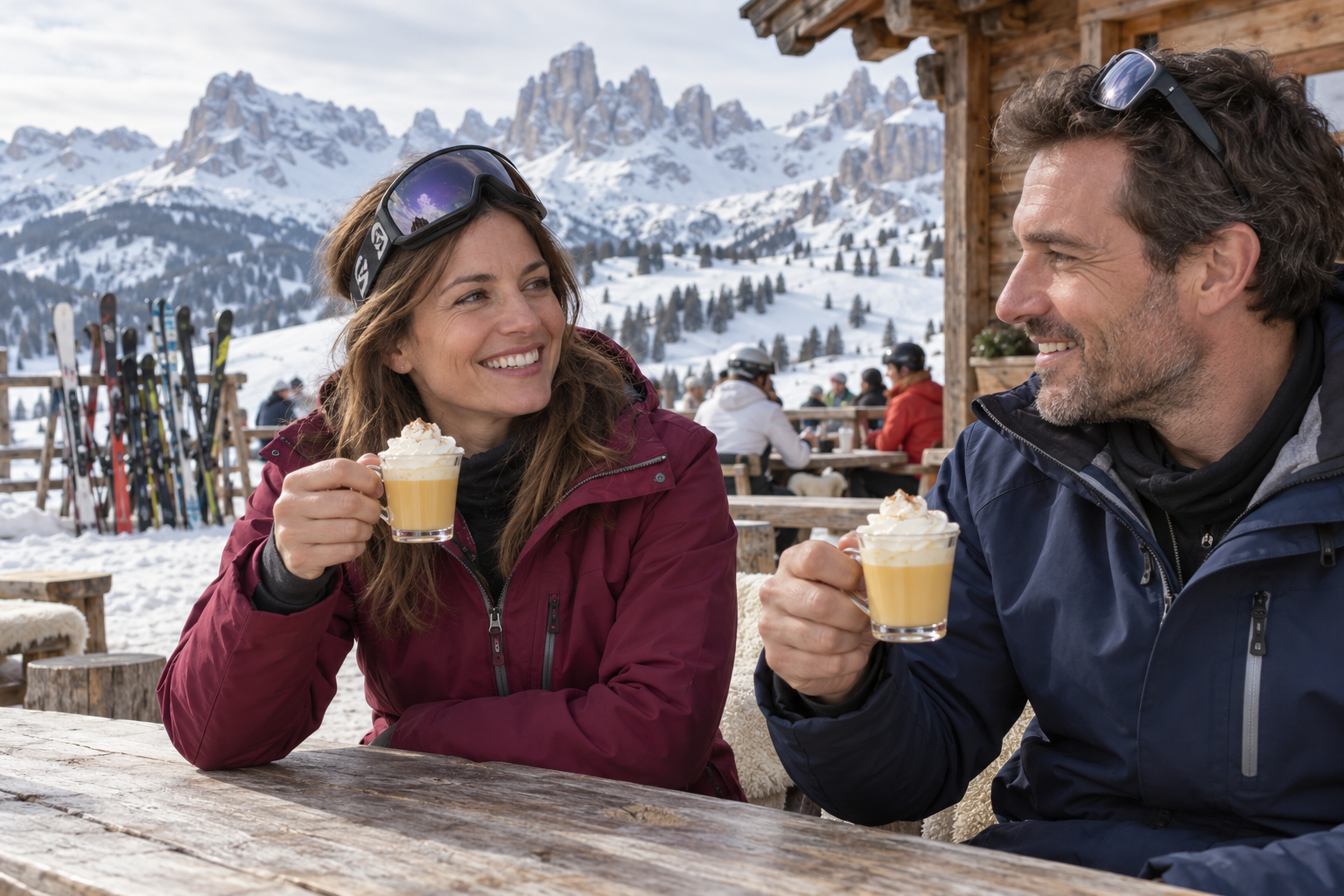
Beyond wine and chocolate lies a whole category of hot drinks that take the warming mission rather more seriously, the spiked, the strong, and the showy, the drinks designed to thaw you to your bones after real cold. The Alps are their natural home. In the Italian mountains, the drink of the ski slopes is the bombardino, a hot, thick, intensely rich mixture of egg liqueur and brandy, topped with whipped cream, served mid-mountain to restore frozen skiers, as much a dessert as a drink. Austria answers with Jagertee, hunter’s tea, a potent blend of black tea and rum that does exactly what its warming reputation promises.
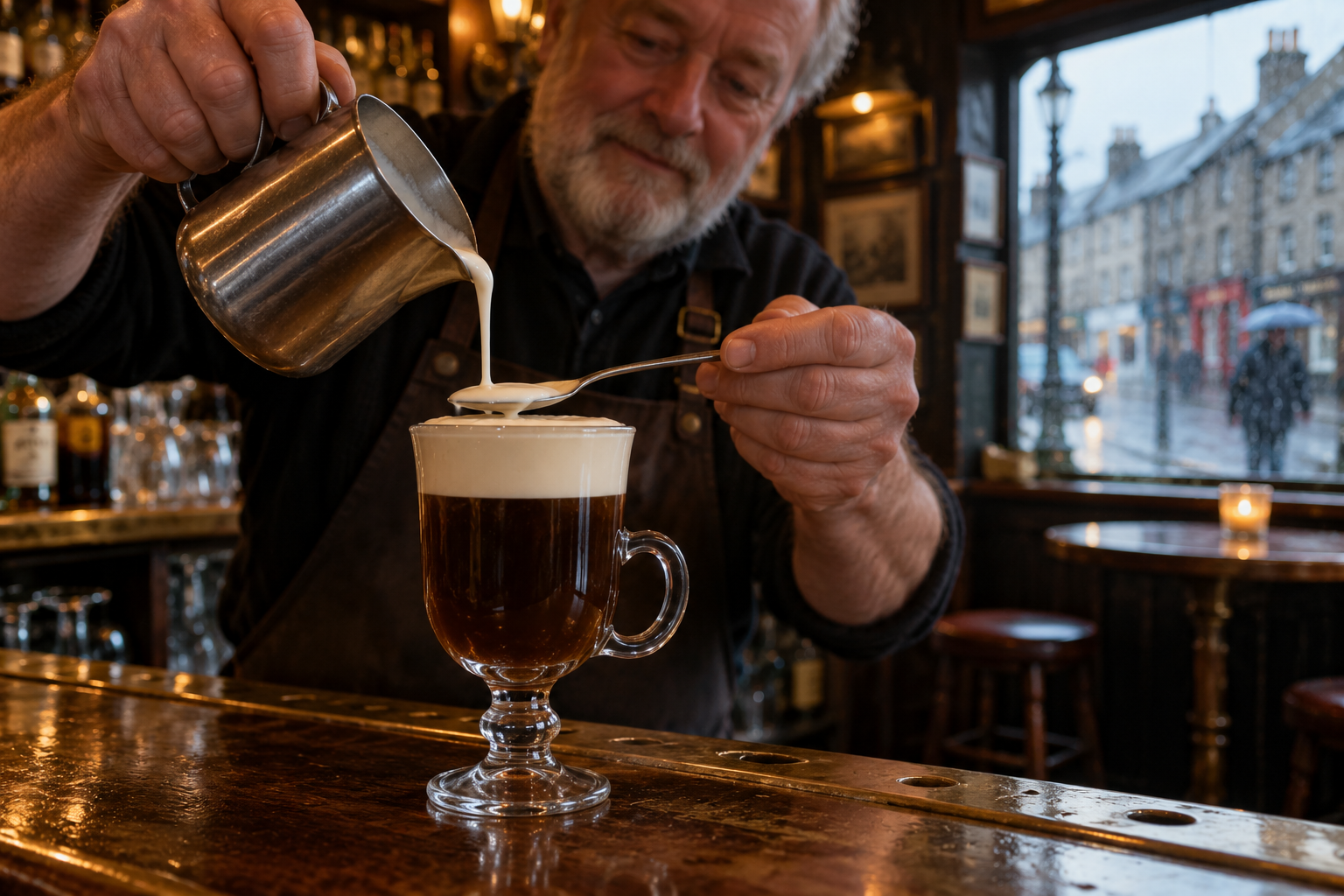
The British Isles contribute their own warmers, above all the hot toddy, whisky, honey, lemon, and hot water that doubles as a folk remedy for a cold, and the Irish coffee, coffee laced with whiskey and topped with cream, an invention so good it conquered the world. Across much of northern Europe there is grog, rum and hot water with citrus and sugar, once the drink of sailors and now a Christmas-market staple, sometimes mixed with tea in France and Belgium. The Czechs warm up with hot honey mead, medovina, at their winter markets. These are the heavy artillery of the European hot-drink arsenal, the drinks for genuine cold and genuine celebration, and they share a cheerful willingness to combine warmth, spice, and a serious measure of spirit into something that makes winter not just bearable but actively fun. One of these after a cold day outdoors does not merely warm you; it changes your whole opinion of the season.
The Warmers Without the Wine
It is worth pausing on the many hot drinks that carry no alcohol at all, because the European hot-drink tradition is not only for those who drink, and some of its greatest pleasures come without a drop of spirit. The thick hot chocolate belt already covers much of this ground, since a mug of Spanish chocolate a la taza with churros or an Italian cioccolata calda is as warming and festive as anything spiked, and entirely family-friendly. But there is more.
England and the cider countries make mulled cider, apple cider warmed with the same cinnamon and cloves as mulled wine, a gentler and often non-alcoholic cousin found steaming at autumn and winter fairs, and every bit as fragrant as its grape-based relative. Across the continent, the Christmas markets sell warm spiced fruit punches and children’s versions of Gluhwein, Kinderpunsch, so that no one need stand in the cold without a glowing mug. And everywhere there is tea, the spiced and herbal and fruit infusions that warm a cold afternoon, from a simple hot tea with honey and lemon to the elaborate spiced blends of Eastern Europe. The point is that the European hot drink is fundamentally about warmth and ritual and the mug in cold hands, not about the alcohol, and a visitor who does not drink loses almost nothing, with a thick hot chocolate or a mulled cider or a spiced tea offering every bit of the comfort and the festive spirit. The glowing mug is the thing; what is in it is entirely up to you, and the market does not judge.
Why Europe Does Hot Drinks So Well
Step back, and it is worth asking why Europe, more than most places, has turned the hot drink into such an art and such a ritual, because the answer says something about how the continent lives. A great deal of it comes down to the Christmas market, that beloved European institution in which whole towns fill their squares with wooden stalls for the weeks before Christmas, and where the hot drink is not an afterthought but the very fuel of the occasion. You go to a Christmas market to wander in the cold among the lights and the wooden stalls and the smell of roasting nuts, and you do it with a warm mug in your hand, often a collectible market mug you pay a deposit on, which has made the hot drink utterly central to one of the most cherished rituals of the European year.
But it runs deeper than the markets. Europe’s hot-drink culture is really a culture of socializing outdoors and together in the cold, of refusing to let winter drive everyone inside and apart, and the warm mug is the tool that makes that possible, the thing that lets people stand in a freezing square and enjoy it. There is a sociability to the European hot drink, a sense that it is meant to be shared, held in cold hands among friends around a market stall, that distinguishes it entirely from a solitary mug of coffee hurried down at a desk. It is a drink you have with people, in the cold, on purpose.
The continent that invented the Christmas market and the apres-ski and the long winter stroll needed drinks to go with them, and it produced a whole glowing map of them. To drink your way across that map, from a German Gluhwein to a Spanish chocolate to an Alpine bombardino to a Swedish glogg, is to taste the many ways Europe has found not merely to survive winter but to actively savor it, mug in hand, out in the cold, among friends. It is a small genius, and a thoroughly European one.
Make It: Gluhwein
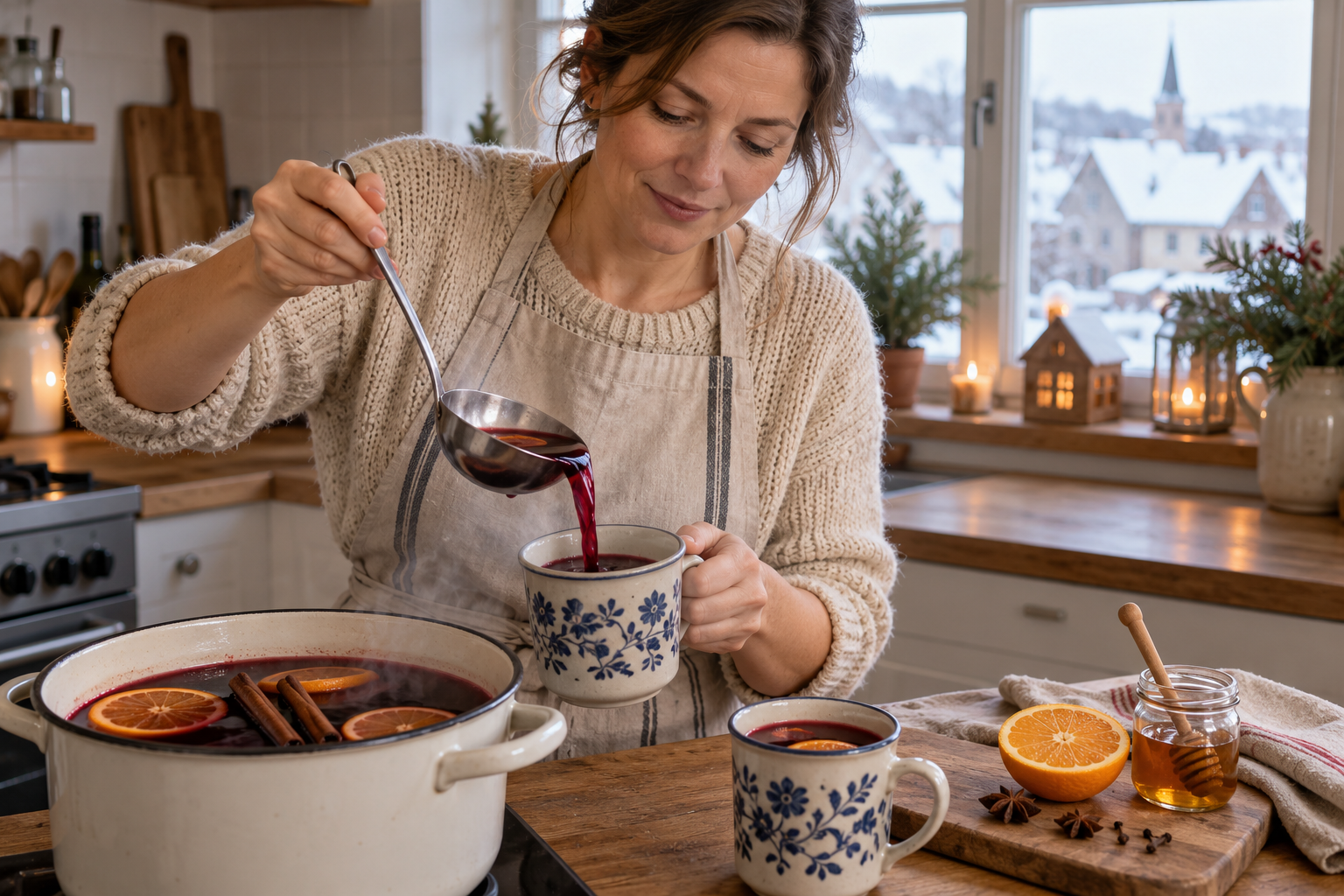
Of all the drinks on the map, the one to bring home is Gluhwein, German mulled wine, because it fills your whole kitchen with the smell of a Christmas market and could not be easier to make. The name means glow-wine, for how it makes you feel, and it is the perfect thing to simmer on the first cold evening or to serve to a house full of guests.
Serves 6. About 5 minutes of prep and 20 to 30 minutes of gentle warming.
Ingredients:
- 1 bottle (750 ml) of dry red wine, nothing expensive
- 1 orange, half sliced into rounds and half juiced
- 3 to 4 tablespoons sugar or honey, to taste
- 2 cinnamon sticks
- 4 whole cloves
- 2 star anise
- Optional: a shot of rum or brandy, and a few slices of ginger
Instructions
- Pour the wine into a pot or saucepan and set it over low heat. The single most important rule of Gluhwein is to warm it gently and never let it boil, because boiling cooks off the alcohol and dulls the flavor, so keep the heat low throughout.
- Add the orange juice and slices, the sugar or honey, the cinnamon sticks, cloves, and star anise, and the ginger if using. Stir to dissolve the sugar.
- Let it warm gently for 20 to 30 minutes, keeping it below a simmer, so the spices infuse and the whole kitchen fills with the aroma. Taste and add more sweetness if you like.
- If you want a stronger drink, stir in a shot of rum or brandy at the end, off the heat.
- Ladle the hot wine into mugs, straining out the whole spices or leaving them in for show, add a fresh slice of orange to each, and serve steaming hot.
A note on the wine: use something dry and inexpensive, because the spices and sweetening do the work and a fine wine would be wasted. The only mistake you can really make is letting it boil, which cooks off the alcohol and leaves a flat, stewed taste, so keep the heat gentle and patient and you will have a mug of winter market in your hands in half an hour, and your whole home smelling of one.

About the Author: Ruben, co-founder of Gamintraveler.com since 2014, is a seasoned traveler from Spain who has explored over 100 countries since 2009. Known for his extensive travel adventures across South America, Europe, the US, Australia, New Zealand, Asia, and Africa, Ruben combines his passion for adventurous yet sustainable living with his love for cycling, highlighted by his remarkable 5-month bicycle journey from Spain to Norway. He currently resides in Spain, where he continues sharing his travel experiences with his partner, Rachel, and their son, Han.