
Ask an American to picture breakfast and the image is fairly consistent and fairly large: eggs, maybe bacon, toast, perhaps a stack of pancakes, a big plate and an even bigger, endlessly refilled mug of coffee. Ask the same of Europe and there is no single answer at all, because what a European actually eats at eight in the morning varies so wildly from one country to the next that it is one of the most surprising maps on the whole continent, and one of the first things a traveler notices on the ground. In Italy it might be a single espresso and a sweet pastry, gulped standing at a bar in ninety seconds. In Germany it is a laden table of bread, cold cuts, and cheese. In Britain it can be a full fried plate that defeats most people.
The European breakfast is not one meal but a dozen, and the differences reveal a great deal about how each culture thinks about the morning. So here is the breakfast map of Europe, what each country really eats when it wakes up, and why the first meal of the day looks so different depending on where you open your eyes. It is one of the quickest ways to feel how genuinely different one European country is from the next.
What follows is the light sweet south, the substantial savory north, the great British outlier, the secret of the second breakfast, and what your breakfast says about you.

The Light Sweet South
Across southern Europe, breakfast is a small, sweet, almost perfunctory affair, which is the first great shock for an American used to a hearty morning plate. In Italy, breakfast, la colazione, is famously tiny: an espresso or a cappuccino and a cornetto, the Italian croissant, often eaten standing at the counter of a bar on the way to work, the whole thing done in a couple of minutes. The idea of a savory breakfast, of eggs and meat in the morning, is genuinely alien to Italians, who regard milky coffee as a morning-only drink, so that ordering a cappuccino after about eleven, or worse with lunch, will mark you instantly and unmistakably as a foreigner. Breakfast in Italy is sweet, small, and fast, a jolt of caffeine and sugar taken on the feet, nothing more, and the notion of lingering over a big savory morning plate would strike most Italians as faintly absurd, or at least as something you do on holiday abroad.
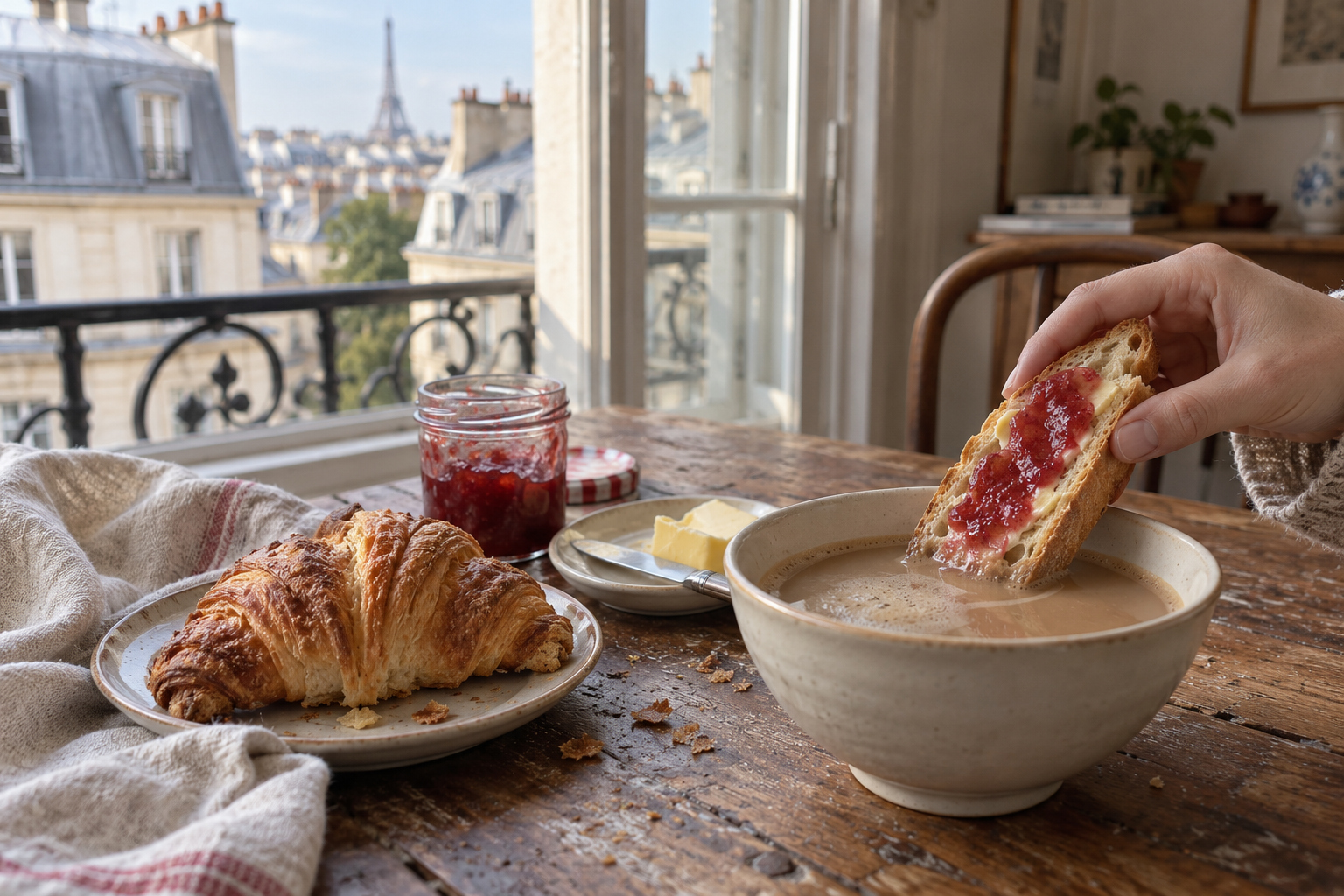
France keeps a similarly light morning, le petit dejeuner being just that, a little breakfast: coffee, and bread or a croissant with butter and jam, perhaps a tartine, a slice of yesterday’s baguette spread with butter and jam and dunked, without the slightest embarrassment, into a wide bowl of coffee or hot chocolate. It is sweet, simple, and over quickly, a civilized nibble rather than a meal.
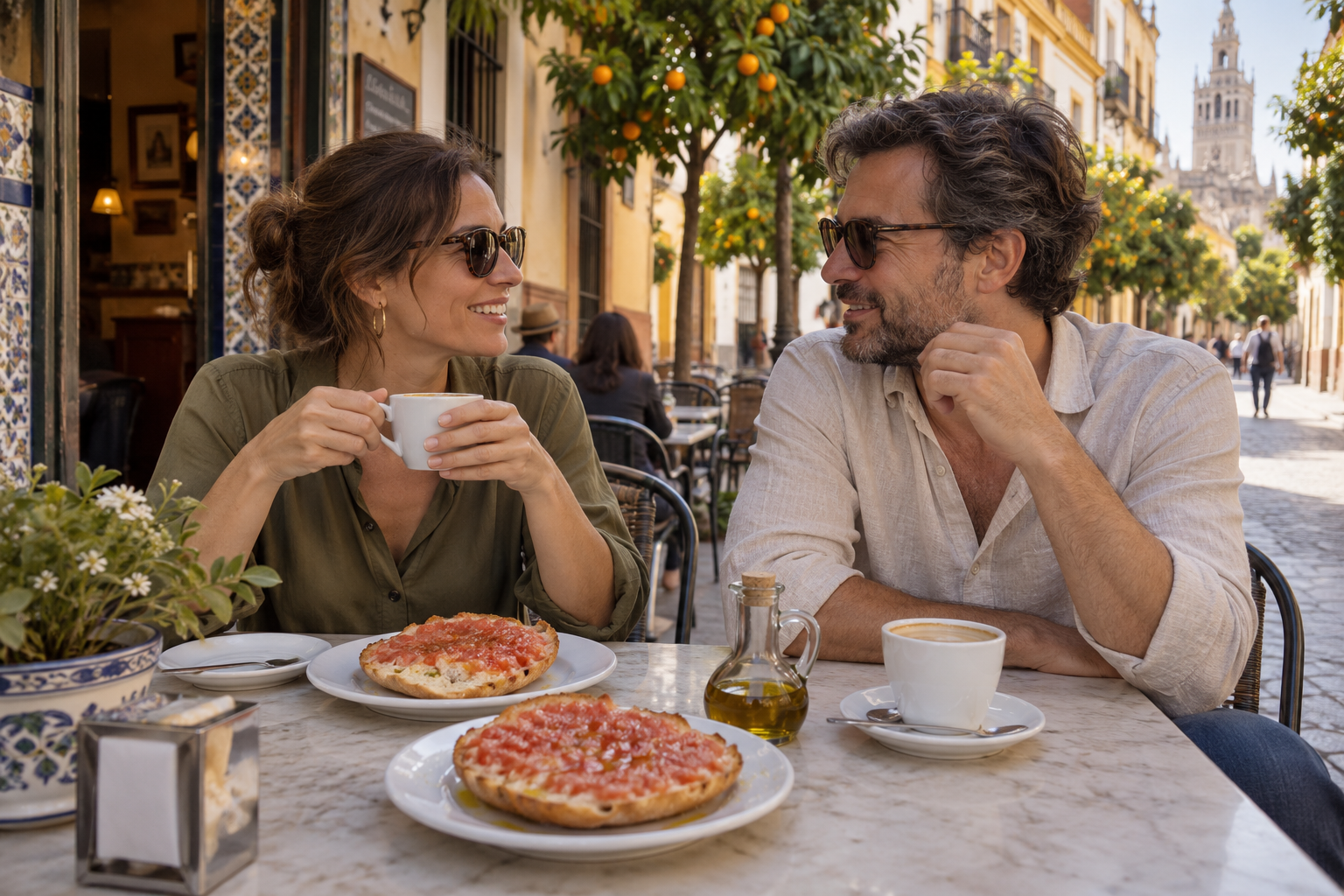
Spain starts lighter still for many, often just a cafe con leche and a tostada, toasted bread rubbed with tomato and good olive oil, or a pastry, or churros dipped in thick chocolate on a weekend, taken early and quickly before the real mid-morning feeding that we will come to.
The Spanish first breakfast is barely a meal; it is a small, deliberate down payment on the day’s eating. Portugal matches the pattern, a strong coffee and a pastry, perhaps a warm pastel de nata dusted with cinnamon, taken standing or sitting briefly at a neighborhood cafe on the way into the day. Across the whole sunny south, the message is the same: the morning meal is small, usually sweet, built around good coffee and a little bread or pastry, and emphatically not the main event of the eating day, which is saved for the long lunch. The south eats its big meal in the middle of the day, so the morning stays light. For an American accustomed to breakfast as a substantial meal, a plate to sit down to, the southern European version can feel less like breakfast than like a quick, pleasant prelude to it, more a punctuation mark than a sentence. The first few mornings abroad, many Americans find themselves hungry by ten and baffled as to why.
The Substantial Savory North
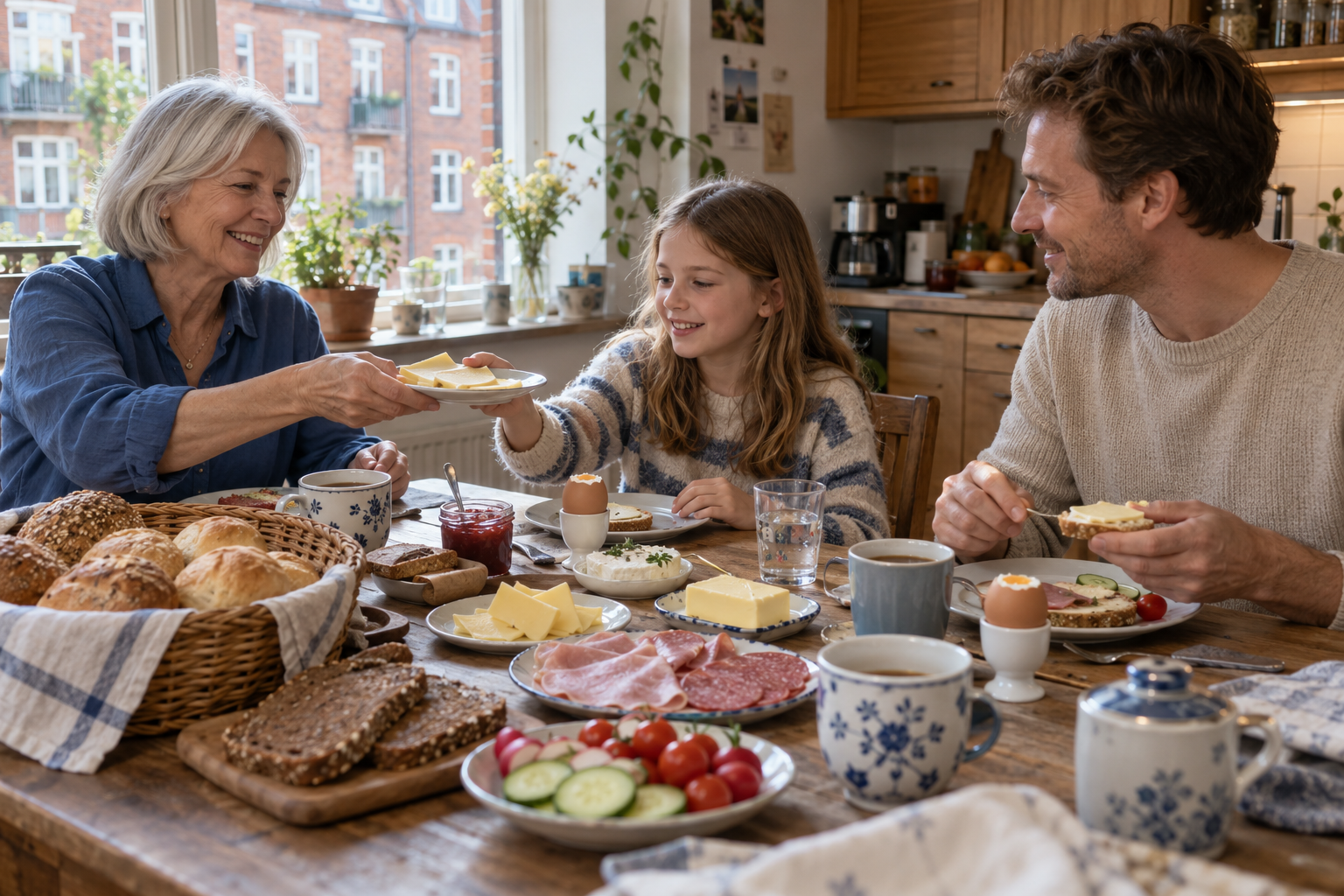
Cross into the German-speaking lands and the north, and breakfast transforms into something an American will recognize as a real meal, though assembled quite differently. The German Fruhstuck is a substantial, savory spread, a table laid with an array of breads and crusty rolls, cold cuts of ham and sausage, several cheeses, butter and jam and honey, often a soft-boiled egg in its little cup, and strong coffee, a cold buffet of good things that you build into open-faced sandwiches to your own taste, course by course across a leisurely hour. This is breakfast as a proper sit-down event, especially on weekends, generous and savory and sociable, the family gathered around a table spread with good things, a world away from the Italian espresso-and-run. For a German, a breakfast without bread and cold cuts is barely a breakfast at all.
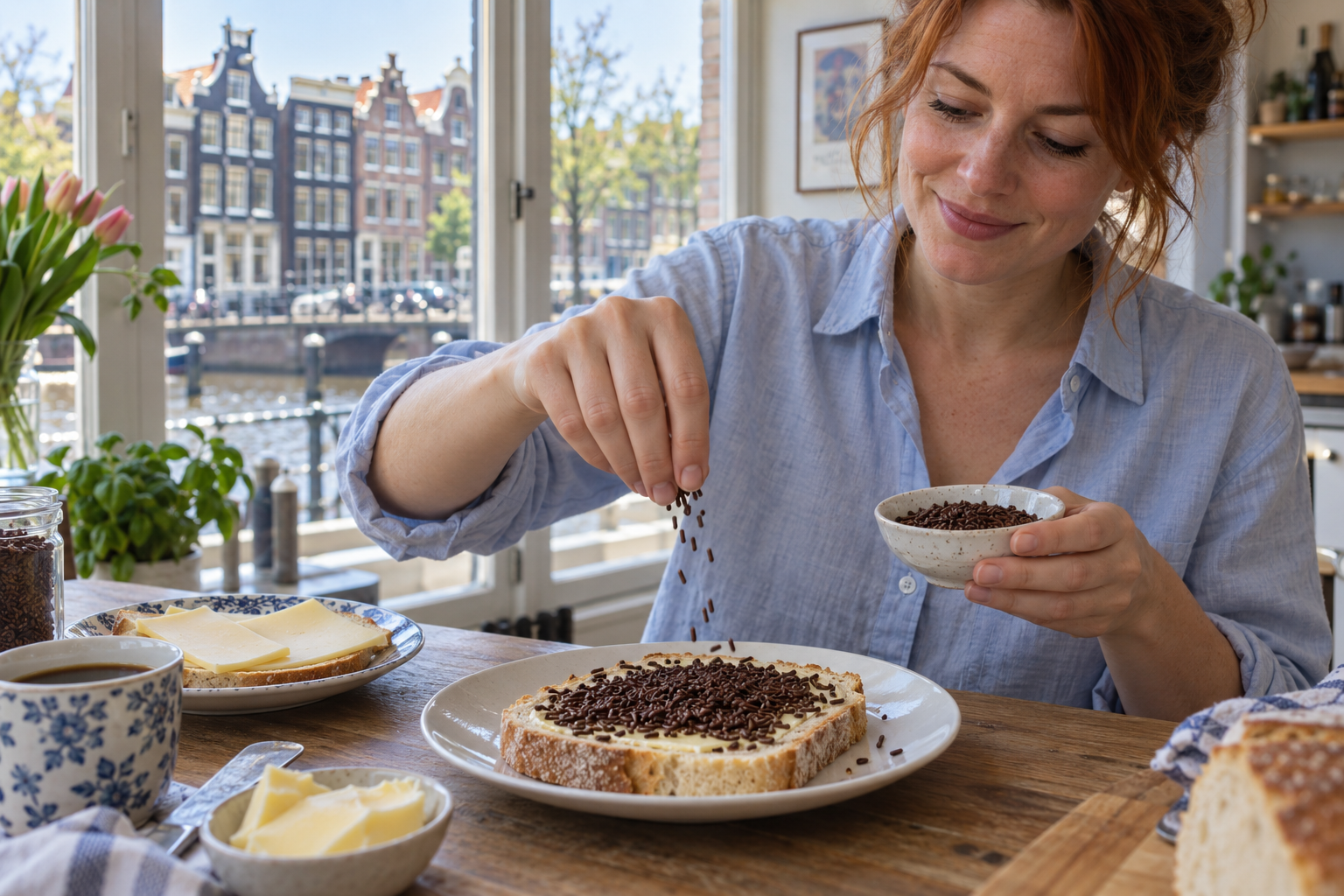
The pattern holds across the north with local variations, a shared conviction that the morning deserves a real, savory, sit-down meal rather than a hurried pastry. Austria and Switzerland keep similar bread-and-cheese-and-cold-cuts mornings, with Switzerland adding its famous Bircher muesli of oats, fruit, and yogurt invented there. The Netherlands lays out bread with a vast range of toppings, sliced cheese, cold meats, and including the beloved hagelslag, chocolate sprinkles scattered thickly over buttered bread, a national breakfast quirk, eaten by adults with a straight face, that delights children and astonishes visitors in equal measure. And Scandinavia leans into open-faced sandwiches on dark rye, with cheese, cold cuts, and even cold fish such as herring or smoked salmon, alongside warm porridge, thick fermented milks, and mueslis, a hearty and health-minded start fit for a cold northern morning. The northern breakfast is a cold, savory, build-your-own spread of bread, dairy, meat, and eggs, a genuinely sustaining start to the day, and the clearest proof that the European morning splits firmly in two: the light sweet coffee-and-pastry south, and the substantial savory bread-and-cold-cuts north.
The Great British Outlier
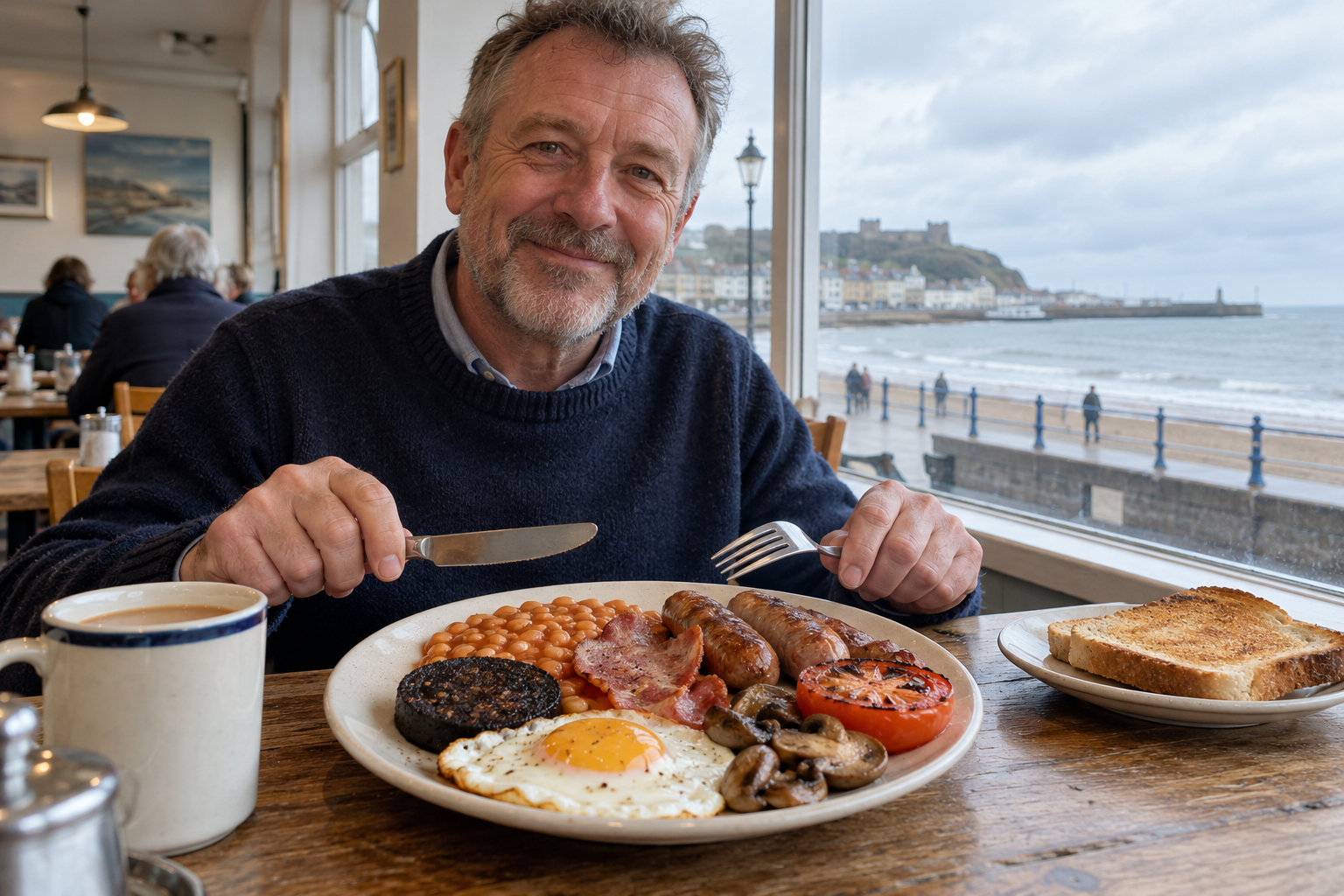
And then there is Britain, which refuses to fit either camp and stands gloriously alone with the most famous breakfast in the world. The full English breakfast, the fry-up, is a hot cooked plate of real abundance: fried or scrambled eggs, bacon, sausages, baked beans, grilled tomatoes, mushrooms, fried bread or toast, and, for the brave, black pudding, all on one groaning plate, washed down with tea. Ireland keeps its own nearly identical version, the full Irish, which swaps in its own soda bread and white and black pudding and will be defended by the Irish as the superior of the two. It is the one European breakfast that out-Americans the American breakfast, a hot savory feast that is the stuff of legend and of post-pub recovery alike.
The honest footnote, which surprises people, is that the full English is not actually what most Britons eat on a weekday. Like the American big breakfast, the fry-up is largely a weekend, holiday, and special-occasion meal, or something eaten out at a cafe, while the ordinary British work morning is as likely to be a quick bowl of cereal, a slice of toast, or just a cup of tea as anything fried. The full English is the celebrated ideal rather than the daily reality, a glorious institution reserved for lazy weekends, hungover Sundays, seaside cafes, and hotel breakfast buffets, beloved precisely because it is an occasion rather than a routine. But as a national breakfast identity it is unmatched, the one European morning meal that is itself a tourist attraction, and the great hot outlier on a continent that otherwise splits between the light-and-sweet and the cold-and-savory.
The Secret of the Second Breakfast
Here is the detail that resolves one of the great puzzles for a visitor, namely how southern Europeans survive on so tiny a breakfast: many of them do not, because they have a second one. The light coffee-and-pastry breakfast of the south is often only the first installment, topped up a few hours later by a more substantial mid-morning meal, so that the small start makes perfect sense once you know what follows it. In Spain this is the almuerzo, the mid-morning second breakfast taken around half past ten or eleven, when offices empty and worksites pause and people head to a bar for a proper bite, a bocadillo sandwich stuffed with ham or tortilla, a tapa, another coffee, enough to bridge the long gap to a Spanish lunch that may not arrive until two or three in the afternoon.
Germany and Austria have their own, the zweites Fruhstuck, the second breakfast, the mid-morning snack that carries you to lunch. The principle, across much of Europe, is that the morning’s eating need not all happen at once at the table before work; it can be split, a light sweet start on rising and a more substantial savory top-up a few hours into the day. This is a genuinely useful thing for a visitor to understand, because it explains why the first breakfast is so small and reframes the whole southern European morning, which is not, as it first appears, a culture of barely eating breakfast, but a culture of spreading breakfast across two unhurried sittings, each with its own pleasures. The tiny espresso-and-cornetto is not the whole story; it is chapter one, with the real food of the morning often coming at the second breakfast a few hours later, when the day is properly underway and the appetite has arrived.
How the American Breakfast Compares
It is worth placing the American breakfast on this map too, because seeing it alongside the European versions reveals how distinctive it actually is. The classic American breakfast, eggs any style, bacon or sausage, toast or pancakes or both, hash browns, and a bottomless mug of coffee, is in one sense closest to the British fry-up, a big hot savory plate, but it adds something the British plate does not: a strong streak of the sweet, the pancakes and waffles and syrup and sugary cereals that sit happily beside the eggs and bacon. The American breakfast is the only one on the map that is routinely both big and hot and savory and sweet, all at once, on a weekday.
That combination genuinely surprises Europeans, for whom sweet and savory at breakfast belong to different countries, not the same plate. To a southern European, the American habit of eating eggs and pancakes together looks as odd as the American finds the Italian espresso-and-nothing. The American breakfast also tends to be eaten bigger and more often than most European ones, closer to the celebrated British fry-up but as a daily possibility rather than a weekend treat, which is part of why the small, quick continental breakfast comes as such a shock to American visitors. Understanding where the American breakfast sits, big, hot, and uniquely willing to mix sweet and savory, helps explain both the surprise an American feels at a tiny Italian colazione and the surprise a European feels at a towering American stack of pancakes next to the bacon. Each makes complete sense at home and looks slightly baffling abroad, which is the whole charm of a breakfast map.
What Your Breakfast Says About You
Step back from the map, and the European breakfast turns out to be a surprisingly revealing portrait of how different cultures meet the morning. The light, sweet, fast breakfast of the south speaks of a culture that treats the morning meal as a quick, pleasant launch and saves its serious eating for later in the day, at the long lunch that is the real centerpiece. The substantial, savory breakfast of the north speaks of a culture that front-loads the day with a proper meal and values the morning table as a moment of its own. And the celebrated British fry-up speaks of a nation that made its breakfast a point of pride and pleasure, even if it saves the full version for the weekend.
For a visitor or a newcomer, the practical wisdom is simply to go with the local grain and eat the morning the way the country does. In Italy, take your espresso and cornetto standing at the bar and do not ask for eggs; in Germany, settle in to the glorious bread-and-cheese spread; in Spain, eat lightly on rising and save yourself for the mid-morning almuerzo; in Britain, have the full fry-up on a lazy weekend and toast on a workday, like the locals. Resisting the local breakfast, hunting across Rome for an American-style eggs-and-bacon plate in a country that simply does not do it, is a recipe for frustration and sad, overpriced imitations in tourist cafes, while embracing the local way, the espresso at the bar, the German spread, the Spanish second breakfast, is one of the quiet, daily pleasures of being somewhere genuinely different. The breakfast map of Europe is, in the end, a map of a dozen different ways to wake up and meet the day, from a sugar-and-caffeine jolt at a Roman bar to a laden German table to a Dutch slice of bread scattered with chocolate to a vast British plate, each one perfectly sensible in its own country and slightly strange in any other, and each one a small, delicious lesson in how many ways there are to do the most ordinary thing in the world.

About the Author: Ruben, co-founder of Gamintraveler.com since 2014, is a seasoned traveler from Spain who has explored over 100 countries since 2009. Known for his extensive travel adventures across South America, Europe, the US, Australia, New Zealand, Asia, and Africa, Ruben combines his passion for adventurous yet sustainable living with his love for cycling, highlighted by his remarkable 5-month bicycle journey from Spain to Norway. He currently resides in Spain, where he continues sharing his travel experiences with his partner, Rachel, and their son, Han.