
Everyone has an opinion about pizza, where it comes from, what belongs on it, which city does it right. Almost nobody outside Catalonia has an opinion about coca de recapte, and yet this Catalan flatbread has been quietly doing much of what pizza does for a very long time, arguably longer, without any of the fuss. It is a thin, crisp, olive-oil-rich flatbread, shaped into a rustic oval and topped not with tomato sauce and cheese but with escalivada, a glorious tangle of roasted peppers, aubergine, and onion, often finished with a few salty anchovies on top. It is smoky, sweet, savory, and about as utterly Mediterranean as food gets, the kind of thing eaten warm with a glass of cold white wine on a lazy Catalan afternoon, and it remains far less known abroad than it truly deserves to be. Here is what coca de recapte is, why it sits outside the whole pizza argument, and how to make it at home. It is one of the most rewarding things you can bake for the effort, rustic enough to be forgiving and impressive enough to make people ask what it is.
What follows is why this flatbread predates the pizza debate, the roasted vegetables that are the whole point of it, the dough that is emphatically not pizza dough, the simple method of putting it together, and the recipe.
Older Than the Pizza Debate
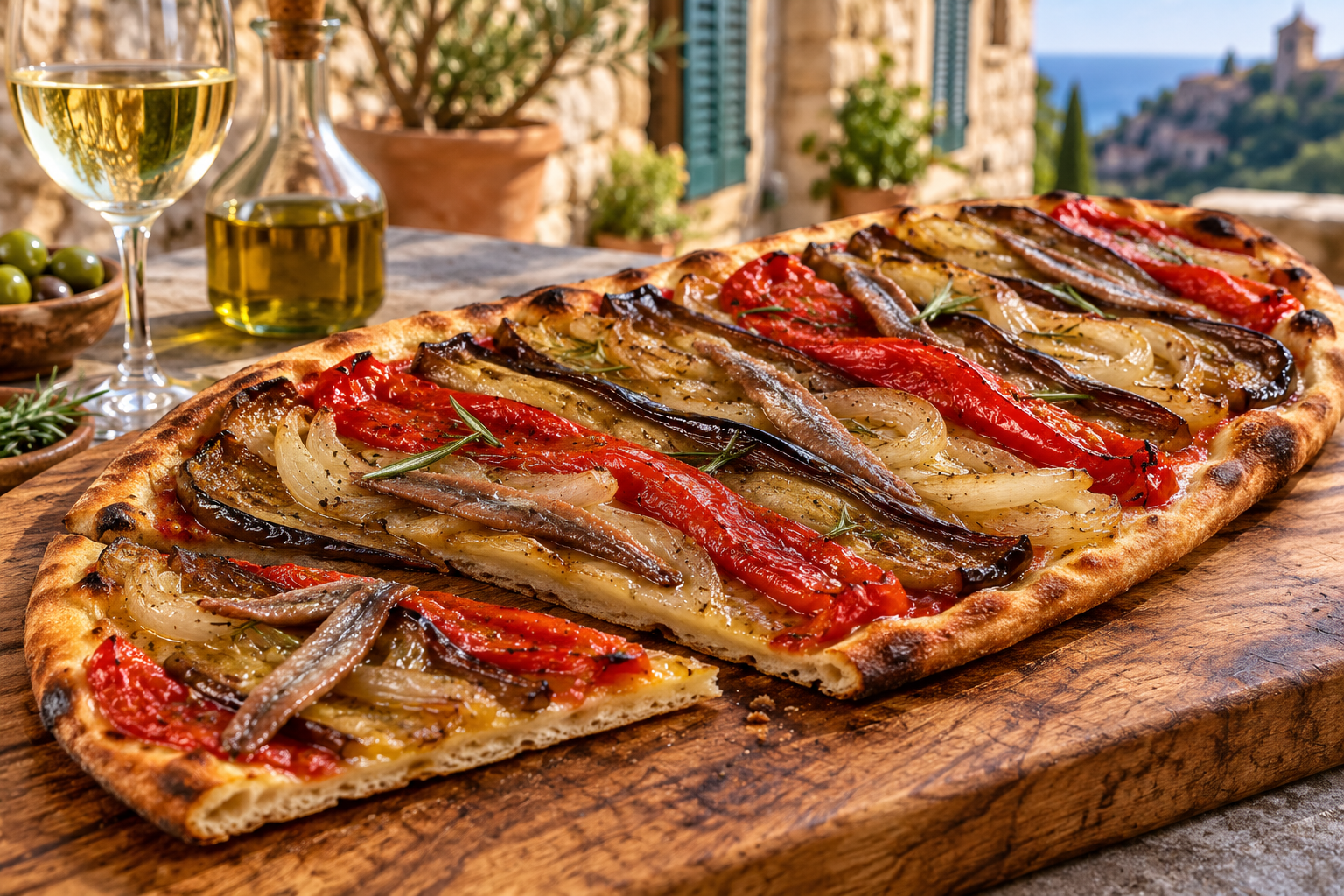
The temptation, the moment anyone sees a coca de recapte, is to call it a Catalan pizza, and while that gets you in the right neighborhood it slightly misses the point. Coca belongs to the broad, ancient family of Mediterranean flatbreads, the tradition of stretching a simple dough thin and baking it with whatever good things are to hand, a tradition that is older and wider than pizza and of which pizza is really just the most famous member. In that sense coca is less pizza’s Catalan imitator than its cousin, sprung from the same deep Mediterranean root, and you could as fairly say pizza is coca’s Italian relation as the other way around.
The name itself tells a humble, practical story. Coca comes from an old root shared with the words cake and kuchen, and recapte means something like provisions, the food you pack up and take with you to the fields or on a picnic. That is exactly what a coca de recapte originally was: portable, sturdy peasant food, and in the days before ordinary households had their own ovens, Catalan villagers would bring their vegetables to the town baker, who would top a piece of dough with them and bake it in the communal oven. This is a food born of necessity and the countryside, not of restaurants, and it carries none of the status anxiety that swirls around pizza. It never became a global brand or a battleground of authenticity, which is part of its quiet appeal, a genuinely traditional dish that has stayed local, humble, and unbothered by fame. There are no wars over the authentic coca, no debates about whether a topping is permitted, just a very old, very practical flatbread that Catalans have been making and eating, without fanfare, since long before anyone thought to argue about pizza at all.
Escalivada Is the Point
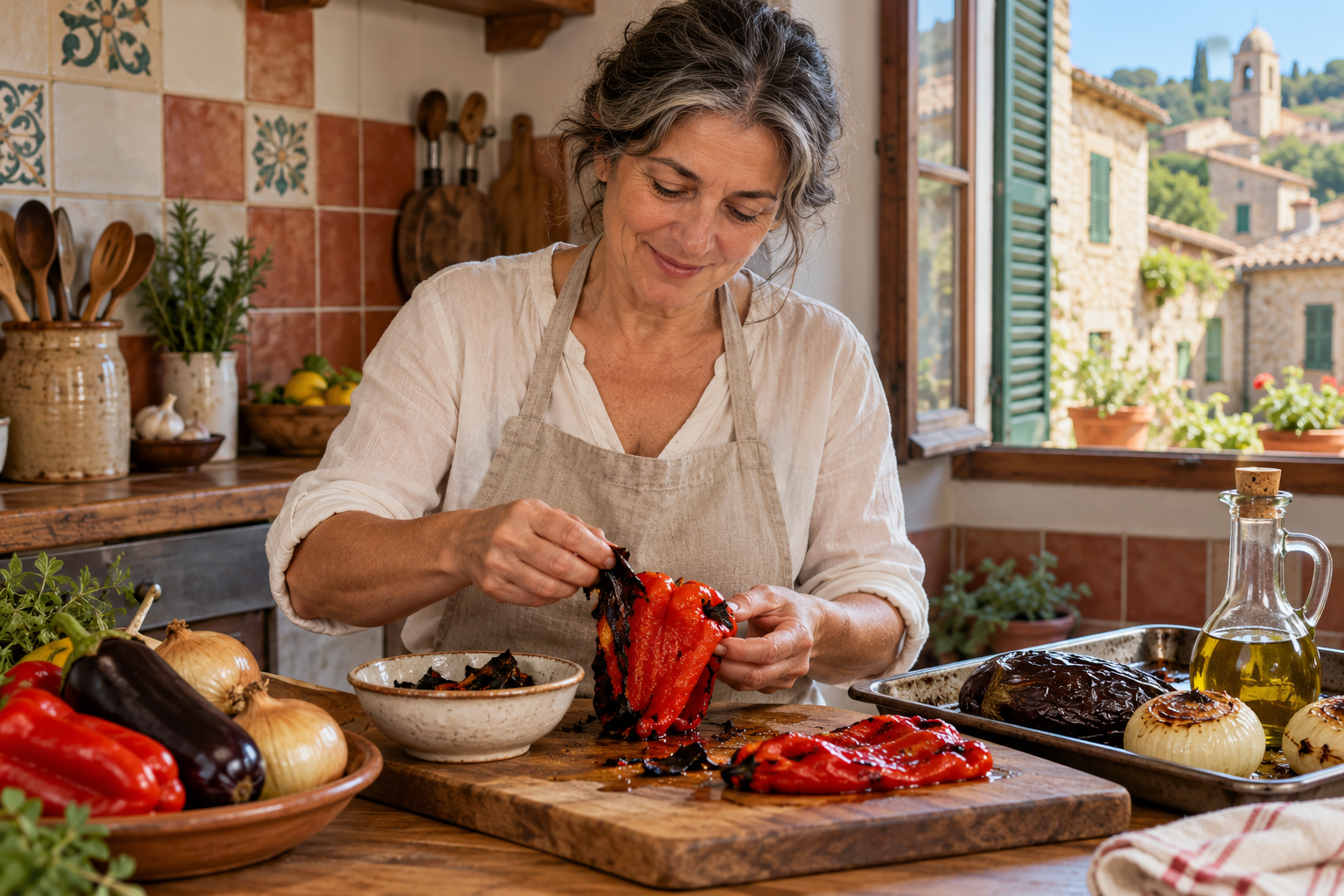
If the dough is the canvas, escalivada is the painting, and it is what makes coca de recapte the thing it is. Escalivada is roasted red peppers, aubergine, and onion, cooked slowly until their skins char and their flesh turns meltingly soft and sweet, then peeled and torn or sliced into strips and dressed simply with good olive oil and salt. The name comes from a Catalan word meaning to cook in embers, and that smoky, fire-roasted character is the heart of the dish, the roasting concentrating the vegetables into something deep and sweet and savory all at once.
Laid across the coca in alternating strips of red pepper and dark aubergine, glistening with oil, the escalivada is both the flavor and the look of the dish, and it is emphatically not interchangeable with a scatter of raw toppings. The vegetables must be properly roasted, charred and soft, because that transformation is the whole point, and a coca topped with underdone vegetables misses everything that makes it special. Traditionally the escalivada is finished with a few anchovies, whose salty punch cuts beautifully through the sweet roasted vegetables, though smoked sardines, tuna, or, for a vegetarian version, nothing at all are all perfectly good, and some cooks add botifarra, the Catalan sausage. What you will not find on a traditional coca de recapte is cheese, since this is not a pizza and the roasted vegetables and their oil are rich enough to carry it alone. Get the escalivada right, deeply roasted and generously oiled, and the coca more or less makes itself. The roasting is where the magic happens, turning ordinary supermarket vegetables into something that tastes of sunshine and smoke, and it is worth doing patiently rather than rushing.
The Dough That Isn’t Pizza
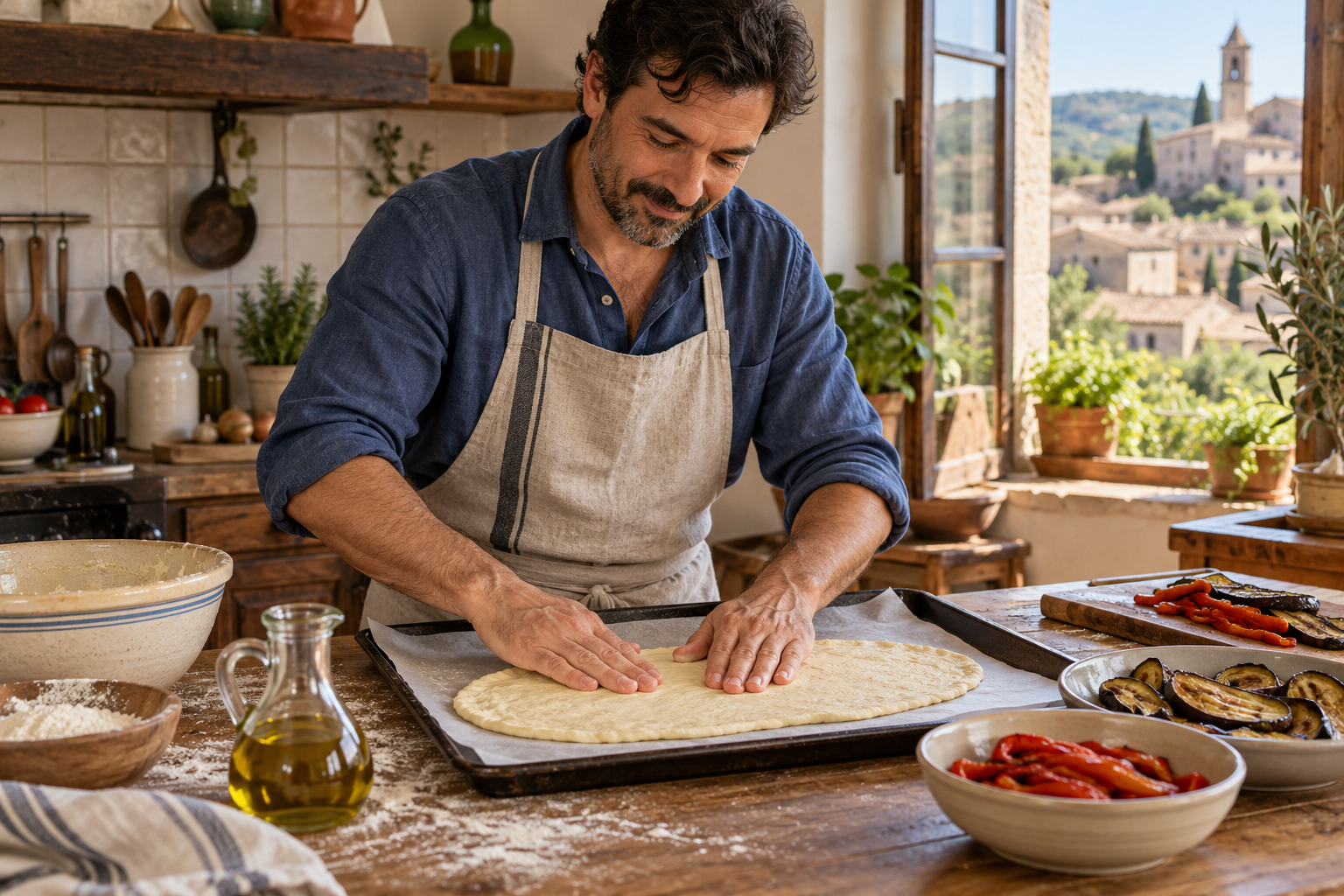
The base of a coca de recapte looks, at a glance, like pizza dough, and it is made from the same humble things, flour, water, olive oil, salt, and yeast, but the result is meant to be different, and understanding that difference is the key to a good coca. Where pizza aims, at least in its Neapolitan form, for a puffy, airy, chewy crust with a pronounced rim, coca is stretched thinner and baked to be crisper and denser, more like a cracker or a crisp flatbread than a bready pizza base. It is not trying to rise dramatically; it is trying to be a thin, sturdy, olive-oil-rich raft for the vegetables on top.
Making it is straightforward, well within reach of anyone who has never made bread. You combine the flour, water, oil, salt, and yeast into a dough and knead it until smooth, then let it rest and rise. Many recipes call for a long, slow rest, even eighteen to twenty-four hours in the fridge, which develops a better flavor and texture, but a simpler rise until doubled works perfectly well if you are in less of a hurry to plan ahead.
When it comes time to shape it, rather than tossing it into a round you press and stretch it into a thin, rustic oval or rectangle directly on your baking tray, the irregular, hand-shaped look being part of its rustic charm. Generosity with olive oil is characteristically Catalan and part of what gives the finished coca its flavor and its crisp edges. It is, in short, a forgiving, unfussy dough, in keeping with the unpretentious spirit of the whole dish. There is no need for the anxious precision that pizza obsessives bring to their crusts; a coca is meant to look hand-made and a little rough, and it tastes all the better for it.
Roast, Peel, Top, Bake
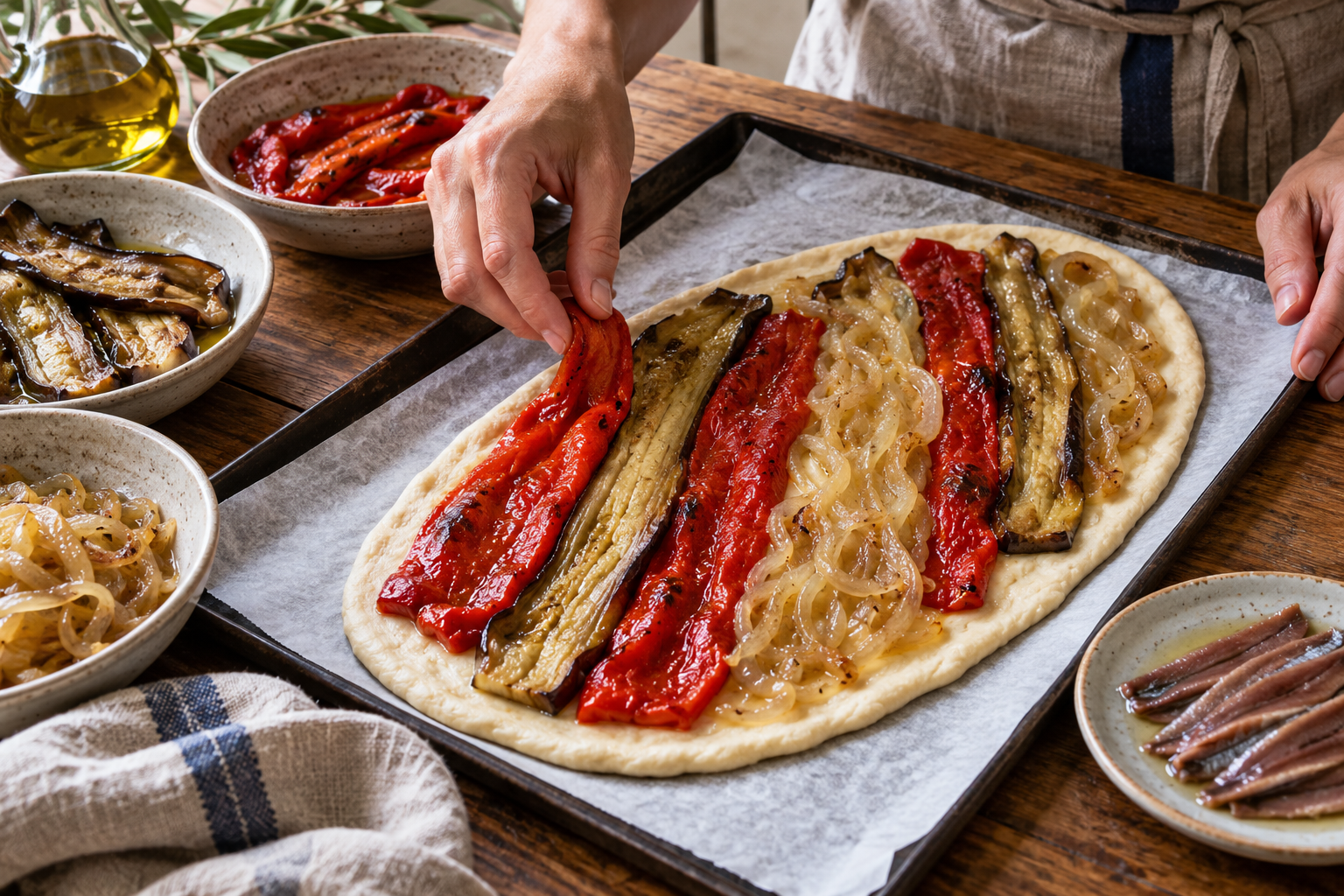
Putting a coca de recapte together is a matter of four simple stages, and the good news is that the two slow parts, the dough and the roasted vegetables, can both be done ahead, leaving only quick assembly and baking at the end. First you make and rest the dough, as above. Then you roast the vegetables: whole red peppers, aubergine, and onion go into a hot oven, around 190 to 200 degrees Celsius or 375 to 400 Fahrenheit, and roast for the best part of an hour, turning once or twice, until their skins are blackened and blistered and the flesh inside is soft.
The peeling is the one slightly fiddly step, and there is a trick to make it easy: as soon as the roasted vegetables come out of the oven, cover them and let them sweat for ten or fifteen minutes, which loosens the charred skins so they slip off readily. Peel them, discard the skins and the pepper seeds, and tear or slice the soft flesh into long strips, then dress with olive oil and salt.
Now you assemble: stretch the dough thin on the tray, lay the strips of pepper, aubergine, and onion across it, alternating the colors, drizzle generously with olive oil, and add the anchovies or sardines if using. Then it bakes in a hot oven for twenty to thirty minutes, until the base is crisp and golden and the edges are browned. A final drizzle of good olive oil, a scatter of flaky salt, and perhaps a little fresh rosemary, and it is ready, best served warm rather than piping hot, cut into squares or strips, with a glass of cold white wine. Made this way, coca de recapte is proof that Catalonia perfected the topped flatbread quietly, in its own way, while the rest of the world was busy arguing about pizza. Bring one to the table and you are serving something genuinely old and genuinely Catalan, a taste of the Mediterranean that most of your guests will never have heard of and none of them will forget.
Making Coca de Recapte
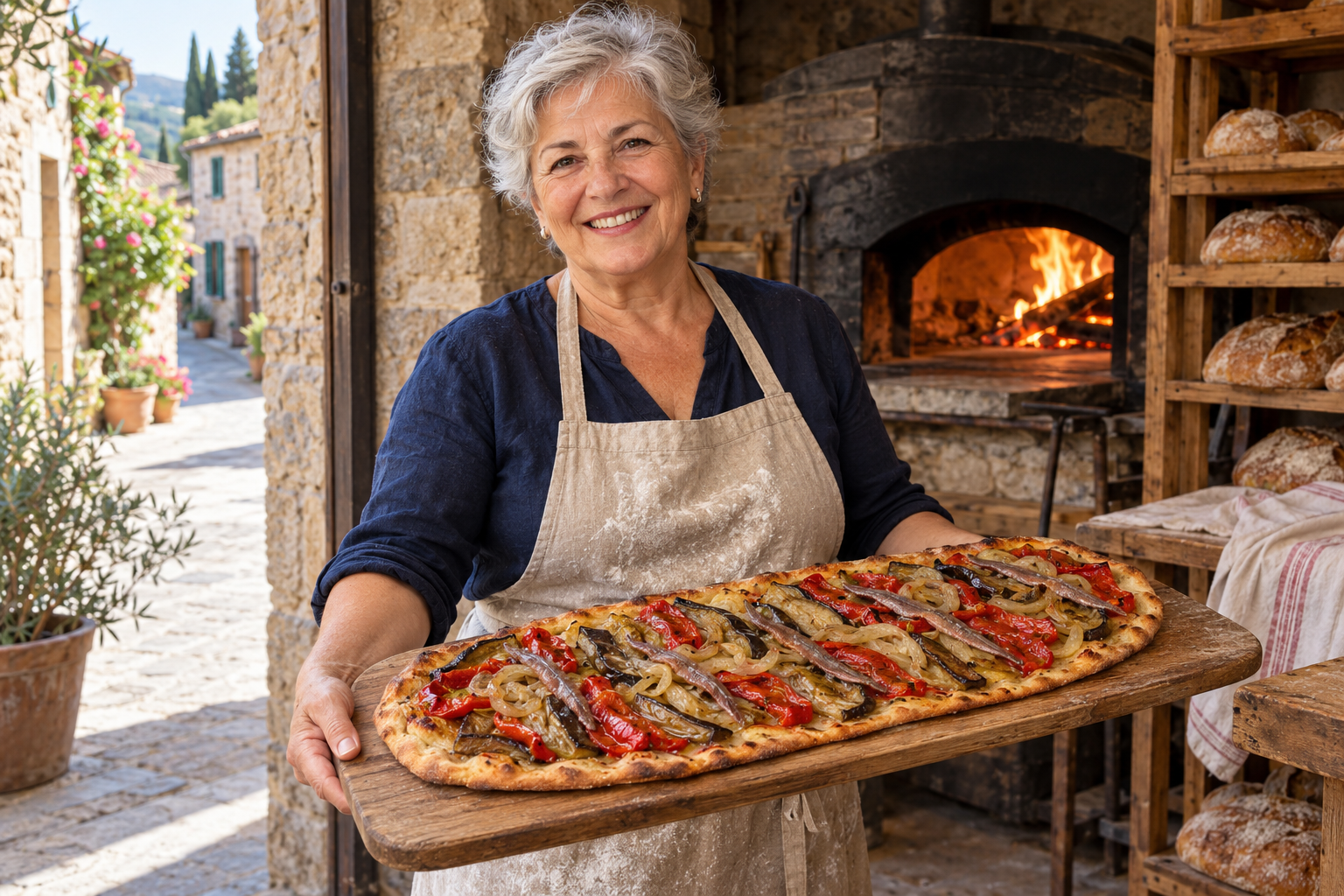
Here is a classic coca de recapte, making one large flatbread. The dough and the escalivada can both be made ahead.
Ingredients
For the dough:
- 300 g bread flour
- 180 ml warm water
- 3 tablespoons olive oil
- 1 teaspoon salt
- 5 g dried yeast
For the topping:
- 2 red peppers
- 1 aubergine
- 1 onion
- Olive oil and salt
- Anchovies or smoked sardines, optional
- Fresh rosemary, optional
Instructions
- Mix the flour, water, oil, salt, and yeast into a dough, knead until smooth, and let it rise until doubled, or rest it overnight in the fridge for better flavor.
- Roast the whole peppers, aubergine, and onion in a hot oven, about 200 C or 400 F, for around 45 minutes to an hour, turning, until the skins are charred and the flesh is soft.
- Cover the roasted vegetables and let them sweat for 10 to 15 minutes, then peel them, discard skins and seeds, and tear or slice the flesh into strips. Dress with olive oil and salt.
- Stretch the dough thin into a rustic oval on a baking tray lined with paper.
- Lay the strips of pepper, aubergine, and onion over the dough, alternating them, drizzle generously with olive oil, and add anchovies or sardines if using.
- Bake in a hot oven, around 220 C or 425 F, for 20 to 30 minutes, until the base is crisp and golden and the edges browned.
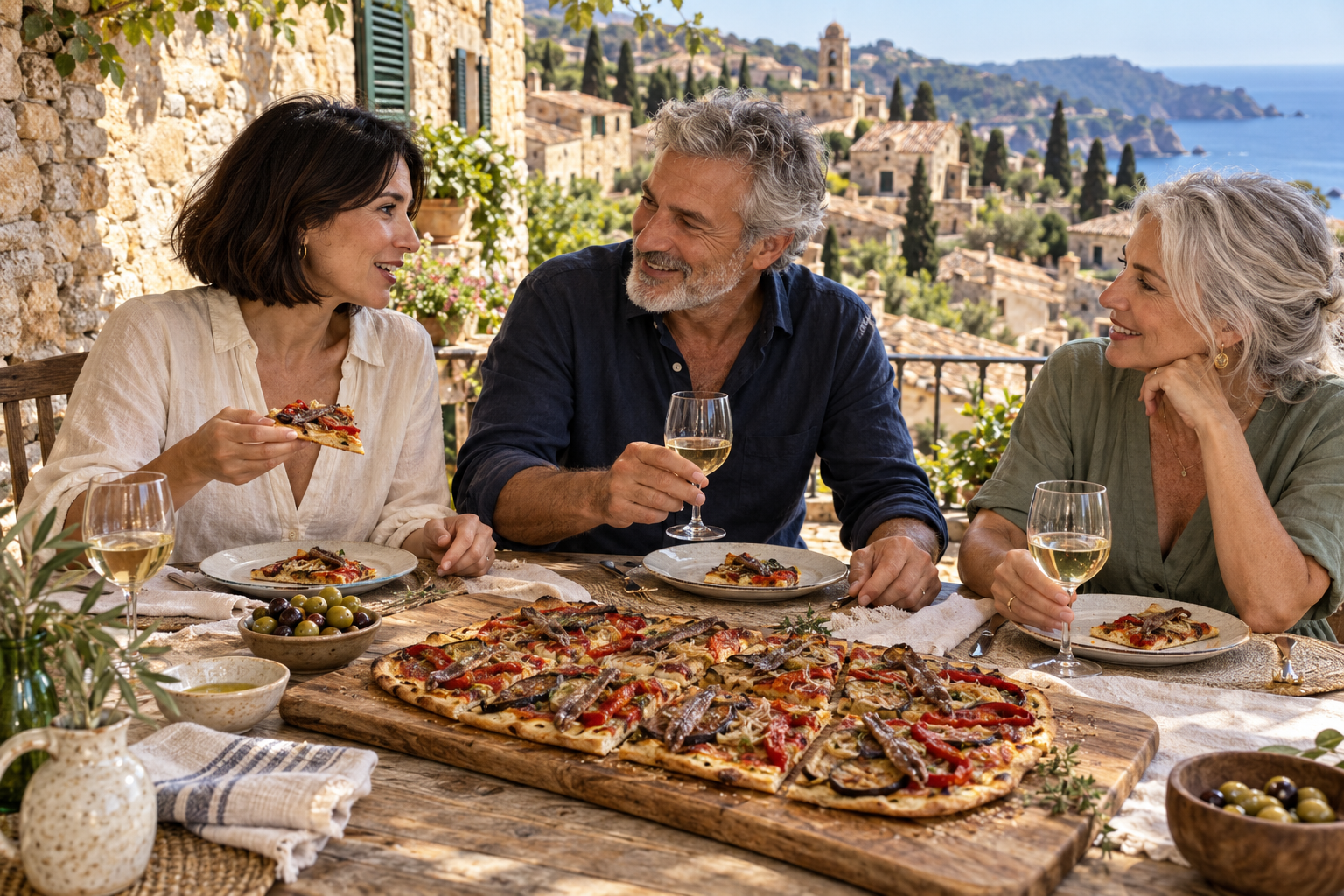
- Finish with a drizzle of olive oil, flaky salt, and rosemary, and serve warm, cut into squares, with a glass of cold white wine.
And do not be tempted to treat it like a pizza, since the whole character of coca de recapte is the deeply roasted escalivada on a thin, crisp, cheeseless base, so roast your vegetables properly, be generous with the olive oil, skip the cheese, and taste a flatbread that was perfected long before the pizza debate began.

About the Author: Ruben, co-founder of Gamintraveler.com since 2014, is a seasoned traveler from Spain who has explored over 100 countries since 2009. Known for his extensive travel adventures across South America, Europe, the US, Australia, New Zealand, Asia, and Africa, Ruben combines his passion for adventurous yet sustainable living with his love for cycling, highlighted by his remarkable 5-month bicycle journey from Spain to Norway. He currently resides in Spain, where he continues sharing his travel experiences with his partner, Rachel, and their son, Han.