
For a lot of Americans thinking about a long trip to Europe, or a move there for good, one member of the family complicates everything: the dog. Leaving them behind is simply unthinkable, so the question becomes how, exactly, you get a dog across the Atlantic in the first place, and the answer in 2026 is that it is entirely doable, but more involved, more expensive, and more full of hidden traps than almost anyone expects going in. The rules are strict, the paperwork has a rigid order that cannot be broken, the costs quietly add up in ways the airline website never shows you, and there is one particular problem, all to do with the size of your dog, that catches people out again and again and again. Here is what flying to Europe with your dog actually costs in 2026, the paperwork you need and the order you need it in, and the things nobody tells you until it is almost too late. None of it is beyond an organized owner, but almost all of it rewards starting months, not weeks, before you fly.
What follows is the two separate systems you have to satisfy, the EU paperwork in its strict order, what the whole thing actually costs, the big-dog problem nobody warns you about, and the other traps worth knowing before you book.
The Two Systems You Have to Satisfy
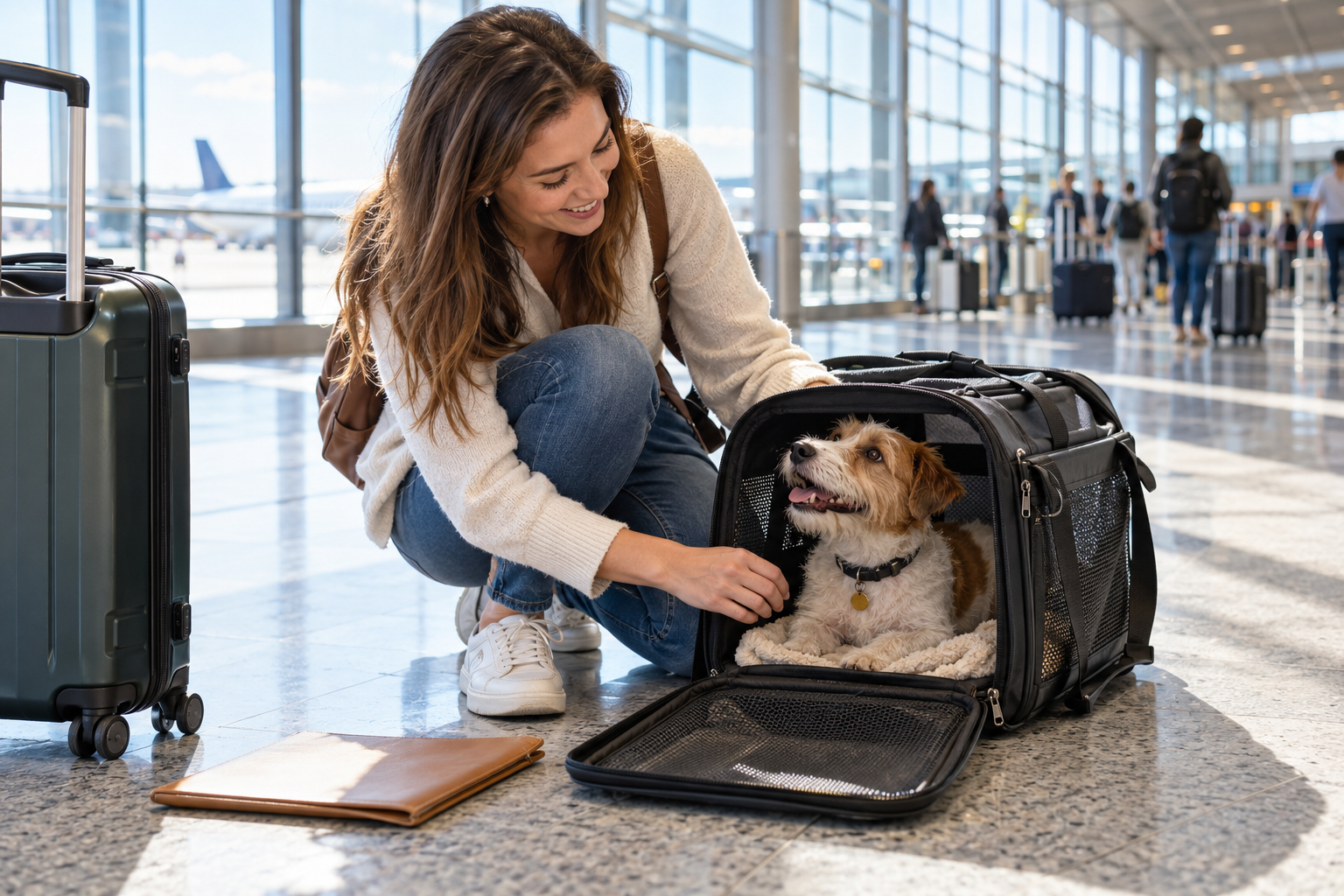
The single most useful thing to understand at the outset, because getting it wrong is what trips up even careful people, is that taking a dog to Europe means satisfying two completely separate sets of rules, not one. The first is the European Union’s entry requirements, the government rules about microchips, vaccinations, and health certificates that determine whether your dog is legally allowed into Europe at all. The second is your airline’s own pet policy, an entirely separate matter of whether and how that particular airline will physically carry your dog, and at what price.
These two systems do not talk to each other, and meeting one does not mean you have met the other, which is exactly the trap. It is perfectly possible to have flawless EU paperwork and then discover no airline on your route will carry a dog your size, or to book a pet-friendly flight and then find your dog cannot legally enter because a vaccination was done in the wrong order. Experienced travelers get caught out precisely because they assume that if the airline says yes, the trip is sorted, when in fact airline approval and legal entry are two different hurdles you have to clear independently. So the right way to plan is to treat them as two parallel checklists that both have to be complete before you fly, and to start both early, because each has its own timing and its own ways of going wrong. Keep that division clear in your head and the whole process becomes manageable; forget it, and you set yourself up for a nasty surprise at the check-in desk or the border. The people who have miserable experiences are almost always the ones who nailed one system and assumed it covered the other.
The EU Paperwork, in Order
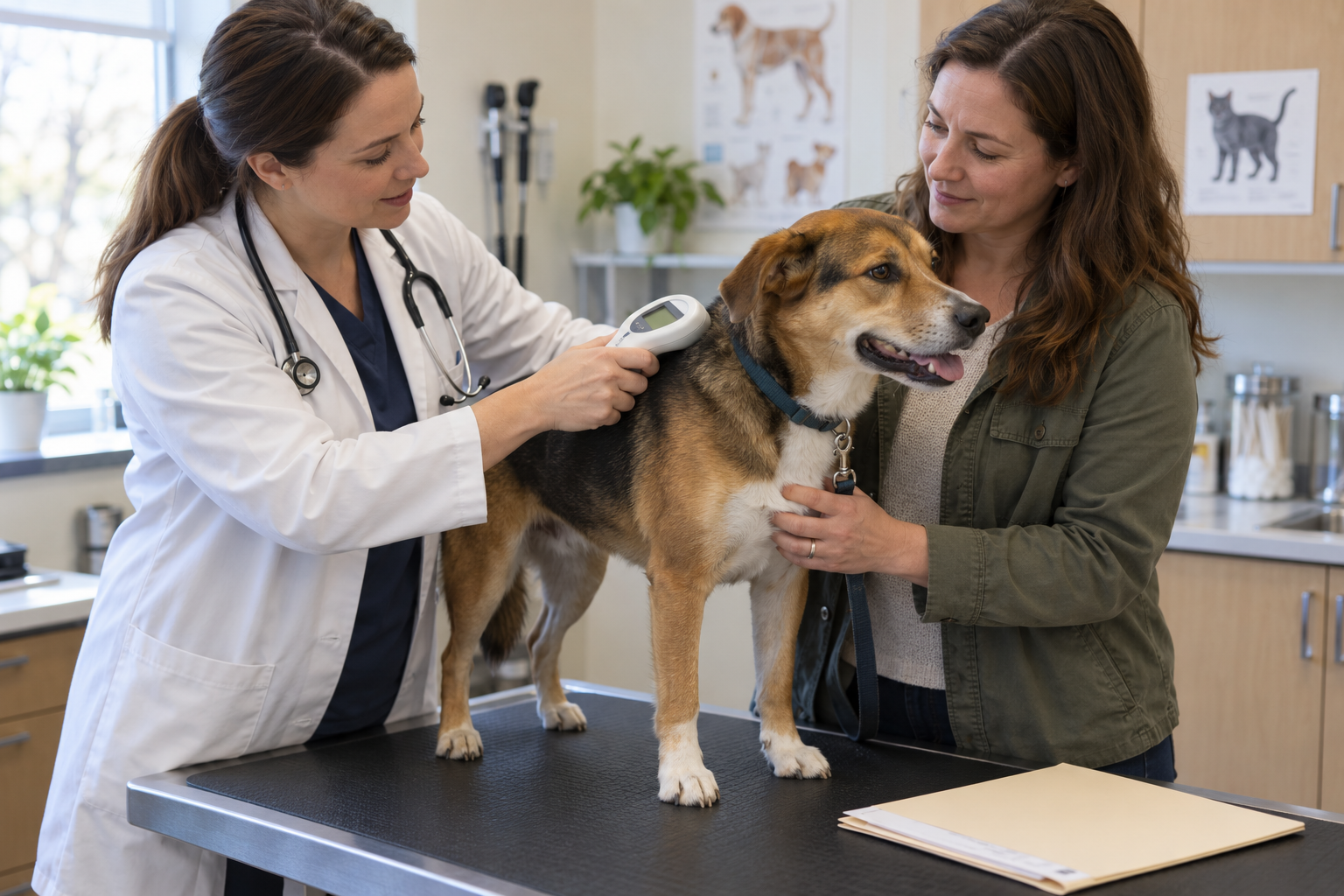
The European side comes down to three things, and the crucial, non-obvious point is that they must happen in the right sequence, because Europe is strict about the order as well as the substance. First, your dog needs an ISO-standard fifteen-digit microchip, the kind Europe reads, and it must be implanted before the next step. Second, your dog needs a valid rabies vaccination, and this is where order matters most: the rabies shot must be given after the microchip is in place, and for a first vaccination you must then wait at least twenty-one days before traveling. If your dog was vaccinated before it was chipped, that vaccination does not count for EU purposes and must be redone, with a fresh waiting period, a mistake that has derailed many trips.
Third, within ten days of your travel, a USDA-accredited veterinarian must complete an EU Animal Health Certificate for your dog, which then has to be endorsed by your state USDA office before you fly. That certificate is your dog’s entry ticket, valid for entry and for onward travel within the EU for four months, and there is no quarantine for a dog arriving from the US with everything in order. A couple of extra wrinkles are worth knowing: a handful of countries, such as Ireland, Finland, and Malta, additionally require a tapeworm treatment given a day or a few days before arrival, and the old EU pet passport is, as of 2026, being restricted to EU residents, so American visitors now generally need a fresh health certificate for each trip rather than a reusable passport. The order, then, is the thing to burn into your memory: chip first, then rabies, then wait, then the certificate within ten days, then the endorsement. Get that sequence right and the EU side is straightforward; get it out of order and no amount of goodwill at the border will fix it. This is the single most common way well-meaning owners come unstuck, so if you take one thing from the EU rules, let it be the order.
What It Actually Costs
The costs of all this come in two buckets, the paperwork and the flight, and neither is quite what people expect. On the paperwork side, the microchip is cheap, on the order of fifty dollars or so, and the rabies vaccination is modest too, but the real cost lives in the health certificate and its endorsement. Between the accredited vet’s exam and the paperwork, and the USDA APHIS endorsement fee on top, you are realistically looking at somewhere in the region of two hundred to five hundred dollars for the certificate process, and accredited vets price this very differently, so it genuinely pays to call around. All told, the pre-travel medical and paperwork bill commonly lands in the low hundreds of dollars, more if your dog needs shots or chipping done first. The endorsement step in particular catches people, since it is a government process with its own fee and timing that sits on top of whatever the vet charges, and it is not optional.
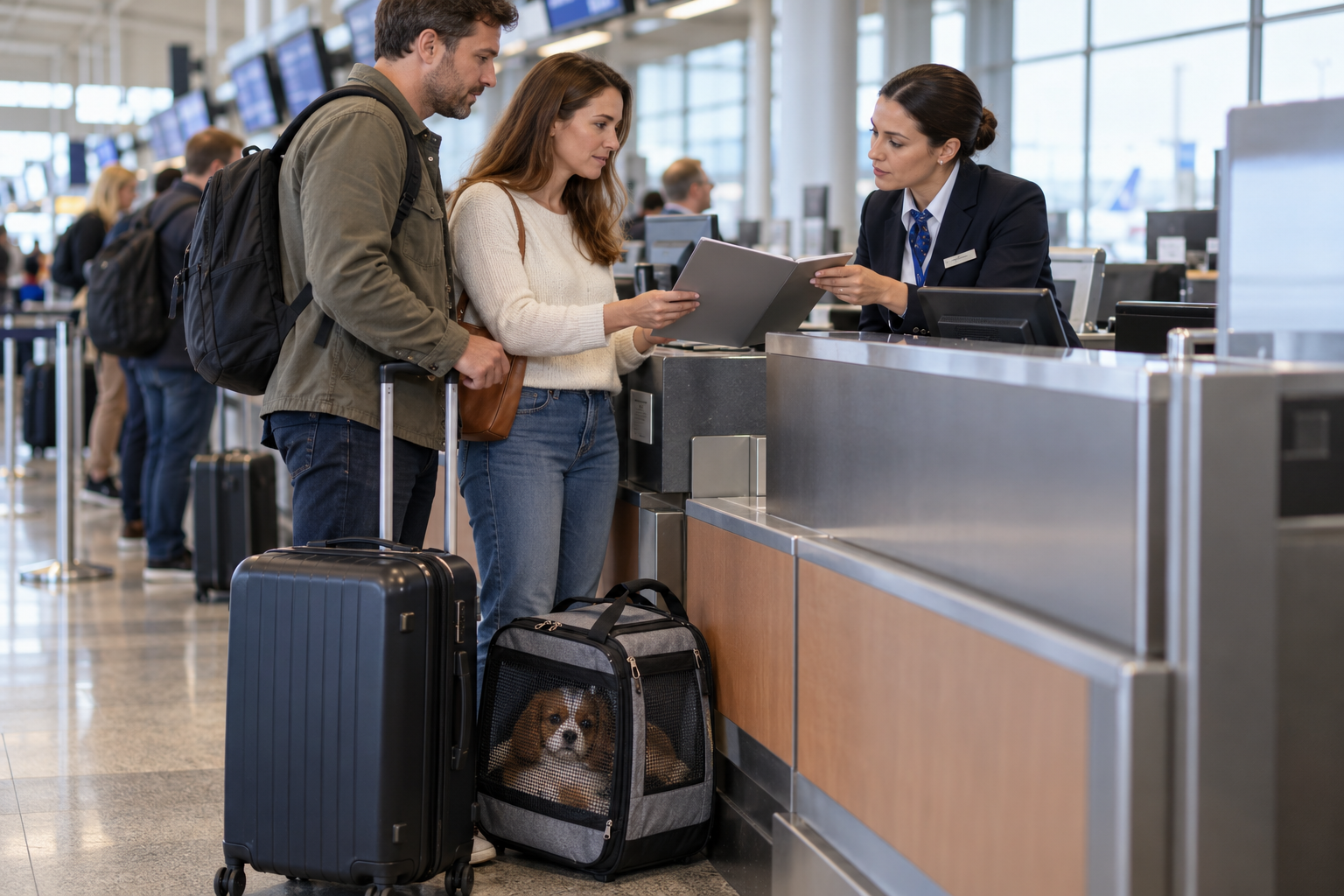
Then there is the airline’s pet fee, which is separate again and varies enormously with how your dog travels. A small dog in the cabin typically costs about one hundred to four hundred dollars each way, depending on the airline and route. A larger dog in the cargo hold costs considerably more, often several hundred dollars and running well into four figures for big dogs in large crates on connecting routes, and using a professional pet-shipping service, which many people with large dogs end up needing, can push the total higher still. Put the pieces together and a realistic all-in figure for a small dog traveling in the cabin, paperwork and flight combined, comes out around a thousand to twelve hundred dollars, while a large dog going as cargo can easily run two, three, or more times that. None of these are the headline numbers the airline shows when you book your own seat, which is a large part of why the cost comes as a shock, so the sensible move is to price the whole thing out in advance rather than assuming the pet is a minor add-on. Add up the vet work, the certificate, the endorsement, and the flight fee together before you commit, and there are no unpleasant surprises later.
The Big-Dog Problem Nobody Warns You About
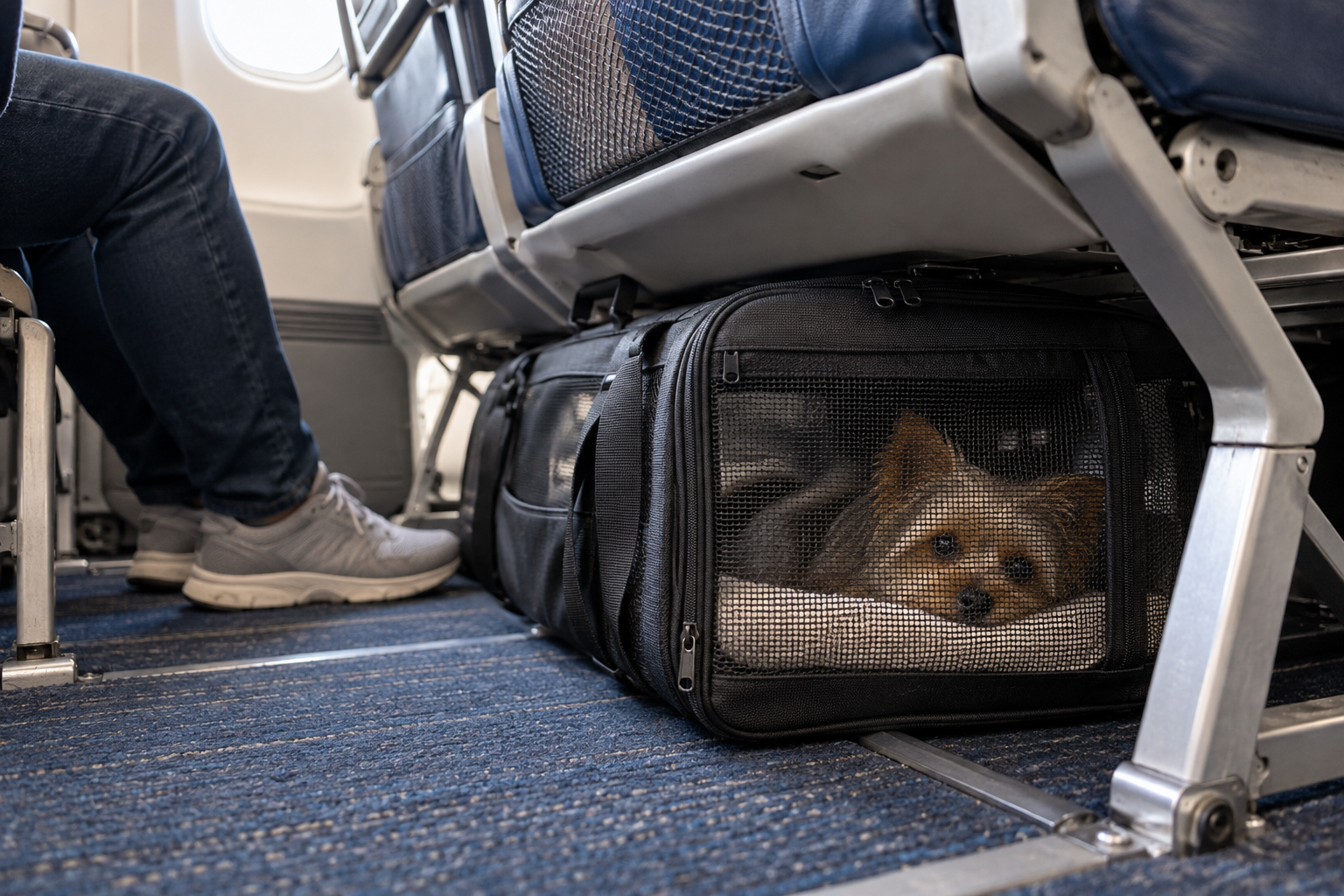
Here is the single biggest thing nobody tells you until you are deep into planning, and it reshapes everything for a lot of families: the size of your dog largely determines whether this is easy or a genuine ordeal. Only small dogs can fly in the cabin, because they have to fit in an airline-approved carrier under the seat in front of you, with a typical weight limit for international flights of around eight kilos, roughly seventeen pounds, including the carrier. If your dog fits that, cabin travel is relatively simple and affordable, and much of the horror-story material about pet travel simply does not apply to you. A calm ten-pound dog under the seat is about as easy as pet travel gets. If your dog does not, and most dogs do not, everything gets harder.
A dog too big for the cabin has to travel in the cargo hold, and this is where the real difficulties pile up. Many airlines, including several major US carriers, heavily restrict or simply do not accept pets in cargo on long-haul international flights, so your choice of airline narrows sharply, often to particular European carriers or to booking through a cargo or pet-shipping service rather than as ordinary luggage. On top of that, snub-nosed or flat-faced breeds are frequently banned from cargo altogether because the combination of their breathing and the hold is considered too risky, and airlines impose heat embargoes that stop cargo pet travel entirely during warm months. The upshot is that owners of large dogs, and of flat-faced dogs of any size, can find their options genuinely limited and their costs genuinely high, sometimes needing a specialist pet-relocation company and a budget in the thousands. This is the part that blindsides people, who assume that if they can fly, their dog can fly with them, and it is worth confronting honestly and early, because for some dogs and some routes the realistic answer is expensive and complicated rather than simple. Better to learn that six months out, when you still have options, than a fortnight before departure, when you do not.
The Move Versus the Visit
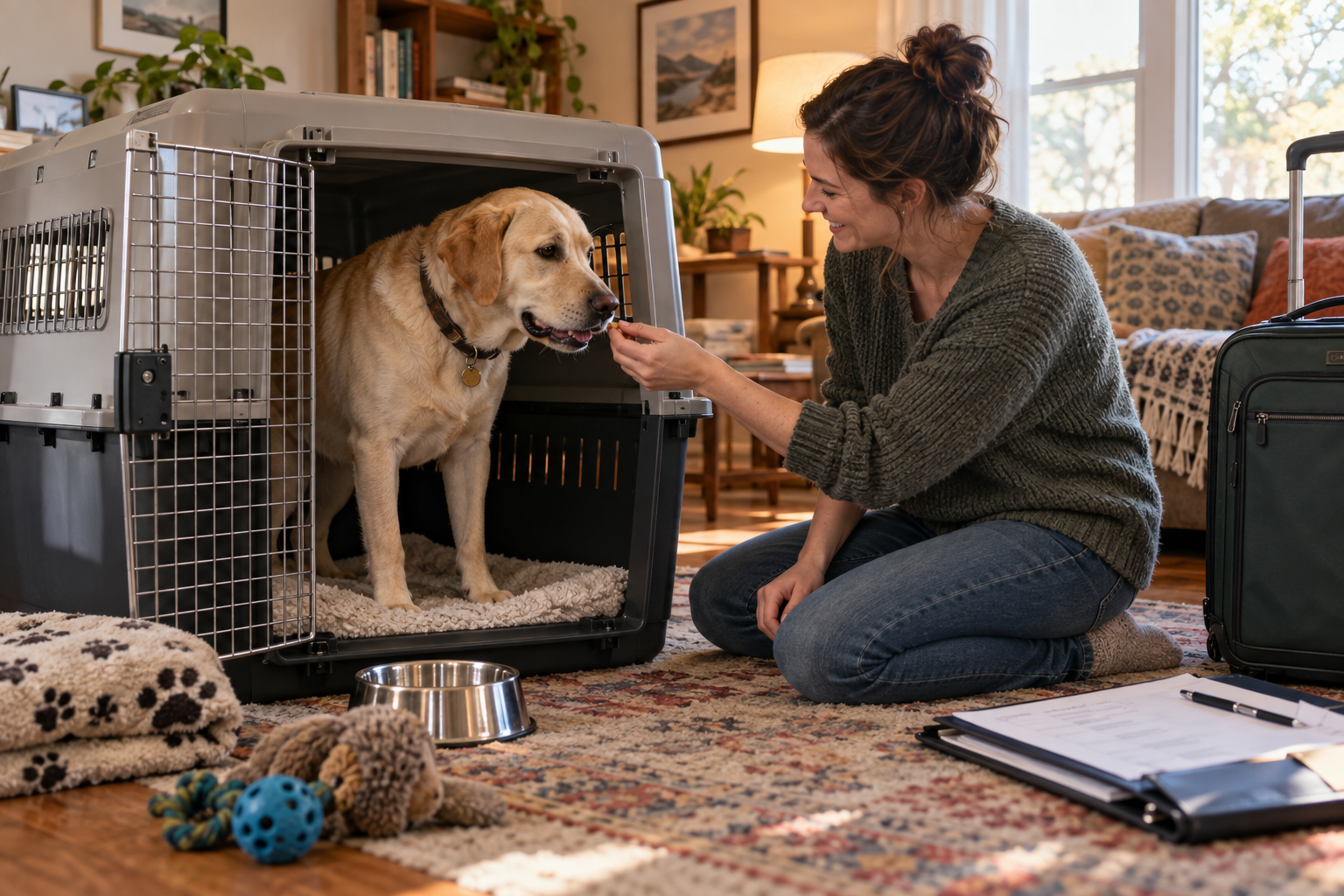
Somewhere in all this planning it is worth pausing on a question people often skip, which is whether to bring the dog at all, because the honest answer depends a great deal on why you are going. For a permanent move, or a stay of many months, the calculation is usually easy: the dog is family, the cost and hassle are a one-time price of admission to a new life, and once you are settled the paperwork lapses into the background. Nobody who is genuinely relocating agonizes for long over whether to bring the dog; they simply work out how.
A short trip is a different matter, and this is where a clear head helps. If you are going to Europe for a couple of weeks, the full cost, the paperwork scramble, the stress of the journey on the animal, and the reality that you will be dragging a dog through airports, trains, and unfamiliar cities may genuinely outweigh the benefit, and boarding the dog with a trusted sitter or kennel at home can be the kinder and cheaper choice. This is especially true for a large dog facing the cargo hold, or an older or anxious animal for whom a long-haul flight is a real ordeal rather than an adventure. None of this is a reason not to bring a beloved dog on the trip of a lifetime if that is what you want, but it is worth deciding deliberately rather than by default, weighing the animal’s comfort and the true cost against the length and nature of the trip. Bring the dog because you have thought it through and it is right for both of you, not simply because leaving them feels hard in the moment.
The Other Traps Worth Knowing

Beyond the big-dog problem, a handful of smaller traps catch travelers out, and knowing them in advance is most of the battle. The first is the airline pet cap: airlines allow only a limited number of animals per flight, in the cabin especially, so the pet slot can sell out, which means you must book your dog onto the flight at the same time you book yourself, not as an afterthought, and confirm it directly with the airline. Turning up with a booked seat and an unbooked dog is a real way to be separated from your pet at the gate, or forced onto a later flight. The second is the ten-day certificate window, which is genuinely tight, since your accredited vet appointment and the USDA endorsement both have to happen within ten days of travel, so you need to line up the vet, and understand the endorsement process, well ahead even though the certificate itself can only be issued at the last minute.
The third is the trip home, because bringing a dog back into the United States now has its own CDC rules, so the return leg needs planning too and is not simply a mirror of the outbound.
And running under all of it is the welfare of the animal itself, which argues for direct flights over connections where possible, for a properly sized airline-compliant crate for any dog traveling in cargo, and for a realistic assessment of whether a long journey is fair on an older or anxious dog at all. The practical way through all of this is to plan backward from your departure date, building in the microchip-then-rabies-then-wait sequence, the ten-day certificate window, and the airline booking, and to lean on official sources, your vet, the airline, and the USDA, to confirm the current specifics, since the rules do change. Do that, start early, and keep the two systems straight, and flying to Europe with your dog in 2026 is entirely achievable. Go in assuming it is as simple as buying an extra ticket, and you are setting yourself up for exactly the scramble, and the bill, that nobody warned you about. The dogs that make the trip happily are almost always the ones whose owners started planning early, priced it honestly, and matched the plan to the animal in front of them.

About the Author: Ruben, co-founder of Gamintraveler.com since 2014, is a seasoned traveler from Spain who has explored over 100 countries since 2009. Known for his extensive travel adventures across South America, Europe, the US, Australia, New Zealand, Asia, and Africa, Ruben combines his passion for adventurous yet sustainable living with his love for cycling, highlighted by his remarkable 5-month bicycle journey from Spain to Norway. He currently resides in Spain, where he continues sharing his travel experiences with his partner, Rachel, and their son, Han.