
Walk into a European bedroom for the first time as an American and something is quietly, disorientingly missing. There is no closet. The wall where you would expect a set of sliding doors, or a reach-in cupboard, or at the very least a rod and a shelf, is just a wall, blank and unbroken. Instead, standing against it or in a corner, is a large freestanding wardrobe, a piece of furniture rather than a part of the house.
For an American, raised to think of a bedroom as automatically coming with somewhere built in to hang clothes, this absence is genuinely startling, and the first practical question is a small panic: where on earth do the clothes go? You stand there in the empty room, suitcase at your feet, looking at a wall that back home would have held a closet, and the everyday certainty that a bedroom simply comes with storage quietly falls apart. The answer, and the whole wardrobe culture behind it, turns out to be one of the more quietly revealing small differences between American and European homes. Here is why European homes so often have no closets, and why nobody who lives in them seems to miss them at all. Like so many differences that startle a newcomer, it turns out to have a perfectly good logic behind it, once you stop expecting Europe to do things the American way.
What follows is the missing closet itself, why the built-in closet never really happened in Europe, the popular tax story and whether it is true, the wardrobe as a piece of furniture, and why, in the end, nobody misses the closet.
The Missing Closet

The first thing to establish is just how normal the absence is, because an American might assume they have simply landed in an unusually old or basic home. They have not. Across much of Europe, the built-in closet that Americans take for granted is simply not a standard feature, in older buildings especially but often in newer ones too. A European bedroom typically comes as a plain room with four walls, and the storage of clothes is left to furniture the occupant provides, most commonly a large freestanding wardrobe, called an armoire in France, a Kleiderschrank or Schrank in Germany, and known to a generation of shoppers everywhere by the name of a certain flat-pack model.
This catches Americans out in a very practical way, particularly when renting. An apartment advertised as unfurnished in Europe can be startlingly bare by American standards, and that often includes having nowhere at all to put your clothes, so one of the first things a new arrival may have to do is go out and buy a wardrobe, an expense and a logistical puzzle that never occurs to someone used to walls full of built-in closets. The absence is not a sign of a cheap or old property; it is simply how European homes tend to work, with clothing storage treated as movable furniture rather than fixed architecture. A brand-new luxury apartment in Madrid or Berlin may hand you the same blank bedroom wall as a hundred-year-old flat, and neither considers it a shortcoming. Once you notice it, you see it everywhere, in grand old apartments and sleek new builds alike, and the initial where-do-the-clothes-go panic gives way to the realization that an entire continent has organized its bedrooms around a completely different assumption about where storage belongs. It is one of those small things that quietly signals you are genuinely somewhere else, not just an American house with a foreign address.
The Unfurnished Rental Shock
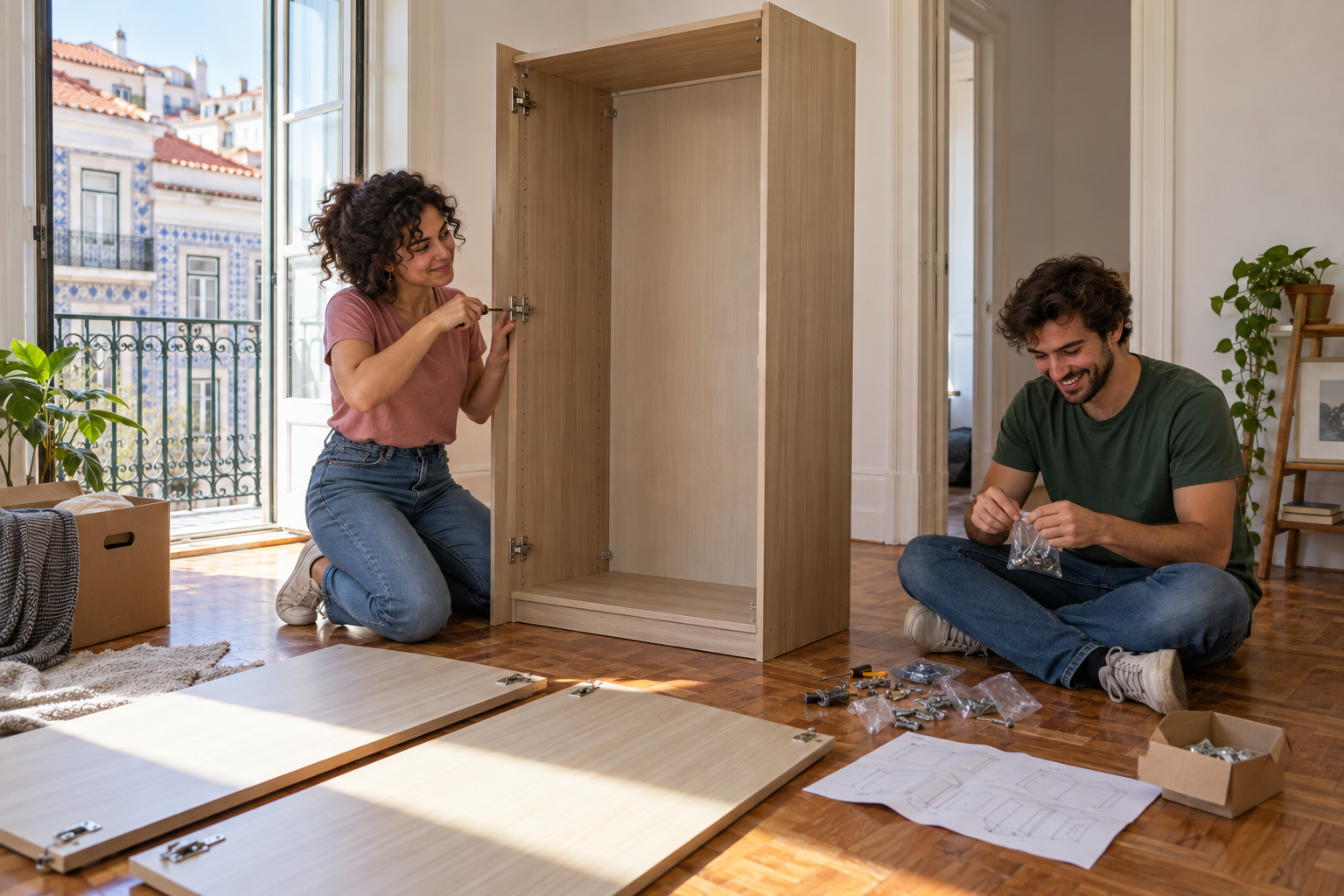
The missing closet is often an American’s first encounter with a broader and more jarring truth about European homes, which is what unfurnished really means when you rent one. In the United States, an unfurnished apartment still comes with the fixed essentials: closets in the bedrooms, a fitted kitchen with appliances, light fixtures in the ceilings. In much of Europe, unfurnished can mean genuinely, alarmingly empty, and the absent closet is just the most visible part of it.
In some countries, Germany above all, a truly unfurnished rental can arrive with no wardrobes, no light fixtures hanging from the wires, and, most shocking of all to an American, sometimes no kitchen at all, just plumbing and a blank space where the previous tenant took their entire fitted kitchen with them when they left. The logic is the same one that governs the wardrobe: in a culture where storage, and even kitchens, are treated as furniture you own rather than fixtures of the property, tenants bring their own and take it with them. For the new arrival this can be a genuine and expensive surprise, turning move-in day into a scramble to buy and assemble not just a wardrobe but sometimes an entire kitchen. Seasoned expats warn each other about it, and the flat-pack furniture stores do a brisk trade in exactly the newly-arrived who have just opened the door to their empty new home. The practical lesson is to ask precisely what unfurnished includes before signing anything, because the American assumption that the basics come with the walls simply does not hold, and the missing closet is your first clue that the whole notion of what belongs to a home and what belongs to its occupant is drawn along a different line here.
Why the Built-In Closet Never Happened
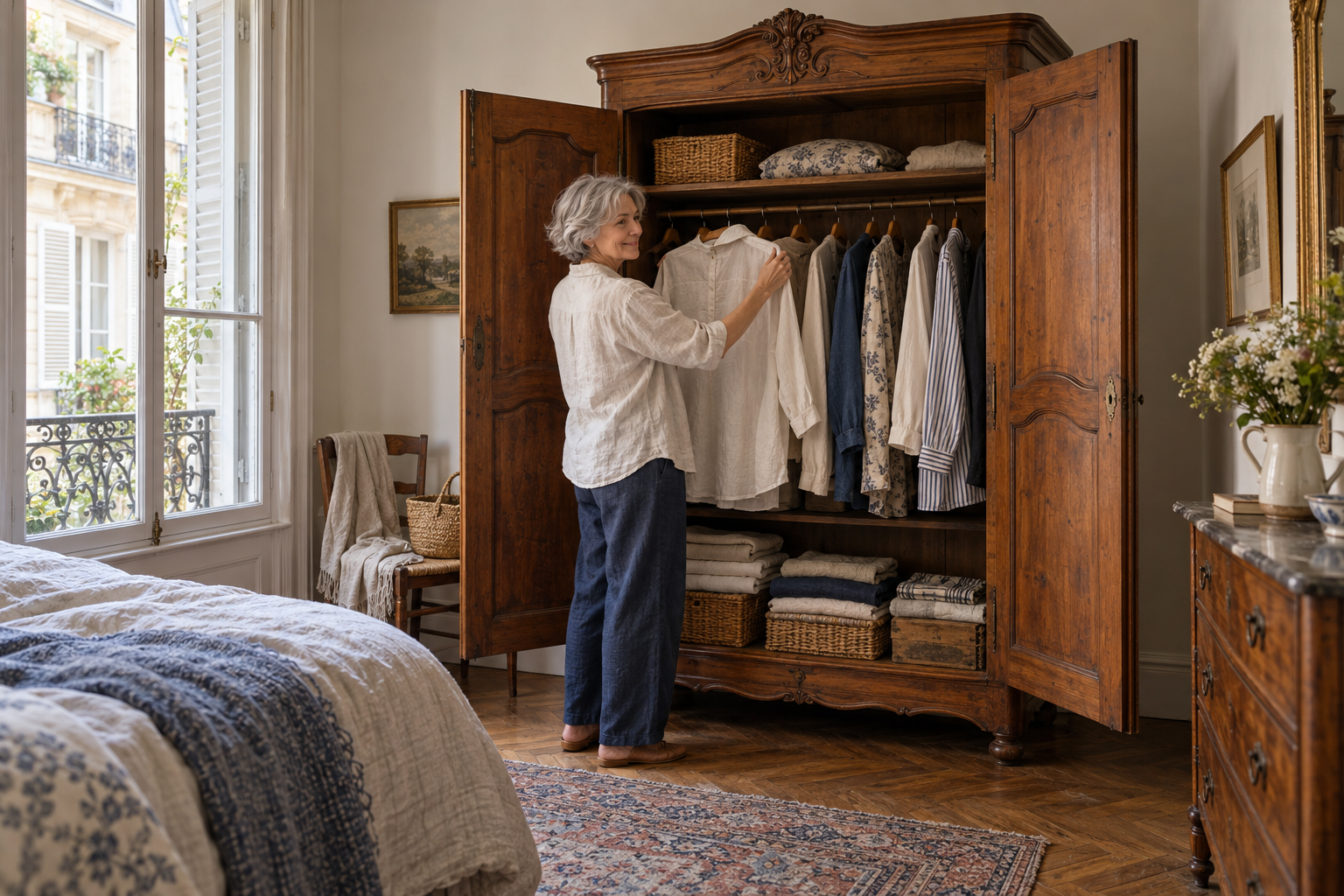
To understand the missing closet you have to go back to how European homes were built, because the answer is mostly a matter of history and architecture. A great deal of Europe’s housing stock is genuinely old, built in centuries when the very idea of a built-in closet did not exist and when clothes, of which people owned far fewer, were kept in chests, trunks, and freestanding cupboards. Storage was furniture, not construction, and the wardrobe, whose very name comes from a piece of furniture for keeping clothes, was the natural and universal solution. For most of history, in most of the world, this is simply how people kept their clothes, and the built-in closet is the historical oddity, not the freestanding wardrobe. Those old buildings, with their thick masonry walls and small, tightly-planned rooms, offered neither the space nor the easy construction for carving out fitted closets, and many of them are now historic or protected, so they cannot be readily altered even today.
That inheritance set a pattern that simply persisted. Because homes had always used freestanding storage, the expectation and the design conventions grew up around furniture rather than built-ins, so even as newer buildings went up, developers often did not bother adding closets that buyers were not expecting and would fill with their own wardrobes anyway. Add to this the enduring smallness of European rooms, where a built-in closet would eat scarce and expensive floor space that a slim wardrobe against the wall uses more efficiently, and the freestanding solution keeps making sense. The built-in closet is less a thing Europe lost than a thing it never adopted, because its housing grew from an older tradition in which the wardrobe, not the wall, was where clothes lived. What looks to an American like a strange omission is really just the long shadow of centuries of building homes a different way. The closet-lined American bedroom is itself a relatively recent invention, born of new, spacious, purpose-built suburban housing; Europe simply never had the blank slate to build that way at scale.
The Tax Story, and Whether It Is True
There is a tidier and more entertaining explanation that gets repeated endlessly whenever this subject comes up, and it deserves examination because it is only partly true. The story goes that in various European countries, and Germany is the one most often named, built-in closets used to be taxed as if they were additional rooms, so homeowners deliberately left them out and used movable wardrobes instead to keep their tax bills down. It is a satisfying tale, the kind of quirky historical explanation that feels like it must be the real reason, and you will find it stated confidently all over the internet.
The honest truth is that this tax story is, at best, a partial and disputed explanation, and quite possibly more folklore than fact. Versions of it attach to several countries, including a parallel American legend about a closet tax imposed by the British crown in colonial times, and historians and long-term residents often push back on the idea that room-counting for tax was really what drove the wardrobe habit. The more mundane and better-supported explanation is the architectural one: old buildings, small rooms, a furniture-based storage tradition, and design conventions that simply carried forward. The tax angle may have played some minor role in some places at some times, but it is almost certainly not the main reason, and it functions mostly as a memorable story people reach for because it is more colorful than the true answer of history and habit. It is worth knowing precisely so you can enjoy the tale without believing it settles the question, since the real explanation is less catchy but far more solid. When someone confidently tells you the closets were taxed away, you can nod, share the story, and quietly file it under things that are fun to say and probably not quite true.
The Wardrobe as a Piece of Furniture

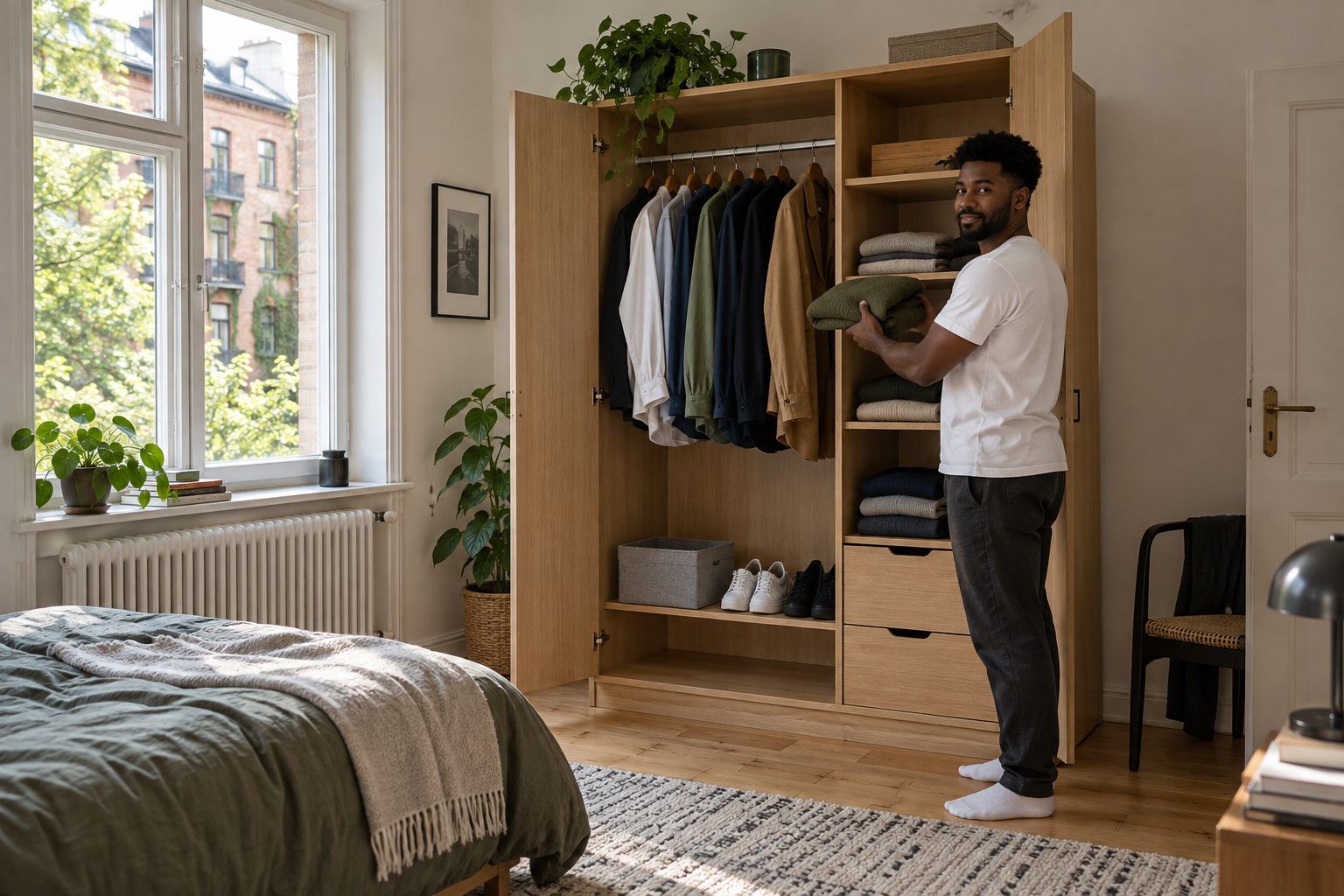
To really understand the European approach, though, you have to stop thinking of the wardrobe as a poor substitute for a proper closet and start seeing it as Europeans do, which is as a genuine and often valued piece of furniture. In much of Europe, the wardrobe is not a grudging workaround but a real item of household furniture, bought and chosen with care, sometimes an inherited antique, sometimes a sleek modern unit, occasionally the centerpiece of the bedroom. An old French armoire or a solid German Schrank can be a substantial, handsome, even treasured object, the kind of thing passed down through a family, and even the humble flat-pack modern versions are chosen and configured to taste. A closet is something you are given by the building; a wardrobe is something you choose, which changes your whole relationship to it.
This furniture-based approach has real advantages that the built-in closet lacks, which is a large part of why Europeans do not feel deprived. A freestanding wardrobe is yours, not the building’s, so it comes with you when you move, meaning you carry your storage from home to home rather than leaving it behind in the walls.
It is flexible, able to be positioned where you want, reconfigured, added to, or replaced as your needs change, in a way a fixed closet never can be. And modern modular wardrobe systems, the flat-pack kind above all, let people build exactly the storage they want, customized with drawers, rails, and shelves, often more cleverly organized than a plain builder’s closet. Seen this way, the wardrobe is not the thing Europe has instead of closets so much as a different and arguably more sensible answer to the same problem, one that treats storage as a possession you own and shape rather than a feature of the property you happen to rent or buy. The American sees a missing closet; the European sees a piece of furniture doing the same job better. It is the same difference in miniature that runs through so much of European life, a preference for the flexible, owned, and movable over the fixed and built-in, and once you adopt the European frame it stops feeling like something is missing at all.
Why Nobody Misses the Closet
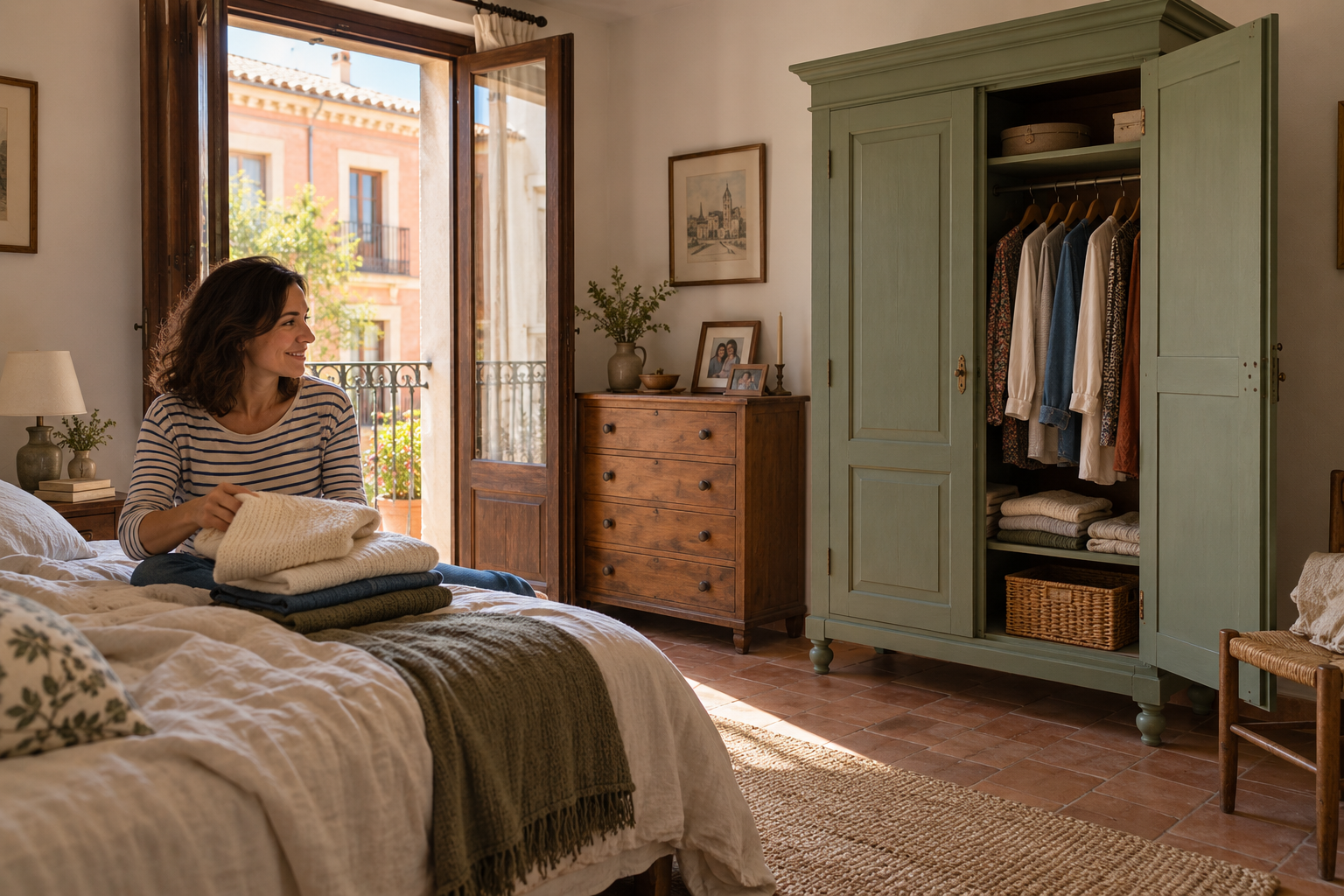
Which brings us to the heart of it: for all an American’s initial dismay, Europeans genuinely do not miss the built-in closet, and once you understand their system it is easy to see why. The wardrobe does the job perfectly well, holding clothes just as a closet would, so nothing is actually lost in function. And the freestanding approach carries the advantages already mentioned, portability, flexibility, and the pleasure of owning a real piece of furniture, that a fixed closet cannot offer, so for a European the trade is not a sacrifice at all but simply a different and often preferable arrangement.
There is a deeper cultural thread here too, which is that Europeans have traditionally owned fewer clothes and possessions than Americans, and had less need for the cavernous storage that American closets, and especially walk-in closets, are built to swallow. A well-chosen wardrobe is ample for a more modest quantity of clothing, and the whole American arms race of ever-larger closets to hold ever-more stuff is simply not a game most Europeans are playing. The walk-in closet, that quiet symbol of American consumer abundance, has no real equivalent in a culture that never built its homes, or its buying habits, around storing quite so much.
For an American moving over, the adjustment is real but small, amounting to buying a wardrobe or two, accepting that an unfurnished flat may truly be empty, and letting go of the assumption that storage comes with the walls. And a surprising number, having made the switch, come to prefer it, appreciating furniture they own and can take with them, and often finding that the discipline of finite, visible storage curbs the accumulation of things they never needed. A wardrobe that is visibly full tells you to stop buying in a way a cavernous closet, with its endless dark corners, never does. The closet, after all, is just a room-shaped box you cannot take with you; the wardrobe is furniture you can, and once you see it that way, the missing closet stops looking like a lack and starts looking like a choice, and a rather sensible one at that. Give it a year, and you may find yourself faintly baffled that you ever hung your clothes in a hole in the wall you had to leave behind when you moved.

About the Author: Ruben, co-founder of Gamintraveler.com since 2014, is a seasoned traveler from Spain who has explored over 100 countries since 2009. Known for his extensive travel adventures across South America, Europe, the US, Australia, New Zealand, Asia, and Africa, Ruben combines his passion for adventurous yet sustainable living with his love for cycling, highlighted by his remarkable 5-month bicycle journey from Spain to Norway. He currently resides in Spain, where he continues sharing his travel experiences with his partner, Rachel, and their son, Han.