
A tomato farmer outside Bologna picks his summer crop having sprayed only what European rules allow, at the levels they allow, and his tomatoes reach the market carrying pesticide residues comfortably below Europe’s legal limits. That same farmer could not sell those tomatoes into the United States using the very same chemicals, and an American grower down the line could not sell his into Europe using several that are perfectly legal at home, because the two systems have drawn their lines in different places. The result is two different produce supplies, grown to two genuinely different rulebooks, and on the whole European fruit and vegetables carry lower pesticide residues than the American equivalents. After reading about that gap, I spent forty-five days trying to eat, as an American, to the European standard, to see what it took and what, if anything, it changed. Six weeks felt long enough to get past the novelty and settle into a real routine, and short enough to actually stick to something as fiddly and pricey as shopping to another country’s rulebook. This is what I found across those six weeks, kept honest about both what is real and what is not.
What follows is the limit Europe sets and America does not, what the residue testing actually shows, how you eat to that standard in the States, what the forty-five days felt like, what is genuinely proven versus merely reported, and the sensible place to land.
The Limit Europe Sets
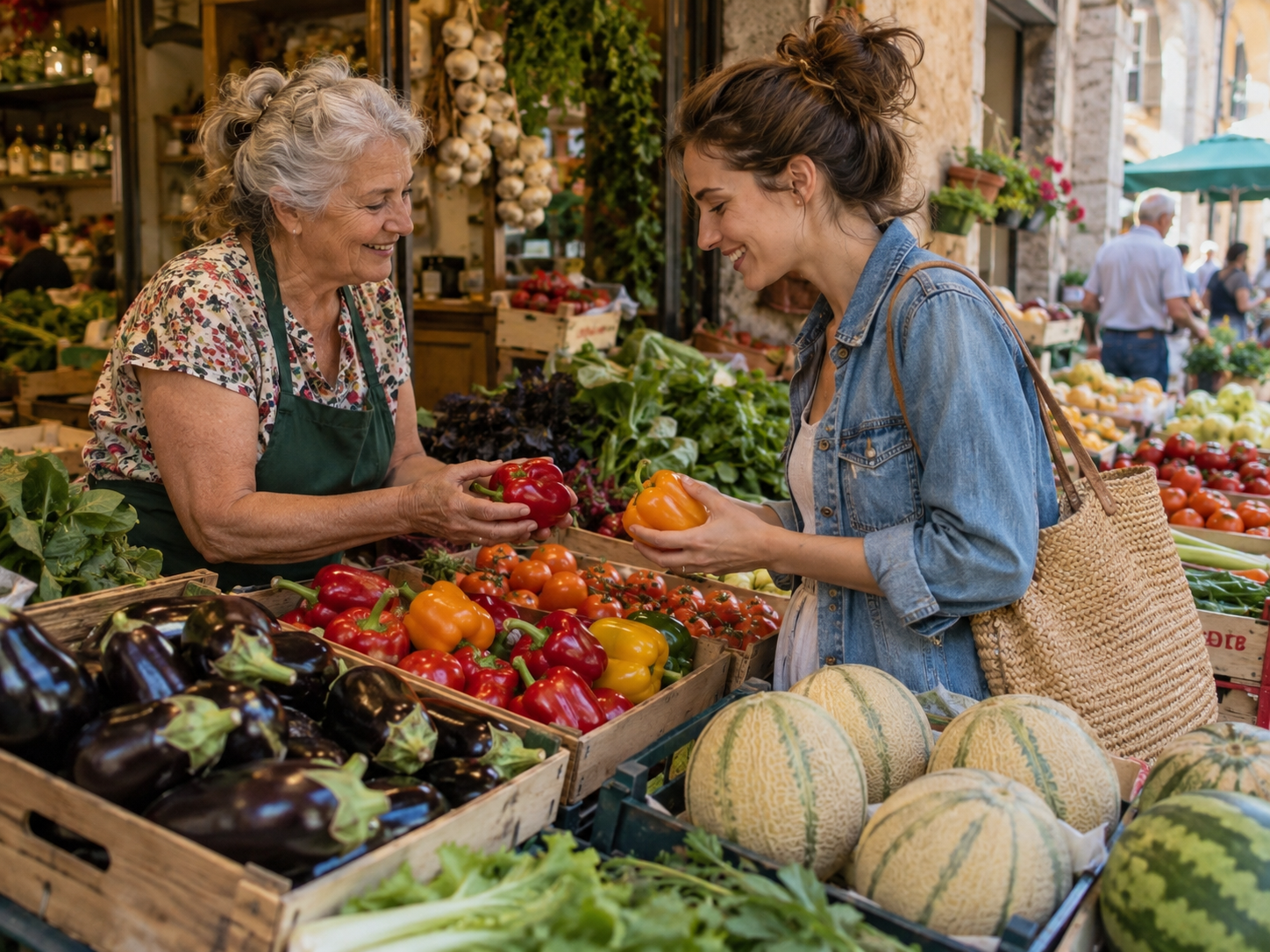
The heart of the difference is a philosophy, and it shows up as a long list of banned chemicals. A widely cited study comparing the two systems found that roughly seventy pesticides still approved for use on American farms are banned or being phased out in the European Union, while only a couple of substances banned in the US remain legal in Europe. Europe, in short, prohibits far more, and it does so under what is called the precautionary principle, the idea that where there is real scientific uncertainty about a chemical’s effect on health or the environment, you restrict it first. The American approach leans the other way, toward requiring clearer proof of harm before pulling a chemical from the market, a framework that prizes economic efficiency and puts the burden of evidence higher. Neither instinct is unreasonable, since acting on uncertainty can mean banning things that turn out fine, while waiting for proof can mean allowing things that turn out harmful, and the two systems have simply chosen different errors to risk.
A handful of specific chemicals sit at the center of the divide. Glyphosate, the world’s most common weedkiller, is far more tightly restricted in Europe, which limits the pre-harvest spraying that is routine in America, where it is used to dry down wheat and beans shortly before harvest. Chlorpyrifos, an insecticide linked to effects on children’s neurological development, has been banned in Europe since 2020 and recently listed there among the most serious persistent pollutants, while in the US it has been through a tangle of bans and court reversals.
Atrazine, a weedkiller tied to water contamination and hormone concerns, has been off the European market since the early 2000s but remains heavy in American corn country. The neonicotinoid insecticides blamed for harming bees were pulled from outdoor use in Europe in 2018 and are still widely applied in the States, and the same pattern repeats with paraquat, chlorothalonil, and others. The upshot is not that European food is chemical-free, but that it carries a different and generally lighter load. Plenty of approved chemicals are still used across Europe, and European produce is not some pristine ideal, so the honest framing is a matter of degree rather than a clean contrast between poison and purity.
What the Residue Testing Shows
The theory only matters if it shows up on the plate, and the residue monitoring both sides run is where you can see it. The honest headline is that the two systems have fairly similar violation rates, with a small percentage of samples in each exceeding their own legal limits, so this is not a story about widespread law-breaking on either side. The real difference is subtler and more telling, and it is about how many residues turn up and how often, rather than about breaking the rules.
In European monitoring, a large share of produce samples come back with no detectable pesticide residues at all, and those that do tend to carry fewer different substances. In American monitoring, detectable residues are far more common, and crucially, samples tend to carry a cocktail of several different pesticides rather than one or none.
By one measure, the average American sample contains meaningfully more distinct detectable substances than the average European one. It is the difference between produce that is usually clean or carries a single trace, and produce that routinely carries a mixture. Whether that mixture matters is exactly the contested question, but the fact of the difference in what the tests find is not really in doubt. The gap is sharpest in a familiar set of crops, the strawberries, spinach, apples, and grapes that top America’s high-residue lists, and it is those same categories that the Environmental Working Group flags each year in its Dirty Dozen. The flip side is its Clean Fifteen, the avocados, onions, sweet corn, and the like whose residue burden is low no matter where they are grown, and where the American and European versions look much alike.
How You Eat European-Standard in America
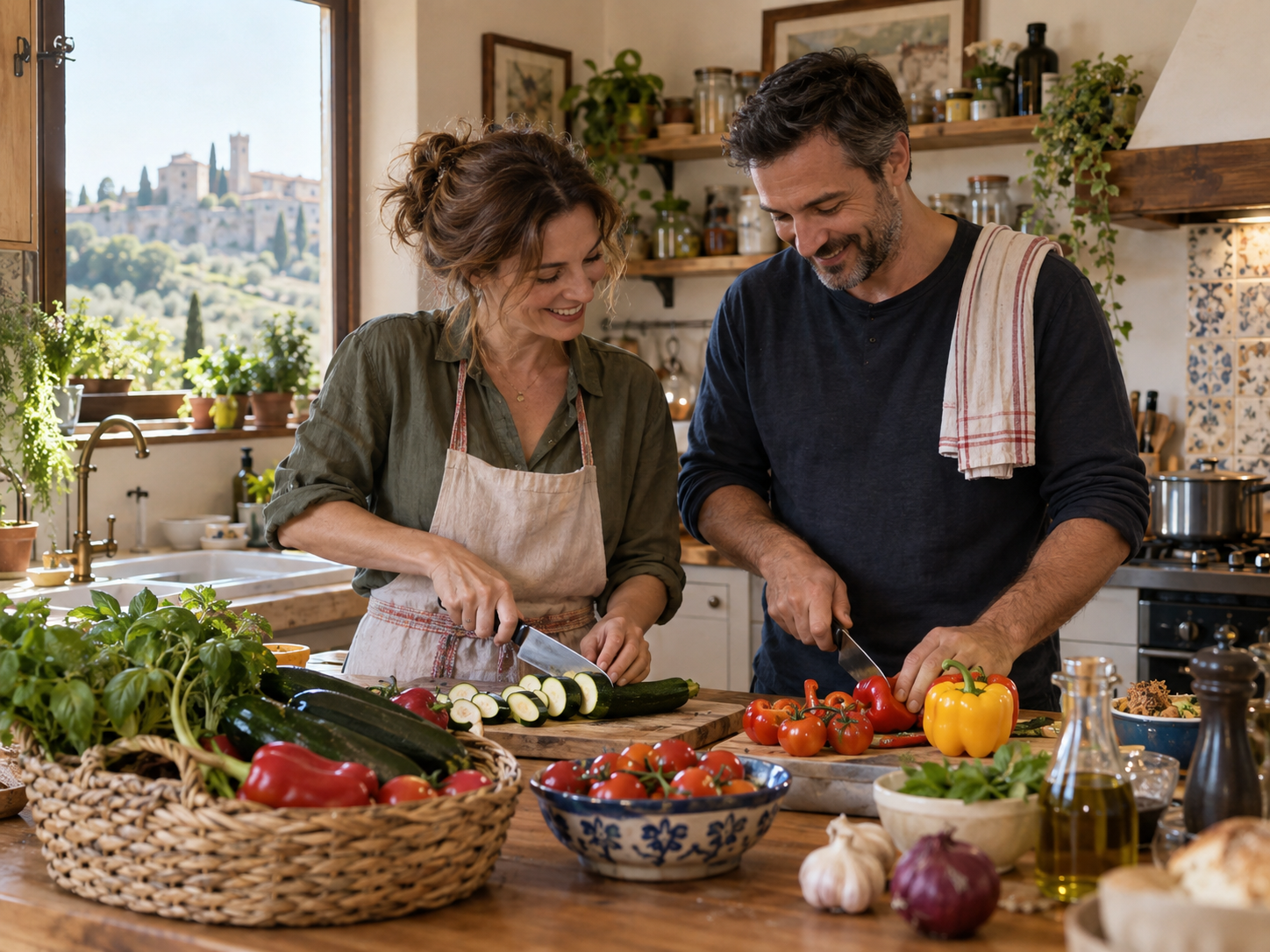
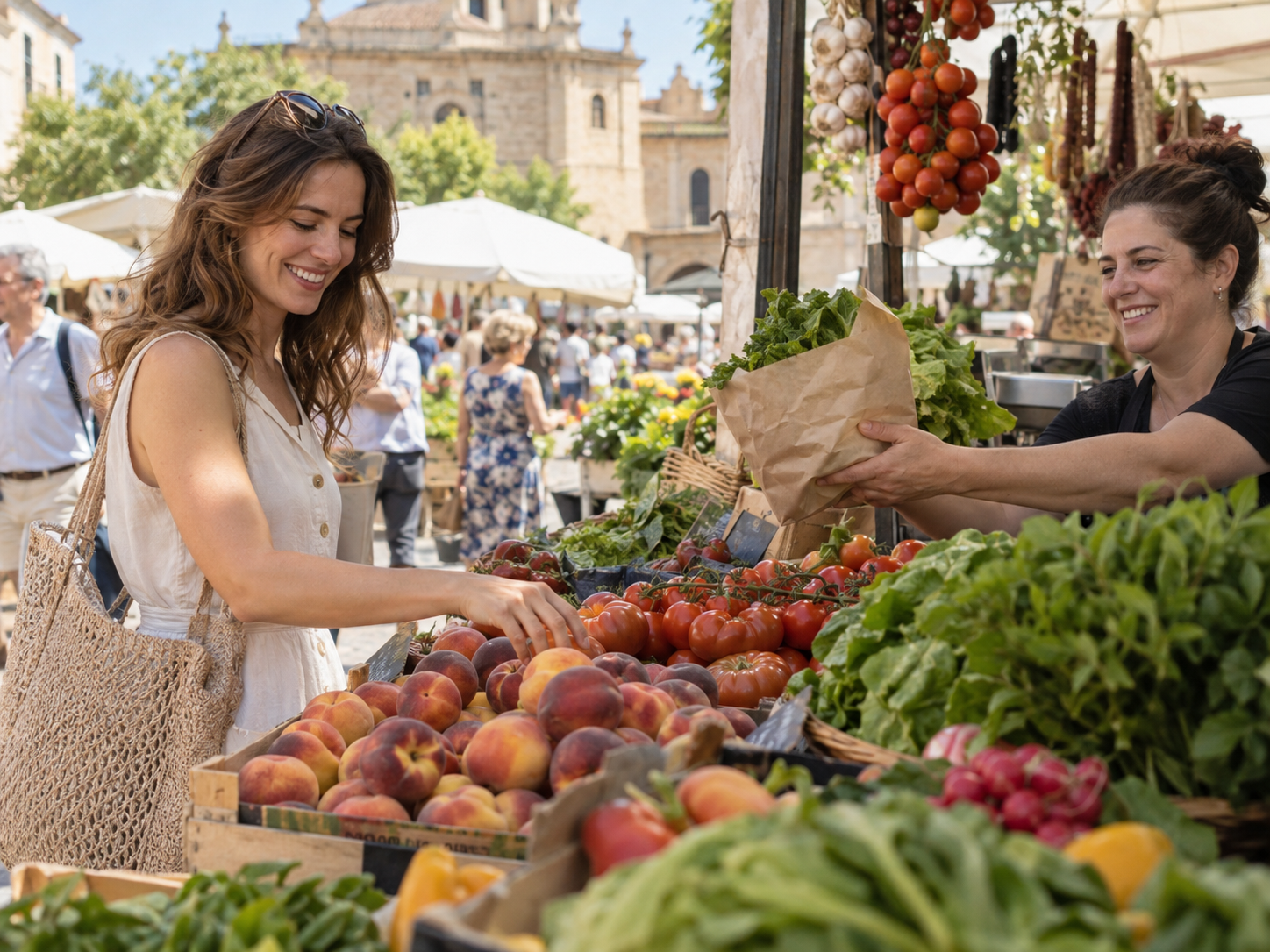
Wanting to eat to the European standard without leaving America turns out to be a practical sourcing problem, and there are a few honest routes to it. The single most straightforward route is to buy organic, since American organic rules prohibit synthetic pesticides and organic produce reliably carries a much lower residue load than conventional, not identical to European produce but close in effect. A smaller number of specialty shops import actual European organic produce, though the supply is thin, seasonal, and expensive, and it is rarely worth chasing when domestic organic does much the same job. The point is to lower the residue load, and there are several roads to that, not a single virtuous one. And for many people the cleanest and most satisfying route is to buy direct from local organic growers through farmers markets or a produce-box subscription, which often beats supermarket organic on both freshness and, sometimes, price.
The honest snag is cost, and it is worth being plain about. Buying organic across the board at ordinary American supermarket prices tends to run somewhere between a third and most of the way again above conventional, which for a household with a real weekly produce budget adds up to a meaningful monthly sum. This is where the smartest strategy comes in, and it is the one worth remembering above all others: rather than going fully organic, buy organic only in the high-residue Dirty Dozen categories and buy conventional in the low-residue Clean Fifteen. That hybrid captures most of the exposure reduction for a fraction of the added cost, which makes it the realistic path for most families. Home growing, even a few pots of tomatoes and herbs, removes the question entirely for whatever you manage to grow, and the whole thing is easier in summer and fall when local options are plentiful and harder in a northern winter when more of the shelf is imported.
What the 45 Days Felt Like
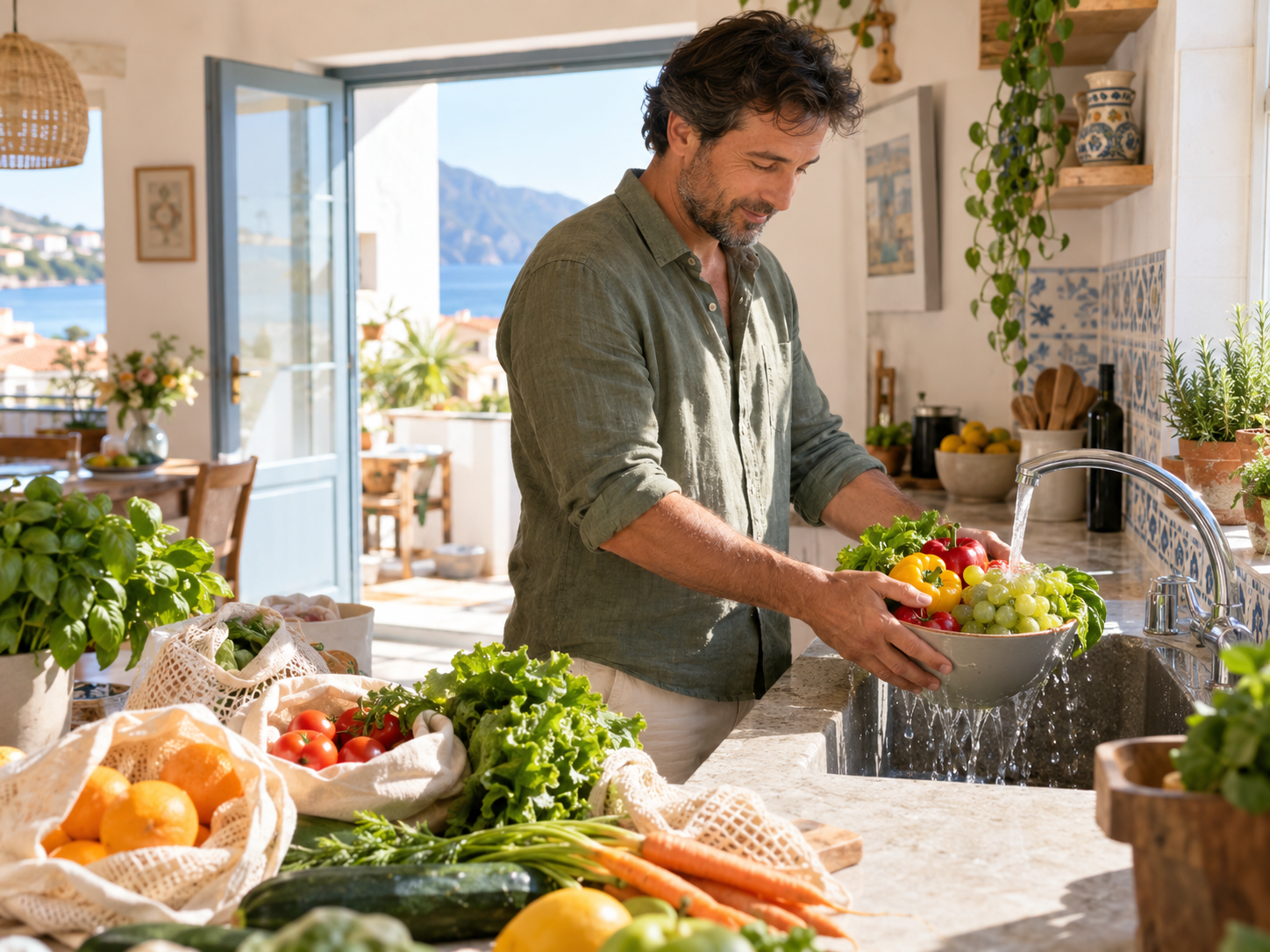
Living it for six weeks was less dramatic than either the hopeful or the skeptical version might expect. The first week or so was mostly logistics, working out which shops and markets had what, learning the rhythm of what was in season, and swallowing the higher prices, and by the third week it had settled into an ordinary routine rather than a project. The most honest thing I can say about the change is that it quietly pushed me toward eating more vegetables and less packaged food, simply because I was shopping so deliberately, and that shift is probably the single biggest thing that happened. When you are already at the market thinking hard about your produce, a bag of chips somehow ends up in the cart far less often.
As for how it felt, the reports I would give match what other people who try this tend to say, and they come with a big caveat attached. Somewhere in the middle stretch I noticed digestion feeling a little smoother, and by the end I would have said my energy was steadier and even my skin looked a touch better.
But I hold those claims loosely, because they are subjective, and because the likeliest explanation is not the pesticides at all but the broader move toward whole foods and more fiber that the deliberate shopping produced. If you start eating markedly more fresh vegetables and less ultra-processed food, you would expect to feel some of that regardless of how the vegetables were grown.
Untangling the effect of cleaner produce from the effect of simply eating better is close to impossible in an experiment of one, and pretending otherwise would be exactly the kind of overclaiming this subject attracts. Any weight change was minor. The cost shock, meanwhile, softened over the six weeks as I got better at buying in season, freezing gluts, and leaning on the Dirty Dozen hybrid rather than blanket organic. The lasting effect was less a transformation than a durable new awareness of where my food comes from. I kept some of the habits after the six weeks were up, not out of fear but because shopping that way had come to feel better, and I dropped the parts that were more trouble than they were worth, which feels like the right way for an experiment like this to end.
What Is Proven and What Is Not
This is the part that deserves the most care, because it is where enthusiasm tends to outrun the evidence. There is one clear, measurable, objective change that switching to organic produce reliably produces, and it is real: studies have repeatedly found that the pesticide breakdown products measurable in people’s urine drop within one to two weeks of the switch. Your body’s pesticide load genuinely falls, and fairly quickly. That much is not in dispute, and it is worth holding onto as the one firm fact in a field crowded with softer claims.
What is in dispute, and it matters to say so, is whether that measurable drop in exposure translates into a meaningful health benefit, and here the research is genuinely unsettled rather than reassuringly clear either way. The concerns that drive the European caution are real and studied, the worry about cumulative low-dose exposure to several chemicals at once, the endocrine-disruption and neurodevelopmental effects seen with some of these substances, the emerging questions about pesticides and the gut microbiome. But most of the strongest evidence for harm involves high occupational exposure or effects on children rather than the everyday dietary exposure of an average adult, and the long-term effect of eating small mixed residues over decades simply has not been pinned down.
So the honest position is that the exposure reduction is proven and the health payoff is plausible but unproven, which is a less satisfying answer than either side of the argument tends to offer, and a truer one. None of this is medical advice, and anyone with a pregnancy, a cancer history, or another condition that makes this feel more pressing should talk it through with their own doctor rather than a blog.
The Sensible Place to Land
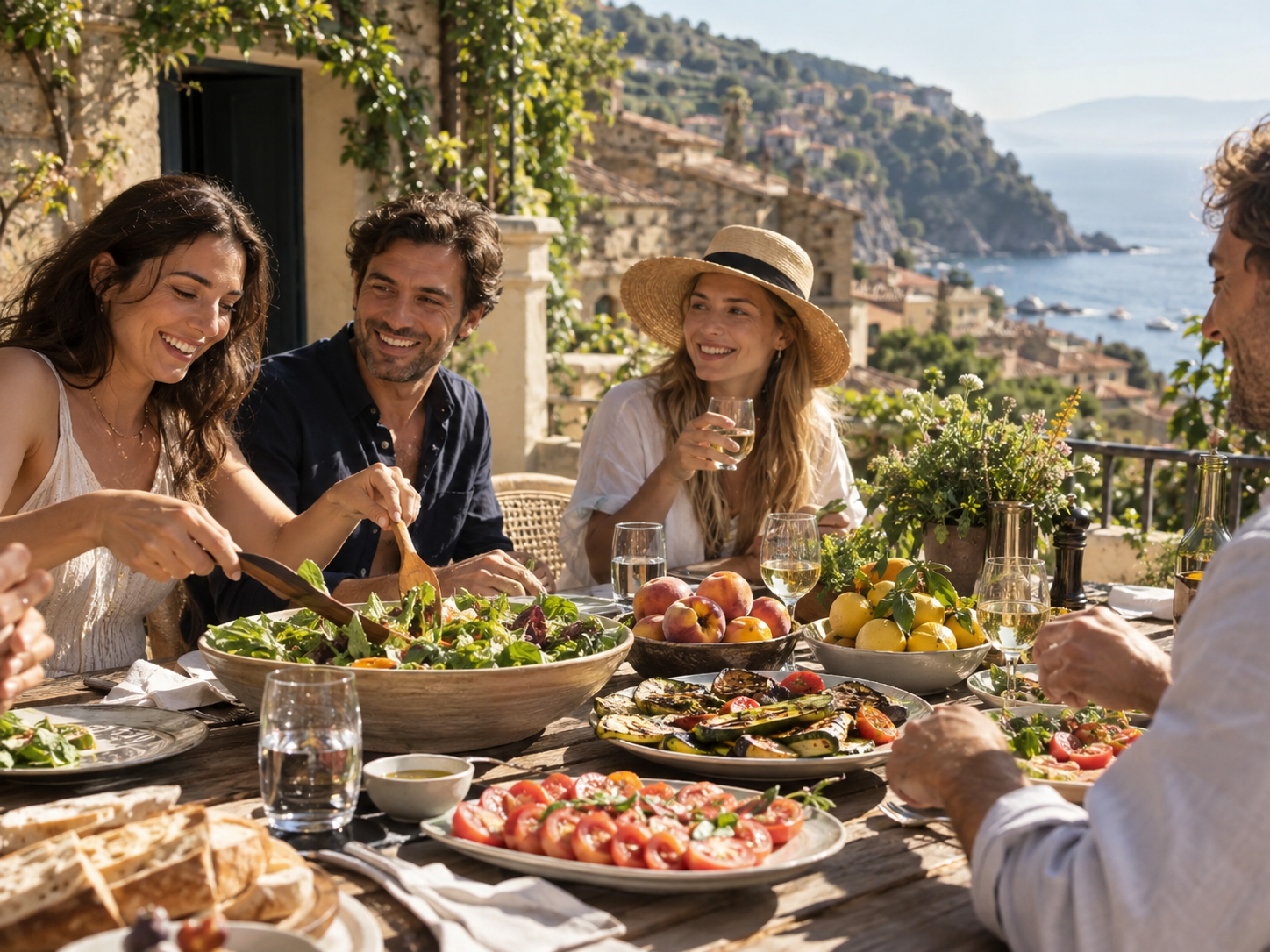
Where all this leaves a reasonable person is somewhere in the calm middle, away from both the alarm and the dismissal. It would be wrong to panic about American produce, which is tested, regulated, and eaten safely by hundreds of millions of people, and it would be equally wrong to wave away the European concerns as fuss, since the regulatory gap is real and the exposure difference is measurable. Both systems have drawn defensible lines and both involve trade-offs, the precautionary one accepting higher costs and fewer tools to reduce uncertain risks, the efficiency one accepting more chemicals in exchange for cheaper, more abundant food. Reasonable people can look at the same evidence and land on either side, which is part of why the argument has run for decades without resolving. It is less a fight between right and wrong than between two different appetites for risk. Neither is simply right.
For an American who finds the more cautious European instinct appealing, the practical takeaways are modest and doable. Start with the Dirty Dozen, since switching just the highest-residue foods to organic buys you most of the exposure reduction for the least money.
Get to know a local grower or a market, where the produce is often cleaner and fresher than the supermarket and the relationship teaches you more than any label. Grow a little yourself if you can, even just herbs on a windowsill, since it is oddly satisfying and removes the question entirely for whatever you manage.
And keep it in proportion, remembering that an individual’s shopping cart changes their own exposure but not the food system, which shifts only slowly and mostly through policy rather than personal choice. A forty-five-day trial will not settle the science, and it did not settle it for me, but it is a fair way to learn what the change costs, what it asks of you, and how your own body and budget respond, which is really all a single person can know for certain. The larger question of which framework is wiser stays open, and worth watching, but the small personal one you can answer for yourself. That, in the end, is what a trial like this is good for: not settling the debate, which is above any single shopper’s pay grade, but giving you honest, first-hand information about the one part of it that is actually yours to decide.

About the Author: Ruben, co-founder of Gamintraveler.com since 2014, is a seasoned traveler from Spain who has explored over 100 countries since 2009. Known for his extensive travel adventures across South America, Europe, the US, Australia, New Zealand, Asia, and Africa, Ruben combines his passion for adventurous yet sustainable living with his love for cycling, highlighted by his remarkable 5-month bicycle journey from Spain to Norway. He currently resides in Spain, where he continues sharing his travel experiences with his partner, Rachel, and their son, Han.