
France has its famous boeuf bourguignon, the beef stew braised in red wine that everyone knows. But just to the north, in Belgium and the cold, flat, beer-loving corner of France called Flanders, they make something that many people love just as much and far fewer have heard of, a rich, dark, glossy beef stew braised not in wine but in beer. It is called carbonnade, or carbonnade flamande, and it is Belgium’s answer to bourguignon, born in a land too chilly for wine grapes but blessed with some of the best beer on earth.
Where bourguignon is elegant and winey, carbonnade is deep and malty and carries a distinctive sweet-and-sour edge that sets it apart from every other beef stew. It is the difference between a stew that tastes of the vineyard and one that tastes of the brewery, and both are wonderful, but they are unmistakably different things. Many Belgians will tell you it is their true national dish, loved even above mussels and frites, and one spoonful of the tender beef in its shining beer gravy tells you why.
What follows is why it is made with beer instead of wine, why the onions matter as much as the meat, the clever bread trick that thickens it, and exactly how to make it.
Beer, Not Wine
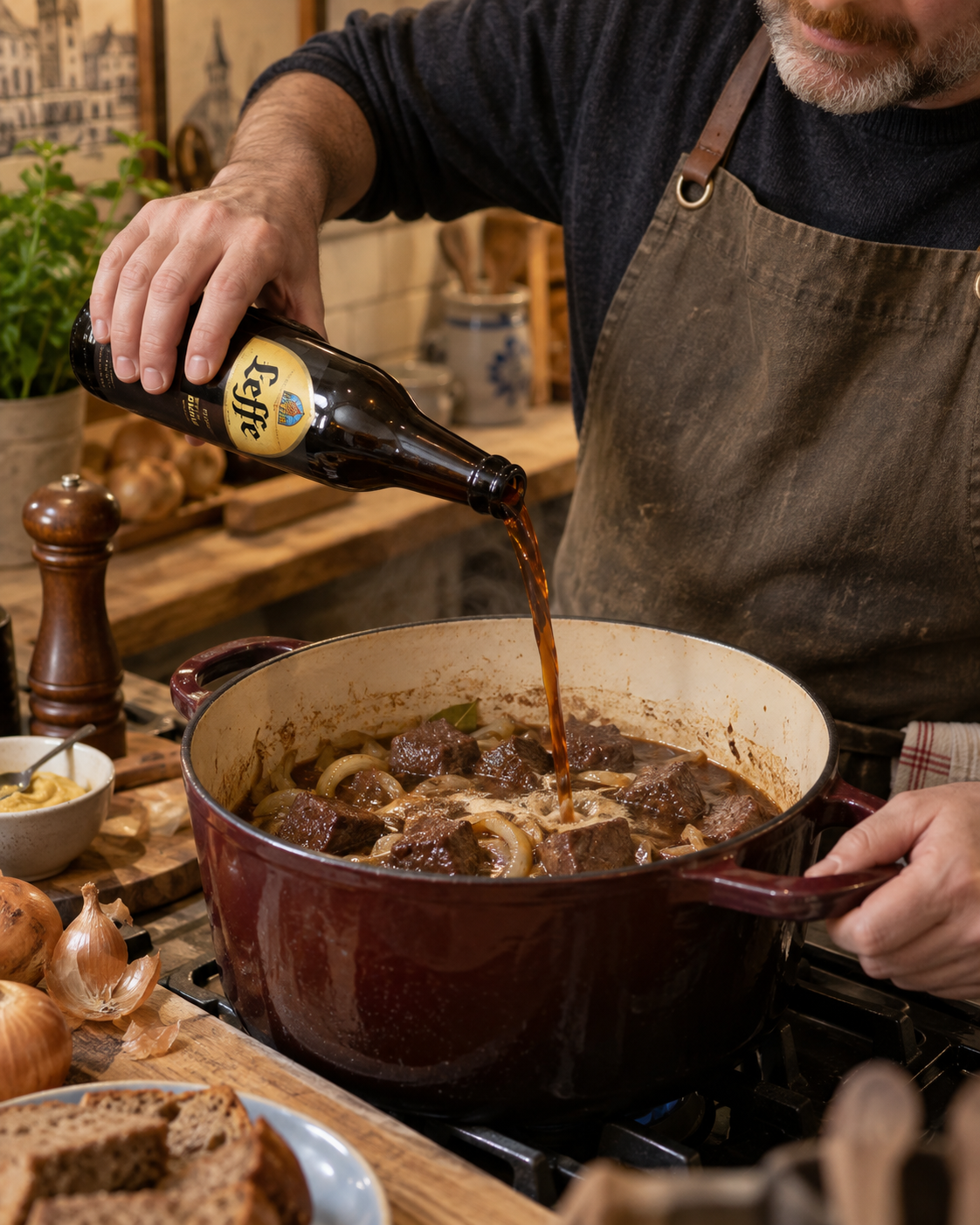
The single thing that defines carbonnade, and separates it from its famous French cousin, is that the braising liquid is beer. Where bourguignon relies on the red wine of Burgundy, carbonnade comes from Flanders and the north of France, a region historically too cold to grow wine grapes but long famous for brewing, so the local cooks reached for what they had in abundance, and used dark Belgian ale to braise their beef. It is a lovely example of a dish shaped entirely by its place, the food of a beer country rather than a wine country, and it could not have come from anywhere else.
So much of the best traditional cooking works this way, born of what a region actually has to hand rather than what a cookbook prescribes, and carbonnade wears its geography proudly in every spoonful. That choice does more than swap one liquid for another, because beer brings a completely different character to the pot. A good dark, malty Belgian ale, the kind with notes of caramel and toffee and a gentle bitterness, gives the stew a depth and heartiness that wine simply cannot, a robust, warming richness suited to cold northern winters.
The beer is genuinely the soul of the dish, so the one you choose matters, and a proper dark Belgian-style brown ale is worth seeking out, since a thin or overly bitter beer will throw the whole thing off. Think of it as cooking with an ingredient you would happily drink, because in a sense you are, and the character of the bottle ends up as the character of the pot. Braised for hours, that ale reduces into a dark, glossy gravy with a malty sweetness and a faint pleasant bitterness that is the unmistakable signature of a real carbonnade, and the reason it tastes like no wine-based stew ever could. Do not use your most bitter or hoppy beer, though, since a heavily hopped ale can turn the long-cooked sauce unpleasantly bitter; a smooth, dark, malty brown ale is what you are after.
It’s Really About the Onions
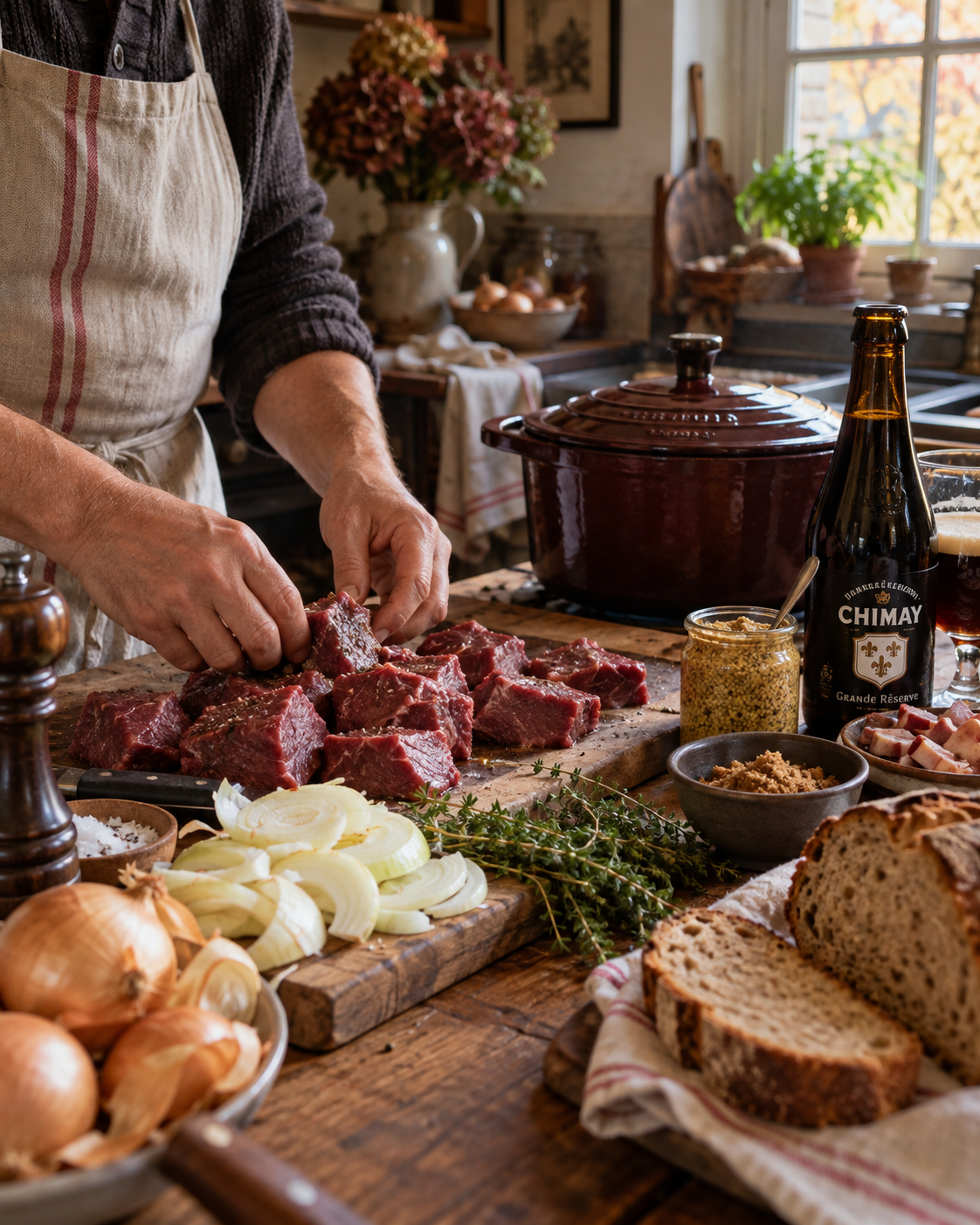
If the beer is the soul of carbonnade, the onions are very nearly its heart, and this is the part impatient cooks get wrong. A proper carbonnade is almost as much a dish of onions as of beef, using a generous quantity of them cooked slowly and patiently until they are deeply caramelized, soft, sweet, and jammy, melting almost entirely into the finished sauce. This is not a step to rush, and it rewards the same patience you would give the onions for a French onion soup, twenty or twenty-five minutes of gentle cooking until they turn a rich golden brown.
The reason it matters so much is that those caramelized onions provide the sweetness and the body that balance the beer. They are, in effect, the dish’s built-in seasoning, doing quietly what a splash of wine and a handful of extras do in other stews.
Cooked properly, they melt into the gravy and give it a natural sweetness and a silky richness that no shortcut can replicate, whereas onions rushed over high heat stay sharp and watery and leave the sauce thin and harsh. So resist the urge to hurry them, keep the heat moderate, stir them often, and let them take all the time they need to go soft and deeply golden before the beer goes in. Get the onions right, cooked down to a sweet, jammy tangle, and you have built the foundation of a great carbonnade, since almost everything good about the finished sauce grows from that base. Get them wrong, pale and half-cooked, and no amount of good beef or good beer will quite rescue the pot. Patience with the onions is patience well spent. It is the one part of the recipe you cannot cut a corner on, and it is also the part that fills the kitchen with the best smell, so it rewards you twice for the time it takes.
The Mustard-Bread Trick
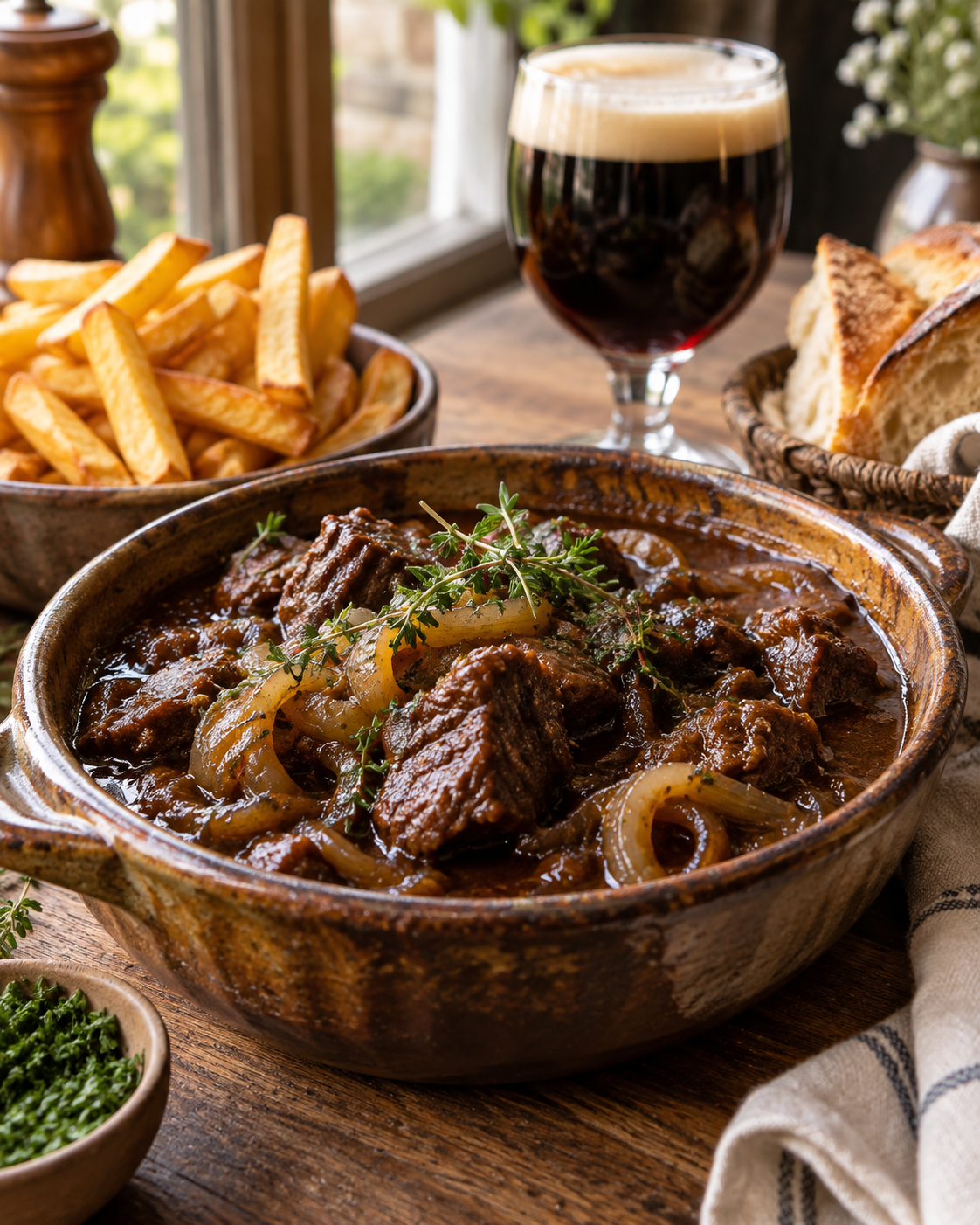
Here is the detail that makes carbonnade distinctive and quietly delights everyone who learns it, the traditional and rather magical way the sauce is thickened. Instead of a flour-based roux or a cornstarch slurry, the classic method is to take a slice of bread, spread it generously with mustard, and lay it mustard-side down right on top of the simmering stew. As the carbonnade braises, the bread slowly dissolves into the liquid, thickening the sauce naturally into a velvety gravy while the mustard infuses the whole pot with a tangy, savory warmth. It is an old, clever, no-waste piece of home cooking, and it works beautifully. Some traditional versions use pain d’epices, a Belgian spice bread, which adds a subtle warmth of clove and cinnamon along with the thickening, but an ordinary slice of good bread with plenty of mustard does the essential job.
The mustard bread also plays into the other thing that defines carbonnade, its signature sweet-and-sour balance. This is a stew that walks a deliberate line between sweet and tart, and getting that balance right is what makes it sing.
A little brown sugar goes in to round out and balance the natural bitterness of the beer, and a splash of vinegar, red wine or cider, cuts through the richness with a welcome sharpness, so the finished stew tastes at once malty, sweet, sour, and deeply savory, all in harmony. Neither the sugar nor the vinegar should announce itself; each is there to balance the other and the beer, not to be tasted on its own.
The tangy mustard from the dissolved bread sits right in the middle of that balance, tying the sweet and the sour together. It is a surprising amount of complexity to coax out of a handful of humble ingredients, which is part of what makes the dish so satisfying to cook. It is this interplay, the sweet onions and sugar against the bitter beer and sharp vinegar, bridged by the mustard, that gives carbonnade its unmistakable and moreish character, and it is why a good one is so much more interesting than a plain beef stew. Taste as you go near the end and adjust, a little more sugar if it is too sharp, a few more drops of vinegar if it is too sweet, until it sits in that perfect balance where you cannot stop eating it.
Serve It With Frites
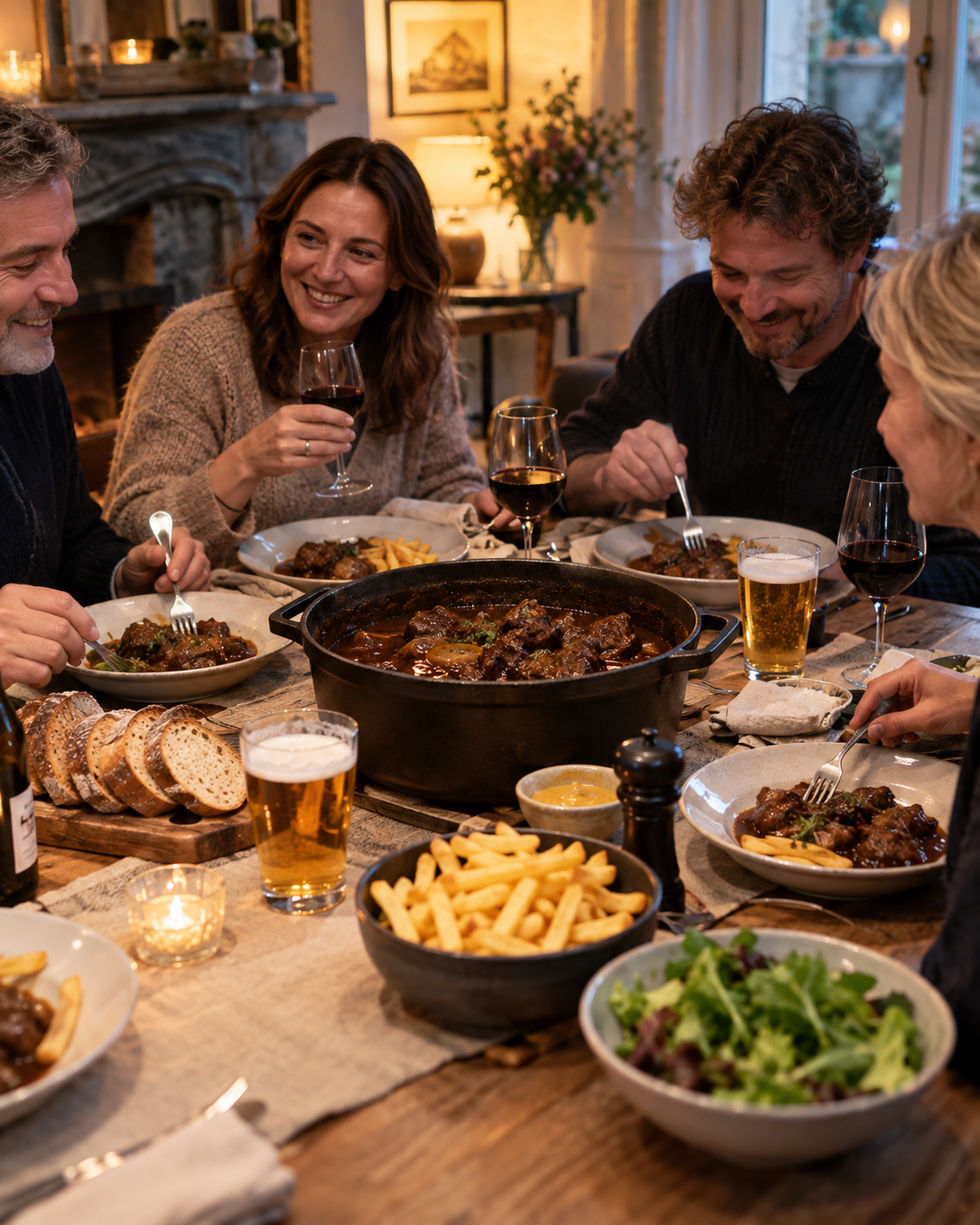
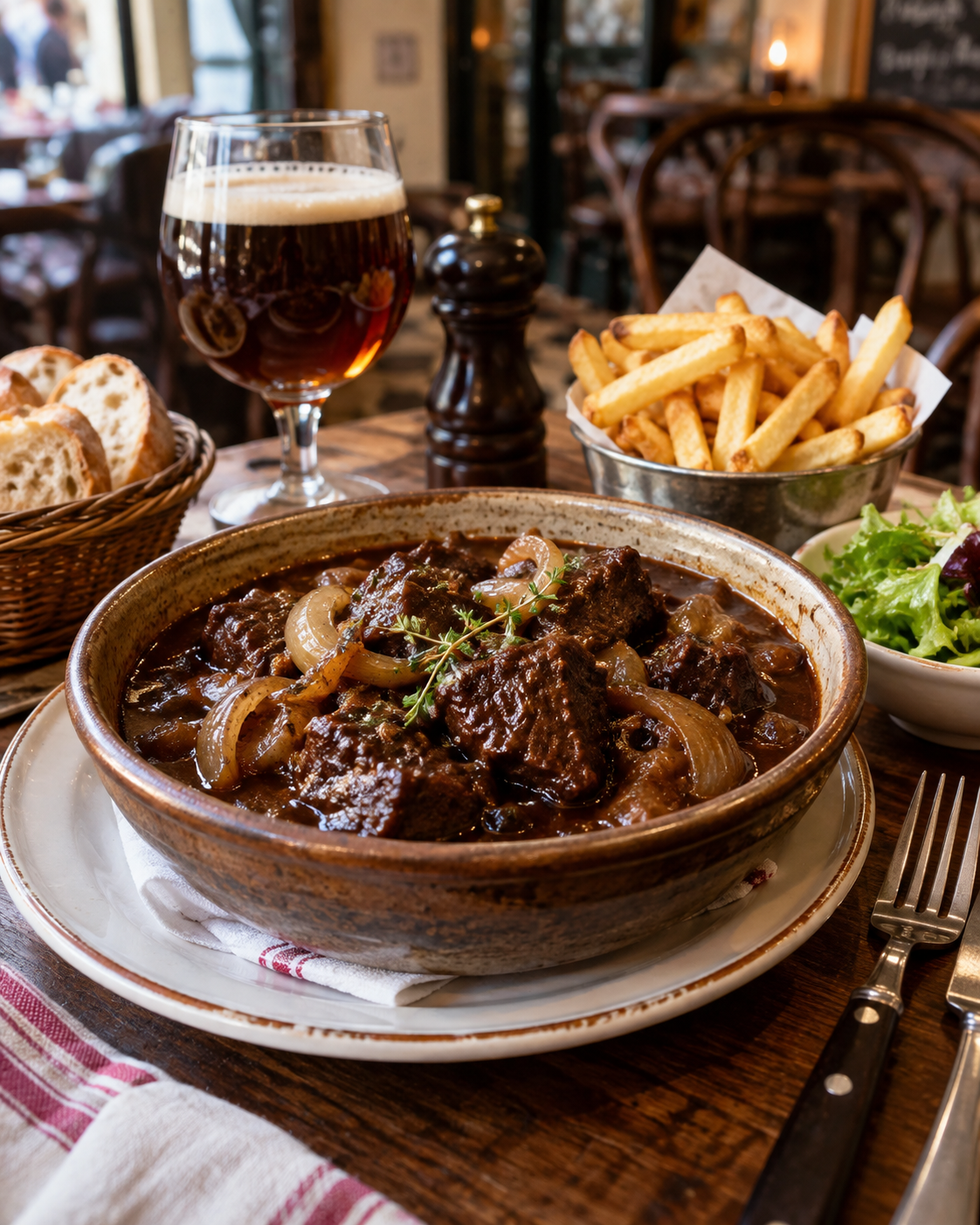
Ask a Belgian how to serve carbonnade and the answer comes back without hesitation: with frites, the crisp golden fries that Belgium claims as its own and makes better than almost anywhere. The pairing is close to sacred, the hot, salty, crunchy fries dipped into the rich dark gravy making a combination that is far greater than the sum of its parts, and a plate of carbonnade with a heap of good frites is one of the great comfort meals of northern Europe. If you want to eat it the way Belgium does, this is how, and it is worth doing at least once even if you rarely make fries at home.
That said, the stew is generous about its accompaniments, and any starch that can soak up the gravy will do the job happily. Boiled or mashed potatoes are entirely traditional and lovely, buttered noodles work, and a thick slice of crusty bread to mop the bowl is never wrong, so you need not make fries if you would rather not. Whatever you serve alongside, the golden rule is simply to give the wonderful gravy something to cling to, since that dark, malty, sweet-sour sauce is half the pleasure of the dish. And to drink, there is really only one right answer, which is a glass of the same style of Belgian ale you cooked with, closing the loop on a dish that beer built from beginning to end.
Making Carbonnade
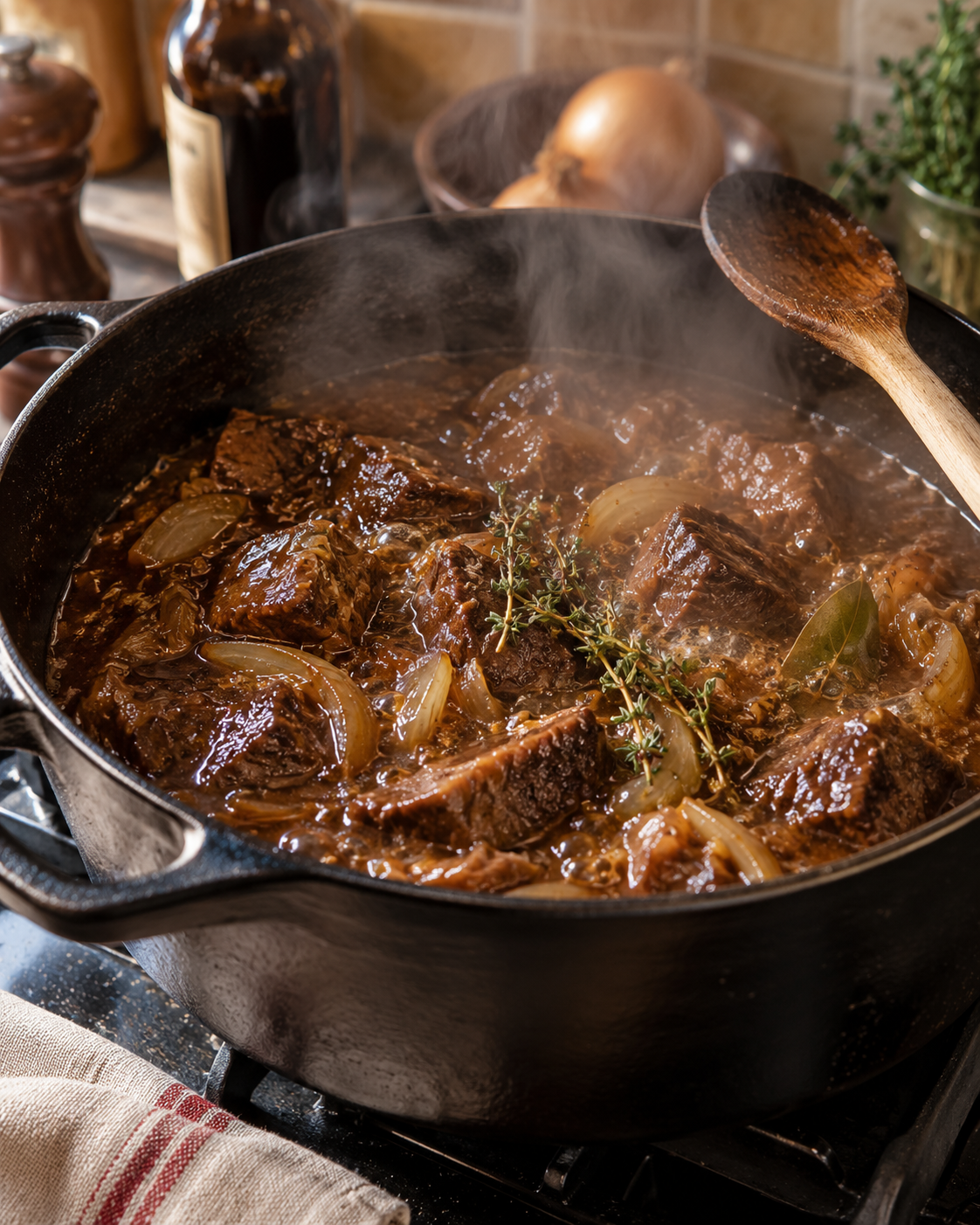
Here is a classic carbonnade flamande, serving four to six. Use a good dark Belgian ale, caramelize the onions properly, and do not skip the mustard bread.
Ingredients
- 1 kg beef chuck or stewing beef, cut into large chunks
- Salt and pepper
- 3 tablespoons butter or oil
- 3 large onions, thinly sliced
- 2 cloves garlic, chopped
- 2 tablespoons flour
- 500 ml dark Belgian brown ale
- 250 ml beef stock
- 1 tablespoon brown sugar
- 1 tablespoon red wine or cider vinegar
- 2 sprigs thyme and 1 bay leaf
- 2 slices of bread and 2 tablespoons Dijon mustard
- Frites or boiled potatoes, to serve
Instructions
- Season the beef well and brown it in the butter in a heavy pot over high heat, in batches so it colors rather than steams. Set the beef aside.
- Lower the heat and add the onions to the same pot, cooking them slowly for 20 to 25 minutes, stirring often, until deeply caramelized and golden. Add the garlic for the last minute.
- Stir in the flour and cook for a minute or two, then pour in the beer and stock, scraping up the browned bits from the bottom.
- Return the beef, add the brown sugar, vinegar, thyme, and bay leaf, and bring to a gentle simmer, seasoning to taste.
- Spread the bread generously with mustard and lay the slices mustard-side down on top of the stew.
- Cover and cook very gently, on a low stovetop flame or in a 325 F oven, for about 2 and a half to 3 hours, until the beef is meltingly tender and the sauce is dark and thick. Stir the dissolved bread into the sauce.
- Discard the thyme and bay leaf, adjust the sweet-sour balance to taste, and serve hot with frites or boiled potatoes.
And do make it a day ahead when you can, since carbonnade, like most great stews, is even better the next day once the flavors have settled and deepened, which makes it as fine a dish for a relaxed dinner party as it is for a cold night in.

About the Author: Ruben, co-founder of Gamintraveler.com since 2014, is a seasoned traveler from Spain who has explored over 100 countries since 2009. Known for his extensive travel adventures across South America, Europe, the US, Australia, New Zealand, Asia, and Africa, Ruben combines his passion for adventurous yet sustainable living with his love for cycling, highlighted by his remarkable 5-month bicycle journey from Spain to Norway. He currently resides in Spain, where he continues sharing his travel experiences with his partner, Rachel, and their son, Han.