
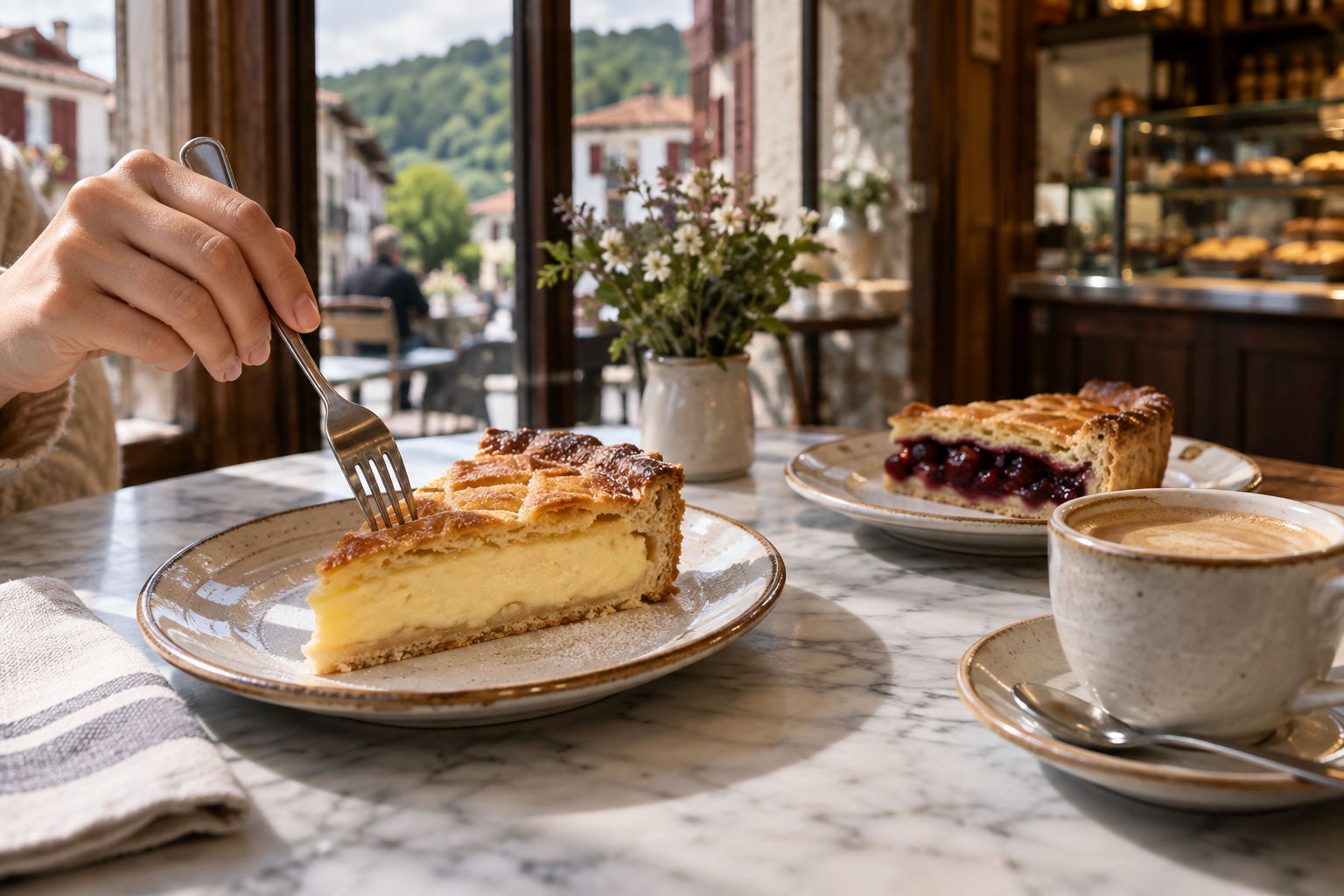
There is a cake in the Basque Country so beloved it has its own museum, its own brotherhood of bakers, and its own annual festival, and yet the people who adore it cannot agree on how it should be filled. It is called pastel vasco in Spanish and gateau basque in French, the Basque cake, a rustic round of buttery, almond-scented pastry hiding a soft filling inside, and it comes in two traditional versions that inspire genuine, good-natured devotion. One camp fills it with rich vanilla pastry cream, the other with dark, tart black cherry jam, and tradition holds firm that you make it one way or the other, and never, ever both. It is one of the great small rivalries of European baking, a delicious either-or, and to make this cake you must, in the end, pick your side. Few desserts manage to be both a beloved tradition and a running argument, but the Basque cake pulls it off, and the debate is affectionate rather than fierce, the kind families reopen happily every time the cake appears.
What follows is what the Basque cake actually is, the story of the two fillings, the clever way each cake tells you which is which, and how to make it yourself, whichever side you choose.
What the Basque Cake Is
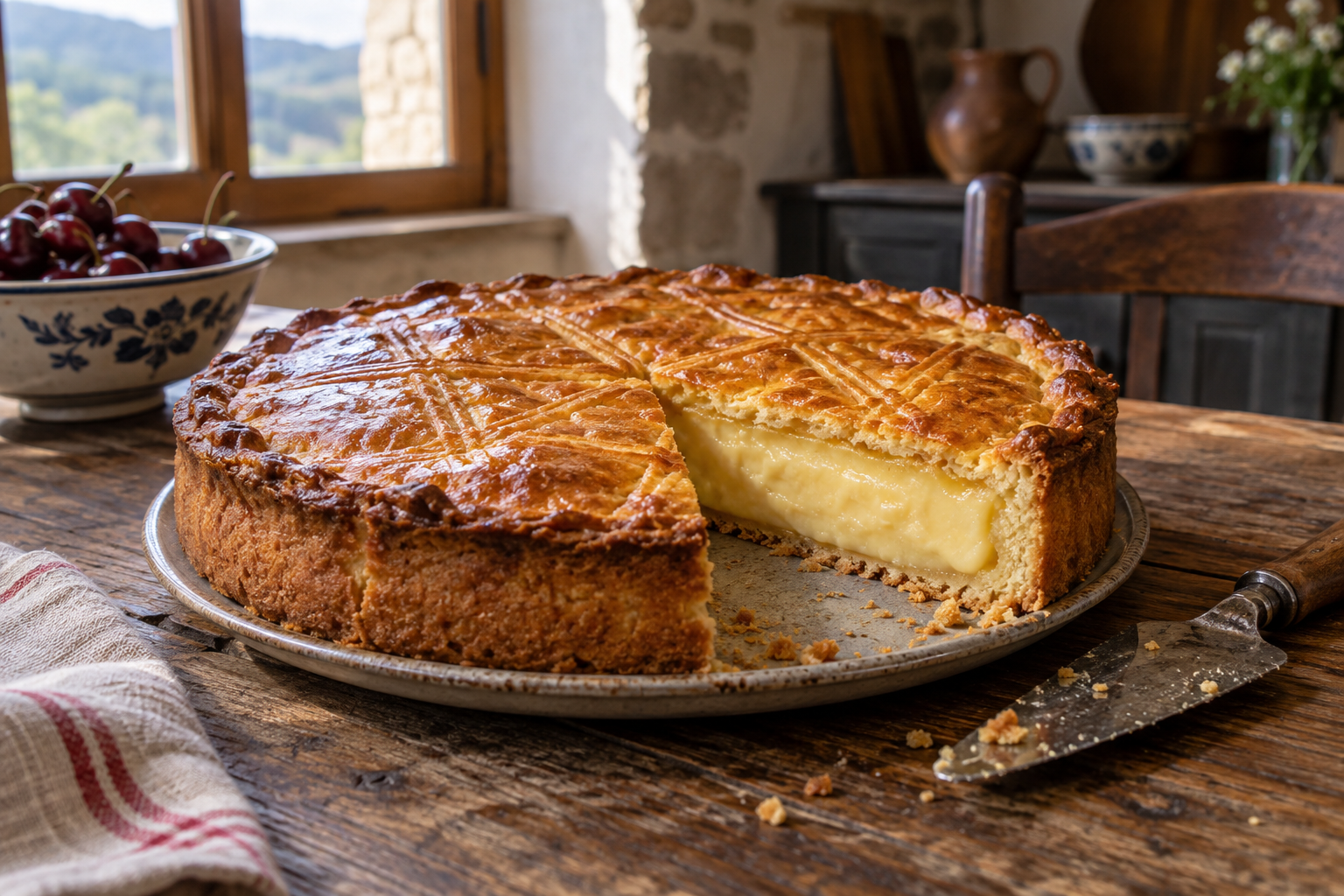
Before the rivalry, the cake itself, because it is a distinctive and wonderful thing regardless of what is inside it. Pastel vasco is built from a rich, buttery dough, closer to a firm shortcrust than to a light sponge, enriched with ground almonds and often a little lemon or vanilla, which bakes up with a crisp, tender, almost cookie-like exterior. That sturdy, golden crust is the signature of the cake, giving it a lovely contrast of textures, a slight crunch and chew on the outside giving way to a soft, generous, yielding filling within. It is this contrast, more than any single flavor, that people love about it, the way a firm, almost biscuity shell gives way to something lush and yielding inside, two textures in one satisfying bite.
It is, in essence, a filled pastry rather than a frosted layer cake, two discs of that almond dough enclosing its filling top and bottom, baked in a round tin and glazed with beaten egg for a deep, glossy golden shine. The Basque name for it, etxeko bixkotxa, means cake of the house, which captures its character perfectly, since this is homely, traditional, made-with-love baking rather than fancy patisserie, the sort of cake a Basque family makes for a celebration and lovingly passes down through the generations. It is not difficult to make, despite looking impressive, and it keeps and travels well, which is part of why it has been a fixture of Basque tables for so long. A cake that survives a journey and still tastes good the next day is exactly the sort a family carries to a gathering, which is precisely the role this one has played for generations.
The Story of the Two Fillings
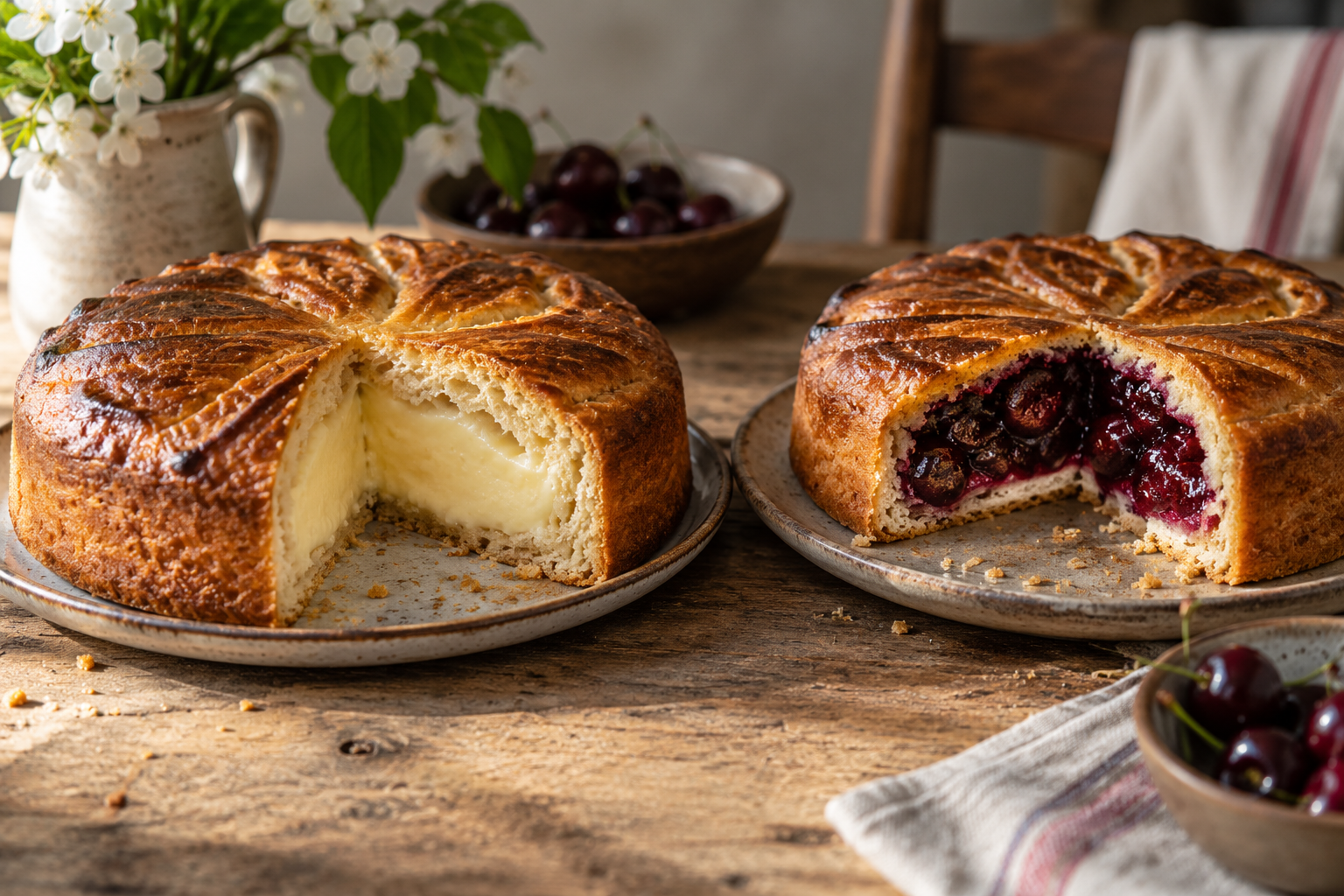
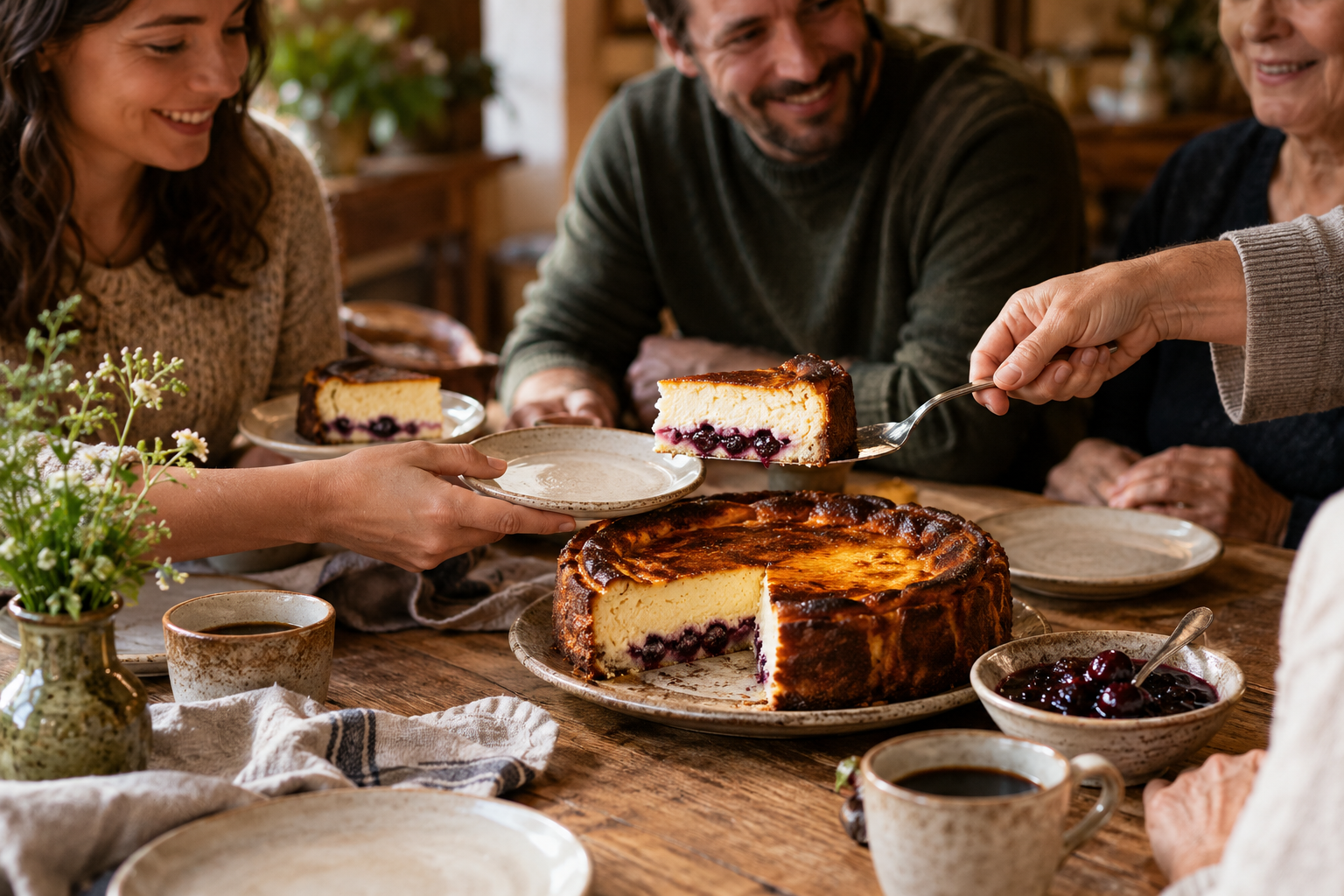
Now to the heart of the matter, the great filling divide, which has a real history behind it. The older, and in some ways more iconic, filling is the black cherry, specifically the dark, tart cherries of Itxassou, a village in the French Basque Country long famous for them, made into a jam that fills the cake with a deep, fruity, slightly sharp heart. This is the version many consider the original and most authentically Basque, tied to a specific place and its celebrated cherry harvest, and it has a rustic, tangy, old-fashioned character that its devotees adore. The sharpness of the dark cherries cuts through the rich, buttery pastry beautifully, and for many Basques that contrast of tart fruit against sweet, almond-scented crust is the true and proper taste of the cake.
The other great filling is pastry cream, a smooth, rich vanilla or almond custard that fills the cake with mellow, comforting softness instead of fruit.
Where the cherry version is bright and tart, the cream version is soothing and indulgent, the custard melting into the buttery crust to make something closer to a warm, comforting embrace than a fruity surprise, which is exactly why its devotees love it as fiercely as the cherry camp loves theirs. This version came a little later, influenced by the refined French pastry tradition of nearby Bayonne, and it has arguably become the more popular of the two, especially in the Spanish Basque Country, where the cream version is the more typical. So the rivalry has a gentle geography to it as well, with the cherry leaning French and original, the cream leaning Spanish and, some would say, more refined, each with its passionate defenders. Cross the border within the Basque Country and the default cake in the pastry-shop window quietly changes, which means your first pastel vasco may well have picked your side for you before you even knew there was a choice to make. The one thing nearly everyone agrees on is that you do not combine them, since a proper pastel vasco commits to one filling or the other, and mixing the two is considered, by purists, to rather miss the point. A cake that tries to please both camps at once pleases neither, the thinking goes, and part of the charm of the tradition is precisely that it makes you choose, declaring an allegiance with every cake you bake.
How the Cake Tells You Which Is Which
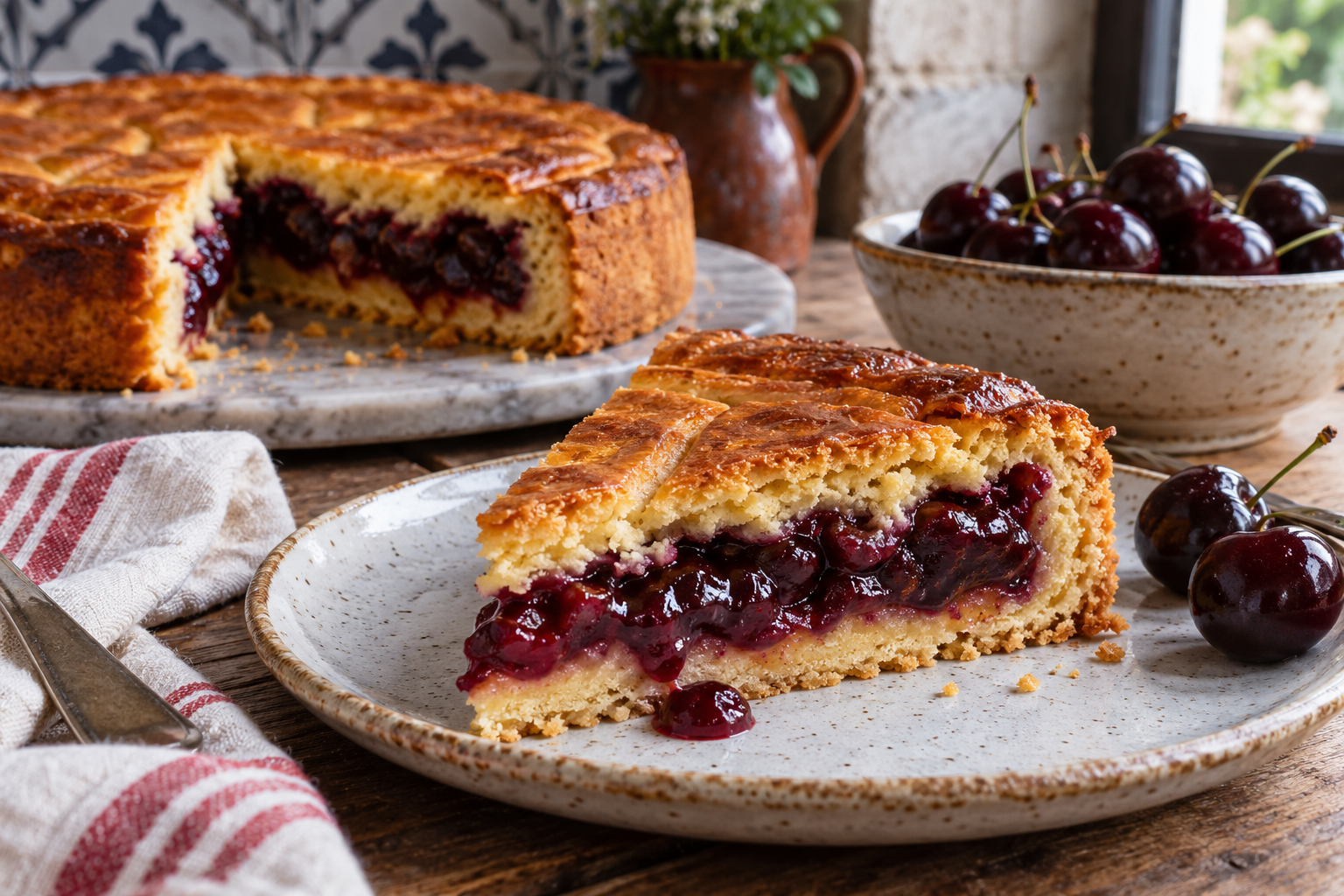
Here is a lovely detail that turns the rivalry into something you can read at a glance, a tradition that lets the cake announce its own filling before you cut it. Basque bakers mark the top of each cake, and the marking tells you what is inside. A cake decorated with a crosshatch pattern, a lattice of lines scored across the top, traditionally holds the pastry cream, while a cake stamped with a lauburu, the ancient Basque cross that looks a little like a four-armed pinwheel, holds the cherry.
It is a small piece of edible signposting, and a beautiful one, rooted in Basque symbolism, since the lauburu is a deep and old emblem of the region, associated with prosperity and eternity, pressed into a humble cake to mark it and to bless it. There is something rather moving in that, an ancient symbol of good fortune carried not on a monument or a flag but on the top of a family dessert, a small daily blessing baked into something you eat. For the baker it is practical, letting you tell your cream cakes from your cherry ones at a glance, but it is also a quiet piece of tradition, the cake wearing its identity on its face. When you make your own, you can honor the custom, scoring a crosshatch if you have filled it with cream or a lauburu if you have chosen cherry, so that anyone who knows the code will know your allegiance before they take a bite. It is a small touch that turns a homemade cake into something that speaks the local language, a quiet nod to the tradition you are joining, and it will earn a knowing smile from anyone who grew up with these cakes.
A Cake Woven Into Basque Life
To understand why this cake inspires such devotion and such cheerful argument, it helps to know how deeply it is woven into Basque life. This is not an everyday snack cake but a dish tied to celebration and tradition, the sort of thing baked for weddings, baptisms, and feasts, a centerpiece of the gatherings that mark the important moments of a family’s year. The recipes are passed down through generations, each household guarding its own version and its own allegiance in the great filling debate, which is part of why the rivalry runs so warm. To take a side is, in a way, to honor your own grandmother’s cake, which is why the argument is never really settled and never really meant to be.
The Basques honor the cake in ways that few humble desserts ever receive. The town of Cambo-les-Bains in the French Basque Country holds an annual festival devoted to it, the Fete du Gateau Basque, complete with competitions where bakers vie to make the finest version, and there is even a museum dedicated to the cake and a confrerie, a formal brotherhood, established to protect and celebrate the tradition. All of this fuss over what is, at bottom, a simple filled pastry tells you how much it means to the region, and how seriously the Basques take the things they love. When you bake a pastel vasco, you are joining a genuinely cherished tradition, which is a lovely thing to bring to your own table, filling and all. Cakes with this much history behind them carry a weight that no trendy dessert can, and there is real pleasure in making something that Basque families have loved and argued over for well more than a century.
Making Pastel Vasco
Here is a classic pastel vasco, serving eight, with both filling options so you can pick your side. The dough needs chilling, so start ahead.
Ingredients
For the dough:
- 250 g butter, softened
- 200 g sugar
- 2 eggs, plus 1 yolk
- 350 g all-purpose flour
- 100 g ground almonds
- 1 teaspoon baking powder
- Zest of 1 lemon
- 1 teaspoon vanilla extract
- 1 egg, beaten, for glazing
For the pastry cream filling:
- 2 cups (500 ml) whole milk
- 4 egg yolks
- 100 g sugar
- 40 g cornstarch
- 1 teaspoon vanilla extract
Or for the cherry filling:
- 1 and 1/2 cups good black cherry jam or compote
Instructions
- For the dough, beat the softened butter and sugar until pale and creamy, then beat in the eggs and yolk one at a time.
- Add the flour, ground almonds, baking powder, lemon zest, and vanilla, and mix just until a soft dough forms. Divide in two, shape into discs, wrap, and chill for at least 2 hours.
- If making the pastry cream, whisk the yolks, sugar, and cornstarch together. Heat the milk with the vanilla until just boiling, whisk it slowly into the yolks, then return to the pan and cook, whisking, until thick. Cover and cool completely.
- Preheat the oven to 350 F, about 180 C, and butter a round cake tin. Roll out one disc of dough and line the base and sides of the tin.
- Spread the cooled pastry cream, or the cherry jam, evenly over the base, leaving a small border.
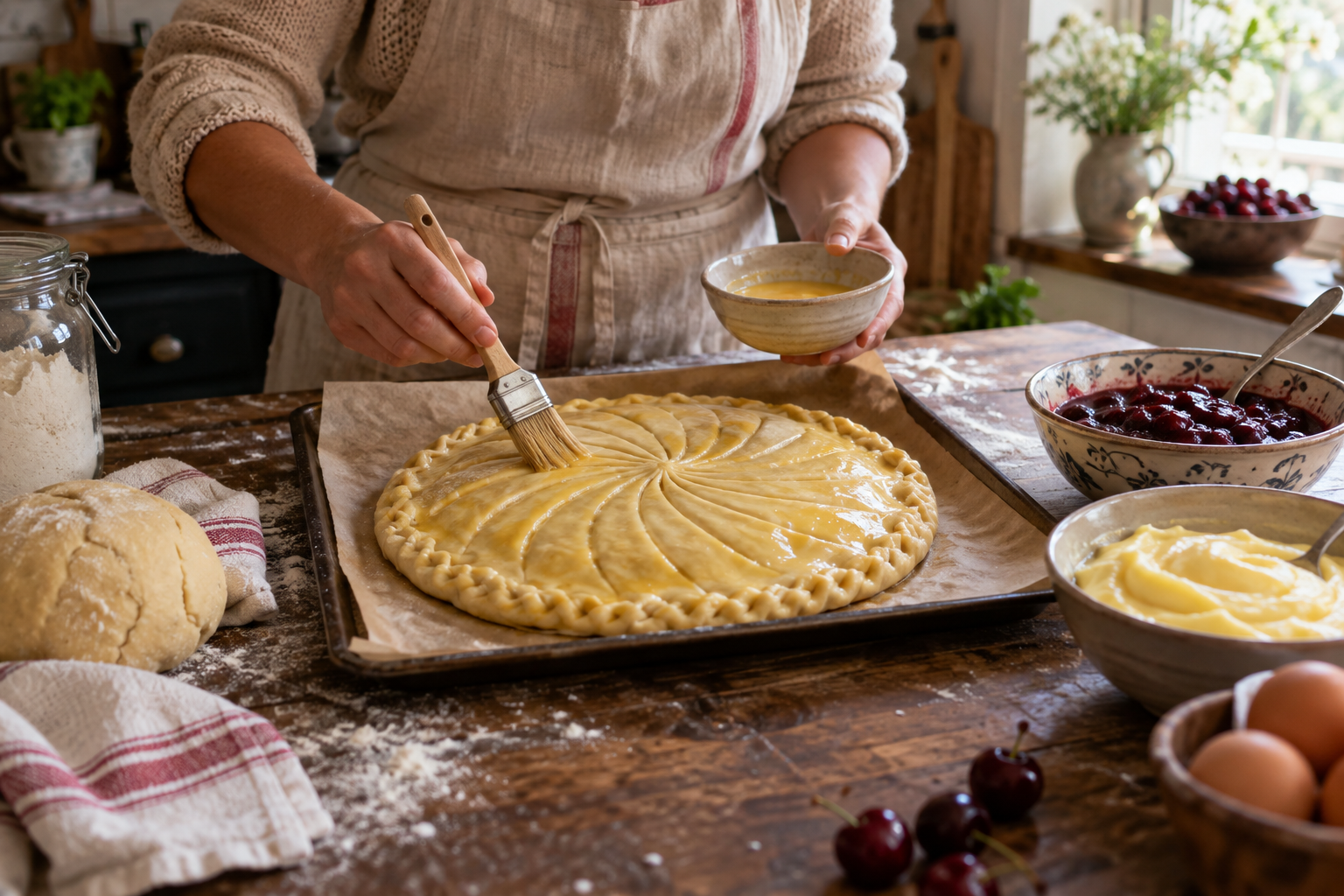
- Roll out the second disc, lay it over the filling, and press the edges together to seal. Brush the top with beaten egg.
- Score the top with a crosshatch pattern for cream, or a lauburu cross for cherry, then bake for 40 to 45 minutes, until deep golden. Cool completely before slicing, as the filling needs time to set.
And whichever side you pick, know that the other camp will insist you chose wrong, which is half the fun, so make one of each over time and settle the great cherry-or-cream question for yourself, in the only way that really counts.

About the Author: Ruben, co-founder of Gamintraveler.com since 2014, is a seasoned traveler from Spain who has explored over 100 countries since 2009. Known for his extensive travel adventures across South America, Europe, the US, Australia, New Zealand, Asia, and Africa, Ruben combines his passion for adventurous yet sustainable living with his love for cycling, highlighted by his remarkable 5-month bicycle journey from Spain to Norway. He currently resides in Spain, where he continues sharing his travel experiences with his partner, Rachel, and their son, Han.