
Ask an American to name a Spanish dish for a party and they will say paella, and they are not wrong, because that great golden pan of rice is one of the world’s supreme crowd-feeders, a dish built from the ground up to gather people around a single fire. But paella is only the most famous member of a much larger family, because Spain is a country of big-pan and big-pot cooking, of one enormous vessel set in the middle of the table and everyone diving in.
For a Labor Day gathering or any occasion where you need to feed a crowd generously and without fuss, these are the dishes Spanish families actually reach for, five magnificent big-format meals that go well beyond paella and that any American host would be lucky to steal. They share the cookout’s whole reason for being, the idea that food is at its best when it is generous, shared, and a little bit of a spectacle, which makes them slot into an American gathering far more naturally than their foreign names might suggest.
What follows are five great Spanish dishes for a crowd, from the noodle cousin of paella to the mighty bean stews of the north, each one designed to feed a long table from a single glorious pan or pot. What unites them is not a single ingredient but a whole way of thinking about food, the deeply Spanish idea that cooking for people means making one big generous thing and gathering everyone around it, rather than plating a dozen careful individual servings.
Fideua, the Noodle Paella
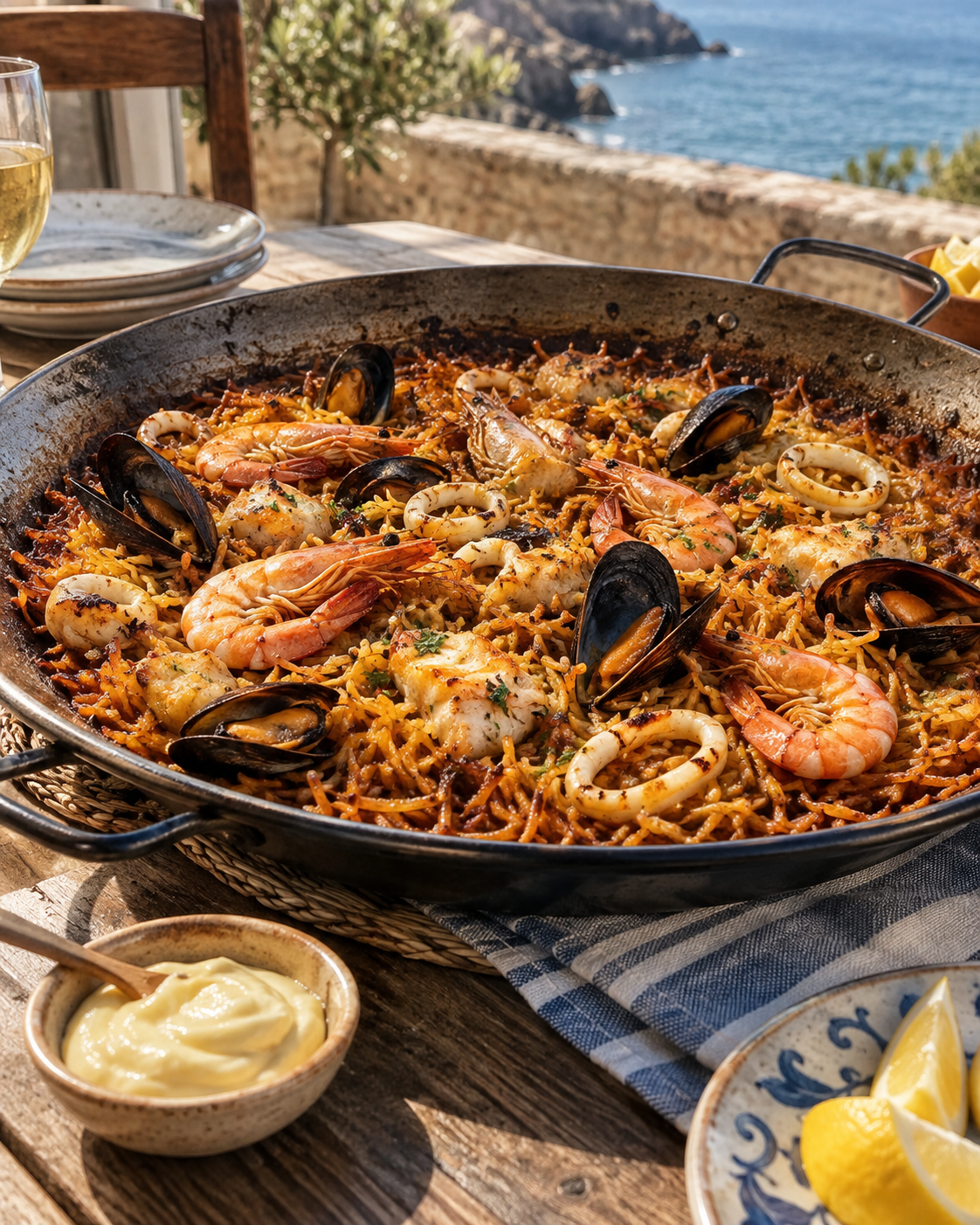
The most natural place to start is with paella’s closest cousin, a dish that looks almost identical but swaps the rice for pasta. Fideua, which comes from the coast of Valencia and Catalonia, is made in the same wide flat pan as paella and cooked much the same way. But it uses short, thin noodles called fideos in place of the rice, simmered in a rich seafood broth until they drink it up and the bottom develops the same prized crust the Spanish call socarrat. It is glorious, and to many palates every bit as good as the original. The noodles, toasted before they are cooked, take on a nutty depth that rice never quite reaches, and because they hold the seafood broth so well, every strand carries the full flavor of the sea. Many Spaniards, if pressed, will admit a quiet preference for it over paella, even if they would never say so too loudly.
What makes fideua such a great party dish is exactly what makes paella one, the drama of the big pan, the way it feeds a crowd from a single vessel, and the communal joy of everyone eating from it together. It is loaded with seafood, shrimp, squid, mussels, and monkfish are all common, and traditionally served with a dollop of garlic aioli stirred in at the table, the sharp garlicky richness cutting beautifully against the sweet seafood and the toasted noodles. If your guests have had paella a hundred times, a fideua is a wonderful way to serve them something that feels both familiar and thrillingly new, a dish that says you know Spain a little more deeply than the tourist menu. It rewards the same theatrical, outdoor, communal cooking that paella does, made over a wide flame with everyone watching, and it ends the same way, with the lucky few fighting good-naturedly over the crisp socarrat scraped from the bottom of the pan.
Arroz Caldoso, the Brothy Rice
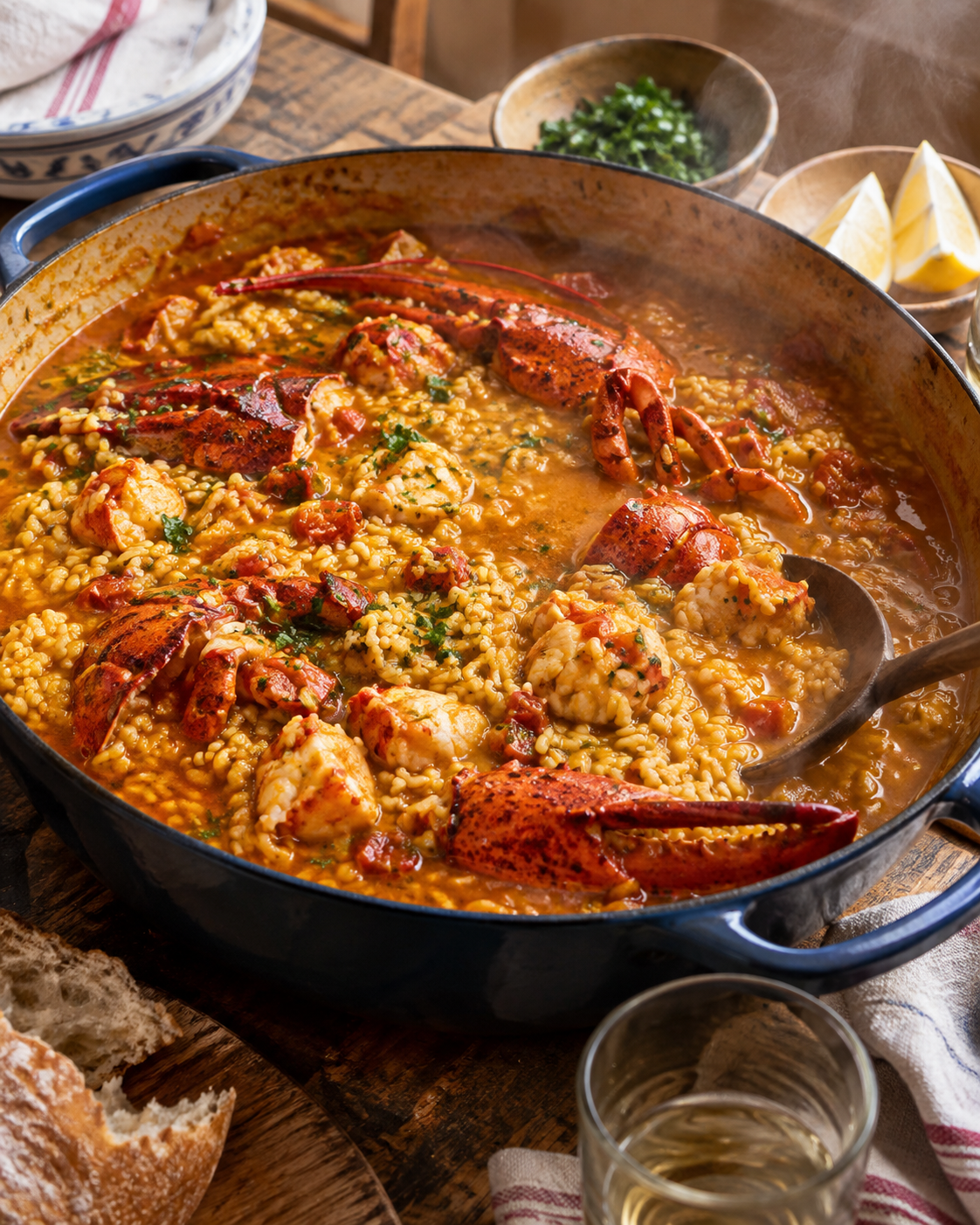
Where paella is dry, with each grain separate, its opposite is a dish that keeps all its wonderful broth, and it is pure comfort in a pot. Arroz caldoso simply means brothy rice, and that is exactly what it is, a soupy, spoonable rice stew swimming in a deeply flavored liquid, closer to a hearty soup than to the firm paella most people know. It is cooked in a big pot rather than a flat pan, and it is the dish a Spanish family makes when the weather turns and everyone wants something warming and generous. Where paella is a summer party dish, cooked outdoors and eaten in the sun, arroz caldoso is its cozy indoor cousin, the pot at the center of the table on a cold night, which makes it a natural fit for a cooler fall gathering.
The most celebrated version is arroz caldoso de bogavante, brothy rice with lobster, a genuine showstopper in which the sweet shellfish flavors the whole pot, but versions with other seafood, with chicken, or with rabbit are all beloved. Because it is served in bowls with a spoon and swims in its own rich broth, it feeds a crowd beautifully and forgivingly, since there is no precise moment when the rice must be perfect, only a great steaming pot to ladle out. There is something forgiving about it that makes it ideal for a nervous host, since a slightly overcooked caldoso is still a delicious soup, where an overcooked paella is a sad, gluey ruin. For a cooler autumn gathering, arroz caldoso is one of the most comforting things you can put in front of people. It has a homely, unpretentious quality that a formal paella lacks, the sort of dish a Spanish grandmother makes on a gray afternoon, and served steaming in deep bowls it warms a whole table in a way few dishes can.
Recipe for Arroz Caldoso
Ingredients
- 300 g bomba or other short-grain Spanish rice, about 1 1/2 cups
- 2 cooked crabs, or 4 large crab claws plus 200 g picked crab meat, about 7 oz
- 1.5 liters hot seafood or fish stock, about 6 cups, plus extra to adjust
- 1 onion, finely diced
- 1 red pepper, finely diced
- 3 garlic cloves, minced
- 2 ripe tomatoes, grated, or 200 g tomato passata
- 60 ml olive oil, about 4 tablespoons
- 1 teaspoon sweet paprika
- 1 tablespoon nora or dried red pepper paste, optional
- A good pinch of saffron threads
- 100 ml white wine, about 1/2 cup, optional
- 2 tablespoons fresh parsley, chopped
- 1 lemon, cut into wedges
- Salt and black pepper, to taste
Instructions
- Keep the stock hot in a pot over low heat, and stir the saffron into it so it steeps and colors the broth while you cook.
- If using whole crabs, separate the claws and legs and crack them lightly, and pick the body meat, keeping the shells. For extra flavor, drop the shells into the hot stock to simmer while you build the sofrito, then fish them out before you need the stock.
- Heat the olive oil in a large, deep pot or wide cazuela over medium heat. Add the onion and red pepper with a pinch of salt and cook gently until soft, about 8 minutes. Add the garlic and cook for one minute more.
- Add the grated tomato and the nora paste if using, and cook down until thick, dark, and jammy, about 8 to 10 minutes. Stir in the paprika and cook for thirty seconds, taking care not to burn it.
- Add the rice and stir for a minute or two to coat every grain in the sofrito and let it toast slightly. Pour in the wine if using and let it bubble away.
- Pour in the hot saffron stock, roughly three parts stock to one part rice, and bring to a gentle simmer. Season with salt, then do not stir again from this point, so the rice stays loose rather than turning creamy.
- Simmer uncovered for about 18 to 20 minutes, until the rice is tender but the dish is still loose and soupy. Add more hot stock as it cooks to keep it brothy, since arroz caldoso should be eaten with a spoon, not a fork.
- About 5 minutes before the end, nestle the crab claws and legs into the rice to warm through. Stir the picked crab meat in gently in the last minute, or with the heat just off, so it stays sweet and tender.
- Taste and adjust the salt. Let it rest for 2 minutes, then serve at once in deep bowls, brothy and steaming, scattered with parsley and with a lemon wedge on the side. It waits for no one, since the rice keeps drinking the broth, so bring it straight to the table.
Fabada Asturiana, the Great Bean Stew
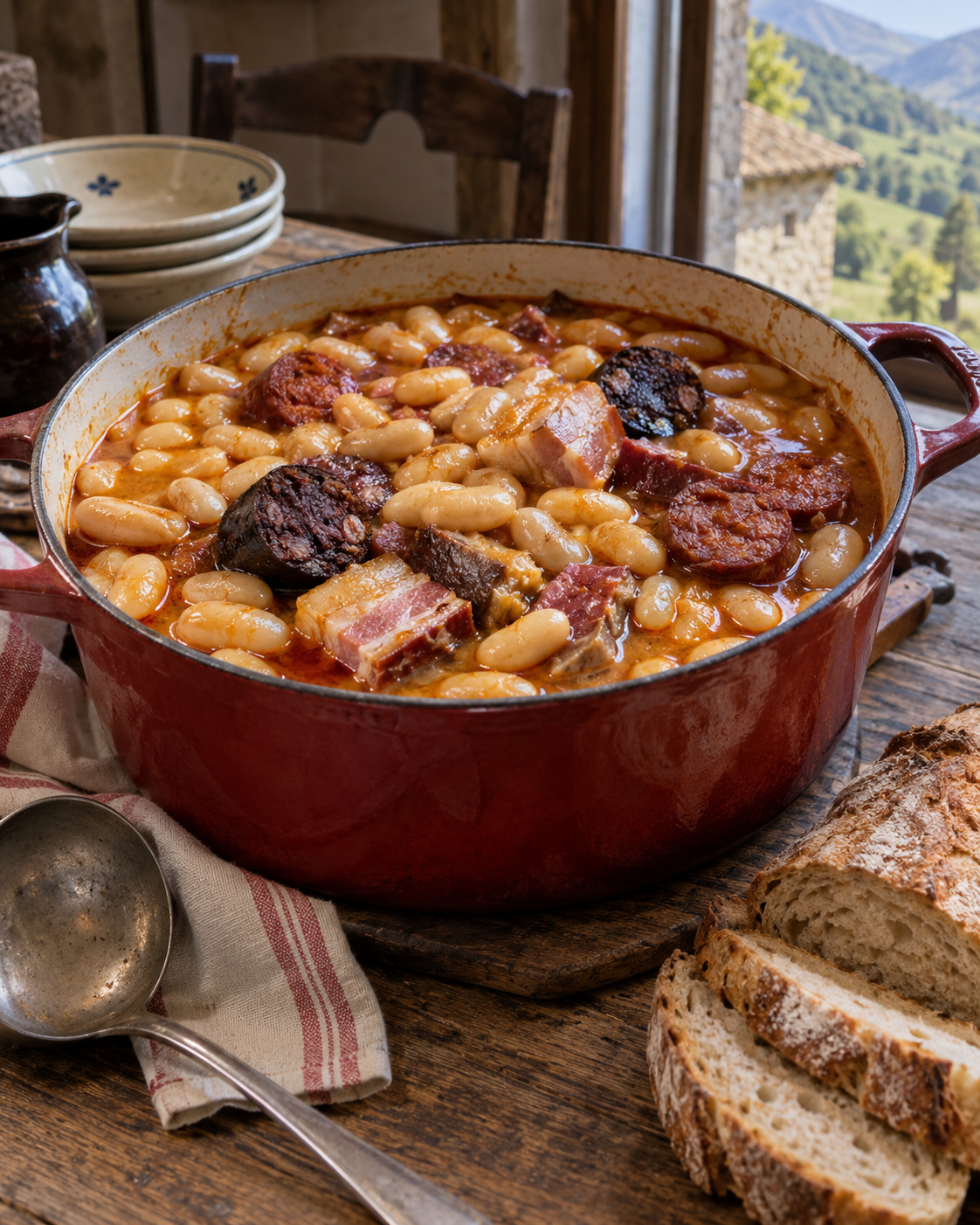
Head north to the green, rainy region of Asturias and you find one of Spain’s mightiest one-pot dishes, a bean stew so rich and hearty it could anchor any feast. Fabada asturiana is built around large, buttery white beans called fabes, slow-cooked with a trio of cured pork that the Spanish call the compango, typically chorizo, blood sausage or morcilla, and a piece of cured pork, until the whole pot turns into something deep, smoky, and unctuous.
The beans themselves are the star, large and creamy and buttery, drinking up all the smoky flavor of the pork around them, and a good fabada is judged first by how tender and flavorful its beans are rather than by the meat. It is the fabada, more than almost anything, that proves Spanish crowd food is not all sunny rice and seafood. Spain has a whole northern, rainy, mountainous half that most tourists never taste, and the fabada is its great ambassador, hearty and warming and utterly unlike the Mediterranean image most people carry of Spanish food.
This is cold-weather cooking at its most generous, a single great pot that simmers away for hours and then feeds a whole table of people with almost nothing to do at the last minute. It is the kind of dish that fills a whole house with its smell as it cooks, so that guests arrive already hungry, drawn to the kitchen by the promise of what is bubbling in the pot.
Like most bean stews it is even better made a day ahead, so it is the ideal dish for a host who wants to do the work in advance and simply reheat a magnificent pot when the guests arrive. Serve it with good bread and red wine, and a fabada will send a crowd home warm, full, and deeply happy, which is really the whole point of cooking for people at all. It is not light food, and it is not meant to be, but on a cool evening among good company it is one of the most satisfying meals in all of Spanish cooking, the kind that becomes the thing people remember about the whole gathering.
Caldereta, the Hearty Stew Pot
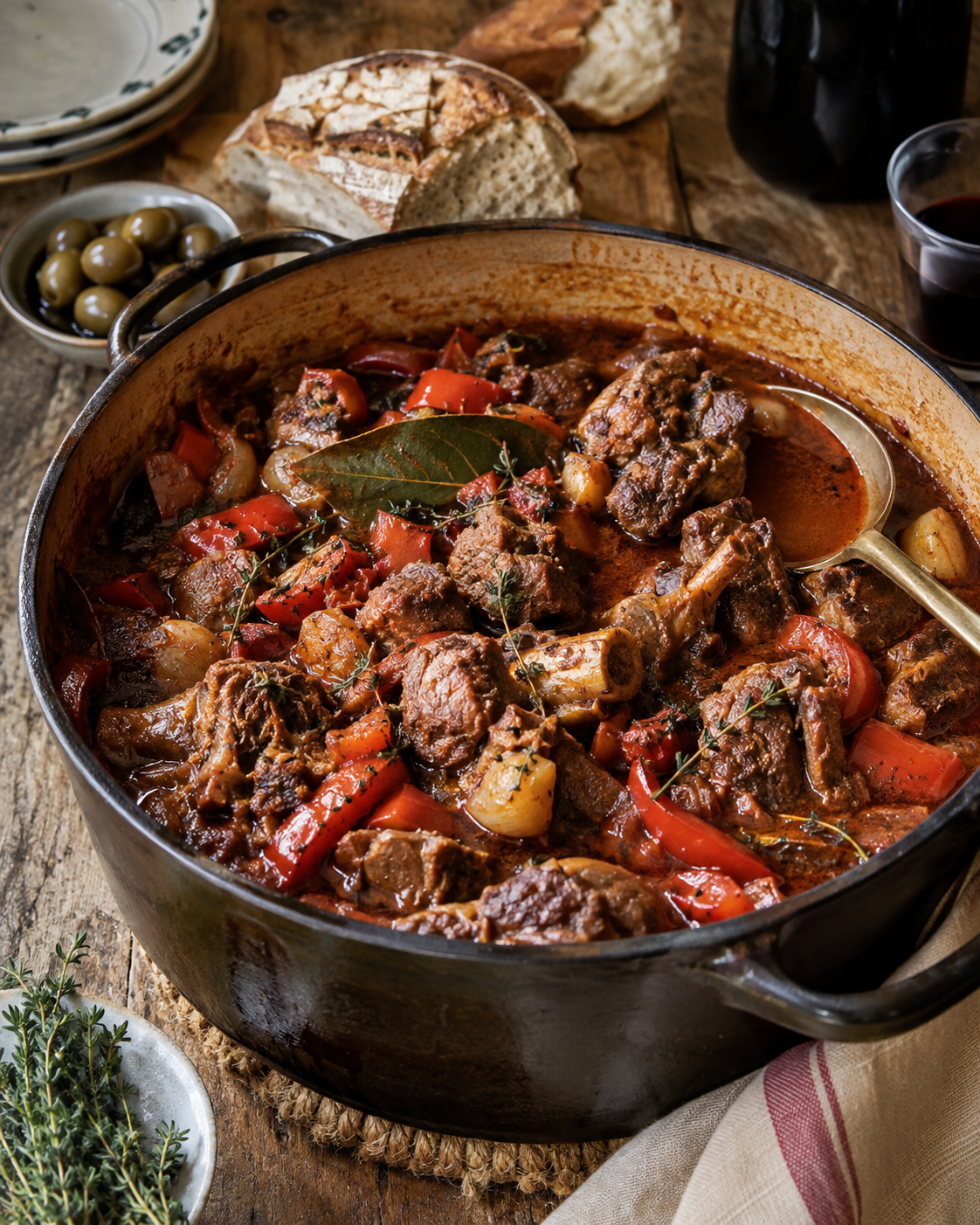
The word caldereta comes from the cauldron it was traditionally cooked in, and it names a whole family of rich Spanish stews built for feeding groups around a fire. There are two great branches of it, and both are crowd food of the highest order, and both take their name from the same big iron pot swung over a fire. Caldereta de cordero, lamb stew, is the rustic inland version, chunks of lamb slow-cooked with peppers, garlic, wine, and often a thickening of the animal’s own liver pounded to a paste, into a deep and savory stew that shepherds have made in the hills for centuries. It is honest, rustic, deeply flavored food, the sort of thing that tastes of woodsmoke and time, and it turns a humble cut of lamb into something a whole table will remember.
Along the coast, the same idea turns to the sea as caldereta de marisco or de langosta, a spectacular seafood and shellfish stew, sometimes built around lobster, simmered with tomatoes, peppers, and aromatics into something rich and briny and celebratory. Either way, the caldereta is a big, forgiving pot of stew that improves as it sits and feeds a crowd with ease, the kind of dish that has fed fishermen and farmers and their families at communal gatherings for generations. It carries none of the anxiety of a dish that must be timed to the second, only the deep pleasure of a great pot shared. This is the quiet advantage of stew cookery for entertaining, that the food is at its best after a long, unhurried simmer and a rest, which frees the host to be a guest at their own party rather than chained to the stove while everyone else has fun. A caldereta made in the morning and left to sit only improves through the afternoon, so by the time the guests arrive the cooking is done and the host is free, which is a gift no last-minute dish can offer.
Migas, the Shepherd’s Feast
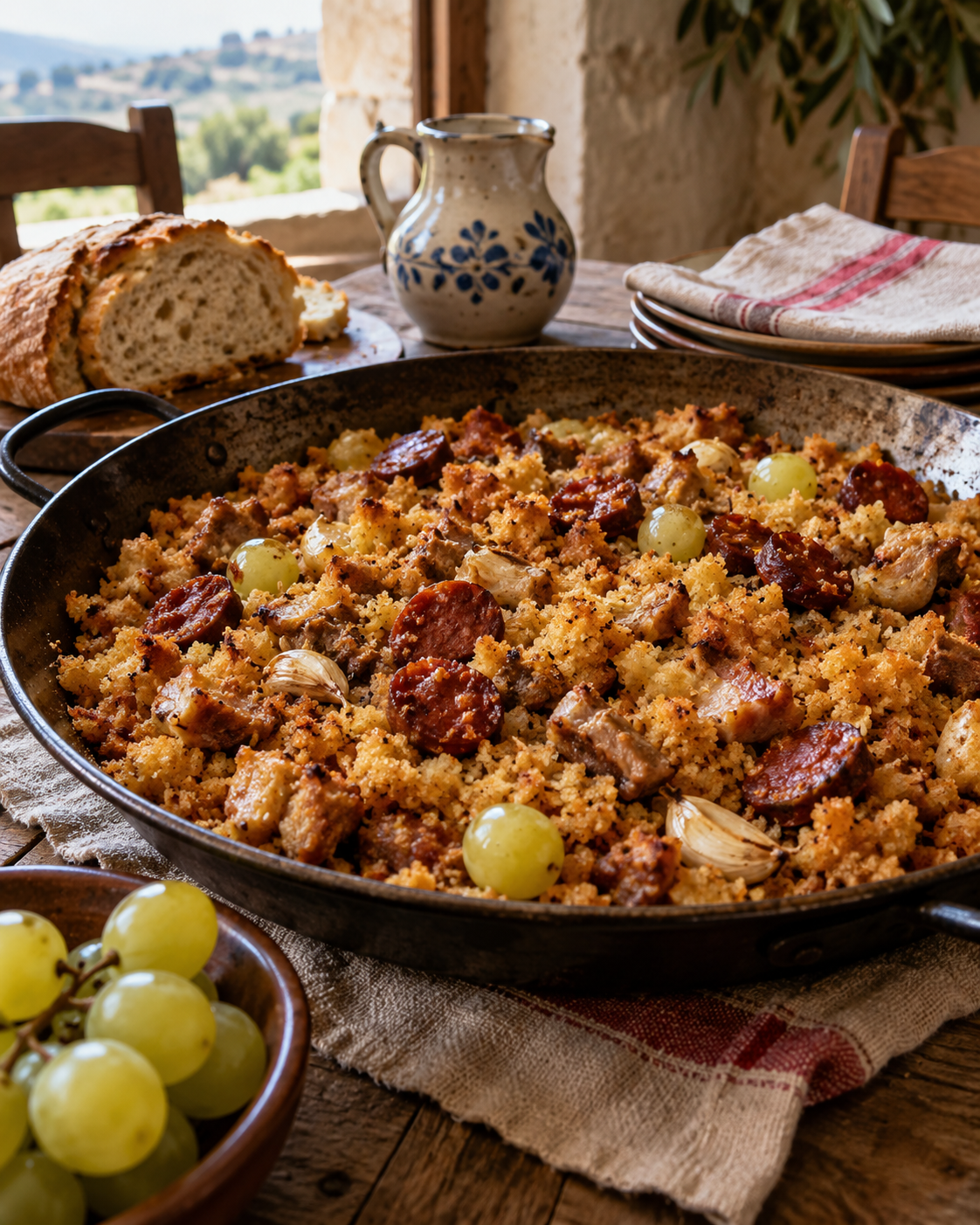
The last of the five is the humblest and perhaps the most surprising, a dish born of poverty and leftovers that has become a beloved crowd-pleaser across much of Spain. Migas simply means crumbs, and the dish is exactly that. Stale bread is torn or grated into crumbs and fried in a big pan with garlic and olive oil until golden and crisp, then studded with whatever good things are around, most often chorizo, bits of pork, and, in a wonderful touch, sweet grapes to cut the richness.
Migas is the ultimate big-pan dish for a crowd precisely because it was invented to stretch little into a lot, a shepherd’s meal designed to feed many hungry people cheaply from a single enormous pan of fried breadcrumbs. It is rustic, satisfying, and endlessly variable, and there is something wonderful about serving a dish with such humble roots at a gathering, the crisp, savory crumbs a genuine revelation to anyone who has never met them. People are often skeptical when they hear the words fried breadcrumbs, and then they taste it, and the skepticism vanishes in a single golden, garlicky, chorizo-flecked bite. For a host who wants to feed a crowd generously without spending a fortune, migas is the cleverest trick in the Spanish book. It also carries a lovely story with it, of shepherds and farmhands turning yesterday’s bread into today’s feast, which is exactly the kind of tale that makes a dish taste better in the telling, and turns a simple pan of fried crumbs into a small piece of Spanish history served warm.
Beyond the Famous Pan
Set these five beside paella and you can see the real shape of Spanish crowd cooking, which is not one iconic dish but an entire philosophy, the belief that the best way to feed people is to make one great thing in one great vessel and gather everyone around it. Paella just happens to be the version that made it onto postcards, but in Spanish homes it stands shoulder to shoulder with all of these, each the star of its own region and its own kind of gathering. From the seafood drama of the fideua to the smoky comfort of the fabada, each of these dishes carries the same spirit, generous, communal, forgiving, and built for a long table rather than a careful plate. None of them asks the cook to fuss over individual portions or precise timing, and all of them get better the more people there are to share them, which is exactly the opposite of most modern entertaining and a large part of why the Spanish table feels so warm. There is a deep wisdom in that approach to hosting, that the goal is not to impress with precision but to nourish with abundance, and the big Spanish pan or pot is that wisdom made edible.
That spirit is exactly what an American cookout is reaching for too, which is why any of these dishes would slot so naturally into a Labor Day gathering or any occasion where you want to feed people well and easily. Pick the one that suits your weather and your crowd, a bright seafood fideua for a warm afternoon, a smoky fabada or a rich caldereta for a cooler evening, a soothing arroz caldoso when the rain sets in, or a clever pan of migas when you want to feed many for little. Either way you will be cooking in the deepest Spanish tradition, the one that says a meal is not really a meal until there are enough people around the pot. That is a lovely thing to bring to an American table, the reminder that the point of all the cooking was never the food alone but the crowd it draws together, warm and full and glad to have come. Paella may be the famous one, but it was never the only one, and the rest of the family is very much worth meeting. Cook one of them for a crowd this fall and you may find, as generations of Spanish families already know, that the dish everyone remembers is not the fanciest or the most complicated but simply the biggest, most generous pot on the table, the one that fed everyone and left them all a little happier than they arrived.

About the Author: Ruben, co-founder of Gamintraveler.com since 2014, is a seasoned traveler from Spain who has explored over 100 countries since 2009. Known for his extensive travel adventures across South America, Europe, the US, Australia, New Zealand, Asia, and Africa, Ruben combines his passion for adventurous yet sustainable living with his love for cycling, highlighted by his remarkable 5-month bicycle journey from Spain to Norway. He currently resides in Spain, where he continues sharing his travel experiences with his partner, Rachel, and their son, Han.