
The German beer garden is one of the great social inventions of Europe, a shady grove of long wooden tables where strangers become table-mates over a liter of cold beer, and it runs on a set of unwritten rules that an American can break within minutes of arriving. Sit in the wrong section, bring the wrong thing, order the wrong size, or plant yourself at the wrong table, and you have marked yourself before the first sip. None of the rules are hard, and the regulars are forgiving of a visitor who is clearly trying, but knowing them turns a bewildering scene into one of the most relaxed and joyful afternoons Europe offers. With the beer garden season running through October and Oktoberfest landing in late September, there is no better time to learn them. Here are the nine Americans break most often. Get them right and you stop being a tourist watching the fun and become part of it, which is the entire difference between a good afternoon and a great one.
Rule One: You Can Bring Food, But Never Drinks
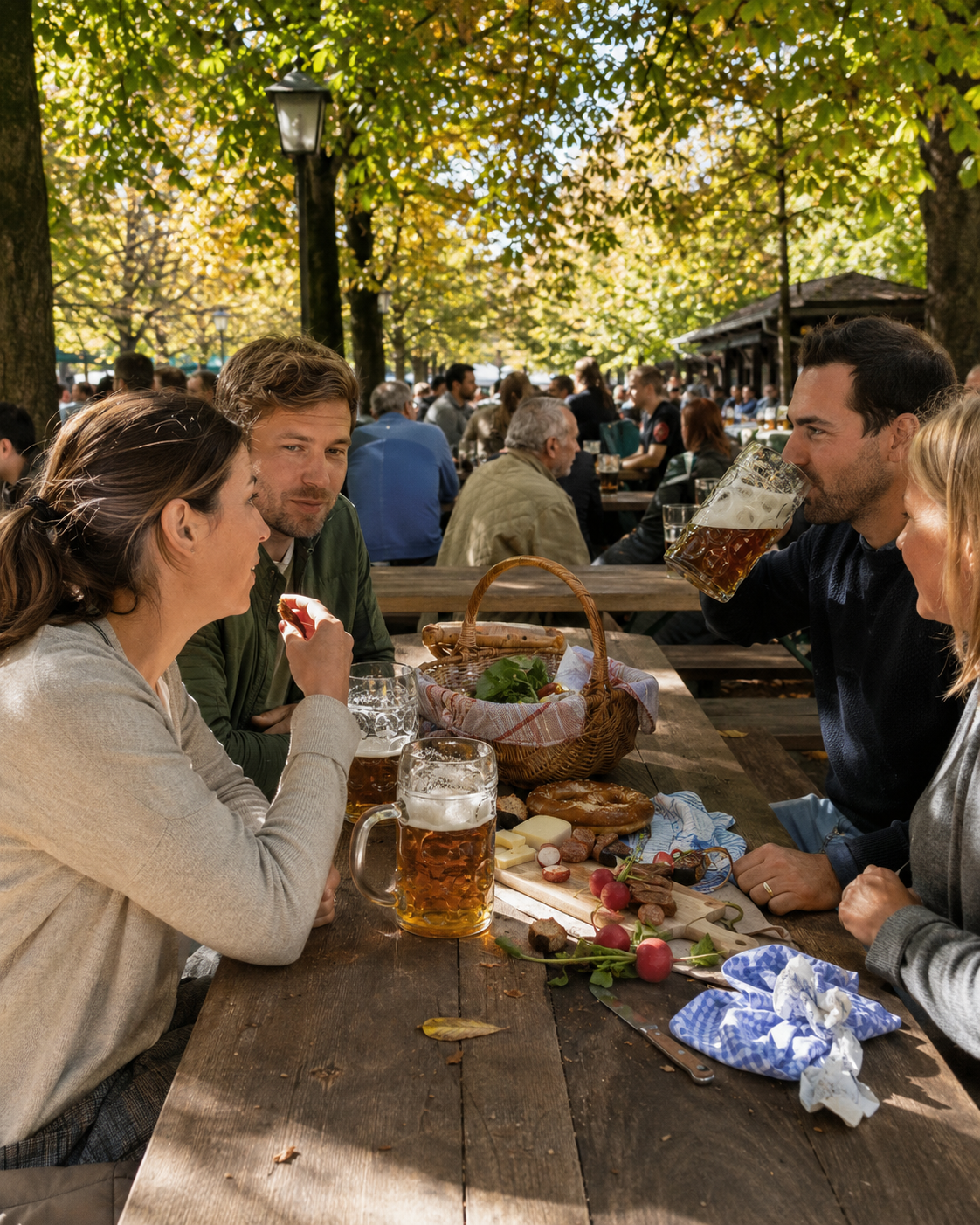
This is the rule that surprises everyone and delights them once they understand it. At a traditional Bavarian beer garden you are welcome to bring your own food, a packed picnic of bread, cheese, sausage, and radishes, and spread it out on the table, a tradition that goes back to an 1812 royal decree that let brewers sell beer but not food, leaving hungry patrons to bring their own. What you may absolutely never bring is your own drinks, because the beer is the whole point and the reason the garden exists, so the deal is simple and centuries old.
The logic, once you know it, is airtight and rather charming. You buy the beer there, always, and everything else you are free to carry in, which is why locals arrive with a Brotzeit basket of cold food and buy round after round of beer to go with it. Bring a bottle of your own wine or beer and you have broken the one truly sacred rule of the place. Bring a whole picnic to eat alongside the beer you buy, and you are doing exactly what the beer garden was invented for. It is one of the few places in the world where showing up with your own lunch is not cheap but traditional, even a little admirable.
Rule Two: Know Your Two Sections
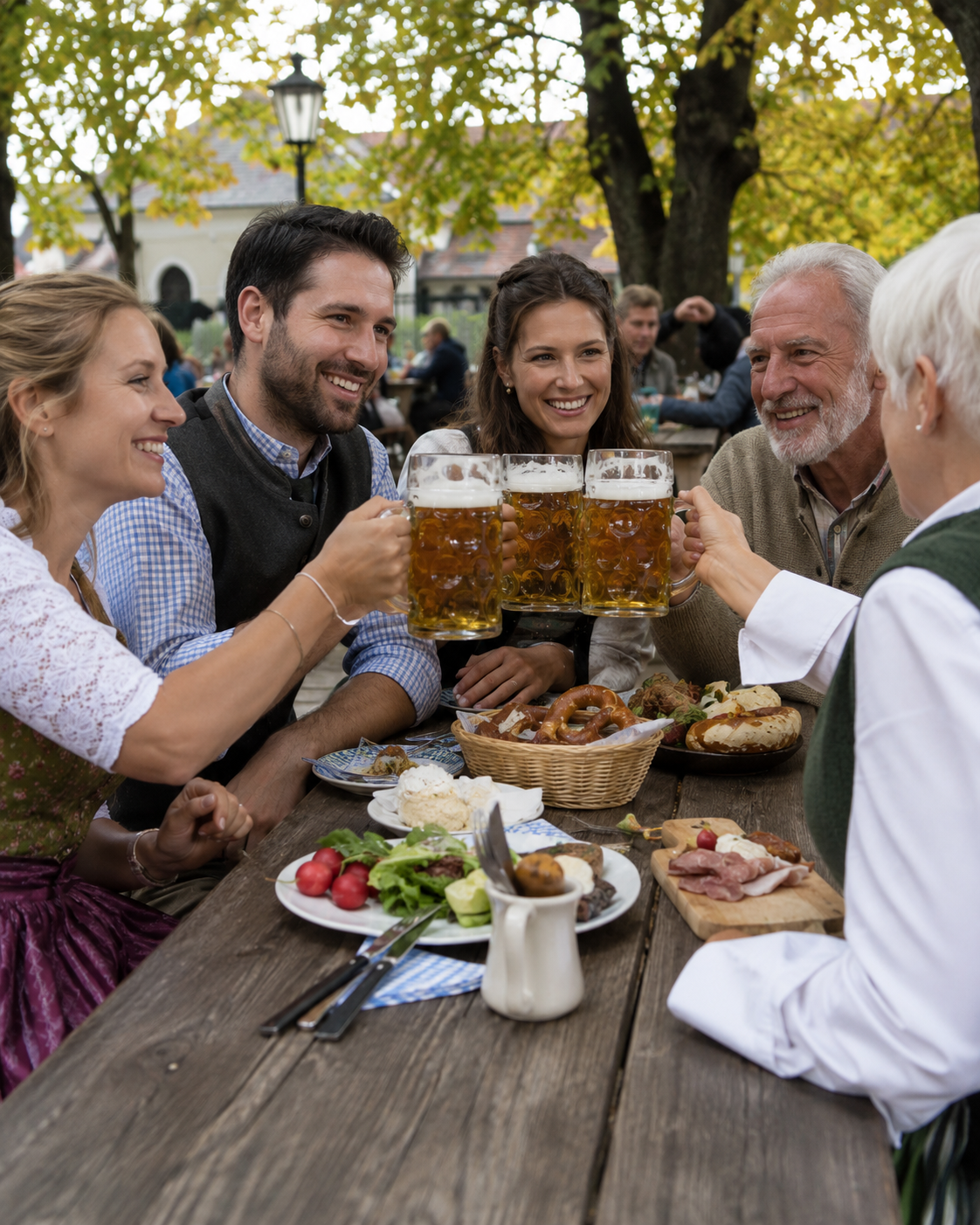
Beer gardens quietly have two zones, and sitting in the wrong one is the most common tourist mistake. The self-service section, where the tables are bare wood, is where the old traditions live, so there you fetch your own beer from a counter, carry it yourself, and are free to bring your own food. The table-service section, usually marked by tablecloths on the tables, works like a restaurant, with a waiter who brings your beer and food, and there you may not bring your own picnic.
Getting this right is the difference between a smooth afternoon and an awkward one. If you spread your homemade sandwiches on a table with a cloth, you will be gently corrected, and if you sit at a bare table waiting for a waiter who is never coming, you will wait a very long time. The move is to look at the tables, since bare wood means fetch your own and bring your food, while a tablecloth means sit and be served and buy the food there. Choose the section that matches how you want to spend the afternoon, and behave accordingly. The self-service side is cheaper and more traditional and lets you bring a feast from home, while the served side trades a little of that freedom for the comfort of being waited on, and both are perfectly good depending on the day.
Rule Three: Share the Table
The long communal tables are not an accident, they are the entire social philosophy of the place, and an American instinct to find a private table will leave you standing forever. You sit down with strangers, on a first-come basis, wherever there is room, and sharing a bench with people you have never met is not an intrusion but exactly how it is meant to work. The tables are built long for precisely this reason, to seat whoever shows up beside whoever is already there.
The etiquette for joining is simple and worth knowing. When you spot an open stretch of bench at an occupied table, you ask “Ist hier noch frei?,” meaning is this seat still free, and when they nod, you sit. The one thing to watch for is a reserved sign, since a table marked reserviert is spoken for and not yours to take, and a tablecloth means it is the served section rather than the free-for-all. Otherwise, squeeze in, nod to your new neighbors, and accept that you may leave the afternoon with friends you did not arrive with, which is the whole magic of the thing. There is no better cure for the loneliness of travel than being folded into a Bavarian table by people who were strangers a pretzel ago.
Rule Four: Order a Mass
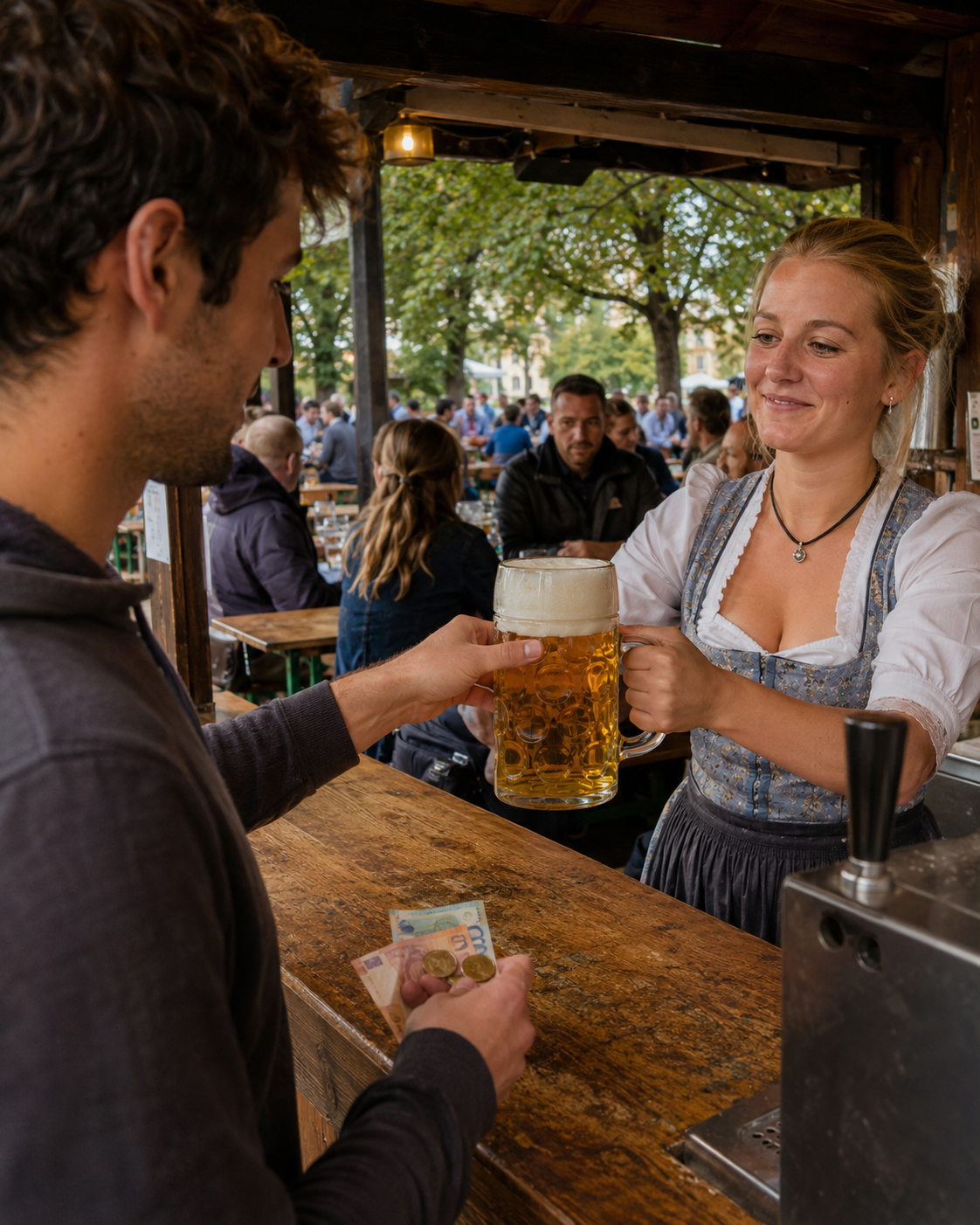
The beer comes in sizes, and knowing them keeps you from confusion at the counter. The classic beer garden serving is the Mass, a full liter of beer in a heavy glass mug, the iconic image of Bavaria, and if you want less, you ask for a Halbe, a half-liter. Order “a beer” the vague American way and you may be met with a raised eyebrow, since here you specify the size and often the type, a Helles, the pale lager, being the beer garden standard.
The prices are worth knowing so nothing startles you, since a Mass in a Munich beer garden runs somewhere around €11 to €13 in 2026, roughly $12 to $14, with the exact figure varying by garden. Note that Oktoberfest tent prices run higher, well past €15 a liter, so the festival is its own more expensive world, worth knowing about before the bill lands. A normal neighborhood beer garden on an ordinary afternoon is far gentler on the wallet than the famous festival. If a full liter feels like a lot, and it is a lot, the Halbe is a perfectly respectable order, or try a Radler, beer cut with lemonade, which is lighter and completely traditional. Nobody will judge you for pacing yourself, and a full liter of strong beer sneaks up on people who treat it like an American pint, so the slower order is often the wiser one.
Rule Five: Fetch It and Return It Yourself
In the self-service section, the whole rhythm is do-it-yourself, and standing around waiting to be served marks you instantly. You walk to the beer counter, order and pay, carry your own heavy Mass back to your table, and when you are done, you carry the empty glass back to the return area yourself. There is no waiter in this section and none is coming, which is not neglect but simply how the self-service tradition works.
A few small courtesies go with this. You do not stack your empty glasses and plates into a tower for someone else to deal with unless the staff ask you to, and at some gardens there are basins where you rinse your own glass before a refill. The spirit of the self-service section is that everyone pitches in a little to keep the place running and cheap, so carrying your own beer and returning your own glass is not a chore but part of belonging. Do it without being asked and you look like a regular. The self-service section is cheaper precisely because everyone shares the small work of keeping it running, and joining in is how you earn your place at the table.
Rule Six: Look Them in the Eye When You Say Prost
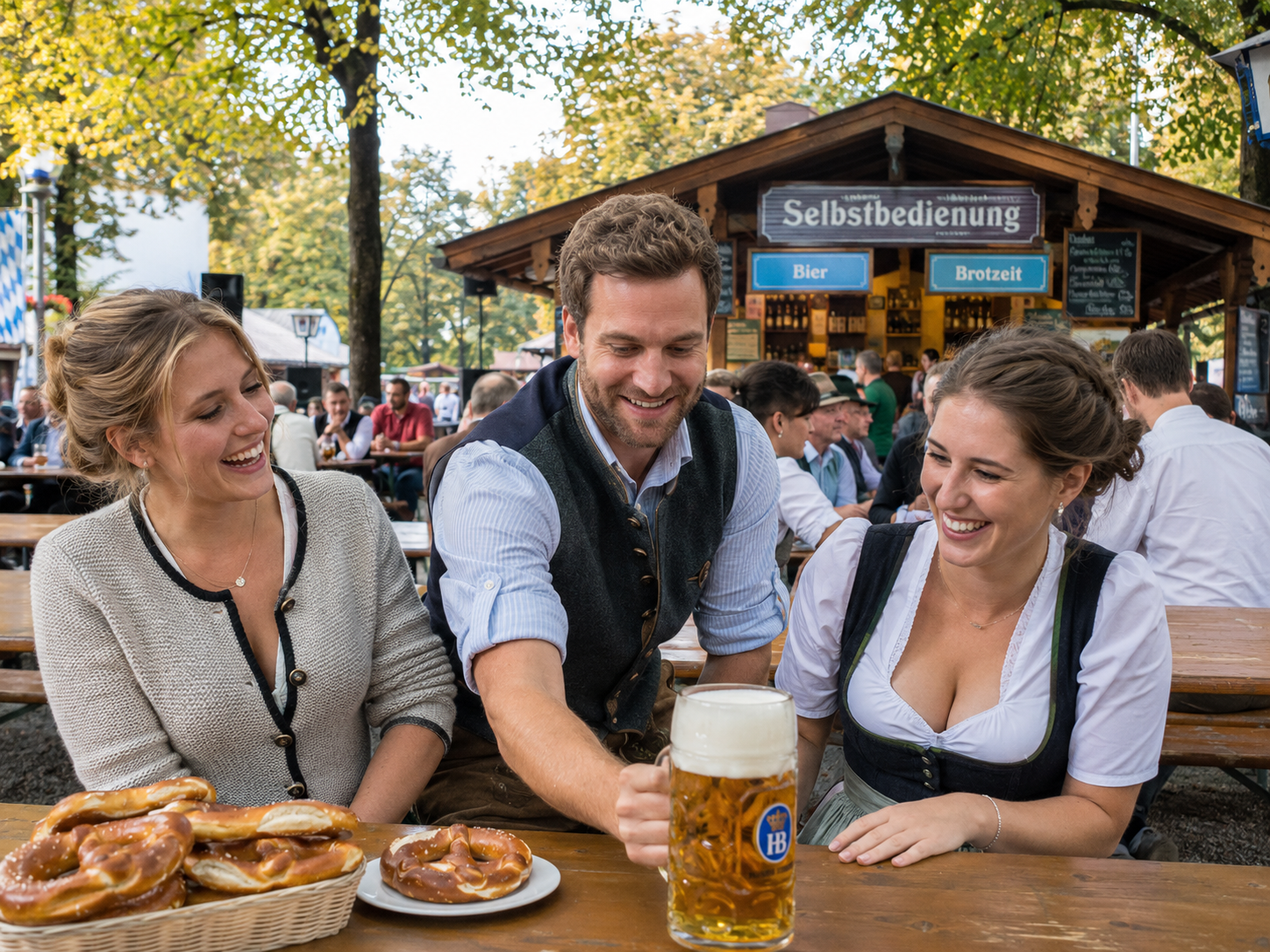
The toast has rules of its own, and getting it wrong is a small but noticed slip. When you clink glasses and say “Prost,” the German cheers, you must look the other person directly in the eye as you do it, not at the glasses, not at the table, but eye to eye. Toasting while looking away is considered careless and, by an old bit of folklore, brings bad luck, so the locals take the eye contact seriously and you should too.
It is a small gesture that carries real warmth. Going around a table of new benchmates, clinking each heavy mug in turn with a “Prost” and a look in the eye, is one of the loveliest little rituals of the beer garden, and it turns a table of strangers into something friendlier in a single round. The heavy glass mugs are built for a solid clink, so meet each one squarely, hold the gaze for a beat, and drink. Get this right and you have shown you understand the spirit of the place, not just its menu. The eye contact is really a tiny act of respect, a way of saying you are drinking with this person and not merely near them, which is the whole difference the beer garden is built on.
Rule Seven: Round Up, Don’t Tip American
The American tipping habit lands wrong here, and understanding the German way saves both confusion and money. You do not leave a fifteen or twenty percent tip, since that is simply not how it works, and instead you round up modestly, so a beer that costs a bit under twelve euros gets rounded to twelve or a touch more. Crucially, you say the total you want to pay as you hand over the money rather than leaving coins on the table afterward, telling the server the rounded-up figure when you pay.
This is a small cultural adjustment with real logic behind it. Servers are paid a proper wage, so the tip is a modest thank-you rather than the bulk of their income, and the round-up custom, done at the moment of payment, is how Germans have always handled it. Leaving a big American tip is not offensive but marks you as a foreigner, while the quiet round-up said at payment marks you as someone who knows the ropes. In the self-service section, of course, there is no tipping at all, since you served yourself, and no one expects a coin for a beer you fetched with your own hands.
Rule Eight: Bring Cash
Germany remains a strikingly cash-loving country, and beer gardens are among the most cash-based places in it, so turning up with only a card is a genuine risk. Many beer garden counters, especially the traditional self-service ones, take cash only, and even where cards are accepted the line moves faster and the transaction is simpler with notes and coins in hand. An American used to tapping a card everywhere can be caught out standing at the beer counter with no way to pay.
The fix is simply to come prepared, with enough cash for the afternoon in your pocket before you arrive, ideally in smaller notes and coins that make paying and rounding up easy. This is not unique to beer gardens but a broader German habit, where cash is still king in a way that surprises visitors, and the beer garden is exactly the kind of traditional, outdoor, fast-moving place where it matters most. Bring the cash, and you never have the awkward moment at the front of the line while a thirsty crowd waits behind you. A trip to a cash machine on the way is a small price for a smooth afternoon.
Rule Nine: Be Merry, Not Messy
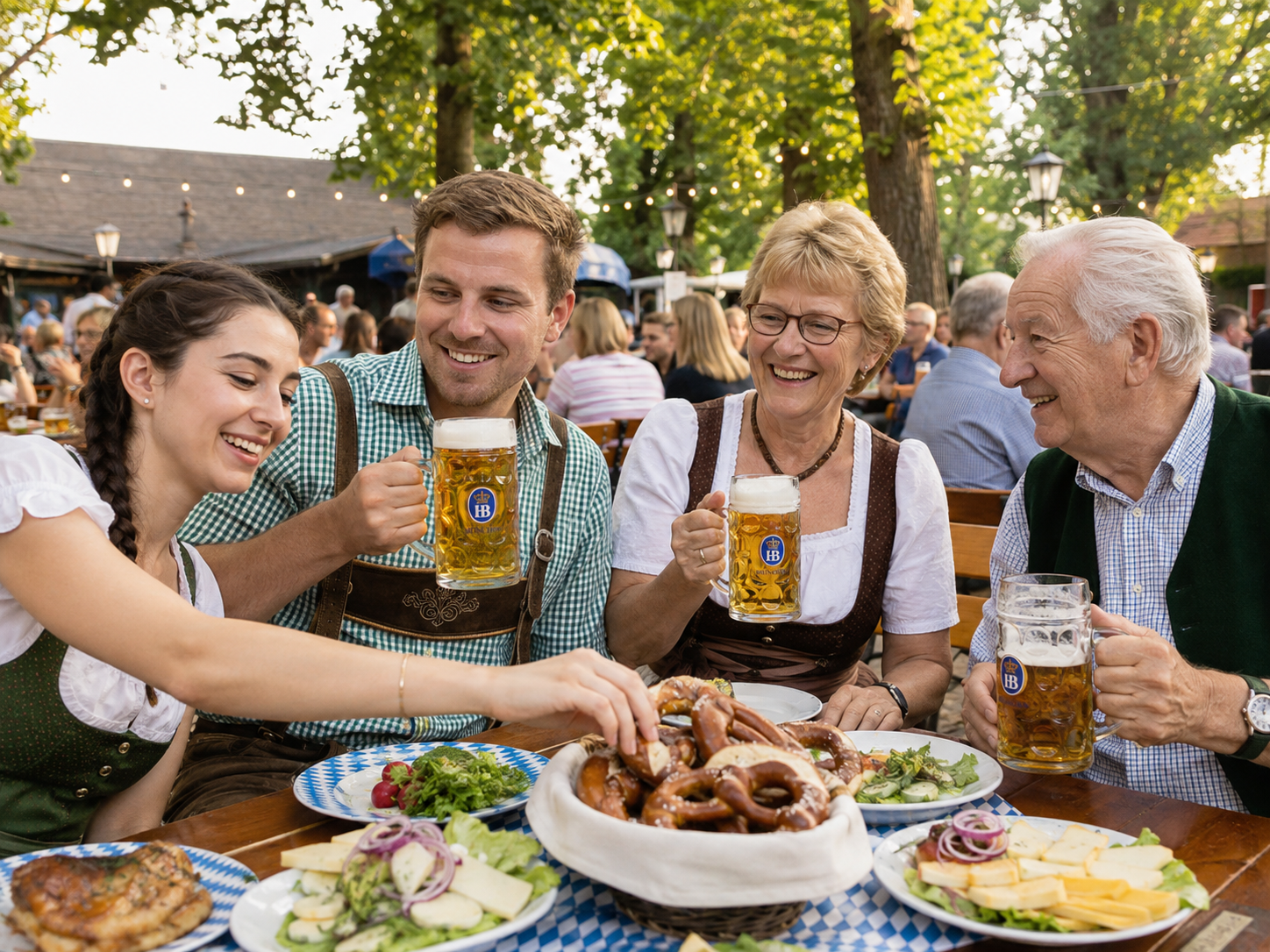
The beer garden runs on a spirit of easy conviviality, and the one way to genuinely offend is to mistake it for a licence to get sloppy. For all the liters of beer, the German beer garden is at heart a family place, with children playing and grandparents chatting, so loud, aggressive, falling-down drunkenness is out of place and, at events like Oktoberfest, can actually earn you a fine or an ejection. The point is warmth and good cheer, not spectacle.
The right register is relaxed and friendly, so you talk to your table neighbors, keep your phone quiet and your voice at a conversational level, join a song if one breaks out, and pace yourself across a long, sociable afternoon rather than racing to the bottom of the mug. This is the German idea of Gemutlichkeit, a hard-to-translate coziness and good feeling that the whole institution exists to create, and protecting it is everyone’s job. Be merry, be sociable, be a little sentimental after the second Mass, but stay the kind of guest the regulars are glad to share a bench with. The beer is generous, but the real point was always the company, and the guests who remember that are the ones welcomed back.
The Whole Point Is Belonging
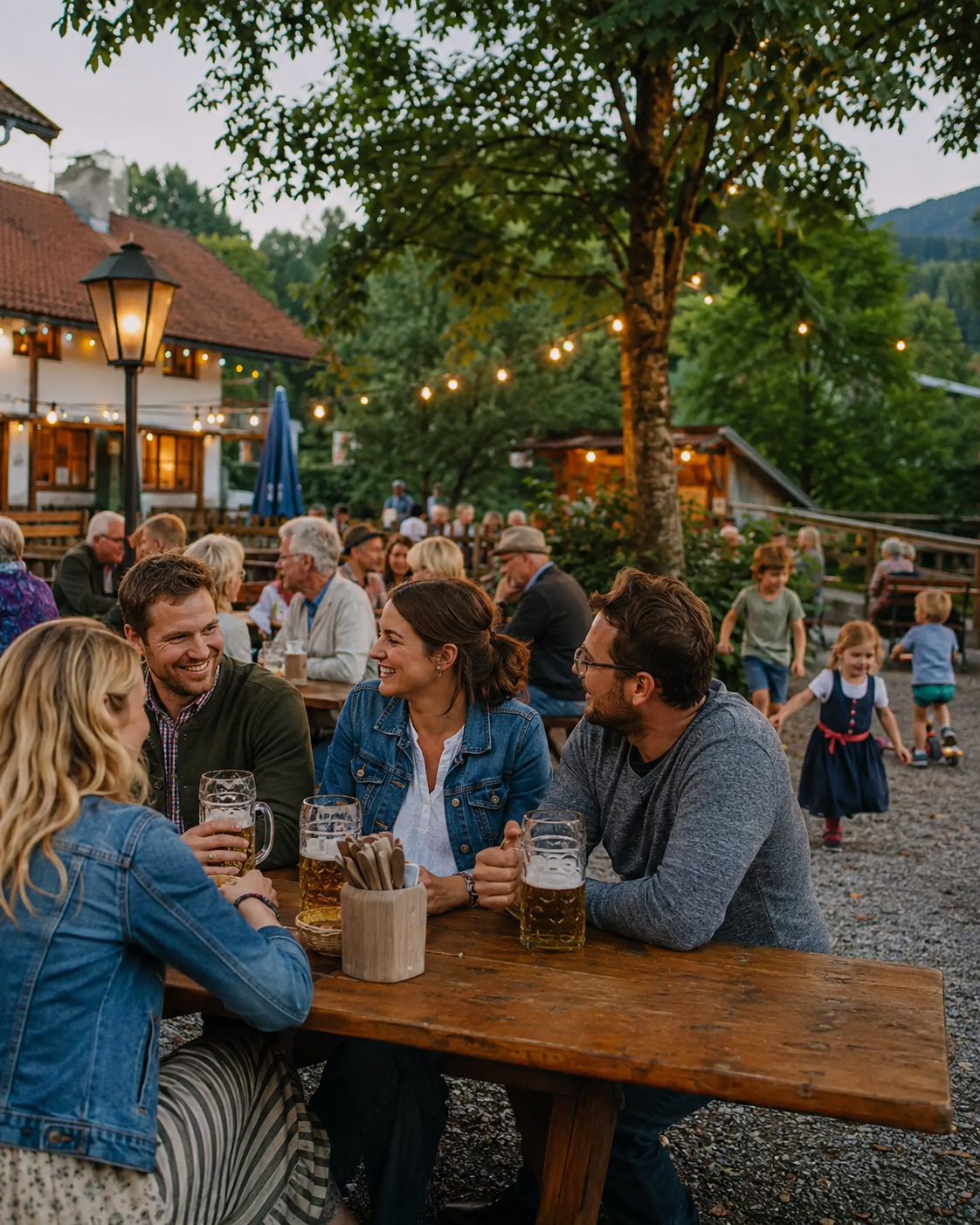
Look at the nine rules together and they are really one idea wearing nine hats, that the beer garden is a shared, communal, slightly ceremonial space, and every rule is a small way of fitting into it rather than standing apart. Buy the beer and bring the food, sit with strangers, order by the liter, fetch your own and return it, toast with your eyes, round up your tip, carry cash, and keep it warm rather than wild, and you have understood not just the etiquette but the whole gentle genius of the place.
None of it is hard, and the reward is one of the best afternoons Europe can offer, especially now, with the chestnut leaves turning and the season winding toward its Oktoberfest climax before the gardens close for winter. A visitor who gets even most of these right is welcomed like a friend, handed a liter, and folded into a long table of good cheer under the trees. Learn the nine, relax into the communal rhythm, and the German beer garden becomes exactly what it was built to be, a place where strangers sit down and stand up as friends. There are few better ways to spend a warm afternoon anywhere in Europe, and fewer still that ask so little of you in return.

About the Author: Ruben, co-founder of Gamintraveler.com since 2014, is a seasoned traveler from Spain who has explored over 100 countries since 2009. Known for his extensive travel adventures across South America, Europe, the US, Australia, New Zealand, Asia, and Africa, Ruben combines his passion for adventurous yet sustainable living with his love for cycling, highlighted by his remarkable 5-month bicycle journey from Spain to Norway. He currently resides in Spain, where he continues sharing his travel experiences with his partner, Rachel, and their son, Han.