
Everyone knows paella, the great rice dish Spain cooks over fire in a wide flat pan. Far fewer people outside Spain know its humbler, cozier cousin, the one that is baked in the oven instead of simmered on the flame, and that was born not for a festive Sunday but for the leftovers of Monday. It is called arroz al horno, oven-baked rice, and in its home region of Valencia it is the dish traditionally made on a Monday from whatever was left of the weekend’s big stew, turning yesterday’s scraps into today’s feast. A whole head of garlic sits proudly in the center, the rice bakes up in a clay dish until the top is golden and a little crisp, and the whole thing is pure, thrifty, deeply Spanish comfort.
What follows is the lovely story behind this dish, how it turns leftovers into something special, and a recipe you can make from a Sunday stew or from scratch on any day of the week.
The Dish Born From Monday’s Leftovers
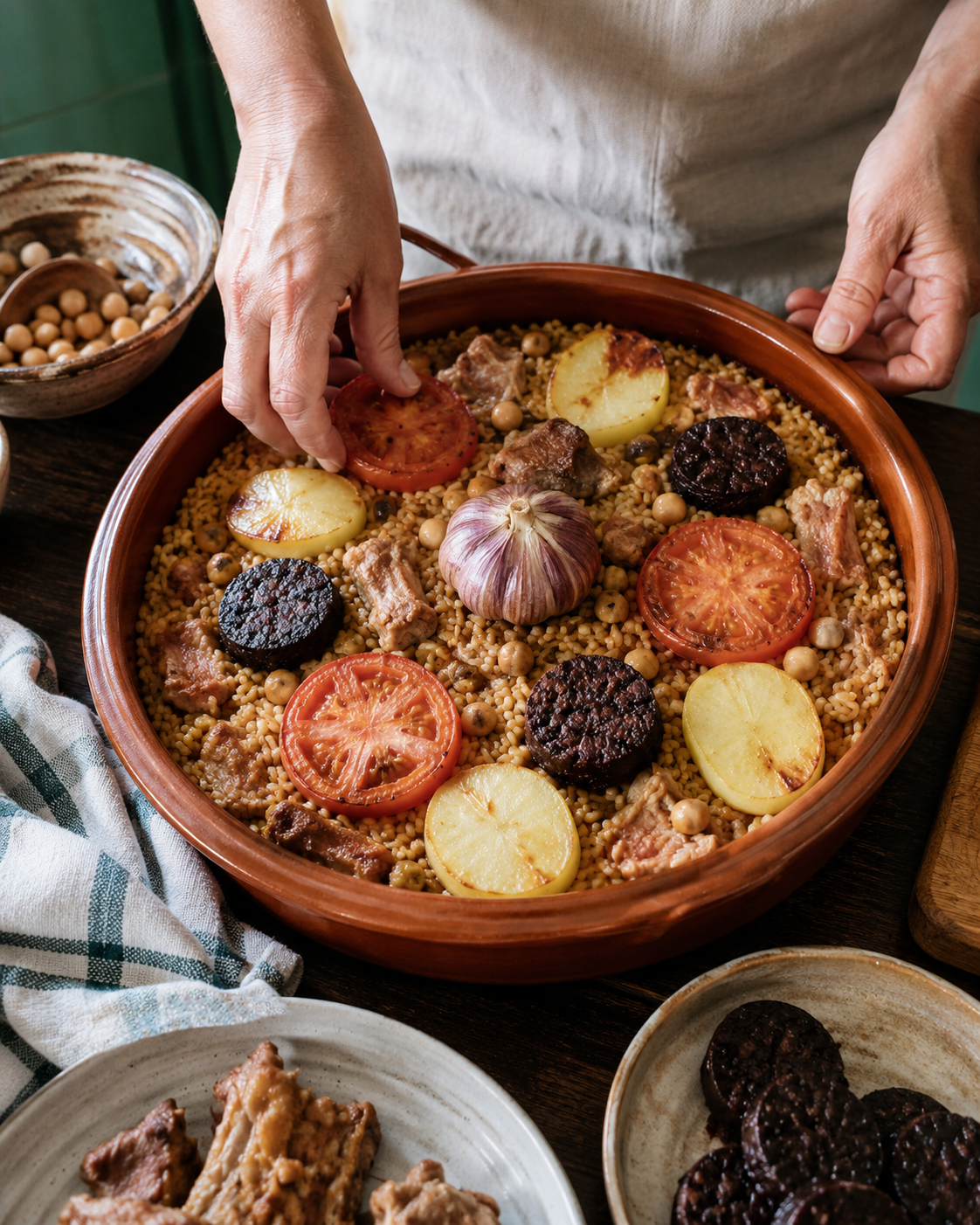
The heart of arroz al horno is a beautiful piece of kitchen thrift, and understanding it explains everything about the dish. In Valencian homes, the weekend often meant a cocido or puchero, a big slow-cooked stew of meats, chickpeas, and vegetables that produced a rich, flavorful broth and always more than could be eaten in one sitting. So on Monday, rather than waste any of it, cooks would take that leftover broth, the cooked chickpeas, and the bits of meat and turn them into a completely new dish by baking them with rice. That is exactly how arroz al horno came to be the Monday dish, a clever second act for a stew that had already given one good meal and still had plenty left to give.
It is one of the finest examples of the Spanish and Mediterranean instinct that nothing good should go to waste, where the tail end of one meal becomes the centerpiece of the next. The genius of it is that the leftovers were never sad scraps but genuinely delicious things, above all that cocido broth, which is one of the most flavorful liquids in all of Spanish cooking, so the rice baked in it comes out tasting far richer than its humble origins suggest. This is not a dish that merely uses up leftovers out of duty, but one that turns them into something people actively look forward to, which is why it earned a permanent place on the Valencian table rather than staying a mere act of frugality.
Why the Oven, Not the Stovetop
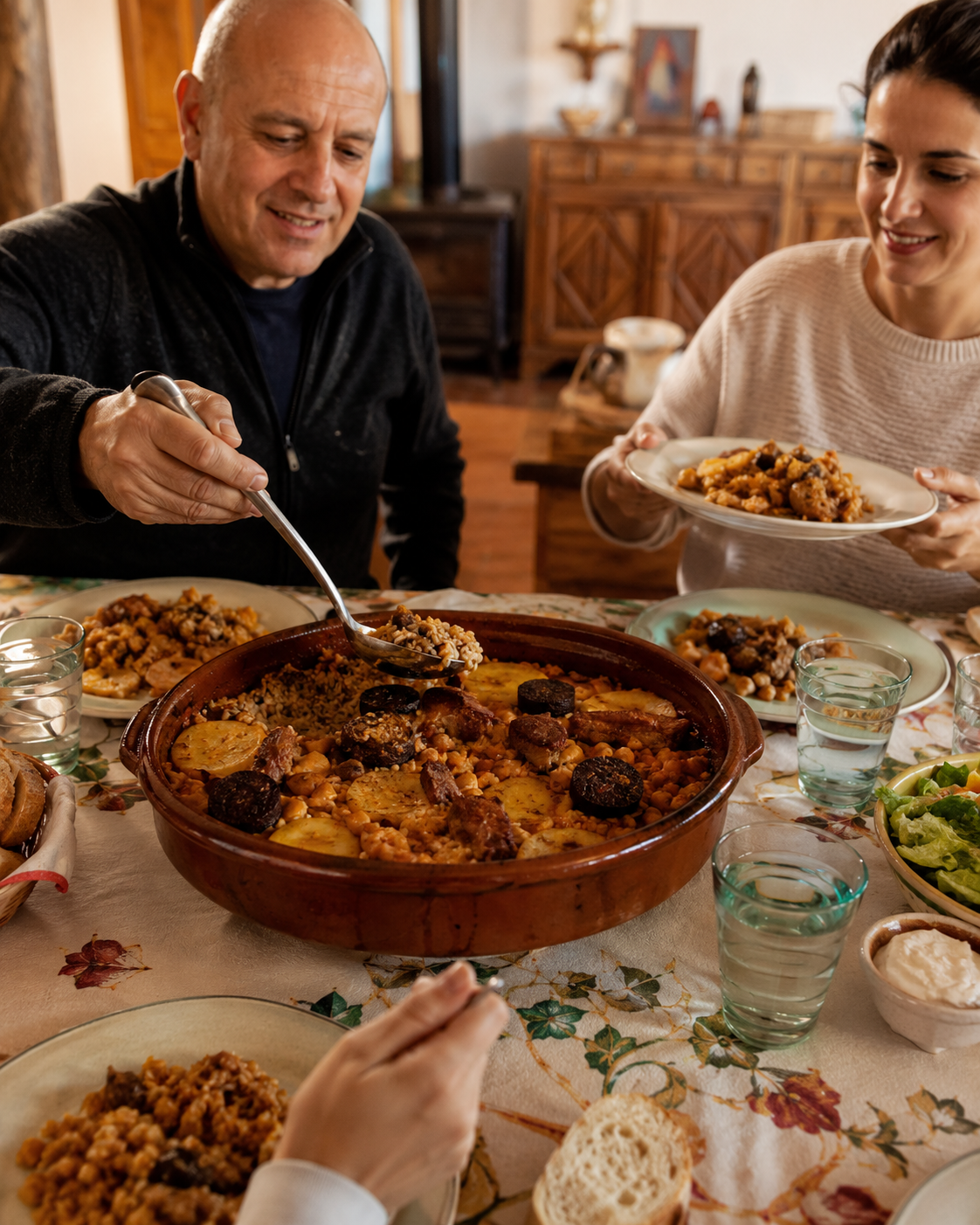
The other thing that sets arroz al horno apart from paella is right there in the name, since al horno means in the oven, and that baking is the whole character of the dish. Where paella is cooked on the flame in a wide open pan, arroz al horno is baked in an earthenware casserole called a cazuela, which gives the rice a completely different texture, drier and firmer than paella, with a wonderful golden crust forming on top where the grains meet the heat of the oven.
There is a charming history behind the oven, too, one worth knowing. In the old days, not every Valencian household had an oven of its own, so families would prepare their cazuela at home and then carry it through the streets to the communal village oven or the local bakery to be baked, alongside the dishes of all their neighbors. This gave the dish one of its loveliest names, arros passejat in the Valencian language, the walking rice, for the little journey it made to the oven and back. It is a small window into a whole way of village life, when the bakery’s oven was a shared resource and a Monday’s baked rice was a communal affair, and it is baked into the identity of the dish as surely as the garlic in its center.
The Head of Garlic in the Middle
Every arroz al horno has one unmistakable feature that announces exactly what it is, which is a whole head of garlic placed, unpeeled and intact, right in the center of the dish. It bakes there along with the rice, the papery skin going golden and the cloves inside turning soft, sweet, and mellow, utterly transformed from the sharp raw garlic they started as, so you squeeze the tender roasted cloves out over your rice as you eat.
Valencians have an affectionate name for this centerpiece, calling the baked head of garlic the perdiu, the partridge, for the way it sits plump and browned in the middle of the dish like a little roasted bird. It is both a flavor and a decoration, the crowning touch that makes an arroz al horno instantly recognizable, and it is genuinely delicious, since roasted garlic is a gentle, sweet, spreadable thing rather than the pungent bite of raw. Do not skip it or treat it as mere garnish, because that soft roasted garlic squeezed through the rice is one of the real pleasures of the dish and part of what makes it feel special rather than plain.
What Goes In It
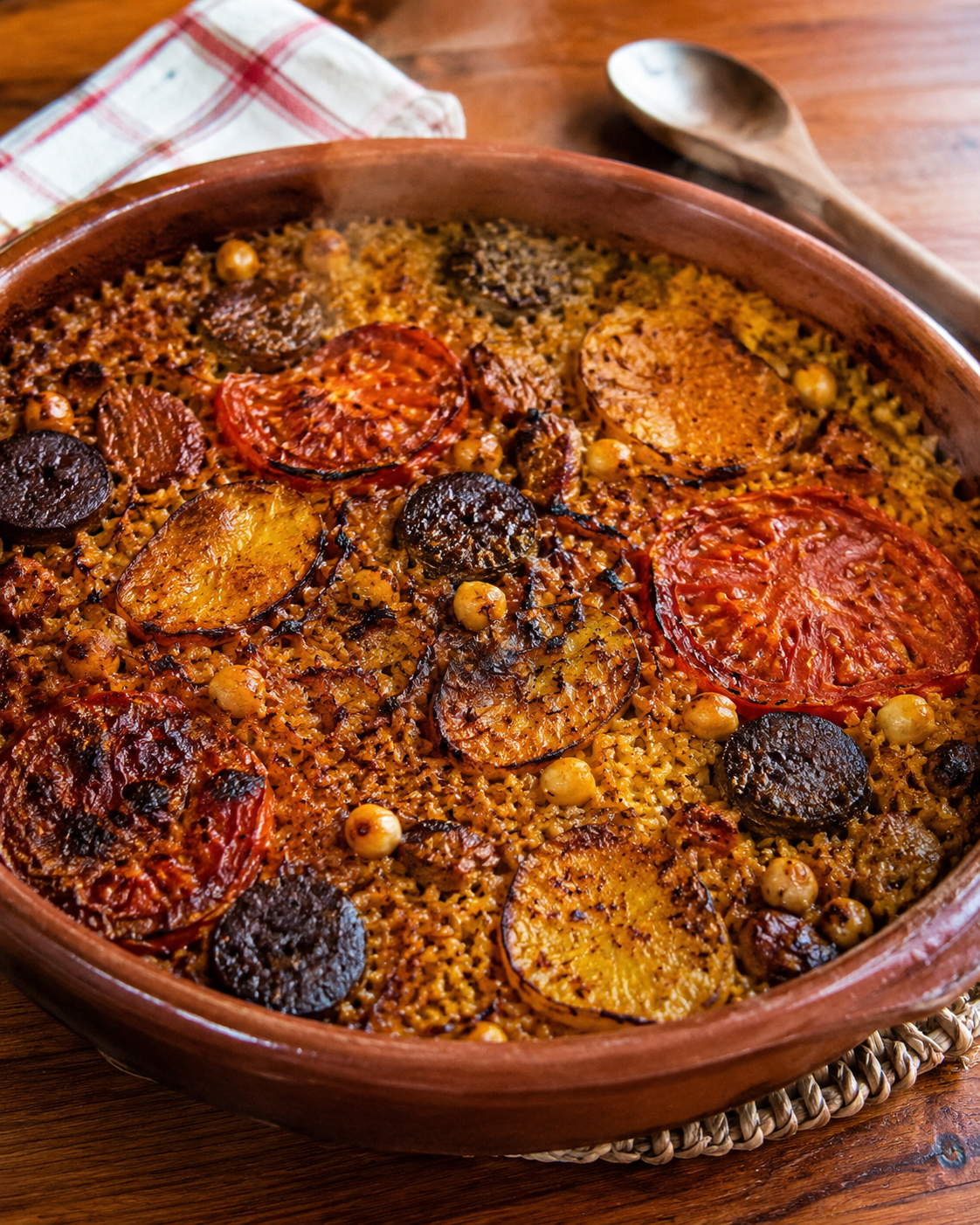
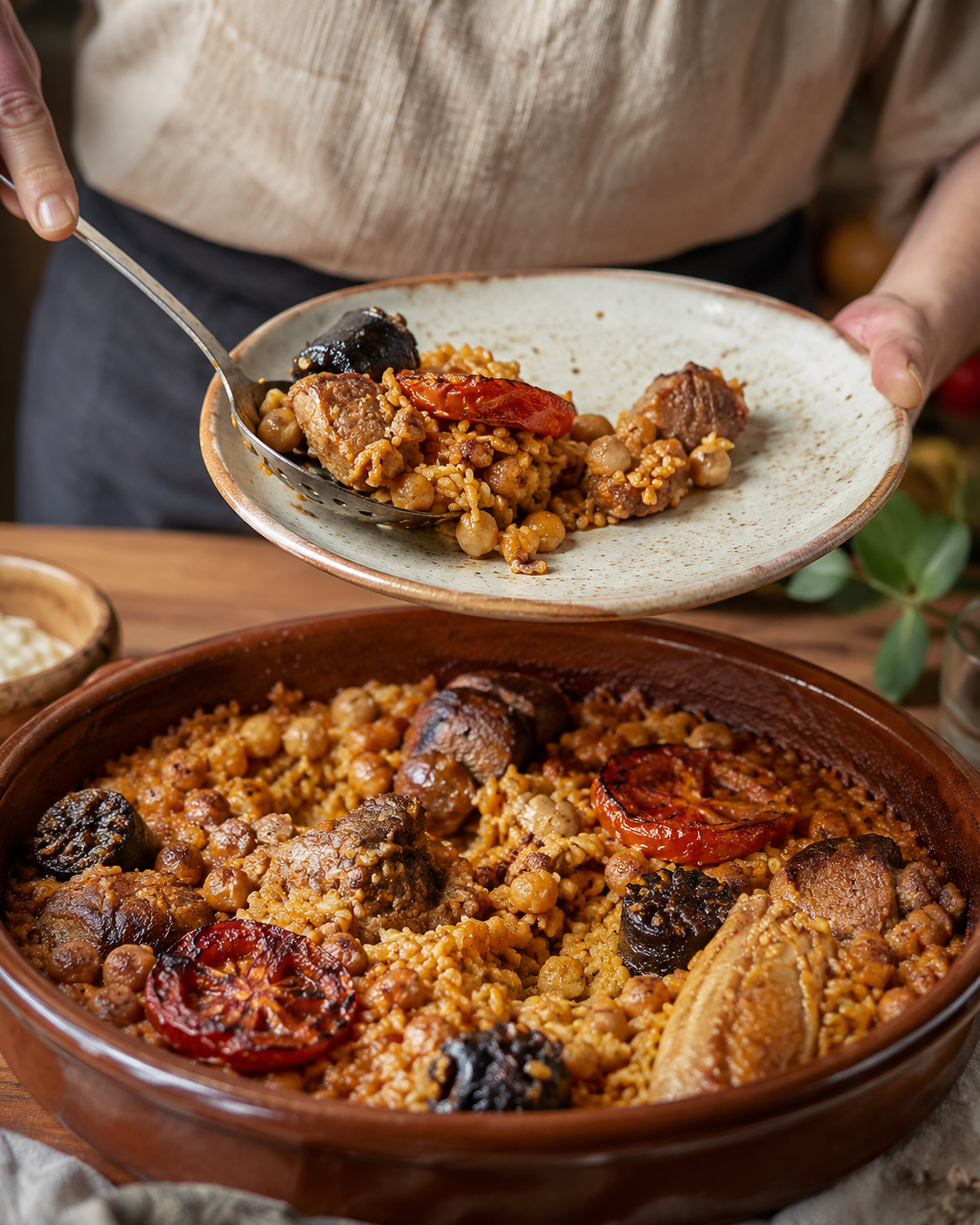
Beyond the rice, the broth, and the garlic, arroz al horno carries a hearty and unmistakably Spanish cast of ingredients. Chief among them is morcilla, the Spanish blood sausage, which is traditional and adds a rich, dark, savory depth, along with the chickpeas from the cocido, slices of potato, slices of tomato laid across the top, and pieces of pork like ribs or belly. Some versions add chorizo or other sausages, and the exact mix depends on what the weekend’s stew provided.
The rice itself should be a short-grain Spanish variety like bomba, the same rice used for paella, which holds its shape and drinks up the flavorful broth without turning to mush. And the seasoning is simple but essential, with saffron or a little turmeric for color and aroma, sweet paprika, and good olive oil, all of which give the finished dish its warm golden hue and its deep savory flavor. It is a genuinely filling, one-dish meal, the kind of hearty plate that suits a cold day and leaves nobody hungry, which is exactly what you want from food built to make a satisfying meal out of the humblest beginnings. Every element earns its place, the sausage for depth, the chickpeas for body, the potato for softness, and the rice to carry it all, so that a plate of arroz al horno feels complete on its own, needing nothing more than perhaps a little green salad on the side.
Making It Without the Cocido
The traditional route starts with leftover cocido, but you do not need to cook a giant stew first to enjoy arroz al horno, which is part of what makes it so practical. If you have no leftovers, you simply build the same dish from scratch, using good chicken or beef stock in place of the cocido broth, a tin of chickpeas instead of the stewed ones, and fresh sausages and pork that you brown before they go in. The result is very nearly as good, and it means this is a dish you can make any night, not only the day after a big stew.
That flexibility is worth emphasizing, because it would be a shame to think of arroz al horno as something you can only have if you happened to make a cocido first. Treat the leftover version as the lovely traditional origin and the from-scratch version as the everyday reality, and you have a dish that works both ways, honoring its Monday roots while fitting into a modern kitchen that rarely produces a weekend cocido. Brown your meats, use a good stock, keep the garlic head in the center, and you will have a genuine arroz al horno whatever the starting point.
The Keys to a Golden Top
A few small things make the difference between a good arroz al horno and a dry or soggy one. The most important is the ratio of liquid to rice, and knowing that the oven behaves differently from the stovetop. You want enough hot broth to cook the rice through, but not so much that it drowns, since too much liquid leaves the grains beneath the surface overcooked even as the top looks dry. Use roughly two parts broth to one part rice as a guide, add it hot, and resist the urge to keep pouring more in.
The other keys are to use a proper wide, shallow ovenproof dish so the rice cooks in a thin layer with plenty of surface for that golden crust, and to get everything, especially the broth, properly hot before it goes into a hot oven, which helps the rice cook evenly. Brown your meats and potatoes first for flavor and color, arrange everything around that central head of garlic, and then leave it alone in the oven to do its work, resisting the temptation to stir it like a risotto. Bake it until the liquid is absorbed and the top is golden and just crisp, let it rest a few minutes, and you will have the firm, savory, golden-topped rice that makes this dish such a beloved piece of Valencian home cooking.
Making the Arroz al Horno
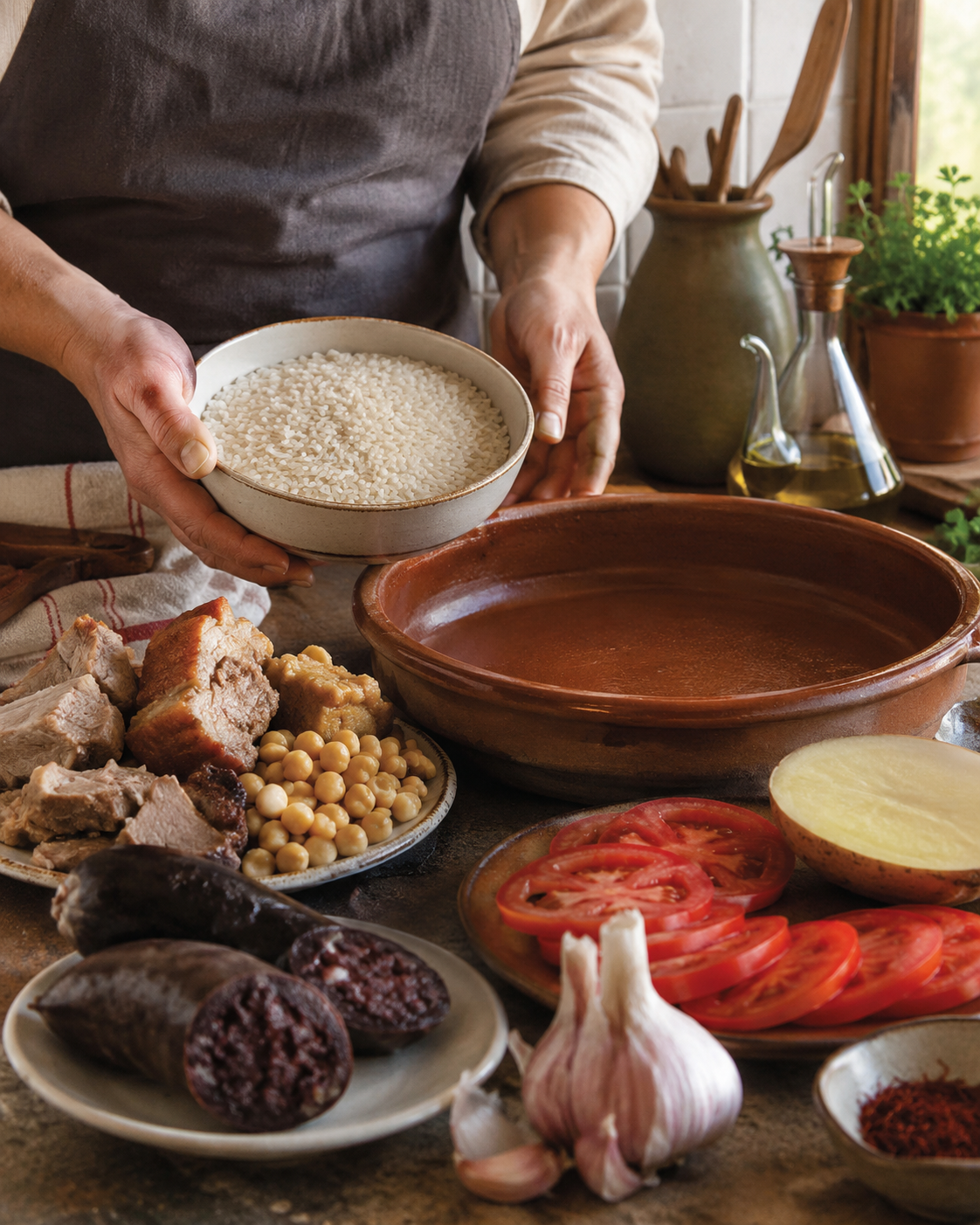
Here is a straightforward arroz al horno, written for the from-scratch version so you can make it any day, though you can happily swap in leftover cocido broth, chickpeas, and meats if you have them. It serves four.
Ingredients
- 300 g bomba or other short-grain rice, about 1 1/2 cups
- 600 ml hot chicken or beef stock, about 2 1/2 cups
- 1 whole head of garlic, plus 2 cloves, sliced
- 2 morcilla (blood sausages), sliced
- 400 g tin chickpeas, drained, or cooked chickpeas
- 1 large potato, peeled and sliced into rounds
- 1 tomato, sliced, plus 1 tomato grated
- 250 g pork ribs or belly, cut into pieces
- 4 tablespoons olive oil
- 1 teaspoon sweet paprika
- A pinch of saffron, or 1/2 teaspoon turmeric
- Salt, to taste
Instructions
- Preheat the oven to 200 C, about 400 F, and heat the stock until nearly boiling. Stir the saffron or turmeric into the hot stock.
- Heat the olive oil in an ovenproof cazuela or wide, shallow ovenproof pan over medium heat. Brown the pork pieces well, then set aside. Fry the potato slices until just golden, then set aside. Fry the morcilla slices briefly and set aside.
- In the same oil, gently fry the sliced garlic and the grated tomato with the paprika for a minute or two, until fragrant and slightly reduced.
- Add the rice and stir for a minute to coat it in the oil and flavors. Spread it evenly across the dish.
- Arrange the chickpeas, browned pork, potato slices, and morcilla over the rice, lay the tomato slices on top, and set the whole head of garlic in the very center, pressing it in slightly.
- Pour the hot seasoned stock evenly over everything, season with salt, and do not stir from here on.
- Bake for about 35 to 45 minutes, until the liquid is absorbed, the rice is tender, and the top is golden and lightly crisp. Let it rest for 5 minutes before serving, squeezing the soft roasted garlic from the central head over the rice.
And of course the dish is yours to build from whatever you have, since arroz al horno was born from leftovers and never followed strict rules, so treat this as the classic shape and fill it with the meats, sausages, and broth your own kitchen offers.

About the Author: Ruben, co-founder of Gamintraveler.com since 2014, is a seasoned traveler from Spain who has explored over 100 countries since 2009. Known for his extensive travel adventures across South America, Europe, the US, Australia, New Zealand, Asia, and Africa, Ruben combines his passion for adventurous yet sustainable living with his love for cycling, highlighted by his remarkable 5-month bicycle journey from Spain to Norway. He currently resides in Spain, where he continues sharing his travel experiences with his partner, Rachel, and their son, Han.