
The bill from EDP arrived in February, €214 for one month of heating a two-bedroom flat in Setúbal, and that was the number that stopped the spreadsheet from describing the life the Harpers were actually living. The Harpers are a composite, stitched together from figures three couples handed us across kitchen tables in the year after they landed. The plan said $2,800 a month, which that particular week converted to about €2,590. It was a careful plan, built over a winter of watching YouTube tours and reading forums. It was also wrong, and the interesting part is where it was wrong. Not on rent. Not on groceries or wine or the ferry across the Sado estuary. It broke on the quiet costs nobody puts in a spreadsheet because nobody warns you they exist.
Portugal is genuinely affordable. That is not the argument here. The argument is that the version of Portugal that costs $2,800 and the version that costs $3,400 are the same country, and the €600 gap between them lives almost entirely in things you cannot see on a rental listing.
The Number That Gets Quoted Before Anyone Has Lived a Winter

Every couple has a first number, and it is always the number they told their friends back home. For the Harpers it was $2,000, quoted in month three, in October, when the weather was still kind and the flat still felt like a holiday. That figure was real. It was also seasonal, which they did not yet understand.
The mistake is not optimism. The mistake is quoting a summer month as if it were an average month. A year in Portugal is not twelve of October. It is two months of paying to stay warm, a few months of tourist-season prices on everything near the coast, one month where a residency renewal eats a week and some fees, and the ordinary months in between that actually match the brochure. Average those honestly and the Harpers’ true all-in figure sat closer to €2,780 a month, roughly $3,000, once the dull stuff was annualized. The dull stuff is the whole story.
There was one bright cost that was entirely their own doing. In the early months they tried to build a social life the American way, over dinners out, and a dinner for two with wine in a decent Setúbal restaurant runs €45 to €60, so three of those a week quietly became €600 a month of friendship. The Portuguese around them were doing something cheaper and warmer, meeting at 10:30 for a coffee and a tosta that cost under €4, or on Saturday mornings at the market. The Harpers spent nearly a year overpaying for connection before they noticed the locals had solved it for the price of an espresso. That gap between how you think you make friends and how the country actually makes them is not on any budget sheet, and for them it was worth a few hundred euros a month until they let it go.
The Winter Nobody Costs Into the Plan

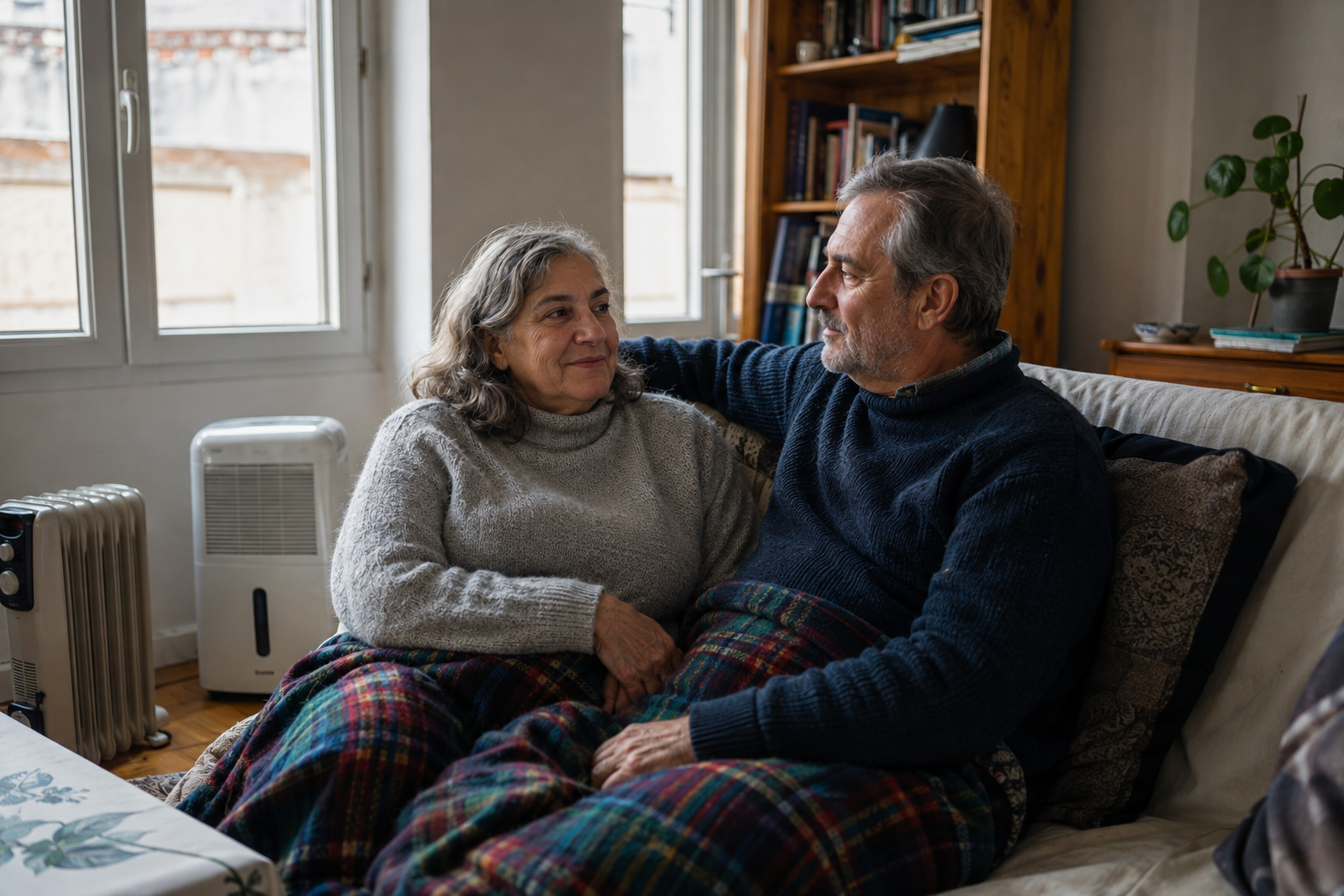
Portuguese houses are built for heat, not cold. Thick walls, tile floors, big windows, and until recently very little insulation, because the summer is the enemy the architecture was designed to fight. The result is that a mild Portuguese winter, where it rarely drops below 8°C outside, can feel colder indoors than a hard winter in a well-sealed house in Ohio.
The Harpers rented a flat with single-glazed windows and no central heating, which described most of the affordable listings they saw. They ran two oil radiators and a dehumidifier against the damp, and the EDP bills for December, January, and February came in at €186, €214, and €171. Three months of the year cost them nearly €250 more than budgeted, every year, on electricity alone.
There is a health cost hiding inside the money cost, too. A cold, damp flat in January is where the winter chest infection lives, and a couple in their sixties who spend three months slightly too cold and slightly too damp tend to spend those months slightly ill, which turns into pharmacy trips and the occasional doctor and a general sense that Portugal is not delivering the calm it promised. The flat was doing that, not the country.
The fix costs nothing and everyone learns it too late. A flat with a heat pump and double glazing rents for maybe €100 more a month than the charming one with the old windows, and it saves more than that across the winter while being a place you actually want to sit in December. The listing photos never show glazing. You have to ask, and most arrivals do not know to ask. The single most useful question at any viewing between October and March is simply whether the windows are double-glazed and what heats the place, and the answer predicts your winter better than the rent does.
The Cheap Flat With the Expensive Condomínio

The rent was €850. The condomínio, the monthly fee for the building’s shared costs, was €95, and the Harpers had budgeted zero for it because in the U.S. that concept lives inside an HOA they had rented their way around for decades.
Ninety-five euros a month is €1,140 a year for a line item that started at nothing on the spreadsheet. And it can move. When the building voted to repair the lift and repaint the stairwell, each owner faced a special assessment of several hundred euros on top of the normal fee, and the landlord passed a share of the mood, if not the legal bill, straight into the next lease negotiation. The rent went up €40 at renewal, which the Harpers were told was “the building.” A tenant does not pay the assessment directly, but a tenant in an old building lives downstream of every vote the owners take, and those votes are about roofs and lifts and façades, the expensive parts of a structure that a charming 1970s block eventually needs all at once. A cheap apartment in an old building with deferred maintenance is not a cheap apartment. It is a cheap rent attached to an unknown liability, and the only way to see the liability in advance is to ask for the last two years of the condomínio’s meeting minutes before signing. Almost nobody does. The Harpers did not.
When the Dollar Has a Bad Month
The plan was denominated in dollars. The life was denominated in euros. For most of the year that mismatch is invisible, and then there is a month where it is the only thing you can see.
When the Harpers built the spreadsheet, the dollar bought about €0.92. During their first year it slipped, and there were stretches where the same $2,800 withdrawal landed as €2,500 instead of €2,590, a €90 haircut that arrived without anyone spending a cent differently. On a lump-sum withdrawal strategy, a weak-dollar year does not feel like markets. It feels like the supermarket got more expensive overnight, and it did not, your money just got smaller. Anyone living on dollars in a euro country is running a small currency bet every single month whether they think of it that way or not, and the honest budget assumes the bet loses sometimes.
Tax sits in the same blind spot. Portuguese residents are taxed on worldwide income, and the personal income tax brackets run from roughly 12.5% at the bottom to 48% at the top, with the famous NHR regime that once softened this now closed to most new arrivals and replaced by the narrower IFICI. For a couple living on a pension or on withdrawals, the practical effect depends heavily on the double-taxation treaty between the two countries and on structure, which is exactly the kind of thing a Portuguese accountant earns their fee sorting out in year one. The Harpers found theirs after the first surprise rather than before it, which is the more expensive order to do things in.
The Health Line They Left Blank

They were not yet 65, which in the U.S. meant Medicare was a future thing and in Portugal meant they were somewhere between systems. Portugal’s public health service, the SNS, is real and can be very good, but access and waiting times vary, and most expats in that gap carry private insurance to fill it.
Private cover for a couple in their early sixties ran the Harpers about €180 a month combined, and the out-of-pocket pieces the policy did not touch, dental, the physio after a fall, the reading glasses, the specialist who wanted cash, added another €60 or so averaged across the year. Two hundred and forty euros a month, none of it on the original plan. Health was the single largest thing they had costed at zero, and it is the one line where costing it at zero is not optimism but denial, because bodies in their sixties are the reason the whole move is supposed to buy them a calmer life.
There is a timing detail worth knowing. Private insurers in Portugal price on age and on pre-existing conditions, and a policy taken out at 62 is cheaper and easier to secure than the same policy sought at 67 after something has already gone wrong. The couples who arrange cover in their first months, while they are still the healthy new arrivals they feel like, lock in a better number than the couples who wait until a scare forces the question. The Harpers waited. The scare was minor, a fall on the tile that needed an X-ray and some physio, but it arrived before the policy did, and the paperwork was worse for it.
The Car Question That Cuts Both Ways
The Harpers thought they had solved transport by not owning a car. Setúbal has buses, the train to Lisbon, and the ferry, and for the first six months they walked or rode and felt clever about it. Then the appointments started, the specialist in Almada, the furniture pickup, the day trip to a town the train did not reach, and the taxis and rideshares added up to something that looked a lot like a car payment without the car.
The couples who go the other way and buy a car meet the costs from the opposite side. Fuel in Portugal is among the more expensive in Europe, hovering around €1.75 a litre for petrol, which turns a casual American driving habit into a line that stings. Insurance, the annual inspection called the IPO, and the municipal road tax stack on top. And anyone who imports a car from the U.S. to save money meets the ISV, the vehicle tax on first registration, which can run into thousands of euros and has surprised more than one family into leaving a perfectly good car behind. There is no free version of transport here. There is the taxi budget you underestimate or the ownership budget you underestimate, and the honest plan picks one on purpose and costs it fully rather than assuming the problem solves itself.
The Week That Residency Eats
Residency in Portugal is not a one-time event. It renews, and each renewal is a small tax on time and money that the monthly spreadsheet never sees. The Harpers’ first renewal with AIMA, the immigration agency that replaced the old SEF, cost them a fee in the low hundreds of euros, a document-gathering scramble, and the better part of a week that could not be spent on anything else.
AIMA has been working through a large backlog, and appointments can sit weeks out, which means the renewal is not a morning at a counter. It is a period. For a couple that number is fees plus certified translations plus the occasional paid help from a lawyer or a gestor when the paperwork turns strange, and across a year it averages out to something real even though it arrives in lumps. Budget it as a recurring annual line of a few hundred euros and a reserve of patience, and it stops being a shock. Leave it off the plan, as almost everyone does, and it becomes one more February.
What Would Have Held the Plan Together

None of this makes Portugal a mistake, and it is worth saying once, plainly, that the couples who share these numbers with us are not unhappy. The Harpers stayed. Year two cost more than they promised their friends and less than they feared in that February kitchen, and they would not go back. The move worked. The spreadsheet is the only thing that failed, and a spreadsheet is cheap to fix.
What would have held it together was not a bigger number. It was a truer one. A winter electricity line built from an actual EDP tariff table and a realistic range for old windows. A condomínio line with a ten percent reserve on top. A currency buffer that assumes the dollar has a bad quarter. A health line that exists. Add those four and the plan lands at €3,000 instead of €2,590, and €3,000 is a number you can actually live inside without the February surprise. The couples who arrive with the honest figure spend year one calm. The couples who arrive with the friend-quote figure spend year one doing math at midnight.
Read the Condomínio Minutes Before You Sign
If you take one thing from the Harpers into your own move, make it this. Before you sign a lease on any flat in an older Portuguese building, ask the agent for the last two years of the condomínio’s meeting minutes, in translation if you need it, and read them for the words that mean money: elevador, telhado, fachada, obras. Lift, roof, façade, works. A building about to repaint its face or replace its roof is a building about to reach into your rent, and the minutes say so months before the invoice does. It is fifteen minutes of reading that a landlord will find slightly annoying, and it is the cheapest insurance you will buy in Portugal. Do the same with the electricity: ask what the last tenant paid EDP in January, and if the agent does not know or will not say, treat the silence as the answer and price a cold winter in yourself.

About the Author: Ruben, co-founder of Gamintraveler.com since 2014, is a seasoned traveler from Spain who has explored over 100 countries since 2009. Known for his extensive travel adventures across South America, Europe, the US, Australia, New Zealand, Asia, and Africa, Ruben combines his passion for adventurous yet sustainable living with his love for cycling, highlighted by his remarkable 5-month bicycle journey from Spain to Norway. He currently resides in Spain, where he continues sharing his travel experiences with his partner, Rachel, and their son, Han.