
The first time I made zarzuela de marisco, I understood the name the moment the pot came together, because there in the golden, tomato-rich broth was an entire cast of characters, each playing its own part. A stew like this could only be named after an opera. Zarzuela is the word for a beloved form of Spanish light opera, a lively, colorful musical theatre that took its own name from the royal palace near Madrid where it was first performed, and the dish borrows that name for a very good reason. Like the opera, the stew brings a whole ensemble onto one stage, the shrimp, the clams, the squid, the fish, each one contributing its own distinct note to a single glorious whole. It is a dish from the Catalan coast, festive and generous and full of color, and it is one of the great celebration meals of the Spanish table. This is how I make my zarzuela de marisco, from the charming story behind its name to the little almond paste that is its true secret, so that you too can bring the whole vivid opera to your own home kitchen.
I love this dish for the way it turns a handful of different seafoods into something far greater than the sum of its parts, and for how much simpler it is to make than its dramatic name and appearance suggest. You do not need a great deal of any one thing, just a little of several, which keeps it from being as extravagant as it looks. That combination of drama and thrift is very Catalan, a way of making something grand and generous out of modest, carefully chosen ingredients, and it is a large part of why I have loved the dish for so long. So let me walk you through the story, the cast, and the method, and by the end you will see exactly why a bowl of seafood stew came to carry the name of the opera. It is the kind of dish I make when I want to turn a meal into an event, when friends are coming or a Sunday calls for something a little grander than usual. It rewards a relaxed afternoon in the kitchen, but the actual cooking, once everything is prepped, moves surprisingly fast, which is part of the pleasure of it.
A Stew Named for an Opera
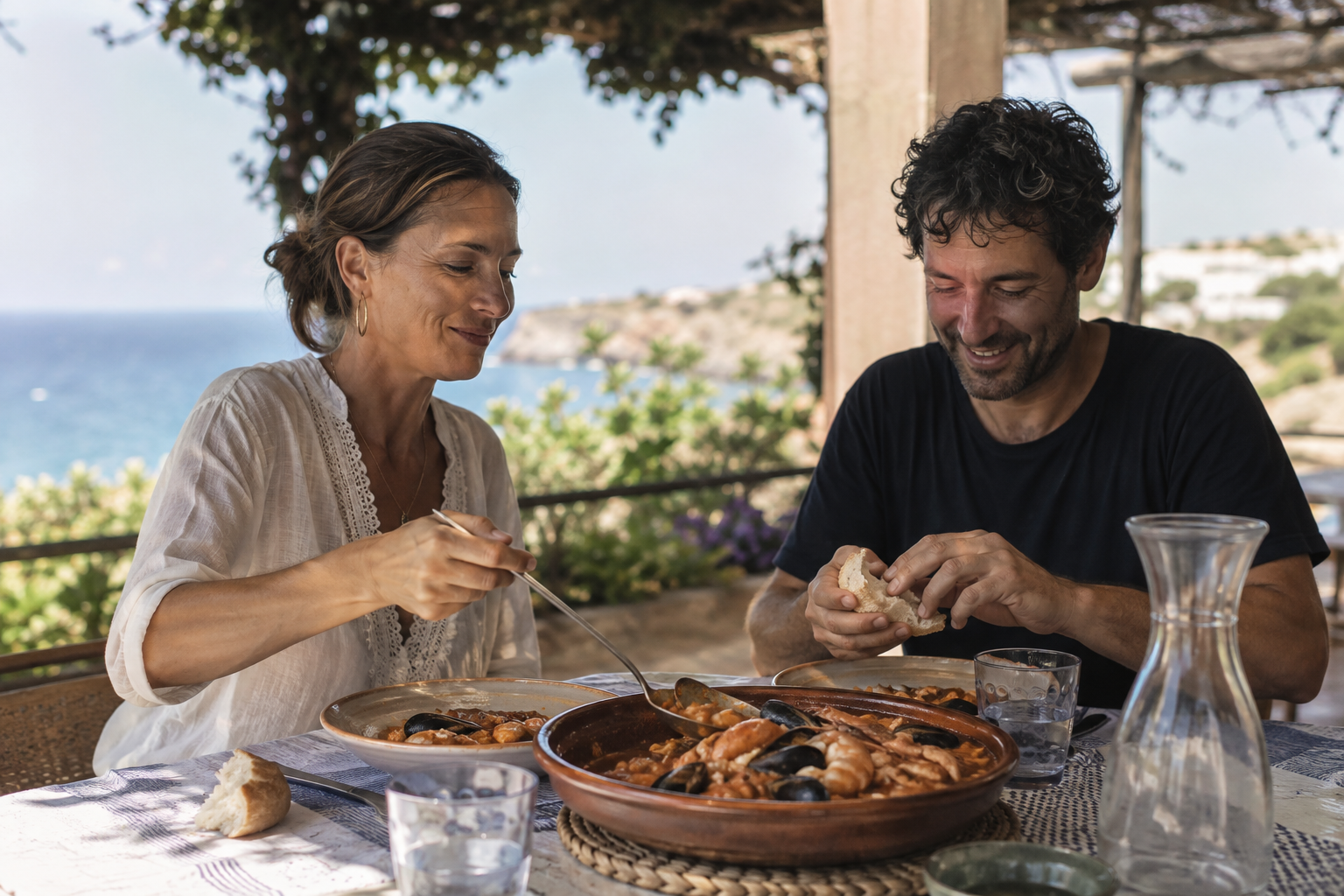
The name is the first thing everyone asks about, and the answer is one of the most charming stories in Spanish cooking. It tells you exactly what kind of dish this is before you even taste it.
The opera gives it meaning. Zarzuela is a form of Spanish light opera, full of song, drama and many characters, and the stew takes its name because it too brings a whole varied cast together in one place. Each seafood is a singer with its own voice, and the dish is the ensemble as one, which is a lovely way to think about a pot of stew.
The name came from a palace. The opera was named after the Palacio de la Zarzuela, the royal retreat near Madrid where it was first staged centuries ago, so the dish carries an echo of that grand origin. Knowing that a humble seafood stew traces its name back through the opera to a royal palace makes it feel, rightly, like something worth dressing the table for. I always find that the story adds to the meal, giving guests something to talk about before the first spoonful. There is a particular delight in explaining, as the pot comes to the table, that they are about to eat the opera, and watching them look again at the shrimp and clams as though they were characters taking a bow. Food carries its stories along with its flavors, and a dish with a tale behind it always seems to taste a little better for it. Zarzuela is generous with both, offering a story as rich as its sauce, and I have never served it without someone asking where on earth such a name came from.
Why It Feels Like a Celebration
Beyond its name, zarzuela has always struck me as a dish built for a happy occasion, and there is a reason it appears at festive tables all along the Catalan coast. It carries a sense of abundance in every bowl.
It is a coastal Catalan classic. Zarzuela comes from Catalonia, especially the Mediterranean coast around Barcelona, where it is a beloved dish of seaside restaurants and family celebrations alike. a great pot of mixed seafood in a rich sauce is generous and joyful, meant to be shared, and that spirit is baked into the dish.
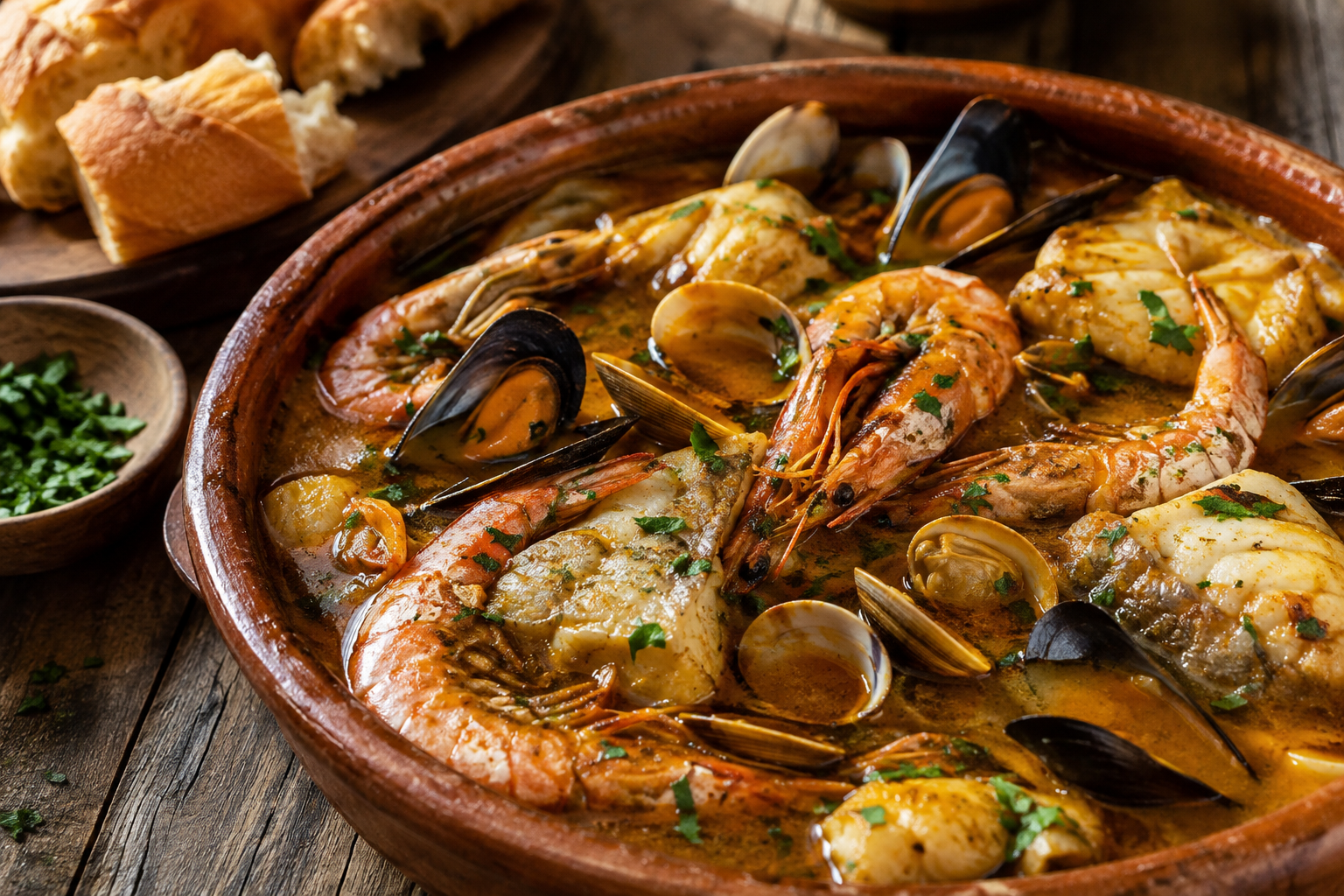
Its color alone is a party. Once the saffron and tomato have done their work and the seafood is arranged in the golden-red broth, the pot is a genuinely beautiful thing, glowing and full of variety. A zarzuela looks like a celebration before anyone has taken a bite, and setting it in the middle of the table with a good loaf of bread turns an ordinary evening into a small feast. The Catalans have long understood that food shared from a communal pot draws people together in a way that individual plates never quite manage. A zarzuela is meant to sit at the center of the table while everyone reaches in, dipping bread and picking out their favorite morsels, and that generous, sociable way of eating is as much a part of the dish as the sauce itself.
The Cast of Seafood
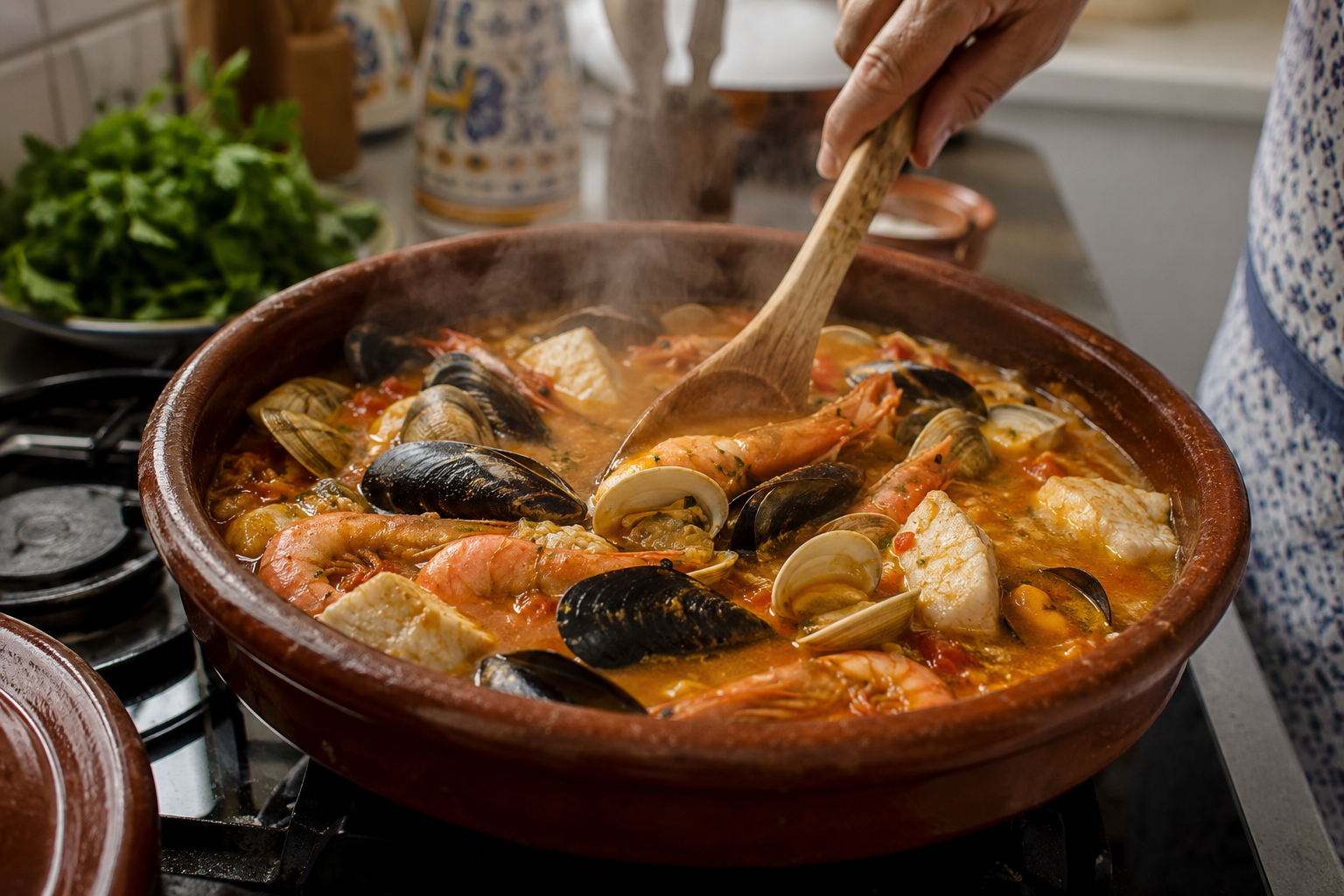
The heart of a zarzuela is its variety, the several different kinds of seafood that each bring their own texture and flavor to the pot. Choosing the cast is half the pleasure of the dish.
Variety is the whole point. A proper zarzuela mixes several seafoods, shrimp, mussels, clams, squid, and a firm white fish such as monkfish or cod, so that every spoonful offers something a little different. The mix of shellfish and finfish gives the stew its wonderful range of textures, from the buttery flesh of the fish to the chew of the squid and the snap of a fresh clam.
A little of each goes a long way. One of the things I love most is that you need only a modest amount of any single seafood, since the combination is what matters, which makes the dish far more affordable than its luxurious appearance suggests. Buying a handful each of a few different things, rather than a great deal of one, is exactly the right way to shop for a zarzuela. It also means the dish flexes easily to whatever the fishmonger has that is freshest on the day, which is really how it was always meant to be cooked. If the mussels look wonderful and the squid does not, lean into the mussels. Traditional cooks never treated the mix as fixed, and neither should you, so let the market guide the cast of your particular opera. A little lobster or a few langoustines make it grander for a special occasion, while a simple mix of shrimp, mussels, and squid keeps it homely and affordable for a weeknight. The dish is forgiving and welcoming that way, as happy with a modest cast as with a lavish one, which is one more reason I return to it so often.
The Sofrito Is the Foundation
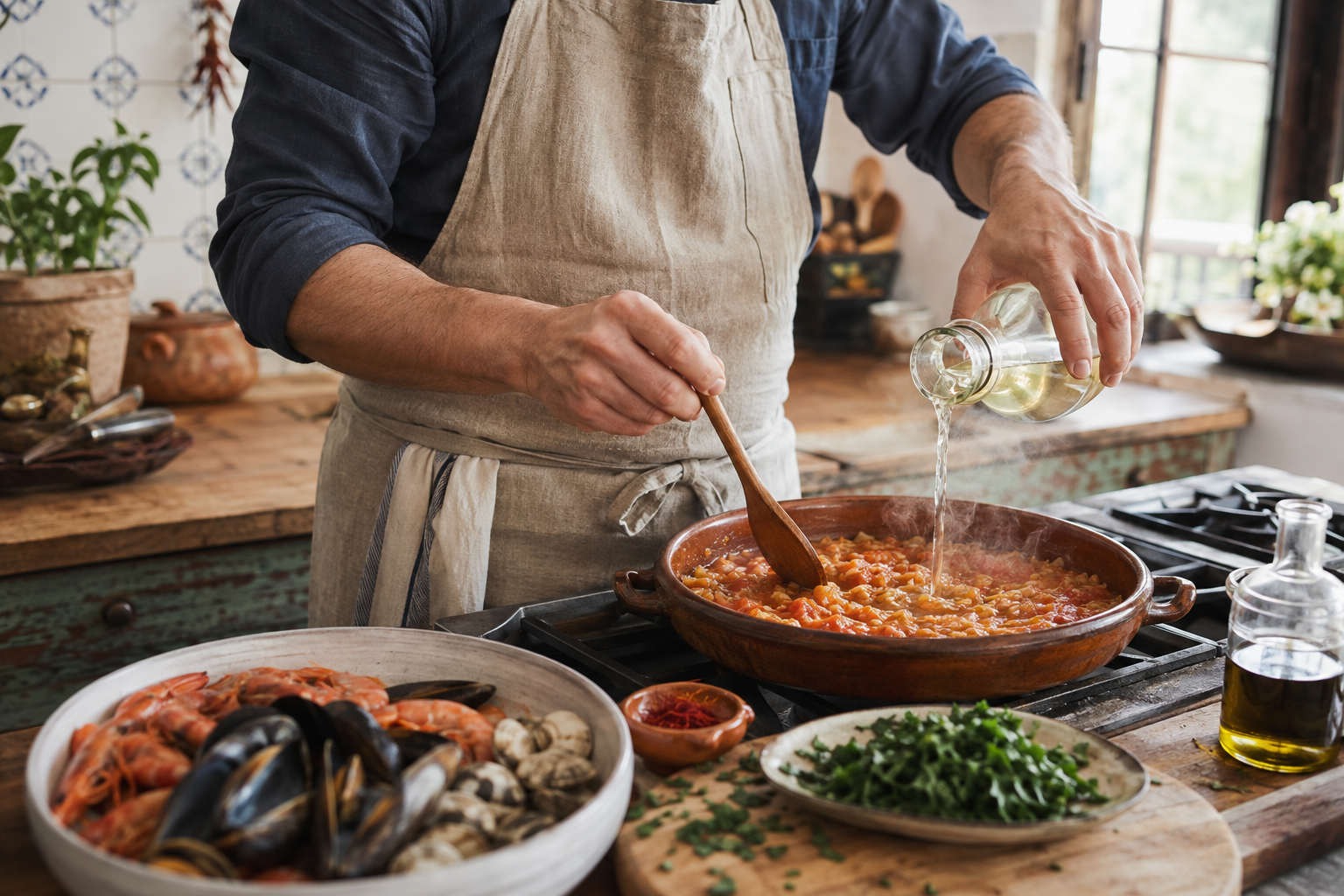
Before any seafood goes near the pot, there is the base, the slow-cooked sofrito of vegetables that gives the whole stew its depth. Everything good in the finished dish begins here.
Build a slow, rich base. The foundation of a zarzuela is a sofrito, a gentle cooking-down of onion, red pepper, and garlic in olive oil until soft, followed by grated tomato cooked slowly until it darkens and concentrates. This is not a step to rush, because the patience you spend on the sofrito gives the broth its deep, savory backbone.
Let the tomato cook right down. The single most important part of the base is cooking the tomato until it loses its raw sharpness and turns dark, sweet, and jammy, which can take a good fifteen minutes of unhurried attention. A sofrito taken to this point transforms the whole stew, so I never hurry it, no matter how eager I am to get the seafood in. It is the single lesson I would pass on above all others, that a rushed sofrito makes a thin, sharp stew while a patient one makes a deep and rounded one. You can almost watch the flavor build as the tomato darkens, the smell in the kitchen changing from raw and bright to sweet and concentrated. That transformation is the quiet foundation on which everything else is layered.
Brandy, Wine, and Saffron
With the sofrito built, the next layer is the liquid and the seasoning, and here is where the stew gains its warmth, its depth, and its glorious color. These few additions do a great deal of work.
The alcohol adds real depth. I add a splash of brandy, letting it cook off and even flame if it will, followed by a good pour of dry white wine reduced down, so the harshness burns away and only a concentrated, aromatic depth remains. This step gives the broth a grown-up richness that plain stock alone could never provide.
Saffron makes it golden. A pinch of saffron, steeped in a little warm stock, lends the broth its golden hue and a subtle, earthy note that is unmistakably Spanish, joined by a little paprika added off the heat so it does not scorch. Between the tomato, the saffron, and the paprika, the sauce takes on the warm, glowing color that makes a zarzuela so inviting. Saffron is not cheap, but a very little goes a long way, and there is no true substitute for the particular color and fragrance it lends. Steeping it first, rather than tossing the threads in dry, is the trick that releases its full character into the broth. That small step, and the pinch of paprika stirred in gently off the heat, are what give the finished sauce its unmistakable Spanish soul.
The Picada, the Catalan Secret
If there is one thing that turns a good seafood stew into a true zarzuela, it is the picada, the little pounded paste that is the signature of Catalan cooking. This is the step that makes the dish what it is.
The picada thickens and enriches. A picada is a paste ground from almonds, garlic, parsley, and a little saffron, sometimes with fried bread, and it is stirred into the stew near the end to thicken and deepen the sauce without any flour or cream. It works like a pesto dropped into the pot, binding the broth with a nutty, garlicky richness that lifts the whole dish.
It is the soul of the stew. Far more than a thickener, the picada gives a zarzuela its distinctive character and its link to Catalan cooking, where these pounded pastes enrich so many dishes. Loosening it with a spoonful of the hot broth before stirring it in, so it melts smoothly through the sauce, is the final touch that pulls the whole opera together. I make my picada in a mortar and pestle when I have the time, because there is something satisfying about the rhythm of it and the slightly rough texture it gives, but a small processor works perfectly well when I am in a hurry. However you make it, resist the urge to grind it completely smooth, since a little grain in the paste is part of its charm and helps it thicken the broth beautifully.
Cooking the Seafood Just Right
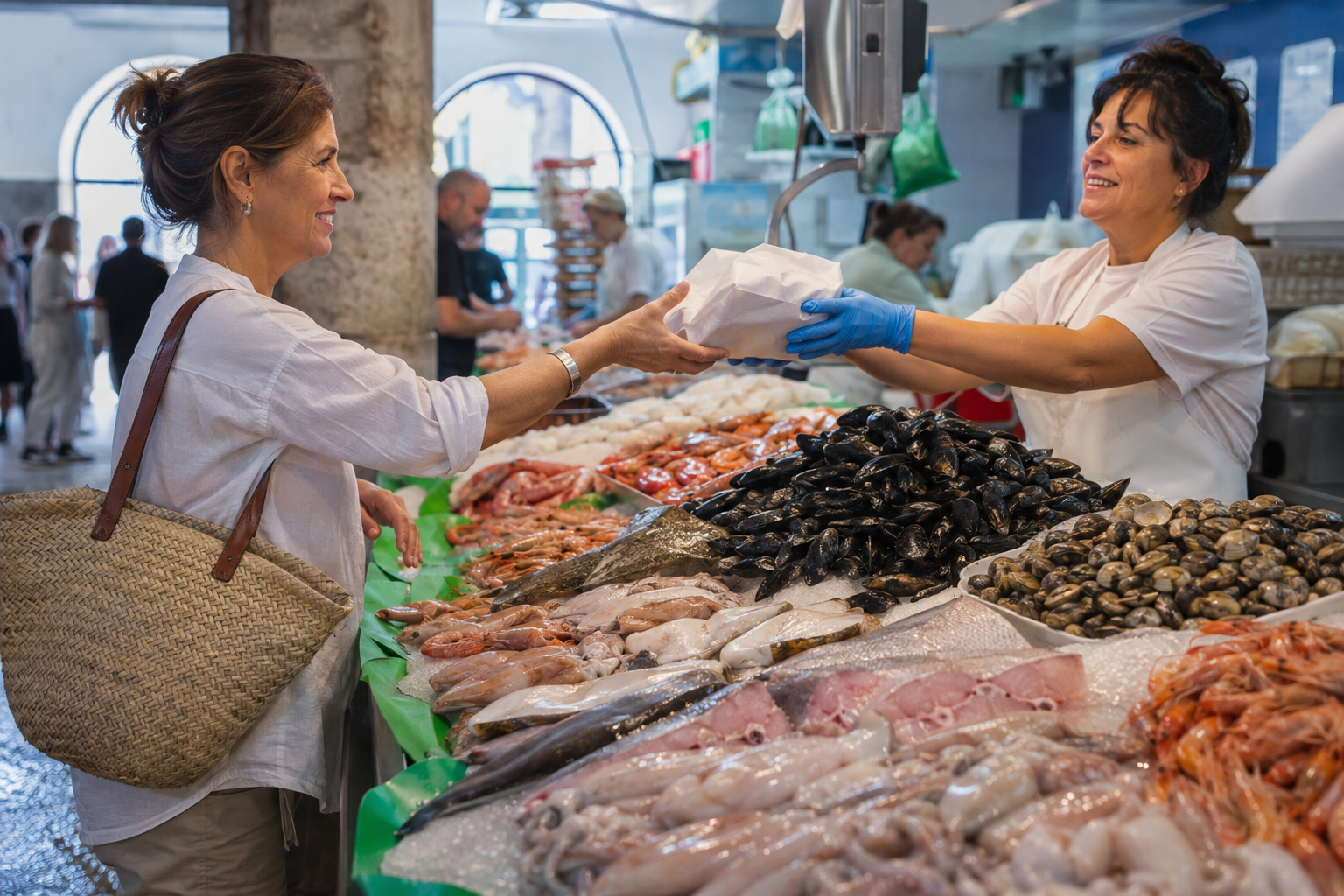
The last act is the seafood itself, and the golden rule here is gentleness, adding each kind at the right moment and cooking it only until just done. Overcooked seafood is the one thing that can spoil a zarzuela.
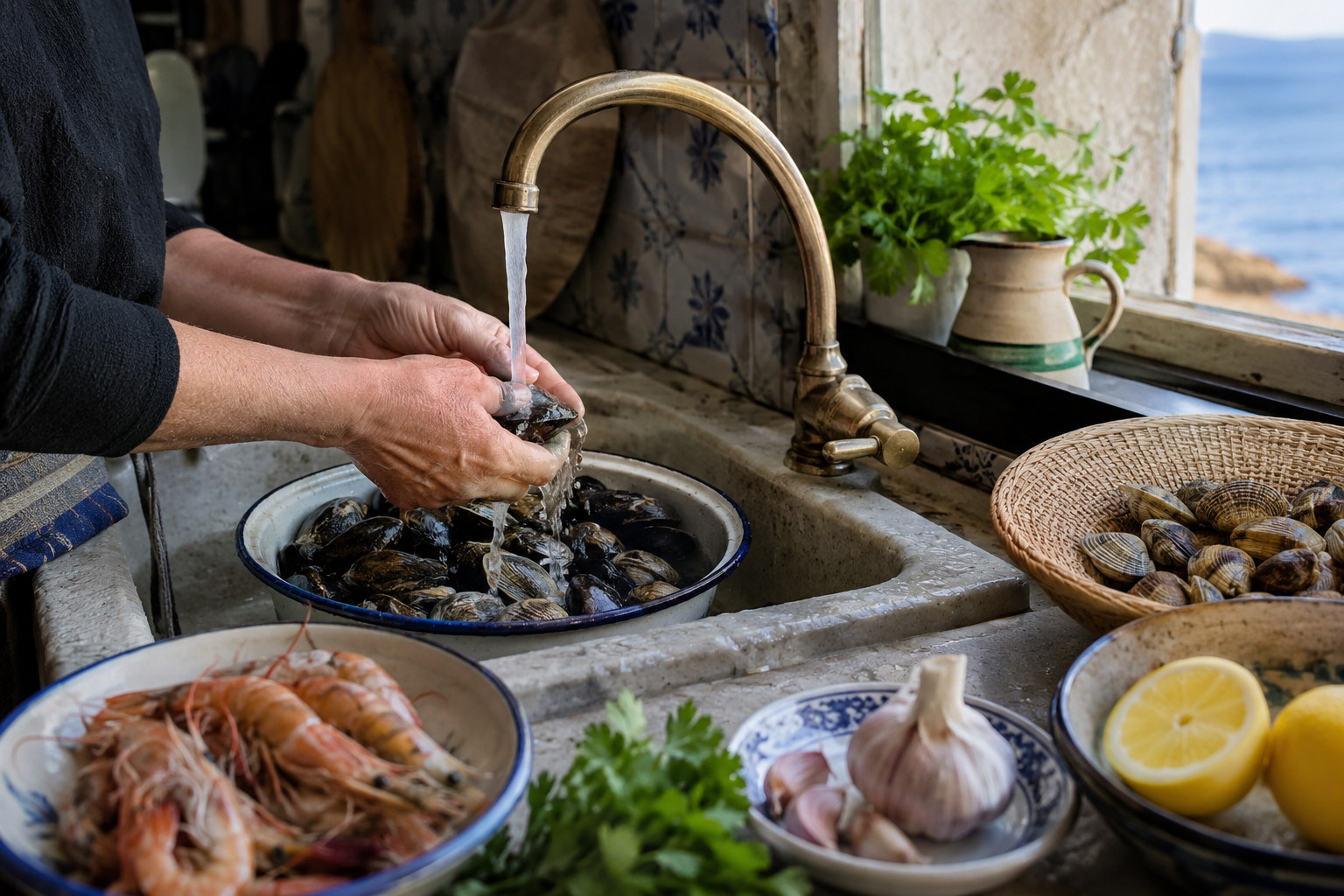
Add it in order, and briefly. Because different seafoods cook at different speeds, I add the firm white fish first, then the shrimp, clams, mussels, and squid, cooking everything only until the shells open and the seafood is just set. The whole point is to keep each piece tender, so the seafood spends as little time in the heat as possible. This is the moment when a zarzuela can be lost, because seafood turns from tender to rubbery in a matter of minutes. I keep a close eye on the pot from the instant the shellfish go in, pulling it from the heat the moment the mussels and clams have opened and the fish flakes at a gentle prod. Any shells that stubbornly refuse to open should simply be discarded rather than forced, a small rule of caution worth remembering. Timing the seafood well is really the whole art of the finish, and it is worth having every piece prepped and ready beside the stove before you begin, so nothing sits waiting while something else overcooks. A zarzuela comes together in its final minutes in a small flurry of activity, and the reward for that brief attentiveness is a pot of seafood that is perfectly, tenderly done.
Serve it at once, with bread. A zarzuela is at its best the moment it is ready, so once the picada is stirred through, I bring it straight to the table with plenty of crusty bread for mopping up the sauce. That bread, soaked in the golden broth to scoop up a piece of shrimp, is my favorite part of the dish, and no one at my table ever bothers much with a spoon. There is a happy, informal messiness to eating a zarzuela, hands and bread and shells and the golden sauce running everywhere, that suits the generous spirit of the dish perfectly. It is not a meal for best behavior or fine napkins, but for rolled sleeves and second helpings, and that, to my mind, is exactly what a dish named after a joyful opera ought to be.
Zarzuela de Marisco Recipe
Serves 4 to 6
Ingredients:
- 3 tablespoons olive oil
- 1 large onion, finely chopped
- 1 red bell pepper, finely chopped
- 5 cloves garlic, minced (divided, some for the picada)
- 3 large ripe tomatoes, grated (or a can of chopped tomatoes)
- 1 teaspoon sweet paprika
- A generous pinch of saffron threads
- 1 bay leaf
- 60 millilitres brandy
- 250 millilitres dry white wine
- 500 millilitres fish or seafood stock
- 12 large raw shrimp or prawns, shells on or peeled
- 500 grams mussels, cleaned
- 300 grams clams, cleaned
- 300 grams squid, cleaned and sliced into rings
- 400 grams firm white fish such as monkfish or cod, cut into chunks
- Salt and pepper to taste
- Crusty bread, to serve
For the picada:
- 30 grams blanched almonds
- 2 cloves garlic
- A handful of fresh parsley
- A small pinch of saffron
- 1 tablespoon olive oil
Method:
- Steep the saffron for the broth in a little of the warm stock and set it aside to bloom.
- Make the picada. Pound the almonds, garlic, parsley, and pinch of saffron in a mortar (or pulse in a small processor) with the olive oil to a thick, grainy paste. Set aside.
- Heat the olive oil in a large, deep pan over medium heat. Add the onion and red pepper and cook gently for 6 to 7 minutes until soft. Add most of the garlic and cook for another minute.
- Add the grated tomato and cook slowly, stirring now and then, for about 15 minutes, until it darkens and turns jammy.
- Raise the heat and pour in the brandy, letting it bubble and cook off for a minute. Add the white wine and reduce it by about half.
- Stir in the paprika off the heat so it does not burn, then add the bay leaf, the saffron-steeped stock, and the rest of the stock. Season lightly and bring to a gentle simmer.
- Add the chunks of white fish and let them poach gently in the sauce for a few minutes.
- Add the shrimp, mussels, clams, and squid. Cover and cook for about 5 minutes, until the mussels and clams have opened and the seafood is just cooked through. Discard any shells that stay shut.
- Loosen the picada with a spoonful of the hot broth, then stir it gently through the stew. Simmer for a minute more to bring everything together.
- Taste, adjust the seasoning, and serve at once in warm bowls with plenty of crusty bread.

About the Author: Ruben, co-founder of Gamintraveler.com since 2014, is a seasoned traveler from Spain who has explored over 100 countries since 2009. Known for his extensive travel adventures across South America, Europe, the US, Australia, New Zealand, Asia, and Africa, Ruben combines his passion for adventurous yet sustainable living with his love for cycling, highlighted by his remarkable 5-month bicycle journey from Spain to Norway. He currently resides in Spain, where he continues sharing his travel experiences with his partner, Rachel, and their son, Han.