
Every so often a headline goes around the internet that sounds almost like a fairy tale, and Sardinia’s offer to pay newcomers up to fifteen thousand euros to move to its villages is one of them. The Italian island, famous for its turquoise coves and its remarkable share of people who live past a hundred, has a problem familiar to much of rural Europe, which is that its small inland towns are quietly emptying out as the young leave and the old remain. To reverse that decline, the regional government has put real money on the table, offering grants of up to fifteen thousand euros to people willing to buy or renovate a home there. It is a genuine program with genuine funds behind it, and for the right person it could be a remarkable opportunity. But as with any offer that sounds too good to be true, the details matter enormously, and the difference between a dream and a disappointment lies entirely in the fine print. Here is exactly how the Sardinia scheme works in 2026, what you would really be signing up for, and the catches that the breathless headlines tend to leave out.
What makes this scheme worth understanding properly, rather than just sharing with a wistful sigh, is that it is entirely real and yet nothing like the free money it is often made to sound. The grant exists, the villages are lovely, and people really do move and build good lives there. But the money comes wrapped in serious conditions, and it solves only one of the several problems between an outsider and a new life in rural Sardinia. Understanding both the promise and the fine print is the only way to judge whether this is a door worth walking through.
The Offer That Sounds Too Good to Be True

At the heart of the scheme is a simple and quietly appealing promise, that Sardinia will contribute a substantial sum toward the cost of settling in one of its small towns. The headline figure is real, if not quite as simple as it first appears.
The number is fifteen thousand euros. The regional government offers a non-repayable grant of up to fifteen thousand euros to those who move to its smaller municipalities and put down roots there, so the money on offer is significant and does not have to be paid back. For anyone dreaming of a Mediterranean village life, it is an eye-catching sum. Fifteen thousand euros is enough to make a real dent in the cost of a modest rural home, and in a part of the world where a small village house can still be found for a fraction of what property costs elsewhere in Europe, it changes the arithmetic meaningfully. That is why the offer travels so far online, and why it is worth understanding properly rather than dismissing as a gimmick. The money is real, even if the path to it is more demanding than a headline can convey.
The money is limited and must be claimed. Sardinia set aside a large but finite pot, enough for only a few thousand grants in total, so the money is not unlimited and can run out as applications come in. This is not an open-ended entitlement but a competitive program with a real ceiling, which means timing and speed can matter. The regional government committed a fixed sum to the scheme, sufficient for a few thousand grants across the whole island, and once that money is claimed the door closes until it is refunded. Anyone serious about applying would do well to move promptly, watch for the relevant announcements, and treat the funding as the limited resource it is rather than assuming it will always be there for the taking.
What the Money Is Actually For

Before anyone imagines a cheque simply landing in their account, it is vital to understand that the grant is tied tightly to property, and comes with a crucial limit on how much of your costs it will really cover. This is the first and most important piece of fine print.
It must go toward a home. The grant can only be used to buy or renovate a primary residence, not as free spending money, so it is really a subsidy on the cost of putting down roots rather than a cash gift. You must be acquiring or improving a home you intend to live in, and the funds are directed to that purpose alone.
It covers only half your costs. Crucially, the grant will never exceed fifty percent of the total cost of the purchase or renovation, so to receive the full fifteen thousand, you would need to spend at least thirty thousand of your own. The headline figure is a ceiling, not a guarantee, and most recipients will need substantial funds of their own to unlock it. This single detail reframes the whole offer. It is not a windfall handed to newcomers but a matching contribution that rewards those already able and willing to invest in a home. A person with no capital of their own cannot simply collect fifteen thousand euros and move. The scheme is best understood as a discount on a purchase you were prepared to make anyway, generous but conditional on your own commitment of money.
Where You Would Actually Be Living

The grant is not offered for just any address in Sardinia, but specifically for its smallest and most fragile communities, which shapes the entire experience in ways worth thinking through carefully. This is a scheme for village life, not coastal glamour.
The towns are tiny by design. Eligibility is limited to municipalities with fewer than three thousand inhabitants, the small inland villages that are losing population fastest, so you would be settling in a truly small and quiet community rather than a bustling town. These are the places the program exists to save, which is precisely why the money is on the table.
Remoteness is part of the bargain. These villages are often inland, away from the famous beaches, with aging populations and limited services, and a slower, more isolated rhythm of life, so the reality is far from the glossy image of Sardinian resorts. For some this quiet, rooted village existence is the whole appeal, and for others it would be a difficult adjustment, which is why an honest look at the setting matters so much. These are not stepping stones to the fashionable coast but destinations in their own right, small places where everyone knows everyone, where the nearest large supermarket or hospital may be a drive away, and where the rhythm of life is set by seasons and neighbors rather than by convenience. For the person who craves exactly that, it is a dream. For the person who would miss the buzz and services of a town, it could quickly feel like isolation, and only an unsentimental visit can tell you which you are.
The Strings: Move, Register, and Stay
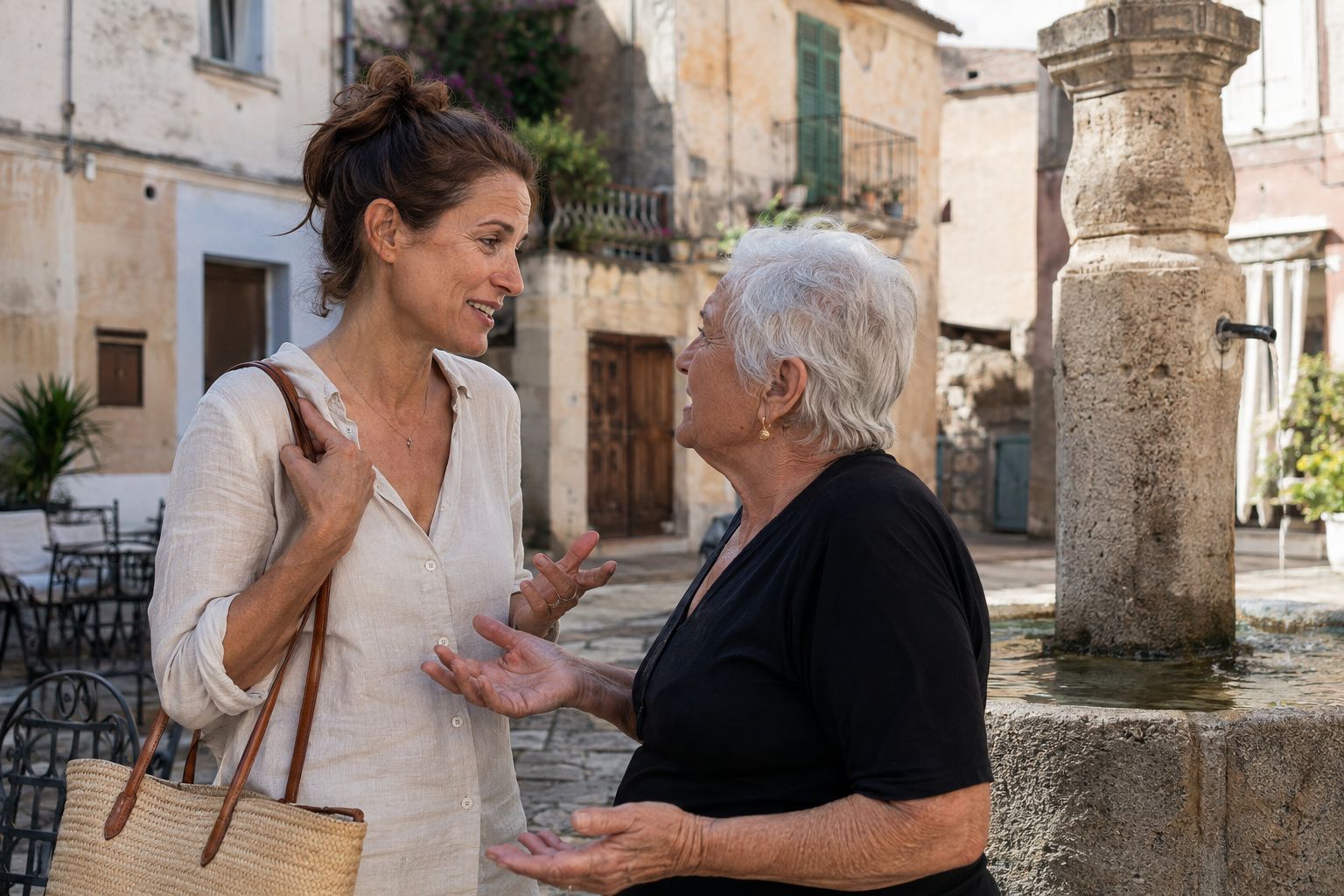
The conditions that most separate this scheme from free money concern commitment, because the grant is designed to create permanent residents, not to reward brief visits or property speculation. You are expected to truly make your life there.
Residency is required, and quickly. Recipients must transfer their residence to the new home within eighteen months of the purchase, and live there in earnest, so this is not a scheme for a holiday home or an occasional bolt-hole. The whole point is real, permanent settlement in the village.
You must stay for years. Beyond simply moving in, recipients must typically keep their residence in the property for at least five years, so the commitment is a long one rather than a quick claim and departure. This multi-year obligation is the strongest sign that the grant is meant for people truly ready to build a new life, not for those chasing a windfall.
The Catch Nobody Mentions: You Still Need the Right to Live There

For anyone outside the European Union, and Americans in particular, there is a fundamental catch that the cheerful headlines almost never mention, which is that the grant does nothing to give you the legal right to live in Italy in the first place. This is the single most important thing for a non-European to understand.
The grant is not a visa. This is a housing subsidy for people settling in Sardinia, not an immigration program, so it does not grant residency rights, a visa, or permission to stay in Italy long-term. A citizen of a non-EU country would still need to secure the legal right to reside in Italy through an entirely separate process before the grant would be of any use.
Immigration comes first, and it is its own challenge. For an American, that typically means an elective residence visa, which requires proving sufficient passive income, or another route, or another lawful route to living in Italy, all of which must be sorted out independently of the grant. The grant solves the cost of a house, not the far larger question of whether you may live there at all. This is the catch that turns many an excited daydream into a sober reappraisal. A European Union citizen can move to Sardinia freely and simply pursue the grant, but for an American or other non-European, the housing money is the easy part. The hard part, securing the legal right to reside in Italy, must be solved first and separately, and it involves its own income requirements, paperwork and patience. Anyone who skips past this step is planning a move they may not be permitted to make.
The Practical Realities
Beyond the headline rules, several practical realities shape what pursuing this grant truly involves, and knowing them in advance prevents a great deal of frustration. The process is more involved than a single application.
You apply through individual towns. Rather than one central application, each participating municipality publishes its own call for applications under the regional guidelines, and may add its own extra conditions and priorities, so you must identify a specific town and follow its particular process. This local, town-by-town structure means research and patience are essential. There is no single website where you fill in a form and wait for a cheque. Instead you must find a village that appeals to you, confirm it participates, and then follow its particular published rules and deadlines, which may differ from those of the village down the road. It rewards the organized and the determined, and quietly weeds out the merely curious.
Renovation can be complex and costly. Many of the available properties are old and in need of significant work, and while a separate scheme even offers certain homes for one symbolic euro, the renovation costs can be substantial, so the true cost of settling can far exceed the grant. Anyone drawn by cheap property should budget realistically for the work and the paperwork involved.
Who It Is Really For

Weighing all of this together, the Sardinia grant emerges not as free money but as a genuine helping hand for a very particular kind of person, and grasping who that is makes the whole scheme far clearer. It rewards commitment, not curiosity.
It suits the genuinely committed. The ideal candidate already has or can obtain the right to live in Italy, and has funds to cover at least half the cost of a home, and truly wants a quiet, rooted life in a small inland village for years to come. For that person, the grant is a meaningful and welcome boost toward a life they already want.
It is not a shortcut to a new life. For anyone imagining easy money, an effortless escape, or a way around the hard realities of immigration and relocation, the scheme will disappoint, because every part of it is built to filter out all but the seriously committed. Seen clearly, it is less a fairy tale than a fair and generous bargain for those willing to meet it fully.
The Honest Verdict
The lasting truth about Sardinia’s fifteen thousand euro offer is that it is entirely real and remarkably generous, and also far more demanding than the headlines suggest, rewarding only those prepared to move, invest and stay. The money is a door, but you must bring the right to walk through it, the funds to meet it halfway, and the commitment to remain.
What makes the scheme worth taking seriously despite its conditions is that for the right person it lowers a real barrier to a life many people dream of, a quiet, affordable, beautiful existence in one of the Mediterranean’s most storied islands. The villages are lovely, the pace is gentle, and the region is famous for long, healthy lives, so the reward at the end of the conditions is considerable. The grant simply insists that you mean it.
So if the headline about Sardinia paying you to move has caught your eye, take it neither as a fantasy nor as a scam, but as a real opportunity with real strings. Check whether you could obtain the right to live in Italy, look honestly at whether village life suits you, budget for far more than the grant provides, and research the specific towns and their current rules with care. Do all of that, and Sardinia’s offer may prove to be exactly the boost that turns a Mediterranean daydream into an address, for those truly ready to answer its call.

About the Author: Ruben, co-founder of Gamintraveler.com since 2014, is a seasoned traveler from Spain who has explored over 100 countries since 2009. Known for his extensive travel adventures across South America, Europe, the US, Australia, New Zealand, Asia, and Africa, Ruben combines his passion for adventurous yet sustainable living with his love for cycling, highlighted by his remarkable 5-month bicycle journey from Spain to Norway. He currently resides in Spain, where he continues sharing his travel experiences with his partner, Rachel, and their son, Han.