
There is a particular kind of magic to a Spanish terraza, the outdoor tables that spill from every bar and café onto pavements and plazas across the country. It is where Spain does much of its living, over a coffee that lasts an hour or a beer that lasts an afternoon, slowly watching the whole of the world go by. For a visitor from a country where a café table is a thing to be occupied briefly and vacated quickly, the terraza can be quietly baffling, governed by a set of rules that no one writes down and everyone follows. Break them and nothing terrible happens, but you mark yourself as an outsider and miss much of what makes the ritual so pleasurable. Learn them, and a whole gentle and unhurried art quietly opens itself up to you. The terraza runs on a set of unwritten contracts between customer and café, and understanding them is the difference between nervously perching awkwardly on the edge and settling in properly like a local. Here are nine of the most important, the small unwritten customs that quietly turn a single cup of coffee into a whole afternoon and a stranger into a regular.
The beauty of these rules is that almost all of them run in the visitor’s favor, granting a kind of unhurried freedom that the pay-and-leave culture of many countries simply does not offer. The terraza asks little of you and gives a great deal, provided you understand what it is offering. So consider this less a list of restrictions than an invitation, a guide to claiming the same relaxed pleasure the locals take for granted. Once you know the contracts, the terraza becomes one of the great affordable luxuries of Spanish life.
1. The Table Is Yours for Hours
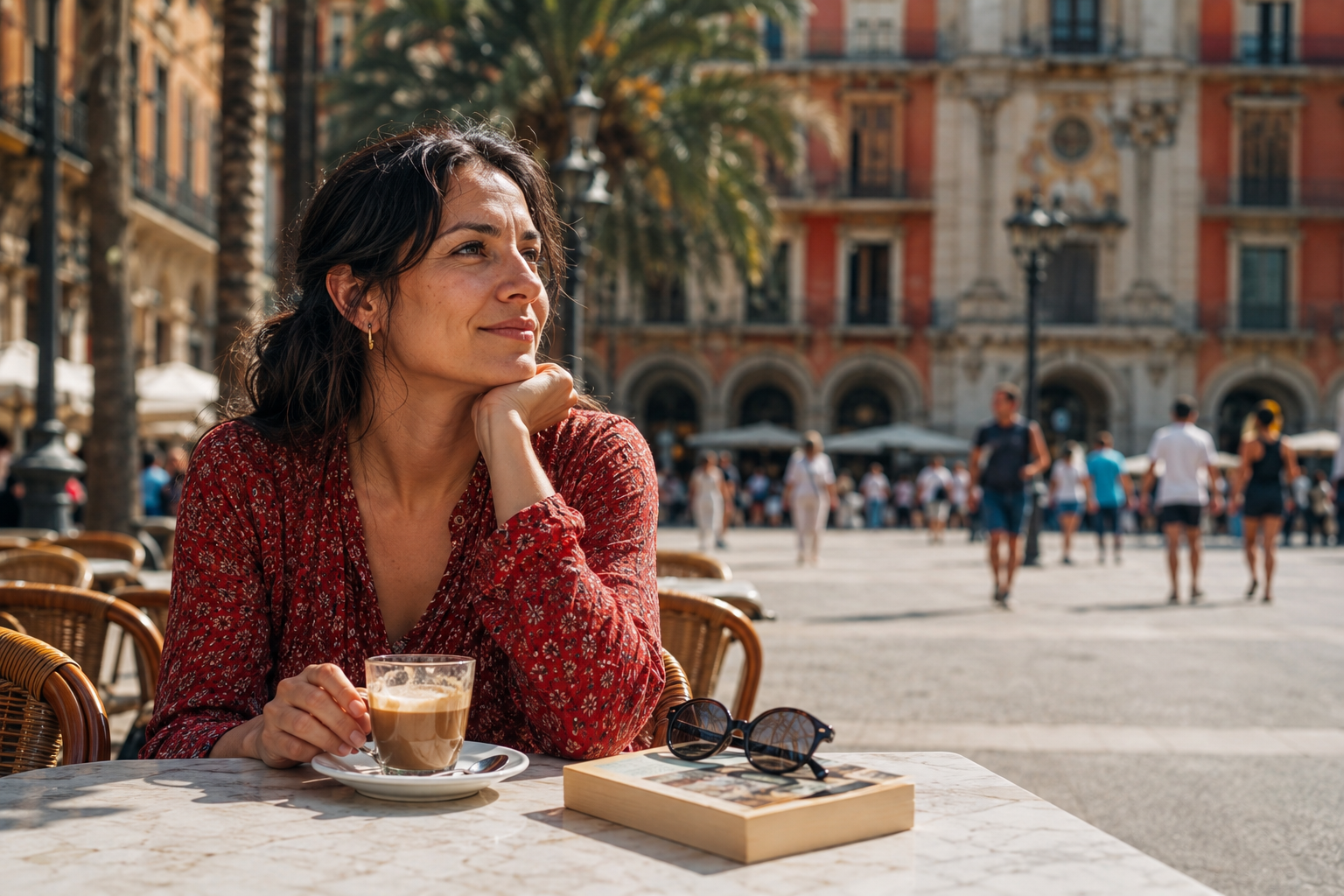
The single most important thing to understand about a Spanish terraza is that once you have ordered, the table belongs to you for as long as you care to sit there. This is the foundational contract, and it changes everything.
Nobody will hurry you. Having bought a single coffee, you are entitled to nurse it for an hour, two hours, or an entire afternoon, and no waiter will hover, no manager will glance meaningfully at your empty cup, and no one will ask you to make way for the next customer. The seat is yours, and the price of the drink is really the rent on the table for as long as you want it.
Lingering is the whole point. Far from being tolerated, sitting for hours over very little is precisely what the terraza is for, a place to read, to talk, to watch the street, to simply exist without purpose. The Spanish have a word, the sobremesa, for the long unhurried time spent at the table after the food and drink are done, and the terraza is its natural home.
2. The Bill Never Comes Until You Ask
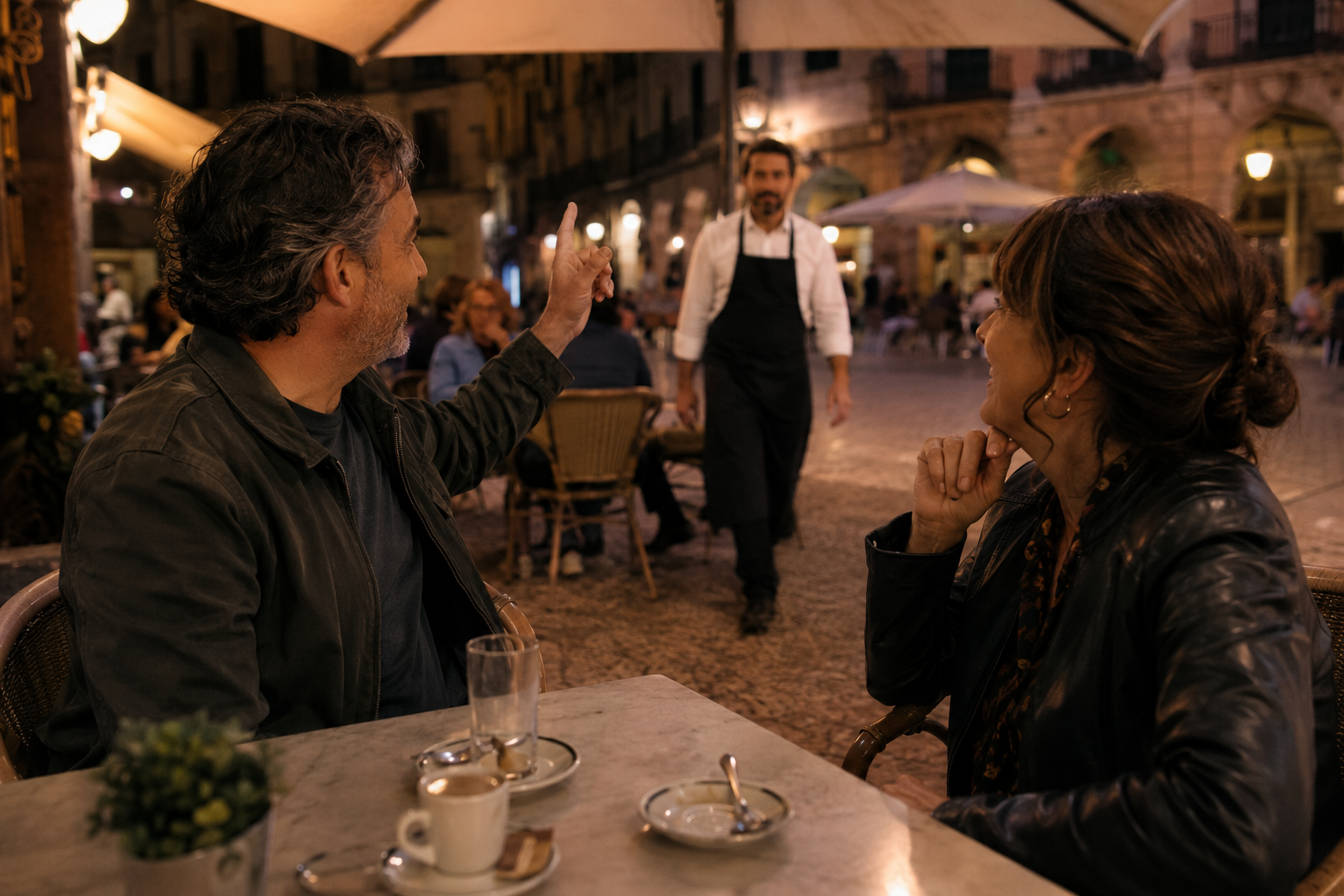
For the newcomer, the most disorienting rule of all is that the waiter will almost never bring your bill unprompted, and waiting for it means waiting forever. You must request it, every time.
Asking is expected, not rude. When you are ready to leave, you catch the waiter’s eye and say the magic words, la cuenta, por favor, and only then will the bill arrive. This is not a sign of forgetful service but a deliberate courtesy, a way of never making you feel rushed or as though your time at the table is being metered.
Silence means stay. Because the check never comes until you call for it, its absence is simply the café telling you there is no hurry, that you are welcome to remain as long as you like. Understanding this transforms the wait from a frustration into exactly the gift it is meant to be, the freedom to leave entirely on your own schedule. Visitors who do not know the custom sometimes sit for ages growing quietly annoyed, convinced the service has forgotten them, when in truth the café is simply extending a courtesy. The moment you realize that no bill will ever arrive unbidden, a small anxiety lifts, and you can settle into your seat knowing the afternoon is entirely yours to end whenever you please.
3. Claim Your Own Table
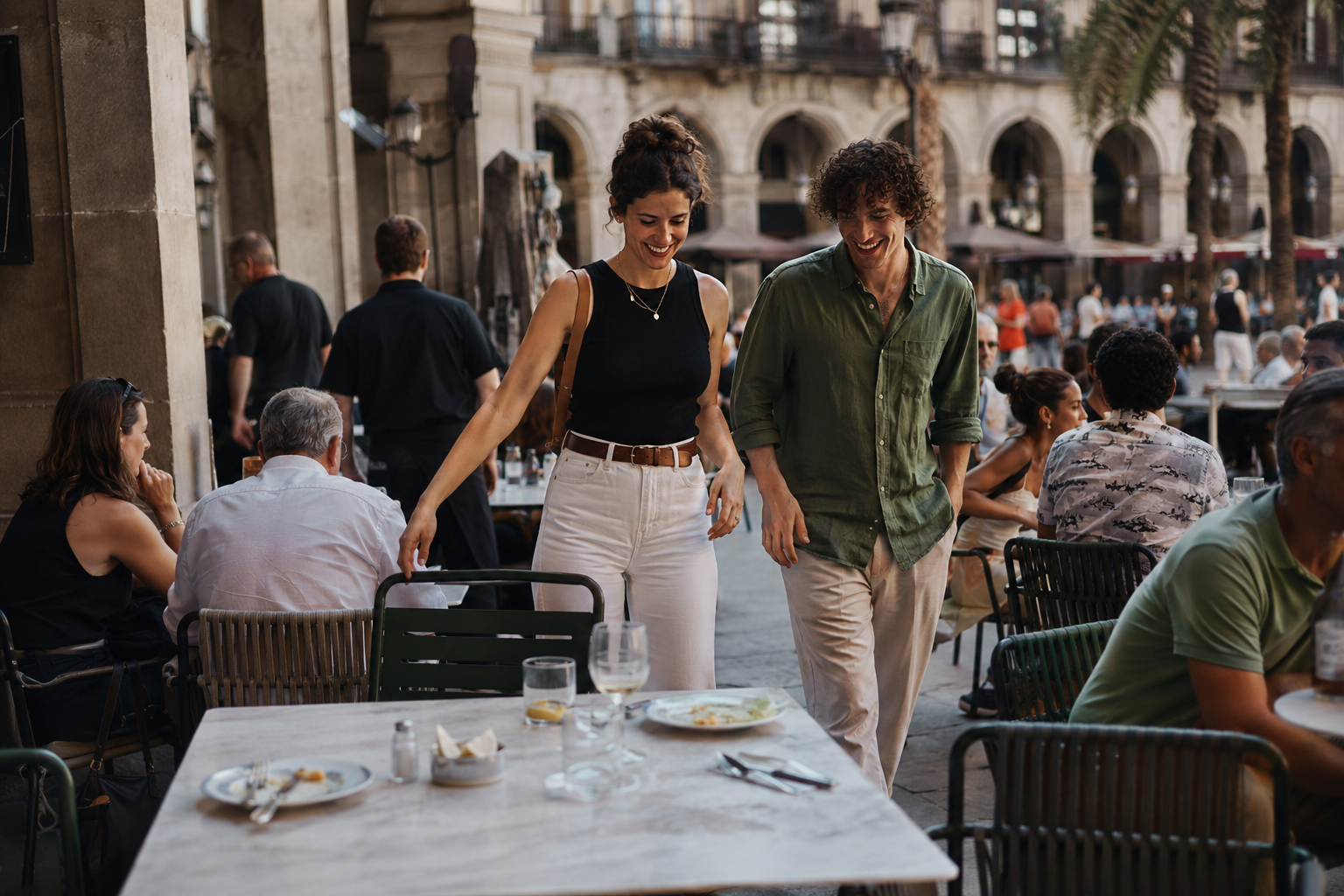
Unlike in countries where a host seats you, the Spanish terraza usually expects you to find and claim your own table, and hesitating politely at the edge will get you nowhere. Spotting a free table and taking it is the done thing.
Be gently assertive. When you arrive, scan for an open table and simply sit down at it, since there is rarely a queue or a waiting list and no one will come to lead you to your seat. If every table is taken, it is perfectly normal to linger nearby and move in the moment a group stands to leave, a small dance of anticipation everyone understands.
When in doubt, check with the waiter. At busier or more formal terrazas, especially where several tables sit empty, it is polite to catch a waiter’s eye and gesture a question before settling in, in case a table is reserved or being cleared. A quick glance for permission covers you, but in most casual spots, claiming a free table yourself is exactly right.
4. Wait for the Waiter, Do Not Chase Them
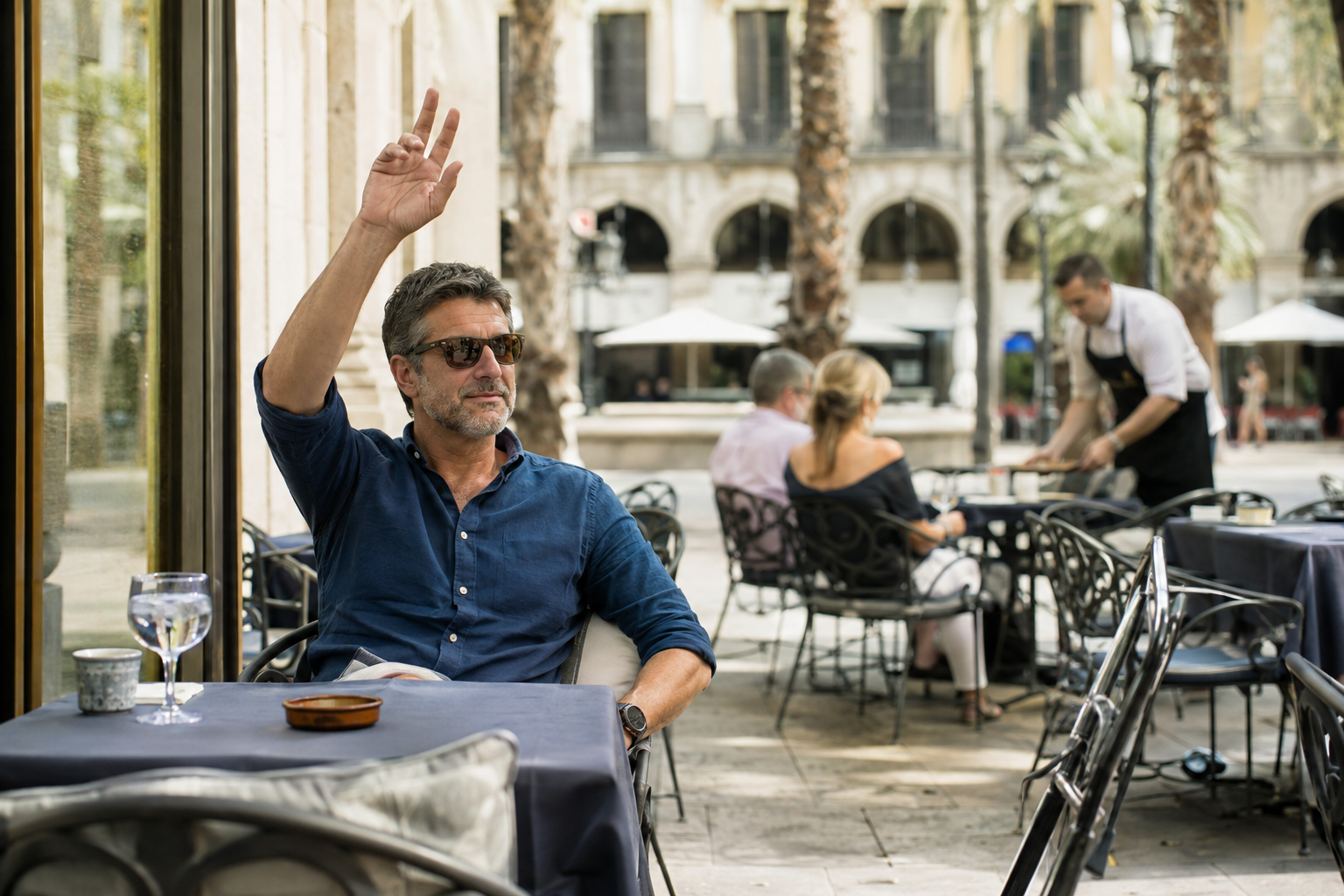
Service on a terraza runs at a calmer rhythm than many visitors expect, with waiters giving you space rather than checking in every few minutes, and understanding this prevents a great deal of unnecessary anxiety. Patience and a raised hand are your tools.
They are not ignoring you. A waiter who does not rush over the instant you sit down is not being negligent but is following the local custom of not hovering, trusting you to signal when you are ready. One person often works many tables at once, so a moment’s wait is normal and no cause for concern. What can feel like slow service to a newcomer is really a different philosophy of hospitality, one that treats leaving you undisturbed as a form of respect rather than neglect. Relax into it, and the calm rhythm becomes part of the pleasure.
Summon, do not pursue. When you want to order or need something, the way to get attention is a small raised hand, a polite perdona, or a catch of the eye, rather than getting up to find the waiter or heading to the counter. On a terraza you are served at your table, and a calm signal will always bring someone over in good time.
5. The Terraza Costs More Than the Bar

One small financial rule surprises many visitors, which is that the very same drink often costs more at an outdoor table than standing at the bar inside, and this is entirely normal and above board. You are paying for the seat and the view.
Three prices, one coffee. Many bars charge different amounts depending on where you consume your drink, cheapest at the counter, more at an indoor table, most at a terraza table outside, so the same café con leche carries a small premium in the sun. This tiered pricing is a long-standing and perfectly legal Spanish custom.
It is worth every cent. The modest terraza surcharge buys you the best seat in the house, a front-row view of the street and the right to linger there for hours, which is a bargain by almost any measure. If you want the cheapest possible coffee, drink it standing at the bar like the locals in a hurry, but for an afternoon in the sun, the terraza price is a gift. Once you understand the tiered pricing, it stops feeling like a trick and starts feeling like a menu of options, each honestly priced for what it offers. A quick jolt of caffeine at the counter costs almost nothing. A front-row seat to the life of a plaza for as long as you like costs a little more, and that little more is one of the best-value purchases in Spain.
6. Tip Light, or Not at All
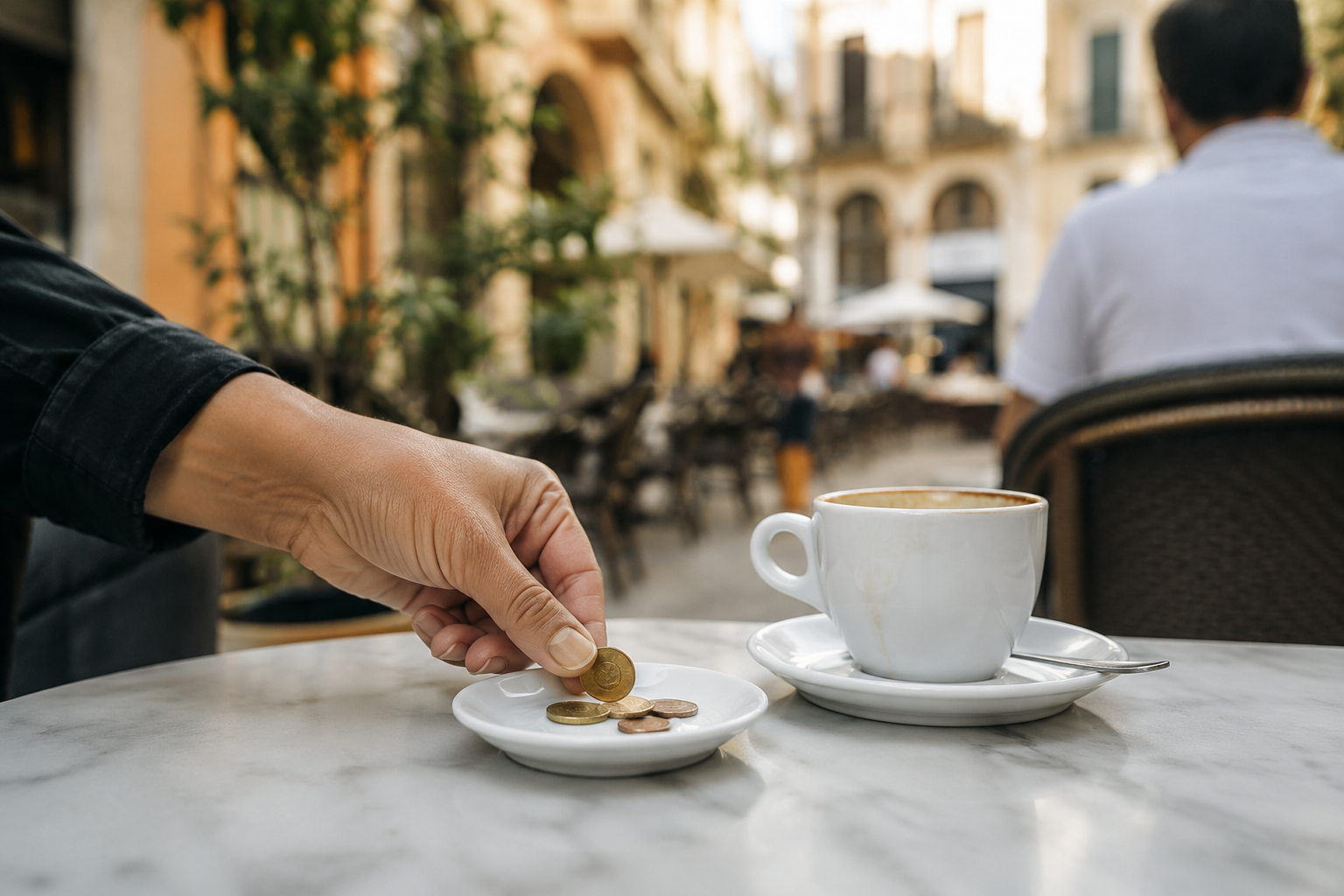
Visitors from heavy-tipping cultures often agonize over gratuities in Spain, but the rule here is refreshingly simple, which is that tipping is minimal, discretionary and never a source of stress. A little is plenty, and nothing is acceptable.
Round up and leave the coins. The Spanish norm is to leave small change or round the bill up to the nearest euro or two, not to calculate a percentage, so for a coffee or a couple of drinks, leaving the loose coins is entirely sufficient. Waiters here earn a proper salary and do not depend on tips the way they do in some countries.
No guilt required. Because tipping is a small gesture of appreciation rather than an obligation, no one will chase you or judge you for leaving little or nothing, and there is simply no concept of an insultingly small tip. A service charge added to your bill would in fact be against the rules here, so what you leave is always genuinely up to you.
7. Ask for Tap Water by Name
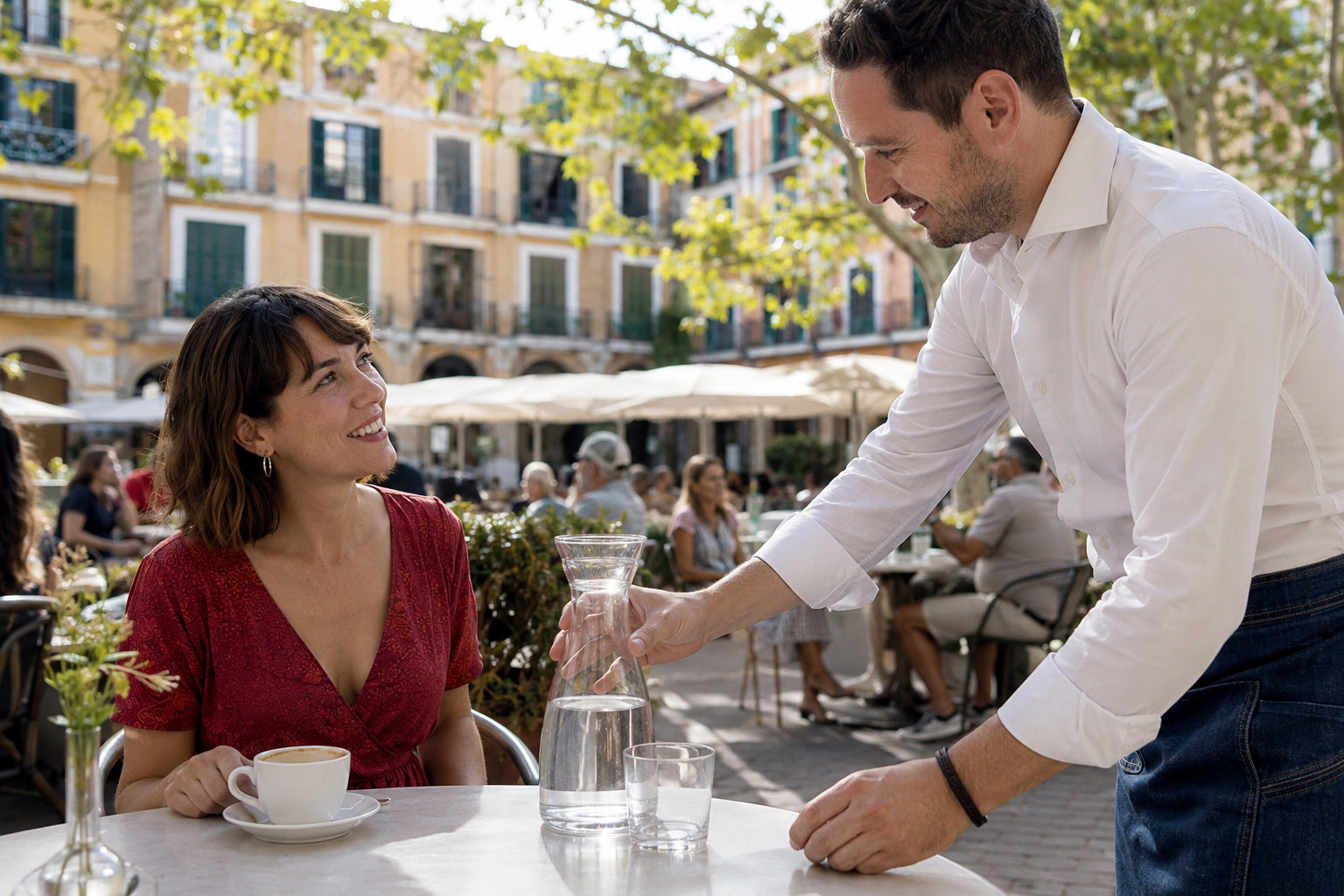
A small but useful rule concerns water, because if you simply ask for water you may be brought a pricey bottle, when perfectly good tap water is yours for the asking and often for free. The trick is knowing what to say.
Say agua del grifo. Spanish tap water is safe and clean across the country, among the best in Europe, so there is no need to pay for bottled unless you prefer it, and asking specifically for agua del grifo signals that tap is what you want. Without that phrase, many places will default to selling you bottled water at a couple of euros or more.
There is no shame in tap. Requesting tap water is completely ordinary and carries no stigma, and establishments are generally expected to provide it when asked, so you need never feel awkward about it. Ordering tap water is simply the frugal, local and increasingly common choice, and it leaves more of your money for the coffee. Spaniards themselves increasingly ask for tap over bottled, both to save money and to spare the plastic, so you are in good company. A carafe of cold tap water alongside your coffee is a perfectly respectable order, and no waiter worth their apron will think less of you for it. The bottled-water upsell is for those who do not know to ask otherwise.
8. The Clock Runs on Spanish Time
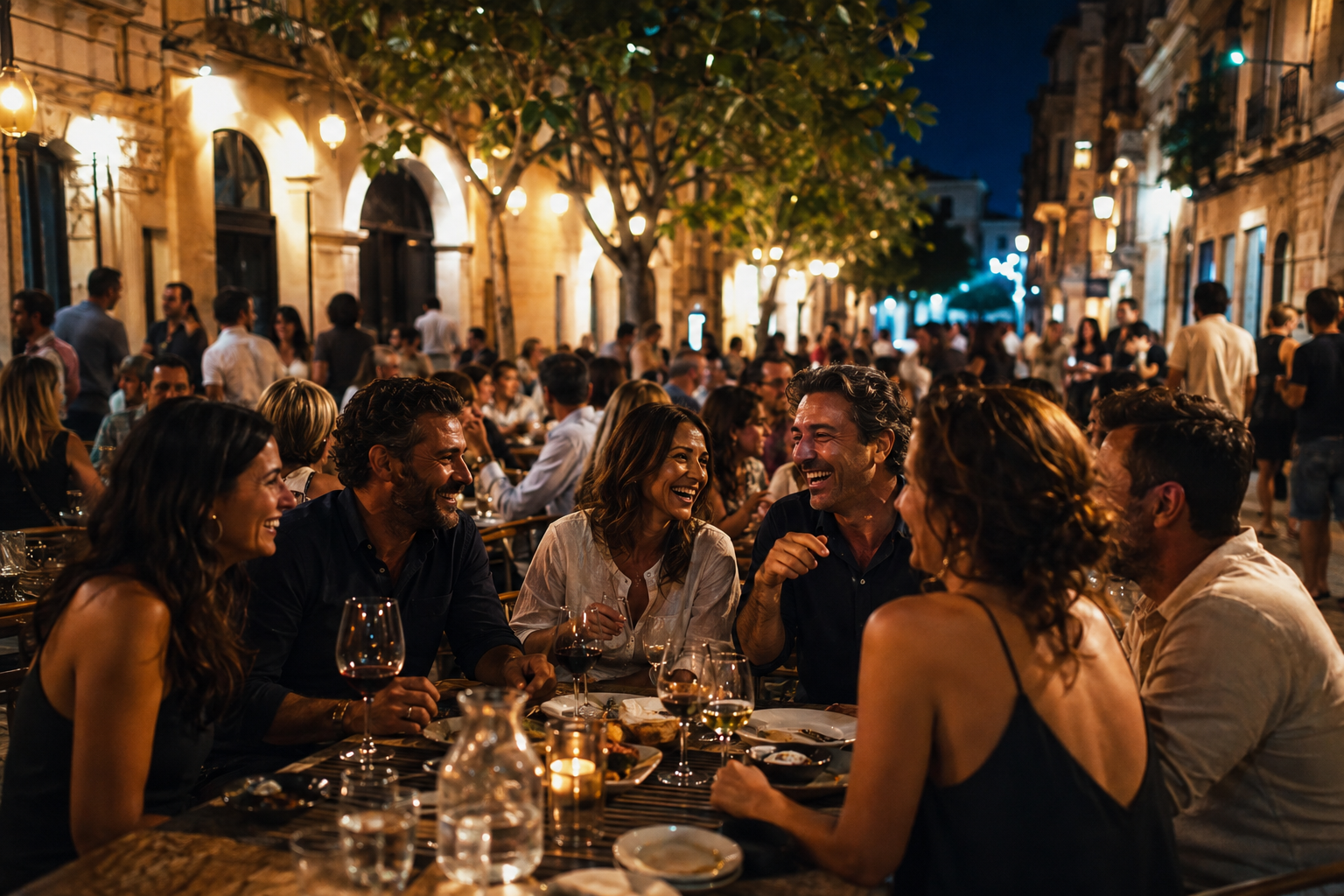
Perhaps the rule that catches visitors off guard most is timing, because the terraza fills and empties on a Spanish schedule that runs hours later than many newcomers expect. Show up at the wrong time and you may find yourself alone.
Meals come late. Spaniards take a mid-morning coffee, a long mid-afternoon lunch, and dinner rarely before nine in the evening, so the rhythms of the terraza follow suit. Arrive for dinner at six and you will have the place to yourself, which is either a delight or a warning sign depending on your mood.
Match the local rhythm. The terraza comes alive at the hours locals actually use it, the late morning coffee, the leisurely afternoon, the long social evening, so aligning yourself with those times is the surest way to feel part of the scene. Learn the Spanish clock and you will always find the terraza at its liveliest and most welcoming. There is a real pleasure in surrendering to this later rhythm, in discovering that a nine o’clock dinner under warm evening air feels far more natural than the rushed early meals of home. The whole day reorganizes itself around leisure rather than efficiency, and the terraza is where that shift becomes most visible. Once your body adjusts, the old schedule can come to seem strangely joyless by comparison.
9. The Terraza Is a Living Room, Not a Transaction
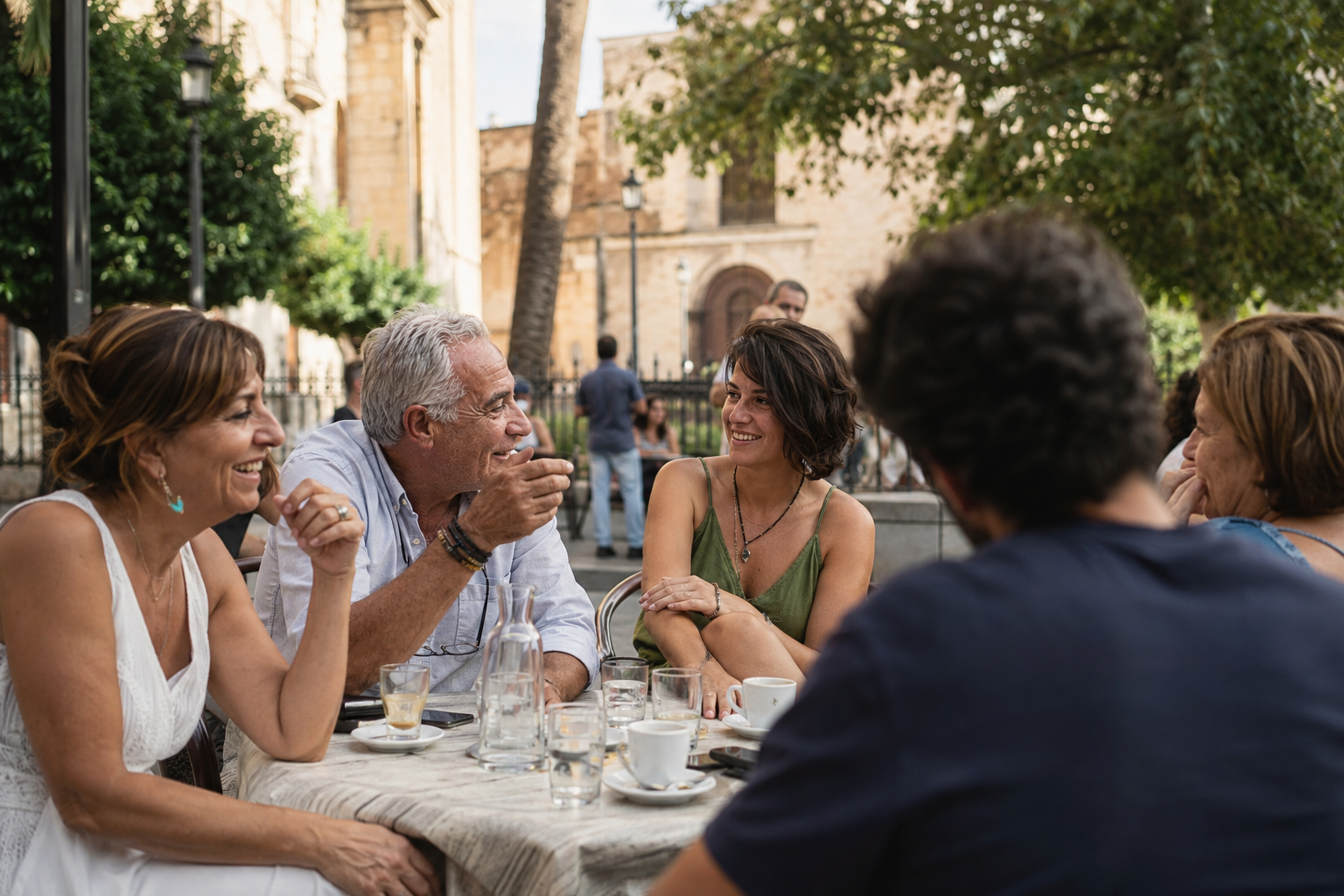
The deepest rule of all is really a matter of spirit, which is that the terraza is not a place to consume something efficiently but a kind of open-air living room where the point is the sitting itself. Everything else follows from this.
The drink is the ticket, not the goal. What you order is almost incidental, a small price of admission to the real event, which is the time spent watching, talking and being part of the street life around you. A single coffee and a good conversation is the ideal, not a quick transaction.
Slowness is the luxury. In a world that prizes speed and efficiency, the terraza offers the opposite, an unhurried hour in the open air that costs almost nothing and refreshes what money cannot buy. To use it well is to slow down, to let the afternoon unspool, and to treat the simple act of sitting as the pleasure it truly is.
The Unwritten Contracts, Understood
Taken together, these nine rules describe a small culture of their own, a set of gentle understandings that make the Spanish terraza one of the most civilized institutions in daily life. None of them is difficult, and all of them reward the visitor who learns them with a richer, more relaxed experience of Spain.
What unites every rule is the same underlying generosity, the sense that the terraza exists to give you time rather than to take your money, offering a seat, a view, and an unhurried hour for the price of a coffee. That is a rare and lovely bargain, and it is available to anyone who understands the contracts and settles in accordingly. The rules are not barriers but the very things that make the pleasure possible.
So the next time you find yourself before a row of outdoor tables in a Spanish plaza, do not perch nervously or gulp your drink and flee. Claim a table, order something small, ask for tap water, wait for no bill until you want it, and let the afternoon take its course. Do that, and you will have grasped the real secret of the terraza, which is that its greatest offering is not the coffee or the wine but the time, and the quiet permission to enjoy it fully.

About the Author: Ruben, co-founder of Gamintraveler.com since 2014, is a seasoned traveler from Spain who has explored over 100 countries since 2009. Known for his extensive travel adventures across South America, Europe, the US, Australia, New Zealand, Asia, and Africa, Ruben combines his passion for adventurous yet sustainable living with his love for cycling, highlighted by his remarkable 5-month bicycle journey from Spain to Norway. He currently resides in Spain, where he continues sharing his travel experiences with his partner, Rachel, and their son, Han.