
Say the word focaccia and most people picture one of two things: the thick, fluffy, dimpled bread of Genoa, golden with olive oil, or something close to a pizza base. There is a third focaccia, though, and it is so unlike the others that meeting it for the first time can be genuinely startling. It has no fluff and no rise at all, because it contains no yeast. Instead it is two sheets of dough rolled almost transparent, sealed around a layer of molten cheese, and baked in a blistering oven until the outside crisps and blackens in spots and the cheese inside runs gooey. This is focaccia di Recco, the cheese-filled focaccia of the Ligurian coast, and it is so treasured that it carries its own European legal protection, guarding both its name and the way it is made.
That protection is part of what makes this dish so fascinating, because it tells you how seriously the people of Recco take their focaccia. This is not a loose idea that anyone can label as they please, but a specific product with a legally defined home and method, one of those rare foods the law itself steps in to defend. And yet for all that officialdom, the focaccia at the heart of it is a thing of beautiful simplicity, just flour, water, oil, salt and cheese, transformed by skill and heat into something extraordinary. There is a lovely tension in that combination, the bureaucratic weight of a European legal designation wrapped around what is, at bottom, a piece of thin dough and some cheese. It is the kind of thing that could only happen in a food culture that treats its regional specialties as treasures worth defending, where the difference between the real thing and an imitation is felt to matter deeply. The law did not make the focaccia special. It simply recognized, and moved to protect, a specialness that was already there.
Here is what focaccia di Recco actually is, why it is so different from the focaccia you know, the story of the legal protection that surrounds it, and how to make a version at home. There is a real recipe below, based on the traditional method, so you can attempt this remarkable cheese-filled focaccia in your own kitchen. Once you taste that shattering thin crust giving way to a river of melted cheese, you will understand why an entire region went to the trouble of protecting it by law.
Not the Focaccia You Know
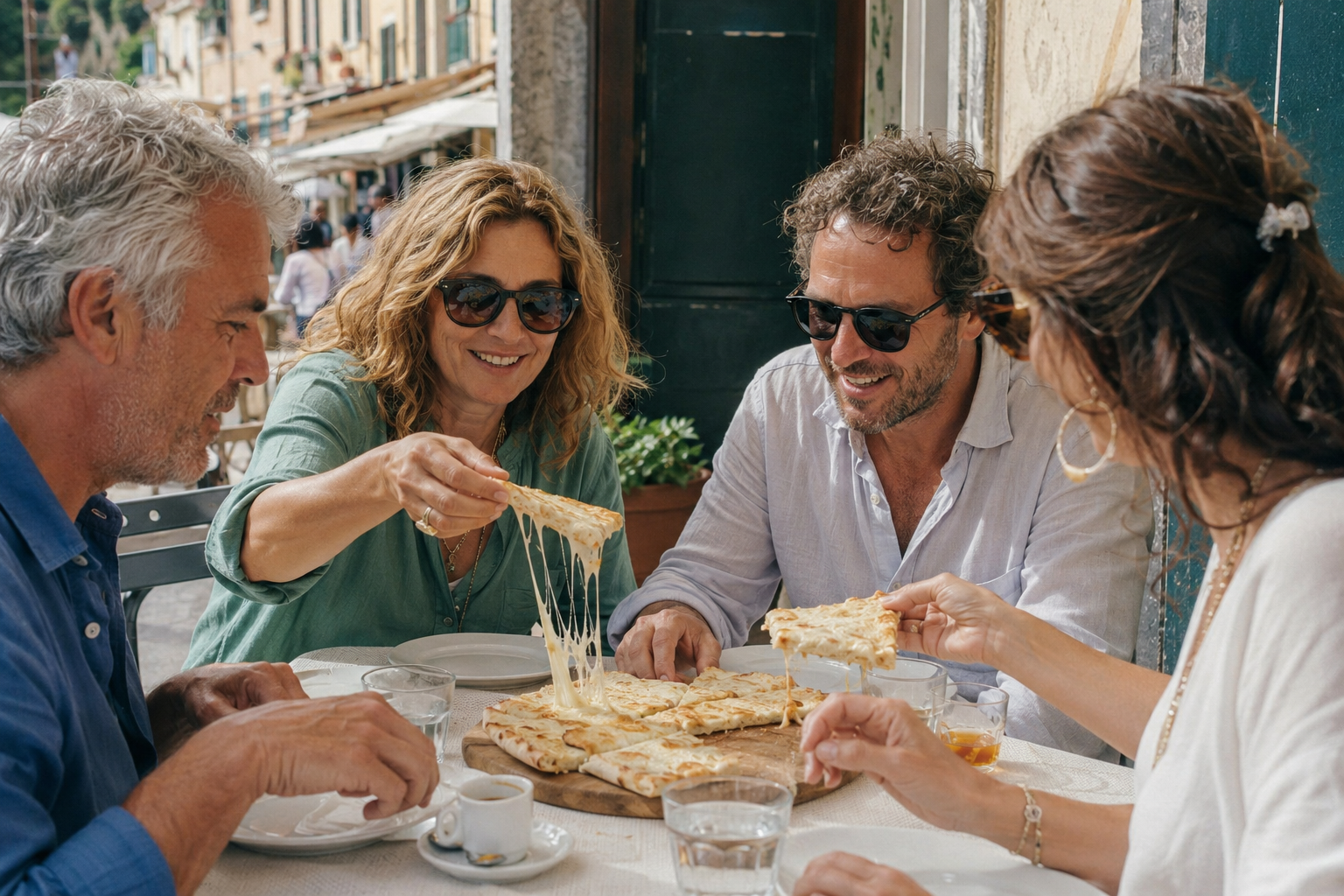
The first thing to understand about focaccia di Recco is that it defies almost everything the word focaccia usually promises, which is exactly what makes it so special. Where ordinary focaccia is thick, soft and airy, this one is thin, crisp and filled, a completely different creature wearing the same name.
The contrast could hardly be sharper. The familiar focaccia of Genoa is a leavened bread, risen with yeast into a pillowy, dimpled slab, whereas focaccia di Recco is made without any yeast at all, which is why it stays paper-thin, so the two share little beyond flour and oil. This is the only Italian focaccia made entirely without leavening, a distinction that sets it apart from every other bread that bears the name.
What replaces the fluff is a filling and a crackle. Rather than a single thick layer of bread, focaccia di Recco is two ultra-thin sheets of dough enclosing a generous layer of melting cheese, so that when it bakes, the dough turns crisp and golden while the cheese goes molten and stretchy, giving you a shattering crust around a gooey heart. It is closer to a crisp, cheese-stuffed cracker than to any conventional bread, and utterly its own thing.
The Cheese at Its Heart
The soul of focaccia di Recco is the cheese sealed inside it, and understanding that cheese is understanding the dish, because everything else exists to frame it. This is not a topping scattered on bread but a molten filling within two delicate layers.
The traditional cheese is a specific one. Focaccia di Recco is filled with a soft, fresh cow’s milk cheese, either crescenza or stracchino, essentially the same mild, creamy, slightly tangy cheese known by two names, prized for the way it melts into a rich and stretchy layer. Its gentle acidity and extraordinary meltability are exactly what the dish needs, giving a filling that is creamy and flowing rather than heavy or stringy.
Finding that cheese can be the main challenge outside Italy. Because crescenza and stracchino can be hard to source in other countries, cooks abroad often substitute other soft, melting cheeses to approximate the effect, reaching for creamy, spreadable cheeses that behave similarly in the oven, so the dish can be attempted even where the authentic cheese is unavailable. The goal is always that same rich, gooey, gently tangy molten layer, however you achieve it. Purists will rightly point out that no substitute quite matches the original, and they are correct, since crescenza has a particular character that shaped the dish over generations. But the spirit of the thing survives a good substitution better than you might fear, and a home cook using whatever soft, creamy, meltable cheese they can find will still produce something worth every minute of effort. The ideal is the authentic cheese, but the dish is generous enough to forgive its absence.
Cheese Inside, Law Around It
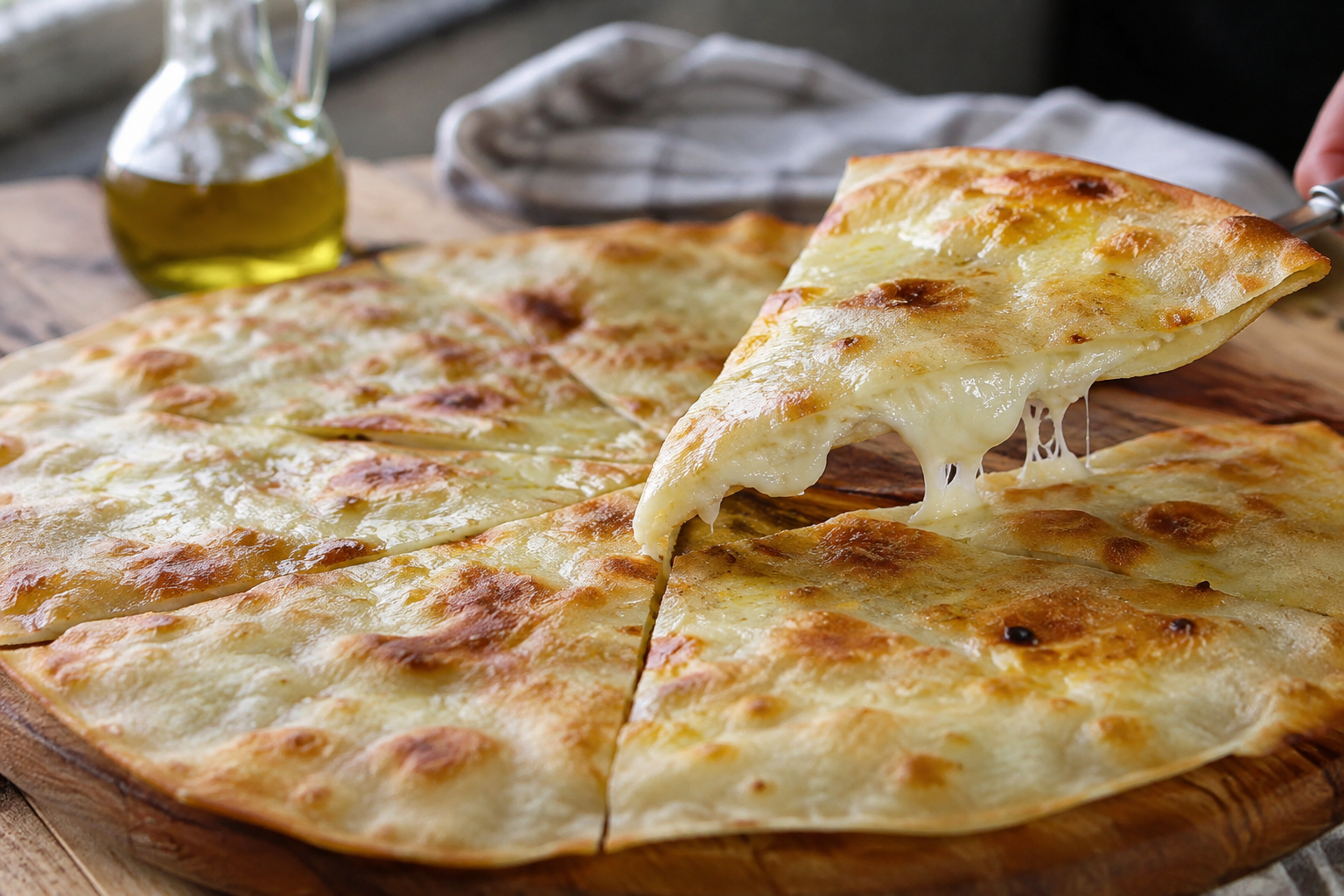
Now to the remarkable fact that this humble-sounding focaccia is wrapped in legal protection, a detail that says everything about how prized it is. Focaccia di Recco is not merely a local specialty but an officially protected product, defended by European law against imitation.
The protection is specific and real. Focaccia di Recco col formaggio holds a Protected Geographical Indication, the IGP seal, granted in 2015, which means that only focaccia made by the traditional method in a defined area can legally carry the name, and that area is the town of Recco and a handful of neighboring municipalities on the Ligurian coast. Make it elsewhere or by another method, and whatever you have, you cannot call it the real thing.
The protection came about through deliberate effort. A consortium of local producers organized in the early 2000s to secure this European recognition and safeguard their focaccia, and the designation guards not a single fixed recipe but the traditional method of production itself, defining how the focaccia must be made rather than pinning down one exact set of quantities. It is a defense of a craft as much as a product, a legal fence built around a way of doing things.
The Focaccia the Law Lets Restaurants Bake
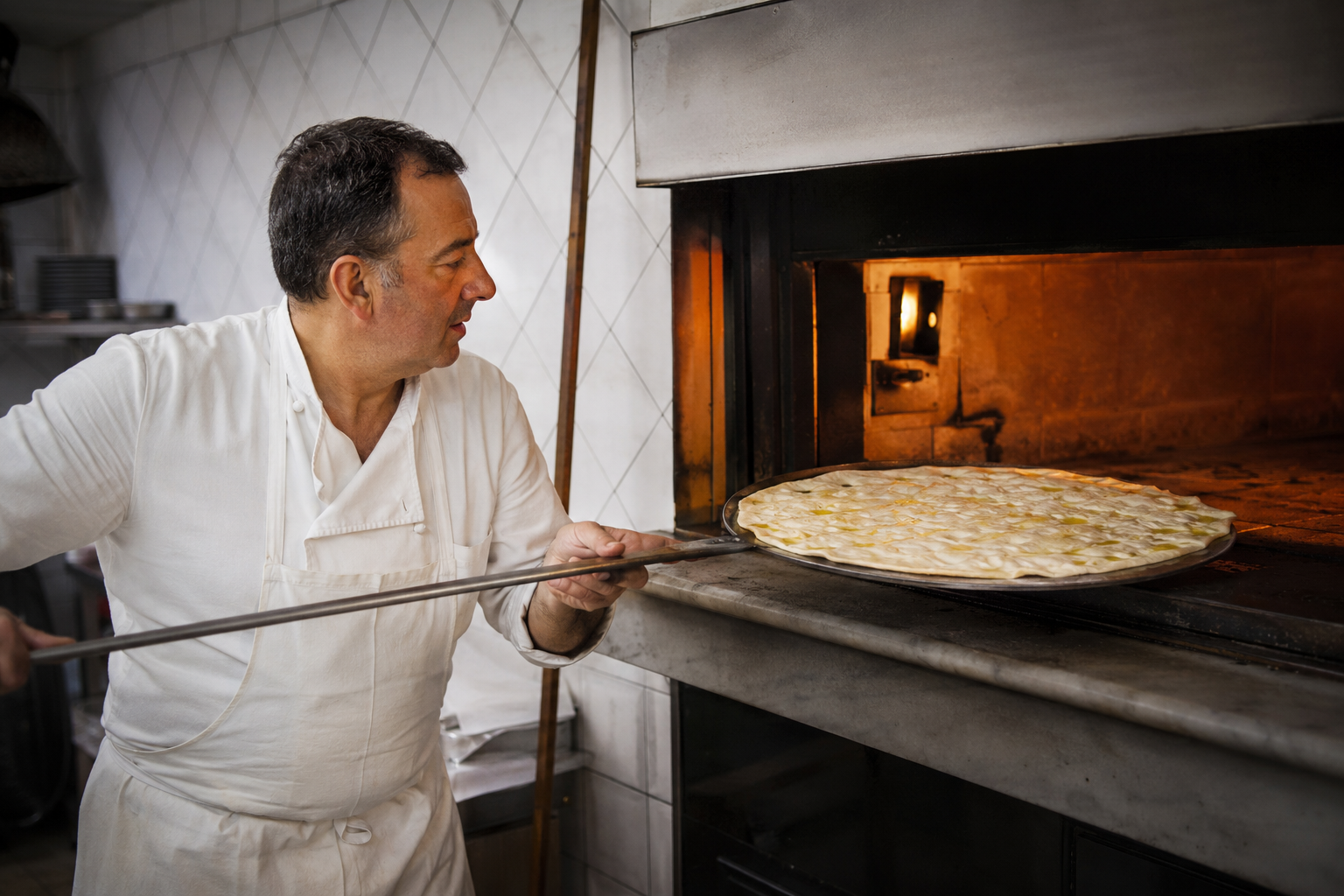
There is a charming peculiarity in how this protection works that sets focaccia di Recco apart even among protected foods. Most such designations govern products made in a specific kind of facility, but focaccia di Recco has an unusual allowance built into its rules.
The quirk concerns where it can be made. Uniquely among these protected Italian products, focaccia di Recco is permitted to be made not only in bakeries but also in restaurants, its entire production process allowed to take place in a restaurant kitchen, which reflects how deeply the dish is woven into the dining life of the region rather than confined to bakeries alone. It is a food meant to be baked fresh and eaten on the spot, and the rules honor that. The dish carries a long history that suits this immediacy. Local legend traces its origins back centuries, to Genoese people who fled inland during coastal raids and made do with the simple ingredients they had to hand, cheese and flour and oil, while its modern fame is usually credited to the bakers and restaurateurs of Recco in the late nineteenth century, who turned a humble improvisation into a regional icon. From a food of necessity grew a food of pride, and eventually a food defended by law.
This tells you something about the dish’s character. Focaccia di Recco is at its best straight from a fierce oven, eaten hot while the crust still crackles, which is precisely why it belongs in restaurants where it can be baked to order and served immediately, rather than made in advance and left to cool. The law, in allowing restaurants to produce it, is really acknowledging the truth that this is a focaccia to be devoured the moment it emerges. This is worth holding onto when you make it at home, because it is the single most important thing about serving it well. A focaccia di Recco that has sat for twenty minutes is a sadder object than one pulled apart while it still steams, the crust having softened and the cheese having begun to set. Plan your meal so that this is the last thing to come out of the oven and the first thing everyone eats, and treat any delay as the enemy it is.
The Recipe
Here is a home version of focaccia di Recco, based on the traditional method. The two challenges are rolling the dough thin enough and baking it hot enough, but neither is beyond a home kitchen with a little care. This makes one focaccia.
Focaccia di Recco (Cheese-Filled Ligurian Focaccia)
serves two to four, about one hour with resting
Ingredients:
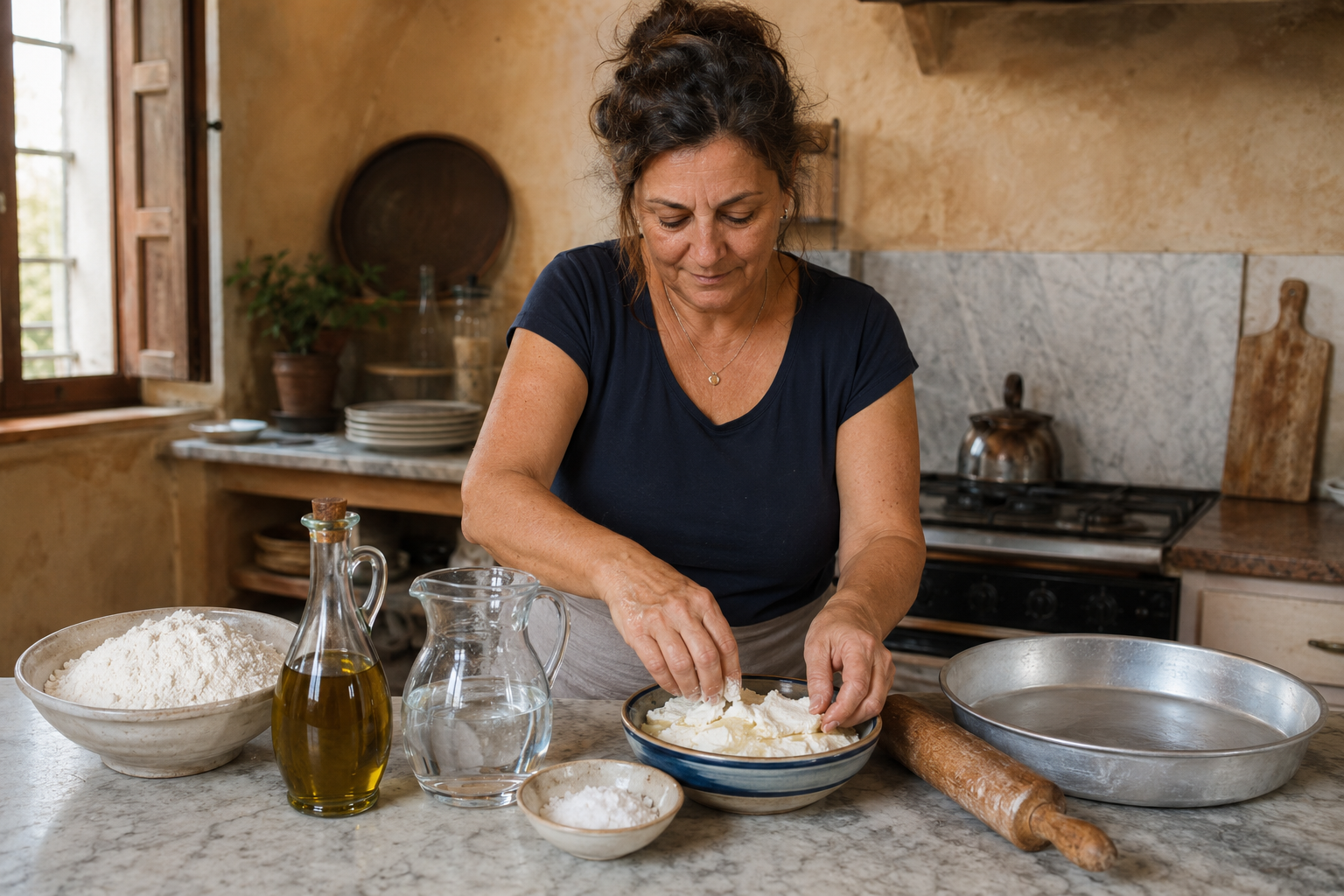
- Soft wheat flour, ideally a strong bread flour, two cups
- Water, about three quarters cup
- Olive oil, three tablespoons, plus more for the tray and top
- Salt, half a teaspoon
- Crescenza or stracchino cheese, about ten ounces, or another soft melting cheese
Method:
- Mix the flour, water, olive oil, and salt into a smooth, soft dough, kneading for about ten minutes, then let it rest, covered, for at least thirty minutes.
- Divide the dough into two pieces, one slightly larger for the base.
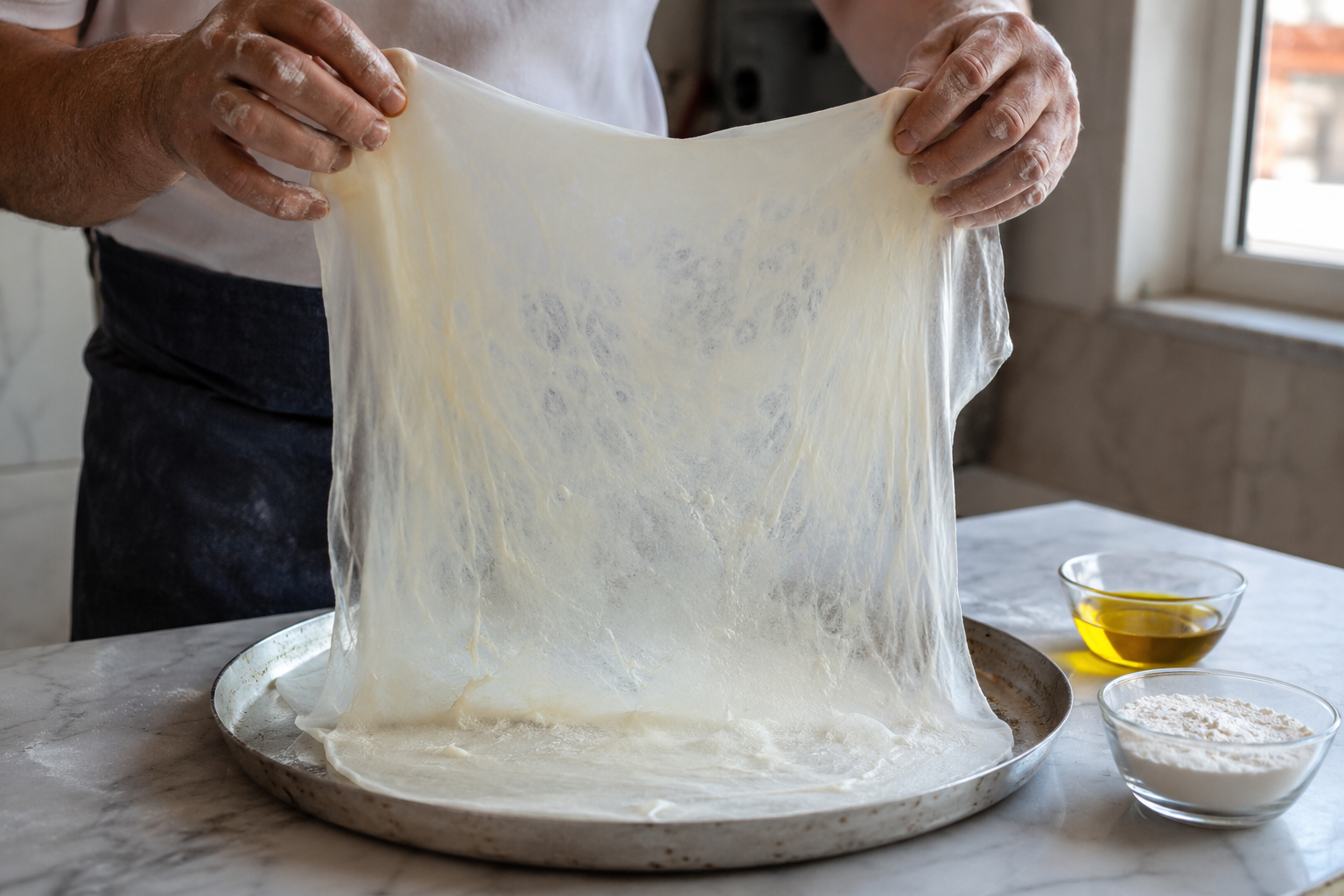
- On a floured surface, roll each piece out with a rolling pin, then gently stretch it with your hands until it is paper-thin and almost translucent, taking care not to tear it.
- Lay the larger sheet on a well-oiled baking tray, letting it overhang the edges.
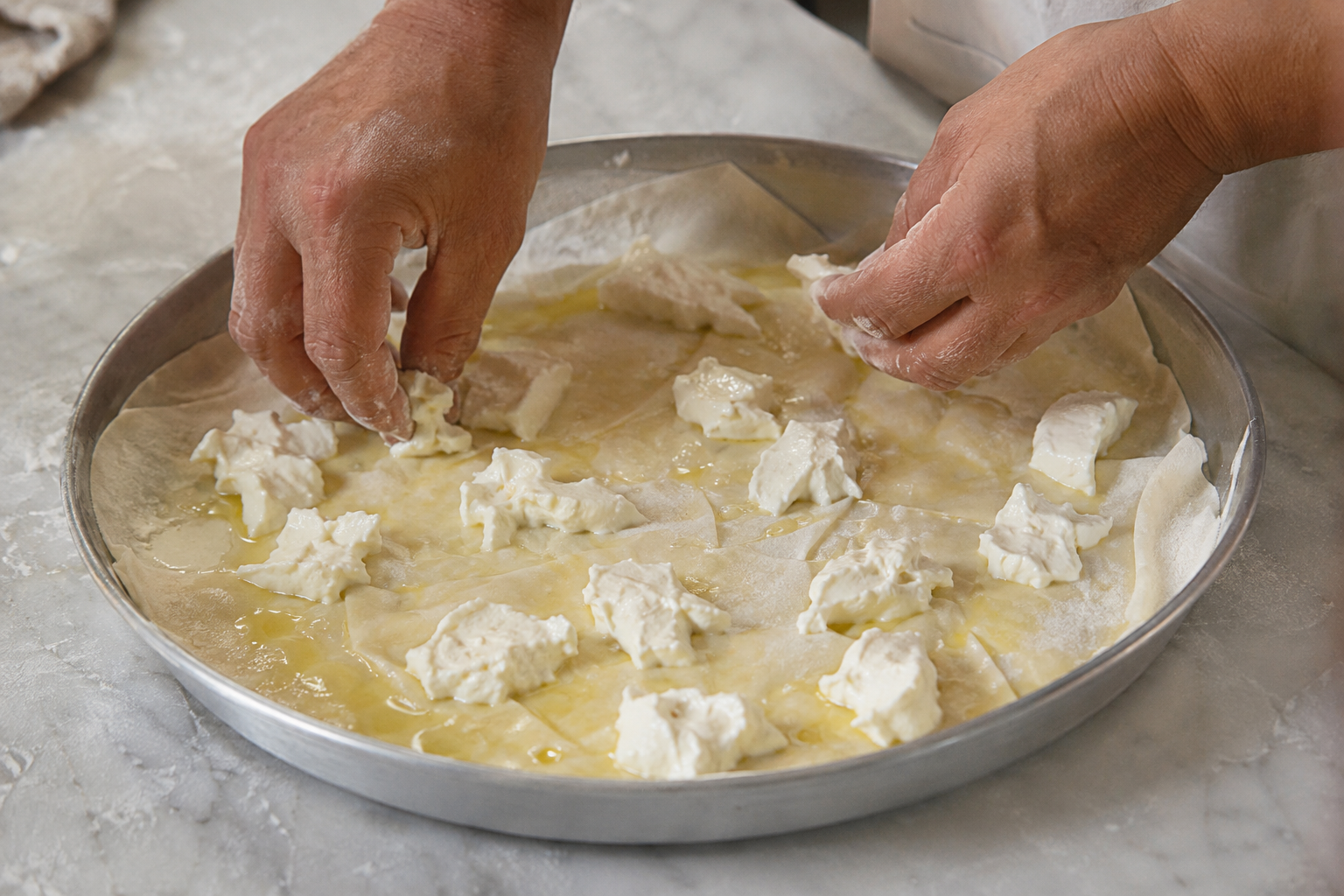
- Dot small pieces of the cheese evenly over the dough, leaving small gaps between them.
- Cover with the second, thinner sheet, then press and seal the edges together so the cheese cannot escape.
- Tear or pierce a few small holes in the top sheet only, in the gaps between the cheese, to let steam escape, then trim the excess dough and brush the top with olive oil and a little salt.
- Bake in the hottest oven you have, ideally around 500 degrees Fahrenheit or higher, for about eight to twelve minutes, until the top is golden and blistered and the cheese is molten.
- Serve immediately, while hot and crisp.
That is the whole thing, a crisp, cheese-filled focaccia from the simplest ingredients, best eaten the moment it leaves the oven.
Getting It Right
A few things make the difference between a good attempt and a triumphant one, and they all come down to the two great challenges of thinness and heat. The most important is stretching the dough as thin as you possibly can, because the magic lies in its delicacy, and a dough left too thick will bake up bready rather than crisp. This is the step that most rewards practice, and the one where a first attempt is most likely to fall short, so be patient with yourself. The dough should end up so thin you could almost read through it, thin enough that the cheese beneath shows as shadowy lumps, and getting there takes gentle, unhurried stretching rather than force.
Using the right flour helps enormously here. A strong bread flour stretches thinner without tearing than a weaker flour would, which is why it is worth seeking out for this dish, giving you those near-transparent sheets that crisp so beautifully. Work patiently, stretching a little at a time, and accept that a small tear can usually be pinched back together.
Heat is the other essential. Focaccia di Recco is meant to bake fast and fierce, so use the very hottest setting your oven allows and give it time to come fully up to temperature, since a hot oven crisps the thin dough quickly and melts the cheese before the base can dry out, whereas a cool oven gives a pale, tough result. Serve it the instant it is done, because like all the best crisp things, it waits for no one.
The Third Focaccia Worth Knowing
The lasting wonder of focaccia di Recco is that it takes the humblest of ingredients, flour and water and oil and cheese, and through nothing but skill and heat turns them into something a region felt compelled to protect by law. It is proof that simplicity and greatness are not opposites, and that a food can be at once utterly plain in its components and utterly singular in its result.
What makes it worth seeking out and attempting is exactly its difference, the way it upends everything you thought focaccia was and offers instead a shattering, cheese-filled marvel unlike any other bread. Between the paper-thin crust, the molten heart, and the story of the legal protection that guards it, focaccia di Recco rewards both the eating and the knowing, which is the mark of a truly special dish.
So the next time you think you know what focaccia is, remember there is a third kind, born on the Ligurian coast and defended by European law, that hides its cheese inside two whispers of crisp dough. Roll your sheets as thin as you dare, seal the cheese within, bake it in the fiercest heat you can manage, and eat it at once while the crust shatters and the cheese pulls into strands. You will be making a focaccia that a whole region loved enough to protect, and one glorious, molten bite will tell you exactly why. It is one of those dishes that seems almost too simple to be as good as it is, until you make it and understand that the simplicity is precisely the achievement, everything unnecessary stripped away until only flour, cheese, oil and heat remain.

About the Author: Ruben, co-founder of Gamintraveler.com since 2014, is a seasoned traveler from Spain who has explored over 100 countries since 2009. Known for his extensive travel adventures across South America, Europe, the US, Australia, New Zealand, Asia, and Africa, Ruben combines his passion for adventurous yet sustainable living with his love for cycling, highlighted by his remarkable 5-month bicycle journey from Spain to Norway. He currently resides in Spain, where he continues sharing his travel experiences with his partner, Rachel, and their son, Han.