
In Portuguese homes, when there is fried fish for dinner, there is very often a pot of loose, soupy, tomato-red rice beside it, and that rice is frequently the thing everyone remembers. It is arroz de tomate, Portuguese tomato rice, one of the most beloved and effortless dishes in the whole of Portuguese home cooking. You build a quick tomato base, stir in the rice and the water, and then largely leave it alone to cook itself into a comforting, brothy bowl you eat with a spoon. It asks very little of the cook and gives a great deal in return, which is exactly why it has been a staple in Portuguese kitchens for generations, made a little differently in every household.
The soul of this dish is its texture, because Portuguese tomato rice is not dry and fluffy like a pilaf, but loose, saucy and soupy, a style the Portuguese affectionately call malandrinho. That word literally means naughty, but in the kitchen it describes rice that is brothy and spoonable rather than fluffy and separate, and it is the whole point of the dish. Getting that soupy, saucy character right is what separates a real Portuguese tomato rice from an ordinary side of rice, and happily, it is easy to do.
Here is what makes Portuguese tomato rice so special, the simple technique behind it, exactly how to make it, and how to serve it the traditional way. There is a real recipe below, the classic Portuguese method, so you can make it tonight. This is humble comfort food at its finest, a dish built from pantry staples and a few ripe tomatoes that somehow tastes like far more than the sum of its parts, and once you learn it, it may become one of your most reliable weeknight dinners.
The Comfort Food of Portugal
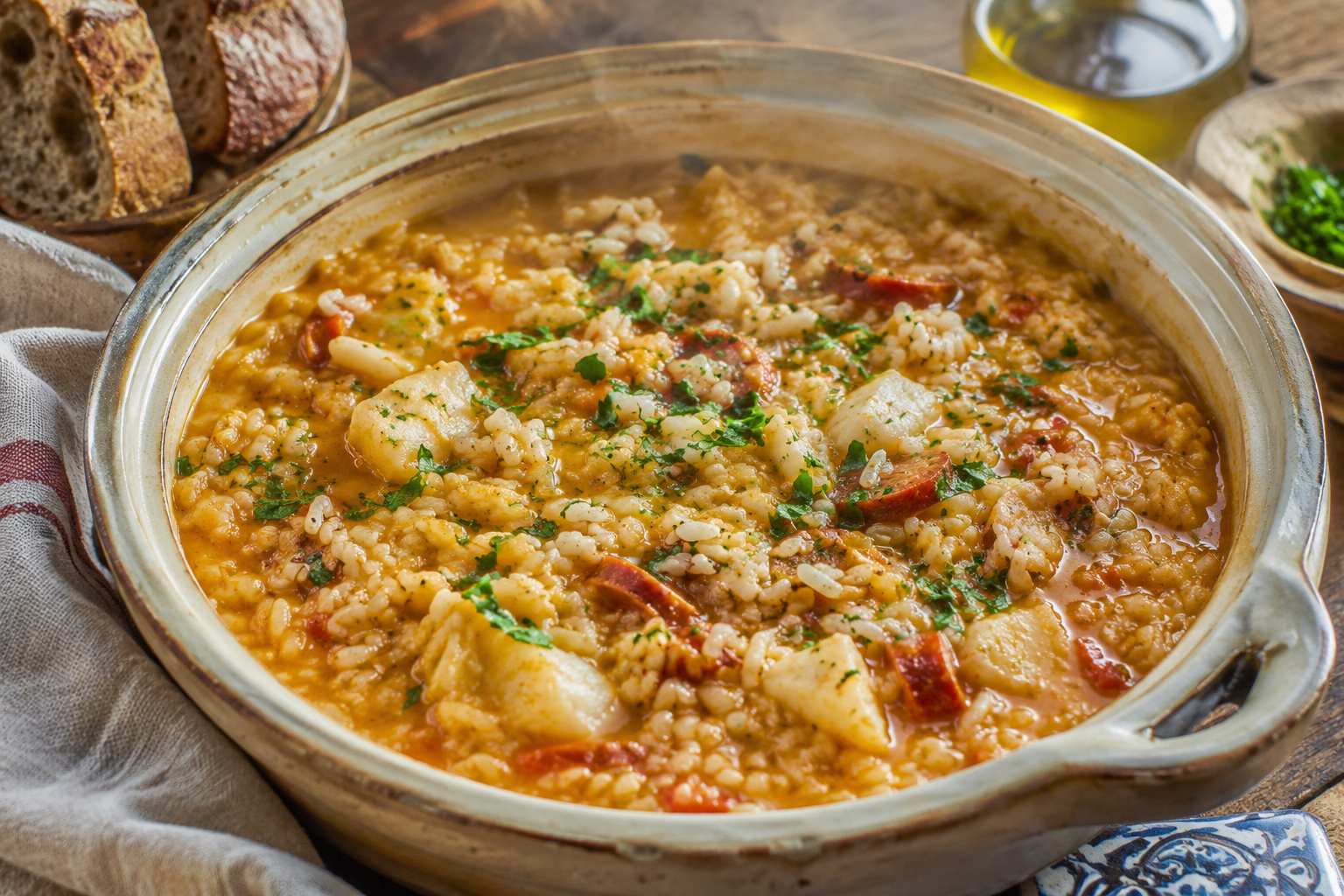
To understand this dish, it helps to know its place in Portuguese life, which is that of a cherished everyday staple rather than a special-occasion showpiece. Arroz de tomate is the kind of homey, unfussy food that Portuguese families eat all the time, a dish nearly everyone grew up with and associates with home cooking, and its ubiquity is a mark of how good and how easy it is.
Its classic role is as a companion to fried fish. In Portugal, tomato rice is the traditional partner to fried fish, from battered cod to little fried fillets, its soft, saucy tomato character balancing the crisp, savory fish perfectly, so the two together are a beloved combination that appears on countless Portuguese tables. It also pairs happily with grilled meats or, brothy and satisfying as it is, stands on its own as a light meal. There is something democratic about a dish like this, in the best sense. It costs almost nothing, uses ingredients any kitchen already has, and demands no special skill or equipment, yet it produces a bowl a grandmother would be proud to serve and a child would ask for again. Food this humble and this good is a reminder that eating well has never really depended on expense, only on knowing a few simple things and doing them with a little attention.
Part of its charm is how personal and variable it is. Every Portuguese household makes its tomato rice a little differently, tweaking the aromatics or the seasonings to their own taste, so there is no single rigid recipe but a shared idea that each family adapts, which is exactly how the best traditional home cooking tends to work. The version here is a solid, authentic starting point that you can then make your own. This is worth remembering if you ever eat a version that differs from the one you learned, because there is no single correct arroz de tomate to be defended against imposters. One family swears by a pinch of chili, another by a bay leaf, another by a splash of wine, and all of them are right in their own kitchens. The dish is less a fixed recipe than a shared understanding, which is exactly what makes it feel like home cooking rather than restaurant cooking.
What Makes It Work
The secret to great Portuguese tomato rice lies in a foundational technique that runs through much of Portuguese cooking, the refogado. This is the aromatic base of gently cooked onion and garlic in olive oil that begins so many Portuguese dishes, and building a good one is the first and most important step in a good tomato rice.
The refogado does the heavy lifting of flavor. By cooking onion and garlic slowly in olive oil until soft and fragrant but not browned, you create a deep, savory foundation, and when you add tomato to this base and let it cook down, you build the rich, concentrated tomato flavor that will infuse every grain of rice, so the few minutes spent on the base repay themselves many times over. Rushing or skipping this step gives a thin, flat result, while taking your time with it gives depth. It is tempting, when a dish is this simple, to hurry the base and get straight to the rice, but the refogado is precisely where the flavor is made, and there is no shortcut for it. A few extra minutes letting the onions turn soft and sweet, and letting the tomato cook down into something concentrated rather than watery, is the difference between a tomato rice that tastes of real cooking and one that tastes of tomato paste stirred into water. Patience here is repaid at the table.
The other key is the liquid, which is what creates that signature soupy texture. Portuguese tomato rice uses more liquid than ordinary rice cookery, roughly three to four parts liquid to one part rice rather than the usual two to one, and this generous ratio is what keeps the finished dish loose, brothy and spoonable rather than dry, so being liberal with the water or stock is essential to the malandrinho character. The rice should end up swimming a little, not sitting dry. People raised on fluffy, separate rice sometimes find this unsettling at first, worried they have made a mistake when the pot looks wet, but that wetness is the entire point. A proper arroz de tomate should pool slightly on the plate and be eaten with a spoon as much as a fork, closer to a loose risotto than to a pilaf. Once you taste it that way, the dry version starts to seem like the mistake, and you understand why the Portuguese guard the soupy texture so carefully.
The Rice and the Tomatoes
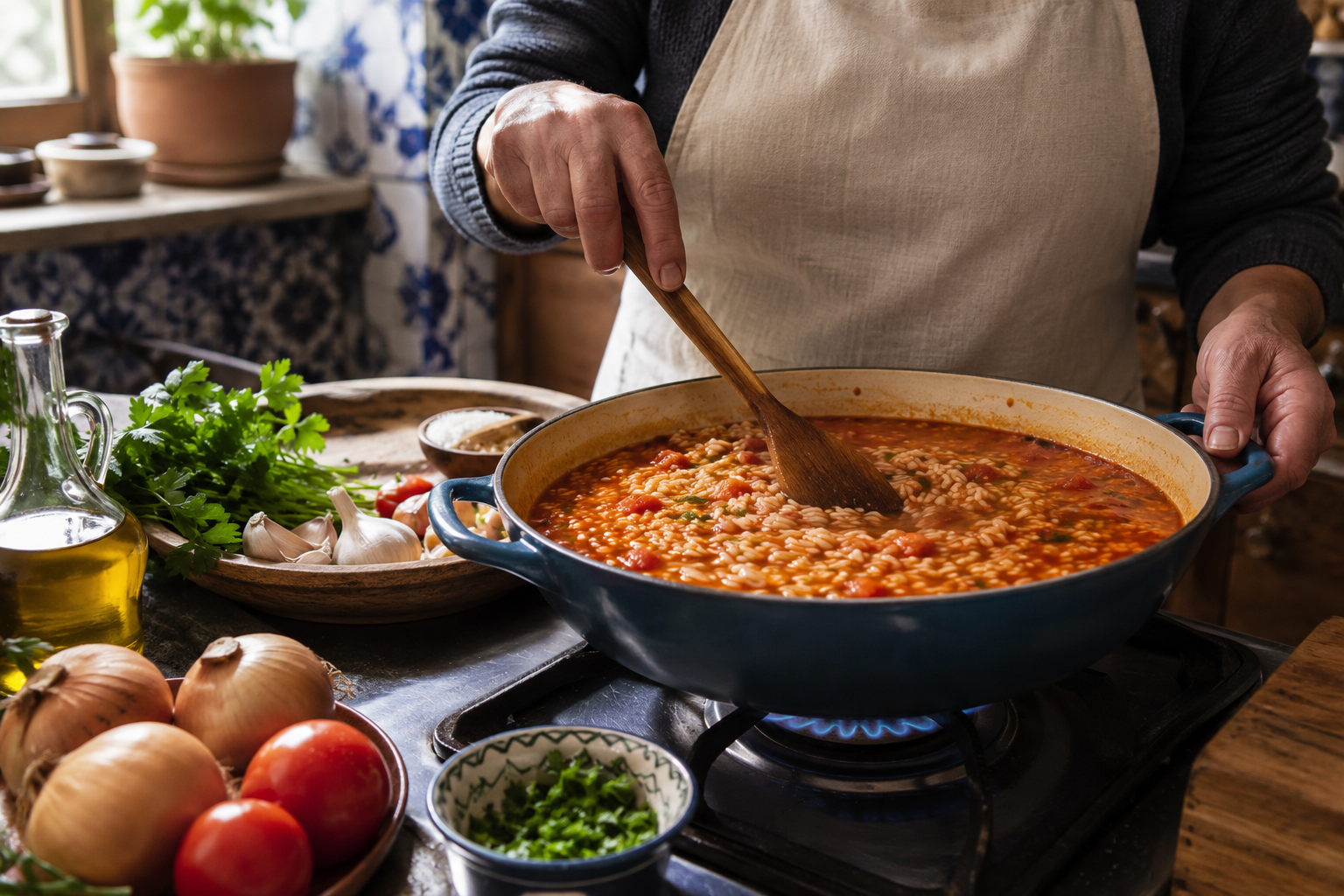
A word about the two main ingredients will help you get the best result. Traditionally, the rice is a short-grain Portuguese variety called Carolino, which behaves rather like the Italian rices used for risotto, releasing some starch to help create that lovely creamy, soupy texture, and if you can find it, it is worth using.
If Carolino is unavailable, good substitutes are easy. Any short-grain rice will work, including the Arborio or bomba rices sold for risotto and paella, since these share the starchy, absorbent quality that gives the dish its body, so there is no need to hunt far if the Portuguese variety is not on your shelf. What you want to avoid is a long-grain rice, which stays too separate and dry for this style.
The tomatoes should be ripe and flavorful. Very ripe, juicy tomatoes are ideal, since the dish is built on their flavor, and in summer fresh ripe tomatoes are wonderful, though good tinned tomatoes make an excellent substitute at any time of year, which is part of what makes this such a reliable pantry dish. A little tomato paste alongside the fresh or tinned tomatoes deepens the color and concentrates the flavor.
The Recipe
Here is the classic Portuguese tomato rice, an easy one-pot dish that comes together with minimal fuss. The key things to remember are to build a good tomato base, use plenty of liquid, and serve it promptly while it is still soupy.
Portuguese Tomato Rice (Arroz de Tomate Malandrinho) serves four as a side, about thirty minutes
Ingredients:
- Olive oil, three tablespoons
- Onion, one, finely chopped
- Garlic, three cloves, minced
- Bay leaf, one
- Tomato paste, one tablespoon
- Ripe tomatoes, about one pound, chopped, or one tin of chopped tomatoes
- Short-grain rice, one cup, Carolino if you can find it
- Hot water or stock, three to four cups
- Salt and black pepper, to taste
- Optional: a pinch of chili flakes, chopped parsley or coriander to finish
Method:
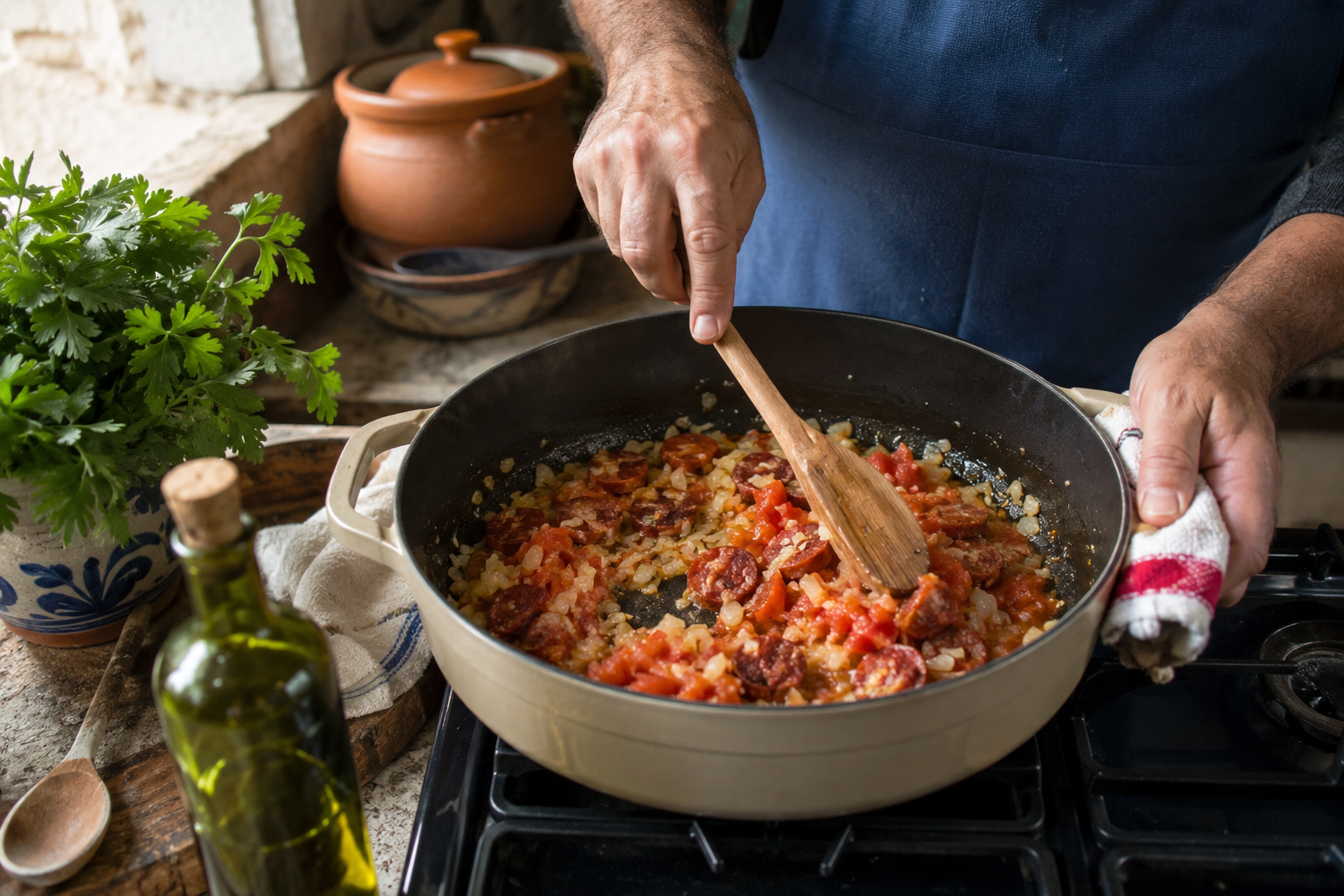
- Warm the olive oil in a pot over medium heat, add the onion, garlic, and bay leaf, and cook gently for about five minutes until soft and fragrant, stirring so the garlic does not burn.
- Stir in the tomato paste and let it cook for half a minute, then add the chopped tomatoes, salt, and pepper.
- Cook the tomatoes down for about ten minutes, stirring now and then, until they soften and break into a rich sauce.
- Add the rice and stir to coat it in the tomato base, then pour in the hot water or stock.
- Bring to a simmer, then reduce the heat to medium-low and cook for about fifteen to twenty minutes, stirring occasionally, until the rice is tender but the dish is still loose and soupy.
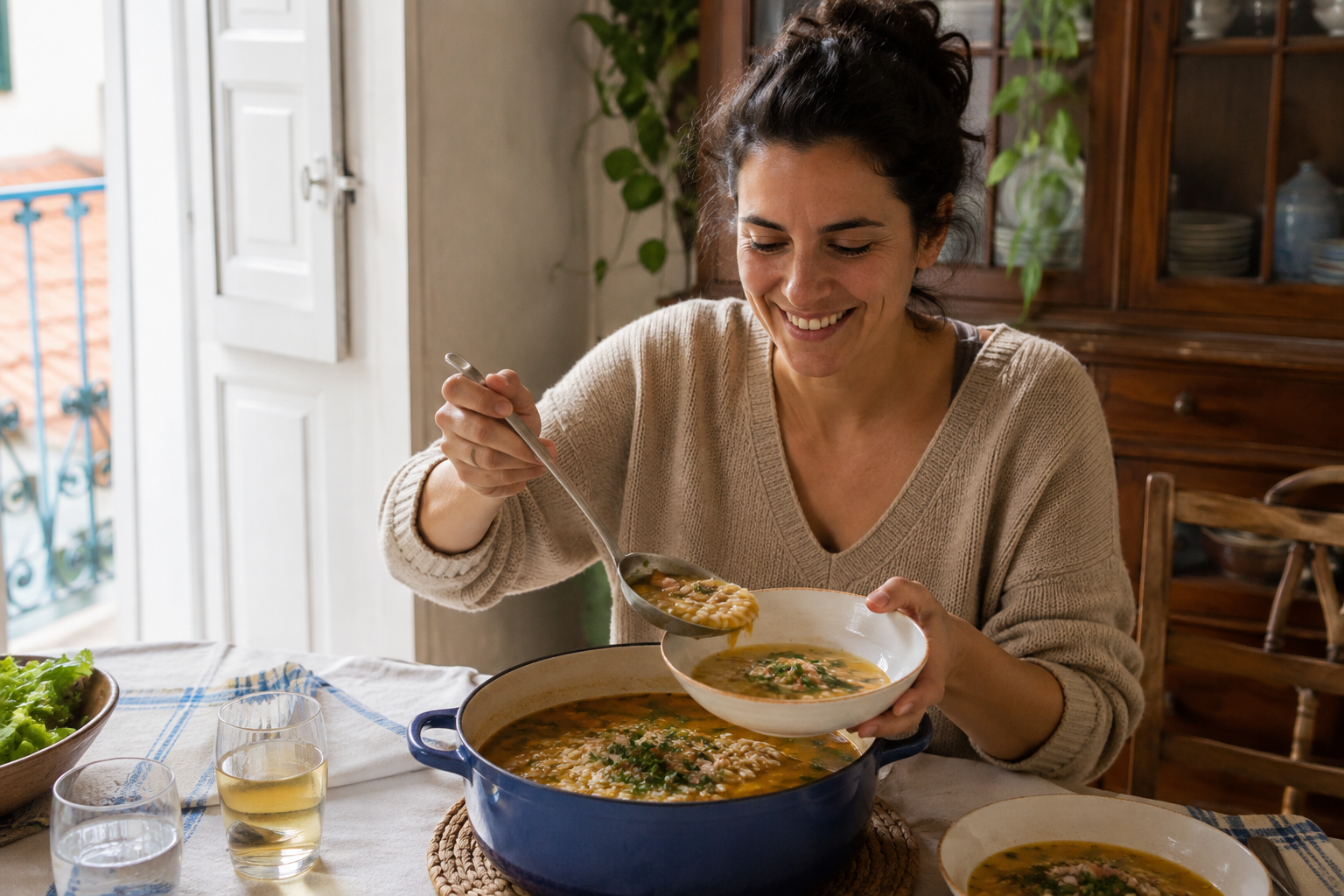
- Taste and adjust the salt, stir in the herbs if using, and serve immediately while it is still brothy.
That is the whole thing, a comforting pot of tomato rice from a handful of humble ingredients, ready in about half an hour.
The One Rule That Matters
If there is a single rule that makes or breaks Portuguese tomato rice, it is this: serve it immediately, while it is still soupy. The dish is defined by its loose, brothy texture, and rice has a way of continuing to drink up liquid as it sits, so a tomato rice that is perfectly soupy in the pot will turn thick and stodgy if it waits too long.
This is why Portuguese cooks treat timing as essential. Tomato rice is meant to be the last thing you prepare, finished just as everyone sits down to eat, so it arrives at the table at its brothy best rather than having tightened into a dense mass while it waited, which means you plan your meal so the rice is ready at the very end. It is not a dish to make in advance and hold.
A small practical consequence follows from this. If your rice does thicken more than you would like, whether while it finishes or if you reheat leftovers, you simply loosen it with a splash of hot water or stock and a gentle stir, which brings it back toward its proper soupy consistency, so the fix is easy even though the ideal is to serve it fresh. Keeping a little extra hot liquid on hand is a wise move.
Making It Your Own

While the basic recipe is wonderful as it is, Portuguese tomato rice is endlessly adaptable, and part of its charm is how easily it takes to small additions. Many cooks build extra flavor into the base by adding a chopped red or green bell pepper along with the onion, which brings a gentle sweetness, or a little chili for warmth, both of which sit comfortably within the tradition.
A splash of wine is another classic touch. Adding a little white wine, especially a Portuguese vinho verde, after the tomato base has cooked and before the liquid goes in adds a bright, aromatic depth that lifts the whole dish, so if you have an open bottle it is well worth a splash. Fresh herbs also belong here, with parsley or coriander stirred in at the end bringing freshness and color.
You can also turn the side into a meal. Because the rice is so hearty and forgiving, it readily becomes a main course with the addition of seafood, so stirring in shrimp, clams, or chunks of fish toward the end transforms it into a satisfying one-pot dinner, in the spirit of Portugal’s many seafood rice dishes. From a humble side, a whole meal is only a handful of clams away.
A Pot Worth Knowing
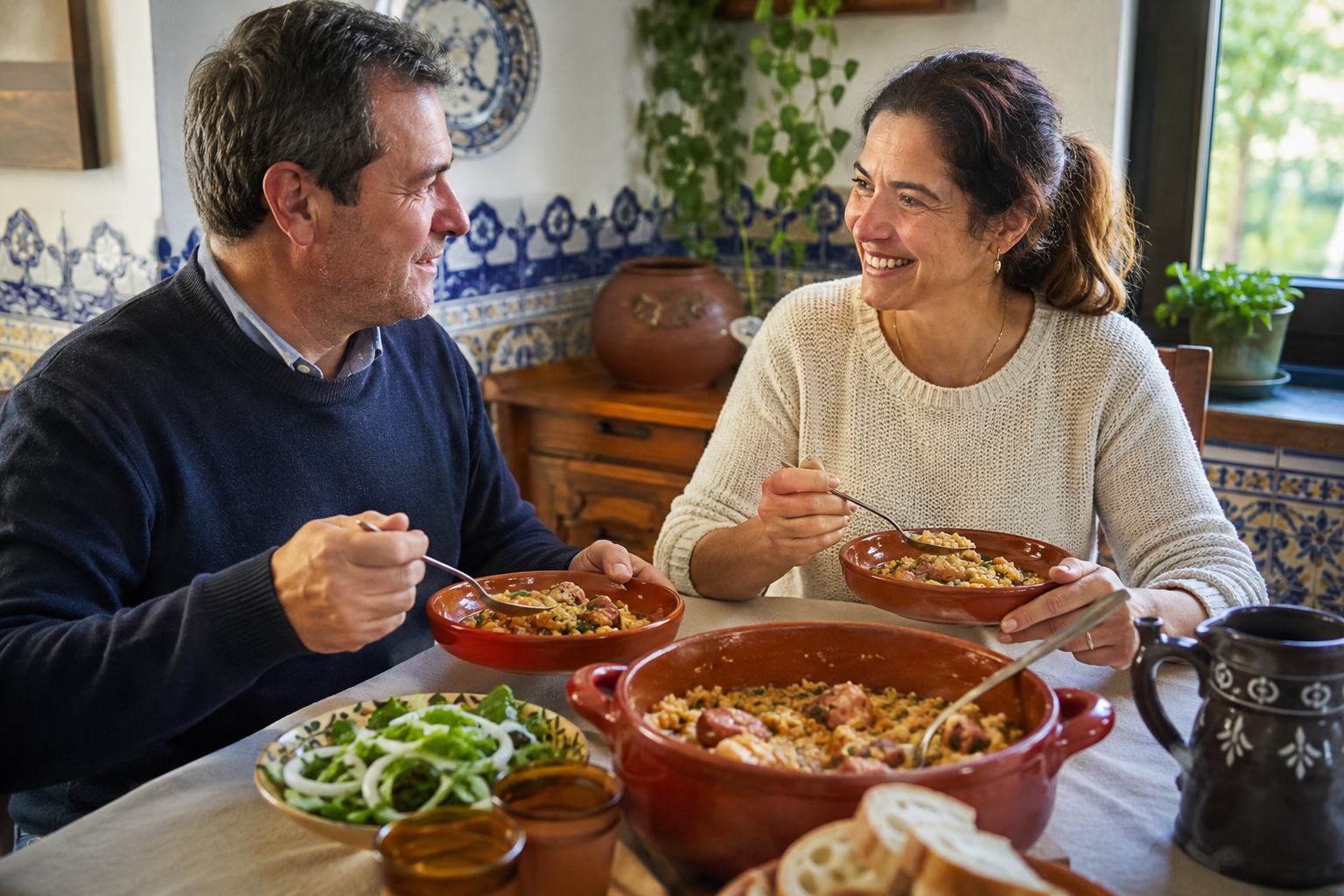
The lasting appeal of Portuguese tomato rice is that it delivers deep, homey, satisfying flavor from almost nothing, a few pantry staples and a handful of tomatoes transformed by a good base and a generous hand with the liquid into something deeply comforting. It is the essence of good home cooking, humble ingredients treated with a little care to produce a dish far greater than its parts.
What makes it worth adding to your repertoire is its rare combination of ease, economy and reward. Few dishes are this cheap and simple to make yet this consistently satisfying to eat, which is precisely why it has endured as a beloved everyday staple in Portuguese homes, and why it slots so naturally into a busy weeknight anywhere else. Once it is in your rotation, you will reach for it whenever you want comfort without effort.
So the next time you fry a piece of fish, or simply want a warm and soothing bowl of something, make a pot of Portuguese tomato rice to go with it. Build your tomato base, stir in the rice and plenty of water, let it simmer into a soupy, spoonable comfort, and bring it to the table while it is still brothy and bright. It is the kind of unassuming dish that Portuguese grandmothers have quietly perfected over generations, and one spoonful explains why it has never gone out of style. It is proof, if any were needed, that the most comforting food in the world is rarely the most complicated, and that a pot of rice and tomatoes, made with a little care, can be a small act of love.

About the Author: Ruben, co-founder of Gamintraveler.com since 2014, is a seasoned traveler from Spain who has explored over 100 countries since 2009. Known for his extensive travel adventures across South America, Europe, the US, Australia, New Zealand, Asia, and Africa, Ruben combines his passion for adventurous yet sustainable living with his love for cycling, highlighted by his remarkable 5-month bicycle journey from Spain to Norway. He currently resides in Spain, where he continues sharing his travel experiences with his partner, Rachel, and their son, Han.