
Watch an Italian cook prepare garlic and you may notice a small extra step that American recipes almost never mention. Before chopping or crushing a clove, they slice it in half lengthwise, glance at the center, and flick out a slender sprout from the middle with the tip of a knife. That little green shoot is the germ, the heart of the clove where a new garlic plant would grow, and removing it is a small habit that makes a real difference to the flavor, especially the raw and lightly cooked ones where garlic is meant to shine. American recipes skip this step almost universally, and most American cooks have never heard of it, which is why their garlic sometimes carries a harsh bitterness they cannot quite explain.
The removal of the garlic germ is one of those quiet refinements that separates careful cooking from careless, a two-second gesture that keeps a dish clean and sweet rather than sharp and bitter. It matters most in the dishes built around raw or barely cooked garlic, the aiolis, dressings and garlic breads where there is nowhere for a bitter note to hide, and once you know to do it, you will taste the difference and never go back. Understanding the germ, why it turns bitter, and when to bother removing it is a small but genuine upgrade to your cooking.
Here is what the garlic germ is, why it can make your food bitter, when it is worth removing and when it does not matter, and how to do it, along with a classic garlic-forward recipe where removing the germ truly earns its keep. This is a piece of practical kitchen knowledge rather than anything complicated, and the technique takes seconds to learn, but it is exactly the kind of small detail that quietly lifts a dish from good to excellent.
What the Garlic Germ Is
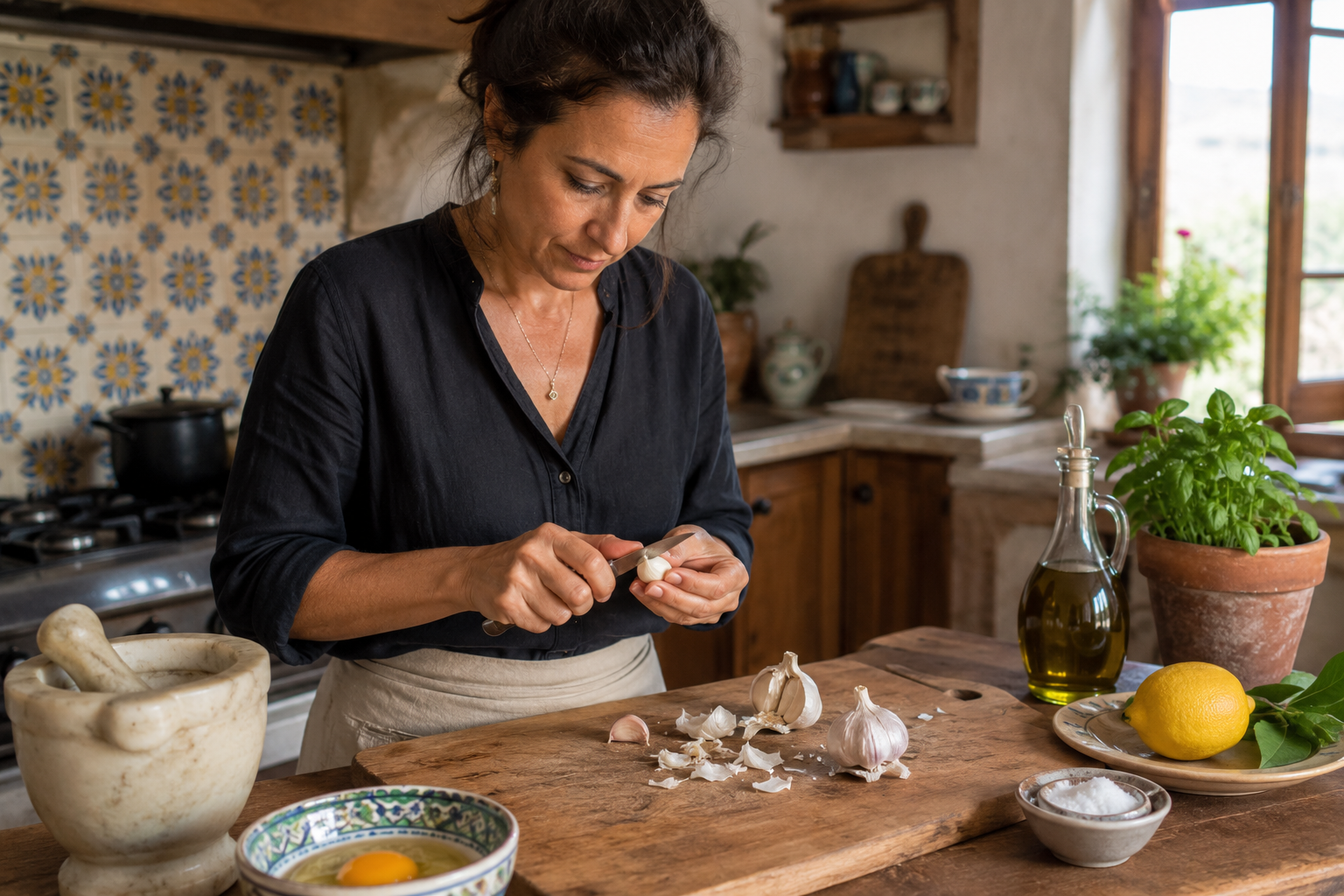
The germ is the small sprout at the very center of a garlic clove, the part from which, given the chance, a whole new garlic plant would grow. Every clove of garlic contains this germ at its core, and it begins life pale and almost invisible, tucked in the middle of the clove, before becoming more prominent and greener as the garlic ages and starts to germinate.
Its appearance changes with the garlic’s age, which is the key to spotting it. In very fresh garlic the germ is small, pale and easy to miss, barely distinguishable from the rest of the clove, but as garlic sits in storage and begins to sprout, the germ grows into a visible green or pale-green shoot running through the center of the clove, the telltale sign that the garlic is no longer young. That green sprout is the germ made obvious.
This is why a green shoot in your garlic is really a sign of age. When you cut a clove and see a distinct green germ down the middle, it means the garlic has been stored a while and has begun the process of growing into a new plant, which is perfectly safe to eat but signals that this is older garlic whose flavor has started to change. The germ is both the seed of the next generation and the marker of the clove’s maturity. Knowing this changes how you look at a clove. A pale, barely-there germ tells you the garlic is fresh and sweet and needs little attention, while a fat green shoot running the length of the clove tells you the bulb has been sitting around, drying out and turning sharper, and that a moment’s attention will improve whatever you are cooking. The germ, in other words, is a small built-in freshness gauge, there in every clove for anyone who thinks to look.
Why It Turns Your Food Bitter

The reason careful cooks remove the germ is that it carries a sharp, bitter, sometimes almost acrid quality that can taint a dish, quite distinct from the clean pungency of good garlic. As garlic ages and the germ develops, that central sprout takes on a strong, bitter, harsh flavor, and when you chop or crush the whole clove without removing it, that bitterness goes straight into your food.
The effect is most noticeable as a kind of unpleasant aftertaste. Where good garlic gives a clean, warm, savory pungency, the germ adds a bitter edge and sometimes a harsh, lingering burn at the finish, the sort of sharp note that makes a garlicky dish taste slightly off without your quite knowing why. Many cooks have blamed the garlic itself for this harshness when the real culprit was the little green germ running through it. This misattribution is part of why the germ is so worth knowing about. A cook who has never heard of it experiences only the result, a garlic bread or a dressing that came out unexpectedly bitter, and has no way to trace the fault to its source, so they either resign themselves to inconsistent results or wrongly conclude they used too much garlic. Learning about the germ hands them the missing piece, turning a mysterious, recurring disappointment into a problem they can simply prevent.
There is a subtlety worth knowing, which is that the aging clove itself changes too. Some careful testing suggests that as garlic sprouts, the whole clove, not only the germ, loses moisture and sweetness and grows sharper, so the harshness of old garlic is partly the germ and partly the tired clove around it. But the practical upshot is the same, that removing the germ from older, sprouting garlic reliably produces a cleaner, sweeter result, which is why the habit persists among cooks who care about flavor.
When It Matters Most

The germ matters most in dishes where the garlic is raw or barely cooked, because that is where its bitterness has nowhere to hide and comes through most clearly. In a raw preparation, the germ’s harsh, bitter bite is fully exposed on the palate, so any dish built around uncooked or lightly cooked garlic is one where removing the germ makes a real and tastable difference.
This points to exactly the dishes where the step earns its keep. Garlic-forward preparations like aioli, raw dressings and dips, garlic bread, and lightly cooked garlic sauces are precisely the places where an unremoved germ will announce itself with a bitter burn, so these are the dishes where careful cooks always take the germ out. The more raw and the more garlic-centered the dish, the more the germ matters.
In long-cooked dishes the case is weaker, which is worth admitting. When garlic is cooked long and slow, simmered into a sauce or roasted soft, the bitterness of the germ mellows and largely disappears into the dish, so in a slow braise or a long-simmered sauce, removing the germ makes far less difference and is often not worth the trouble. The rule of thumb is simple, that the rawer and more prominent the garlic, the more removing the germ matters, and the more it is cooked down, the less it does.
When You Can Skip It
Just as useful as knowing when to remove the germ is knowing when you need not bother, because the step is not always necessary and treating it as an absolute rule wastes effort. With very fresh, young garlic, the germ is small, pale and mild, not yet developed into the bitter green sprout of older cloves, so with truly fresh garlic there is often little or no germ worth removing and little bitterness to worry about.
The nature of the dish decides the rest. In long-cooked applications, where the germ’s bitterness melts away in the heat, and in dishes using only a small amount of garlic amid many other flavors, the germ makes so little difference that removing it is optional at best, a refinement you can take or leave. There is no need to degerm eighty cloves destined for a long-simmered stew, since the payoff simply is not there.
It is also worth noting that not every great cook agrees the germ must always go. Some respected cooks leave the germ in, particularly with fresher garlic, considering the fuss unnecessary, which is a fair position, so this is a technique to apply with judgment rather than as an iron law. The sensible approach is to remove the germ when it is prominent and the dish is raw or garlic-forward, and to not worry about it when the garlic is fresh or the dish is long-cooked.
How to Remove It
Removing the germ is truly a two-second job once you know the motion, and it requires nothing more than a small knife. The method is to cut the clove in half lengthwise, from the pointed tip to the root end, which splits the germ down its length and exposes it running through the center of the two halves, ready to be lifted out.
From there it lifts out easily. With the clove halved, you use the tip of a paring knife or even a fingernail to gently pry or scoop out the green germ from each half, following it from tip to root and discarding it, after which you chop, slice or crush the cleaned clove exactly as you normally would. The whole thing takes moments and quickly becomes an automatic part of prepping garlic.
A little care keeps it clean. It helps to work with a sharp paring knife and good light, and to lift it out gently rather than tearing at the clove, since a clean removal leaves no bitter residue behind. Done a few times, the motion becomes second nature, a small flick of the knife that you stop even noticing, and your garlic-forward dishes are the better for it.
A Recipe Where It Truly Matters
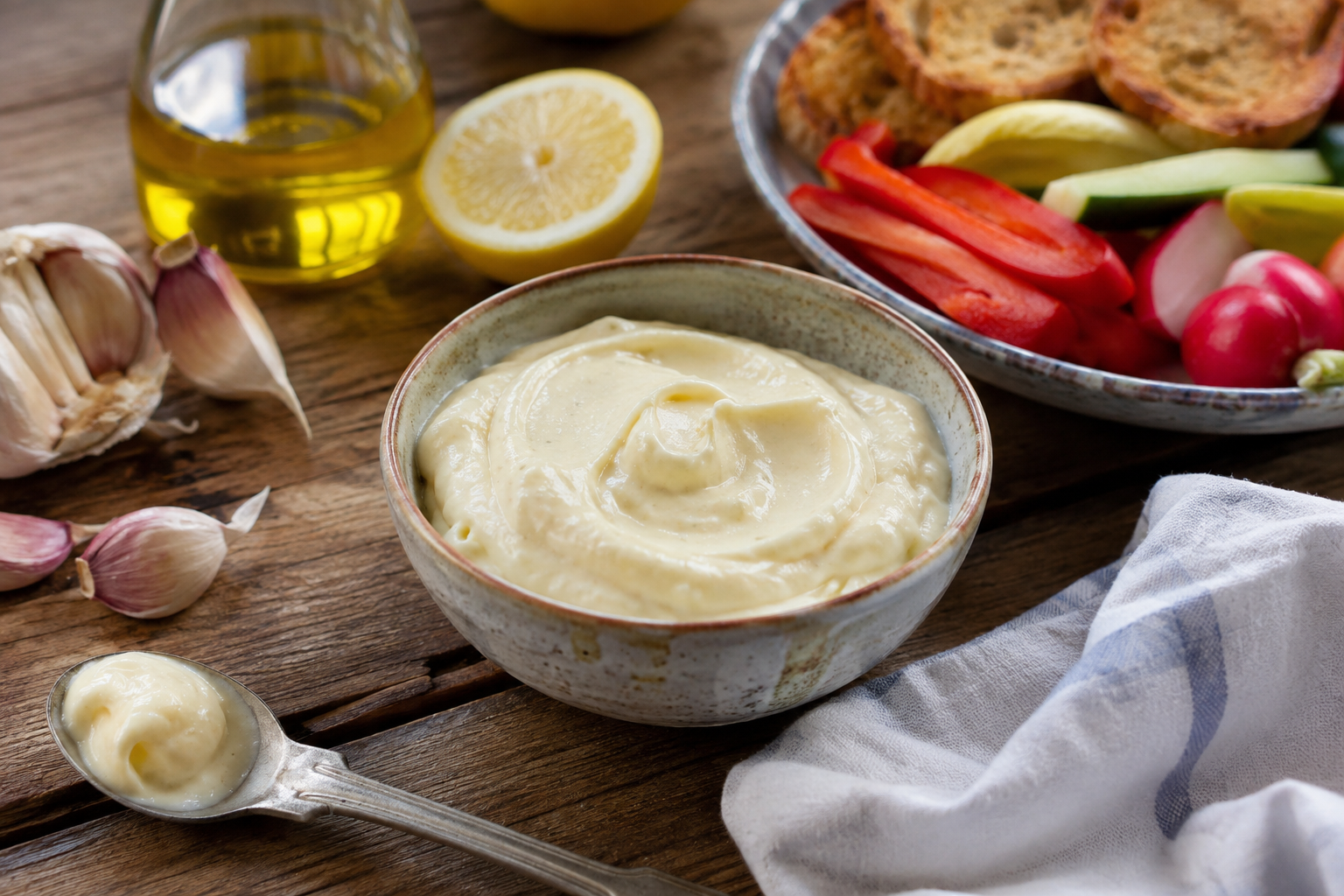
To taste exactly why this matters, there is no better dish than a classic garlic aioli, the glossy garlic-and-olive-oil sauce of the Mediterranean, because it is built almost entirely around raw garlic and leaves the germ nowhere to hide. Made with degermed garlic, aioli is punchy and clean and garlicky in the best way, while made with the germ left in, it carries exactly that harsh, bitter burn at the finish that spoils the whole thing.
This is the dish that converts the skeptic. Anyone who doubts whether the germ really matters need only taste two batches of aioli side by side, one made with the germ removed and one with it left in, to feel the difference immediately, the clean version lively and delicious, the other sharp and disagreeable. It is the clearest possible demonstration of why the small step is worth taking. This is exactly the test that has changed the minds of lifelong skeptics, cooks who assumed the germ was an old wives’ tale until they tasted the two versions back to back. The difference in a raw preparation like aioli is not subtle or imagined but immediate and obvious, the harsh burn of the germ version unmistakable once you know to look for it. One side-by-side taste tends to make a convert for life.
Here, then, is a simple garlic aioli, the perfect showcase for degermed garlic, wonderful with grilled vegetables, seafood, potatoes, or simply as a dip for good bread.
Classic Garlic Aioli serves 4 to 6
Ingredients:
- 3 to 4 cloves garlic, halved lengthwise and germ removed
- 1 large egg yolk
- 1 teaspoon lemon juice, plus more to taste
- 1 pinch of salt
- 175ml mild extra virgin olive oil
- 1 teaspoon warm water, if needed
Method:
- Halve each garlic clove lengthwise and lift out the green germ from the center, then chop the cleaned garlic finely.
- Using the flat of a knife and a little salt, crush and smear the chopped garlic into a smooth paste.
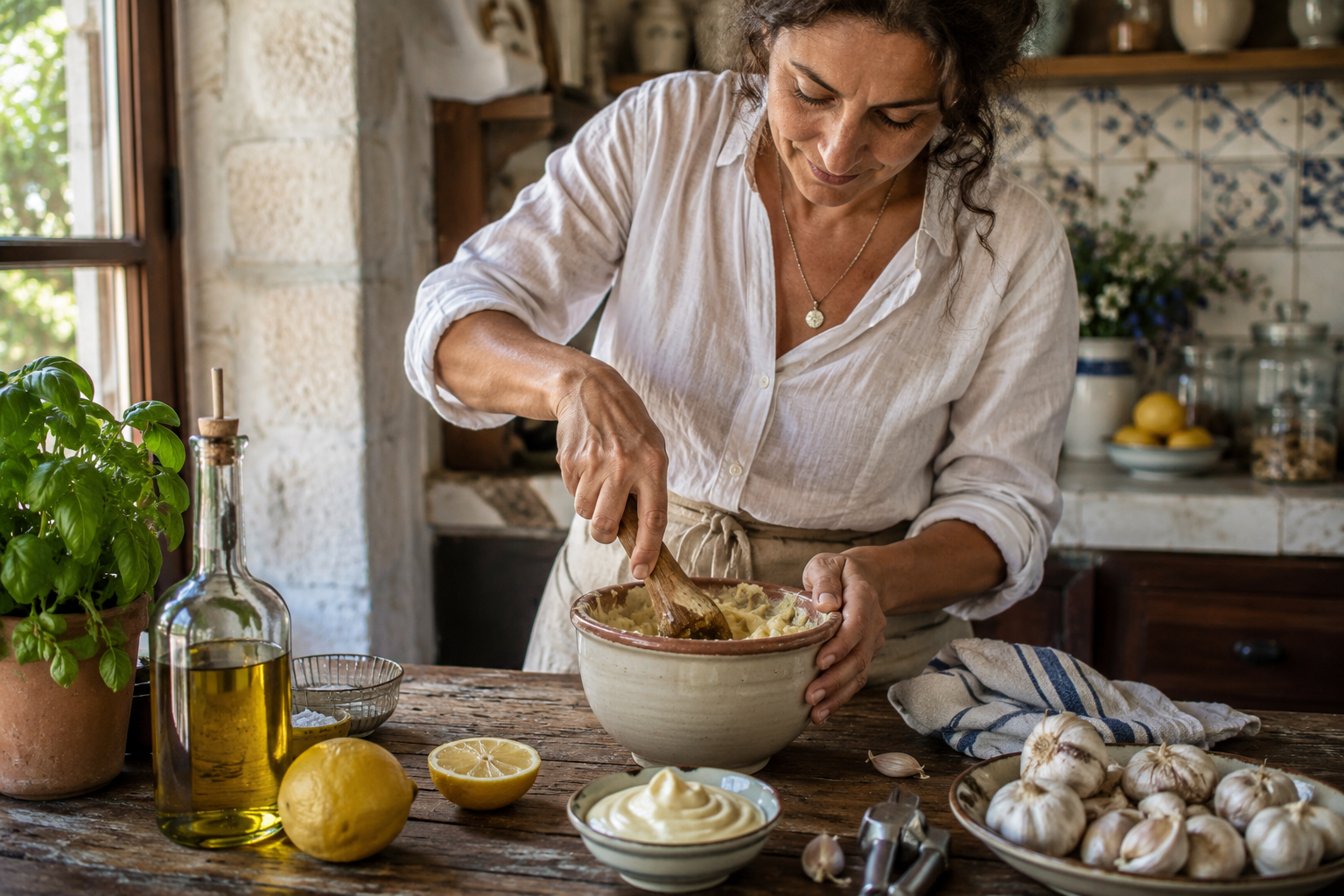
- Put the garlic paste, egg yolk, lemon juice and a pinch of salt into a bowl and whisk together well.
- Begin adding the olive oil a few drops at a time, whisking constantly, until the mixture starts to thicken and emulsify.
- Once it has begun to thicken, pour the remaining oil in a slow, thin stream, whisking all the while, until you have a thick, glossy sauce.
- If the aioli becomes too thick, loosen it with a little warm water, and adjust the salt and lemon to taste.
- Serve at room temperature, and keep any leftovers chilled.
The Small Step Worth Taking
The lasting lesson of the garlic germ is that great cooking often lives in small, almost invisible details, the little steps that careful cooks take without fanfare and that quietly separate a clean, delicious dish from a subtly disappointing one. Removing the germ costs two seconds and no skill, yet it spares your garlic-forward dishes a harsh bitterness that many cooks never even identify, blaming the garlic or the recipe instead.
What makes the habit worth adopting is how easy it is relative to how much it can improve a dish. Once you know to split a clove, glance at the center, and flick out any prominent green germ before using garlic in a raw or lightly cooked dish, you close off one of the common sources of off-putting bitterness for good, and you do it with a gesture so quick it barely registers. It is exactly the kind of tiny technique that marks the difference between cooking by rote and cooking with care.
So the next time you reach for a clove of garlic, especially for an aioli, a dressing, a garlic bread, or anything where the garlic speaks loudly, take a moment to halve it and check the center. If a green germ is running through it, lift it out and discard it, and cook with the clean, sweet garlic that remains. It is a small thing the Italians and other careful cooks have long known, a step American recipes forget to mention, and once it becomes a habit, your garlic will taste the better for it every single time.

About the Author: Ruben, co-founder of Gamintraveler.com since 2014, is a seasoned traveler from Spain who has explored over 100 countries since 2009. Known for his extensive travel adventures across South America, Europe, the US, Australia, New Zealand, Asia, and Africa, Ruben combines his passion for adventurous yet sustainable living with his love for cycling, highlighted by his remarkable 5-month bicycle journey from Spain to Norway. He currently resides in Spain, where he continues sharing his travel experiences with his partner, Rachel, and their son, Han.