
Walk into any Spanish bar, from a tiled old taberna in Seville to a chrome-and-glass place in Madrid, and a version of the same short list is waiting behind the counter. The tapas that define Spanish bar culture are not endless or mysterious. There is a core of about nine dishes that turn up almost everywhere, and once you can make them, you can lay out a whole Spanish counter in your own kitchen for a fraction of what a night of tapas costs out.
None of these is hard. That is the quiet genius of Spanish bar food, which was built to be cheap, fast and made in quantity, from a handful of good ingredients treated simply. A few can be prepared entirely in advance, a few take minutes to throw together fresh, and together they make a spread that feels generous without ever being complicated. The other secret is that a tapas spread is about variety rather than quantity, since a few bites of many things beats a big plate of one. Make five or six of these instead of all nine if you are short on time, choosing a mix of hot and cold, and the table will still feel abundant.
Here are the nine tapas every Spanish bar serves, each with a proper recipe, so you can make the whole counter at home.
Patatas Bravas
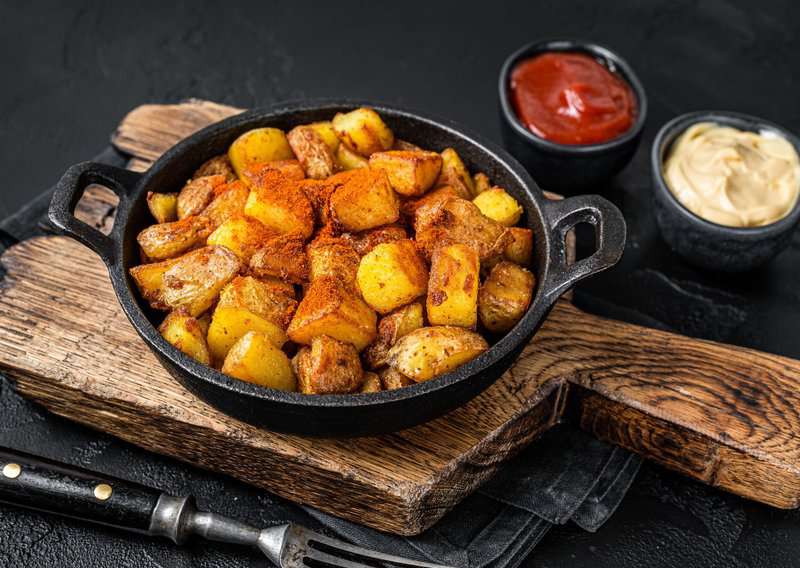
If one dish is the flag of the Spanish bar, it is patatas bravas, chunks of fried potato under a spicy, smoky red sauce. The sauce is the whole argument. A real brava is a proper cooked sauce, not a shortcut of ketchup and hot sauce, and it is often served with a cross-hatch of garlicky alioli alongside. Made well, this is the dish everyone reaches for first.
Ingredients:
- 4 large potatoes, peeled and cut into rough cubes
- Oil, for frying
- 2 tbsp olive oil
- 1 tbsp flour
- 1 tsp sweet smoked pimentón
- Half a tsp hot pimentón or cayenne
- 250ml chicken or vegetable stock
- Salt
- For a quick alioli: 1 garlic clove, 1 egg yolk, 100ml olive oil, a squeeze of lemon
Method:
- Fry or roast the potato cubes until crisp outside and fluffy within, giving them room in the pan, then drain and salt them.
- For the sauce, warm the olive oil, stir in the flour and both kinds of pimentón, and cook for a minute.
- Whisk in the stock and simmer to a smooth, rust-red sauce, then season.
- For the alioli, blend the garlic and egg yolk while trickling in the oil until thick, then add the lemon and a pinch of salt.
- Pile the hot potatoes on a plate, spoon over the brava sauce, and add the alioli alongside or crosshatched on top.
The secret is crisp potatoes and a proper sauce. Fry the potatoes twice, or roast them hard, for real crunch, and make the brava sauce a day ahead, since it only deepens as it sits.
Tortilla Española
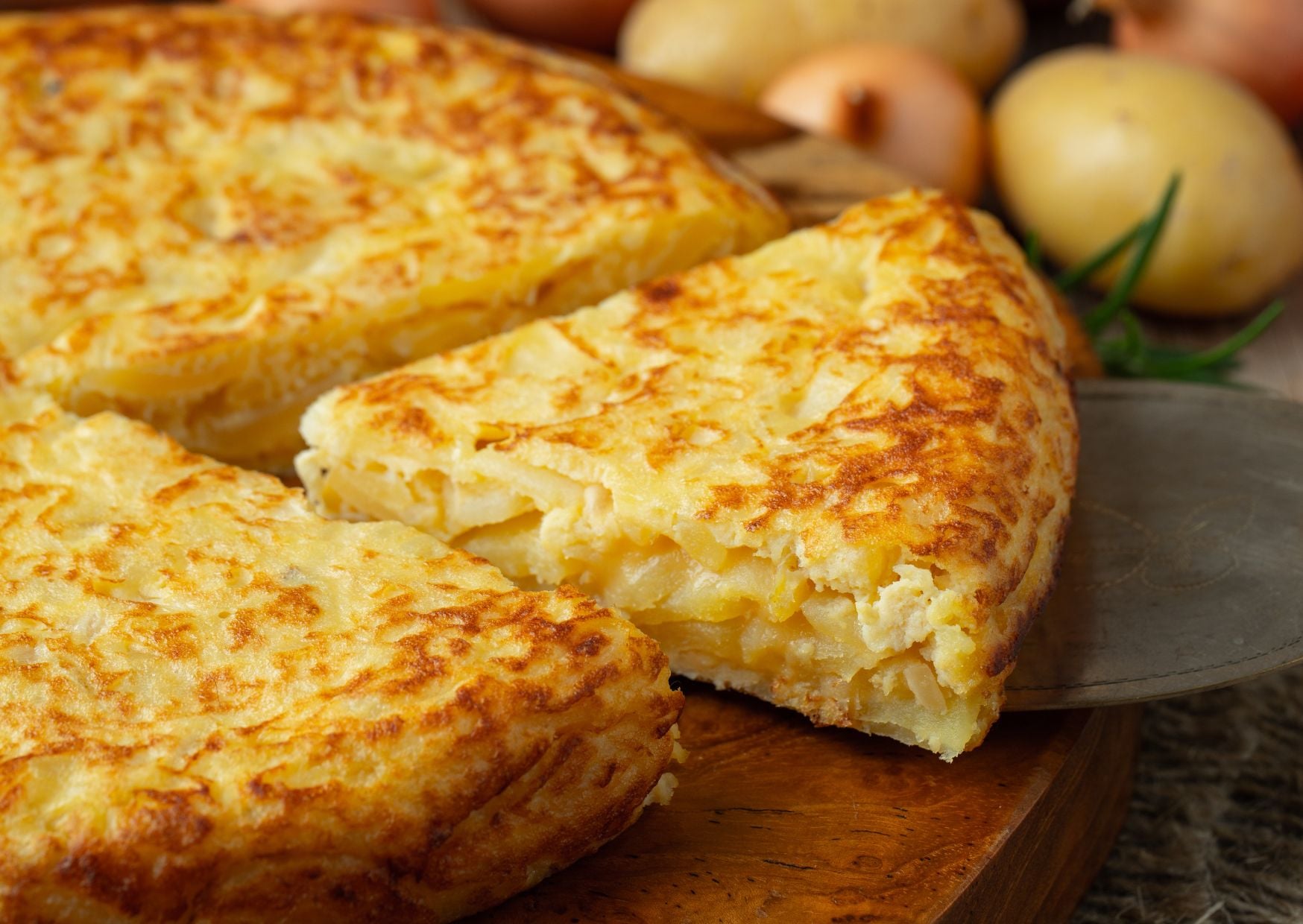
The tortilla española, the thick Spanish potato omelette, is the most beloved and most argued-about dish in the country. The great debate is whether it should contain onion, and both camps hold their ground with feeling. The other point of honor is the interior, which the best tortillas keep jugosa, juicy and barely set rather than dry through. Served warm or at room temperature in wedges, it is the perfect make-ahead tapa.
Ingredients:
- 500g potatoes, peeled and thinly sliced
- 1 onion, thinly sliced (optional)
- 6 eggs
- 200ml olive oil
- Salt
Method:
- Warm the oil in a pan and cook the potatoes, and the onion if using, gently until soft but not browned, about 20 minutes.
- Drain the potatoes well, reserving the oil, and season them.
- Beat the eggs in a bowl, stir in the warm potatoes, and let the mixture rest for a few minutes.
- Heat a little oil in a nonstick pan, pour in the mixture, and cook over medium heat until the base is set but the top is still loose.
- Slide it onto a plate, invert the pan over the plate, and flip the tortilla back into the pan to cook the second side, keeping the center just soft.
- Serve warm or at room temperature, cut into wedges or small squares.
The flip is the one tricky moment, and confidence is everything. Use a plate wider than the pan, commit to the turn in a single motion, and treat a slightly underdone center as the goal rather than a fault.
Croquetas

Croquetas are Spain’s answer to comfort food, small breaded cylinders of thick béchamel that are crisp outside and molten within. The classic filling is shredded jamón, and the mark of a great one is a filling so soft it almost flows. The béchamel must chill until firm before you shape it, but the whole thing can be made in stages, and you can even freeze them raw and fry from frozen.
Ingredients:
- 50g butter
- 80g flour, plus extra for coating
- 500ml warm milk
- 100g jamón serrano, finely chopped
- A grating of nutmeg, and salt
- 2 eggs, beaten
- Breadcrumbs, for coating
- Oil, for deep-frying
Method:
- Melt the butter, stir in the flour, and cook for two minutes to a smooth paste.
- Whisk in the warm milk a little at a time until you have a thick, smooth béchamel, then stir in the jamón, the nutmeg and salt.
- Spread the mixture into a shallow dish, cover the surface, and chill until firm, ideally several hours or overnight.
- Roll the firm mixture into small logs, then coat each one in flour, then beaten egg, then breadcrumbs.
- Deep-fry in hot oil at 180°C, or 350°F, until deep golden, and drain on paper.
The colder and firmer the béchamel, the easier the shaping, so do not rush the chilling. Shape and freeze a big batch raw, and you can fry a few straight from the freezer whenever guests appear.
Gambas al Ajillo
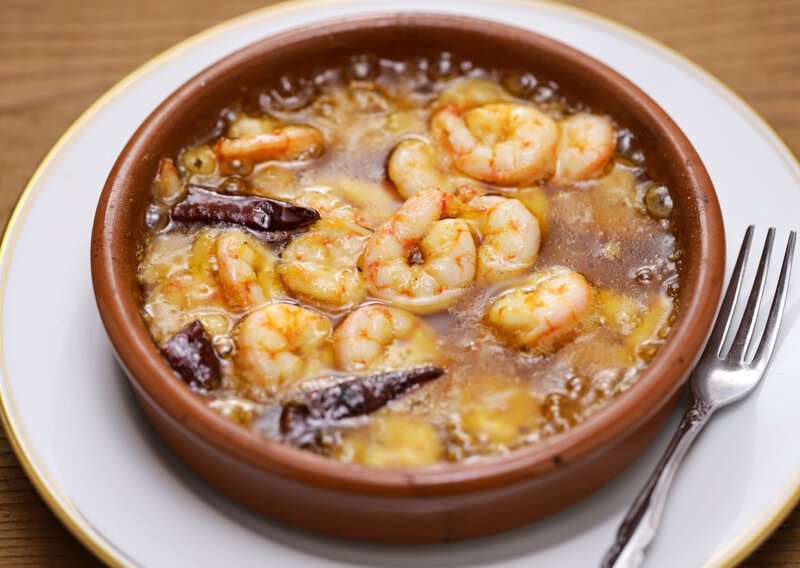
For something fast and dramatic, nothing beats gambas al ajillo, prawns sizzled in garlic and olive oil. The dish arrives still bubbling in its little dish, and half its pleasure is the golden, garlicky oil left behind, which everyone mops up with bread. It takes five minutes and looks far more impressive than the effort. The keys are to slice the garlic rather than crush it, and not to overcook the prawns.
Ingredients:
- 300g peeled raw prawns
- 6 garlic cloves, thinly sliced
- 100ml olive oil
- 1 dried chilli, or a pinch of chilli flakes
- Chopped parsley, and salt
Method:
- Warm the oil with the sliced garlic and chilli over medium heat until the garlic is fragrant and pale gold, not browned.
- Turn up the heat, add the prawns and a pinch of salt, and cook for a minute or two, just until pink.
- Scatter with parsley and serve at once, sizzling hot, with plenty of bread for the oil.
Everything here happens fast, so have the bread on the table before you start. Sliced garlic flavors the oil without burning the way crushed garlic does, and the prawns need only a minute, since they keep cooking in the hot oil.
Pan Con Tomate
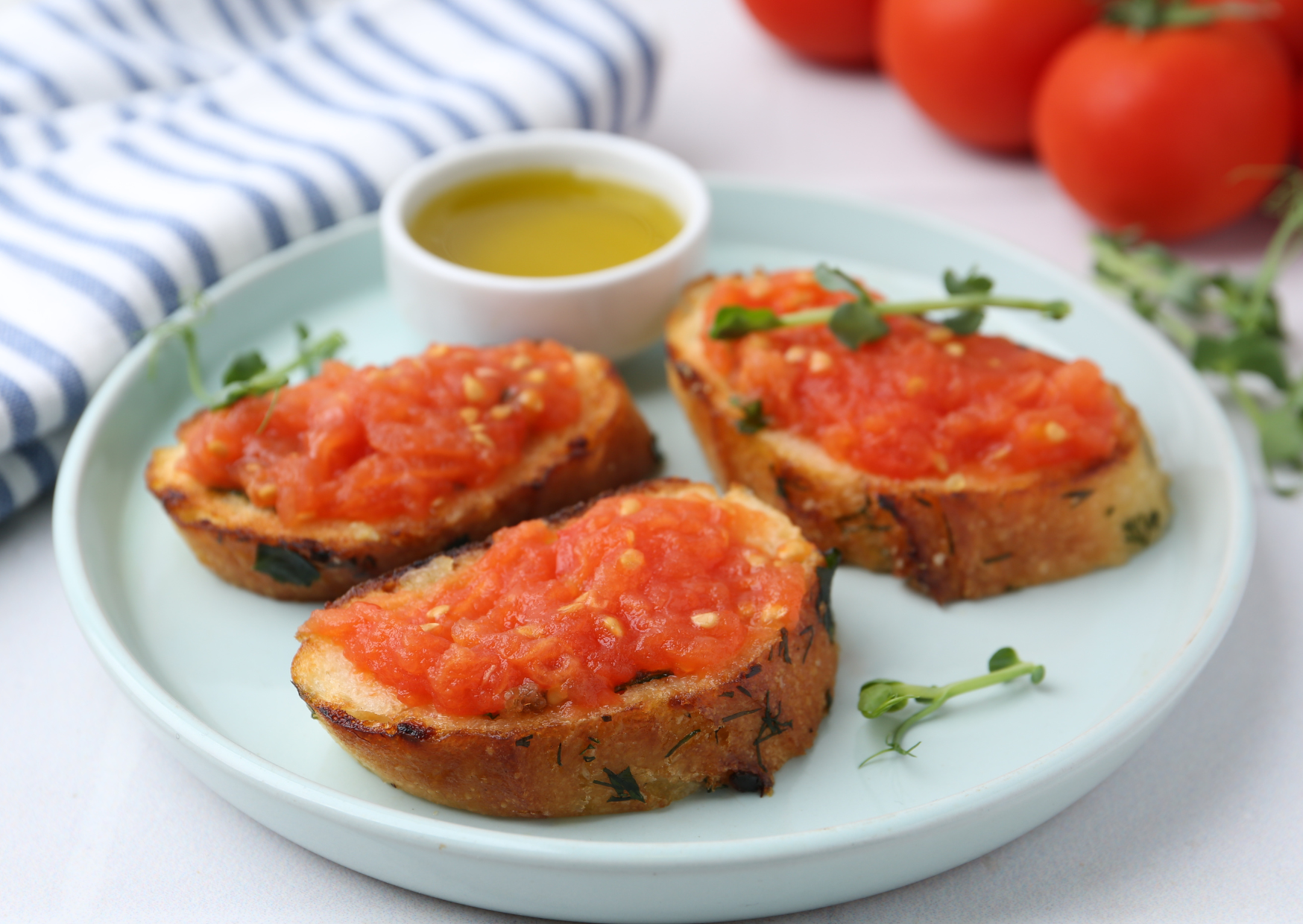
The simplest tapa of all is pan con tomate, or pa amb tomàquet in its Catalan homeland, and it proves how little good Spanish food needs. Like all such minimal dishes it lives or dies on its ingredients, so use good rustic bread, a genuinely ripe tomato and a fine olive oil. It is also the ideal base for a counter, holding up under jamón, anchovies or cheese.
Ingredients:
- 4 slices rustic bread
- 1 garlic clove, halved
- 2 ripe tomatoes, halved
- Extra virgin olive oil
- Salt
Method:
- Toast or grill the bread until crisp.
- Rub the cut face of the garlic across each slice, then rub with the cut face of a tomato so the pulp soaks into the bread.
- Drizzle with olive oil, sprinkle with salt, and serve straight away.
This one is all about the tomato. Use one so ripe it is almost too soft to slice, grate it if you prefer a smoother spread, and never keep good tomatoes in the fridge, which flattens their flavor.
Jamón

No Spanish counter is complete without jamón, the cured ham that is one of the glories of the country’s food. It is the one item on this list that needs no cooking at all, sliced thin and served as it is. The everyday choice is serrano, cured for about a year, while ibérico, from the native black Iberian pig, is richer and deeper, and its top bellota grade comes from pigs fattened on acorns.
How to choose and serve:
- Buy the best you can afford, serrano for every day or ibérico for a treat, pre-sliced from a good source if you have no ham stand and long knife.
- Bring it out of the fridge and let it come to room temperature before serving, so the fat softens and the flavor opens up.
- Lay it out wafer-thin on a plate, never piled, and serve with bread, crunchy picos, or a little pan con tomate alongside.
Serve it and little else. A good jamón wants only bread and perhaps a glass of dry sherry or vermouth beside it, and it is best sliced just before serving, since it dries and dulls once cut.
Pimientos de Padrón

Pimientos de padrón bring an element of roulette to the table, since most of the little green peppers are mild and sweet but the occasional one is fiercely hot, with no telling which until you bite. Fried whole until blistered and showered with salt, they are the easiest cooked tapa on the list, a couple of minutes from start to finish.
Ingredients:
- 200g Padrón peppers
- 2 tbsp olive oil
- Flaky salt
Method:
- Heat the oil in a pan until very hot.
- Add the peppers and fry, tossing now and then, until blistered and slightly collapsed, a couple of minutes.
- Tip onto a plate, shower generously with flaky salt, and eat at once.
Get the oil properly hot before the peppers go in, so they blister rather than steam. The Galician gamble is part of the fun, so warn your guests that roughly one pepper in ten will bite back.
Boquerones en Vinagre

For a cool, sharp counterpoint to all the fried and rich dishes, Spain turns to boquerones en vinagre, fresh anchovies marinated in vinegar and garlic. The little fillets turn white and firm in the vinegar, then are dressed in oil, bright and clean and utterly different from the salt-cured brown anchovies of a pizza. Because they are cured rather than cooked, freeze the fish first to be safe.
Ingredients:
- 250g fresh anchovies, filleted
- 200ml white wine vinegar
- 2 garlic cloves, thinly sliced
- Chopped parsley
- Olive oil, and salt
Method:
- Freeze the anchovy fillets for two days first, then thaw them, which makes them safe to eat raw.
- Lay the fillets in a shallow dish, cover with the vinegar and a little salt, and refrigerate until they turn white and firm, a few hours.
- Drain off the vinegar, then dress the fillets with a good pour of olive oil, the sliced garlic and chopped parsley.
- Chill until you are ready to serve.
The freezing step is not optional when you cure raw fish at home, so never skip it. Once made, the boquerones keep for several days in the fridge under their oil, and they only improve after a day.
Ensaladilla Rusa
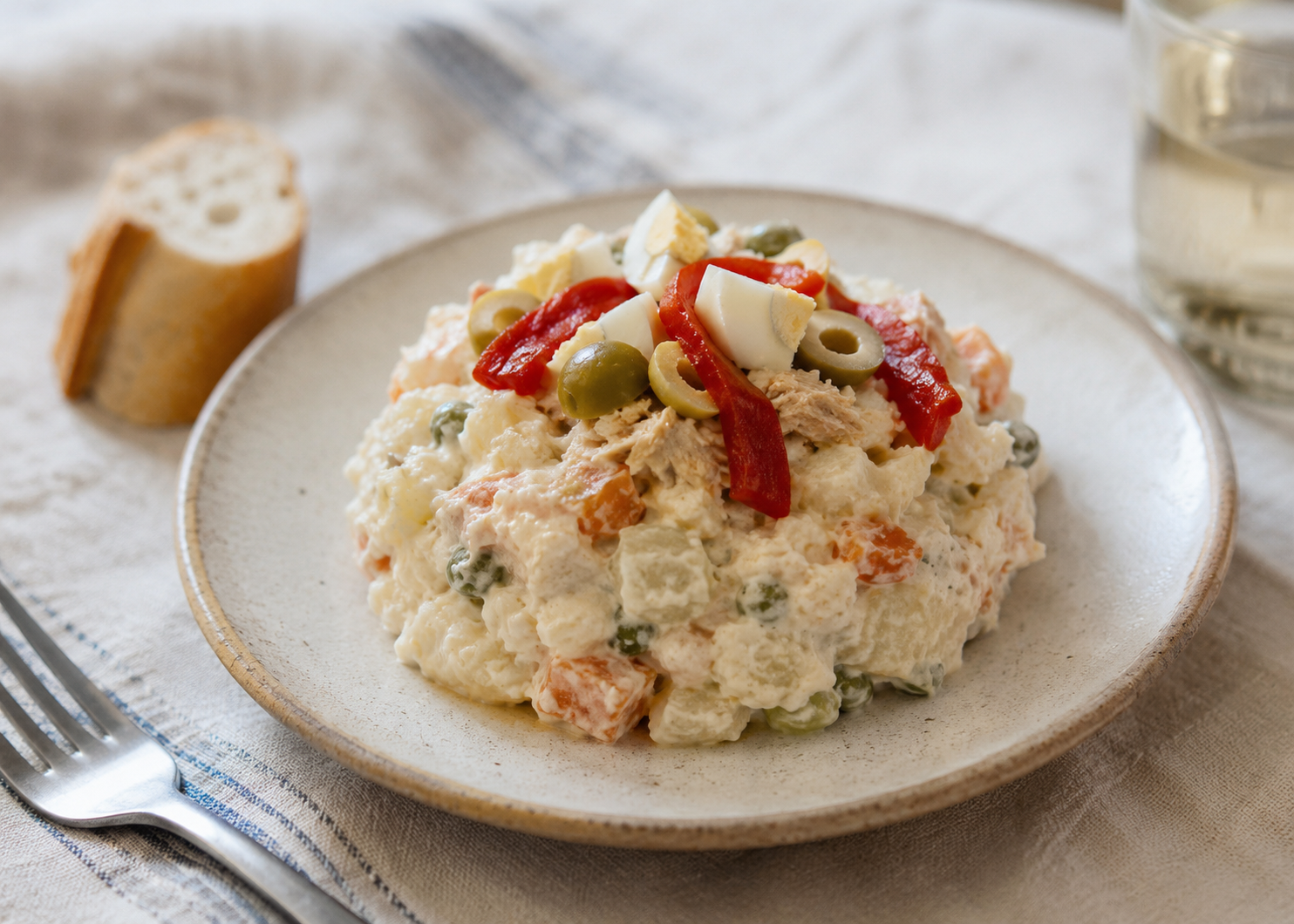
The last of the nine is ensaladilla rusa, Spain’s version of a cold potato salad and a fixture of every bar counter. Despite the name, which nods to a Russian original, it is thoroughly Spanish now, and it is loved for being cheap, filling and made entirely in advance. Served cold with bread or breadsticks for scooping, it is refreshing in the heat and comforting at any time.
Ingredients:
- 500g potatoes, boiled and diced small
- 2 carrots, boiled and diced small
- 100g cooked peas
- 150g tinned tuna, flaked
- 150g mayonnaise
- 2 hard-boiled eggs (optional)
- Salt, and roasted red pepper to top (optional)
Method:
- Boil the potatoes and carrots until tender, then dice them small and let them cool.
- Fold them together with the peas, tuna and mayonnaise, and season with salt.
- Spread into a serving dish and top with chopped egg or strips of roasted red pepper.
- Chill well and serve cold, with bread or breadsticks alongside.
Dice everything small and even, which is what separates a smooth ensaladilla from a lumpy one, and make it well ahead, since it needs time in the fridge for the flavors to settle before serving.
Between these nine you have the whole tapas counter within reach, and the beauty of it is how well they fit together into one spread. Make the boquerones and the ensaladilla the day before, have the jamón and the pan con tomate ready to assemble, and cook the bravas, gambas and pimientos fresh as people arrive, and the timing stays entirely under control. Add a few cold beers and a bottle of wine, and your kitchen becomes the best tapas bar in town, at a fraction of the price and with the door never closing. A word on drinks and quantity. Tapas are meant to be grazed, so a little of each dish goes a long way, and half a portion of everything here easily feeds four people passing plates around. Pour cold beer, a crisp white, or a jug of tinto de verano, and let people help themselves slowly across the evening, which is exactly how a real tapas bar works. Serve each plate at its own right temperature, the fried ones hot and the cold ones straight from the fridge, and you have not just a meal but a whole evening.

About the Author: Ruben, co-founder of Gamintraveler.com since 2014, is a seasoned traveler from Spain who has explored over 100 countries since 2009. Known for his extensive travel adventures across South America, Europe, the US, Australia, New Zealand, Asia, and Africa, Ruben combines his passion for adventurous yet sustainable living with his love for cycling, highlighted by his remarkable 5-month bicycle journey from Spain to Norway. He currently resides in Spain, where he continues sharing his travel experiences with his partner, Rachel, and their son, Han.