
Walk into a trattoria in Rome, or Florence, or any small town in between, and ask for garlic bread. You will get a polite, puzzled look. The soft, buttery, garlic-drenched loaf that arrives alongside spaghetti in American restaurants does not exist in Italy, has never existed in Italy, and would strike most Italians as a slightly baffling thing to do to good bread. It is one of the most beloved “Italian” foods in America, and it is not Italian at all.
What Italy makes instead is older and simpler, and in its way more honest about what it is. It is grilled bread, rubbed with raw garlic, dressed with excellent olive oil and a little salt, and it goes by the name bruschetta, or in Tuscany, fettunta. There is no butter, no baking, no blanket of melted cheese. There is bread, fire, garlic, and oil, and the whole point is to taste each one on its own.
Neither version is wrong. They are two different dishes with a common ancestor, separated by an ocean and a hundred years. Here is what Italians really make, how the American loaf came to be, and how to make both of them properly at home.
What Italy Makes Instead
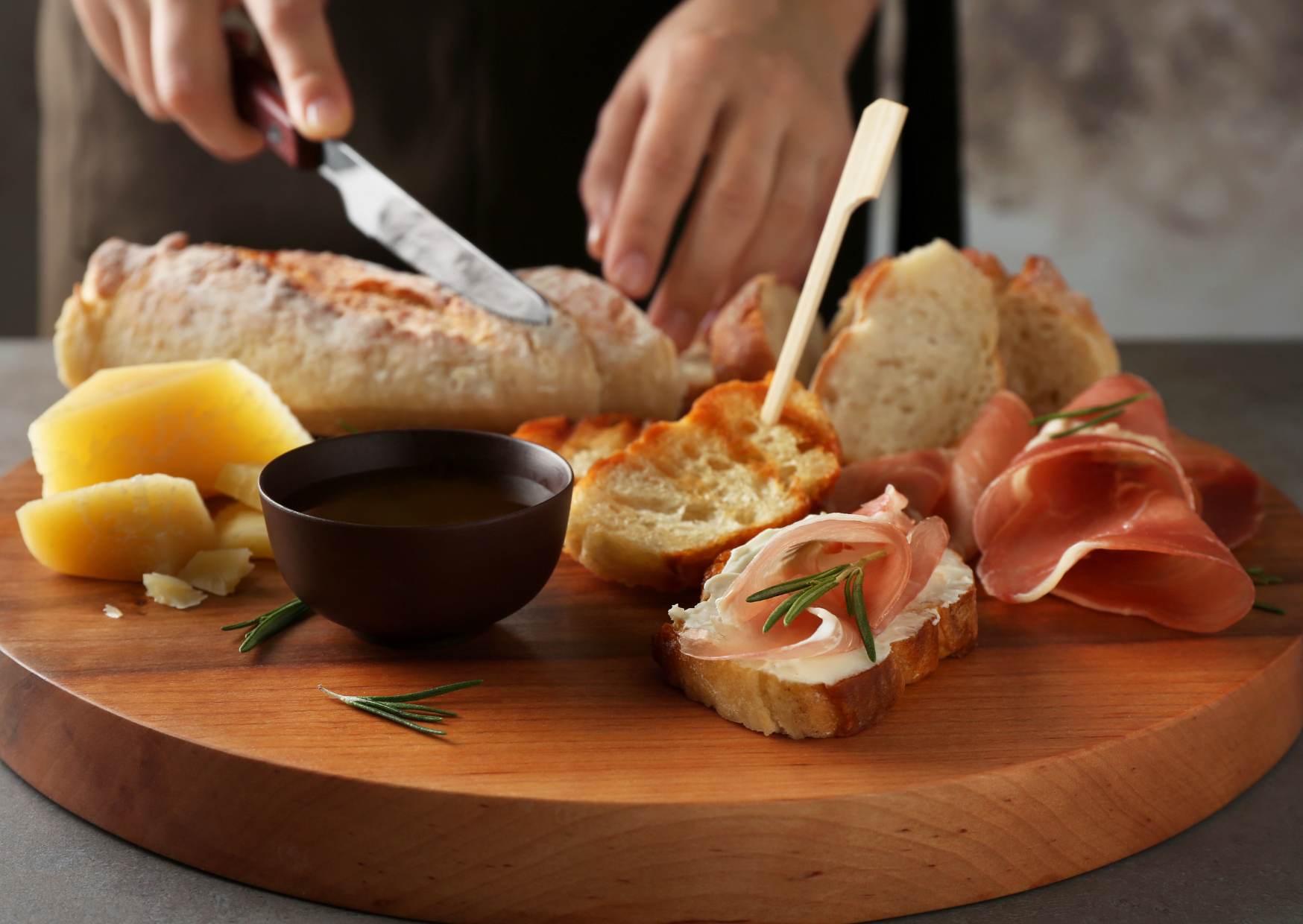
The Italian original is bruschetta, and the name tells you how it is made. It comes from the Roman word bruscare, meaning to roast or toast over coals, and that is the entire technique. A thick slice of good rustic bread is grilled until the surface is crisp and lightly charred, then a raw clove of garlic is rubbed across the hot, rough face so the bread itself grates the garlic into it. A generous pour of extra virgin olive oil follows, then a pinch of salt, and that is bruschetta in its true form.
The tomato topping most Americans picture as bruschetta came much later and is only one variation among dozens. The base dish, the one made in Italian kitchens for centuries, is simply the grilled bread with garlic and oil. In Tuscany it carries its own name, fettunta, meaning “oiled slice,” and it is traditionally made at the olive harvest to show off the fierce, peppery flavor of the just-pressed new oil. The bread is a delivery system for the oil, and the oil is the star of the plate.
That is the philosophical heart of the Italian version. Its key elements stay raw: raw garlic, raw oil, with the only heat applied to the bread itself. Nothing is baked together into a soft, unified whole. Each component stays distinct and sharp, and a good bruschetta lives or dies on the quality of three things, the bread, the garlic, and above all the oil.
This is why bruschetta belongs to summer and autumn in Italy, tied to ripe tomatoes and fresh oil, rather than being a year-round side. It is less a recipe than a way of eating very good bread with very good oil, brightened with a little garlic, and it asks almost nothing of the cook beyond fine ingredients and a hot grill.
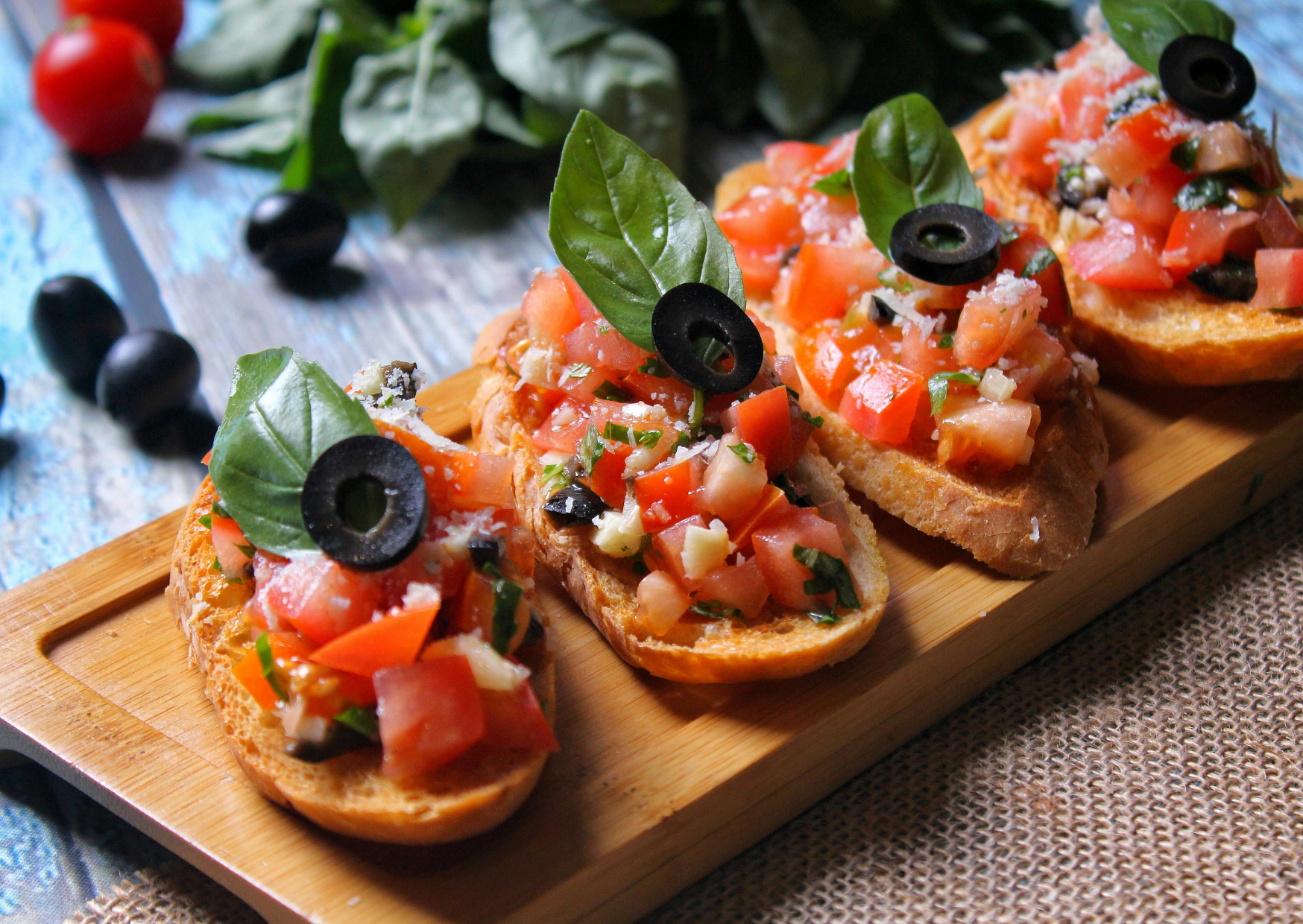
From that plain base the regional toppings multiply. Tuscany piles it with white cannellini beans dressed in oil, or with sautéed cavolo nero, the dark winter kale. The south spreads it with fiery ‘nduja, the soft spreadable sausage of Calabria. And the famous tomato version carries its own proper name, bruschetta al pomodoro, a summer plate of chopped ripe tomato with basil and oil heaped on the garlic-rubbed bread. Every one of them starts from the same grilled, garlic-rubbed slice.
How Garlic Bread Became American
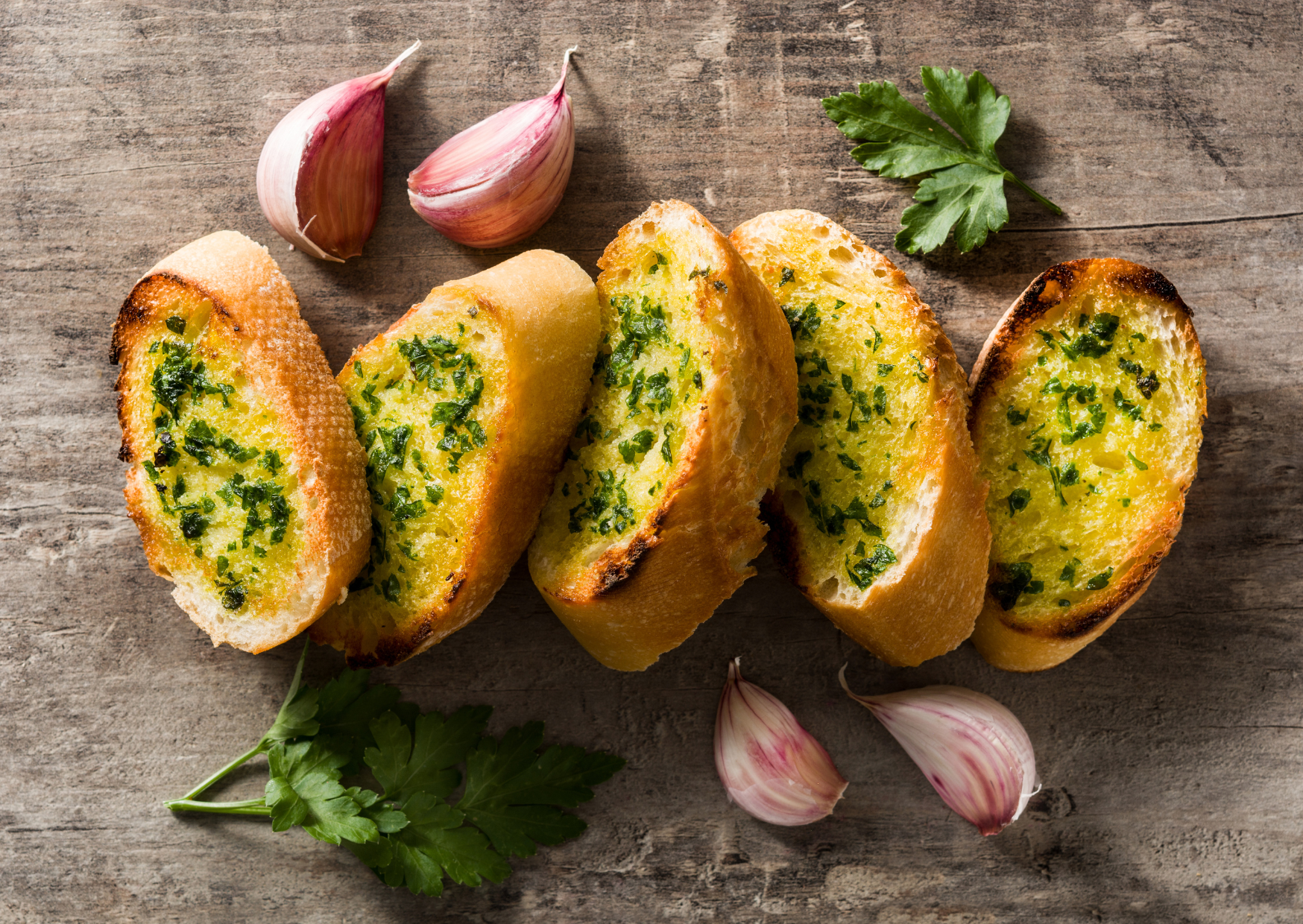
If the Italian version is grilled bread with raw garlic and oil, where did the soft, buttery, baked American loaf come from? The answer is the Italian-American kitchen of the early twentieth century, where immigrants reshaped the foods of home around the ingredients and tastes of a new country.
Italians arriving in America found a place where butter was cheap and plentiful and good olive oil was expensive and scarce. They found soft supermarket loaves and long sandwich breads rather than the dense country bread of home. And they met an American palate that liked things rich and soft. Bruschetta, bent to those conditions, slowly became something else. Garlic was mashed into butter rather than rubbed on raw, spread thickly on a split loaf, and baked or broiled soft and golden rather than grilled crisp.
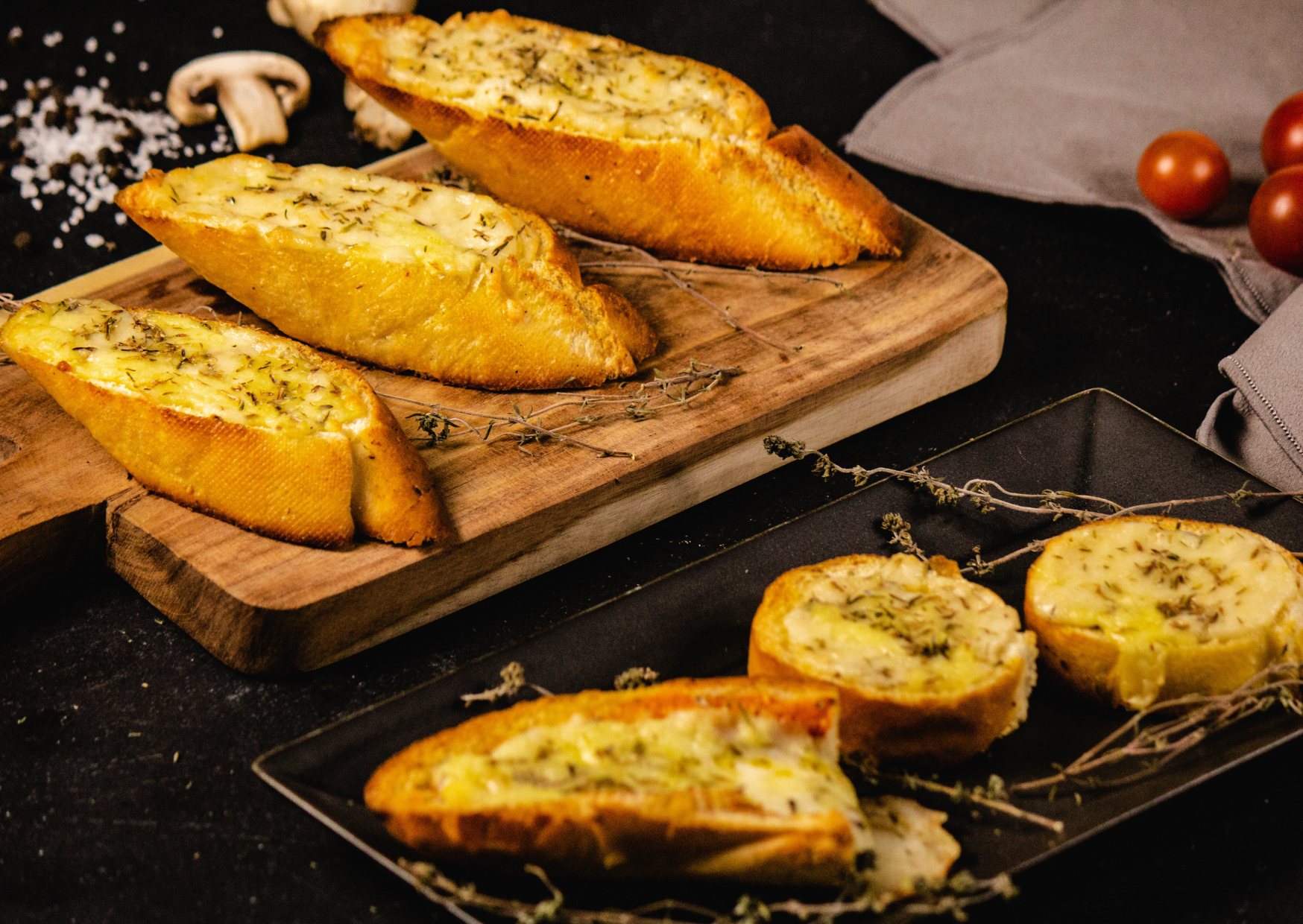
The change was complete by the time garlic bread became a fixture of American-Italian restaurants, arriving in a basket before the meal, often crowned with melted mozzarella or a dusting of parmesan. It is a real and delicious dish. It is simply an American one, born in America and made the way Americans like it, and it bears the same relationship to bruschetta that a New York bagel bears to its Old World ancestor. Recognizable kin, but its own thing entirely.
None of this makes garlic bread lesser. It makes it a distinct dish with its own history, worth cooking on its own terms rather than as a poor copy of something it was never trying to be. The only mistake is believing it is what Italians eat, because it never has been.
The name itself is an American coinage. There is no tidy Italian word that translates to “garlic bread,” because the thing it names was assembled on the far side of the Atlantic, and the closest Italian relatives, bruschetta and fettunta and pane all’aglio, all describe the grilled-and-rubbed original rather than the buttered-and-baked descendant that carries the English name.
The Real Bruschetta, Step by Step
Authentic bruschetta is almost insultingly simple, which is exactly why the ingredients have to be good. You want a loaf of proper rustic bread, a sourdough or country loaf with a real crust and an open, chewy crumb, cut into slices about a finger thick. You want a few cloves of garlic, peeled, your best extra virgin olive oil, the good bottle rather than the cooking one, and flaky salt.
The method turns on heat and order. Grill the bread over hot coals or a ridged pan, or toast it under a broiler, until both sides are crisp and marked with dark char in places. The char is not a flaw. It is the whole flavor of the dish, the roasted note that gives bruschetta its name. While the bread is still hot, rub a raw clove of garlic firmly across the top. The rough, toasted surface works like a grater, and the clove melts away into it, leaving garlic aroma and oil without a harsh raw bite.
Then drizzle, rather than brush, a real pour of your good oil across each slice, letting it sink into the warm bread. Finish with a pinch of flaky salt and eat it at once, while it is warm and fragrant. That is the classic. From there you can add ripe tomatoes chopped and tossed with good oil and torn basil, but taste the plain version first, because that is the one an Italian would recognize.
The single rule that matters most is the olive oil. Because it is raw and central, a mediocre oil makes a mediocre bruschetta no matter how good everything else is, while a superb, peppery oil turns a plain slice of grilled bread into something you remember. This is the dish to open the special bottle for. One small secret helps along the way: bread a day old grills better than fresh, since a slightly dry crumb crisps rather than steams and stands up to the oil without slumping into a soggy mess.
Bruschetta al Pomodoro
Makes 6 slices
Ingredients:
- 6 slices rustic sourdough or country bread, cut a finger thick
- 2 to 3 garlic cloves, peeled
- 4 tbsp of your best extra virgin olive oil
- Flaky salt, to taste
- For the tomato topping: 2 ripe tomatoes, chopped, plus a few torn basil leaves and 1 tbsp olive oil
Method:
- Heat a grill, a ridged pan or the broiler until very hot.
- Grill the bread on both sides until crisp and marked with dark char in places.
- While each slice is still hot, rub a raw garlic clove firmly across the top so it melts into the toasted surface.
- Drizzle a generous pour of olive oil over each slice and let it sink into the warm bread.
- Finish with a pinch of flaky salt and eat at once, while warm and fragrant.
- For the tomato version, toss the chopped tomatoes with the oil, the basil and a pinch of salt, then spoon them over the oiled bread just before serving.
The American Garlic Bread, Done Well
The American version is a different craft, and done well it is a wonderful thing in its own right. Here the aim is richness and a deep roasted-garlic warmth, and butter rather than raw oil is the medium. You want a soft Italian or French loaf split lengthwise, a good amount of softened butter, several cloves of garlic, fresh parsley, and, if you like, grated parmesan or a handful of mozzarella.
Start with the garlic butter, which is where the flavor lives. Soften the butter to room temperature and work in the garlic, either finely minced for a sharper punch or gently cooked in a little butter first for a mellower, sweeter note. Stir in chopped parsley, a pinch of salt, and the cheese if you are using it. Spread this thickly and evenly across the cut faces of the bread, right to the edges, so no bite is left plain.
Bake it in an oven at around 375°F, or 190°C, until the butter has melted into the crumb and the edges turn golden and crisp, usually ten to fifteen minutes. For a browner, bubblier top, or if you have added mozzarella, finish it for a minute or two under the broiler, watching closely, because it goes from golden to burnt in seconds. Cut it into thick pieces and serve it hot, while the butter is still glossy and the smell fills the room.
The small tricks separate the good from the average. Cook the garlic gently first if you want it sweet rather than harsh, spread the butter all the way to the crust so the edges crisp rather than dry, and pour on more than feels sensible, because this dish punishes restraint and is meant to be rich, so half-measures only leave it dry.
The dish has spawned a whole family of its own on the American side. Cheese-stuffed loaves and garlic knots twisted from pizza dough are both descendants of that first buttered slice, as is the frozen version in its foil sleeve, each one a step further from Italy and, on the right night, none the worse for it.
American Garlic Bread
Serves 4 to 6
Ingredients:
- 1 soft Italian or French loaf, split lengthwise
- 115g (1 stick) butter, softened
- 4 garlic cloves, minced
- 2 tbsp fresh parsley, chopped
- Half a tsp salt
- 50g grated parmesan or mozzarella (optional)
Method:
- Heat the oven to 190°C, or 375°F.
- For a sweeter, mellower flavor, gently cook the minced garlic in a little of the butter first. For a sharper bite, leave it raw.
- Beat the softened butter together with the garlic, the parsley, the salt and the cheese if using.
- Spread the garlic butter thickly and evenly across the cut faces of the bread, right to the edges.
- Bake for 10 to 15 minutes, until the butter has melted into the crumb and the edges are golden and crisp.
- For a browner, bubblier top, finish under a hot broiler for a minute or two, watching closely so it does not burn.
- Cut into thick pieces and serve hot, while the butter is still glossy.
Where People Go Wrong
Both dishes fail in predictable ways, and knowing the traps is half the battle. With bruschetta, the commonest error is cheap oil. People lavish care on the bread and the char and then finish with a flavorless supermarket oil, which is the one ingredient that cannot be hidden in a dish this bare. The second error is toasting the bread too gently, so it browns without ever charring, and loses the smoky note that is the entire reason the dish exists.
Raw garlic causes the other bruschetta problem. Rubbing a whole clove hard and long over the bread leaves a fierce, lingering burn that overwhelms the oil, when the point is a whisper of garlic behind it. A light pass is plenty, and a single clove should dress several slices rather than one.
Garlic bread has its own failure modes, and burnt garlic leads the list. Minced raw garlic scattered on top and then blasted under a broiler scorches before the bread is ready, turning bitter and acrid, which is why cooking it gently into the butter first is the safer path. The other classic mistake is timidity, an underbuttered loaf baked dry, when the whole appeal is a rich, glistening crumb. Garlic bread punishes restraint, and bruschetta punishes excess, which is a neat summary of the difference between them.
There is also the question of how much garlic is too much, and the two dishes answer it in opposite directions. Bruschetta wants a hint, a single clove ghosting across the surface and no more. Garlic bread can take real quantity, several cloves worked into the butter, because the cooking tames the raw bite that would wreck a bruschetta. Judging the amount by the wrong dish is exactly how a bruschetta turns acrid or a garlic bread turns bland.
The Difference Is the Point
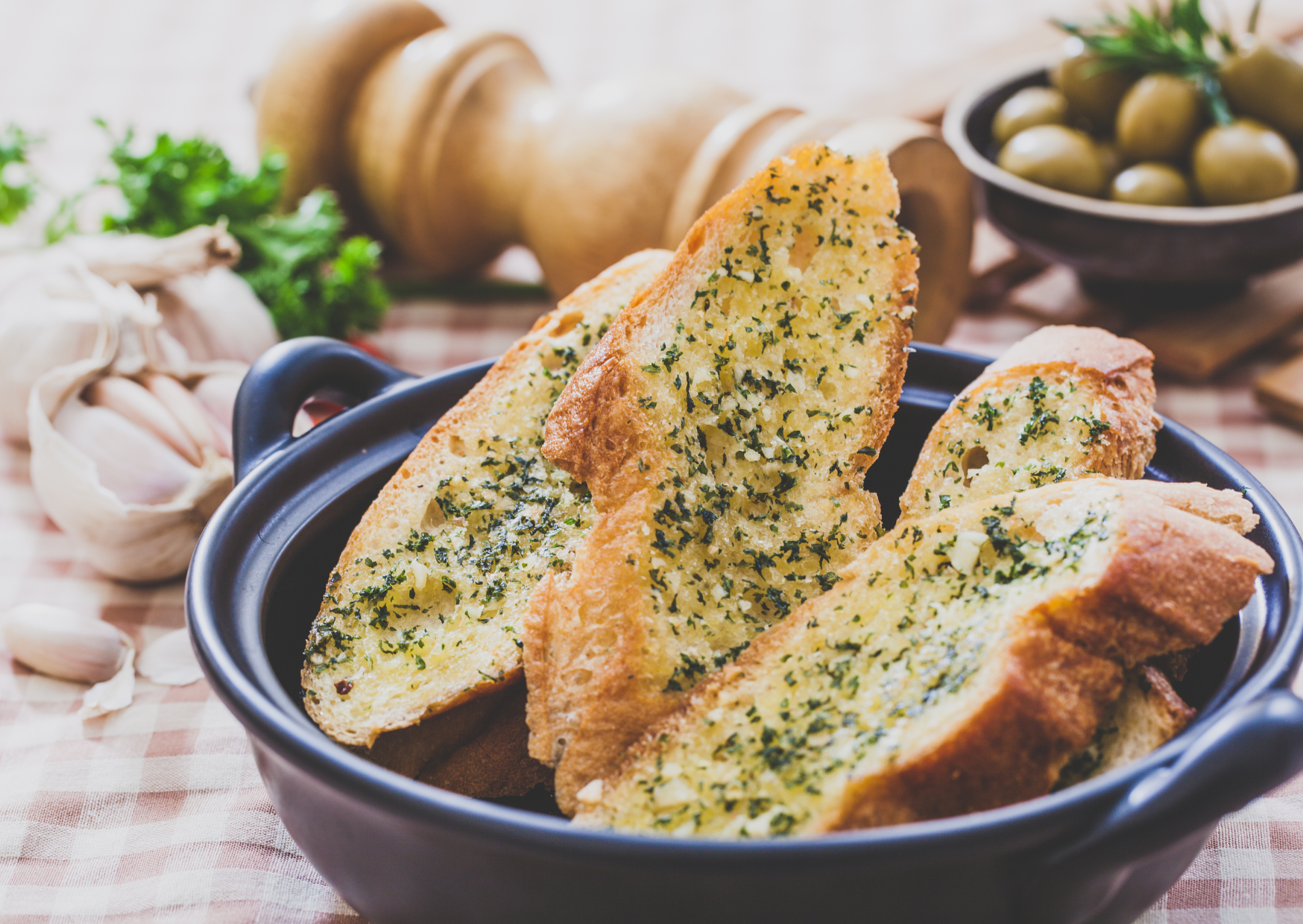
Set the two side by side and the contrast explains everything. The Italian version is grilled and raw at its heart, built on olive oil and sharp with char and fresh garlic kept distinct. The American version is baked and cooked through, built on butter and soft with a mellow, unified richness. One tastes of summer and the harvest. The other tastes of comfort and the oven.
Knowing which is which changes how you make each. When you want the bright, clean, oil-forward thing that suits a plate of tomatoes and a glass of cold wine on a hot evening, you make bruschetta and reach for your best oil. When you want the warm, buttery, pull-apart loaf that suits a bowl of pasta and red sauce on a cold night, you make garlic bread and reach for the butter and the broiler. They answer different moods and different meals.
Even the sound gives it away. A good bruschetta cracks and shatters at the first bite, all crisp crust and sharp raw oil. A good garlic bread yields softly and pulls apart in buttery strands. One is a snap and the other a sigh, and your mouth knows at once which country it is standing in, long before anyone names the dish.
The error was never in loving garlic bread. It lay only in believing it came from Italy, which flattened two good and distinct dishes into one and quietly erased the older, simpler original along the way. Make them both, call each by its right name, and you gain a dish rather than lose one.
Make Both, and Know the Difference
The practical takeaway is the happiest kind, because you do not have to choose. Learn the real bruschetta, grilled bread with raw garlic and a hard pour of your finest olive oil, and keep it for warm evenings and good tomatoes and the moments when simplicity is the luxury. Learn the American garlic bread, rich with garlic butter and baked soft and golden, and keep it for the pasta nights when comfort is the whole point.
Between them you cover the entire range, from the austere and sun-drenched to the indulgent and cozy, using more or less the same few ingredients arranged two ways. That is a good position to be in, and a better one than believing a basket of buttered supermarket bread is the sum of what Italy does with bread and garlic.
So the next time someone calls garlic bread Italian, you can smile and let it pass, or you can make them a real bruschetta and let the olive oil settle the argument. Either way you will know the difference, and knowing the difference is the whole point, and a good part of the pleasure besides.

About the Author: Ruben, co-founder of Gamintraveler.com since 2014, is a seasoned traveler from Spain who has explored over 100 countries since 2009. Known for his extensive travel adventures across South America, Europe, the US, Australia, New Zealand, Asia, and Africa, Ruben combines his passion for adventurous yet sustainable living with his love for cycling, highlighted by his remarkable 5-month bicycle journey from Spain to Norway. He currently resides in Spain, where he continues sharing his travel experiences with his partner, Rachel, and their son, Han.