
The focaccia Genovese is the one the world knows, the dimpled, golden, olive-oil-soaked flatbread from Liguria that fills bakery windows from Genoa to Brooklyn. It deserves its fame. But it is not the only focaccia worth learning, and eight hundred kilometers to the south, the city of Bari makes a version that stands entirely on its own, crowned with tomatoes and built on a dough the north would not recognize.
This is focaccia Barese, the pride of Puglia, the heel of the Italian boot. Where the Genovese is soft and pale and plain, the Barese is chewy and golden and loud with tomato, olive, and oregano. It has a secret in its dough that the northern version lacks, and a crust so crisp on the bottom it is almost fried. For anyone who has already fallen for the Genovese, this is the next focaccia to make.
Here is what sets the Barese apart, and exactly how to make it at home, from the dough to the topping to the fierce heat that gives it its signature base.
What Makes the Barese Different
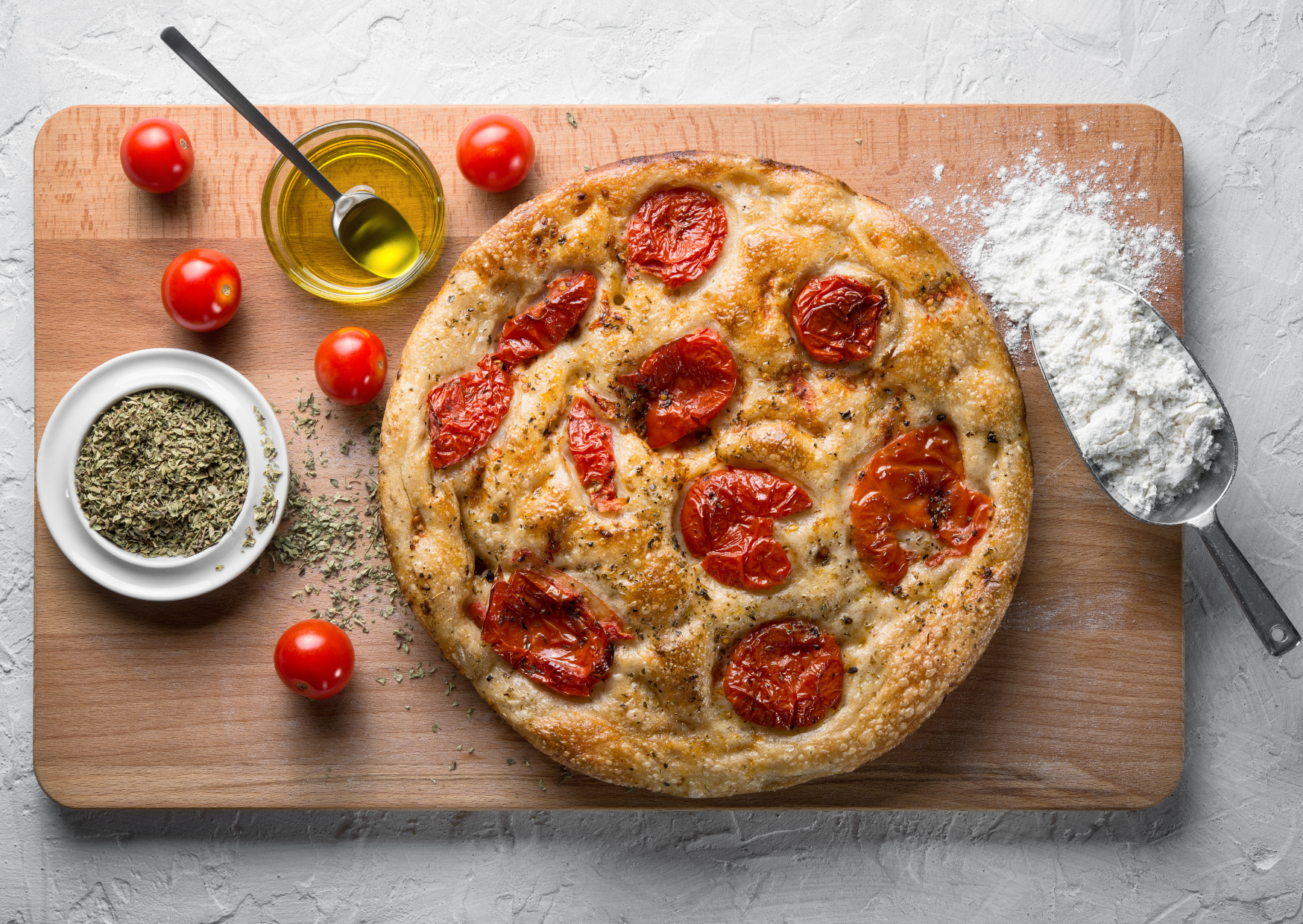
Three things separate a focaccia Barese from its famous northern cousin, and the first is the flour. The Barese dough is not made from plain wheat flour alone. It uses a mix of soft 00 flour and semolina, the finely re-milled durum wheat the Italians call rimacinata. That semolina is what gives the bread its warm yellow color and its distinctive chew, a texture no all-wheat focaccia quite matches.
The semolina is not a garnish to the flour but a full partner to it, often close to half the dough, and it is the same golden durum wheat that Puglia has grown and milled for centuries. That heritage is why the region’s breads, this focaccia among them, carry a character you will not find in the softer wheat breads of the north. Bread is serious business in this part of Italy, and the semolina is the reason.
The second difference is hidden inside the dough, and the baresi swear by it. A little mashed potato is worked into the mix, which sounds strange until you taste the result. The potato holds moisture and softens the crumb, so the interior stays tender and fluffy for days while the edges crisp. It is a quiet trick, invisible in the finished bread, and it is one of the things that makes a real Barese so hard to stop eating.
The third difference is the one you see first: the tomatoes. Where a Genovese is dressed with oil and coarse salt and perhaps a sprig of rosemary, the Barese is scattered with tomatoes crushed by hand into the surface, along with olives and a heavy dusting of oregano. It is a topping, not a garnish, and it turns the bread into something closer to a meal than a side.
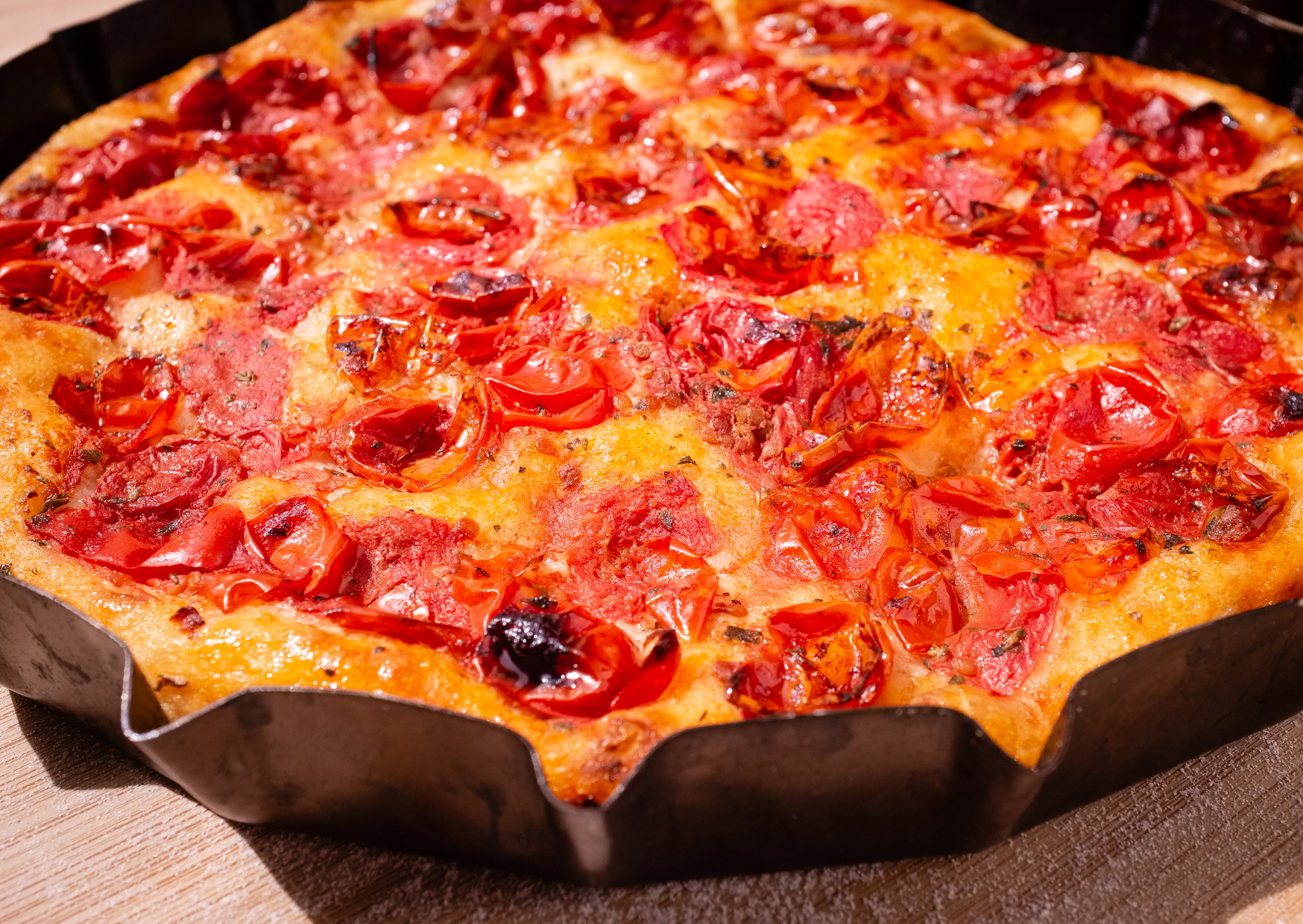
Underneath all of it sits the fourth signature, which is the heat. In Bari the focaccia is baked in a heavy, well-seasoned iron pan in a scorching oven, so the oil-slicked bottom does not so much bake as fry, arriving with a crust that shatters. The Genovese aims for soft all the way through. The Barese wants a crackling base under its tender top, and that contrast is the whole pleasure of it.
The Dough
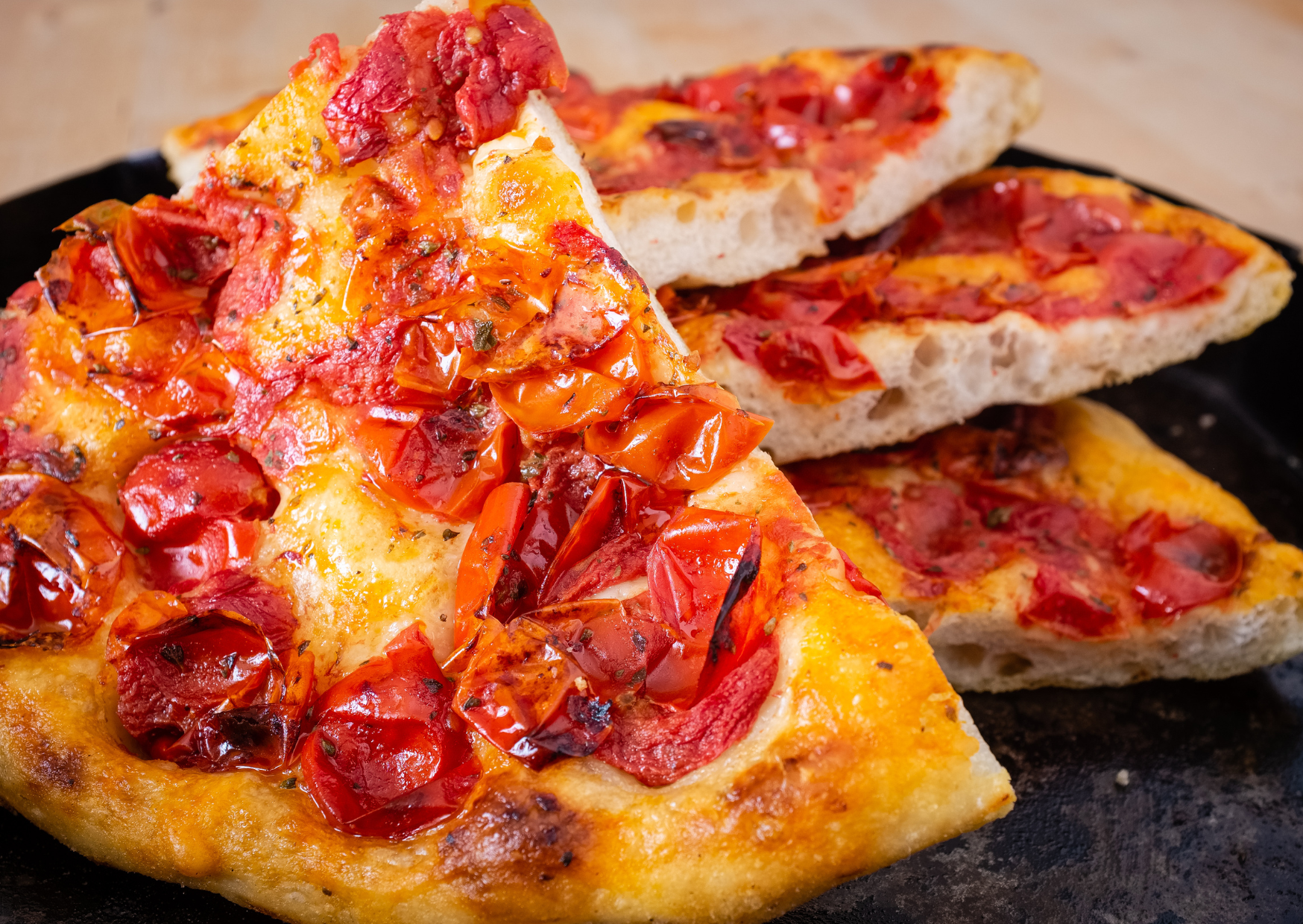
Making the dough is straightforward once you have the two flours. For a focaccia to fill one round pan of about twelve inches, you want roughly three hundred grams of 00 flour and two hundred grams of fine semolina, mixed together in a large bowl. You also need one medium potato, about a hundred and fifty grams, boiled in its skin until soft, then peeled and mashed or passed through a ricer until smooth and cool.
Warm around three hundred and fifty milliliters of water to lukewarm and dissolve a teaspoon of sugar and a packet of yeast in a little of it, waiting a few minutes until it foams. Add the mashed potato to the flours, then the yeast mixture, and begin working in the rest of the water with your hands or a wooden spoon. The exact amount of water varies with the potato and the flour, so add it gradually and stop when the dough is soft and slightly sticky rather than dry. Mix in the salt, then a good glug of extra virgin olive oil, and knead for five to eight minutes until the dough is smooth and elastic.
The dough should stay tacky. Resist the strong urge to add more flour to make it easier to handle, because a drier dough gives a drier, denser bread, and the softness is the whole point. If it clings to your hands, oil them lightly instead of flouring the surface heavily.
Cover the bowl and let the dough rise somewhere warm until it has doubled, which usually takes a couple of hours. A longer, slower rise develops more flavor, so there is no harm in giving it three. When it is puffed and full of air, it is ready to go into the pan.
For even better flavor, you can slow the whole thing down. Mix the dough, let it rise briefly at room temperature, then refrigerate it overnight and bring it back to room temperature before shaping the next day. The long cold rise deepens the taste and relaxes the dough so it stretches more willingly, which is how a lot of bakeries build the flavor that a two-hour rise cannot quite reach.
The Topping
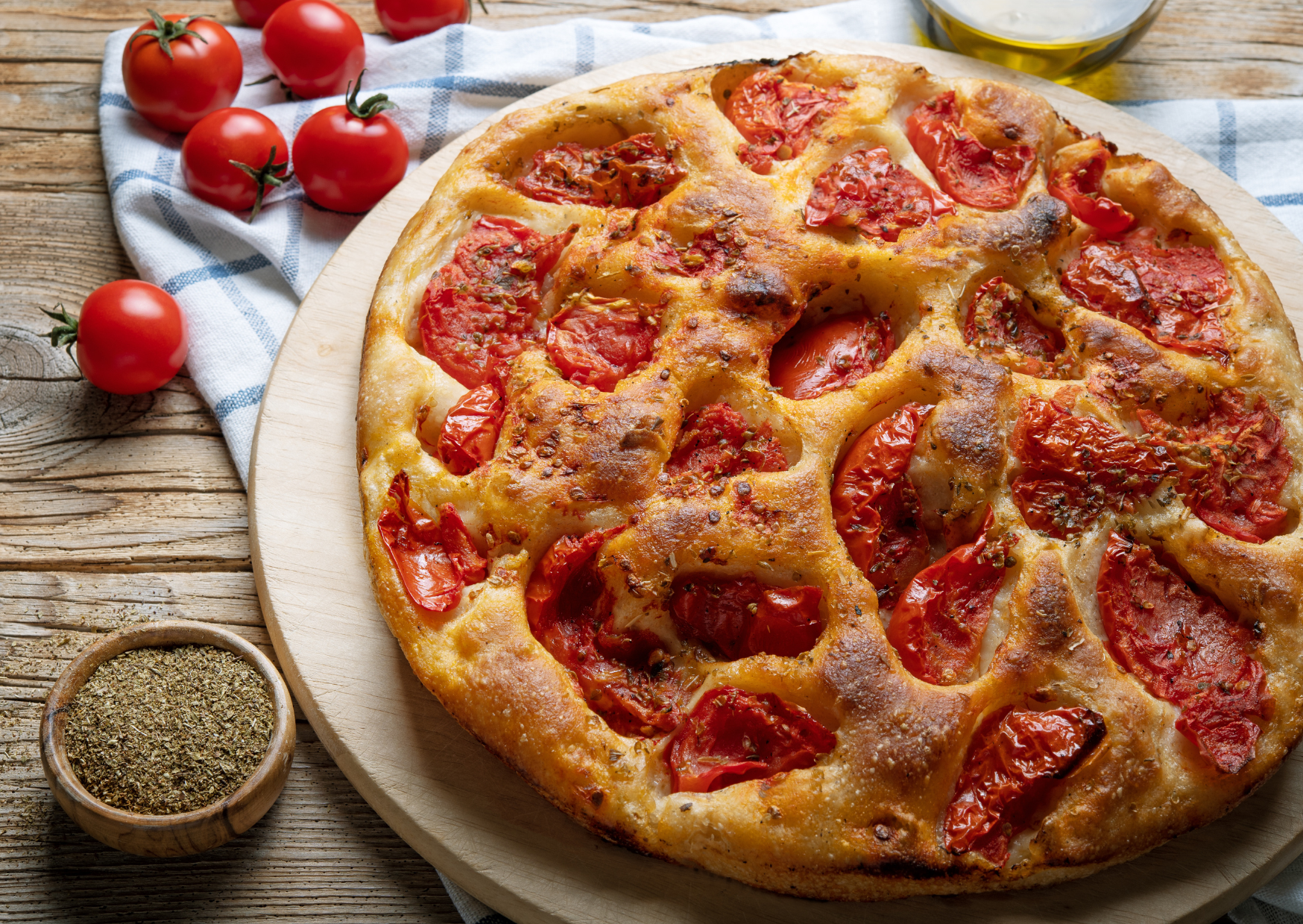
While the dough rises, prepare what goes on top, because the tomatoes are the soul of this focaccia. The classic choice is small, intensely sweet cherry tomatoes, the Pachino or Datterino varieties if you can find them, though any ripe, flavorful cherry tomato will do. You also want good olives, black or green, the small Taggiasca olives being ideal, along with dried oregano, flaky salt, and more olive oil than feels reasonable.
Oil a round metal pan generously, pour a slick of oil into the base so the bottom will crisp, and tip the risen dough into it. With well-oiled fingers, press and stretch the dough out to the edges, dimpling it all over as you go, the same pocked surface you know from the Genovese. Let it settle and puff for another twenty or thirty minutes before topping, so the second rise keeps the crumb light.
Now dress it. Take a handful of the cherry tomatoes, halve them, and press them firmly cut-side down into the dimpled dough so they release their juice into the surface, then turn some cut-side up for color. Scatter the olives between them, pushing each one gently into the dough so it does not roll off in the oven. Finish with a heavy sprinkle of oregano, a pinch of salt, and a final generous drizzle of oil across the whole thing, until the surface glistens.
In Bari itself, many bakers use a mix of tomatoes rather than one kind. They crush peeled plum tomatoes across the base for an even, saucy layer, then dot halved cherry tomatoes over the top for bursts of sweetness and color. Either approach works, and what matters in both is that the tomato juice reaches the dough, because that seeping juice is what keeps the crumb moist and gives the Barese its characteristic savory, slightly greasy dimples.
The Bake
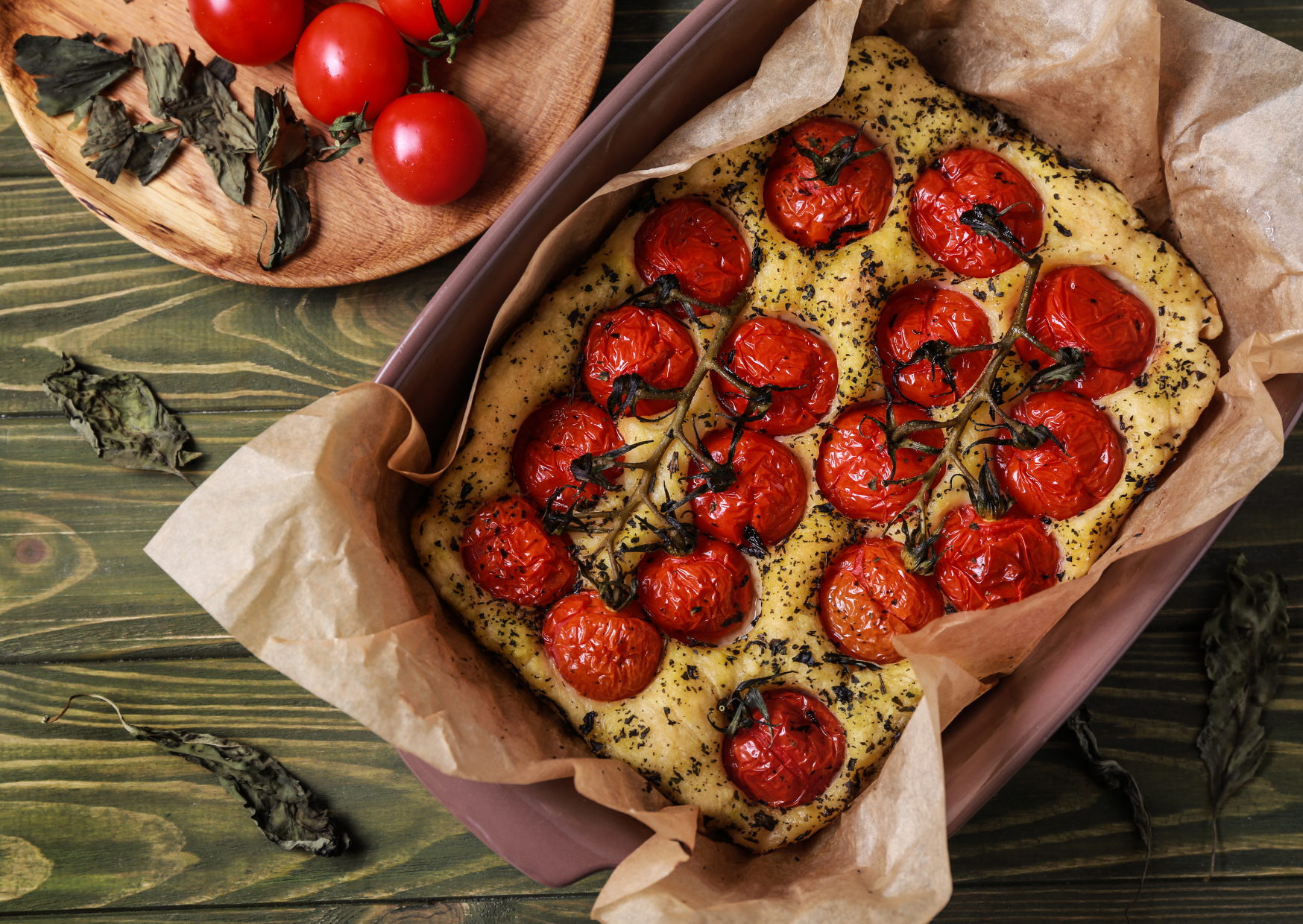
The Barese is a hot-oven bread, and half-hearted heat is the surest way to miss what makes it special. Preheat the oven as high as it will comfortably go, around 250°C, or 480°F, well before the focaccia is ready, so the pan meets real heat the moment it goes in. If your oven runs cooler, give it longer rather than settling for a pale, soft base.
Bake it on the lowest rack first, for the first ten minutes or so, which drives heat into the bottom and starts the oil frying the base to a deep, crisp gold. Then move the pan up to the middle rack to finish, another ten to fifteen minutes, until the top is browned in patches and the tomatoes have collapsed and caramelized at their edges. The total time lands around twenty-five to thirty minutes, but you are baking to color and crispness, not to the clock.
You will know it is done when the base sounds hard and hollow if you lift the pan and tap it, and the edges have pulled slightly from the sides with a dark, almost fried rim. Let it cool for just a few minutes in the pan, then slide it out onto a board. Cutting it too soon steams the base and softens the crust you worked to build, so give it a moment even though the smell will be testing your patience. One last trick borrowed from the bakeries is a small ovenproof dish of water set on the floor of the oven for the first few minutes, whose steam keeps the top supple while the base fries crisp, though the focaccia forgives you completely if you skip it.
Focaccia Barese
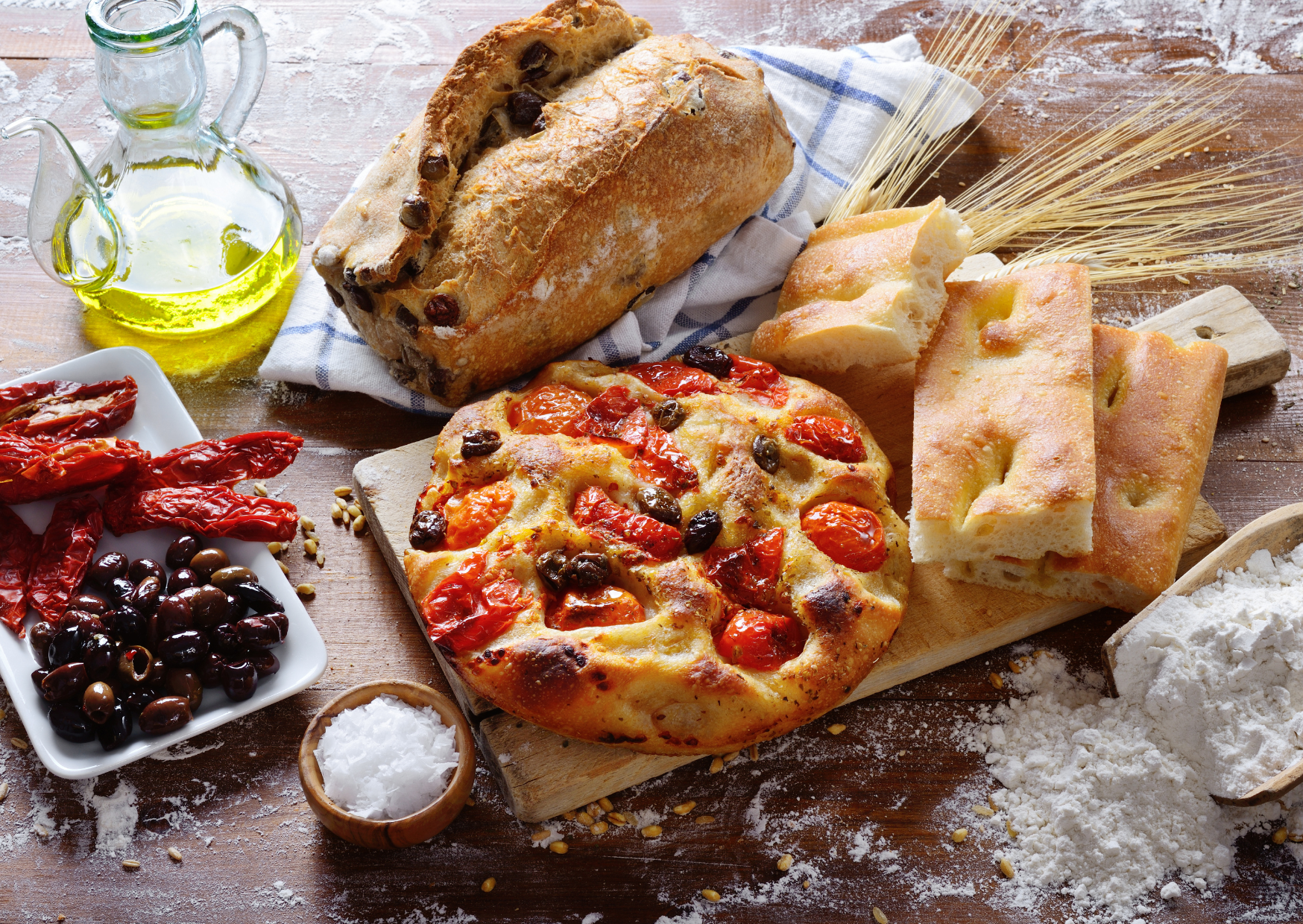
Makes one 12-inch round
Ingredients:
- 300g “00” flour
- 200g fine semolina (rimacinata)
- 1 medium potato, about 150g, boiled and mashed
- 350ml lukewarm water
- 1 tsp sugar
- 7g (1 packet) dried yeast
- 1.5 tsp salt
- Extra virgin olive oil, plus more for the pan and the top
- 250g cherry tomatoes (Pachino or Datterino), halved
- A handful of black or green olives (Taggiasca)
- Dried oregano
- Flaky salt
Method:
- Boil the potato in its skin until soft, then peel and mash or rice it until smooth, and let it cool.
- Dissolve the sugar and yeast in a little of the lukewarm water and leave until foaming.
- Combine the flour and semolina in a large bowl, then add the mashed potato and the yeast mixture, working in the rest of the water gradually until the dough is soft and slightly sticky.
- Mix in the salt and a good glug of olive oil, then knead for 5 to 8 minutes until smooth and elastic, resisting any urge to add more flour.
- Cover and leave to rise somewhere warm until doubled, about 2 hours, or refrigerate overnight for deeper flavor.
- Oil a round metal pan generously and pour a slick of oil into the base. Tip in the dough and, with oiled fingers, press and dimple it out to the edges, then let it puff for another 20 to 30 minutes.
- Press the halved cherry tomatoes cut-side down into the dough so they release their juice, turning some cut-side up for color, and scatter the olives between them, pushing each one in.
- Finish with a heavy sprinkle of oregano, a pinch of flaky salt and a final generous drizzle of oil.
- Bake on the lowest rack of an oven heated to 250°C, or 480°F, for about 10 minutes to crisp the base, then move to the middle rack for a further 10 to 15 minutes, until browned and the base sounds hollow.
- Cool for a few minutes in the pan, then slide out onto a board before cutting.
Getting It Right
A few points decide whether your Barese sings or slumps. The pan matters more than for most breads. A heavy iron or steel pan holds and radiates heat to fry the base, while a thin, shiny aluminum tray does not, and the dough is more likely to stick to it besides. If you have a cast-iron pan or a heavy carbon-steel one, use it. A pizza stone under a lighter pan helps too.
Use the best tomatoes you can get, and ripe ones. The tomato is not a decoration here but a primary flavor, and a pale, watery, out-of-season tomato leaves the whole focaccia flat. In deep winter, good tinned cherry tomatoes, drained, beat poor fresh ones. On the potato question, know that you have a choice: the potato in the dough gives a taller, fluffier, more forgiving bread, while leaving it out gives a thinner, crisper one that some baresi prefer. Try it both ways and pick your side of the local argument.
The last rule is restraint with the flour and generosity with the oil, which is the reverse of most bakers’ instincts. Keep the dough wet, oil your hands and the pan lavishly, and pour more oil over the top than looks sensible. This is a bread built on olive oil, and holding back on it is the one mistake it will not forgive.
A Northern Cousin and a Southern Original
The two focacce tell a small story about Italy itself, north against south, on a single baking sheet. The Genovese comes from Liguria, the coastal northwest, and it is a bread of soft restraint, plain wheat flour and a wet dough, a brine of water and oil brushed into the dimples, and little more than coarse salt or rosemary on top. It is elegant and understated, the taste of good flour and good oil with nothing competing against them.
The Barese comes from the opposite corner, the sun-baked south, and everything about it runs bolder. Puglia is Italy’s great wheat country, its golden fields feeding a deep tradition of durum-semolina baking that produced not only this focaccia but the legendary bread of nearby Altamura, one of the very few breads in the world with protected DOP status. The Barese takes the plain northern idea and piles on the ingredients and the sunshine of the Mezzogiorno, from the semolina and potato in the dough to the tomato and olive and oregano heaped on top.
Even the way each is eaten reflects its home. The Genovese is a refined bakery item, sliced and served, a companion to an aperitivo. The Barese is street food and beach food and everyday food, torn warm and eaten with the hands, a working city’s bread rather than a polished one. Neither is better than the other. They are two answers to the same question, given at opposite ends of the same long country.
Making both, back to back, is one of the best short lessons in Italian regional cooking a home baker can hand themselves. The single word focaccia produces two breads that share a shape and almost nothing else, and tasting them side by side teaches more about how Italy changes from region to region than any amount of reading about it could.
Eat It the Bari Way
In Bari, focaccia is not a dinner-party centerpiece but the everyday food of the city, sold hot from bakeries that fill whole streets with the smell of tomato and oil from early morning. Locals call it f’cazz and eat it at every hour, folded into a napkin on the way to work, packed for the beach, wrapped in paper as a child’s school snack, torn apart among friends during a football match. The most famous version comes from Panificio Fiore in the old town, but every unassuming corner bakery makes a good one.
That is the spirit to make it in. This is not a fussy bread. It is a generous, forgiving, everyday one, meant to be eaten warm with your hands and shared without ceremony, and it rewards a relaxed cook more than an anxious one. If your first attempt is a little uneven, it will still taste of Puglia, and it will still disappear fast.
There is a wider family worth knowing, too. The same bakeries turn out a calzone di cipolla, a stuffed focaccia turnover packed with sweet onions and olives and a little anchovy, and in spring you find versions crowned with cima di rapa, the bitter broccoli greens Puglia adores. The tomato Barese is the everyday standard, but the tradition around it runs deep and wide. The focaccia keeps well too, staying soft for a day or two thanks to the potato, and it reheats beautifully in a hot oven for a few minutes, crisping the base again as though just baked. Even cold from the fridge it is good, which is exactly why it travels to so many Bari beaches.
So make the Genovese for its soft, oily elegance, and make the Barese when you want something heartier and brighter, and unmistakably southern, with a crackling base and a top full of sun. Between the two focacce you have the north and the south of Italy on your counter, and the tomato-topped one from Bari more than holds its own against its famous cousin.

About the Author: Ruben, co-founder of Gamintraveler.com since 2014, is a seasoned traveler from Spain who has explored over 100 countries since 2009. Known for his extensive travel adventures across South America, Europe, the US, Australia, New Zealand, Asia, and Africa, Ruben combines his passion for adventurous yet sustainable living with his love for cycling, highlighted by his remarkable 5-month bicycle journey from Spain to Norway. He currently resides in Spain, where he continues sharing his travel experiences with his partner, Rachel, and their son, Han.