
The pasta was twelve euros. The wine was reasonable. The meal was lovely. Then the bill arrives, and there at the bottom sits a line that was not on any dish: coperto, two euros per person, roughly $2.20 each. To an American, freshly seated in their first Italian trattoria, it looks exactly like the thing everyone warned them about, a sneaky surcharge, a tourist trap, a scam.
It is none of those things. The coperto is one of the most misunderstood items in European dining, a legitimate, legal, centuries-old part of how Italian restaurants price a meal. Italians pay it without a second thought, it is printed on the menu by law, and once you understand what it is and what it covers, it stops looking like a trick and starts looking like a perfectly reasonable, and rather honest, way of doing business.
What the Coperto Actually Is
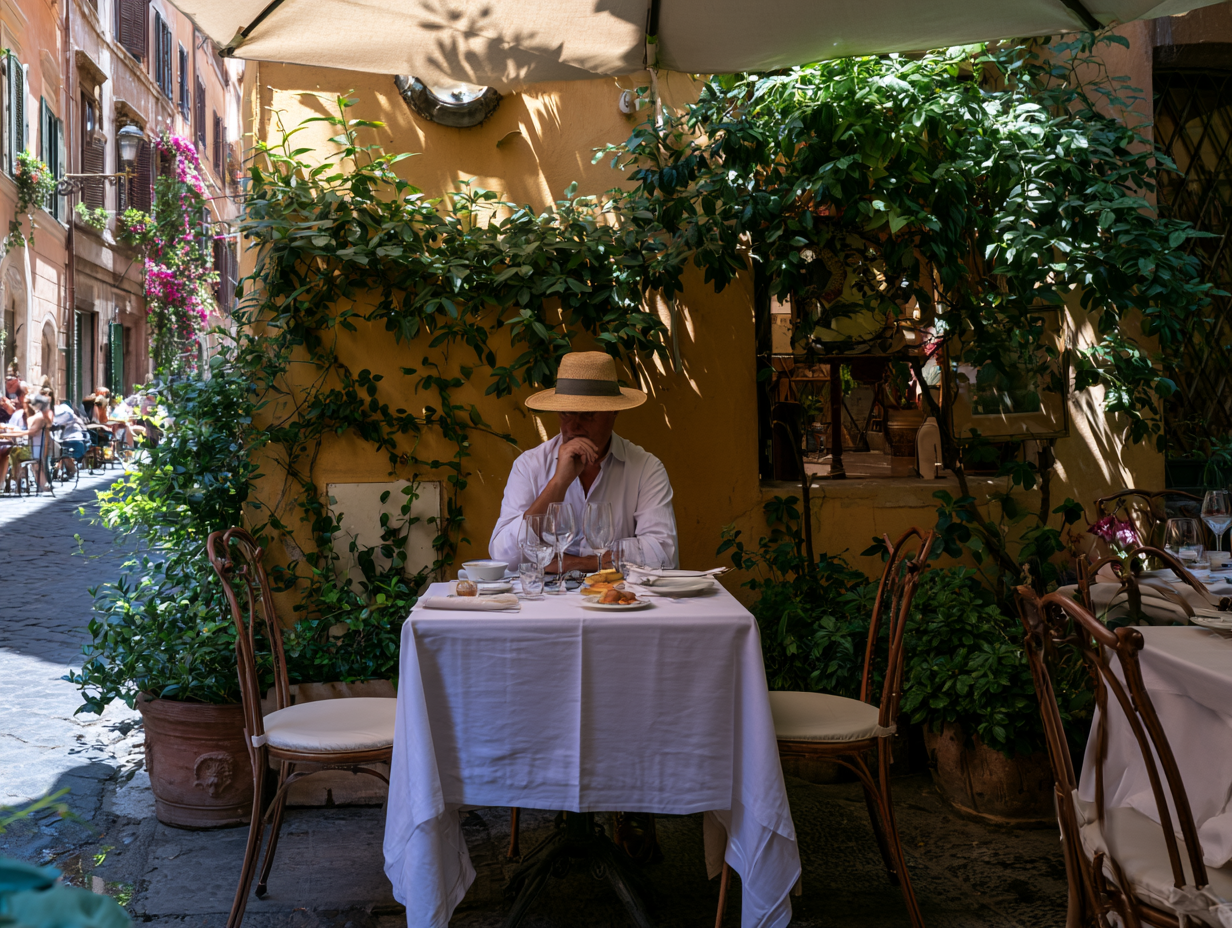
The coperto is a fixed cover charge, applied per person, that most Italian restaurants add to the bill. It is a flat amount, typically somewhere between one and three euros a head, though it can be higher in premium or tourist-heavy locations, and it is charged to everyone at the table, adults and children alike.
The defining feature is that it does not depend on what you order. Whether you have a single plate of pasta or a full four-course meal, the coperto is the same, because it is not a charge for food at all. A table of four will see the coperto multiplied by four on the bill, one charge for each seat occupied, regardless of how much or how little each person ate. The word itself, coperto, relates to the idea of the place setting, the covered table laid out for each diner.
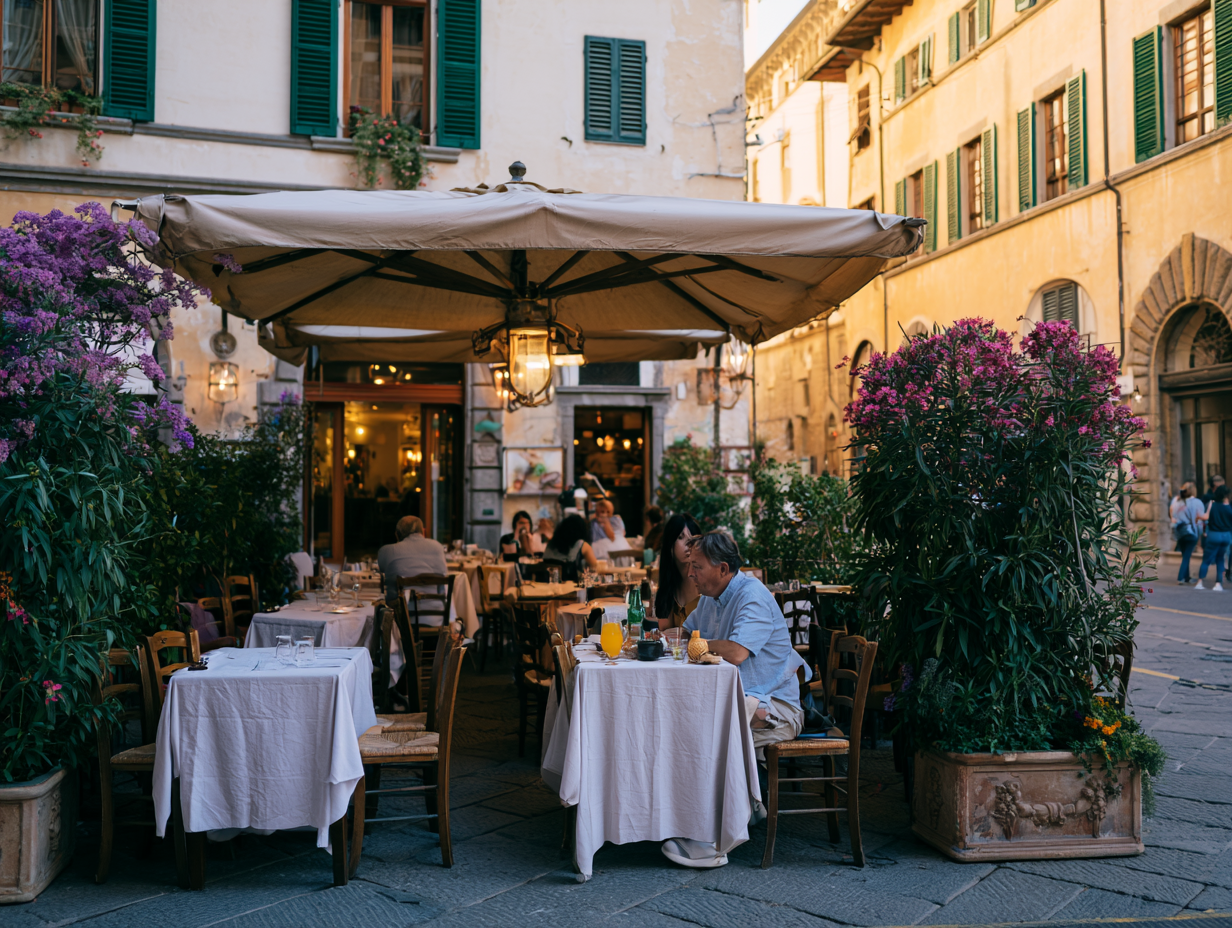
This is the first thing to grasp: the coperto is a charge for your presence at a set table, not for anything on your plate. It is the price of sitting down to be served in that restaurant, levied once per person, and it appears on the bill as its own clearly labelled line. Not every establishment charges it, but a great many do, and it is entirely standard across most of the country. It is a feature of the system, not a surprise sprung on the unwary.
What It Pays For
So what does that small per-person charge actually buy? The traditional answer is the whole apparatus of the table, everything the restaurant provides so that you can sit down and eat comfortably, none of which appears as a separate item anywhere else on the menu.
That means the tablecloth, which is laundered fresh between services, the cloth napkins, the cutlery, the plates and glasses, and the labour of laying, clearing, and resetting your place. In most restaurants it also covers the bread that appears on the table, which is why the charge is often written as pane e coperto, bread and cover. When you sit down, a whole set of things is provided and later cleaned up after you, and the coperto is how that cost is met.
Seen plainly, the coperto is simply a way of pricing overhead transparently. Every restaurant everywhere has these costs, the linens, the washing-up, the table that seats only so many people per night. American restaurants fold that cost silently into the price of the dishes, so a plate of pasta quietly carries a share of the laundry bill. Italian restaurants, by long tradition, prefer to separate it out and charge it openly as the coperto, keeping the listed price of each dish a little lower. It is the same money, gathered a different way, and arguably a more honest one.
It Is Not a Tip, and Not a Service Charge
A great deal of the confusion around the coperto comes from mixing it up with two other things it is often mistaken for: the tip and the service charge. In Italy these are three genuinely separate concepts, and keeping them straight is the key to reading any Italian bill with confidence.
The coperto, as established, is the fixed per-person cover charge, and it goes to the restaurant. The servizio is a service charge, a percentage of the total bill, usually somewhere around ten to fifteen per cent, that some restaurants add, more often in touristy or formal places or for large groups. It is far less universal than the coperto; many trattorias and osterie charge no servizio at all, expecting the coperto to cover the service function. And the mancia is the tip, which in Italy is genuinely optional and modest.
This is where American instincts mislead most badly. In the United States, a tip of fifteen to twenty per cent is a social obligation, because servers depend on it to earn a living. In Italy, servers are paid a proper salary, waiting tables is often a respected career rather than a stopgap, and tipping is not expected. Leaving nothing beyond the coperto and any servizio is completely normal and not rude. If the service was wonderful, rounding up the bill or leaving a few coins is a kind gesture, but there is no percentage to calculate and no guilt to feel. The coperto is emphatically not a tip in disguise; it is a separate charge entirely.
Why It Is Legal, and When It Isn’t
The coperto is not only legal; its legality rests on a clear principle, which is disclosure. Under Italian consumer law, the charge must be stated on the menu, so that a diner can see it before they order and decide whether to stay. A coperto printed on the menu is one you have effectively agreed to by sitting down and ordering.
The catch is that it has to be visible in advance. A coperto that appears only on the final bill, having been listed nowhere the customer could see it beforehand, is not legitimate, and a diner is within their rights to question it. In practice, restaurants comply by printing the coperto on the menu, though often in small type at the top or bottom of a page, so it pays to glance for it. There is no legal maximum on the amount, but consumer-protection guidance suggests that a charge above roughly five or six euros should reflect a genuine additional service, and the amount charged must match what the menu states.
This is the useful, practical distinction for a visitor. A disclosed coperto is legitimate, full stop, even if it feels unfamiliar; the correct response to one you find too high is to choose a different restaurant, not to refuse the bill. An undisclosed charge that materialises only at the end is a different matter, and one you can politely challenge. The line between fair and unfair here is not the existence of the coperto but whether it was shown to you before you committed.
The Rome Exception
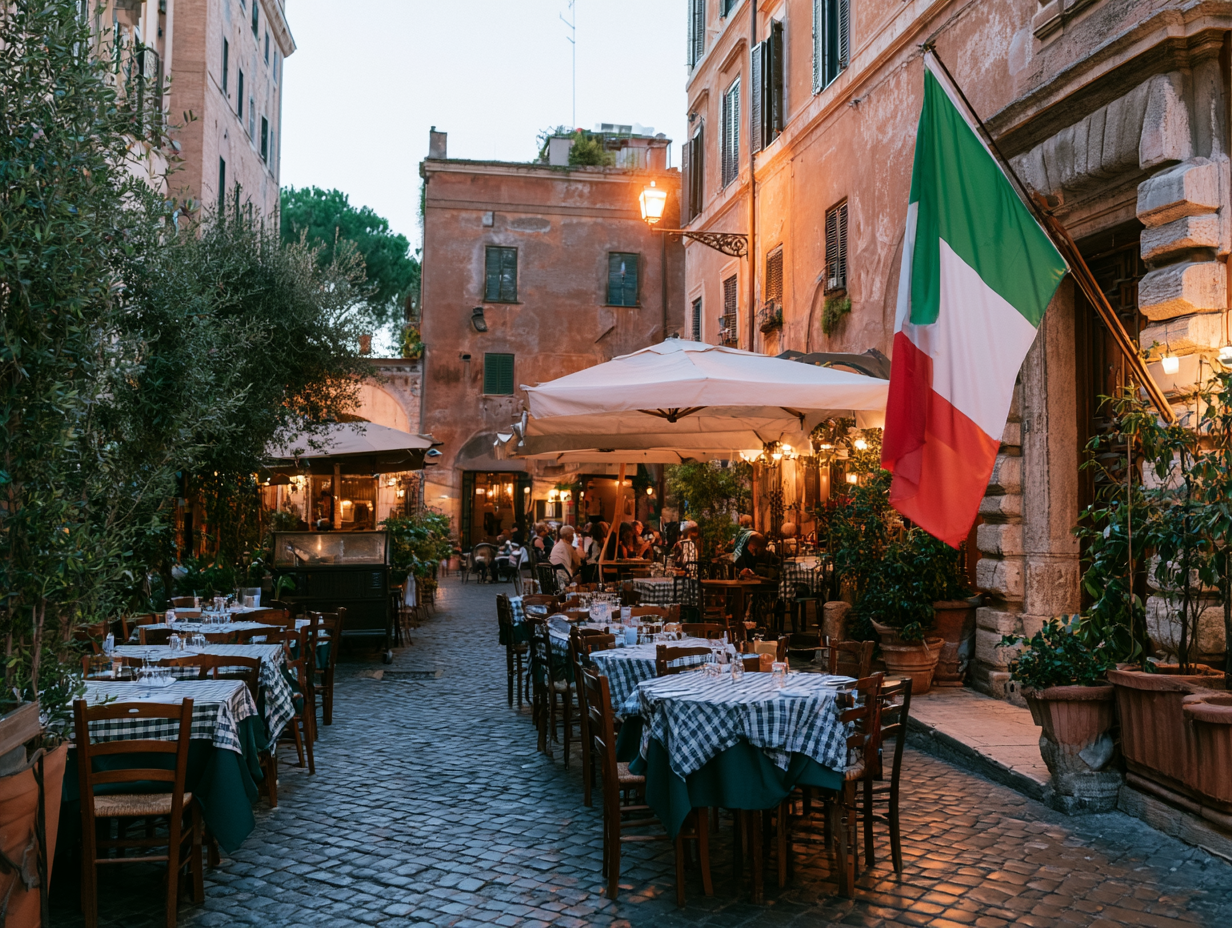
There is one significant regional wrinkle that trips up even seasoned travellers, and it concerns Rome. In Lazio, the region that includes the capital, a regional law dating from 2006 restricts charging a line item under the specific name coperto. So in Rome, you may never see the word at all.
This does not mean dining in Rome is cheaper. Restaurants there have simply adapted, charging instead for pane, the bread, or adding a servizio, a service percentage, both of which are permitted when properly disclosed on the menu. The effect on your final bill is much the same; only the label has changed. In Rome, in other words, expect to see pane or servizio doing the job that the coperto does elsewhere, and understand that these are legitimate charges too, not evasions.
The important point is that the Roman rule targets the word, not the underlying idea of a table charge. A table-related cost is normal across Italy; Lazio simply forbids calling it coperto specifically. This is a piece of genuinely confusing regional detail, and its practical lesson is the same as everywhere else: read the bottom of the menu, see what the restaurant calls its charges, and know that a disclosed pane or servizio in Rome is the local equivalent of the coperto you would meet in Florence or Bologna.
What Changes in Tourist Areas
The coperto is modest almost everywhere, but there is one situation where it can climb, and it is worth knowing about: heavily touristed, premium locations. Because there is no legal cap on the amount, a restaurant on a famous square or a Venice canal can set a considerably higher coperto than a neighbourhood trattoria, and a few notorious spots have charged startling sums.
In ordinary Italian life the coperto sits at a euro or two. In the tourist heart of Venice, Rome, or the Amalfi Coast, it can reach five euros or more per person, and there are occasional stories of far higher figures at places banking on diners who will not check. This is not illegal, provided the amount is disclosed on the menu, but it is exactly the situation where a moment’s attention pays off. A high coperto is a signal, telling you that you are paying a premium for the location as much as the food.
The defence is simple, and the same as it is for everything else in Italian dining: look before you sit. In a tourist area especially, glance at the menu, find the coperto, and decide whether the setting is worth it before you take a chair. A three or four euro coperto on a glorious piazza may be money well spent for the view and the atmosphere; the same charge at a nondescript spot by the station is worth walking away from. The number is always there to be read, and reading it is the whole defence.
Why It Is Not a Scam
Step back, and the case that the coperto is a scam collapses entirely, for one simple reason above all: Italians pay it too. A charge levied equally on locals and tourists, accepted without complaint by the people who eat in these restaurants every week, disclosed on the menu by law, is by definition not a trick aimed at foreigners. Locals understand it, so they do not resent it.
Its roots run deep, as well. The idea traces back centuries, to an era when travellers might bring their own food to an inn and pay the house simply for the table, the service, and a place to sit and eat. The coperto is a direct descendant of that arrangement, a charge for hospitality and the use of the table rather than for the food itself. It is history, not invention. What feels alien to a modern American diner is in fact one of the older ideas in European dining.
Tellingly, some Italian restaurants have now abolished the coperto altogether, folding the cost back into slightly higher dish prices, precisely because international diners find the separate line confusing. The result is the same total bill in a different shape. That restaurants would rather raise prices than keep a charge that looks bad to tourists shows the coperto was never a con to begin with; it was a pricing convention, and one some places are quietly retiring for the sake of clarity. Whether itemised or absorbed, you pay for the table either way. Only the presentation differs.
How to Read an Italian Bill
For a visitor who wants to dine in Italy without anxiety, the whole thing reduces to a few simple habits, and they take the mystery out of the bill entirely. The guiding principle is that legitimate Italian charges are always disclosed, so a quick look before you sit is your best protection.
Glance at the menu for the coperto or, in Rome, for pane or servizio, usually printed small at the top or bottom of a page. If you see it, you know the number before you order, and there is nothing to dispute later. The only two extra charges you should ever encounter are the coperto and the servizio; if anything else appears on the bill that was not on the menu, you are entirely within your rights to ask the server, calmly, what it is and where it was posted. Asking for the fiscal receipt, the official one, keeps everything honest. And if you want to avoid the coperto altogether, do as you would with coffee and stand at the bar, al banco, where a quick espresso or a snack taken standing generally carries no cover charge at all.
None of this requires suspicion, only attention. The phrase for the bill, when you want it, is il conto, per favore. Read it, recognise the coperto for the ordinary charge it is, add a few coins only if you genuinely wish to, and pay it without resentment. An Italian bill is almost always exactly what it appears to be, and the coperto sitting at the bottom of it is not an insult but simply the price of the chair you have been comfortably sitting in.
The Price of the Table
In the end, the coperto is one of those small cultural gaps that looks like a problem and turns out to be a misunderstanding. It is not a hidden fee, not a tourist trap, and not a tip you were tricked into paying. It is a clearly posted, legally required, historically rooted charge for the simple act of sitting down to be served at a laid table.
Once you see it that way, the little line at the bottom of the bill loses all its menace. You are paying a euro or two for your place at a table that someone set for you, will clear for you, and will reset for the next diner after you leave, and that is a genuinely fair thing to charge for. The Italians have merely chosen to name it out loud rather than bury it in the pasta price.
So when the bill comes and the coperto is there, as it usually will be, there is no need to bristle or to hunt for the manager. Check that it matched the menu, pay your euro or two, and enjoy the fact that you were never expected to calculate a twenty per cent tip on top. Understood properly, the coperto is not the thing that spoils an Italian meal. It is just the quiet, honest price of getting to sit down and enjoy one.

About the Author: Ruben, co-founder of Gamintraveler.com since 2014, is a seasoned traveler from Spain who has explored over 100 countries since 2009. Known for his extensive travel adventures across South America, Europe, the US, Australia, New Zealand, Asia, and Africa, Ruben combines his passion for adventurous yet sustainable living with his love for cycling, highlighted by his remarkable 5-month bicycle journey from Spain to Norway. He currently resides in Spain, where he continues sharing his travel experiences with his partner, Rachel, and their son, Han.