
You board in one city as the light goes, have a drink in the lounge car while the suburbs slide past, and climb into a bunk. You wake the next morning pulling into a different country, wash your face, and step off the train into the center of a new city with the whole day ahead of you. Somewhere in the night you crossed a border, covered a thousand kilometers, and saved yourself both a hotel bill and a travel day. That is the trick of the night train, and after decades of decline it is firmly back.
Europe’s sleeper network had all but collapsed by the middle of the last decade, hollowed out by budget airlines that undercut it on price and speed. Since around 2020 the trend has reversed hard. New routes are launching, old ones are being revived, and by 2026 the continent is running something close to two hundred regular overnight lines again, with fresh connections opening faster than at any point in a generation.
Here is what the night train really saves you, which 2026 routes are new, and how to get a berth on one before it sells out.
The Bed That Replaces a Hotel Night
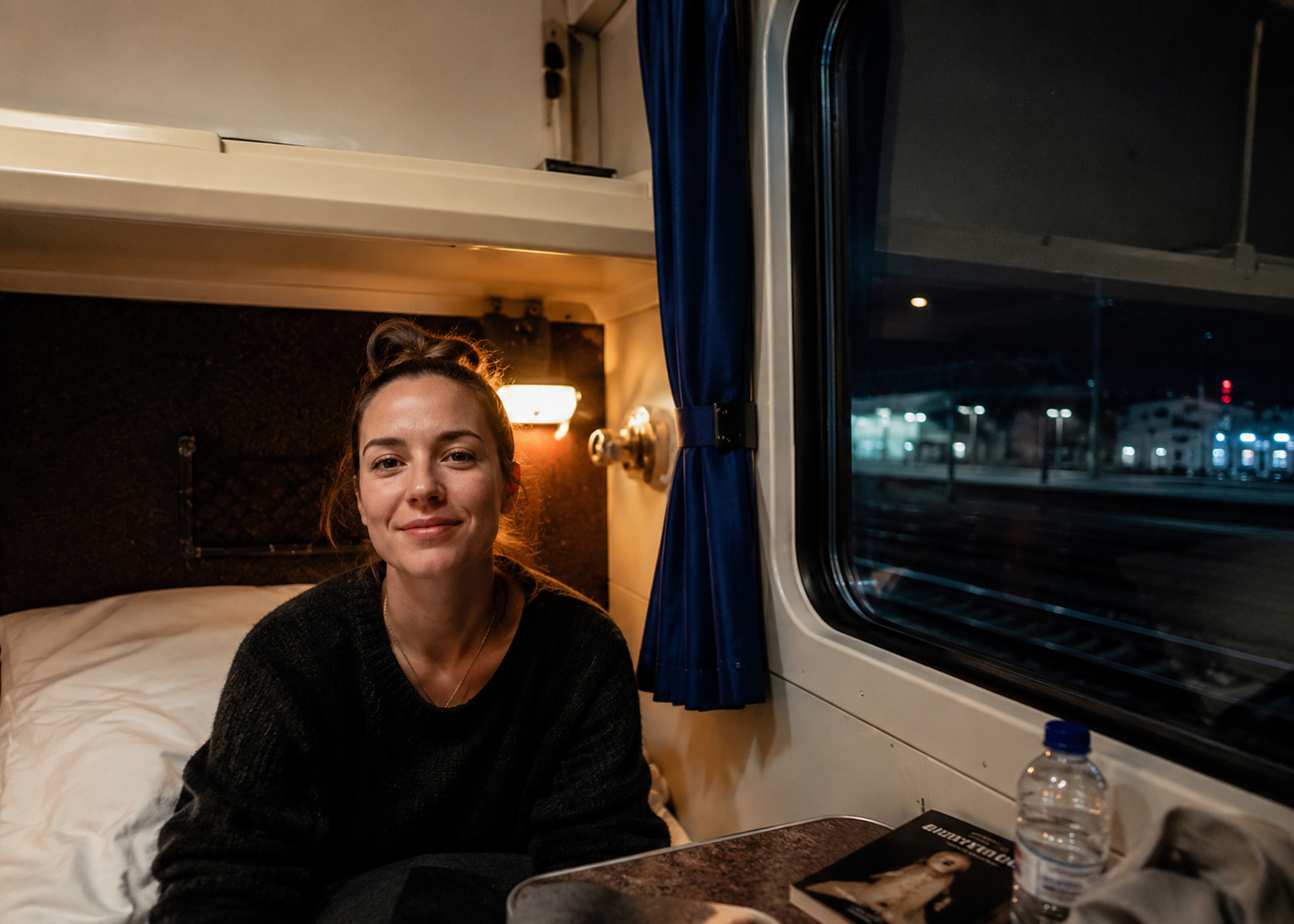
The economics are the part most travelers miss, and they are the whole case. A night on a train is not just transport. It is a bed, which means it quietly replaces the hotel room you would otherwise pay for that night, and it moves you the length of a country while you sleep, which means it also replaces a travel day you would otherwise burn sitting on a plane or a daytime train.
Put numbers on it and the logic is hard to argue with. A couchette berth from Vienna to Rome, booked ahead, runs somewhere around €29 to €59, roughly $32 to $65, and carries you about 1,200 kilometers overnight. A hotel room for that same night would cost €60 to €120, about $65 to $130, on its own. So the fare is often less than the hotel it stands in for, and the journey itself rides along free, which is close to the opposite of how travel usually prices out.
The comparison to flying is just as lopsided once you count the whole day. A short flight over the same ground looks faster on paper, but stacked with the trip out to the airport, the early check-in, security, the wait, and the ride back into the city at the far end, it often runs six or more hours door to door and eats a chunk of daylight doing it. The night train uses the hours you were going to spend asleep anyway, and it sets you down in the city center rather than at a terminal on the edge of town.
A climate argument rides alongside the financial one. An overnight train throws off a small fraction of the carbon of the equivalent flight, on the order of a tenth, which is a large part of why younger European travelers have swung back toward the sleeper and why several governments have started funding the routes again.
The saving stacks twice, which is what makes it unusual. Skip one hotel night and shift one travel day, and a single fare quietly does the work of a plane ticket and a room combined. On a two-week trip with three or four long hops, choosing the sleeper for each adds up to a few hundred euros kept and several mornings gained in cities you would otherwise have reached at lunchtime.
Why the Sleepers Died and Came Back
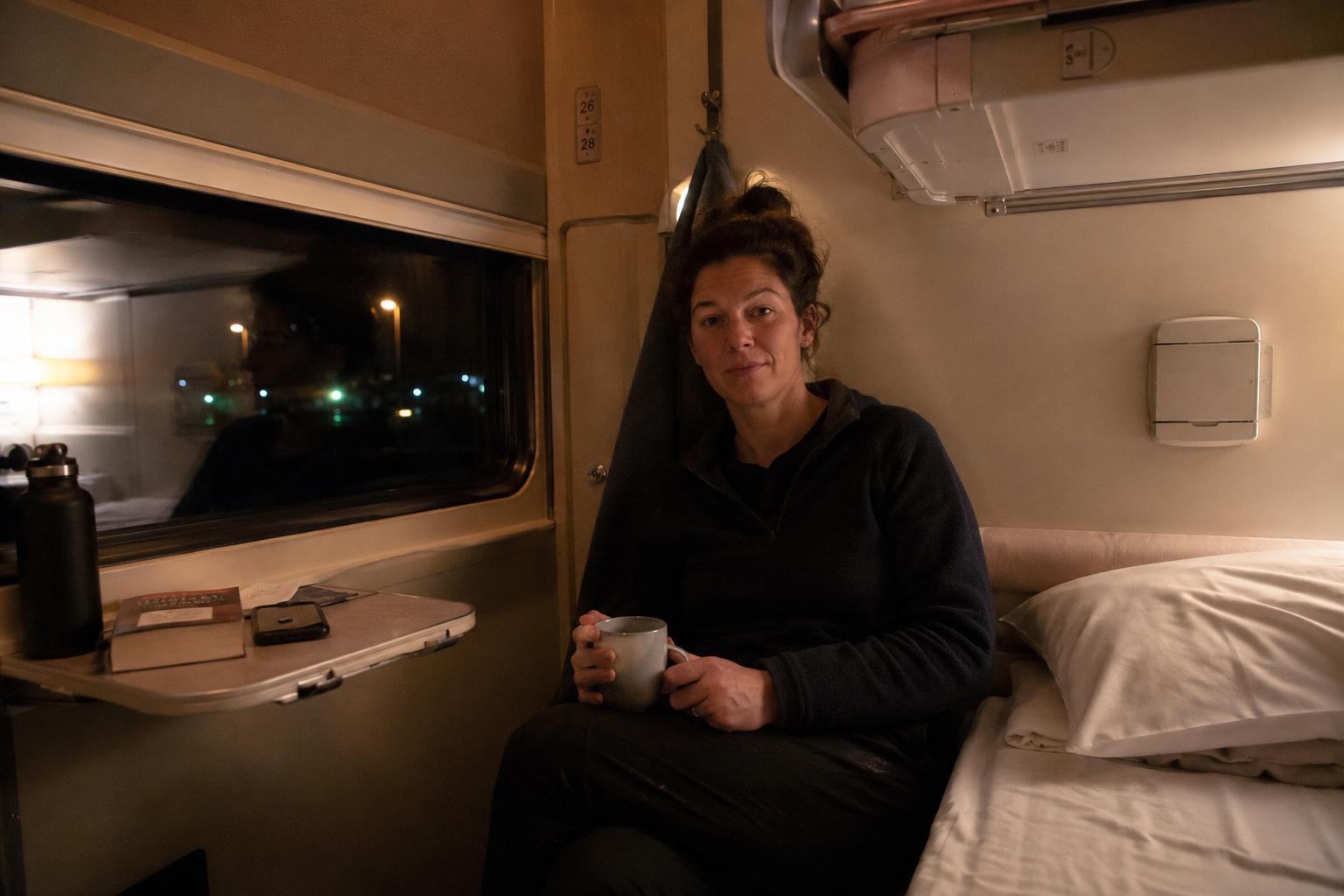
The scale of the collapse is easy to forget. Around 2010 Europe ran well over two hundred overnight rail routes. By 2016 that number had crashed to fewer than fifty, as low-cost airlines undercut the trains on both price and time and national railways quietly retired their aging sleeper fleets rather than replace them. For a while it looked like the night train was going the way of the ocean liner, a romantic relic on its way out.
The turnaround came from a mix of climate and demand. The Swedish word flygskam, or flight shame, put a name to the growing unease about flying short distances, and travelers, especially younger ones, began actively seeking out the train as an alternative. Austria’s national operator read the shift early and bet on it, expanding its sleeper network aggressively while others were still cutting, and independent newcomers appeared to run routes the big railways had abandoned.
Governments and the European Union have since climbed aboard, treating cross-border night rail as a piece of climate policy worth subsidizing rather than a nostalgia project. The result is the odd, hopeful moment the network sits in now, where demand clearly outstrips the number of beds available, and the main thing holding the revival back is not passengers but the slow, costly business of building new sleeper carriages to carry them.
The clearest snapshot of the moment comes from the volunteers who map it. The rail campaign group Back-on-Track counts roughly two hundred and five regular sleeper lines running across Europe in 2026, with five fresh connections added for the year and about ten lost, a ledger that captures the network’s strange simultaneous growth and retreat better than any single headline could.
The Routes That Came Back in 2026
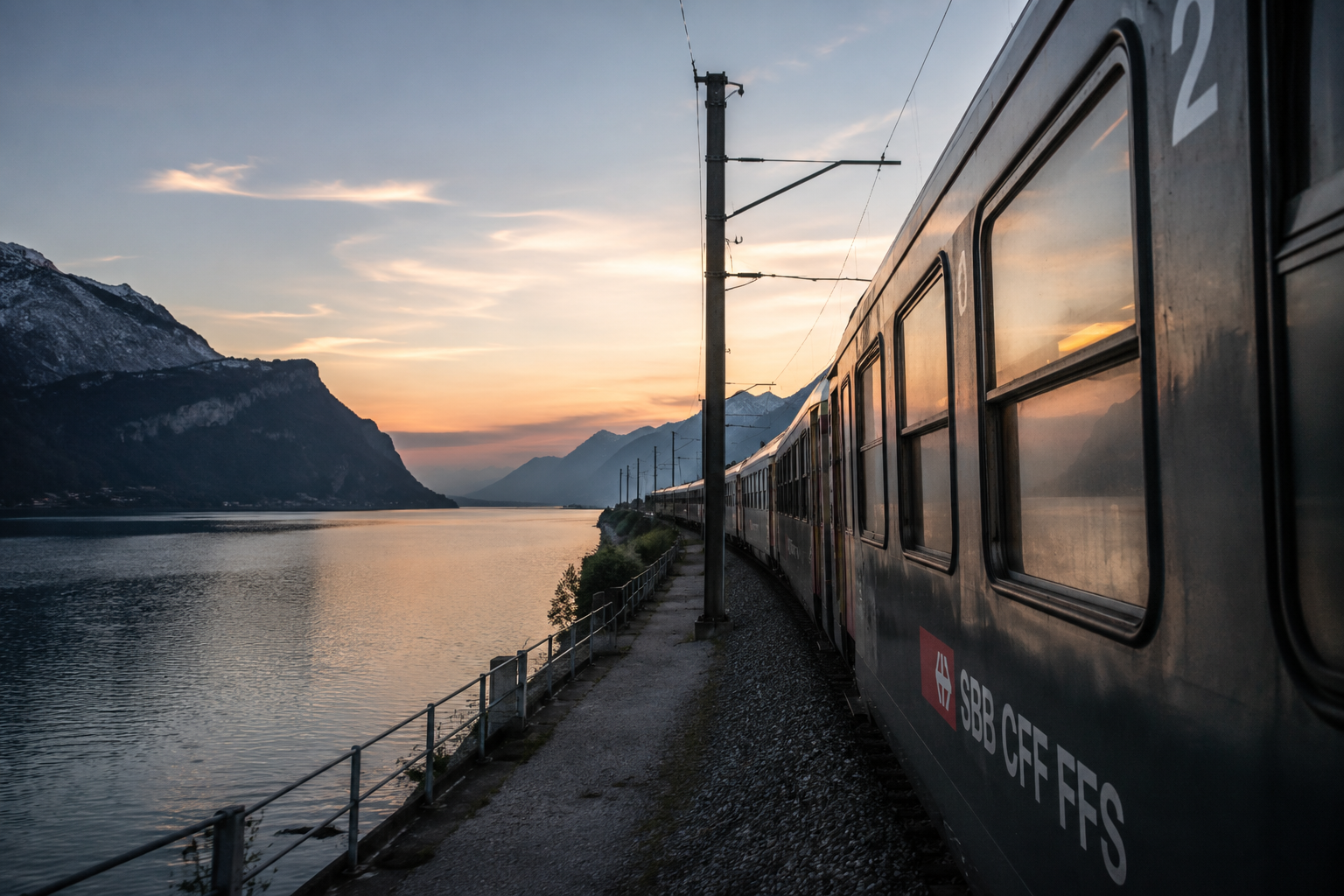
The headline revival of the year is Paris to Berlin. The route had been running as an Austrian Nightjet service until its funding was pulled at the end of 2025, and for a moment it looked lost again. Then the independent Belgian-Dutch operator European Sleeper stepped in and relaunched it on 26 March 2026, running several nights a week and routing through Brussels, which conveniently lets travelers connect from London on the Eurostar. The train carries somewhere around six to seven hundred passengers a night, and it sells the oldest dream in rail, going to bed in one great capital and waking in another.
The other big launch of the year runs north. On 15 April 2026, Swiss Federal Railways and a German partner opened a new overnight service from Basel up to Copenhagen and Malmö, three nights a week, all year round. It links Switzerland straight to Scandinavia without a change, leaving Basel in the early evening and rolling into Malmö the next morning, filling a gap on the map that had sat empty for years.
Two more ambitious routes are in the pipeline for later in the year, both from European Sleeper. One would connect Brussels to Milan, threading through Switzerland, an operationally tricky path the whole night-train community is watching. The other would run from the Low Countries down to Barcelona, calling at French cities like Avignon and Montpellier on the way to Catalonia. Neither had a firm start date locked in as the year began, but both point to where the network is heading, back across the borders that budget airlines spent two decades monopolizing. Further east, new links are stitching Poland to Prague and Munich, and a Finnish service now runs north toward Lapland.
The Network You Can Ride Tonight
The new routes get the attention, but the backbone of European night travel is already running and has been for years. The largest operator by far is Austria’s ÖBB, whose Nightjet brand stitches together most of the continent’s core sleeper lines. From Vienna you can ride overnight to Rome in about fourteen hours by way of Venice, or to Amsterdam, or to Brussels, or as far as Barcelona a few nights a week, each an established, bookable service rather than a promise. Other Nightjet routes run Hamburg to Zurich and Innsbruck down to Rome through the Alps.
European Sleeper’s founding route is the other pillar worth knowing. It runs from Brussels through Amsterdam and Berlin to Prague, a long overnight haul across the heart of the continent that put the young operator on the map when it launched in 2023 and proved a startup could make sleeper trains pay. Between the ÖBB network and the newer independents, a traveler can already cross most of Western and Central Europe by night without waiting for a single new line to open.
The practical point is that the night train is not a novelty to build a whole trip around. It is a working piece of the transport map that slots into an ordinary itinerary, turning a long transfer between two distant cities from a wasted day into a night’s sleep and a saved hotel bill.
The timings are half the appeal. Board the Vienna to Rome Nightjet around eight in the evening and you wake pulling into Rome mid-morning, having passed Venice and Bologna somewhere in the dark, with the whole Roman day still in front of you. It is the kind of schedule that turns travel time into found time rather than lost time, which is a rare thing to be able to say about getting from one place to another.
What a Night on Board Is Like
A sleeper ticket comes in tiers, and the price rises with the privacy. At the bottom is a reclining seat, the cheapest way to travel overnight, sometimes as little as €19, about $21, and fine for a young traveler counting every euro. The middle option is a couchette, a compartment of simple bunk berths shared with other passengers, which is where most people land and where the value is best. At the top is a private sleeper cabin, a proper little room with a bed and often a washbasin, for travelers who would rather pay for a real night’s rest than pocket the difference.
The newest trains have raised the ceiling considerably. Austria’s latest Nightjet carriages, rolling out across the network, include private cabins with en-suite showers and a clever answer for people traveling alone, the Mini Cabin, a single-person pod that hands one traveler a lockable private space at close to couchette prices. It is a real rethink of what a budget overnight can feel like, and it has done a great deal to shed the sleeper train’s old reputation for cramped discomfort.
The rhythm of a night on board is its own pleasure. You settle in, watch the country go dark through the window, sleep to the rock of the carriage, and wake to breakfast, usually a simple tray of bread, coffee, and juice, brought to your cabin as the train nears its stop. It is not a luxury hotel on rails, and the older carriages still in service can be plain, but at its best it is one of the most civilized ways to cross a continent that travel still offers.
The better trains carry a lounge or bar car where the evening tends to gather, a place to have a drink and watch the last of the daylight go before the corridor quiets and everyone turns in. There is a particular pleasure, too, in crossing a national border while fast asleep, the passport queues and boarding gates of the airport replaced by nothing at all, just a different country waiting outside the window at breakfast.
It Is Not All Expansion
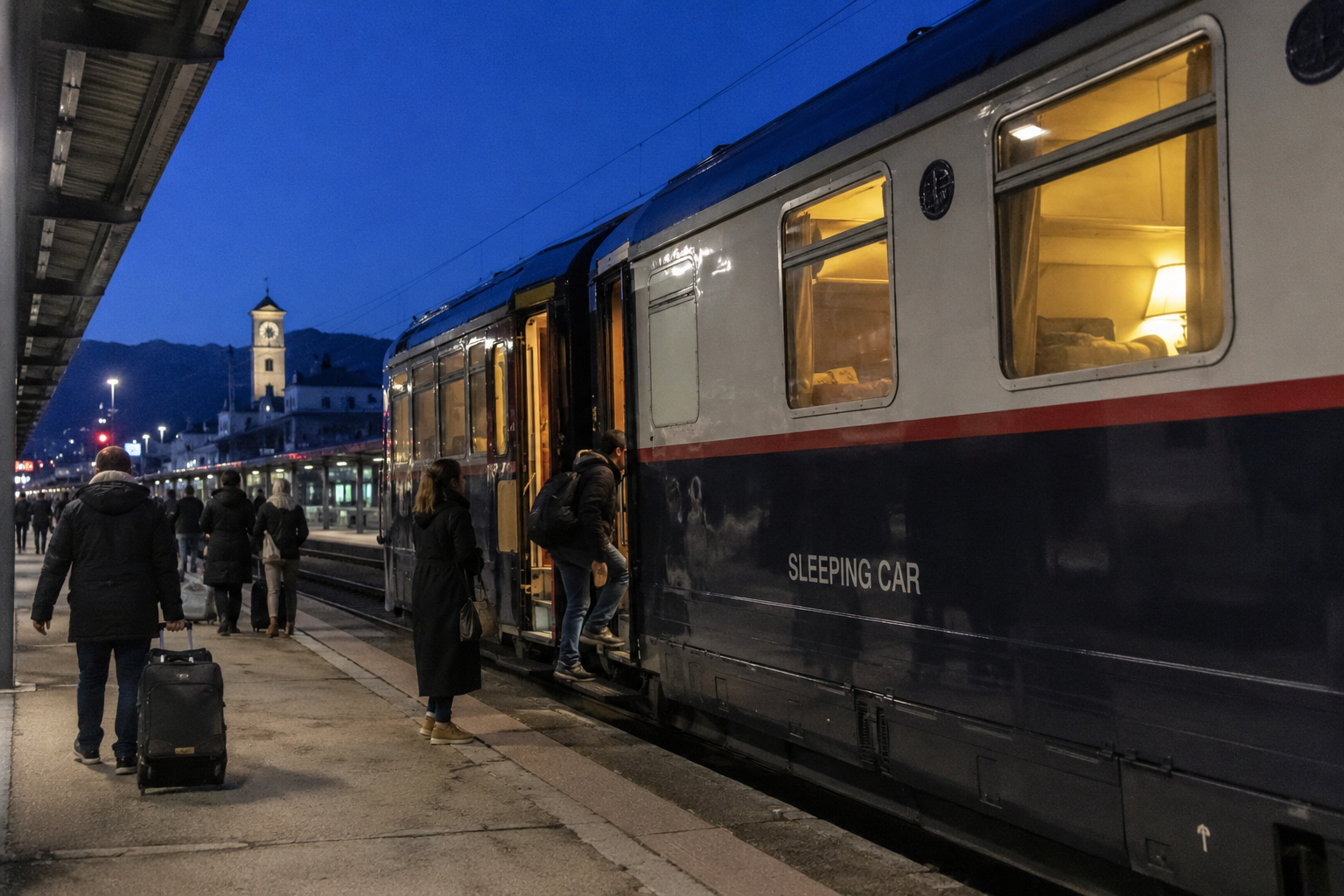
The revival is real, but it deserves an even-handed accounting, because the map is shrinking in places even as it grows in others. For every route that launched in 2026, roughly two others were quietly cut, among them several long-standing Nightjet lines and the spectacular Stockholm to Narvik run, a 1,456-kilometer journey into the Arctic that was one of the longest sleeper routes in Europe before it was dropped. A few surviving routes have been trimmed rather than killed, starting or ending short of where they once did, among them a sleeper toward the Adriatic coast that now begins in Vienna instead of further east. The network is in transition, growing and contracting at once, not simply booming.
The deeper problem is hardware. The single biggest obstacle to more night trains is a shortage of the sleeper carriages themselves, which are expensive and slow to build, so demand routinely runs ahead of the supply of beds. That mismatch shows up as trains selling out weeks early in summer and popular routes that could obviously fill more carriages than the operators can put on the rails. The enthusiasm is ahead of the equipment.
None of this should put anyone off, but it should shape expectations. A night train is a bed on a fixed schedule, not a hotel you can conjure the evening before. Treat it as a service that rewards a little planning and a little flexibility and it delivers handsomely. Expect a luxury cruise or reliable last-minute availability and it will let you down.
How to Get a Berth
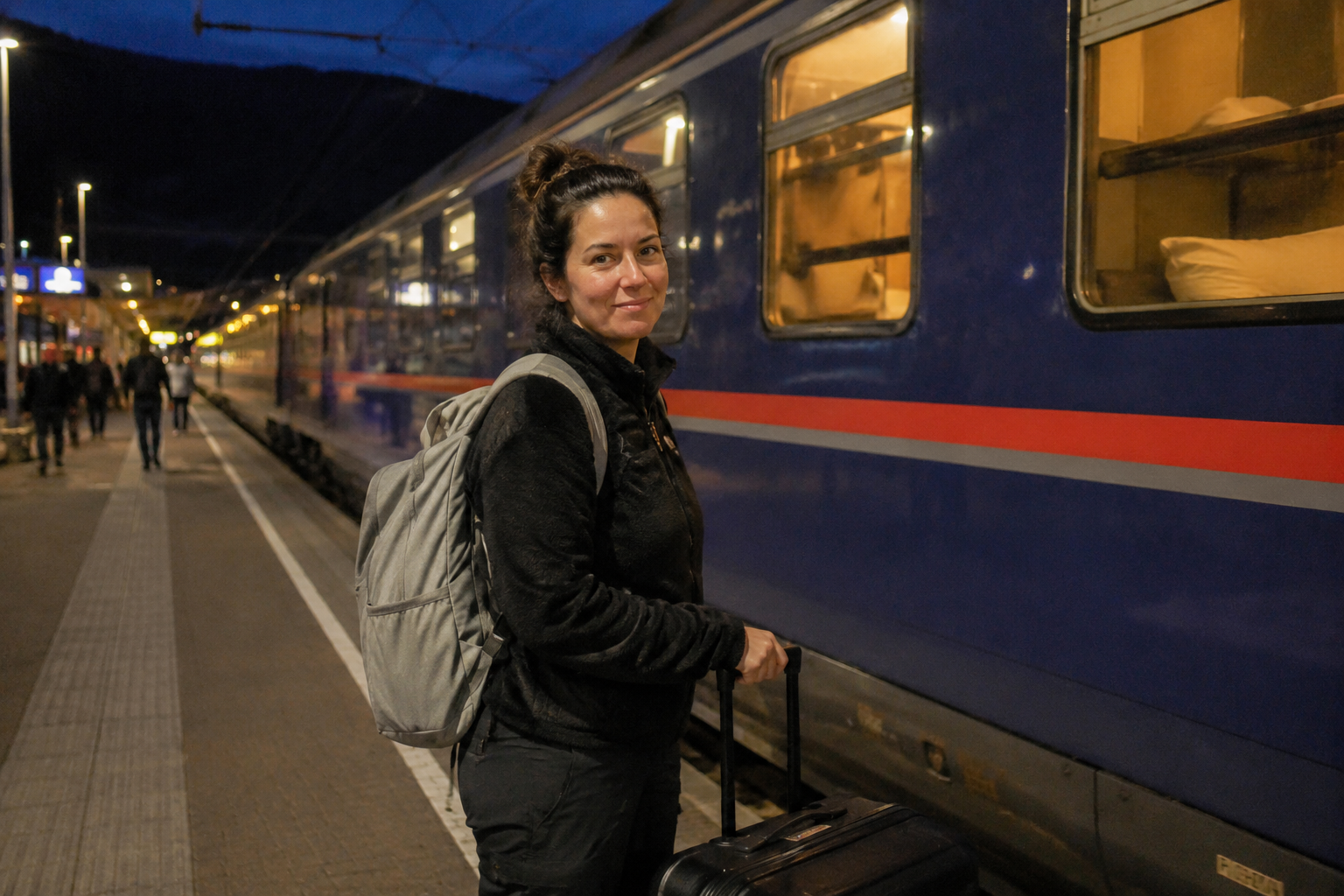
The booking rules are simple once you know them. Sleeper cabins on the popular routes sell out well in advance, especially for summer travel, so the single most useful habit is to book early, ideally two to three months ahead. Austrian Nightjet fares open about six months before departure, and the cheapest berths go first, with prices climbing steadily as the train fills.
Buy direct where you can. The Nightjet routes are cheapest through nightjet.com, and European Sleeper’s routes through the operator’s own site, while cross-operator platforms are handy for comparing options on a border-hopping journey but sometimes tack on a fee. If you are traveling on a Eurail or Interrail pass, the pass covers the base fare and you pay only a reservation supplement for your berth, which is nearly always far cheaper than buying the whole ticket outright.
Then pick your tier by the trip. For a short overnight or a tight budget, a couchette is the sweet spot. For a long haul or a night you truly need to sleep before, pay up for a private cabin or one of the new Mini Cabins. One note on luggage: sleeper trains have generous but not unlimited space, with room for a normal suitcase overhead or under the bunk, so the format suits a traveler with a bag rather than a mover with a van. Pack earplugs and an eye mask, carry a meal from the station if the route runs without a dining car, and set an alarm for a little before arrival. Do that, and you step off in a new city having slept your way there, with the hotel night you skipped still sitting in your pocket.

About the Author: Ruben, co-founder of Gamintraveler.com since 2014, is a seasoned traveler from Spain who has explored over 100 countries since 2009. Known for his extensive travel adventures across South America, Europe, the US, Australia, New Zealand, Asia, and Africa, Ruben combines his passion for adventurous yet sustainable living with his love for cycling, highlighted by his remarkable 5-month bicycle journey from Spain to Norway. He currently resides in Spain, where he continues sharing his travel experiences with his partner, Rachel, and their son, Han.