
There is something strange about marmitako. It is a hot, hearty stew, the kind of thing you would expect to eat by a fire in the depths of winter, yet its season is high summer, and its birthplace was not a kitchen at all but the pitching deck of a fishing boat in the Bay of Biscay.
Marmitako is the great tuna stew of the Basque Country, and it began as the practical meal Basque fishermen cooked for themselves at sea, in a single pot, using the fish they had just caught. Over time it came ashore and became one of the most beloved dishes in all of Basque cuisine. It is rustic, deeply savoury, and surprisingly easy to make, and once you understand its few defining tricks, it is hard to make badly.
A Stew Named After a Pot
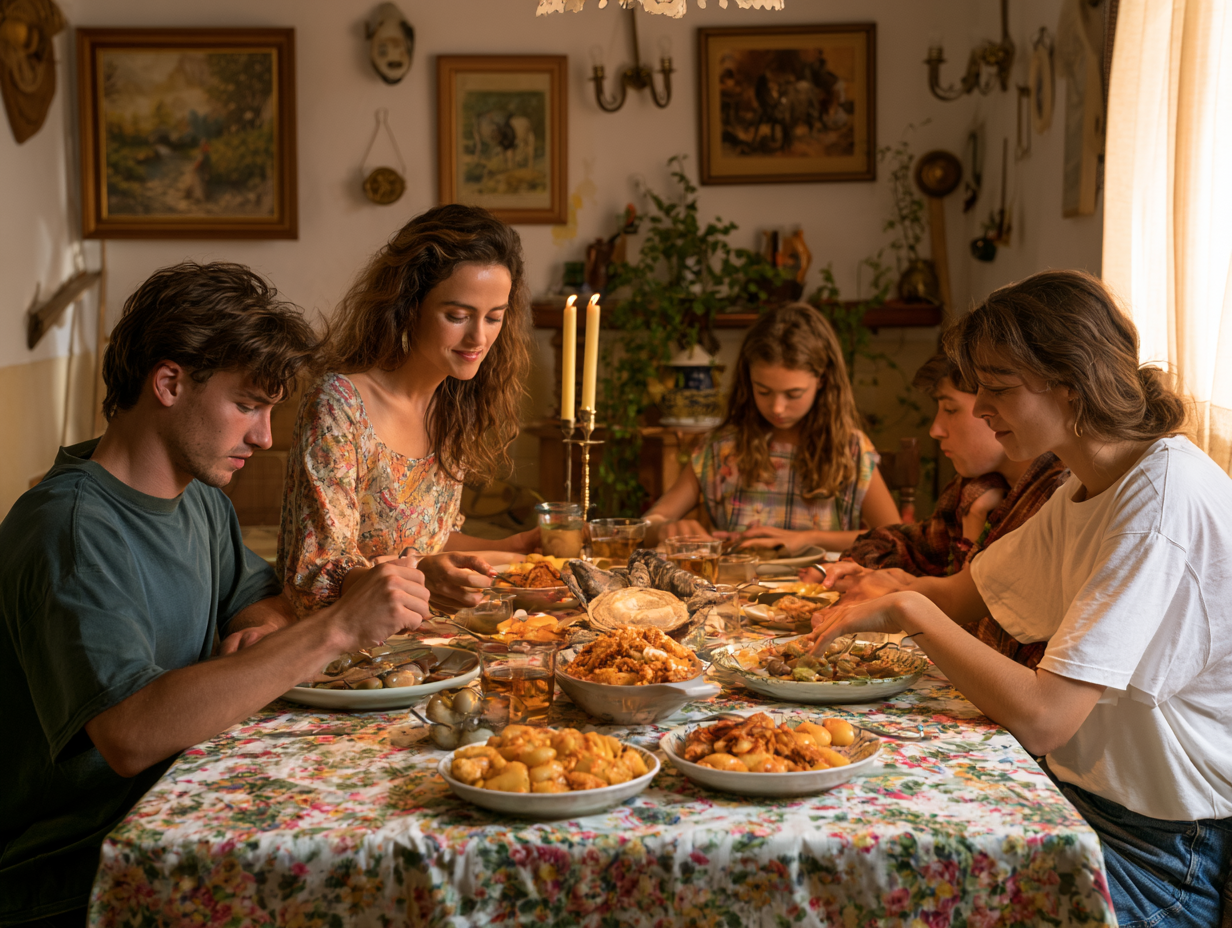
The name gives away the humble origins. Marmitako comes from marmita, the word for the metal cooking pot with a lid that the fishermen used on board, combined with the Basque suffix -ko, meaning from or of. Put together, marmitako means, quite simply, from the pot. The dish is named not after an ingredient or a place but after the vessel it was cooked in.
That tells you everything about how it came to be. During the summer tuna season, Basque boats would head out into the Bay of Biscay and the Cantabrian Sea for days at a time, and the crew had to be fed. The appointed cook worked with what was on board: the fresh fish they were catching, plus the potatoes, onions, and dried peppers that kept well on a long trip. Everything went into one pot over a single flame, because a boat has no room for anything more elaborate.
That constraint shaped the dish in every way. Everything about marmitako, the one pot, the few sturdy ingredients, the technique of tearing potatoes by hand, comes from the reality of cooking at sea with limited space, limited tools, and whatever would survive days away from port. The genius of it is how good the result is despite, or perhaps because of, those limits.
The same dish appears along the wider northern Spanish coast under other names. In parts of Cantabria it is called marmita or marmite, and on the western Cantabrian coast it goes by sorropotún. But it is with the Basque Country that marmitako is most deeply associated, a point of real regional pride, and it is the Basque version and name that have travelled the furthest.
The Fish That Makes It
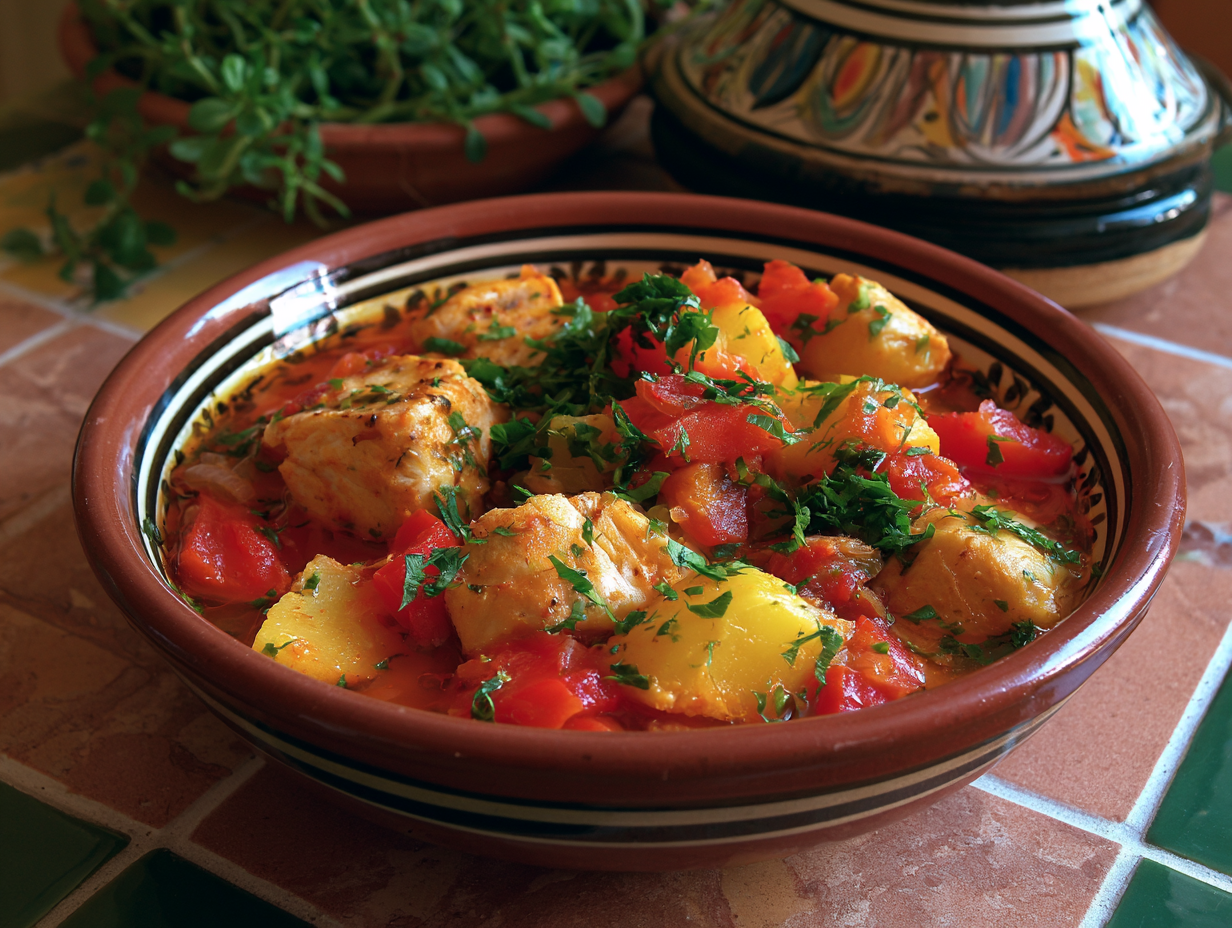
The soul of marmitako is the tuna, and not just any tuna. The traditional and correct choice is albacore, known in Basque as hegaluze, meaning long fin, and across Spain as bonito del norte, the northern bonito. It is a pale, delicate, prized fish, quite different from the deep red tuna revered elsewhere, and the Basques strongly prefer it for this dish.
The timing is no accident either. Albacore migrates close to the Basque coast between roughly July and September, and that summer run is exactly when marmitako is made and eaten. This is why the region has the curious tradition of a steaming fish stew as a summer dish, tied to the rhythm of the sea rather than the calendar of the weather. When the bonito is running, the marmitako pots come out.
How you treat the fish is the single most important technique in the whole recipe. The tuna is cut into chunks and added at the very end, after the pot has come off the heat, then left to sit for a few minutes so the residual warmth cooks it through gently. Albacore is lean and turns dry and chalky the instant it is overcooked, so this restraint is essential. Add it too early or boil it, and you ruin an otherwise perfect stew. Add it last and let it barely cook, and it stays silky and tender.
Get that one thing right and the rest of the recipe is forgiving. Get it wrong and even the finest broth cannot rescue a bowl of dry, crumbly fish. It is the hinge the whole dish turns on, and the easiest place for a first attempt to go astray.
The Cracked Potato Trick
The second signature technique is what the Basques do to the potatoes, and it is one of those small details that reveals the dish’s seafaring origins. Rather than slicing the potatoes cleanly, you break them, a method called cascar or chascar in Spanish.
You do it by pushing a knife partway into the potato and then twisting to snap off a jagged chunk, rather than cutting all the way through. Each piece comes away with a rough, torn edge instead of a clean cut face. This is not just for show. Those broken surfaces release far more starch into the broth as the potatoes cook, naturally thickening the stew into something rich and slightly creamy without any flour or cream. It is a beautiful piece of practical cooking wisdom.
There is a lovely story attached to it, too. The cracking technique is often said to be a nod to the difficulty of cutting neatly on a rocking boat with no proper surface, where tearing chunks off a potato by hand was simply easier than slicing. Whether or not that is the literal origin, the method survives because it works, and doing it the traditional way connects the home cook directly to those fishermen improvising dinner at sea.
It is a small thing, but it is the kind of detail that separates a real marmitako from a generic fish stew. Slice the potatoes neatly and you get a thinner, cleaner broth; crack them roughly and you get the thick, comforting, slightly clingy sauce that marks the dish as the genuine article.
How the Flavour Is Built

Beyond the fish and the potatoes, marmitako gets its deep, red-tinged flavour from a simple base and one special ingredient. The foundation is a sofrito, a slow-cooked mixture of onion, green pepper, and garlic softened gently in olive oil until sweet, which is where much of the stew’s depth is built.
The special ingredient is the choricero pepper. This is a dried, mild Spanish red pepper, soaked and scraped for its pulp, that gives marmitako its characteristic warm red colour and its gentle, fruity, faintly smoky flavour. It is fundamental to Basque cooking, and while smoked paprika can stand in at a pinch, there is no perfect substitute for the real thing. Ripe tomato usually joins the sofrito, and a splash of dry white wine is a common, welcome addition for a little acidity.
From there the assembly is straightforward. The cracked potatoes go in and are coated in the flavourful base, then fish stock or water is added to cover, and everything simmers until the potatoes are tender and beginning to fall apart, thickening the broth. Only then, off the heat, do the chunks of bonito go in to gently finish. A scatter of parsley, a drizzle of good olive oil, and some crusty bread to mop the bowl complete it, ideally with a glass of crisp Basque txakoli alongside.
From the Boat to the Festival
Marmitako long ago stopped being merely fishermen’s food and became a celebrated symbol of Basque identity, and today it is honoured in a very Basque way: with competitions. Across the coastal towns, summer brings marmitako cook-offs, where teams vie to produce the best version, and the dish is a fixture of local festivals during the bonito season.
That journey from necessity to celebration mirrors the dish’s own evolution. What began as the plainest possible meal, fish and potatoes in a pot, grew richer over the centuries as New World tomatoes and peppers arrived in Basque kitchens and found their way in. The humble stew kept getting better, until the thing born of scarcity became something people actively sought out. Even fine-dining restaurants now serve refined versions, sometimes finished with other seasonal fish.
There is a nice irony in that. The tuna that was once the cheap, practical catch feeding a hungry crew has become a prized, sometimes pricey ingredient, which makes a bowl of good marmitako something of a modest luxury today. But at its heart it remains what it always was: honest coastal cooking, a taste of the sea made by people who knew it intimately. The competitions and the restaurant versions are tributes to that origin, not departures from it.
Cooking It on Land
You do not need a boat, a net, or the Bay of Biscay to make a fine marmitako, only good fish and a little respect for the two key techniques. Crack your potatoes rather than slicing them, and add the tuna at the very end off the heat, and you are most of the way to the real thing.
Use the freshest albacore or bonito you can find, take your time over the sofrito, and track down some choricero pepper if you possibly can, because it is what makes the stew taste authentically Basque rather than merely nice. Then serve it the way the fishermen would recognise, in a deep bowl with plenty of bread, unfussy and generous. It is a dish that carries the whole story of the Basque coast in a single spoonful, and it tastes all the better for knowing where it came from.
Marmitako (Basque Tuna and Potato Stew)
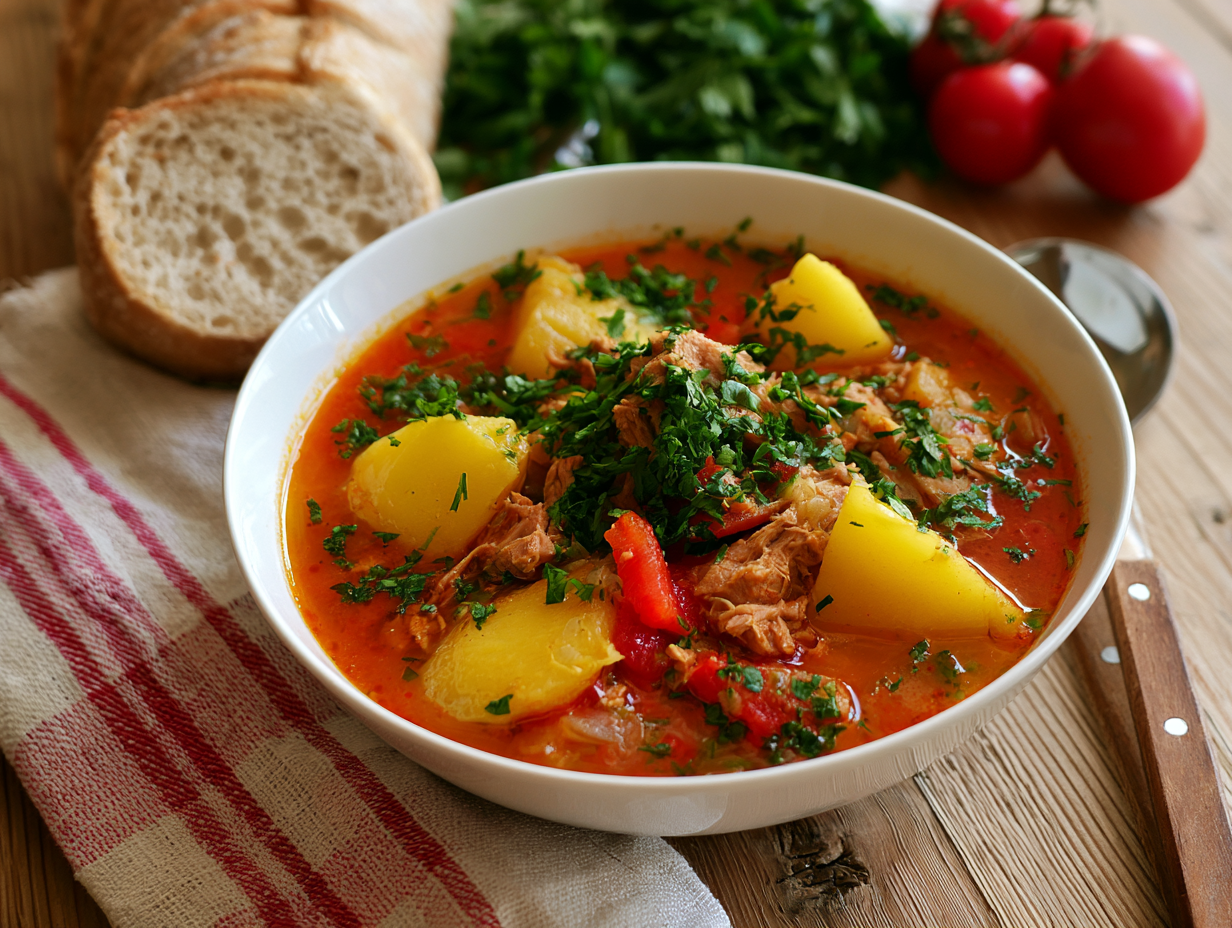
The Basque fishermen’s stew, born on the boats: albacore tuna and cracked potatoes in a rich broth built on sofrito and dried choricero pepper. The tuna goes in last to stay tender.
Serves: 4 · Prep: 20 minutes · Cook: 40 minutes
Ingredients
- 600 g (1¼ lb) fresh albacore or bonito tuna, cut into 3 cm cubes
- 800 g (1¾ lb) waxy potatoes, peeled
- 1 large onion, finely chopped
- 2 green peppers, chopped
- 3 garlic cloves, minced
- 2 ripe tomatoes, grated or chopped
- 2 dried choricero peppers (soaked, pulp scraped), or 1 tbsp ñora paste, or 1 tsp smoked paprika
- 100 ml (⅓ cup plus a splash) dry white wine (optional)
- 1 litre (4 cups) fish stock
- 3 tbsp olive oil
- 1 bay leaf
- Salt, to taste
- Fresh parsley, chopped, to serve
- Crusty bread, to serve
Method
- If using dried choricero peppers, soak them in warm water for 20 minutes, then scrape out the pulp with a knife and discard the skins.
- Break the potatoes into rough 3 cm chunks by inserting a knife partway and twisting to snap off each piece. Set aside.
- Heat the olive oil in a large pot over medium heat. Add the onion and green peppers and cook gently for 8 to 10 minutes until soft. Add the garlic and cook 1 minute more.
- Stir in the tomato and cook for a few minutes until thickened, then add the choricero pulp (or paprika) and the bay leaf.
- Pour in the white wine, if using, and let it bubble for a minute. Add the cracked potatoes and stir to coat them in the base.
- Add the fish stock to just cover the potatoes. Bring to a simmer and cook for 15 to 20 minutes, until the potatoes are tender. Mash a few against the side of the pot to thicken the broth. Season with salt.
- Remove the pot from the heat. Stir in the tuna cubes so they are submerged, cover, and leave to rest for 5 minutes; the residual heat will cook the fish through gently.
- Scatter with parsley, drizzle with olive oil, and serve hot with crusty bread.
Notes
- Albacore (bonito del norte) is the traditional fish; its lean flesh dries out easily, so never boil it, and add it only at the end off the heat.
- Cracking rather than slicing the potatoes releases starch that thickens the broth naturally.
- Choricero pepper gives the true Basque flavour and colour; smoked paprika is a passable substitute.
- Serve with a glass of Basque txakoli or a dry white wine.

About the Author: Ruben, co-founder of Gamintraveler.com since 2014, is a seasoned traveler from Spain who has explored over 100 countries since 2009. Known for his extensive travel adventures across South America, Europe, the US, Australia, New Zealand, Asia, and Africa, Ruben combines his passion for adventurous yet sustainable living with his love for cycling, highlighted by his remarkable 5-month bicycle journey from Spain to Norway. He currently resides in Spain, where he continues sharing his travel experiences with his partner, Rachel, and their son, Han.