
The plates have been cleared for half an hour. The coffee cups are empty, one glass of wine is going warm, and nobody at the table has made any move to leave. In an American restaurant a waiter would have dropped the check by now, twice. Here, in a small place in a Spanish town, the four people at the table are still talking, still laughing, still entirely where they want to be. This is the sobremesa, and it is one of the most quietly revealing things about how Spain lives.
There is no clean English word for it. Sobremesa comes from sobre, meaning over or upon, and mesa, meaning table, and it names the stretch of time spent lingering at the table after a meal is finished. Not eating. Just being there, in conversation, letting the meal dissolve slowly into the afternoon. English speakers know the feeling, but the fact that Spanish gave it a name says something about how much it matters.
A Word With No English Equal
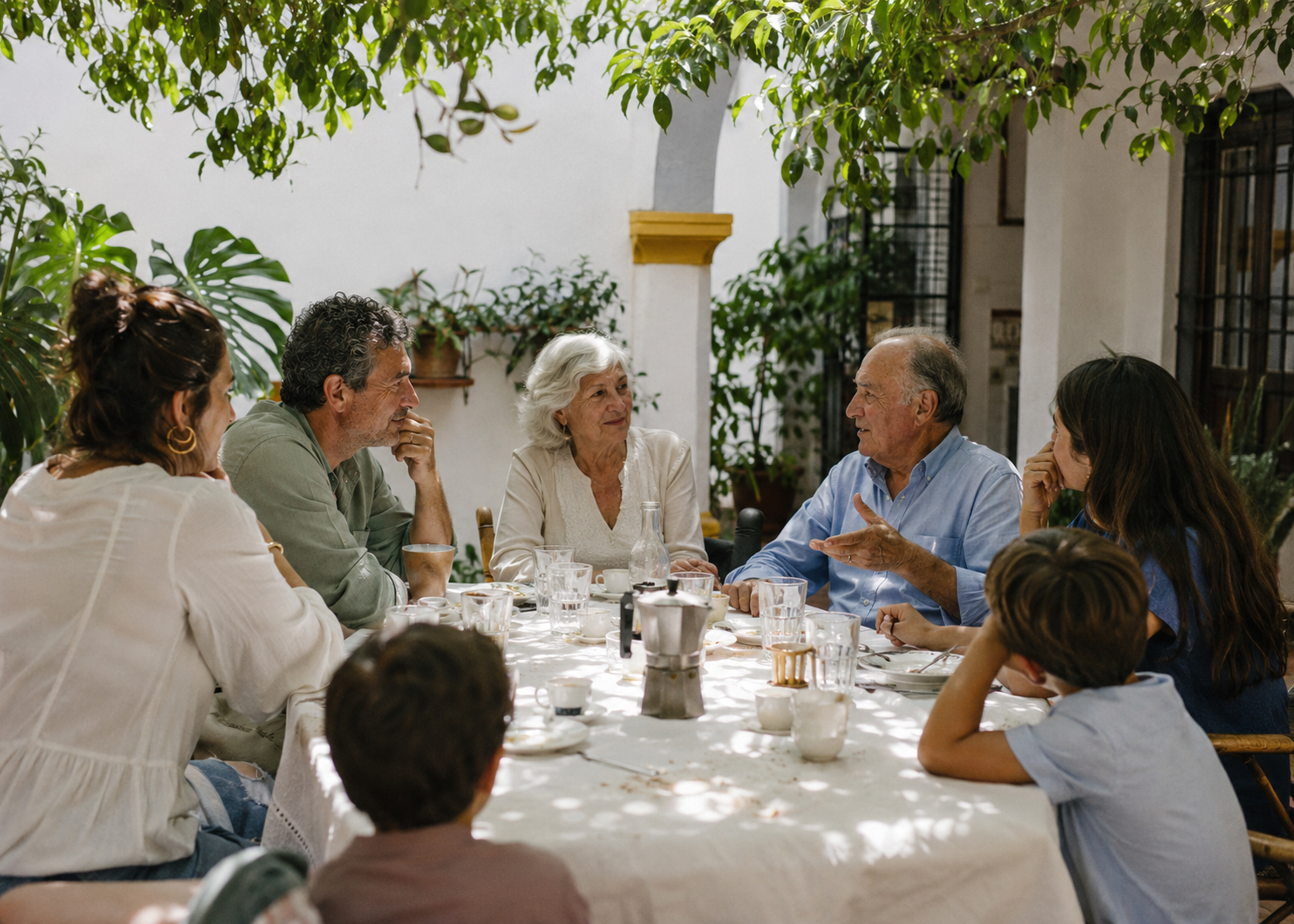
Every language has gaps, words that exist in one and simply have no counterpart in another. Sobremesa is one of the clearest examples in Spanish. English can describe the act, lingering at the table, chatting after dinner, but it has no single term for it, and no cultural expectation attached to one.
That absence is telling. In English-speaking cultures, particularly in the United States, the meal is the event and its end is a signal to move on. The plates come, the plates go, and the table is a place you pass through on the way to the next thing. The idea that the time after eating is itself a distinct and valued part of the meal barely registers.
In Spanish, the word carries weight because the thing it describes is protected. To have a word for something is to notice it, to treat it as real. Spain named the after-meal hour, built customs around it, and defends it against the clock. The gap in English is not just linguistic. It reflects a genuine difference in what a shared meal is understood to be for.
There is a neat twist that proves the point. Portuguese has the very same word, sobremesa, but it means something else entirely: dessert, the sweet course itself. The two languages took the same building blocks, over and table, and Spanish used them for the conversation while Portuguese used them for the pudding. It is one of those rare cases where a word crosses a border intact and quietly swaps its meaning on the way.
Where the Custom Comes From
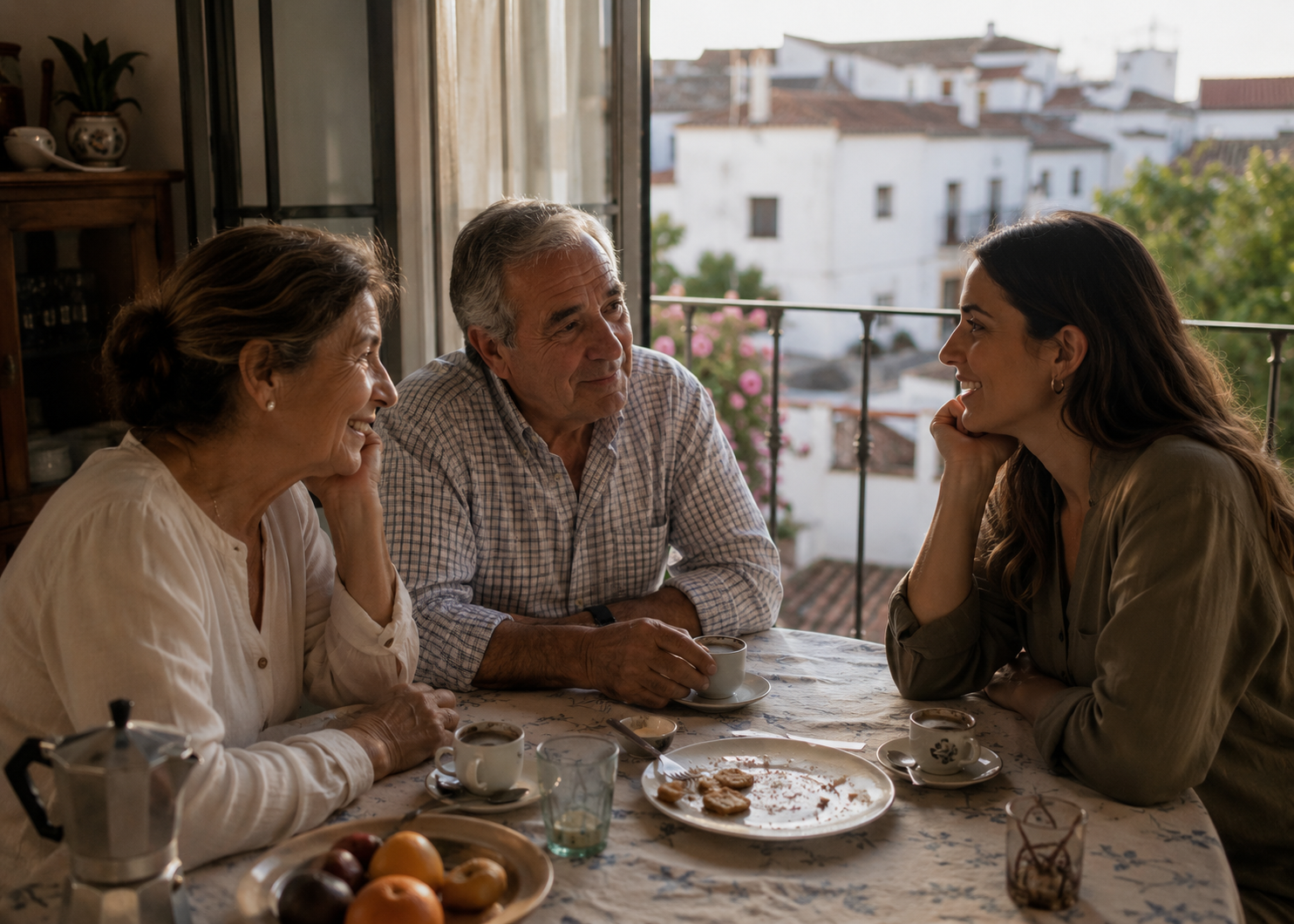
The sobremesa is not an accident of temperament. It grew directly out of the shape of the Spanish day, and specifically out of lunch, which in Spain is the large meal and the axis the whole day turns on.
A traditional Spanish lunch is substantial, often three courses, a first plate, a second, and a dessert, eaten in the early afternoon rather than at midday. After a meal that size, the body wants rest, and for centuries the answer to that was the siesta. Since it would be strange to actually sleep at a restaurant table, the sobremesa became the sociable version of the same pause, a way to let a heavy meal settle without lying down.
The climate reinforced it. In much of Spain the early afternoon in summer is punishingly hot, the worst possible time to be out working or walking, so staying at the table in the shade with a coffee made obvious sense. The custom is Mediterranean at root, shared in gentler forms with Italy and Greece, and tied to a rhythm of life where lunch is late, unhurried, and central rather than a sandwich eaten at a desk.
There is a historical layer under it, too. For generations of agricultural and small-town Spain, the midday meal was when a scattered family reconvened, workers walking home from the fields or the workshop to eat together before the afternoon’s work resumed. The sobremesa was the seam that held that gathering open a little longer. Even as the country urbanised, the habit of treating lunch as the day’s true meeting point survived the move to the city.
The Unspoken Rules of the Table
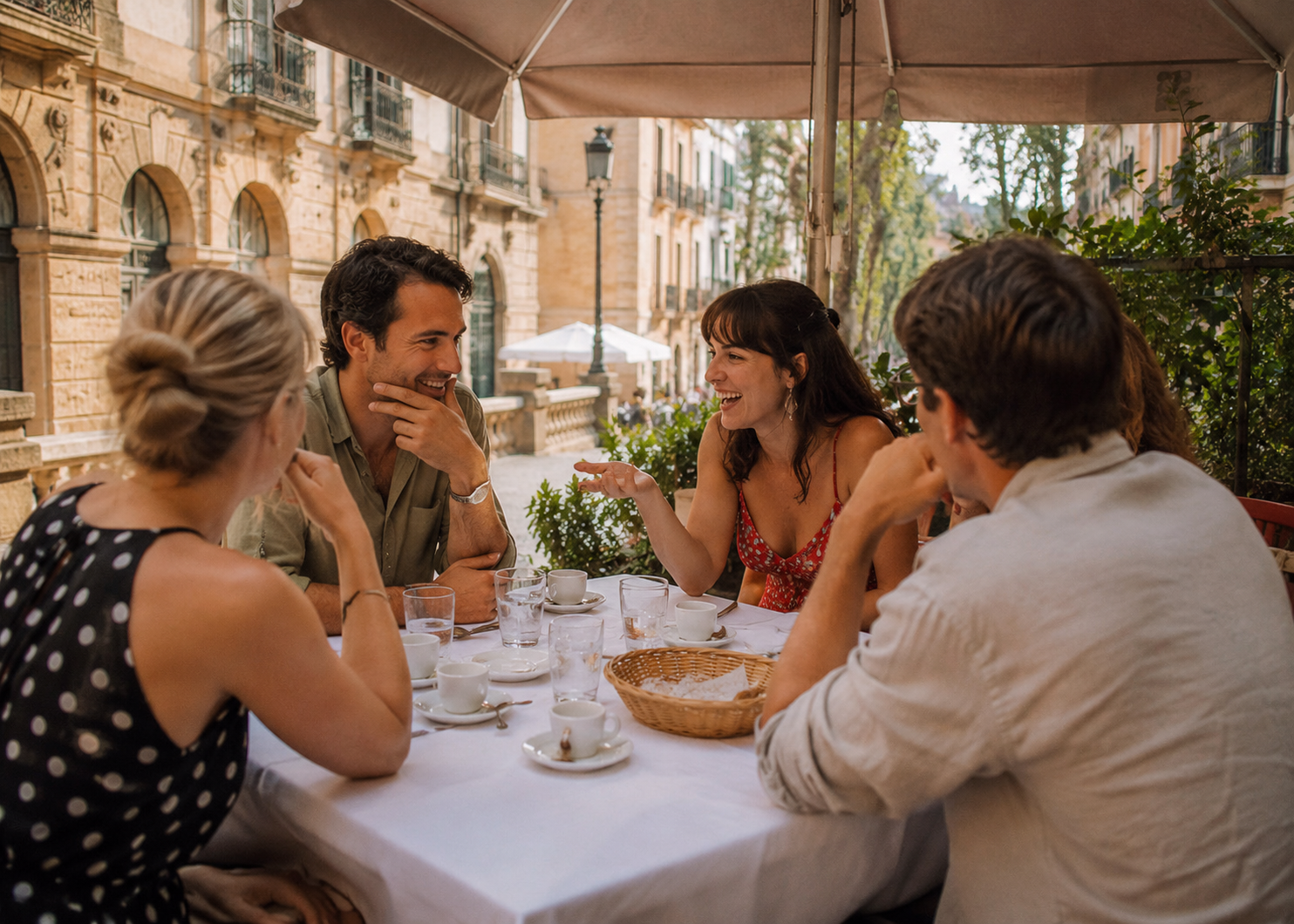
The sobremesa runs on conventions that no one writes down but everyone follows. The first is that you do not rush, and you do not make anyone else feel rushed. Getting up the moment the food is gone reads as abrupt, even a little cold, as though the company were merely a means to the meal.
The second rule explains something that baffles many visitors: the check does not come until you ask for it. In Spain, bringing the bill unprompted would be rude, a way of telling guests their time is up. So the waiter leaves you alone, sometimes for a very long time, and it falls to you to catch their eye and ask. Tourists often read this as poor service when it is exactly the opposite, a deliberate courtesy built around the sobremesa.
The final rule concerns what accompanies it. The sobremesa is fuelled by small things: a café solo, a carajillo laced with brandy, a chupito of some digestive liqueur, or simply the last of the wine. These are not really about the drink. They are permission to stay, a reason to keep the table occupied while the real business, the talking, continues.
There is an art to the pacing, as well. A good sobremesa is not one long conversation but a series of them, drifting from the meal to the news to old family stories and back, with comfortable silences allowed in between. Nobody is performing, and nobody is rushing to fill every pause. That ease is the whole texture of it.
The Sobremesa Hour on National Television
The custom is embedded deeply enough in Spanish life that it shapes the television schedule. The main national news programmes air at three in the afternoon, not in the evening as in much of the world, precisely because that is when the country is sitting over the remains of lunch.
This slot, the sobremesa hour, is one of Spain’s prime viewing times. Families and workers watch the news, a film, or a talk show with a coffee in hand, still at the table or moved to the sofa, before the afternoon resumes. Broadcasters build their afternoon lineup around the assumption that a large share of the audience is mid-sobremesa.
It is a small detail, but a revealing one. In most countries the peak television audience gathers at night. That Spain has a second, midday peak built around what people do after lunch shows how real and how national the sobremesa is. It is not a quaint custom clinging on in villages. It is a scheduling fact that the entire broadcast industry plans around.
It Is Not Only About Lunch
Though the classic sobremesa follows Sunday lunch, the custom stretches across far more of Spanish life than a single weekend meal. It appears after weekday lunches, after long dinners, and crucially in the world of work.
The business lunch in Spain is built on it. Deals and relationships are not made over the food so much as during the sobremesa that follows, when the plates are gone and the guard drops and people actually talk. Leaving immediately after eating, as an efficient visitor might, can come across as dismissive, a signal that you valued the transaction over the person. Allowing time for even a short sobremesa is read as respect.
At home, the weekend sobremesa can run for hours, especially when family has gathered. It is where the news of everyone’s week gets shared, where old stories are retold, where children absorb how the adults argue and joke and reconcile. Weeknight versions are shorter but no less real, and more than one Spaniard has looked up from an after-dinner conversation to find it is somehow past midnight on a work night. The meal ends. The gathering does not.
Card games often keep it going. In many families the sobremesa slides naturally into a few hands of mus, tute, or another traditional game, the deck appearing without ceremony once the coffee is poured. The cards are really just another excuse to stay at the table, a bit of structure laid over the simple wish not to leave yet.
Why Americans Find It So Hard
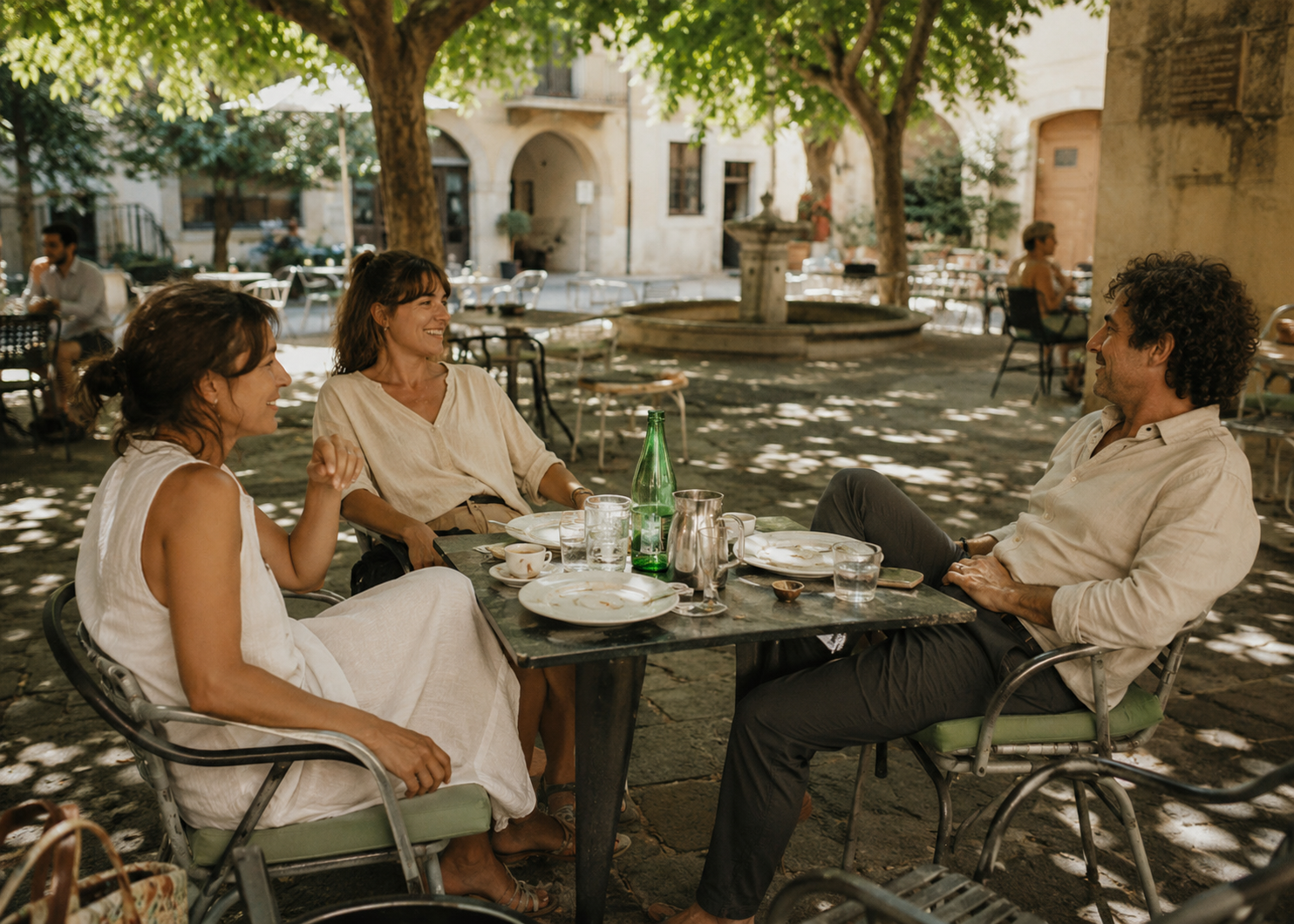
For visitors from fast-paced cultures, and Americans in particular, the sobremesa can be genuinely disorienting. It runs against a deep instinct that time is a resource to be spent efficiently and that a finished meal is a task completed.
In much of American life, eating is treated as utilitarian. You eat between other things, quickly, so you can get back to work or class or the next item on the list. The idea of sitting at a table for two hours after the food is gone, with nowhere to be and nothing to do but talk, can feel not relaxing but faintly stressful, like time being wasted. The pull toward the next task is strong, and the empty plate feels like a starting gun.
The confusion is sharpest around the check. A visitor waits, increasingly puzzled, for a bill that never comes, reads it as neglect, and grows frustrated, when the waiter is simply extending the standard Spanish courtesy of not rushing the table. Learning to relax into the sobremesa, to stop waiting for the meal to be officially over and simply enjoy the fact that it is not, is one of the small cultural adjustments that changes how a person experiences Spain.
It helps to reframe the waiting itself. The empty stretch after the meal is not dead time to be escaped but the part the whole custom is built around, the reward for the food rather than an awkward coda to it. Once a visitor stops reading the cleared plate as a cue to leave, the entire rhythm of the Spanish day starts to make sense.
What Gets Lost When You Rush
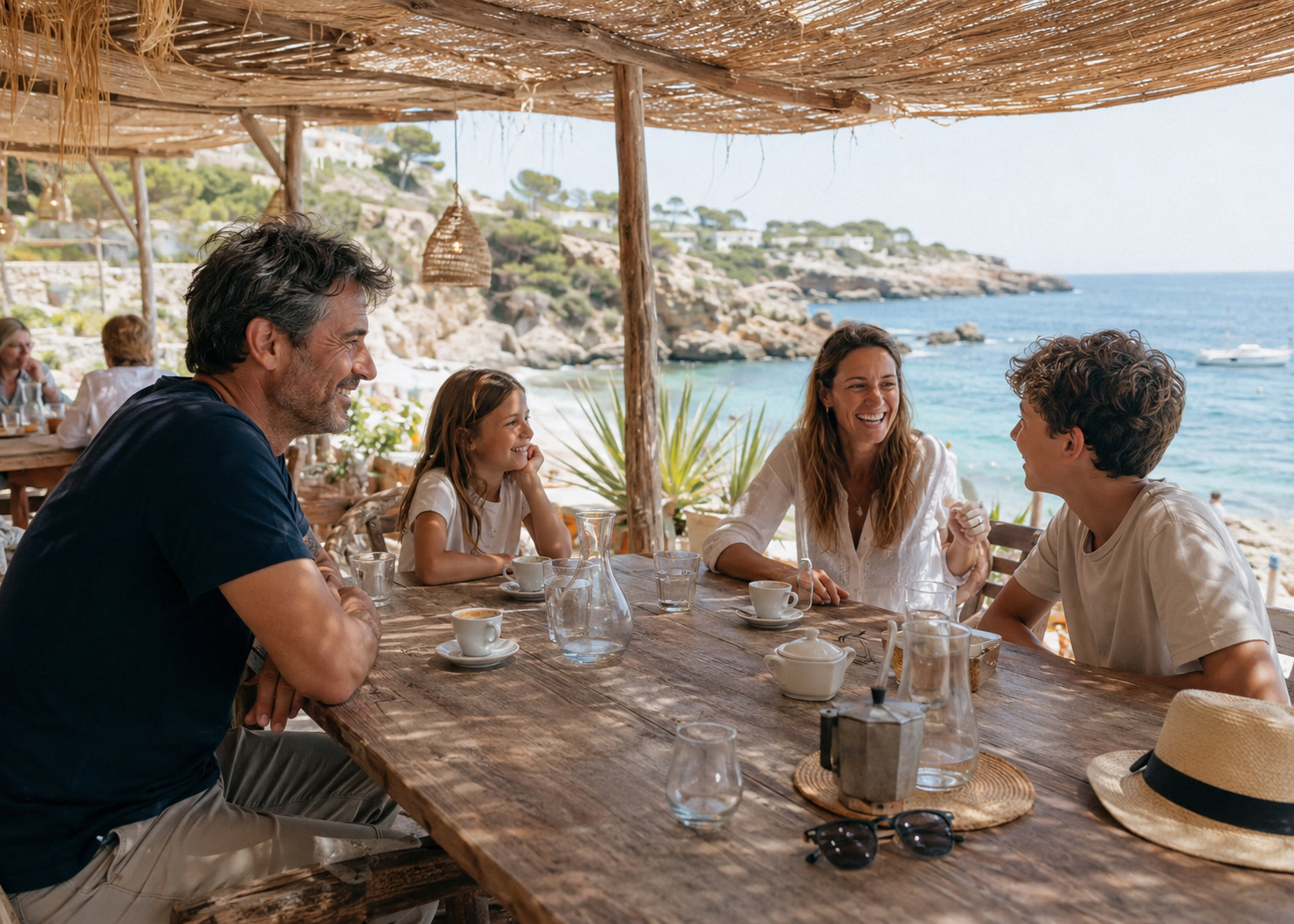
Strip away the romance and there is a real argument underneath the sobremesa, one worth taking seriously in either direction. On one side, the custom protects something modern life erodes almost everywhere: unhurried, undistracted time with the people you are eating with, phones down, nowhere to be.
Those who defend it point to what that time does. Conversation deepens when it is not racing a clock. Relationships, family and professional alike, are built in the loose, unforced hours the sobremesa creates. There is even a plausible case that it is good for wellbeing, a daily built-in pause that lowers stress in a way a rushed lunch never could. In an age of constant distraction, an hour at the table talking to real people in front of you is not nothing.
On the other side, Spaniards themselves debate whether the custom, combined with long working hours and a late schedule, drags out the day and dents productivity. Some argue for a more sensible timetable that would let people keep the sobremesa without paying for it with a working day that ends at eight in the evening. It is a live argument in Spain, not a settled virtue. But almost nobody argues for abolishing the sobremesa itself. The debate is about the schedule around it, never about the value of staying at the table. That near-unanimity is itself telling, in a country that loves to argue about almost everything else.
Is the Sobremesa Disappearing?
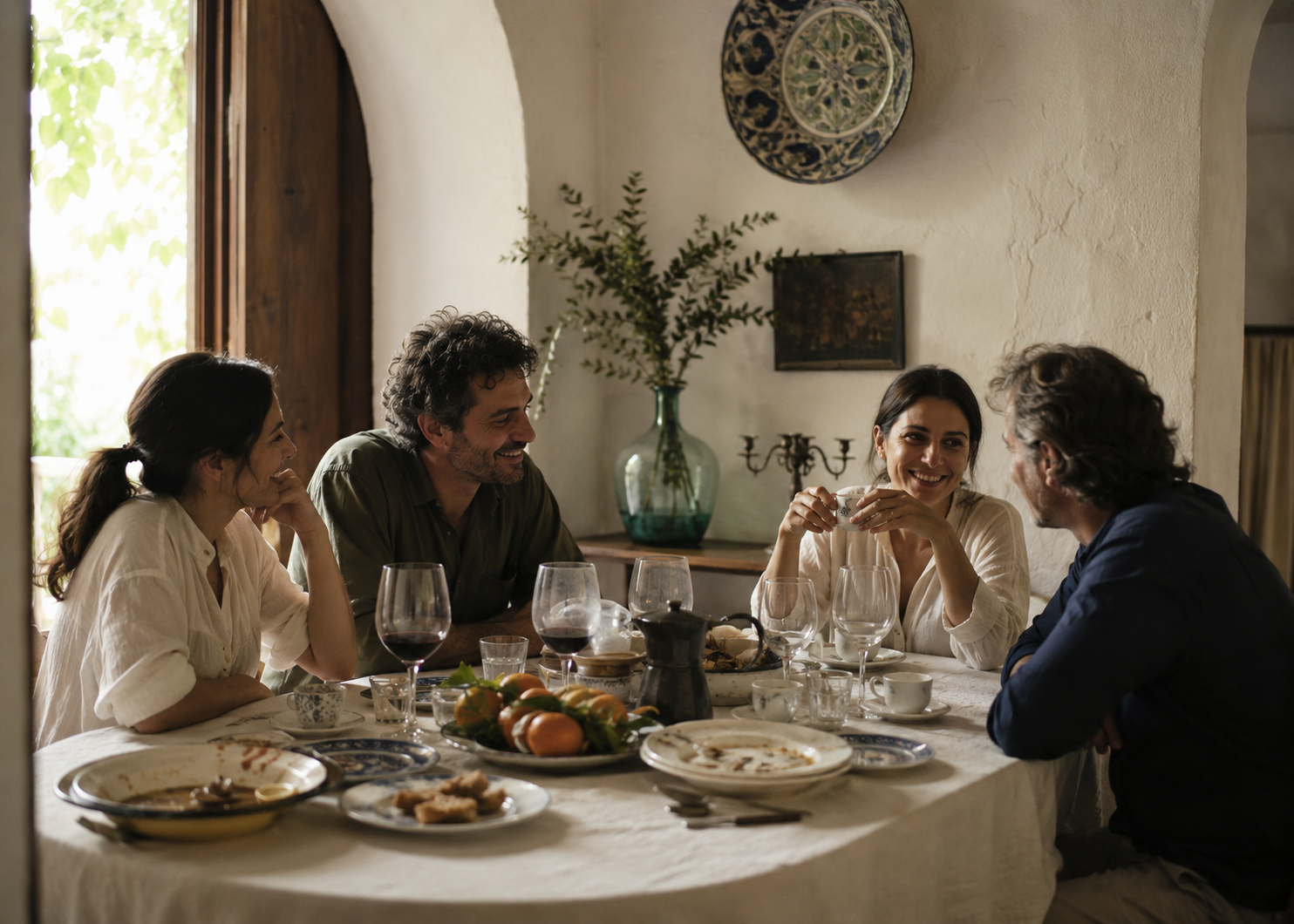
Like every deep-rooted custom, the sobremesa faces pressure from the way modern life is organised, and it would be dishonest to pretend nothing is changing. In the big cities especially, the traditional split day with its long midday break is giving way to the jornada continua, a single continuous shift that ends in the late afternoon.
That change squeezes the weekday sobremesa hard. A worker with a forty-minute lunch break near the office cannot linger for two hours over coffee, and many younger Spaniards now eat a quicker, lighter lunch far closer to the northern European model than their grandparents would recognise. Dual-income households, long commutes, and the general acceleration of urban life all pull in the same direction, toward the efficient meal and away from the unhurried one.
Yet the custom is proving stubborn where it counts. The weekend sobremesa, and above all the long Sunday version with family, remains close to untouchable, protected precisely because it is not a work meal. Holidays, celebrations, and gatherings with friends still summon it reliably. The sobremesa may be retreating from the ordinary Tuesday, but it is holding firm on the days people most want it, which suggests it is less a fading relic than a custom settling into its proper place in a busier century.
How to Actually Have One
For a visitor who wants to understand Spain rather than just pass through it, the sobremesa is one of the easiest and most rewarding customs to adopt. It costs nothing and asks only that you resist a single instinct: the urge to leave.
The method is simple. When the meal ends, order a coffee or a small digestive and stay put. Do not ask for the check. Let the conversation wander wherever it goes, and give it the time it needs to get somewhere. Put the phone away, since a sobremesa spent scrolling is not a sobremesa at all. The whole practice is an argument, made with your own afternoon, that the people across the table are worth more than the schedule.
Spaniards will tell you that the best part of a meal is often not the food but what comes after it, and that a table full of empty plates and unhurried talk is close to the point of eating together in the first place. There is no word for it in English, but there is nothing stopping anyone from doing it. The next long lunch, when the plates are cleared and you feel the reflex to stand, is the moment to try. Just stay, and see how far the afternoon takes you.

About the Author: Ruben, co-founder of Gamintraveler.com since 2014, is a seasoned traveler from Spain who has explored over 100 countries since 2009. Known for his extensive travel adventures across South America, Europe, the US, Australia, New Zealand, Asia, and Africa, Ruben combines his passion for adventurous yet sustainable living with his love for cycling, highlighted by his remarkable 5-month bicycle journey from Spain to Norway. He currently resides in Spain, where he continues sharing his travel experiences with his partner, Rachel, and their son, Han.