
An American friend stayed with us for a week last summer and said the thing out loud that a lot of visitors only think. She had not snacked once since arriving, and she could not work out why. At home she grazed all day, a handful of something here, a bar in the car, a nibble while cooking. Here, somehow, the urge had just gone quiet. She wanted to know what was wrong with her.
Nothing was wrong with her. She had simply stepped out of one food environment and into another, and the new one was not asking her to snack every ninety minutes. The thing she had always assumed was a personal weakness turned out to be a feature of the place she lived, not the person she was.
This is the part that gets the explanation wrong almost everywhere. Americans snack far more than Europeans, and the standard story blames willpower, as though one nation simply has less self-control than another. That story is not just unkind. It is wrong, and it misses everything that is actually going on.
How Big The Gap Actually Is
Start with the scale of it, because it is larger than people realize. In the United States, snacking has climbed steadily for decades. Surveys now find that more than 90 percent of American adults snack on a given day, often two or three times, and the share eating between meals roughly rose from around 60 percent in the late 1970s to 90 percent a generation later.
The three-meal day, in other words, has quietly dissolved in America into a more or less continuous stream of eating occasions. Breakfast, lunch, and dinner still exist, but they float in a sea of smaller intakes, the mid-morning thing, the afternoon thing, the evening thing, the drink that is really a meal.
Europe snacks too, and anyone who tells you Europeans never eat between meals has not met a Spanish child at merienda time. But the pattern is different in a way that matters. Snacking in much of Europe is bounded and occasional rather than constant, often a single scheduled afternoon bite rather than an all-day drip. The difference is not whether people snack. It is whether snacking has swallowed the whole day.
The Spanish merienda is a good illustration. It is a real snack, often bread with chocolate or a piece of fruit, eaten by children and plenty of adults in the late afternoon. But it has a time and a shape. It happens once, around five or six, and then it is over. It is a scheduled pause, not a permanent state, which is a completely different thing from a packet of something open on the desk all day.
Snacking Was Largely Manufactured
The decades-long climb in American snacking is the tell that this is not human nature at work. People did not suddenly grow hungrier between 1977 and today. The food industry got dramatically better at selling them food to eat between meals.
Snacking as a constant, all-day category was, to a real degree, built and marketed into existence. The snack aisle, the breakfast bar, the hundred-calorie pack, the idea of a “fourth meal,” the grab-and-go everything, these are recent commercial inventions, and the numbers track their arrival. A behavior that doubled in fifty years is not an eternal feature of human appetite. It is a market that was created.
This is why the willpower framing is not just unkind but backwards. You are not failing to resist a timeless temptation. You are the target of an enormously sophisticated, well-funded effort to get you eating more often, and that effort largely succeeded at the population level. Europe has been slower to fully industrialize its food culture in this particular way, which is a large part of why the all-day grazing pattern is less entrenched there. The gap is not one of character but of how far the snack economy has been allowed to reach into ordinary life.
It Starts With Real Meals
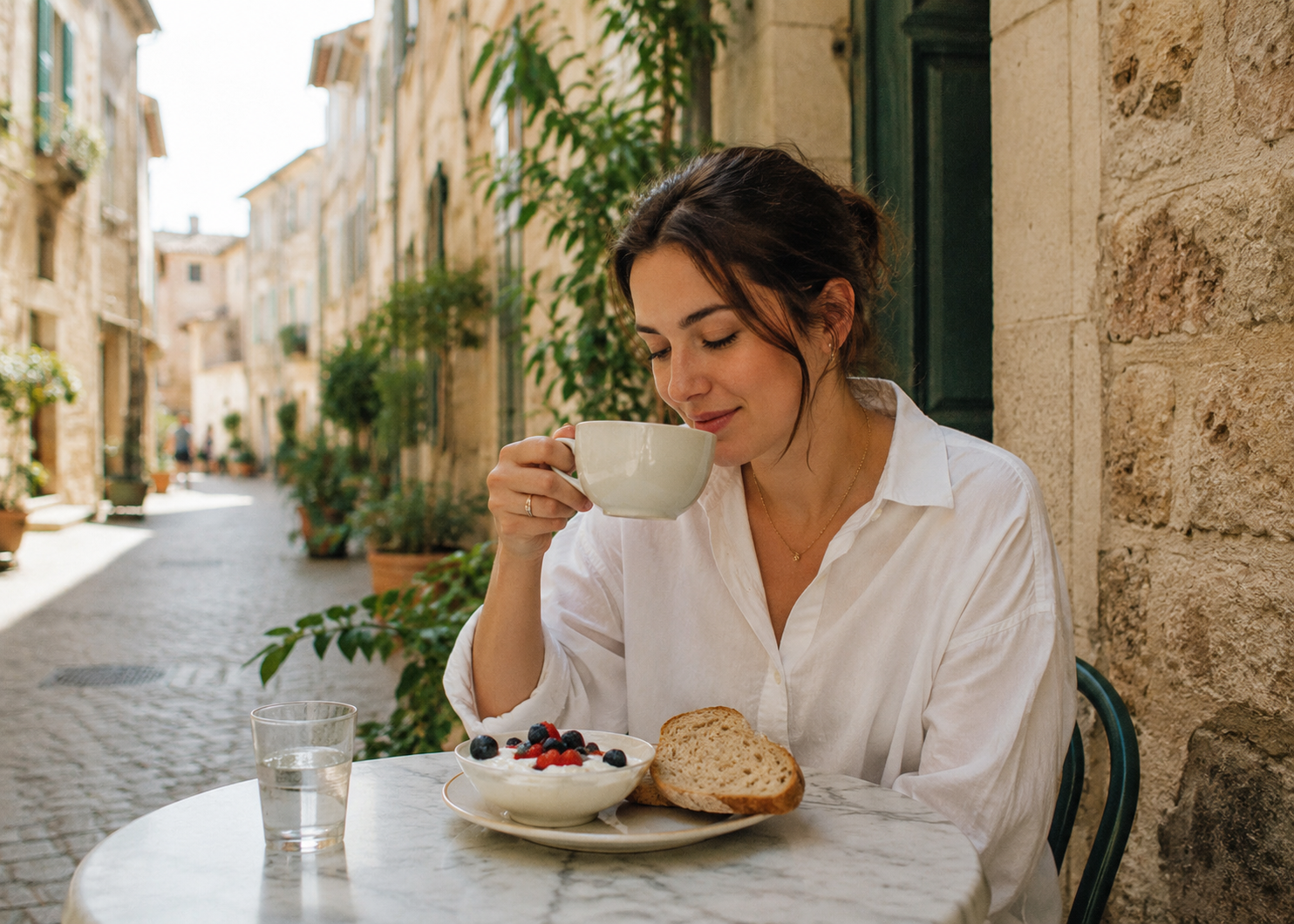
The first reason has nothing to do with snacks at all. It is about what happens at the meals around them.
A proper European lunch is a real event, a sit-down meal, often the largest of the day, eaten slowly and frequently with other people. In Spain the midday meal can run to an hour or two and several courses. A meal like that actually fills you, and a body that is genuinely fed at lunch does not come looking for something at three and again at four-thirty.
The American lunch, by contrast, has shrunk and sped up, a sandwich at the desk, something grabbed between tasks, eaten fast and often alone. A small, hurried, half-distracted meal does not satisfy the way a real one does, and the hunger it fails to settle comes back as the urge to snack a couple of hours later. The grazing is the body trying to make up for meals that were too small and too rushed to do their job.
Fix the meals and a lot of the snacking simply never starts. The structured European day is not suppressing the urge to snack through discipline. It is preventing the urge from forming in the first place by feeding people properly when they sit down.
The Food Itself Is Different
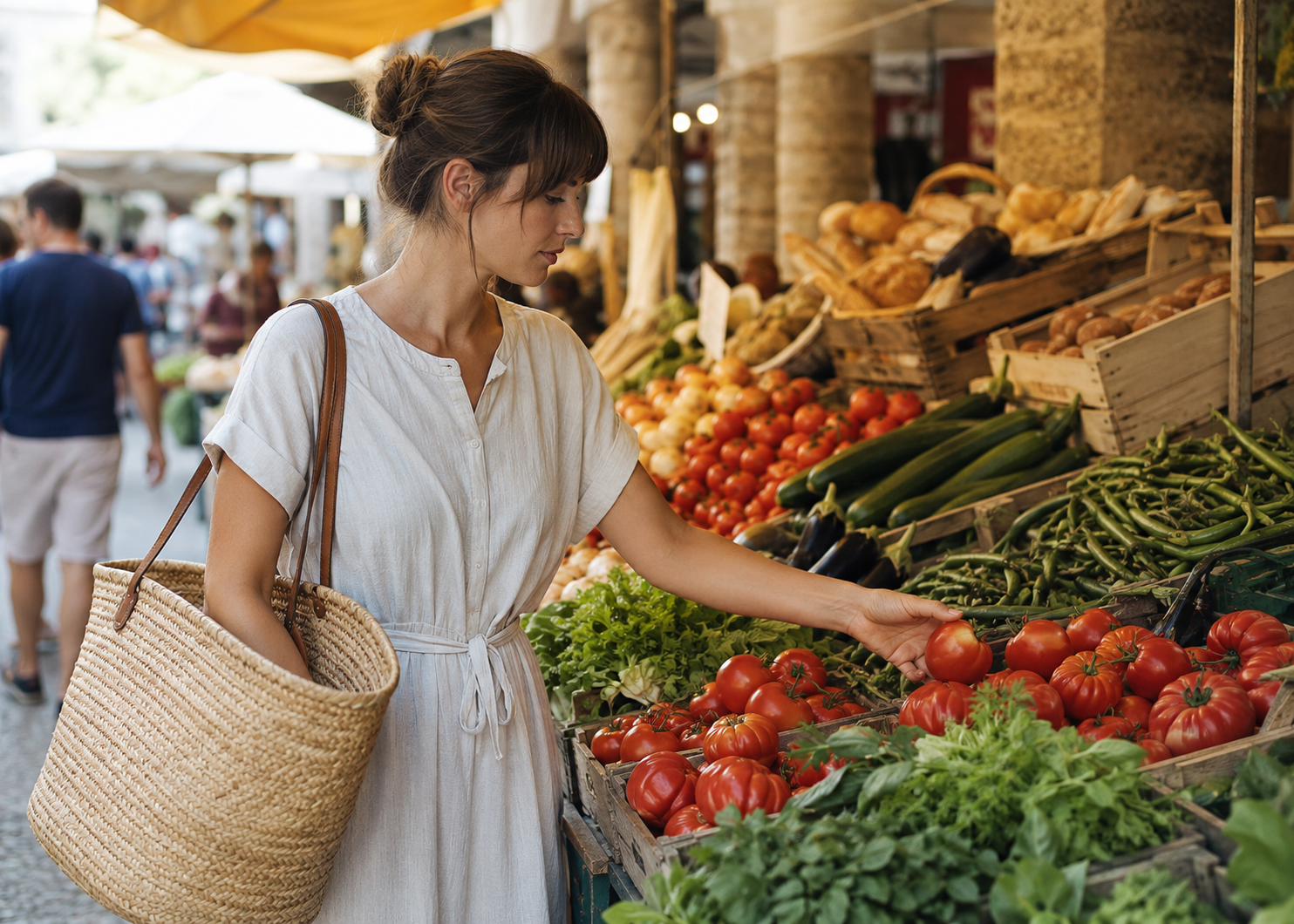
Here is the part that does the heaviest lifting, and it is the same factor underneath most of these comparisons. What Americans snack on is engineered to make them snack again.
In the United States, around 60 percent of the calories people eat come from ultra-processed food, the industrially designed products built to be eaten quickly and endlessly. In Italy the figure is closer to 15 percent. These are not foods you nibble and feel satisfied by. They are formulated, deliberately, to bypass the body’s fullness signals so that one is never quite enough.
That changes everything about the urge to snack. A handful of chips, a sweet drink, a snack bar engineered for “craveability” leaves you hungrier in an hour, not less hungry, because it spikes and drops your blood sugar and does almost nothing for real satiety. The snack creates the next snack. It is a designed loop, and willpower is a poor defense against a product built by scientists to defeat it.
The European snacker reaching for fruit, bread, cheese, or a few olives is eating something that actually fills a small gap and then lets them stop. The difference in what is being snacked on matters as much as how often. One kind of snack closes the hunger. The other kind opens it wider.
The Drink Is Often The Snack
A large share of American between-meal intake is not eaten at all. It is drunk, and it hides in plain sight.
The bottomless soda, the sweetened iced coffee the size of a vase, the sports drink, the flavored everything, these are snacks in liquid form, delivering a meal’s worth of sugar without ever registering as eating. Because they do not feel like food, they slip past the part of the brain that might otherwise call it a snack, and they spike and drop blood sugar in exactly the way that summons the next craving.
The European default with a meal is water, or a small strong coffee, or a glass of wine, and between meals, often nothing but water. The constant sweet drink is one of the most invisible engines of American grazing, and simply removing it closes a surprising amount of the gap on its own. A day punctuated by sugary drinks is a day of continuous small snacking, whether or not anyone would describe it that way.
The Whole Environment Pushes One Way
Step back from the plate and the difference is built into the surroundings. The American food environment is engineered, top to bottom, to put eating within arm’s reach at every moment of the day.
There are vending machines in every lobby, drive-throughs on every corner, enormous packages designed to be opened and grazed from, snacks at the gas station register, food courts, cup holders sized for buckets of soda. The default American setting is that food is always available, always nearby, always being sold to you. In that environment, not snacking takes constant active effort, because the prompt to eat arrives every few minutes from the outside.
European daily life, for now, simply offers fewer of those prompts. Shops close in the afternoon. Portions and packages are smaller. There is less food sold at every turn, fewer machines, fewer giant grab bags, less of the constant ambient invitation to eat. When the environment stops asking you to snack, the snacking quietly stops, and it feels like willpower when it is really just the absence of the prompt.
Eating Is An Event, Not A Background Activity
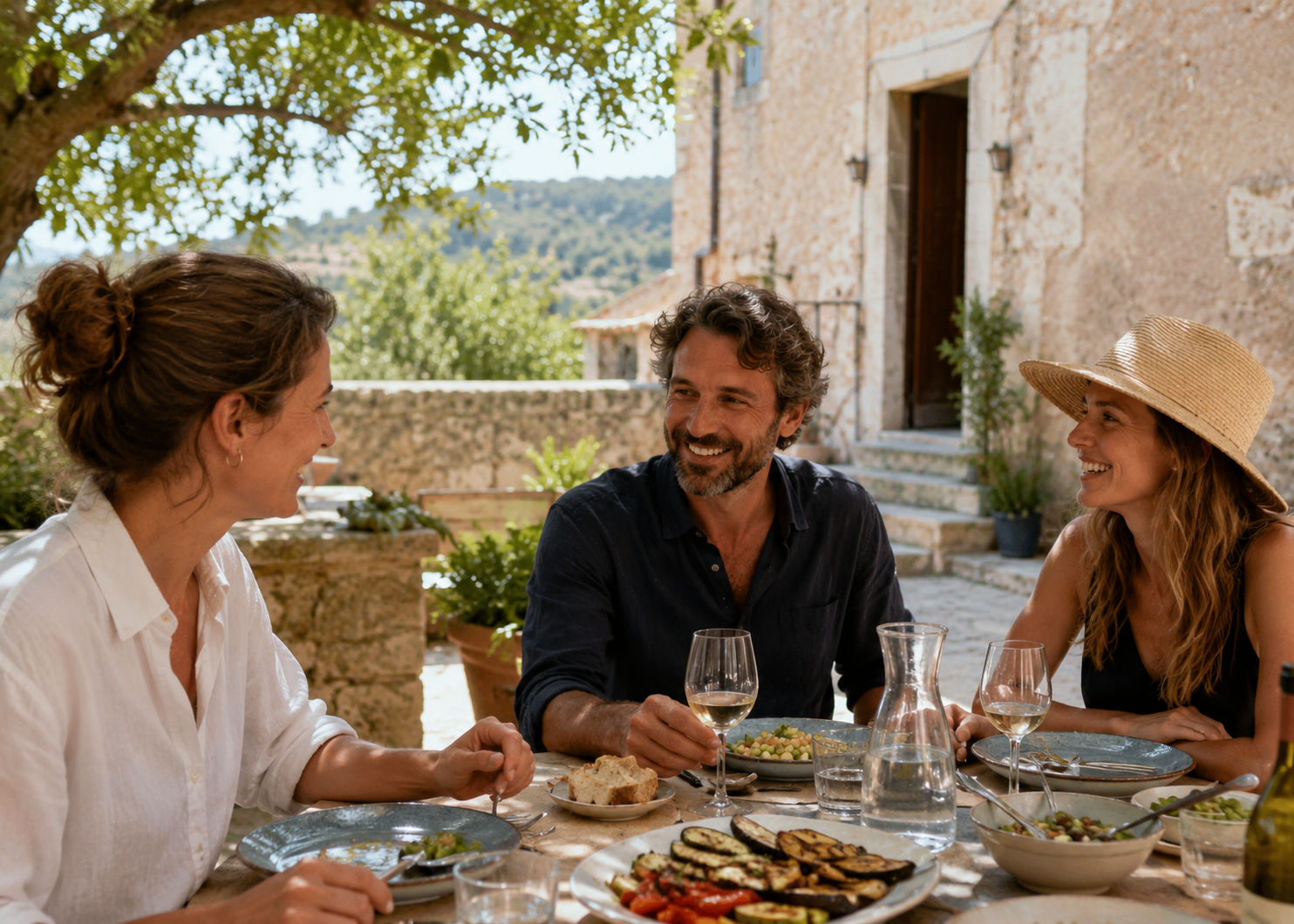
There is a cultural layer underneath the practical one, and it shapes the whole relationship with food. In much of Europe, eating is something you stop to do. In America, eating has become something you do while doing something else.
The European tendency is to treat a meal as an event with edges, a beginning and an end, a table, ideally some company. You sit, you eat, you finish, you get up, and then you are done until the next meal. Food is bounded by occasions, and outside those occasions you are simply not eating.
The American tendency is to fold food into everything else, eating at the desk, in the car, in front of the screen, on the move. When eating has no edges, it has no natural stopping point either, and it spreads to fill the day. A culture that eats at tables snacks less than a culture that eats everywhere, not because it is more disciplined but because it has kept the boundaries around when eating happens.
So Where Does Willpower Come In
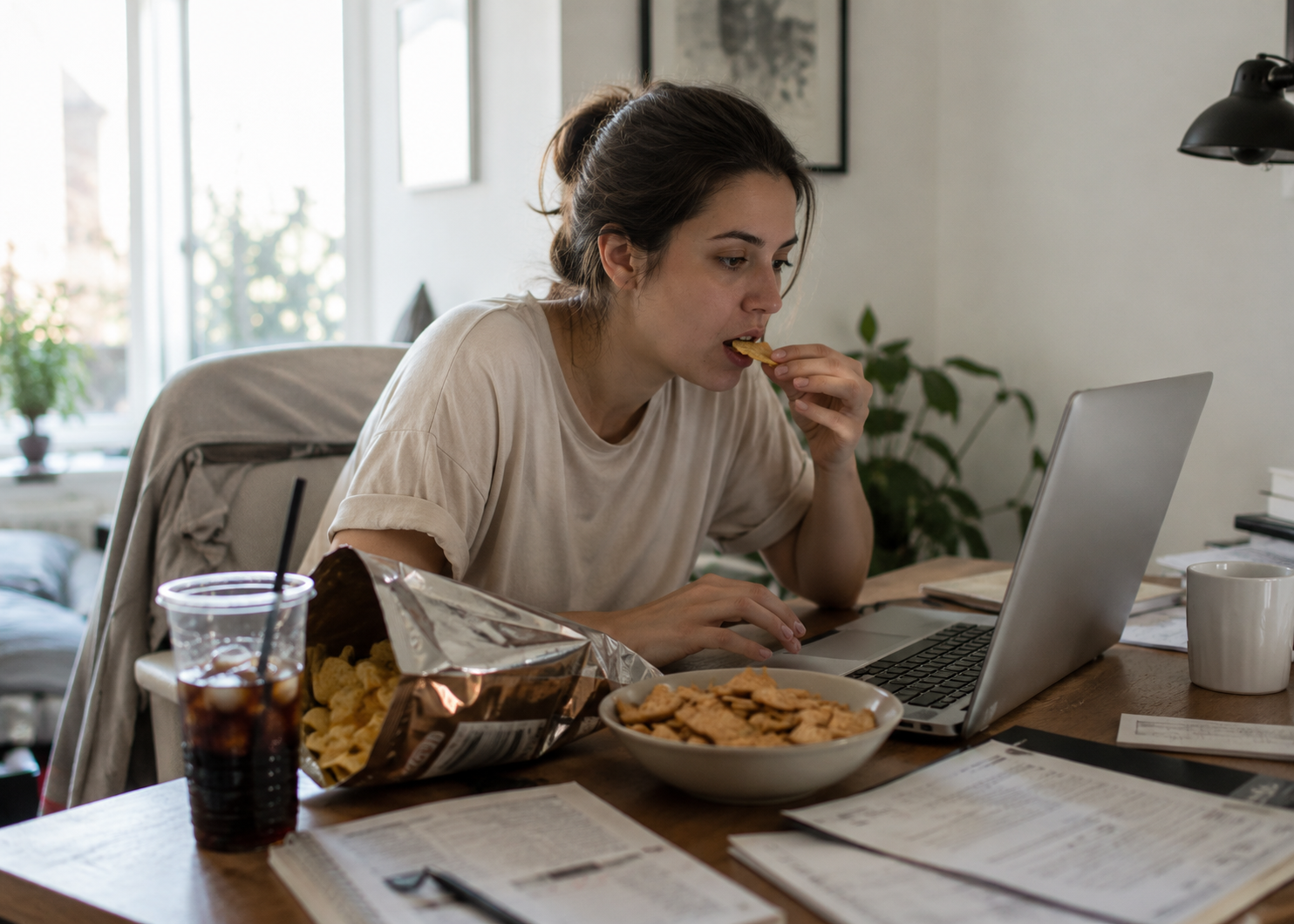
The honest answer is that willpower is real but almost beside the point, and leaning on it is exactly why so many people feel like failures.
Picture the same person in two places. In the American setting, they face constant food prompts, engineered snacks that leave them hungrier, rushed meals that do not satisfy, and a culture of eating on the move. Resisting the urge to snack there is a genuine, exhausting, hour-by-hour fight, and most people lose it most days, because almost anyone would. In the European setting, the prompts are fewer, the meals are filling, the food is less engineered, and eating is bounded by the table. The same person snacks far less, and it costs them no effort at all.
That is the whole point. The European is not winning a willpower battle. They have been handed an environment where the battle is barely fought. Praising them for self-control, or blaming the American for the lack of it, mistakes the surroundings for the character of the people standing in them.
What This Means If You Are The Snacker
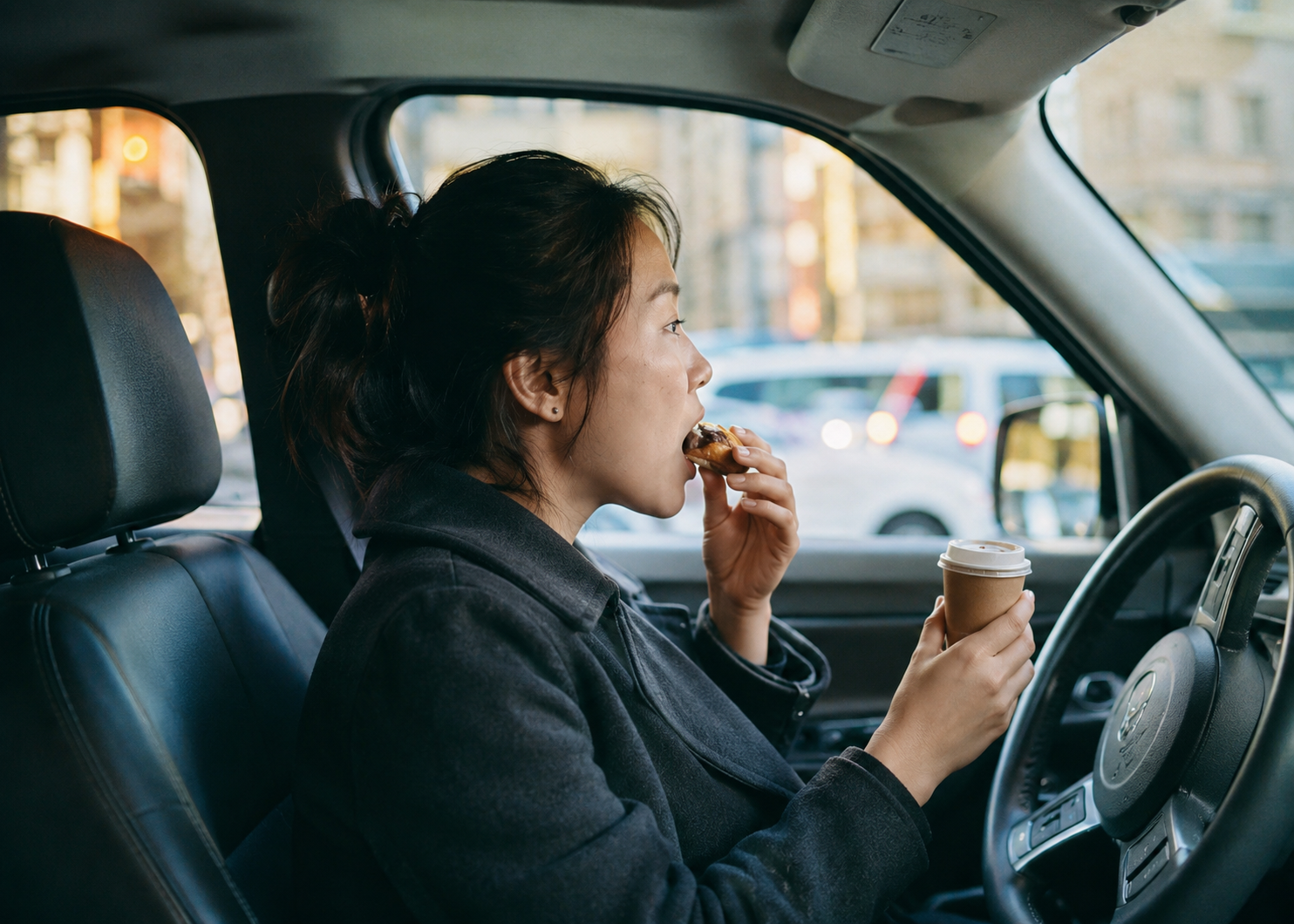
If you graze all day and have always thought of it as a personal flaw, the useful news is that it mostly is not. You are responding, rationally, to an environment designed to keep you eating. The hunger is real because the food made it real, and the constant prompts are real because somebody is paid to put them there.
That reframing does not magically fix anything, and changing a personal food environment in a country built this way is genuinely hard, harder than just moving to Spain. But it points the effort in the right direction. The lever is not more willpower against the snack. It is the things around the snack, eating real meals that actually fill you, keeping food to the table rather than the desk and the car, and noticing how much of the urge was being manufactured from outside.
None of that is about being stronger. It is about quietly removing the things that were generating the hunger in the first place, which is exactly, if accidentally, what the European day already does.
The Real Reason, Stated Plainly
So here is the answer the title promised, without the willpower myth attached. Europeans snack less because their meals are bigger and slower and more satisfying, because their food is far less engineered to be overeaten, because their environment offers fewer constant prompts to eat, and because their culture keeps eating bounded to the table instead of spread across the whole day.
Every one of those is a feature of the surroundings, not the spine of the people. Drop an American into that setup and the snacking falls away on its own, as our visitor discovered with some confusion over a single week. Drop a European into an American suburb full of vending machines and engineered snacks and rushed desk lunches, and within a year they would be grazing too. The willpower was never the variable. The water they were swimming in always was. It is a strange thing to find liberating, that so little of it was ever up to you, but most people do.

About the Author: Ruben, co-founder of Gamintraveler.com since 2014, is a seasoned traveler from Spain who has explored over 100 countries since 2009. Known for his extensive travel adventures across South America, Europe, the US, Australia, New Zealand, Asia, and Africa, Ruben combines his passion for adventurous yet sustainable living with his love for cycling, highlighted by his remarkable 5-month bicycle journey from Spain to Norway. He currently resides in Spain, where he continues sharing his travel experiences with his partner, Rachel, and their son, Han.