
Two soy-glazed classics, two of Asia’s most beloved chicken dishes, and a title that promises a clear winner, which means I owe you an actual verdict rather than a diplomatic dodge. Filipino adobo and Japanese teriyaki both center on chicken lacquered in a soy-based sauce, both are beloved worldwide, both are weeknight staples in their home countries and beyond. But they are quite different dishes underneath the shared soy, and after laying out what each really is, I am going to name a winner and defend it. I will tell you now that I have a horse in this race, but I will make the case on the merits, not the heritage.
This is a comparison of Filipino chicken adobo and Japanese chicken teriyaki, an honest look at what makes each its own thing, how they differ, which one wins and why, and how to make both at home. Both are wonderful, and you should know both, but one of them, I will argue, is the deeper and more rewarding dish. Here is Filipino adobo versus Japanese teriyaki, two soy-glazed classics, one clear winner, and how to make them both.
What Filipino Adobo Is
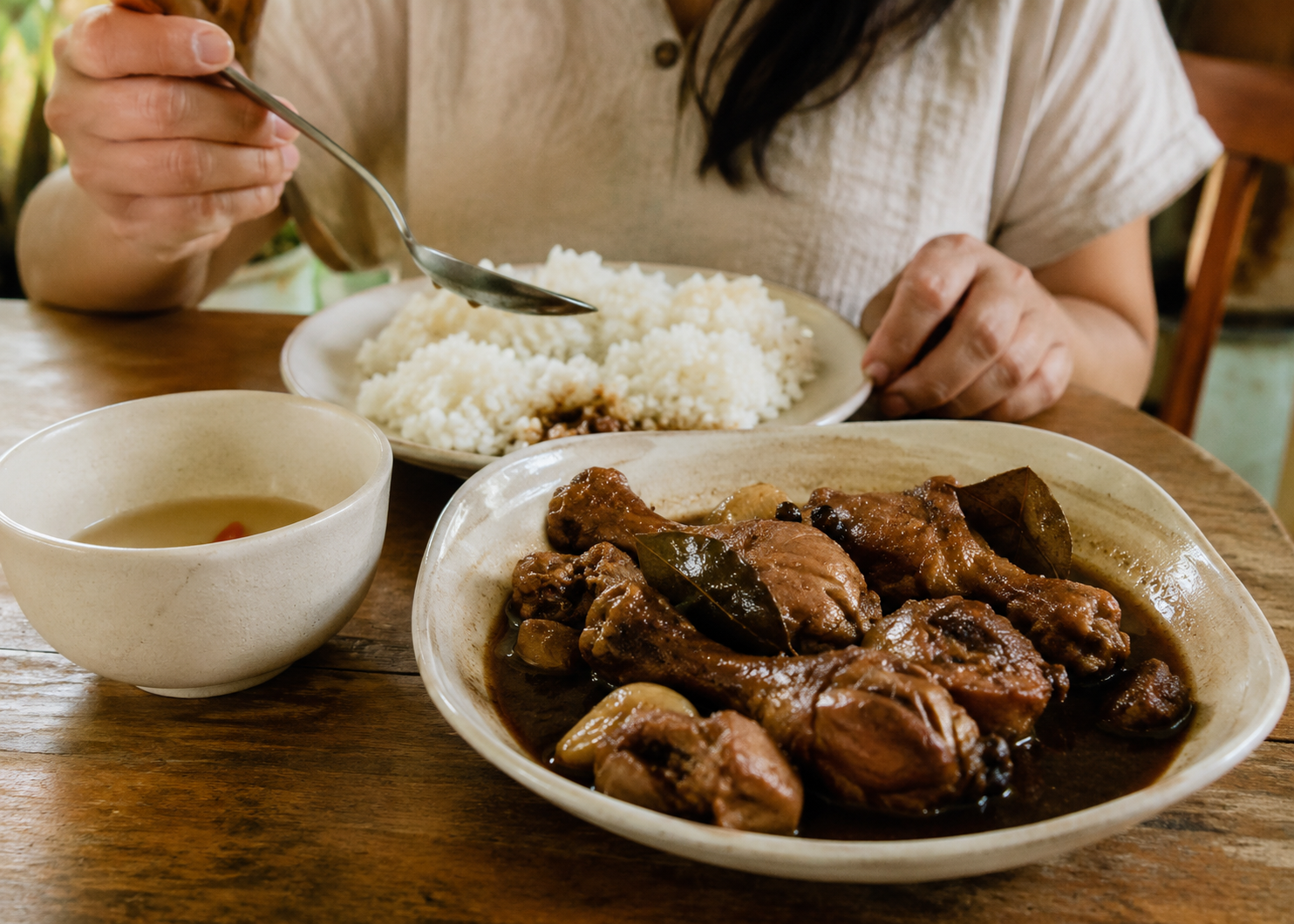
Start with adobo, the Philippines’ beloved national dish, since its particular depth and balance are central to the case.
Filipino chicken adobo is chicken braised in a sauce of soy sauce, vinegar, garlic, bay leaves, and black peppercorns, the chicken simmered in this tangy, savory, garlicky, aromatic liquid until tender and infused, the sauce reducing to a deep, complex, savory-sour glaze, the result a profoundly flavorful braise that is tangy and savory and deeply garlicky all at once. The character is deep and complex and balanced, the soy bringing savory depth, the vinegar bringing a bright tang, the garlic and bay and pepper bringing aromatic complexity, the braising melding it all into a rich tangy savory whole, a dish of real depth and balance. This is adobo, the soy-and-vinegar braised chicken, deep and tangy and savory and garlicky, the beloved Filipino classic.
The technique that defines it is the soy-vinegar braise, the chicken simmered in the soy, vinegar, garlic, bay, and pepper until tender, the sauce then often reduced to a glaze, sometimes the chicken browned at the end, the braising and reduction concentrating the complex tangy-savory flavor. The defining feature is the balance of soy and vinegar, the savory and the sour held in tension, with the garlic and aromatics, so adobo is about the deep tangy-savory soy-vinegar braise, a complex balanced flavorful dish. Understanding adobo, its soy-vinegar-garlic braise, its deep tangy savory complex character, is understanding one contender, and a strong one, the deep balanced Filipino classic.
What Japanese Teriyaki Is
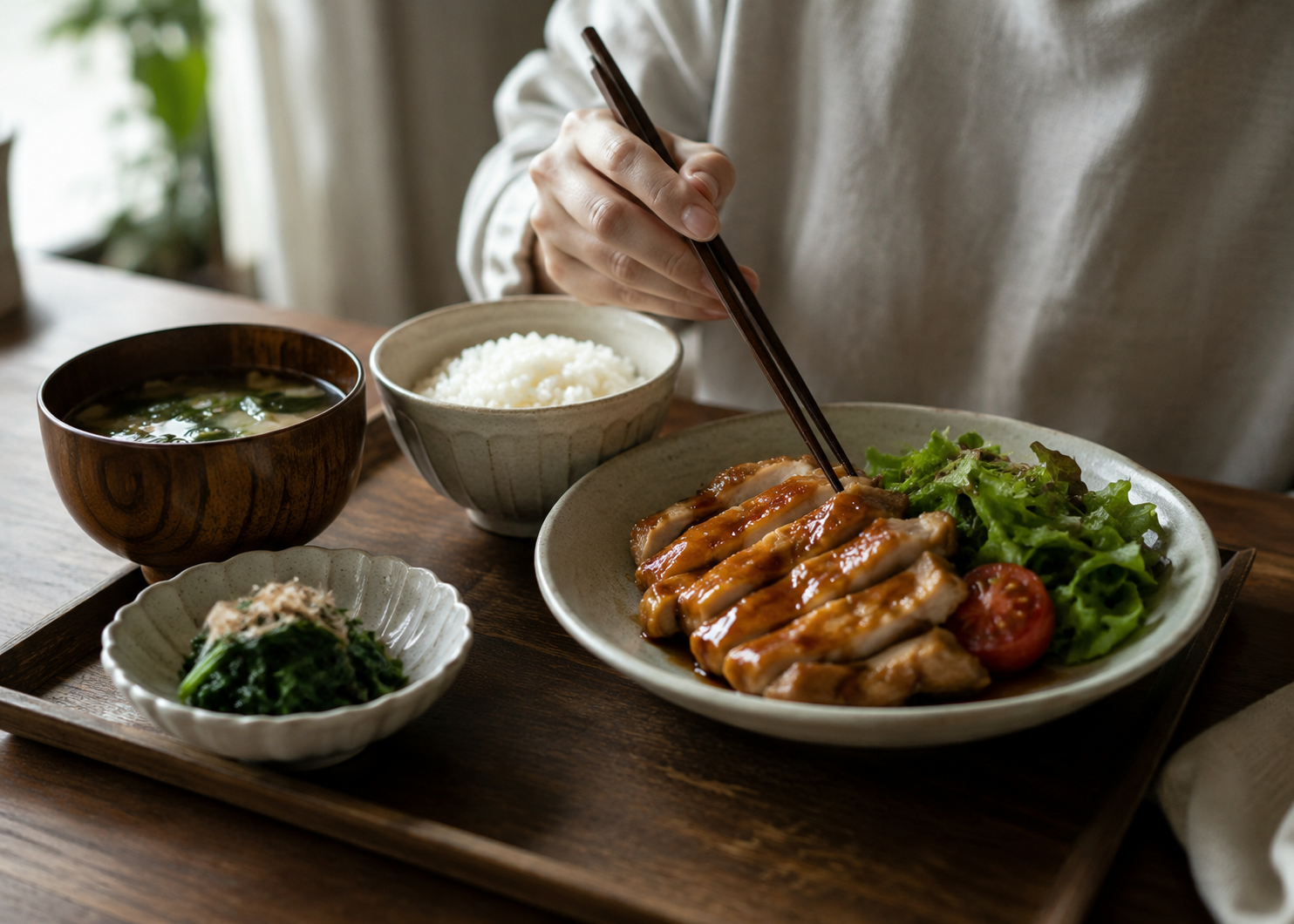
Now teriyaki, the Japanese classic, which takes soy in a sweeter, glossier, simpler direction.
Japanese chicken teriyaki is chicken cooked and glazed in a sauce of soy sauce, mirin, sake, and sugar, the sweet-savory soy glaze reduced to a glossy sheen on the chicken, the result a sweet, savory, glossy, beautifully simple dish, the teriyaki sauce being the sweet-salty soy glaze that gives the dish its name, teri meaning glossy and yaki meaning grilled. The character is sweet-savory and glossy and clean, the soy and mirin and sugar making a sweet-salty glaze, the dish elegant and simple and balanced toward the sweet, the chicken lacquered in the shining sweet-savory sauce, a clean glossy pleasing dish. This is teriyaki, the sweet-savory soy-glazed chicken, glossy and clean and simple, the beloved Japanese classic.
The technique that defines it is the sweet soy glaze and the glossing, the chicken cooked, often pan-fried or grilled, then glazed with the reduced sauce of soy, mirin, sake, and sugar, the sauce reducing to the characteristic glossy sweet-savory lacquer, the teri or gloss being the signature. The defining feature is the sweet-savory glossy glaze, simpler and sweeter than the adobo’s tangy complexity, so teriyaki is about the clean sweet-savory glossy soy glaze, an elegant simple pleasing dish. Understanding teriyaki, its sweet soy-mirin glaze, its glossy clean sweet-savory character, is understanding the other contender, the clean glossy Japanese classic.
How They Differ, Tangy Depth Versus Sweet Gloss
The heart of the comparison is the contrast between adobo’s tangy complex depth and teriyaki’s sweet glossy simplicity, which frames the verdict.
The two soy-glazed classics differ most in their flavor profile and complexity, the adobo being tangy, savory, garlicky, and complex, the soy balanced against the vinegar with the aromatic garlic and bay and pepper giving real depth and a sophisticated savory-sour balance, while the teriyaki is sweet, savory, glossy, and simpler, the soy balanced toward sweetness with the mirin and sugar, cleaner and more straightforward, elegant but less complex. This is the core difference, the adobo’s tangy complex savory-sour depth against the teriyaki’s sweet clean glossy simplicity, the two using soy in quite different directions, one toward tangy aromatic complexity, the other toward sweet glossy elegance. The contrast in depth and flavor direction is the defining difference between them.
This difference shapes the eating experience, the adobo a deep complex tangy-savory braise that rewards attention with its layers, the teriyaki a clean sweet glossy pleasure that satisfies immediately and simply, so they offer different kinds of enjoyment, the complex and the clean. The adobo is a dish of depth and balance and complexity, the teriyaki a dish of clean sweet glossy elegance, so they differ not just in flavor but in their whole character and ambition, the deep tangy adobo against the clean sweet teriyaki. Understanding how they differ, the adobo’s tangy complex depth versus the teriyaki’s sweet glossy simplicity, is the key to the verdict, the two soy classics being genuinely different in depth and character.
The Verdict, And Why Adobo Wins
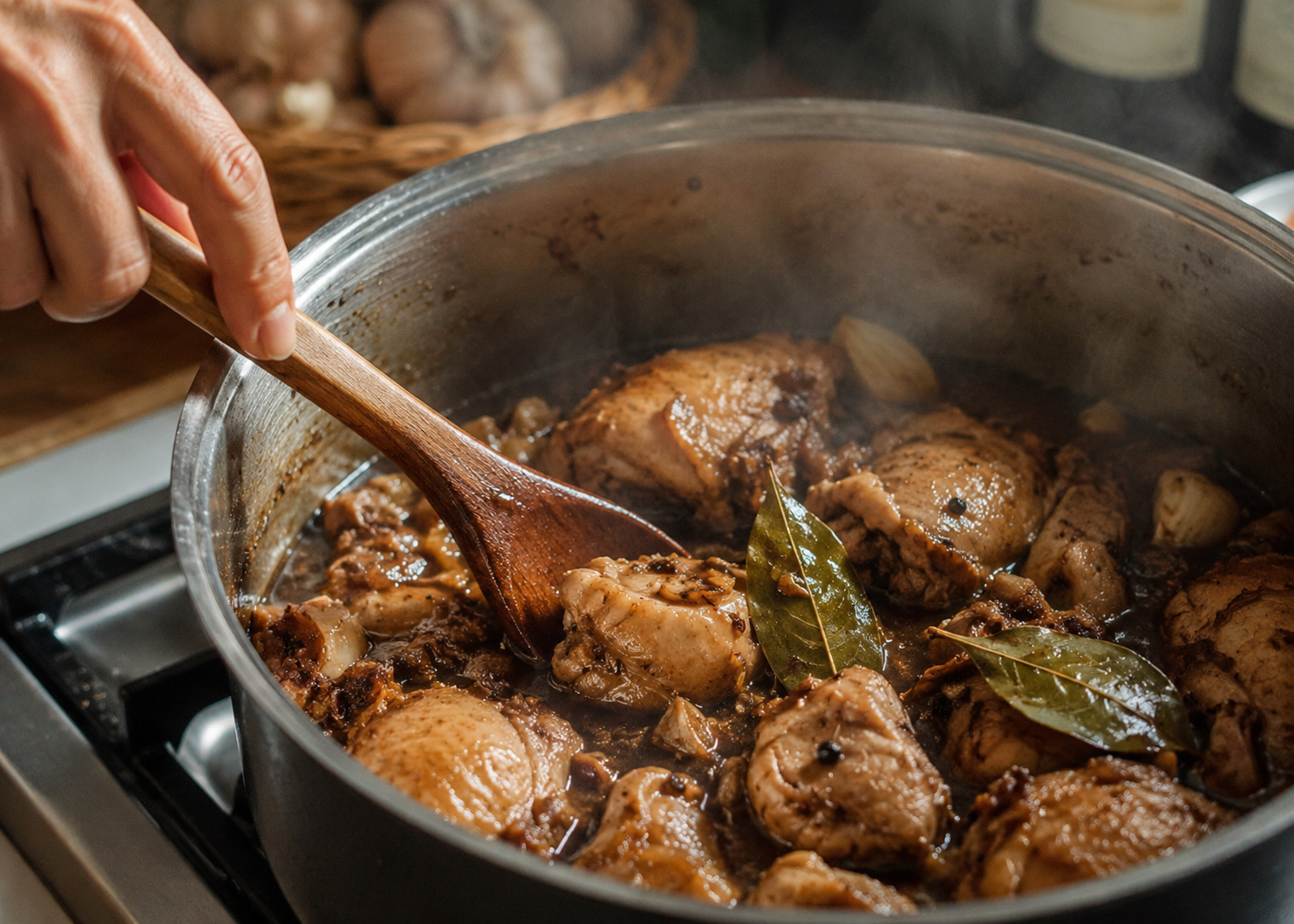
The title promises one clear winner, so here is my honest verdict, with the case made on the merits.
My honest verdict is that adobo wins, and I will be upfront that as a Filipino I have a natural fondness for it, but the case I am making rests on the dish, not the flag. Adobo wins because it is the deeper, more complex, more rewarding dish, the tangy-savory balance of soy and vinegar with the aromatic garlic and bay and pepper giving it a sophistication and a depth that the sweeter, simpler teriyaki, elegant as it is, does not reach. The teriyaki is lovely, clean and glossy and pleasing, but it is essentially a sweet soy glaze, a single beautiful note, while the adobo is a whole chord, the interplay of savory and sour and aromatic giving it layers and balance and a complexity that rewards repeated eating, the depth that makes a dish truly great rather than merely pleasant. Adobo wins on depth and complexity and balance, the more sophisticated and rewarding of the two.
I want to be genuinely fair to teriyaki, because it is a wonderful dish and the verdict is not a dismissal, since teriyaki’s clean sweet glossy elegance is a real virtue, its simplicity a strength in its own way, its broad appeal and its beautiful glossy finish genuine pleasures, and for someone who wants a clean sweet easy crowd-pleaser, teriyaki may well be the better practical choice. So the verdict is not that teriyaki is bad, far from it, but that adobo is the deeper and more rewarding dish, the more complex and balanced and sophisticated, which for me makes it the clear winner on the merits even as teriyaki remains a lovely and in some practical ways more universally pleasing dish. Adobo wins on depth, teriyaki excels at clean sweet simplicity, and my honest call, made on the dish, is for the depth of adobo.
Why The Depth Matters
It is worth dwelling on why the depth that wins it for adobo actually matters, since this is the heart of the case.
The depth that makes adobo the winner matters because it is what gives a dish staying power and true greatness, since a dish of a single pleasing note, like the sweet teriyaki glaze, satisfies but can pall, while a dish of real complexity and balance, like the savory-sour-aromatic adobo, keeps revealing itself and rewarding the eater, the complexity being what sustains interest and makes a dish one you can eat endlessly without tiring. The tangy-savory balance of adobo, the way the sourness cuts the richness and the garlic and aromatics deepen it, gives the dish a dynamism and a balance that the sweeter simpler teriyaki lacks, and it is this dynamism, this complexity that does not pall, that makes adobo the deeper and ultimately more rewarding dish. The depth matters because it is the difference between a dish that pleases and one that endures.
This is also why adobo has the character of a true staple, a dish Filipinos eat constantly and never tire of, since its complexity and balance make it endlessly satisfying in a way that a sweeter simpler dish might not sustain, the depth being what lets it be eaten again and again as a beloved everyday food. The teriyaki is wonderful but is perhaps more of an occasional pleasure, its sweetness lovely but less suited to constant eating, while the adobo’s savory-sour depth makes it a perfect everyday staple, endlessly eatable, which is a real mark of its greatness. Understanding why the depth matters, that it makes adobo endlessly rewarding and sustaining where the sweeter teriyaki might pall, is understanding the real heart of the verdict, the depth being what wins it.
The Cultural Place Of Each Dish
A little context on what each dish means in its home country deepens the comparison and the verdict.
Adobo holds a special place as arguably the national dish of the Philippines, a dish so beloved and so woven into Filipino life that nearly every family has its own version, the balance of soy and vinegar adjusted to taste, the dish cooked constantly and eaten endlessly, a true everyday staple and a symbol of Filipino home cooking. Its very name comes from the Spanish for marinade, a trace of the colonial history, but the dish itself, the soy-vinegar braise, is thoroughly Filipino, an emblem of the cuisine and the culture, cooked in countless homes with countless small variations, beloved across the islands and the diaspora. The deep cultural place of adobo, as a national dish and everyday staple, reflects exactly the depth and endless eatability that wins it the verdict.
Teriyaki holds a different but also important place in Japanese cooking, a beloved and widely cooked preparation, though more a technique and a category, the sweet soy glazing applied to chicken and fish and more, than a single iconic national dish in the way adobo is for the Philippines. Teriyaki is a popular and pleasing part of Japanese home and restaurant cooking, and it has become enormously popular worldwide, often in westernized forms, so it is a beloved and globally famous preparation, clean and pleasing and widely loved, even if it occupies a slightly different cultural role than the national-dish status of adobo. Understanding the cultural place of each, adobo as a beloved national staple and teriyaki as a popular beloved technique, rounds out the comparison of these two soy-glazed classics.
Recipe One, Filipino Chicken Adobo
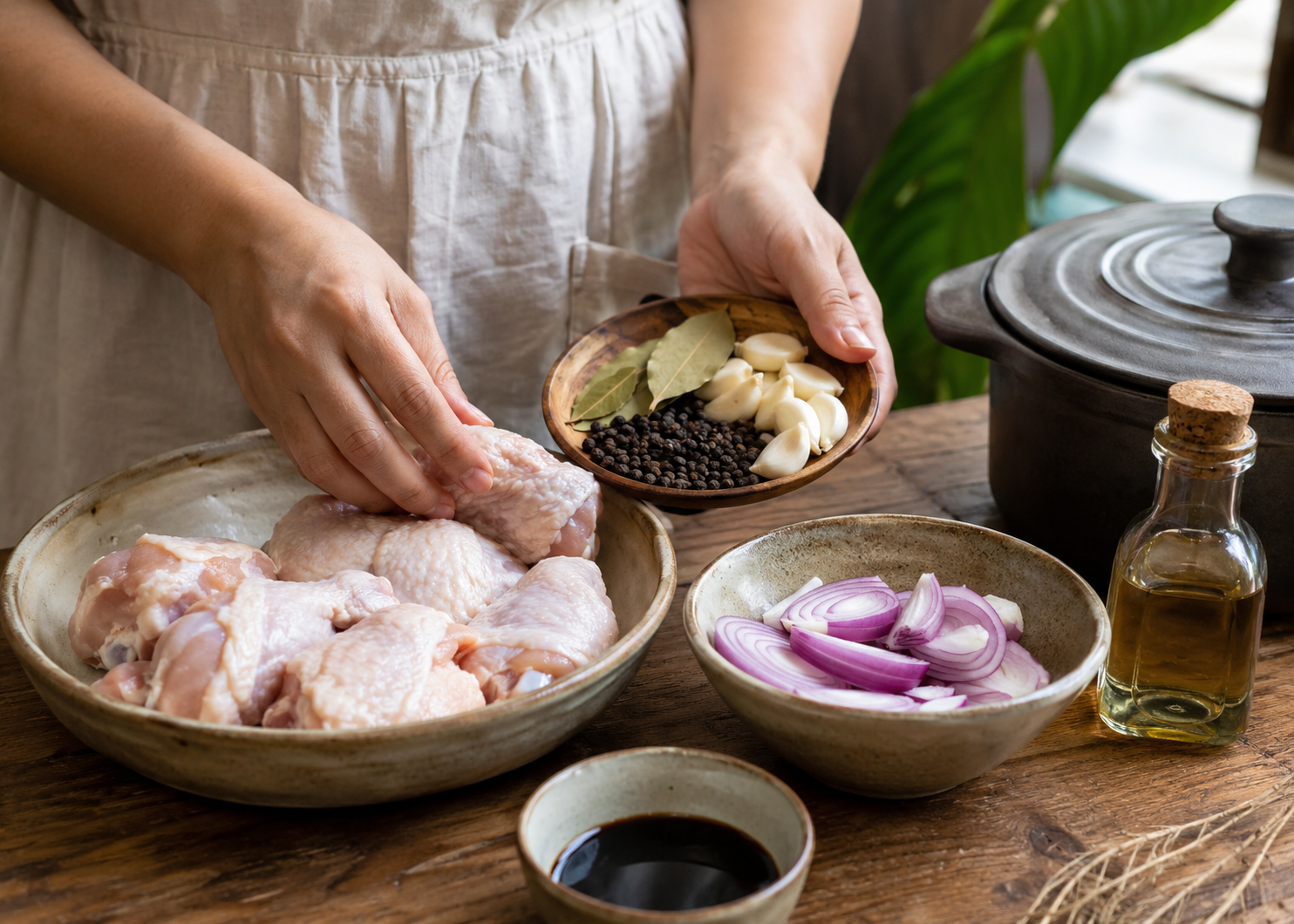
Serves 4. The soy-vinegar balance is everything. Do not stir the vinegar in too early, let it simmer to mellow.
Ingredients
- 1kg bone-in chicken thighs and drumsticks
- 1/2 cup soy sauce
- 1/3 cup white or cane vinegar
- 1 whole head garlic, cloves crushed
- 4 to 5 bay leaves
- 1 tbsp whole black peppercorns
- 1 tbsp brown sugar (optional)
- 1 cup water, oil for browning
Method
- Marinate the chicken in the soy sauce and half the garlic for 30 minutes if you have time.
- In a pot, combine the chicken, soy, garlic, bay, peppercorns, sugar, and water. Bring to a boil, then add the vinegar and let it simmer without stirring for a couple of minutes to mellow the sharpness.
- Lower to a gentle simmer, cover, and cook 30 to 40 minutes until the chicken is tender.
- Uncover and reduce the sauce until glossy, optionally browning the chicken in a little oil for color. Serve over plenty of steamed rice.
Recipe Two, Japanese Chicken Teriyaki
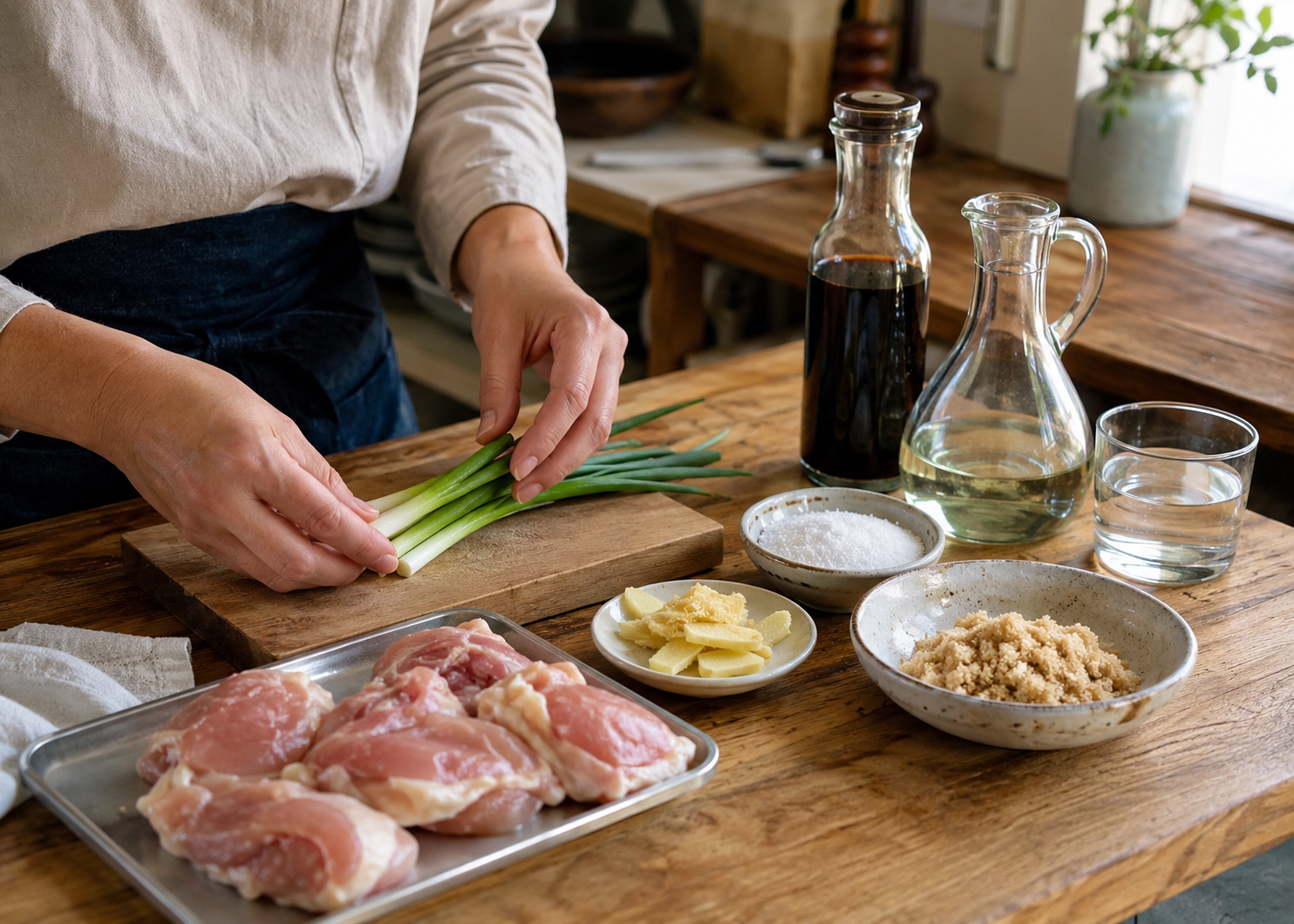
Serves 4. The glossy glaze is the goal. Reduce the sauce until it coats the back of a spoon.
Ingredients
- 600g boneless chicken thighs, skin on
- 4 tbsp soy sauce
- 3 tbsp mirin
- 2 tbsp sake
- 2 tbsp sugar
- Oil, sesame seeds, scallions
Method
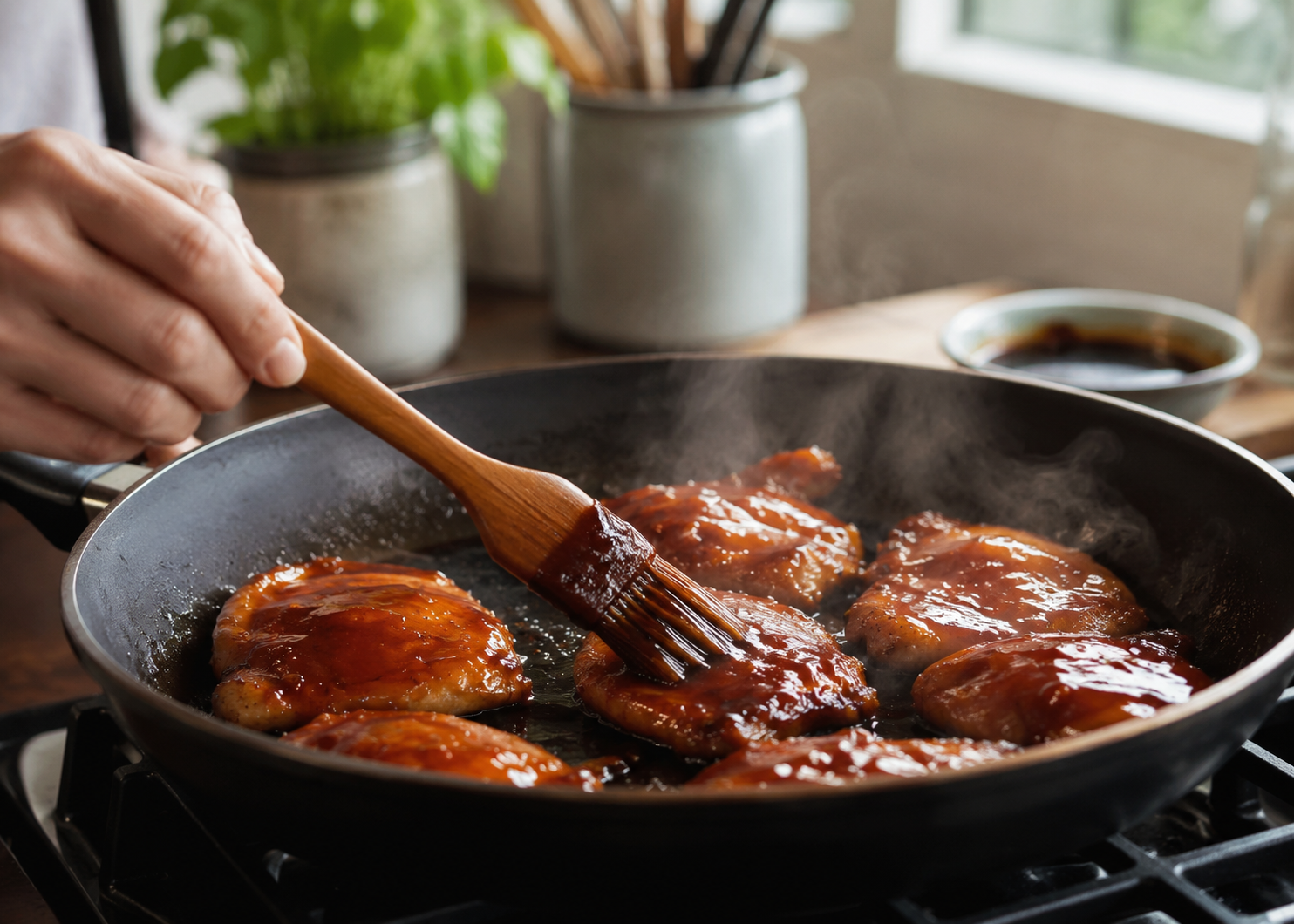
- Mix the soy, mirin, sake, and sugar into the teriyaki sauce.
- Pan-fry the chicken thighs skin-side down in a little oil until golden and nearly cooked, then flip briefly.
- Pour off excess fat, add the sauce, and let it bubble and reduce, spooning it over the chicken, until glossy and thickened and the chicken is cooked through and lacquered.
- Slice, drizzle with the glossy pan sauce, and finish with sesame seeds and scallions. Serve with rice.
Serving And The Final Word
Both reward rice and a few finishing touches, and a final word puts the verdict in perspective.
Serve the adobo over generous steamed rice, which is essential to soak up the deep tangy-savory sauce, the dish being all about the rice and the glorious sauce together, perhaps with a simple vegetable on the side. Serve the teriyaki over rice too, with its glossy sauce spooned over, the sesame and scallion finishing it, a clean and pretty plate. Both are rice dishes at heart, the sauce and the rice being the point in each, though the adobo sauce is the deeper and more complex of the two.
As for the verdict, take it in the right spirit, that adobo wins on depth and complexity for me, made on the merits and not just the heritage, but that teriyaki is a lovely dish you should also know and make, the clean sweet glossy classic having its own real virtues. Make both, taste the deep tangy adobo against the clean sweet teriyaki, and judge for yourself, since while I will stand by adobo as the deeper and more rewarding dish, the only way to truly settle it is at your own table. My clear winner is adobo, but teriyaki remains well worth your while, and both belong in your cooking.

About the Author: Ruben, co-founder of Gamintraveler.com since 2014, is a seasoned traveler from Spain who has explored over 100 countries since 2009. Known for his extensive travel adventures across South America, Europe, the US, Australia, New Zealand, Asia, and Africa, Ruben combines his passion for adventurous yet sustainable living with his love for cycling, highlighted by his remarkable 5-month bicycle journey from Spain to Norway. He currently resides in Spain, where he continues sharing his travel experiences with his partner, Rachel, and their son, Han.